Search This Blog

Thursday, June 9, 2022

Can Machine Learning Translate Ancient Egyptian Texts? - SAPIENS

https://www.sapiens.org/archaeology/machine-learning-egyptian-hieroglyphs/

Can Machine Learning Translate Ancient Egyptian Texts?

A new program aims to use AI to help academics and the public decipher hieroglyphs. Here's an inside look at how—and whether—it works.


While working with Egyptologists, the game developers learned that translating and interpreting ancient hieroglyphic texts is time-consuming, and the process has changed little in the last century. So, Ubisoft decided to give back to the academic community by developing the Hieroglyphics Initiative.

The project aims to help researchers decode Egyptian hieroglyphs using machine learning—a type of artificial intelligence that allows computer programs to become better at making predictions through experience.

The developers joined forces with a range of scholars within Egyptology, including members of the Australian Centre for Egyptology at Macquarie University, where I was a master's student in search of a thesis topic. It felt like a sign. The Hieroglyphics Initiative was an opportunity for me to give back to the academic community by assisting with the development of a computer program that could benefit Egyptologists. I could explore how machine learning might transform archaeological research and education, and even how the public interacts with Egyptology.

The question was: Did the Hieroglyphics Initiative deliver on its promise? I made it my mission to find out.

The difficulties of deciphering hieroglyphs

Deciphering ancient Egyptian texts has challenged scholars for centuries. Ancient Egyptians regularly used more than 700 hieroglyphs, wrote their texts in different directions, and eschewed vowels, punctuation, and space between words. Many early researchers incorrectly assumed hieroglyphs were purely symbols; in fact, they can represent objects, ideas, or sound groups.

In a scene from a video game, a person wearing a circular            shield on their back scales a shiny gold pyramid above plains            covered with trees, mountains, and a bright yellow sun in the            distance.

The creators of Assassin's Creed: Origins consulted with Egyptologists to bring Cleopatra's Egypt to life. Ubisoft

During the medieval era, Arab and Egyptian scholars preserved some knowledge of the hieroglyphic system, and European researchers were later informed by their efforts. But scholars in the West didn't experience a major breakthrough until 1822, when Jean-François Champollion cracked the code by analyzing the multilingual inscription on the Rosetta Stone.

At first, translators used paper and pencil to sketch or trace inscriptions on tomb walls. Then in the 1890s, large-format photography revolutionized the field, allowing scholars to more accurately capture the details of inscriptions and reliefs.

The Hieroglyphics Initiative attempts to advance on these techniques by applying machine learning to capture and preserve this data. In 2020, Google Arts and Culture, which had taken over the project, released the program in English and Arabic, renaming it Fabricius.

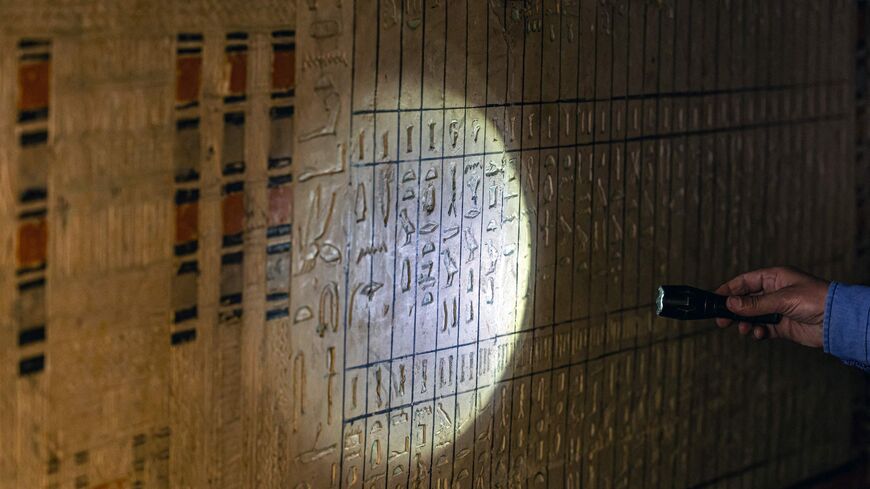
Using this open-source program, researchers can upload a photo of text such as an inscription on a tomb wall, create a facsimile layer of the image, and zoom in on a specific section. They can also utilize the draw and erase function to touch up parts of the hieroglyphs that may be damaged by chinks in the rock wall.

Then they can sequence the hieroglyphs, and the program can help identify each hieroglyphic sign using Gardiner's Sign List, which groups signs into categories such as birds, reptiles, or human body parts. Based on the sequence and identified hieroglyphs, the program can then suggest possible translations.

A video demonstrates how Fabricius can clean up hieroglyphics, such as these signs from the biography of Saroy. Bree Kelly/Macquarie University
https://youtu.be/rbKGOOxVhNk

The process isn't as simple or automatic as, say, the camera option on Google Translate, which translates text from images. It would be impossible for a machine, on its own, to fully incorporate all the nuances of ancient Egyptian grammar and spelling with enough accuracy to identify hieroglyphic sequences and suggest translations. This is because hieroglyphic signs can have multiple meanings, their spelling varies across thousands of years, and different scribes and artists had stylistic idiosyncrasies.

This means translation is complex and involves a high degree of interpretation. However, Fabricius could potentially help Egyptologists start a little further along the analytical process than they do when manually translating. And although Fabricius was initially designed with academics in mind, it has become available to the public, with the aim of making ancient Egyptian writing more accessible to the curious nonspecialist.

As part of my research, I created step-by-step instructions for using Fabricius and published articles that give nonexperts context about the history of decoding hieroglyphs and how Egyptologists are implementing various digital technologies into their research.

For example, Macquarie University Egyptologist Linda Evans examines animal imagery in ancient Egyptian art to better understand the area's environmental history and the relationship between humans and other animals. She analyzed ancient Egyptian wall paintings using DStretch, a plugin that intensifies and saturates the colors in a digital photograph, allowing researchers to see faded details that are invisible to the eye. Using this technique, Evans was able to reinterpret several tomb paintings.

The work of Evans and others indicates that Egyptologists are interested in engaging with innovative new technologies and could potentially benefit from collaborations with companies such as Google and Ubisoft if projects like Fabricius prove successful.

A digitally altered image on a tomb wall reveals two pigs            with bright green and light purple patches surrounding them.

Using software called DStretch, Egyptologist Linda Evans was able to see previously invisible images on a tomb wall. Linda Evans

can machines help translate hieroglyphs?

To investigate whether Fabricius is achieving its aims, I launched a case study, asking eight volunteers of varying levels of expertise to test the program. The participants came from Australia, Egypt, and the Netherlands, and ranged from students of Egyptology to career academics. Each participant was given two ancient Egyptian texts to translate—one using their usual method of translation, the other using Fabricius.

Initially, they were optimistic but also slightly skeptical about the program's ambitious goals. Translation usually involves finding the sounds of particular signs in lists, seeking out words in dictionaries and online databases, using grammars to build good translations, and comparing translations of similar texts in various scholarly works, both analog and digital. This complex process is often carried out on paper and can take a number of attempts at scribbling, erasing, and crossing out symbols.

So, the idea that this multistep, laborious process could be simplified using machine-learning technology and completed on a single computer page intrigued the participants.

However, my study showed that Fabricius was not as immediately useful as initially hoped. The program lagged significantly, and its functions were not always self-evident to the users. This meant I had to guide each participant through the process to help them produce a translation in a timely manner. Most importantly, the machine-learning models used by Fabricius to suggest signs from traced photos achieved only a 27 percent accuracy rate.

That being said, the fact that the program can recognize and order hieroglyphic signs could make it a useful tool, even if recognition rates are not very high. Plus, machine learning allows programs to improve as they receive more and more data. Google Translate, which is powered by a machine-learning system, has become increasingly accurate over the years, and it performs best in languages it gets more training in, such as Spanish and German.

The glamour of machine learning might have to be put aside in favor of Fabricius' pragmatic aspects.

So, as researchers create well-formed training data, a subsequent version of Fabricius could be trained on a much larger dataset. In this way, it could improve its accuracy in identifying hieroglyphs over time and help scholars prepare editions of Egyptian texts for use in a digital context, massively increasing the amount of textual data at their disposal for text and language research.

In short, Fabricius offers an opportunity to revolutionize the method of recording and conducting research into ancient Egyptian textual data. However, until the program evolves to a point where it could accurately identify at least 99 percent of signs, it is unlikely it could become a tool that supplements the manual procedures of textual analysis. Also, it could only be used as an accurate translation tool if the machine-learning module could be trained not just with individual signs (its current focus) but also with sentences and larger texts that incorporate grammar and syntax.

In the meantime, the glamour and mystique of machine learning might have to be put aside in favor of the more usefully pragmatic aspects of Fabricius' design, such as the ability to quickly mark up and sequence all hieroglyphs within a text. This procedure alone would help digitize ancient Egyptian hieroglyphic texts at a much faster rate, allowing them to be easily shared, analyzed, and uploaded to online databases. Such databases could potentially create training information for future machine-learning applications.

In classrooms, Fabricius could generate a new learning mode for Egyptology students, encouraging emerging generations to develop skills that could improve the way hieroglyphic data is incorporated into an ever more technological world.

Overall, Fabricius represents a good first pass at building a program that can detect and automatically classify hieroglyphs. It needs retraining on a larger and better dataset before it could be used in a research context. However, the program holds promise as a platform for Egyptologists, students, and laypeople to engage with ancient texts and experiment with hieroglyphic translation. In addition, it might inspire more people to get involved with projects that combine archaeology, technology, and video games—as it did for me.

--   Sent from my Linux system.

Fossil of 98-million-year-old predatory dinosaur unearthed in Egypt - Society - Egypt - Ahram Online

https://english.ahram.org.eg/NewsContent/1/2/467635/Egypt/Society/Fossil-of-millionyearold-predatory-dinosaur-uneart.aspx

Fossil of 98-million-year-old predatory dinosaur unearthed in Egypt

Zeinab El-Gundy , Wednesday 8 Jun 2022

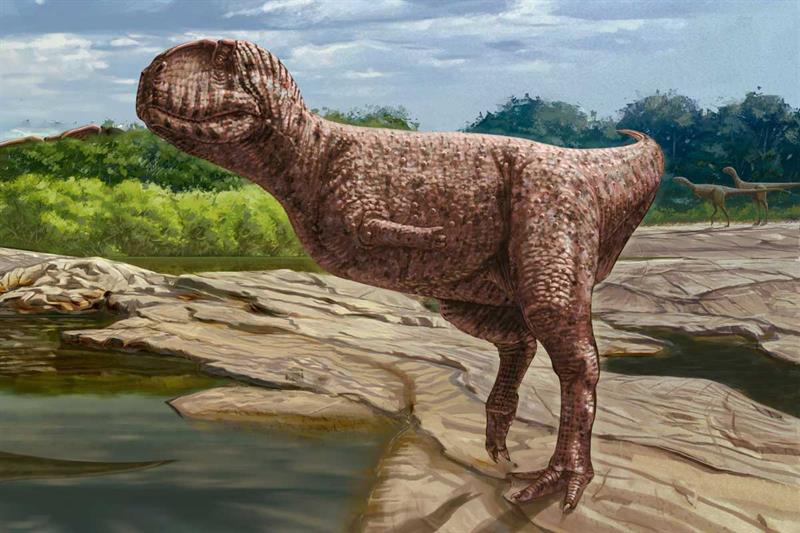
A fossil of a predatory dinosaur that lived 98 million years ago has been found in Al-Bahariya Oasis in Egypt's Western desert, the Egyptian Ministry of Higher Education and Scientific Research announced on Wednesday.

main
Photo courtesy of Egyptian of Higher Education and Scientific Research
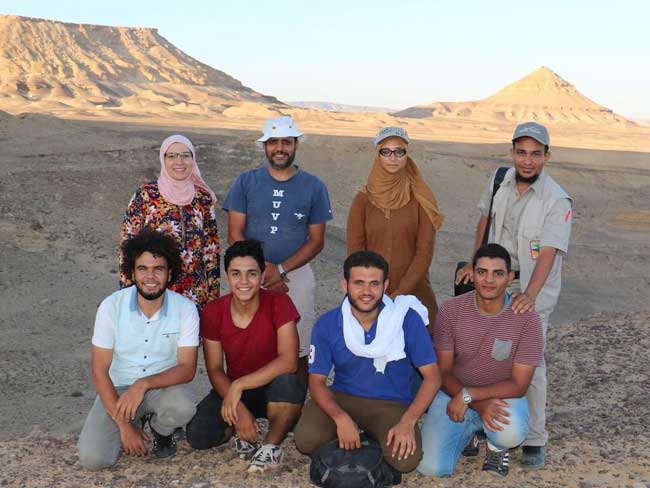
An Egyptian-led team of vertebrate paleontologists in association with the Mansoura University Vertebrate Paleontology Center (MUVP) has discovered a fossil of the large carnivorous dinosaur Abelisaurius (meaning Abel lizards, or Abel dinosaurs), a statement by the ministry said.

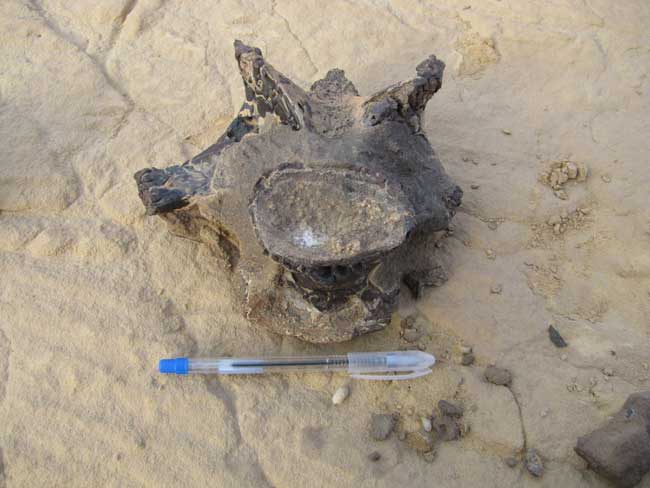
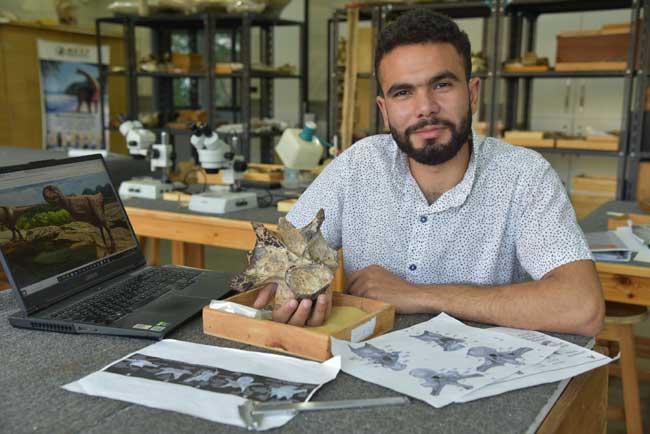
The fossil is from the tenth cervical vertebra of the neck of a huge carnivorous dinosaur, according to a report received by Higher Education and Scientific Research Minister Khaled Abdel-Ghaffar from Mansoura University.

The University said that the research findings were published in a paper led by researcher Belal Salem and others at the Royal Society Journal.

This is the first time that Abelisaurus fossils have been found in Egypt. They are also the oldest to be found in North Africa.

The Abelisauridae lived during the Cretaceous period (145 to 66 million years ago).

Abelisaurus, or commonly known as Abel, is named after Argentinian Paleontologist Roberto Abel, who uncovered the first Abelisaurus in Argentina in 1985.

A predator in nature, Abel was six metres tall and had a similar look to the famous T-Rex, as both had tiny arms, deep skulls, and huge jaws, in addition to being fierce.

This is not the first time MUVP has announced the discovery of dinosaur fossils in Egypt. In 2018, a team of researchers led by Professor Hesham Sallam drew international attention when they uncovered the plant-eating Cretaceous Period dinosaur named Mansourasaurus shahinae.

Furthermore, in 2021, the team announced the discovery of a 43-million-year-old semiaquatic whale.  

Search Keywords:
  • Egypt
  • Dinosaurs
  • Hisham Sallam
  • Mansoura University
Short link:


--   Sent from my Linux system.

Monday, June 6, 2022

Ancient holder of pharaoh's secret documents found in Saqqara - Al-Monitor: The Pulse of the Middle East

https://www.al-monitor.com/originals/2022/05/ancient-holder-pharaohs-secret-documents-found-saqqara

Ancient holder of pharaoh's secret documents found in Saqqara

A Polish mission was delighted to stumble upon the chamber of a major dignitary in the vast Saqqara necropolis.
KHALED DESOUKI/AFP via Getty Images

After another year of exploring the depths of the Saqqara necropolis, a Polish archaeological mission has announced the discovery of a 4,300-year-old tomb that belonged to an ancient Egyptian officer in charge of secret documents during the reign of the first pharaohs of the Sixth Dynasty, around 2,300 BC.

Archaeologists with the Polish Centre of Mediterranean Archaeology at the University of Warsaw found the tomb by chance last autumn while excavating a mysterious ditch known as the Dry Moat that encircles the step pyramid of King Djoser, the earliest such construction in Egypt. The team was working near its previous discovery, the tomb of an ancient vizier named Merefnebef, when the facade of the other's tomb was suddenly unearthed.

Kamil Omar Kuraszkiewicz, the director of the expedition, told Al-Monitor that the discovery "is not in the immediate vicinity of the tomb of Merefnebef — in fact, there are over 40 meters [130 feet] between them — but in the so-called Dry Moat of the step pyramid complex, a fascinating structure that has been recently the focus of our research."

Kuraszkiewicz added, "Exploring a section of the Dry Moat, we were searching for structures from the times of Djoser."

The facade of the burial chamber is decorated with reliefs depicting the tomb's owner: a dignitary named Mehtjetju. The mission found inscriptions reading that Mehtjetju was an official with access to secret royal documents as well as an inspector of the royal estate and a priest of the mortuary cult of King Teti.

Mehtjetju most likely lived at some point during the reigns of the first three rulers of the Sixth Dynasty: Teti, Userkare and Pepy I. Kuraszkiewicz noted that very little is known about the roles of these officials because few documents have survived, but he explained that everything that the pharaoh wrote or dictated was considered a decree and important ones were sealed. Mehtjetju was described as "privy to the secrets of the sealed royal documents."

"We don't know what exactly were his duties, as these have been not described anywhere. But the title itself suggests that he might have been involved in administrative processes that resulted in issuing the most important decrees. As for the contents of the decrees, it could be anything from tax exemptions through land endowments," Kuraszkiewicz said.

The reliefs on the facade of the tomb, executed by an exceptionally skilled hand, suggest that Mehtjetju enjoyed a privileged social position that allowed him to hire skilled artisans, the mission stated. The rock into which the chapel was carved, however, is very brittle and eroded and required help from conservators from Warsaw's National Museum when it was found.

"The relief is of exceptional quality, but this is not easy to see because of the quality of rock in which it is carved; the surface is eroded. But when you see behind the erosion, the finesse is striking," explained Kuraszkiewicz, who called it "surprising to find this quality of workmanship in the tomb of a middle-ranked official, because in the majority of tombs in the same cemetery, with the exception of Merefnebef, the artists were obviously less skilled and their work more schematic, often even clumsy."

The archaeologists note that the decoration of the chapel is incomplete, with no paint on the facade or reliefs on the side walls. On the side walls the Polish mission found figures painted in black ink on lime plaster, guides for carvings to come. The sketches depict sacrificial animals such as cows and oryxes.

The team does not believe that the incomplete decoration of the chamber means that Mehtjetju was not buried inside, as in that case, it is most likely that someone else would have taken over the place. The archaeologists do feel it could be linked to a sudden death and quick burial in the hastily finished tomb.

"It is very tempting to associate the death of Mehtjetju with the nature of his job," Kuraszkiewicz said. "However, there are also other possibilities. It has to be remembered that building or hewing a tomb was a time-consuming process and it happened quite often that dignitaries died before their tombs were completed," he added.

"Moreover, [that] was a period of significant reforms in the Egyptian administration that resulted in many officials being dismissed. When this happened, poor guys most probably could not continue to pay for their tombs," Kuraszkiewicz noted.

The discovery has added to the recent excitement in the world of archaeology over Saqqara, the oldest and most prestigious part of the necropolis of the ancient city of Memphis, one of the most important metropolises of Egypt for three millennia.

"Saqqara is a very big site and it contains many cemeteries dated to the Fifth and Sixth Dynasties, and the discovery of this tomb will enrich our knowledge about the officials of this period and their role on maintaining the cult of the kings," famed archaeologist and former Egyptian Minister of Antiquities Zahi Hawass told Al-Monitor.

One of the most intriguing sites in Saqqara is the majestic funerary complex of Djoser. The surroundings of the royal tomb must have initially been considered a sacred space, but over the centuries the area between the western wall of the complex and the edge of the Dry Moat became a vast cemetery.

"In the next season we will continue exploring the tomb of Mehtjetju, inside of the chapel and possibly also the burial chamber," Kuraszkiewicz said. "The chapel may be decorated with reliefs or paintings and inscriptions, of course, that may tell more about the activity of Mehtjetju. But it's equally possible that the decoration was not even started," he noted.

"The burial chamber may contain the body of the official. If that is the case, we will be able to know much more about his life and his burial equipment. But considering how skilled and diligent were ancient Egyptian tomb robbers, it may be completely or almost completely empty," Kuraszkiewicz added. "I suppose that only ancient gods know the answers at the moment. We hope to know them in September," he concluded.


--   Sent from my Linux system.
World-first recreation of ancient Egyptian garden opens in Hamilton | RNZ News

https://www.rnz.co.nz/news/national/466781/world-first-recreation-of-ancient-egyptian-garden-opens-in-hamilton

World-first recreation of ancient Egyptian garden opens in Hamilton

8:34 am on 10 May 2022

A world-first recreation of a 4000-year-old garden has been opened in Hamilton on Monday.

The ancient Egyptian Temple Garden one of 18 themed            gardens telling the history of gardening and civilisations            over the ages at the Hamilton Gardens.

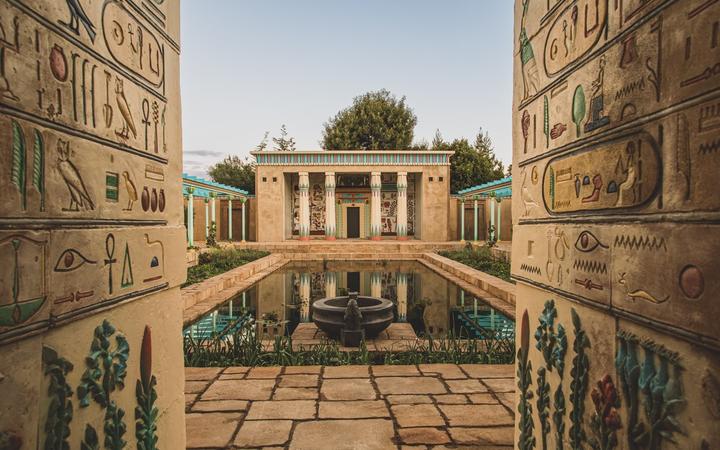
The garden is based on a typical temple from the middle kingdom period 2040 BCE to 1782 BCE. Photo: Supplied / Hamilton City Council

The ancient Egyptian Temple Garden one of 18 themed gardens telling the history of gardening and civilisations over the ages at the Hamilton Gardens.

It was opened by the Egyptian Ambassador to New Zealand, Dina Farouk El Sehy.

The garden is based on a typical temple from the middle kingdom period 2040 BCE to 1782 BCE.

Much is known by archaeologists about ancient Egyptian gardens, but the Hamilton garden is believed to be the first to recreate one.

Hamilton Gardens visitor services director Tamsin Webb said entering the garden was like stepping back in time.

The experience starts outside the temple at the Palm Court, a court yard that links the Egyptian garden with other themed gardens.

"On the outside is an ancient ruin designed to look exactly like it would if discovered today and then once you go through the entrance into the temple garden it is like stepping through in time."

She said ancient Egyptians would not have been able to go into a temple garden as it was only for royalty and priests.

"The outside of it is all about the power of the Pharaoh and inside it is about wooing the gods."

A typical temple garden had a rectangular pool surrounded by a range of plants.

The garden's operations manager Gus Flower said all of the plants in a temple garden were associated with the rituals around death.

"Preparations for rituals, the tombs, funerals . Fruits crops as well, vegetables and part of that was for their preparation for the journey to the after-life. Everything here is in relation to that."

The plantings have been measured out in cubits, an ancient Egyptian unit of length based on the distance from the elbow to the middle finger.

"The attention to detail is really, really important for us."

Webb said every effort has been made to make the garden as realistic as possible.

"We have also worked with Egyptologists at Auckland University and also Oxford University and the designer of the garden Dr Peter Sergel also headed to Egypt to have a chat to officials as well just to make sure the design was as authentic as possible."

The most striking thing about the temple garden is the vibrant colours used on the walls and the temple columns, which may surprise people.

Ancient tombs which have been opened have faded over thousands of years but research shows very bright colours were used, she said.

Hieroglyphics, a system of pictorial writing on ancient Egyptian monuments, also adorn the entrance way into the temple garden.

The 750-square metre garden is only a fraction of the size the real thing would have been.

"If you look at the pool it would have been ten times bigger in an actual temple garden, but there is research that we have done that shows that up to 20 people would have rowed the King around the pool in a temple garden. So as you can see from this one here, it's too small to be able to get 20 people rowing, you would probably do one stroke and be at the other end."

Work started on the design and then construction of the garden in 2018.

Webb said another 12 themed gardens continuing the timeline of gardening are planned at the Hamilton Gardens, bringing the total to 30.

Work has already started on a Pasifika garden, Medieval garden, and a Baroque garden.

The Egyptian garden is open to the public from Tuesday.

--   Sent from my Linux system.
Egypt demands return of King Tut artifact amid former Louvre director scandal - Al-Monitor: The Pulse of the Middle East

https://www.al-monitor.com/originals/2022/06/egypt-demands-return-king-tut-artifact-amid-former-louvre-director-scandal

Egypt demands return of King Tut artifact amid former Louvre director scandal

Former Louvre Director Jean-Luc Martinez was accused of conspiring to conceal the origin of artifacts suspected of having been stolen from Egypt during the Arab Spring in 2011, prompting Egyptian demands to return these valuable pieces to Egypt.
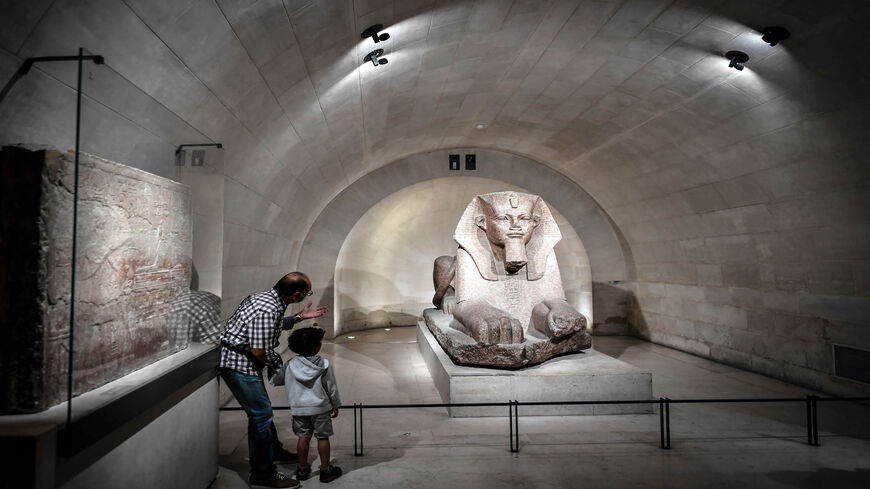
Visitors looks at a sphinx sculpture at the Egyptian            department of the Louvre Museum in Paris, France, June 24,            2021.

The French weekly newspaper Le Canard enchaine reported in an article published May 25 that French investigators are currently trying to find out whether or not former Louvre Director Jean-Luc Martinez "turned a blind eye" to forged certificates of five pieces of Egyptian antiquity. Reportedly, those pieces included a granite stele (slab) engraved with the seal of the ancient Egyptian Pharaoh Tutankhamun that was bought by Louvre Abu Dhabi for tens of millions of euros.

In 2018, the Paris prosecutor-general opened a confidential investigation into the case, entrusted to the Central Office for the Fight Against Illegal Trafficking in Cultural Goods. Before the case was assigned to an investigative judge in February 2020, at least three people were charged with being involved in the case, namely well-known French antiquities broker Christophe Kunicki and his husband Richard Semper, as well as Roben Dib, the German-Lebanese owner of an art gallery.

The case against Martinez brought to the fore the issue of Egyptian antiquities that are believed to have been smuggled out of the country following the January 25 Revolution, amid Egyptian demands to return the Tutankhamun piece.

In the wake of nationwide protests in 2011, antiquities were looted from museums, mosques, warehouses and illegal excavation sites. In 2017, the Egyptian Ministry of Antiquities said that 33,000 artifacts had disappeared over the past decades from the warehouses of the ministry and the Supreme Council of Antiquities.

Shaaban Abdel-Gawad, general supervisor of the Repatriation Antiquities Department at the Ministry of Tourism and Antiquities, told Akhbar el-Yom May 28 that Egyptian authorities are following up on the investigation into Martinez's case, in cooperation with the Ministry of Foreign Affairs, the Egyptian Embassy in France, the International Cooperation Branch in the Egyptian Attorney General's office and all concerned parties.

He said that the piece that was reportedly bought by the Louvre Abu Dhabi bears the seal of King Tutankhamun and is not among the pieces that were discovered in his tomb, but was acquired through illegal excavations and smuggled. "We are currently working on recovering it," he noted.

In an interview with Al-Monitor, Abdel-Gawad said that the Egyptian government has managed to recover more than 27,000 antiquities from abroad since 2014, including 6,665 artifacts and 21,660 antique coins.

He complained about the difficulty in recovering smuggled antiquities acquired from illegal excavation because they do not have an official archive.

Monica Hanna, Egyptian archaeologist and dean of the College of Archaeology and Cultural Heritage at the Arab Academy for Science and Technology, told Al-Monitor that the absence of the Tutankhamun piece from the official archive records does not mean that Egypt has no right to demand getting it back. "Egypt has the right to request access to the official documents of those artifacts included in the judicial investigation from Louvre Abu Dhabi as well as Louvre France," she said.

The French newspaper Liberation reported May 26 that the French investigations focused on 12 large antiquities of illegal origin (stolen), explaining that Kunicki sold them to two of the largest museums in the world — the Metropolitan Museum of Art in New York and Louvre Abu Dhabi — for a total of 56 million euros ($60 million).

Among those pieces is the Coffin of Nedjemankh, which Egypt recovered in 2019 from the United States, in addition to the Funeral Set of Princess Henuttawy, an ancient Egyptian princess from the 19th Dynasty that was acquired by Louvre Abu Dhabi for 4.5 million euros ($4.8 million) in November 2014.

Hanna said that the security chaos that followed the Jan. 25, 2011, revolution greatly harmed Egyptian antiquities and heritage, as several archaeological areas were encroached on and many antiquities were smuggled.

Meanwhile, Louvre Abu Dhabi immediately declared itself a civil party in the investigations, which it described as "a scandal of which the museum was the first victim."

Louvre Abu Dhabi's lawyer Jean-Jacques Noir said in a May 30 statement, "Louvre Abu Dhabi is a victim of trafficking of Egyptian antiquities, while it is a leading cultural institution known around the world."

He noted that since the museum has impeccable morals when it comes to such cases, it will do its best to get to the bottom of the issue.

Louvre Paris also announced in a statement that it would do the same, noting its commitment to combat the illicit trafficking of cultural property.

In 2007, Louvre Abu Dhabi was established in virtue of a cooperation agreement with Louvre Paris. According to its official website, the museum applies a strict international protocol for artworks entering the collection, as outlined in the intergovernmental agreement between Abu Dhabi and France.

Hanna pointed out, "Louvre Abu Dhabi formed a secret committee in July 2021 to investigate the five artifacts [that are suspected of having been smuggled] and concluded that these pieces may have been purchased illegally. But the museum is waiting for the investigations to be completed in France and plans to return the artifacts even if Egypt does not demand it."

She added, "I expect Egypt to recover the artifacts after the investigations are completed," explaining that France and the United Arab Emirates [UAE] are committed to the UNESCO Convention for the Protection of Cultural Property in the Event of Armed Conflict, and Louvre Abu Dhabi will not violate the moral clause of museums, which prohibits displaying stolen pieces.

Mohamed Basal, legal researcher and editor-in-chief of the Egyptian newspaper Al-Shorouk, told Al-Monitor that Louvre Abu Dhabi will likely return the Tutankhamun piece once the French investigations prove that the documents based on which the museum had bought it from the brokers were forged.

He added, "The UAE is a country that maintains its international image, and Louvre Abu Dhabi is a strongly emerging museum, and it does not wish to gain a negative reputation."

Basal pointed out that the Coffin of Nedjemankh, which Cairo recovered from Washington, is another factor that enhances the chances of recovering these pieces, explaining that the piece was sold by the same brokers suspected of selling the Tutankhamun piece to Martinez.

"Louvre Abu Dhabi will also likely file a lawsuit in Paris against the brokers to prove its good intentions, just as the French Cybele Gallery did in the case of the Pa-di-Sena piece, which was also recovered by Egypt, and had been sold to the gallery by the same suspicious brokers," Basal concluded.


--   Sent from my Linux system.
Sunday, June 5, 2022

The Ancient Egyptian Book of the Dead: An interview with Prof. Rita Lucarelli - HeritageDaily - Archaeology News

https://www.heritagedaily.com/2022/06/the-ancient-egyptian-book-of-the-dead-an-interview-with-prof-rita-lucarelli/143772

The Ancient Egyptian Book of the Dead: An interview with Prof. Rita Lucarelli

The following is an interview about the Ancient Egyptian Book of the Dead with Prof. Rita Lucarelli by Richard Marranca from Montclair State University.

I am so pleased that you are up for an interview. What are you currently working on?

Currently I am working on a book of demons, including those in the Book of the Dead (BD). In general, I am surprised by how many unknown BD fragments keep being discovered in Egypt and in private and museum collections, which add new knowledge on the ancient Egyptian funerary beliefs.


How did you get interested in Egyptology? And what is your background? And what do you teach at Berkeley?

I always loved archaeology, the Arabic and African world. I have studied Egyptology first at the Oriental Institute in Naples, then received my PhD in Egyptology at Leiden, in the Netherlands. At Berkeley I teach courses on the ancient Egyptian language, religion and recently also about Digital Egyptology, in particular on 3D technology applied to the ancient Egyptian heritage preservation.

What is the Egyptian Book of the Dead? Is that the original name? And what is the time period for its prominence? Does the Book of the Dead draw upon older Egyptian material, or is it something very original?  

The Book of the Dead is the name given to a corpus of ancient Egyptian magical, ritual and funerary texts, aiming at protecting the body of the deceased and to accompany him or her during the journey in the regions of the Duat, the ancient Egyptian netherworld. The Egyptians called this collection "peret em heru", "going out by day or in the sunlight", which was a metaphor for rebirth and eternal life after the liminal stage of death.

shutterstock 206161183
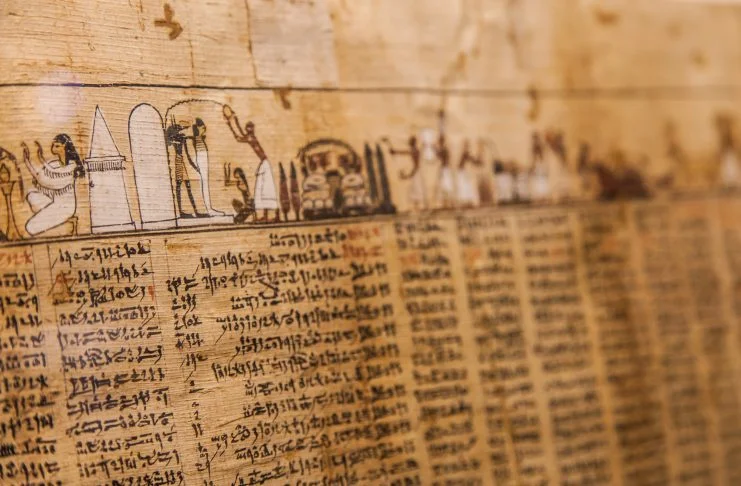
Detail of ancient Book of the Dead (1070 BC), Thebes – Egypt – Image Credit : Paolo Gallo
 

The corpus is attested for a very long span of time, from the beginning of the New Kingdom (1500 BC) to the Greco-Roman period (332 BC – AD 380). The objects where Book of the Dead spells and vignettes (illustrations) occur are part of the funerary equipment used for the burial rituals: papyri first of all, mummy bandages, linen, coffins, stelas, amulets, canopic boxes (used to keep the soft interiors of the body before mummification) and statuettes; selections of Book of the Dead spells occur also on tomb and temple walls.

Who created these Books and for whom? Was there much freedom in creating them?

The ancient Egyptian theologians and priests composed the spells, which derived from the tradition of magical spells for the dead, which started with the Pyramid Texts. They are therefore traditional texts but there was freedom to re-arrange and to produce new variants of the earlier spells.

There are thousands of extant Books of the Dead. What's papyrus? Why did the Books of the Dead last, sometimes in excellent vivid condition?  

Papyrus is a plant that grew in Egypt and was used to make a particular kind of paper that the ancient Egyptian scribes used to write down all sorts of documents. The Book of the Dead papyri were kept in the tomb with the mummified body of the dead and therefore many of them have been preserved in good conditions until the tombs and coffins were open and the papyri brought to the museums around the world.

In contrast to other ancient peoples, the Egyptians seem to have had a good life, plus the afterlife was an ideal reflection of life on earth. Can we assume that life was good, or is that tinged with propaganda? And were the Egyptians obsessed with death?

The ancient Egyptians had a good life according to the social class they belonged to. Even what we call today "slaves" could become free if they were acting well and respected the Pharaoh's laws or if they could show particular skills. They were also obsessed with death in the sense that they believed death was a new beginning and therefore they had to prepare for the journey in the netherworld.

The Egyptians understood that no one returns from the dead. But they strongly believed in the afterlife. So, the ideal was that the person was mummified and the Book of the Dead, in some form or another, was included in the tomb? How were these images, spells and amulets included in the tomb?

Yes, the Book of the Dead had to protect the body and spiritual parts of the dead. The spells and the accompanying images (vignettes) were copied down on papyrus, on the tomb walls, on the coffins as well as on other magical objects that accompanied the dead in the afterlife.

What would the deceased have to say or do to reach the afterlife? Were there many gateways and dangers? Who helped the deceased?   

He had to repeat the magical words of the spells, address the divine and demonic inhabitants of the netherworld and know their names and how they look like, in order to go through the many gates of the netherworlds. Some of the deities also helped the deceased.

My understanding is that there are different ways to dwell in the afterlife. The soul (as in Ba and Ka) joined the pharaohs in the firmament? Was it also true that one resided west in the Field of Rushes? And could the person's spirit also reside somehow in tomb or statue?  

The mummified body (of the Pharaoh but also of non-royal persons) remained in the tomb, the ba could go in and out of the tomb, the Ka was receiving the offering as a sort of vital force of the deaceased, while the Akh was the transfigured spirit of the dead, after the judgment and living with the gods. The "West" is traditionally seen as the Realm of the Dead (cemeteries were on the west bank of the Nile") so the Field of Rushes may be referred to be in the West (Imenet), while the Westerners (Imentyw) were the dead people.

Who are the main gods & goddesses involved in the journey to the netherworld and the netherworld itself?

Osiris, Anubis, Thot, Horus, Ra but ideally all the gods were part of it.

In "Demonology During the Late Pharaonic and Greco-Roman Periods in Egypt," you wrote that "all supernatural beings in Egypt, whether of the 'demon' or 'god' category, could function both benevolently and malevolently towards people (and each other)?" That's fascinating stuff – can you explain the help and hurt potential here for humans?

If the dead or the living knew how to deal with demonic creatures as well as with the deities, they did not have to fear them – this was the magical knowledge of spells and rituals. Sometimes gods and demons would turn malevolent when they had to inflict a punishment towards humankind, as in the myth of the Destruction of Humankind.

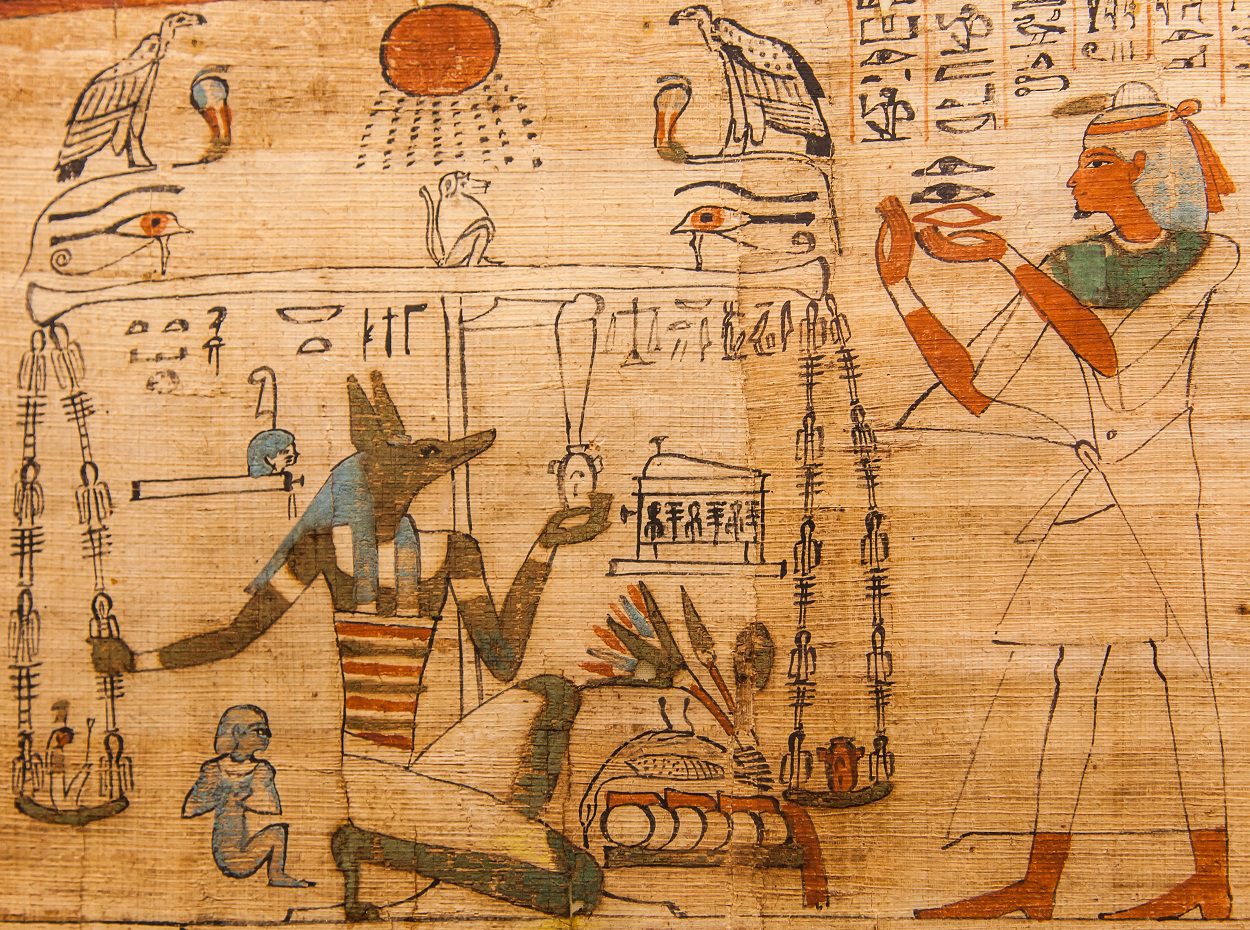
The heart weighed against a feather representing maat opens up a world of questions. Was this like a court case that one had to prove? What happened if one failed? Eaten up?

Yes, it reflects the earthly tribunal with the recitation of the negative confession, when the deceased had to prove his/her innocence. In theory, if it failed, Amemet (the devourer of the dead) will devour the deceased.

Did the person have to have a virtuous life and not been sacrilegious and that kind of thing? What if, like all of us, the person had things to hide? What if your heart spoke out of turn?

Then you will be condemned to pain and punishment in the netherworlds, in a sort of Egyptian Hell represented in the so-called Books of the Netherworld, like the Book of Gates and the Book of the Earth.

Is the Book sort of a reminder for the deceased in case things go wrong? Was the journey the same for rich or poor? I'm thinking — democracy of death? And did the Book serve like the selling of indulgences that the Catholic Church used to do?

The Book of the Dead was a collection of magical spells and only the elite could afford it but also the non-elite believed in the same kind of divine justice, and they were having less rich funerary equipment and shorter papyri, if they could even afford one. I would not compare it to anything in the Catholic Church though, which is based on a different ideology and monotheistic religion.

When and why did the book lose its importance?

Only when the ancient Egyptian civilization disappeared, at the end of the Roman period when the Christians (Copts) arrived in Egypt and destroyed the productions of the indigenous religion.

What are some of the greatest examples of the Egyptian Book of the Dead? What about that famous one that E. A. Wallis Budge bought from a dealer in Egypt?  

The Book of the Dead of Ani (bought by Budge) is certainly a masterpiece, we have many other beautifully illustrated papyri like the Book of the Dead of Kha from Deir el Medina (now in Turin) and the very long papyrus Greenfield (in the British Museum 40 meters long)

Did the Book of the Dead influence later religions in the Middle East, as in Judaism, Christianity, and Islam?

It inspired the imagery of the afterlife in other religions, especially the depictions of hell, but not the beliefs of monotheistic religions whose idea of salvation is very different.

Interview by Richard Marranca from Montclair State University

Header Image Credit : Shutterstock

--   Sent from my Linux system.

Friday, June 3, 2022

Half-mummy confuses Egyptian archaeologists - Al-Monitor: The Pulse of the Middle East

https://www.al-monitor.com/originals/2022/05/half-mummy-confuses-egyptian-archaeologists

Half-mummy confuses Egyptian archaeologists

The mummy, uncovered in the necropolis in the Al-Asasif area in Luxor, has mystified archaeologists.
Egypt mummy

The half-mummy discovered in the tomb of Karabaskin in the Al-Asasif area in Luxor (southern Egypt) in 2014, is still a mystery that archaeologists are seeking to solve.

According to a report published by Al-Sharq al-Awsat newspaper, May 23, the US mission operating in the Al-Asasif area discovered inside the cemetery a mummy consisting of only the upper half of the body of a young man truncated at the waist.

The newspaper quoted the mission as saying that all the cemetery's contents were damaged due to frequent floods. Three coffins were found, including the truncated half-man mummy. The expetidion plans to announce results of its study in January 2024.

The US-Egyptian mission had begun its work in ​​Al-Asasif  in 2006. It succeeded in clearing, restoring, and reconstructing the tombs of Karabasken (TT 391), Karakhamun (TT 223) and Irtieru (TT 390), on the West Bank of Luxor.

It also uncovered thousands of fragments of the collapsed decoration of the tombs, and reconstructed the second pillared hall and part of the first pillared hall in the Karakhamun necropolis.

Bassam al-Shammaa, a researcher in Egyptology, told Al-Monitor "The tombs and cemeteries of the Al-Asasif area are known for their beautiful surprises and their magnificent inscriptions that can compete with the Valley of the Kings and Queens."

According to the website of the Egyptian Ministry of Tourism and Antiquities, the archaeological Al-Asasif necropolis is located on the west bank of the Nile River on the road leading to Deir el-Bahari in Luxor, southern Egypt. The tombs are from the 18th, 25th and 26th dynasties, covering the period from 1550 to 525 BC.

The half-mummy might have been violated and looted by thieves, Shammaa explained. The second possibility is "that the man was eaten by a hippopotamus, crocodile or lion during a hunting trip.  … Numerous accidents of this kind occurred in ancient Egypt, according to Pharaonic literature."

The third scenario, he said, could be that the lower part of the body was lost in battle, but he thinks the wild-animal explanation is most likely. He urged the US team of the mission, headed by researcher Elena Pischikova, to quickly release the results of the study, "especially since it was discovered eight years ago."

Pischikova did not respont to Al-Monitor's request for comment on the mystery.

Hussein Abdel Basir, director of the Antiquities Museum at Bibliotheca Alexandrina, told Al-Monitor, "This mummy is a unique case." He agreed with Shammaa, saying, "I think the mummified man was a military man and he lost the lower part of his body in a fight or it was eaten by a lion or a hippopotamus. He was being honored by being buried in this tomb."

But a specific scientific explanation requires lengthy studies, he said, and "the archaeological team is looking at the family tree of this mummy, with DNA analysis or CT scans."

In September 2019, Pischikova  and the Egyptian Minister of Antiquities Khaled El-Anany, inaugurated an archaeological exhibition, "South Asasif Necropolis: Journey Through Time," to showcase the findings of the mission's work,

Abdel Rahim Rihan, director general of the Department of Research, Archaeological Studies and Academic Publication in South Sinai at the Ministry of Tourism and Antiquities, told Al-Monitor, "The archaeological discoveries in Luxor during the past eight years, including the al-Asasif cache of 30 coffins in 2019, brought it back to life."

--   Sent from my Linux system.
Egyptian Antiquities Seized in Connection to Smuggling Ring - PAPER

https://www.papermag.com/the-met-looted-antiques-2657444244.html?rebelltitem=2#rebelltitem2

The Met Forks Over More Looted Ancient Egyptian        Artifacts

As if a climate activist disguised as an old lady attempting to smear cake all over the Mona Lisa wasn't bad enough, the art world now has to cope with the news that a former president and director of the Louvre has been indicted in relation to an antiquities smuggling investigation.

According to Art News, five Egyptian artifacts collectively worth over $3 million have been seized from the Metropolitan Museum of Art by the New York District Attorney's Office as a part of a much larger investigation into the former president and director of the Louvre, Jean-Luc Martinez. Per the warrant, the antiques were seized as evidence of "crimes of criminal possession of stolen property" and "conspiracy to commit the same crimes."

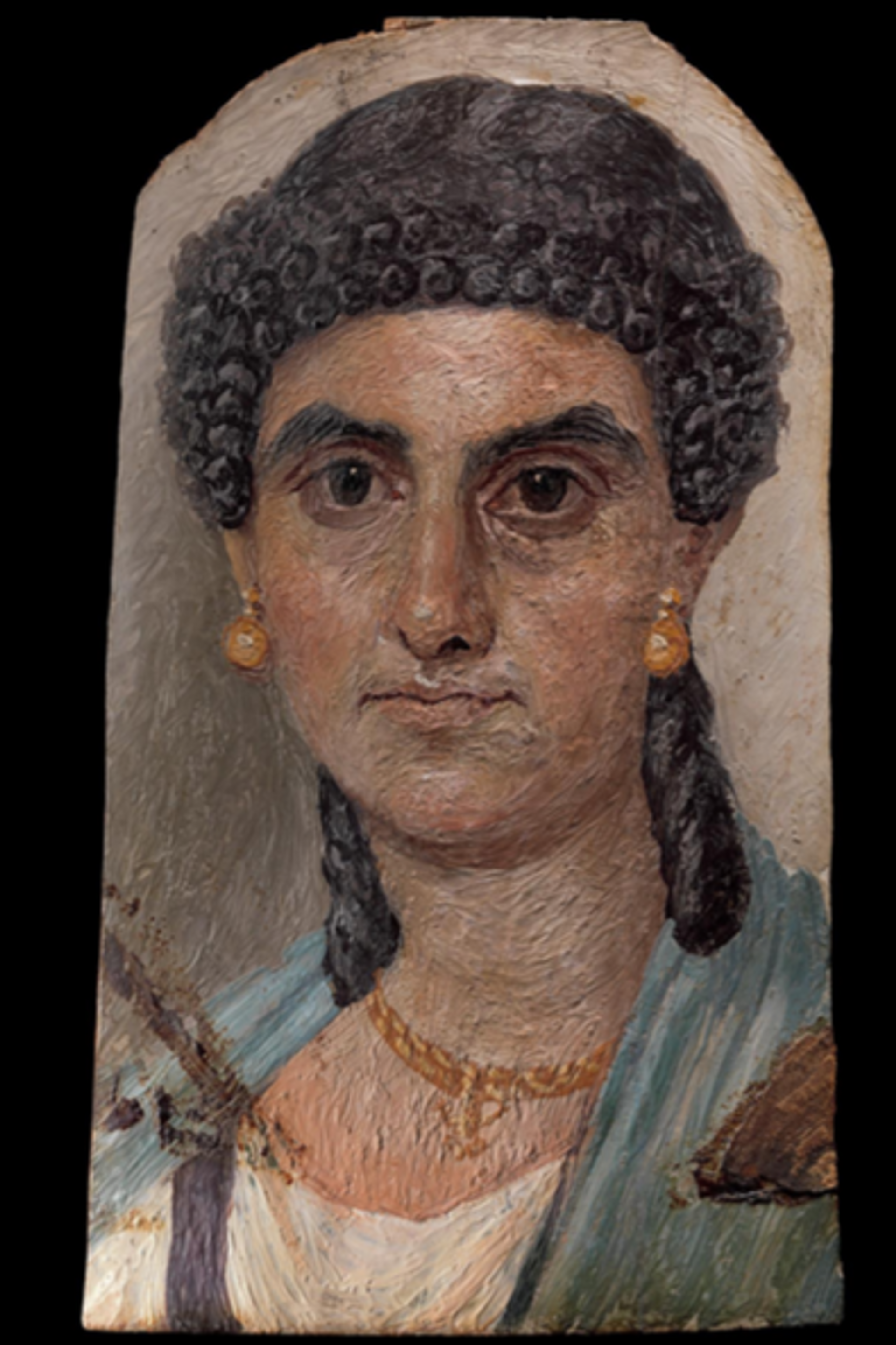
Among the objects were a Sarcophagus mask, a Fayum portrait, which is a painting that was placed over mummies during the Roman occupation of Egypt dating back to 60 BCE and fragments from a wall hanging from the 4th or 5th century CE that are considered to be the oldest known representation of the Book of Exodus.

Four of the pieces came to the Met by way of German-Lebanese dealer, Roben Dib, who's currently awaiting trial in Paris on gang fraud and money laundering charges. Dib is accused of selling looted artifacts to several art institutions such as the Met and the Louvre Abu Dhabi but has publicly denied any wrongdoing.

Interestingly enough, this isn't even the first time the Met has had to contend with the provenance of an artifact they obtained from Dib. In 2019, the Met had to return an ornate golden sarcophagus to Egypt after an investigation had determined that it had been stolen. Stranger still, one of the key pieces of the investigation was a photo Kim Kardashian took next to the fancy coffin in question at the 2018 Met Gala after a looter (who didn't end up receiving payment) tipped off the District Attorney's office about the stolen sarcophagus.

Photo via Getty/ Lorina Capitulo/ Newsday RM

--   Sent from my Linux system.
Wednesday, June 1, 2022

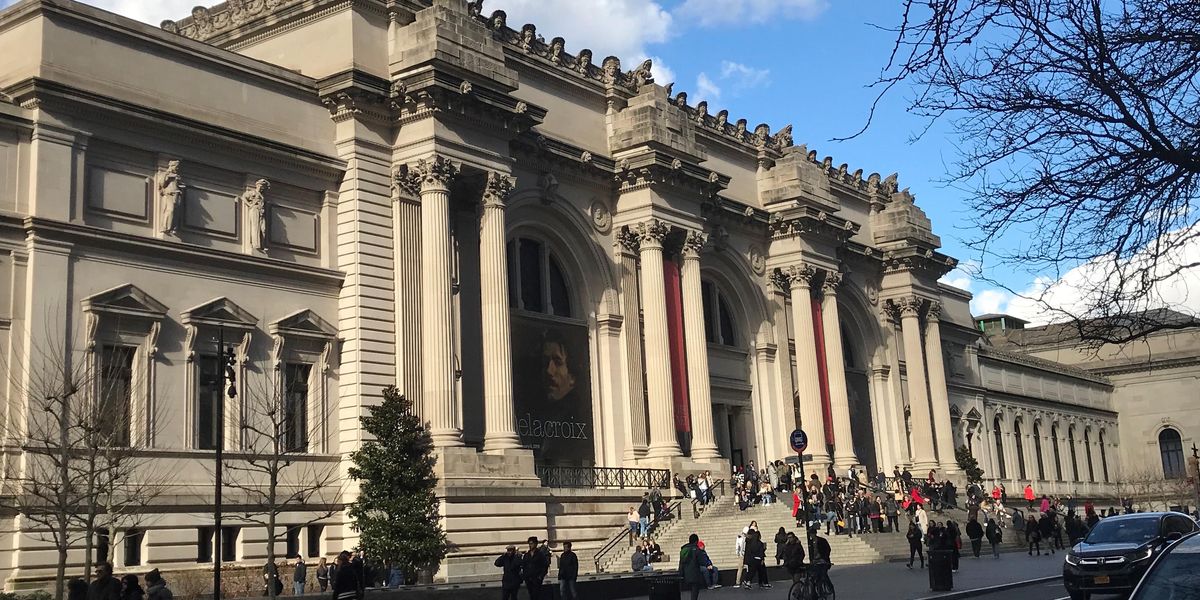
Egyptian antiquities connected to international trafficking ring seized from Metropolitan Museum in New York


https://www.theartnewspaper.com/2022/06/01/egyptian-antiquities-connected-to-international-trafficking-ring-seized-at-metropolitan-museum-in-new-york

Egyptian antiquities connected to international trafficking ring seized from Metropolitan Museum in New York

Three years after the seizure at the Metropolitan Museum of Art in New York of a €3.5m golden sarcophagus, now restituted to Egypt, five more Egyptian antiques, worth more than €3m, have been confiscated from the museum by the New York District Attorney's Office.

The seizure is the latest development in the investigation into an international trafficking ring that led to a series of indictements last week in Paris, including against the former director of the Louvre, Jean-Luc Martinez.

The DA's office confirmed to The Art Newspaper that a warrant signed on 19 May by a Supreme Court judge has been executed. The warrant says that the five artefacts constitute evidence tending "to demonstrate the crimes of criminal possession of stolen property" and "conspiracy to commit the same crimes".

Four of these pieces were listed by The Art Newspaper as coming from Roben Dib, the German-Lebanese dealer suspected to be the key figure in the trafficking ring. He is now detained in Paris and denies any wrongdoing.

The Met has been questioned multiple times since 2019 about the fate of these items, and if it would consider their return to Egypt; the museum has always declined to answer. But, after this week's seizure, a spokesperson reaffirmed "its employees were deceived by this criminal conspiracy and the museum has been fully cooperative throughout this investigation and will continue to be so".

Two of these objects are exceptional. A Fayum portrait of a lady in a blue coat, dating from Nero's reign, was considered the jewel of the funerary Egyptian portraits' collection of the museum. And five fragments of a wall hanging illustrating the Book of Exodus painted on linen, from the 4th or 5th century, constitute one of the oldest representations of the crossing of the Red Sea. Fewer than 10 similar antique decoration fragments are registered in museums like the Met or the Louvre.

Both items were sold through Pierre Bergé auction house in Paris, where one of the investigation's main suspects, Christophe Kunicki, was working as expert. In the catalogues of these antiquities, Kunicki gave "a European collection" as sole provenance. The investigators believe it to be the Simonian collection, coming from three brothers of Armenian descent, Simon, Hagop and Serop Simonian, for whom Roben Dib was working. In his report in 2019 on the golden sarcophagus purchased directly by the Met from Kunicki, the chief of the Antiquities trafficking unit of the DA's office, Matthew Bogdanos, had already pointed out serious flaws in the provenance research by the Egyptian department of the Met.

Between 2013 and 2015, along with the Fayum portrait (worth €1.5m) and the fragments from the Book of Exodus (worth €1.3m), the Met also bought a limestone stele in the model of a chapel dedicated to Kemes, patron of the musicians, from the 13th Dynasty (around 1770 BC), for €250,000, and a 26th dynasty (around 650 BC) stele representing a singer in front of an offerings table with offerings to the god Hathor for €80,000. They were seized at the museum along with a sarcophagus mask, valued by the DA's office at $6,500 (€6,000), which was sold by a Dutch company acting on behalf of Dib, according to a source close to the investigation.

The DA's office did not comment on the motives for its action, but, according to documents seen in Paris by The Art Newspaper, all these pieces were put on sale by Dib, in one case under the name of his mother. They were seized at the museum along a sarcophagus mask, valued by the DA's office at $6,500 (€6,000).

The paintings of the exodus and the Fayum portrait were by far the most valuable pieces on a list of 29 Eastern archeological pieces, sold between 2007 and 2019 and investigated in Paris by the Office against Art Trafficking (OCBC). Fourteen were put on sale by Dib, in four cases under the name of his mother or his sister. One of them was a stele, from the Simonian's collection, representing a high priest in front of an offering table, which was seized in New York on its way to The European Fine Art and Antiques Fair (Tefaf) and returned to Egypt in 2020.

A French officer from the OCBC has arrived in New York to hear evidence from several witnesses, including representatives of the Metropolitan, and exchange information with Bogdanos, who initiated the trafficking investigation in 2013.


--   Sent from my Linux system.