Search This Blog

Monday, December 5, 2022

Tomb with Greek Mummy Unearthed in Aswan, Egypt
https://greekreporter.com/2022/12/04/greek-mummy-aswan-egypt/

Tomb with Greek Mummy Unearthed in Aswan, Egypt

Tomb with Greek Mummy Unearthed in Aswan, Egypt
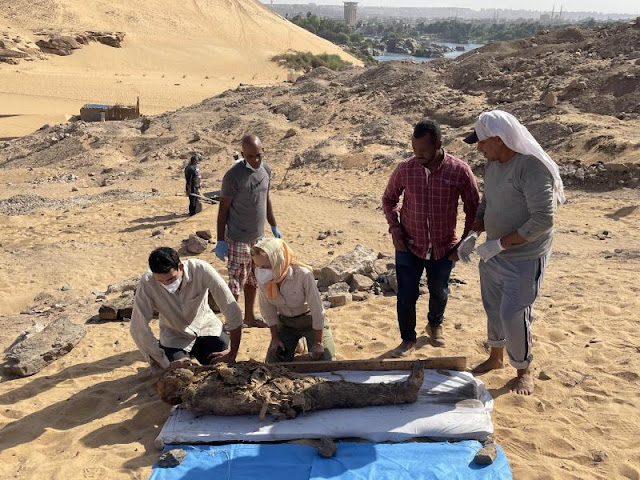
A mummy recently found in Aswan, Egypt had a plaque with his name — Nikostratos — engraved upon it in Greek. Credit: Egyptian-Italian Mission, West Aswan

A Greco-Roman-era tomb with a Greek mummy was unearthed recently in Aswan, Egypt. And in an extremely unusual discovery, the archaeologists found a copper plaque with the man's name — Nikostratos — near his body.

The amazing find was made as part of excavations undertaken by the Egyptian-Italian Mission at West Aswan, in the area of the Aga Khan Mausoleum, as reported by the University of Milan on Monday.

Although the tomb complex had been raided in antiquity, the mummy of the Greek man was intact, with grave goods such as elaborate pottery found with the body. An altar for sacrifices was found at the entrance of the tomb, which contained a total of 20 mummies.

Mummy tomb
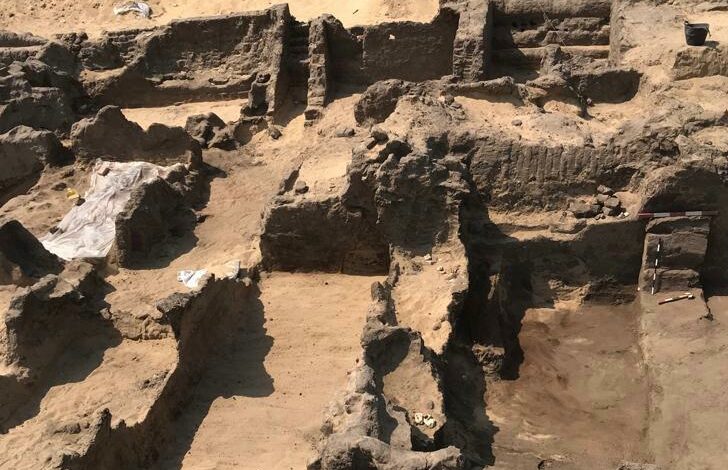
The Interior of the tomb found Aswan, Egypt by the Egyptian-Italian team of archaeologists. Credit: Egyptian-Italian Mission West Aswan

Greek man Nikostratos had been buried with copper necklace with name  on it

The tomb, which the archaeologists say in an announcement was "very large," is part of the Aga Kham Mausoleum complex but had been previously unknown to historians.

The archaeological mission that took place in 2021 was directed by Patrizia Piacentini, Professor of Egyptology and Egyptian Archaeology at the State University of Milan, and Abdelmoneim Said, the Director General of Aswan and Nubia Antiquities (SCA).

The incredible discovery was made during the digs that took place between May and October of 2021.
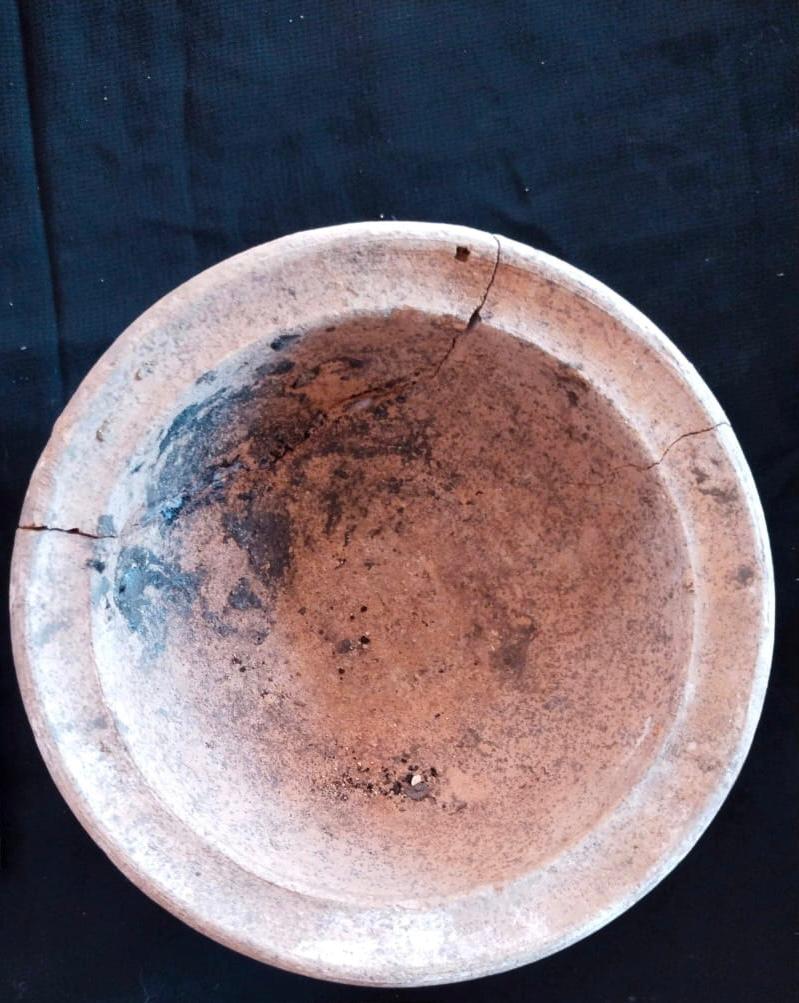
Bowl tomb Aswan
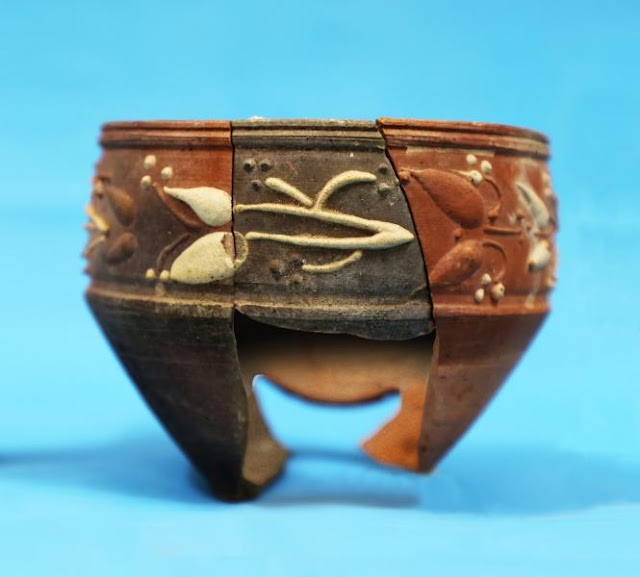
A heavily-decorated bowl that was part of the funerary goods found in the tomb in Aswan. Credit: Egyptian-Italian Mission West Aswan

Greek mummy, funeral goods, altar found in new tomb complex in Egypt

The joint Italian-Egyptian team has been working since 2019 in the area surrounding the Mausoleum of the Aga Khan, on the western shore of the Nile at Aswan, where there are more than 300 tombs dating from the sixth century BC to the fourth century AD.

This encompasses the Ptolemaic era of Egyptian history, when the Egyptian royals intermarried with the Greek Ptolemies, the rulers who took over parts of Alexander the Great's conquered lands.

Archaeologists found the mummy of a man adjacent to the east wall of the structure; next to it, they discovered a copper necklace with an engraved plaque in Greek with his name, "Nikostratos." They believe that his body had originally been in the tomb that had been uncovered soon afterward under the rectangular structure and later taken out by looters in ancient times.
Altar table
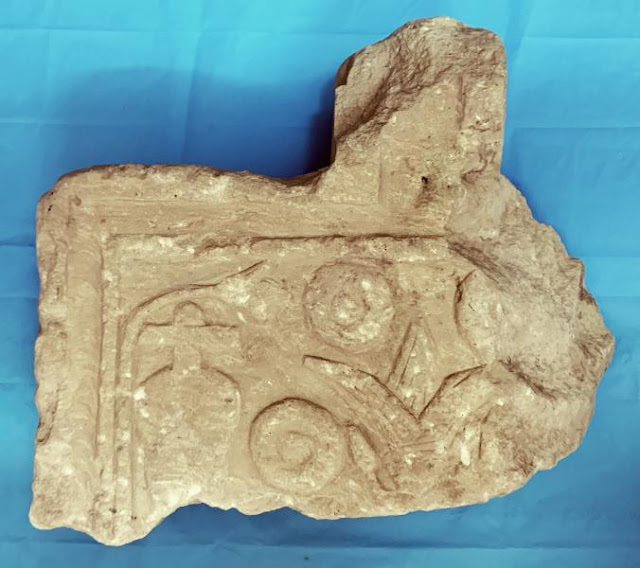
Part of an altar, or table for offerings, that was found at the entrance of the tomb complex. Credit: Egyptian-Italian Mission West Aswan

Unique "rectangular structure" protected tomb of Greek mummy in Egypt for many centuries

Their latest find is a large tomb (designated AGH032) dating from the Greco-Roman period, was hidden by a well-preserved rectangular structure that shows important traces of a mysterious fire that the archaeologists believe also affected the burial site.

A large pile containing animal bones (mainly those of sheep), as well as pottery shards, offering plates and slabs inscribed in hieroglyphics covered the east wall of the structure, suggesting its use as a votive site, the archaeologists state in their report, which was released by the University of Milan.

The archaeologists declared that this is the first structure of its kind found in the Aga Khan necropolis.
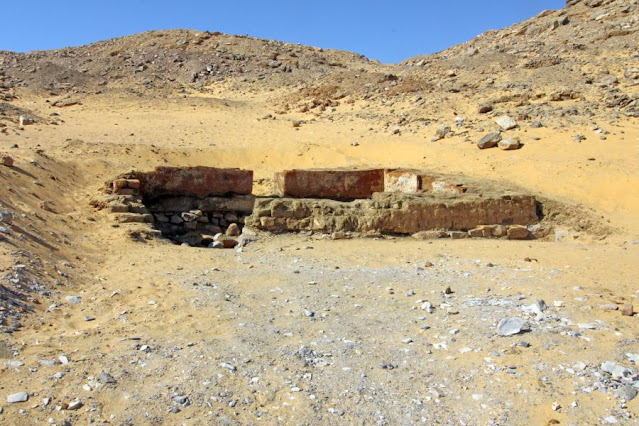
Greek mummy tomb complex
The previously-unknown tomb where the Greek mummy was found is part of the Aga Khan Mausoleum complex. Credit: Egyptian-Italian Mission West Aswan

Mummy's wrappings slashed by grave robbers in antiquity; knife found at scene

A staircase partially flanked by carved blocks and covered by a mud-brick vault leads to the entrance, which was enclosed by a complex system of slabs and stone blocks above the staircase. A large offering table, or altar, was found in pieces at the entrance; hieroglyphics are still clearly visible on its surface.

A heavily-decorated bowl decorated "à la barbotine", or with ceramic slip decoration applied before firing, was found, also in fragments, in the newly-discovered tomb as part of the grave goods of the departed.

The tomb complex is comprised of a hall overlooked by four burial chambers carved deep into the bedrock. In the hall, opposite the entrance, an earthenware sarcophagus containing the mummy of a child and a beautiful cartonnage (a kind of decorated papier-mâché that covered the mummies) was discovered by the archaeologists.

Another child's mummy, found in one of the burial chambers, has been X-rayed and shows a plaque atop the chest of the deceased.

Archaeologists found the 20 mummies, some in what they called "an exceptional state of preservation," inside the four galleries carved into the rock. Others had had their wrappings and cartonnage slashed by ancient thieves; in yet another astounding discovery, the researchers found a knife amongst the mummies that they believe was used for this purpose.

Well-reserved sarcophagi still had brightly-painted colors

Some of the mummified bodies were of elderly people, as evidenced by the visible signs of arthritis in their bones; others were of women or small children, including an infant.

A radiological analysis of the head of a mummified child was performed on the site of the necropolis with a portable X-ray machine by members of the Egyptian-Italian Mission at West Aswan.

They also carried out anthropological and radiological analyses on 45 individuals that had been discovered in 2019 in the tomb called AGH026 in addition to the 20 individuals found in 2021 in tomb AGH032. (See video below).

The aim was to assess age, sex and possible diseases t he people may have suffered from.

The team discovered that in tomb AGH026, 30% of the individuals were children, from the neonatal period to an age of about 10 years. Many of the remaining bodies were female. At least three families were found, with mother, father and son buried next to each other in one case.

Analyses of the bones showed that some of the people had suffered from infectious diseases and various metabolic disorders. The femur of one adult showed clear signs of amputation, which the person must have survived since there is evidence of the bone self-repairing after the event, the archaeologists note.

Other bodies show evidence of arthrosis, which is a sign of death that had taken place in old age.

The initial survey of the area led to the discovery of several well-preserved sarcophagi, made of stone and clay, dating from the Late Pharaonic to the Roman period, with some of them still showing beautiful colors, the archaeologists say. Two sarcophagi of children and three of adults, together with parts of other sarcophagi, were collected from the site and have been secured offsite.

See all the latest news from Greece and the world at Greekreporter.com. Contact our newsroom to report an update or send your story, photos and videos. Follow GR on Google News and subscribe here to our daily email!

--   Sent from my Linux system.

Saturday, December 3, 2022

Funeral Portraits and Coffins Unearthed in Egyptian Burial site  – ARTnews.com

https://www.artnews.com/art-news/news/rare-funeral-portraits-and-coffins-unearthed-in-ancient-egyptian-burial-site-garza-1234648948/

Trove of Rare Funeral Portraits and Coffins Unearthed in Ancient Egyptian Burial Site 

Tessa Solomon

A vast funerary building dating to Ptolemaic Egypt and decorated with portraits of the long deceased was uncovered in the Garza archeological site.

Heritage Daily reports that the structure was discovered at the Garza archeological site which has been under examination since 2016. Located about 50 miles south of Cairo, it was established in the third century BCE as part of an agricultural reclamation project launched by Ptolemy II Philadelphus (309–246 BCE).

The funerary building was constructed from stone blocks and descends several floors into the ground. A ring of arched doorways lead to burial chambers, some of which contained intricately decorated wooden coffins carved with ancient Egyptian and Greek glyphs.

The most notable find, however, is a collection of well-preserved Fayum portraits. Also called mummy portraits, these detailed portrayals of the dead were painted directly on the wooden coffins beginning in Egypt's Roman period (100 BCE). The striking images ranged in style from realistic to highly stylized and have become icons of the period, with many housed in museums across the world.

This is the first significant discovery of Fayum portraits in over a century, since excavations by British archaeologist Flinders Petrie in Hawara in 1887, and German archaeologist, Von Kaufmann in 1910.

The team also found a terracotta statue with the combined traits of Isis and Aphrodite within one of the wooden coffins, along with a preserved cache of papyrus documents in both Demotic and Greek writing.

--   Sent from my Linux system.

Thursday, December 1, 2022

ARCE Virtual Public Workshop: December 5 2022


ARCE There is still time to register!
alt_text

DECEMBER 2022 Workshop


*Public Access Workshop*

December 5, 2022

2:00 PM ET/ 9:00 PM EET

Register Now

"Planning for the Academic and Non-Academic Job Markets"

with Dr. David Anderson, Dr. Julia Troche, Dr. Smiti Nathan, and Chance Coughenour

In this workshop, Dr. David Anderson will share his extensive background in the field of Cultural Resource Management. The webinar is aimed at undergraduate students,  M.A. and early-stage Ph.D. students in Egyptology, Archaeology, Anthropology, Classics, and related fields, but would also be useful to early career scholars and those considering a new career pathway. We will provide practical advice on how to represent your sometimes niche academic skills to prepare and be competitive for a career in the non-academic, academic-adjacent, and at non-R1 (research intensive) educational markets. After the panelists answer some prepared questions, there will be plenty of time for a Q&A, so please bring your questions. 

Saturday, November 26, 2022

Mummies with golden tongues discovered in Quesna - Egypt Independent

https://egyptindependent.com/mummies-with-golden-tongues-discovered-in-quesna/

Mummies with golden tongues discovered in Quesna

The Egyptian archaeological mission of the Supreme Council of Antiquities, working in the Quesna archaeological cemetery in Monufiya Governorate uncovered an extension of the archaeological Quesna cemetery.

This includes ancient tombs dating back to different periods of ancient time.

It turned out that they contain a number of mummies with golden tongues, Mustafa Waziri, Secretary-General of the Supreme Council of Antiquities, announced.

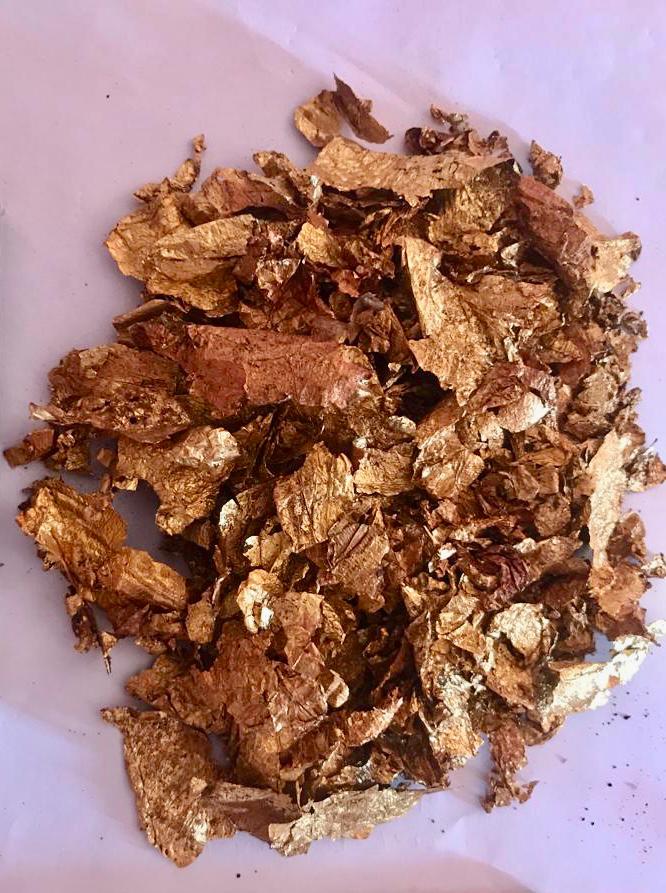
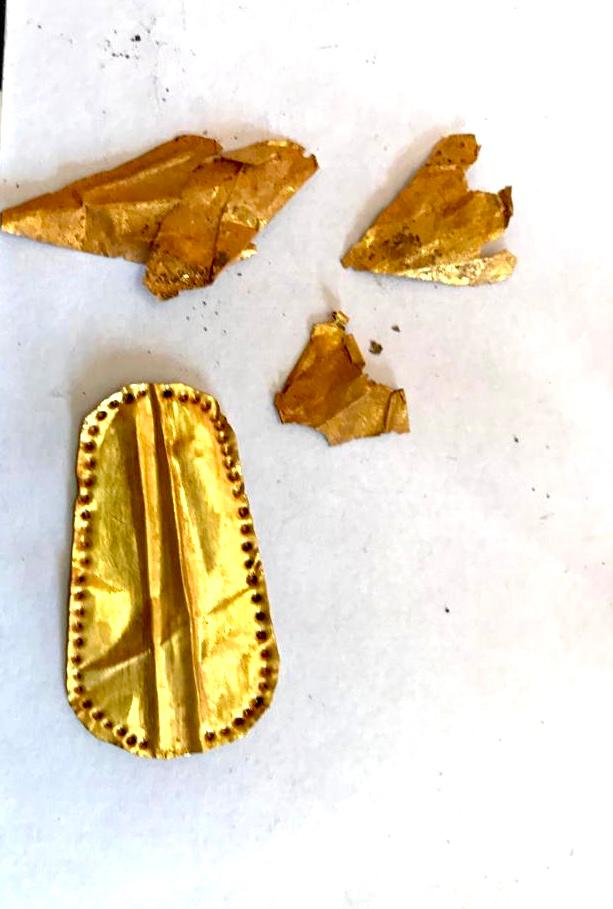
The mission also discovered a number of golden flakes in the form of human tongues in the mouth of some of the discovered mummies.

The condition of these mummies are not in a very good state but skeletons with gold linen are still in tact.

Remains of wooden coffins in human form and a number of copper nails used in those coffins were also discovered.

The cemetery is characterized by a unique architectural style. 

There are many main vaults of entry and exit points : north and south and mud bricks for the burial well.

There are three burial chambers also that coincide with the rest of the design.

He added that the excavations inside the cemetery revealed that they were used during three different time periods.

As the archaeological finds suggest the burial customs at each level of burial were found different from each other, and had different burial directions, which probably were to re-use the cemetery in the Late Period of Ancient Egypt, the Ptolemaic period, and two phases in the Roman period.

The mission also discovered a number of golden flakes in the form of scarab, lotus flower and a number of funeral amulets, stone scarabs and pottery utensils that were used in the mummification process, Qutb Fawzy, Head of the Central Department of Lower Egypt, said.

The results of the archaeological mission's work resulted in the discovery of a number of tombs and architectural units.

Some of these are human-shaped stone coffins and a huge granite sarcophagus of one of the most important priests in the city of Atrib (Banha), capital of the tenth nome of Lower Egypt, Mustafa Rizk, head of the archaeological mission and director general of the Monufiya Antiquities District, stated.

The Quesna Quarries Cemetery is a very import archaeological site in the Delta, as it is located in the Kfour al-Raml area of ​​Quesna in Monufiya Governorate.

The historical and archaeological value of the  cemetery is due to the diversity of burial methods that were used in it.

Also, there is a presence of a rare cemetery for the burial of sacred birds, and a number of architectural units that form a group of tombs built of mud bricks from the late era and the Greek and Roman eras.

--   Sent from my Linux system.

Friday, November 25, 2022

The Bookseller - Rights - Egyptologist Wilkinson’s ‘essential’ account of the Ptolemies goes to Bloomsbury

https://www.thebookseller.com/rights/egyptologist-wilkinsons-essential-account-of-the-ptolemies-goes-to-bloomsbury

--   Sent from my Linux system.
Sunday, November 20, 2022

Unlocking ancient Egyptian secrets

https://www.nst.com.my/lifestyle/sunday-vibes/2022/11/852891/unlocking-ancient-egyptian-secrets

Unlocking ancient Egyptian secrets

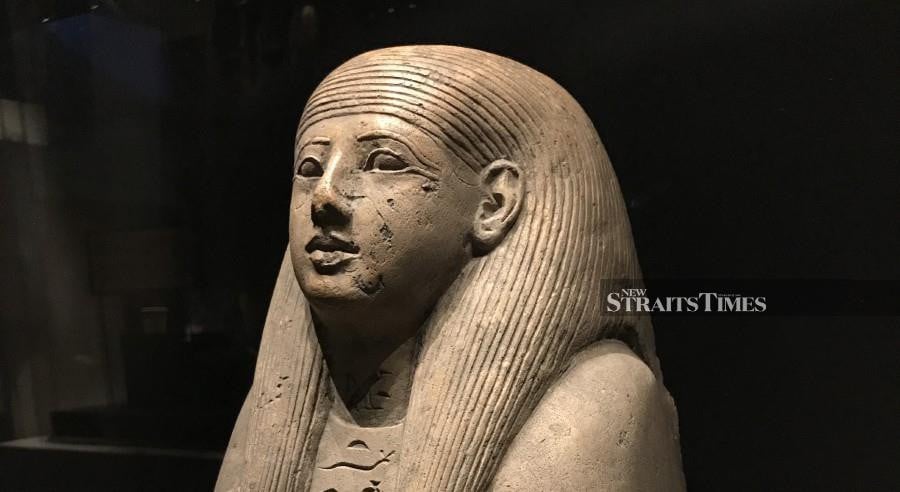
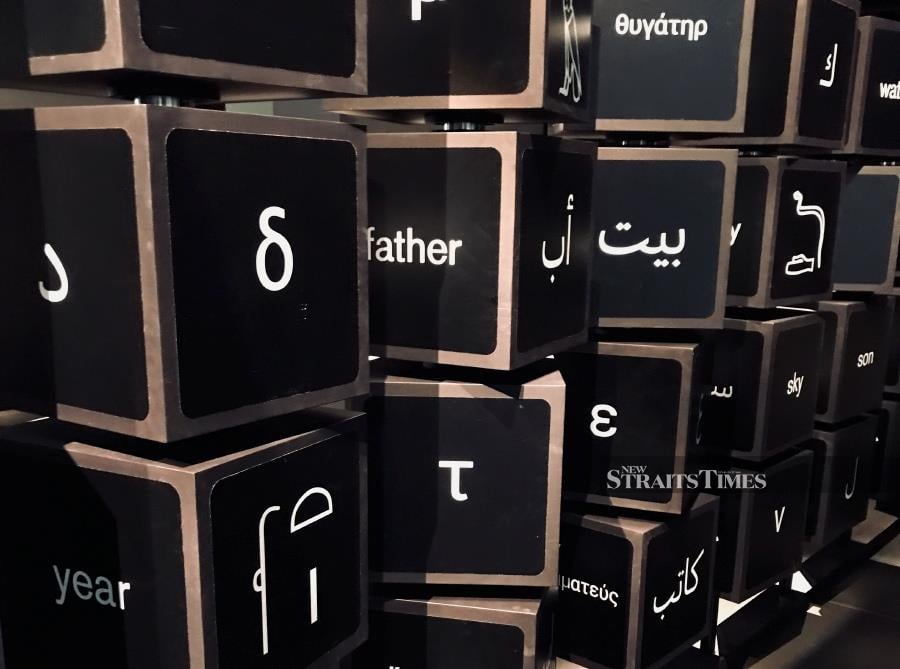
THE first thing to greet visitors to Hieroglyphs: Unlocking Ancient Egypt is reminiscent of a highly engaging Jawi lesson. Large cubes are at the ready to be flipped for a quick comparison between the sounds of ancient Egypt, Greek, English and Arabic. Hieroglyphs are not just about pictures, they turned out to be an alphabet too.

This year is the 200th anniversary of breaking the code of the Rosetta Stone. Most of the British Museum's latest exhibition is about this achievement. It might sound as dry as the Egyptian desert, but the curators have managed to generate some excitement with two scholars racing for the finish line.

 Learning cubes for visitors who want to brush up their              skills in four languages.
Learning cubes for visitors who want to brush up their skills in four languages.

If the thought of a Frenchman versus an Englishman battling it out for linguistic supremacy doesn't get the blood coursing through one's veins, there is an impressive array of background material to enliven their competitive spirit.

The stone's present location is the outcome of what some visitors might find more thrilling — endless military conflict between the two top colonisers of the 19th century and their relationship with the North Africans at the time.

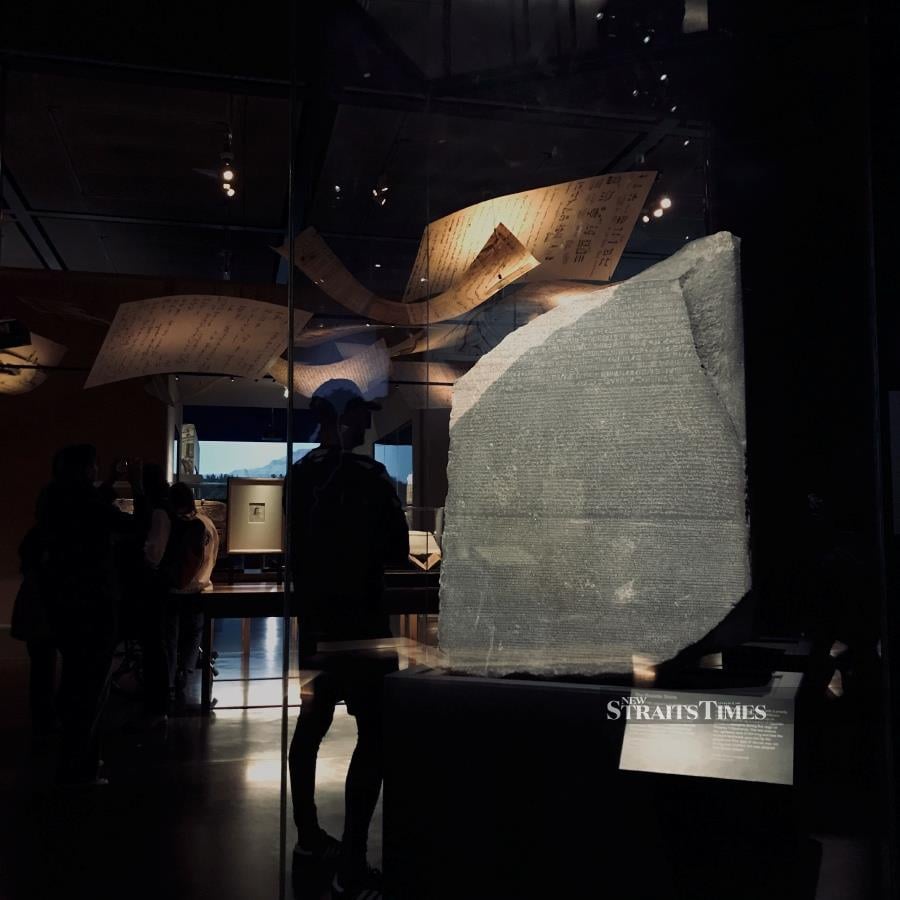
 The Rosetta Stone — more important than impressive to              look at.
The Rosetta Stone — more important than impressive to look at.

Modern Egypt has now stepped into the controversy. With cultural-restitution wars raging all around, the Egyptian archaeologist-in-chief, Zahi Hawass, recently relaunched a campaign to bring the stone home.

As Britain's flagship cultural attraction is the Rosetta Stone, it seems strange not to see this prize in its usual place of public display. The crowds are still there, gawping at empty space, while the stone is now the centrepieces of a (paid-for) exhibition.

LINK BETWEEN LANGUAGES

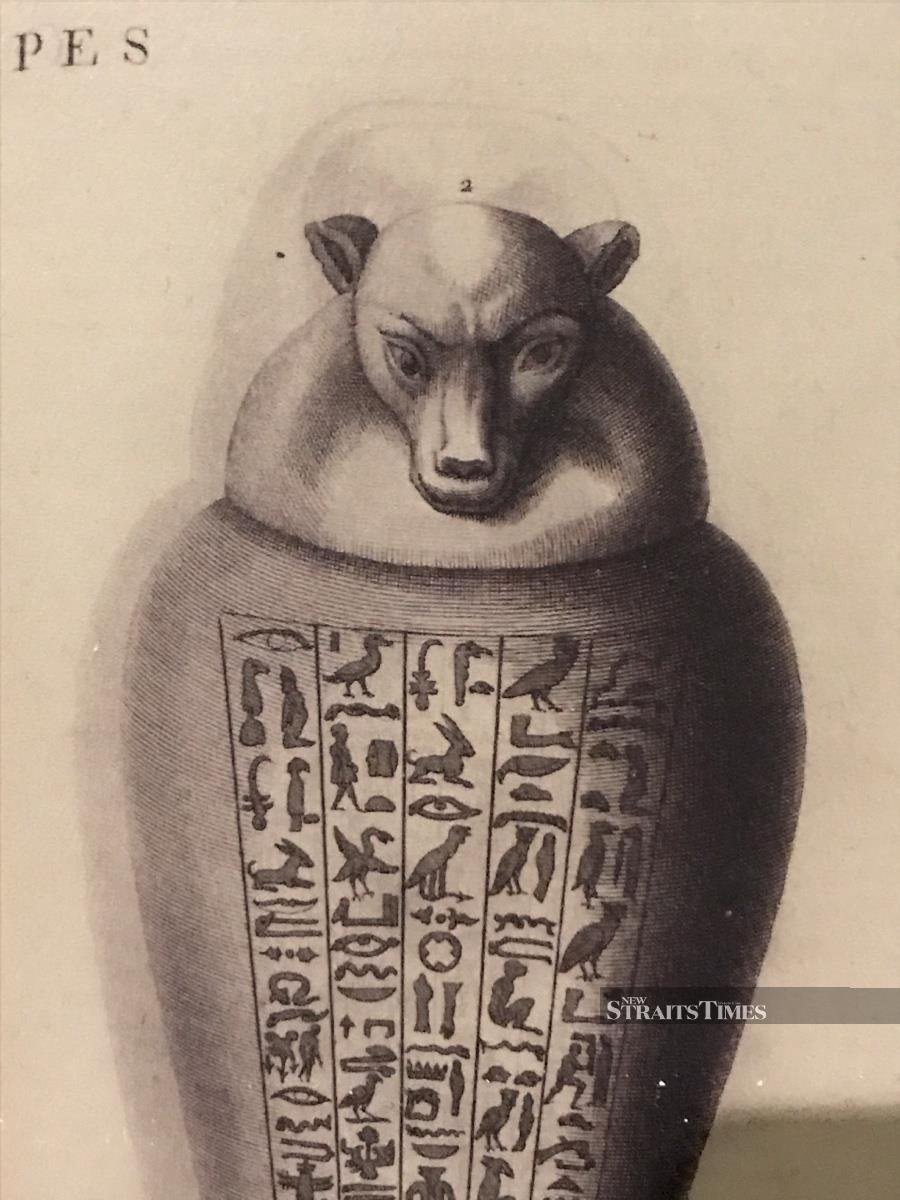
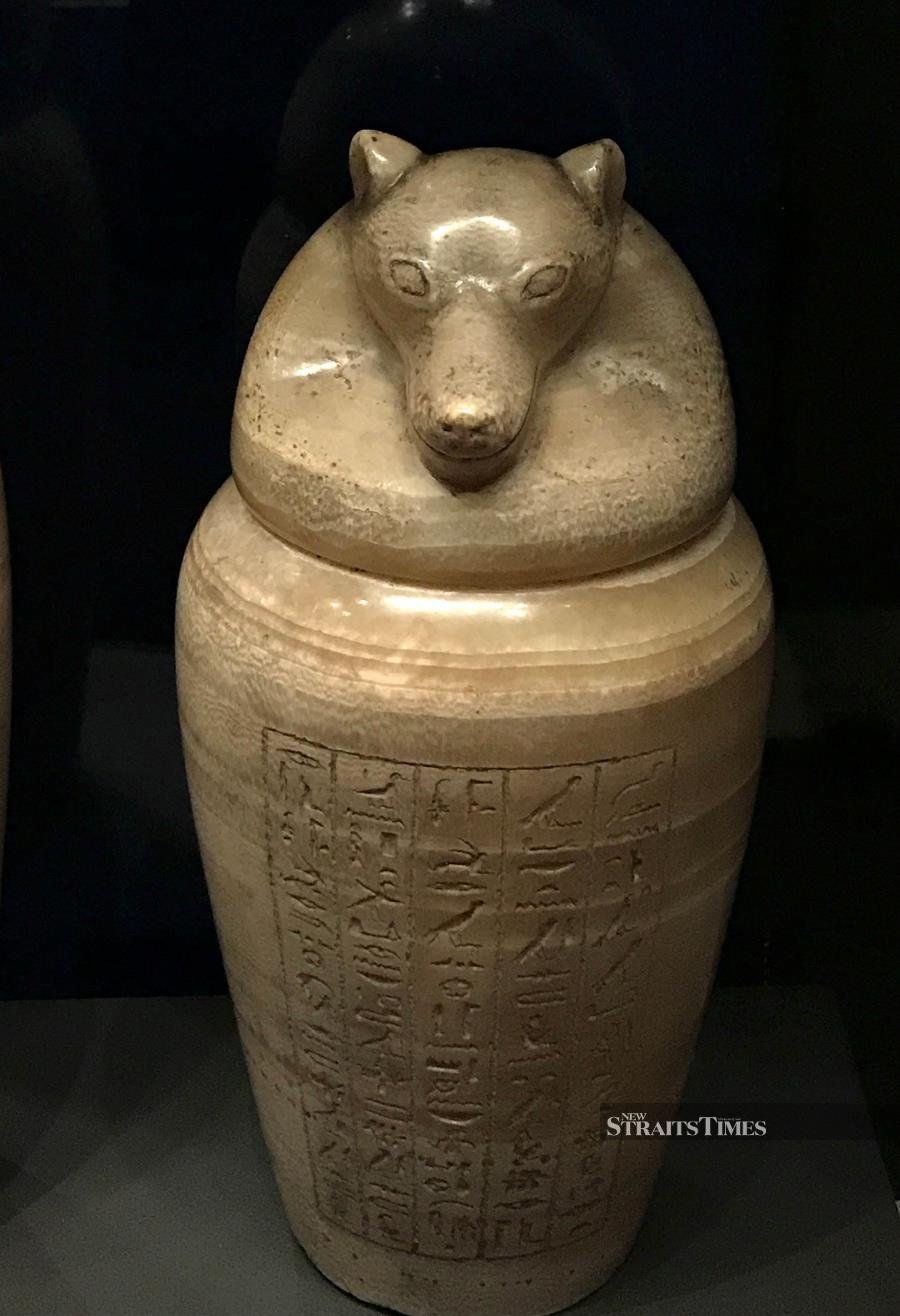
 A drawing of the canopic jar does a good job of              depicting hieroglyphs, but in 1720 there was no              translation.
A drawing of the canopic jar does a good job of depicting hieroglyphs, but in 1720 there was no translation.

The display has improved. Unlike the British Museum's permanent gallery of ancient-Egyptian wares, the exhibition space is filled with drama, superior lighting and even the sound of Coptic chanting.

This community was the link between the languages of hieroglyphs and a more comprehensible alphabet, they have not been forgotten. Nor were they overlooked in centuries past. Rome was well furnished with pharaonic souvenirs on a grand scale long before Mussolini went to Ethiopia to grab some monumental art.

 Canopic jars preserved body parts of the deceased, as              in this one for the stomach from around 2,500 years ago.
Canopic jars preserved body parts of the deceased, as in this one for the stomach from around 2,500 years ago.

One of the exhibits is an Egyptian obelisk. It's only a fragment, and the imagery is a bit fuzzy, but it's given some real context by the enlarged print next to it. On this it is recorded how Pope Pius VI had the 2,600-year-old red-granite monument moved in 1748 to the Piazza di Montecitorio from where Emperor Augustus had placed it after a long journey from Heliopolis. The obelisk is in the same square today — minus the piece that is being lent by the National Archaeological Museum of Naples.

More than a century later, a member of the infamous Borgia family took an interest in the Copts, whose culture had been overtaken by Arab Muslims around the year 640. His curiosity was aroused, as with later linguists, by the continuity of the Coptic language from what was spoken in more-ancient Egypt. It is a succession that is central to the exhibition.

Exploration of those links between antiquity and the growth of Coptic culture is, however, a lower priority than the determination of Jean-Francois Champollion and Thomas Young to break the code and release all that information stored in the form of hieroglyphs.

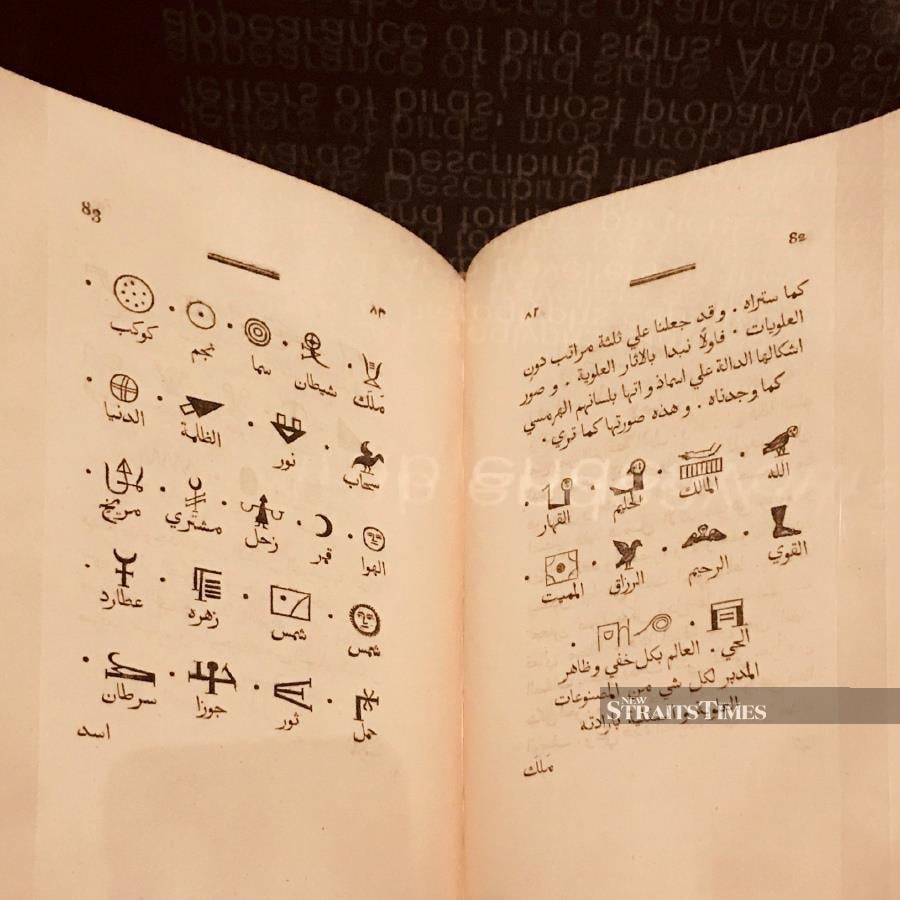
Earlier scholarship is on display too, mostly the work of Arab historians and linguists, although their descendants in the 19th century accepted that the Western interlopers had made a huge amount of progress, not just with the ancient languages, but also with Arabic.

PLENTY OF MYSTERY

 Arab scholars had made some progress with hieroglyphs              before the Rosetta Stone was discovered.
Arab scholars had made some progress with hieroglyphs before the Rosetta Stone was discovered.

Along the way, we get to see the old favourites of Egyptology. As hieroglyphs appear on almost everything, there is no shortage of sarcophagi and canopic jars. These are accompanied by a profusion of "shabti" mini-mummy figures that used to have a place in learned homes around the world. The famous Book of the Dead also puts in an appearance. It turns out to be neither a book nor even a fixed text, but in its different manifestations, it is at least about the dead.

Throughout the exhibition, there's an emphasis on prayers for the dead. Much of it will make the ancient Egyptians seem more "normal" about death than some of the mythology about them suggests.

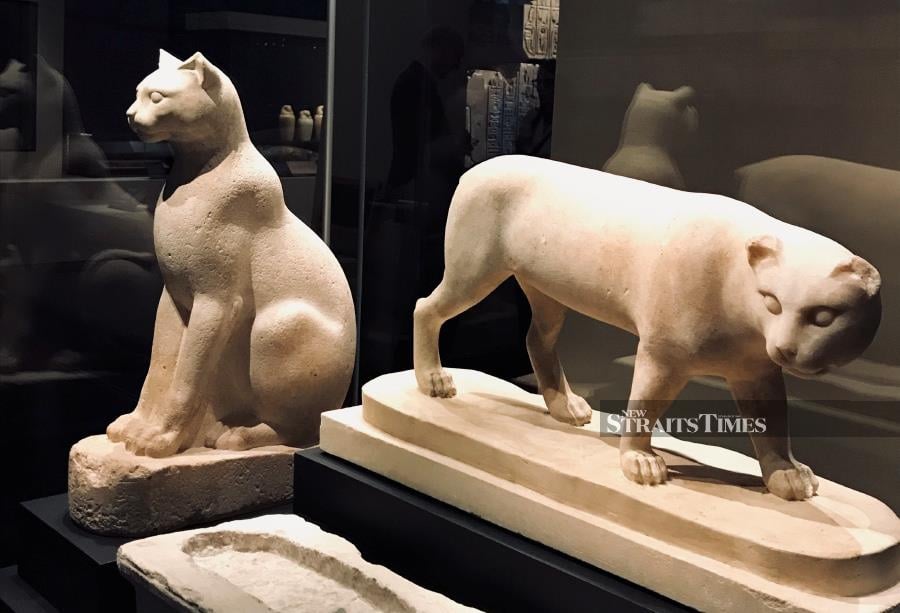
 The ancient Greeks, like the Egyptians, revered cats.
The ancient Greeks, like the Egyptians, revered cats.

Visitors looking for cat mummies will be disappointed. This is too serious a show for that, although you can still see a good selection upstairs for no entry charge. There are also some statues, probably dedicated to the cat goddess Bastet. The accompanying label reveals that cat in ancient Egyptian is "mioew".

With the Rosetta Stone decrypted, there was so much valuable information suddenly available. Two hundred years on, there's a still a lot of mystery and some assumptions that don't seem entirely credible.

One such item in the exhibition is the caption accompanying a tiny mineral figure of Isis with Horus on her lap stating that the imagery was "later adapted by Christians for the Virgin and child".

In this case, no quantity of deciphered hieroglyphs is going to get to the truth of the claim. Around the world, there are countless mother-and-child images created by societies that never knew anything about the pantheon of ancient Egypt, nor how to read hieroglyphs.


Hieroglyphs: Unlocking Ancient Egypt at the British Museum ends on Feb 19, 2023.

Follow Lucien de Guise at Instagram @crossxcultural.

--   Sent from my Linux system.
Dramatic Mirrored Orb Sits in Front of the Giza Pyramids

https://mymodernmet.com/spy-giza-installation/

Pyramids Are a Dramatic Backdrop for a Mirrored Orb Inspired by Ancient Egypt


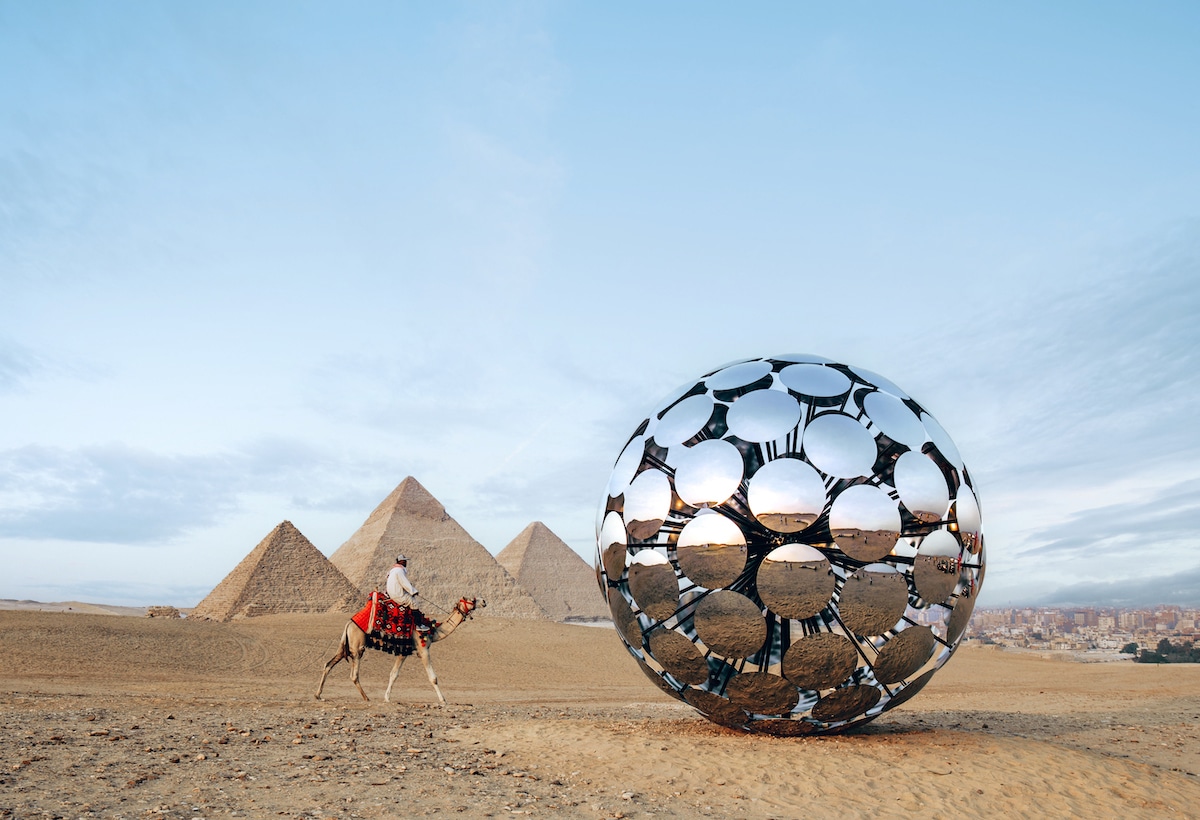
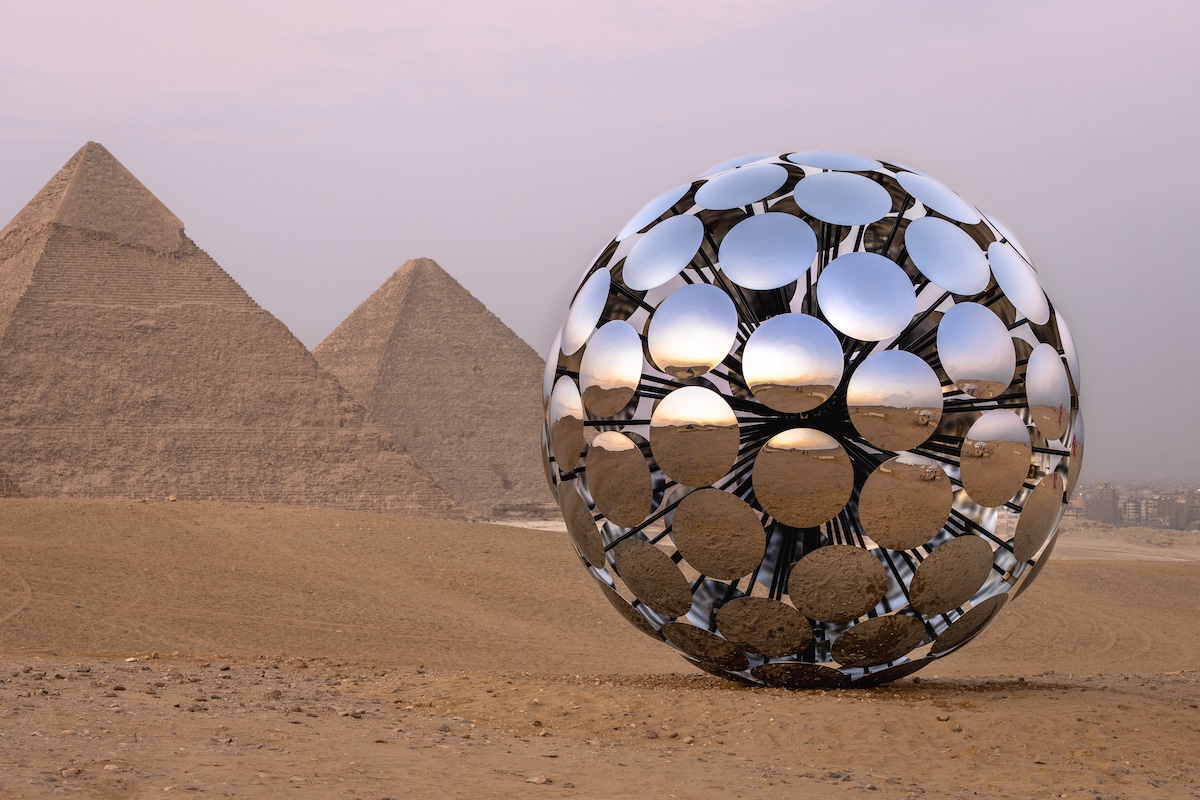
SpY Art Installation in Front of the Pyramids in Egypt

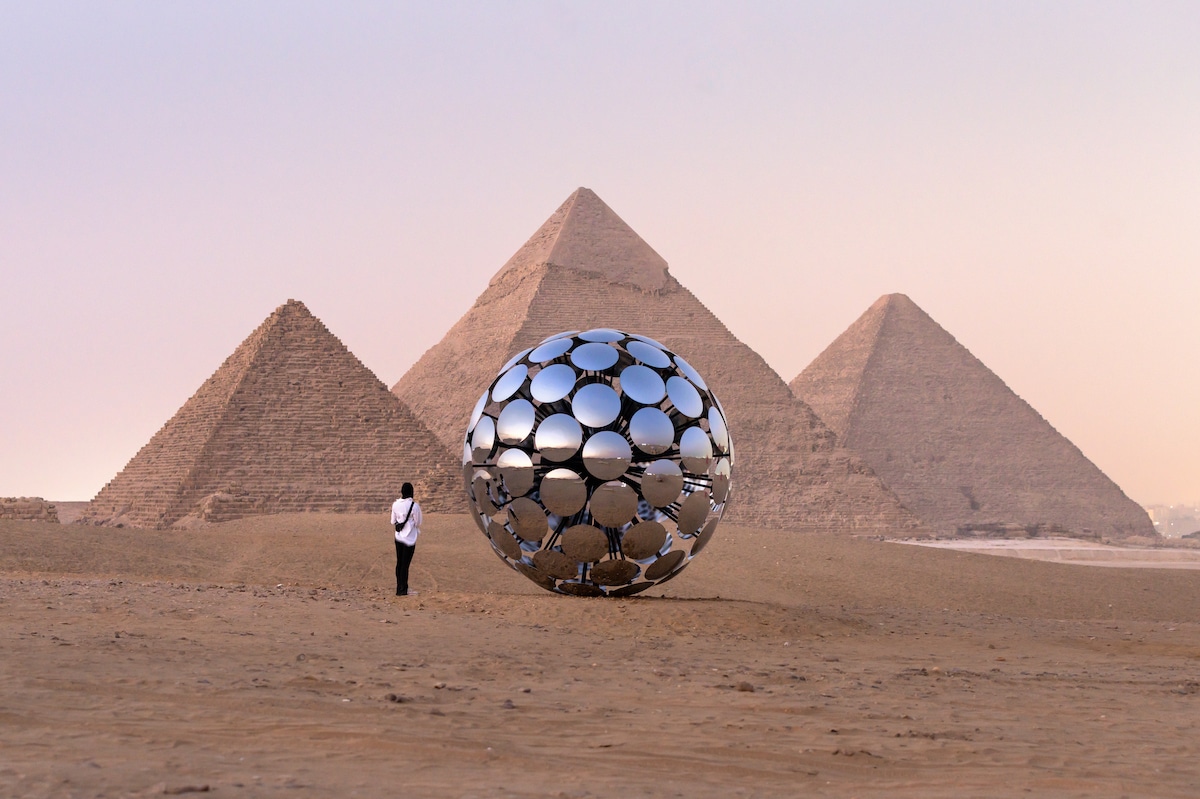
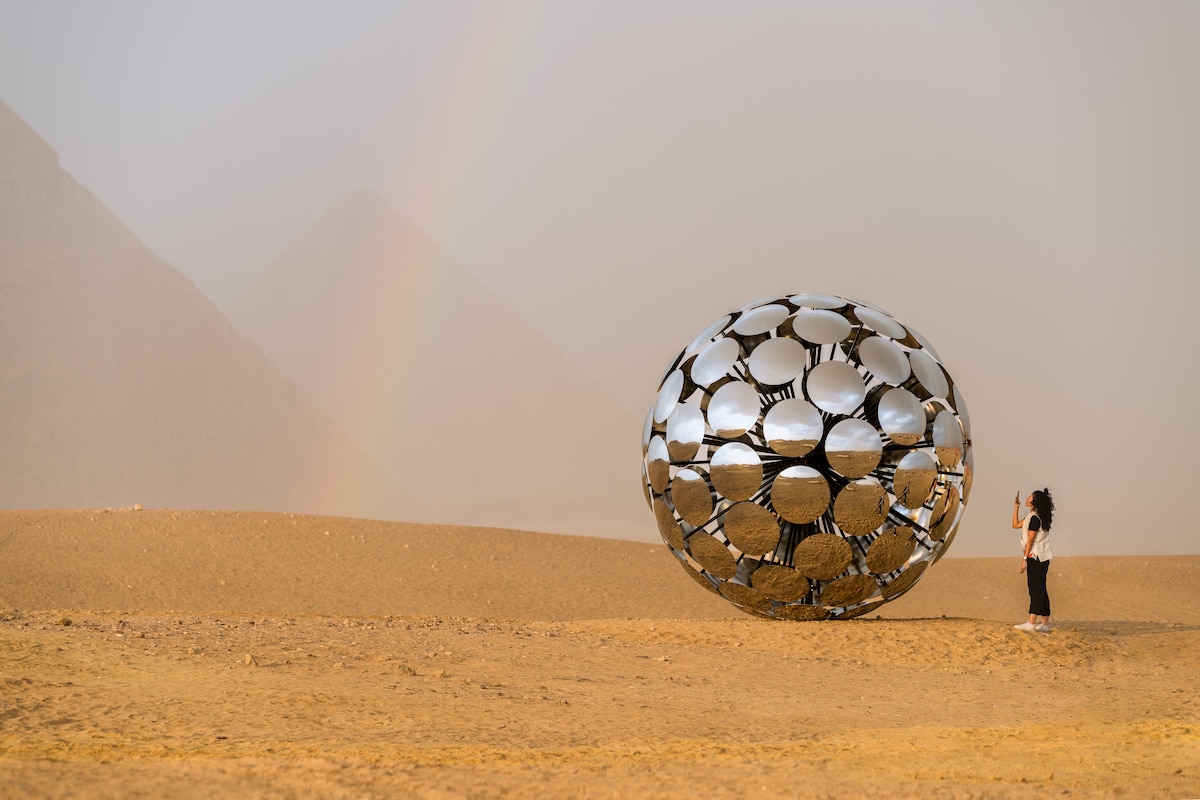
The Giza pyramids are the dramatic backdrop for a new installation by anonymous Spanish artist SpY. Inspired by Egyptian symbolism and mathematics, the piece is part of the exhibition Forever is Now II. Organized by Culturvator/Art D'Égypte, the exhibition asks artists around the world to take inspiration from Egypt's rich cultural history. In SpY's case, he looked at the logical and spiritual world of Ancient Egypt to put together his piece, ORB.

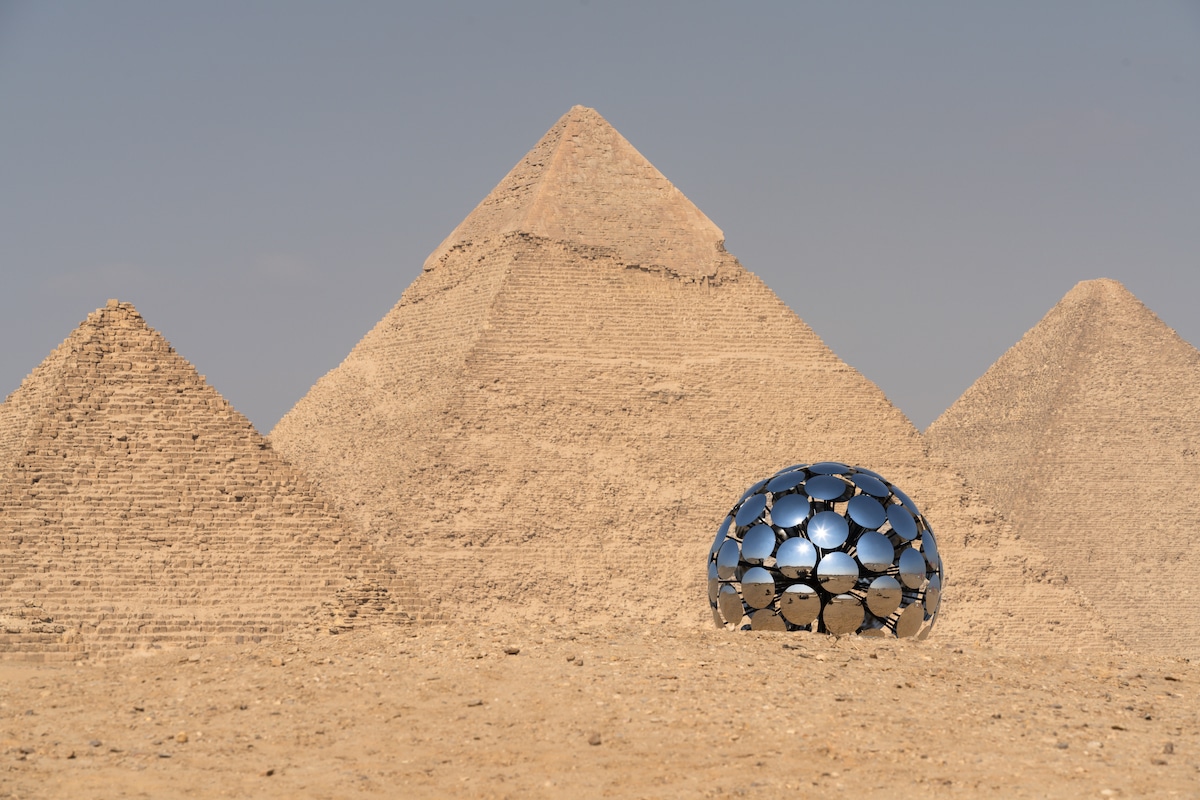
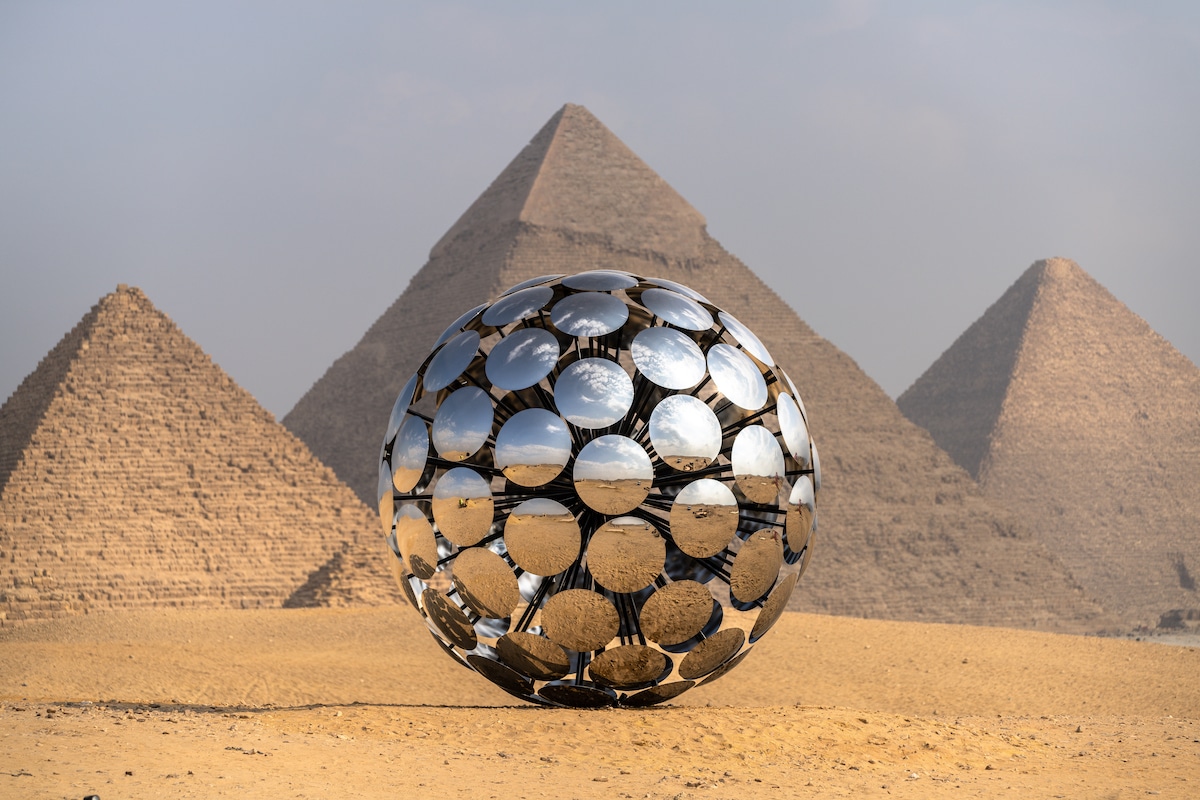
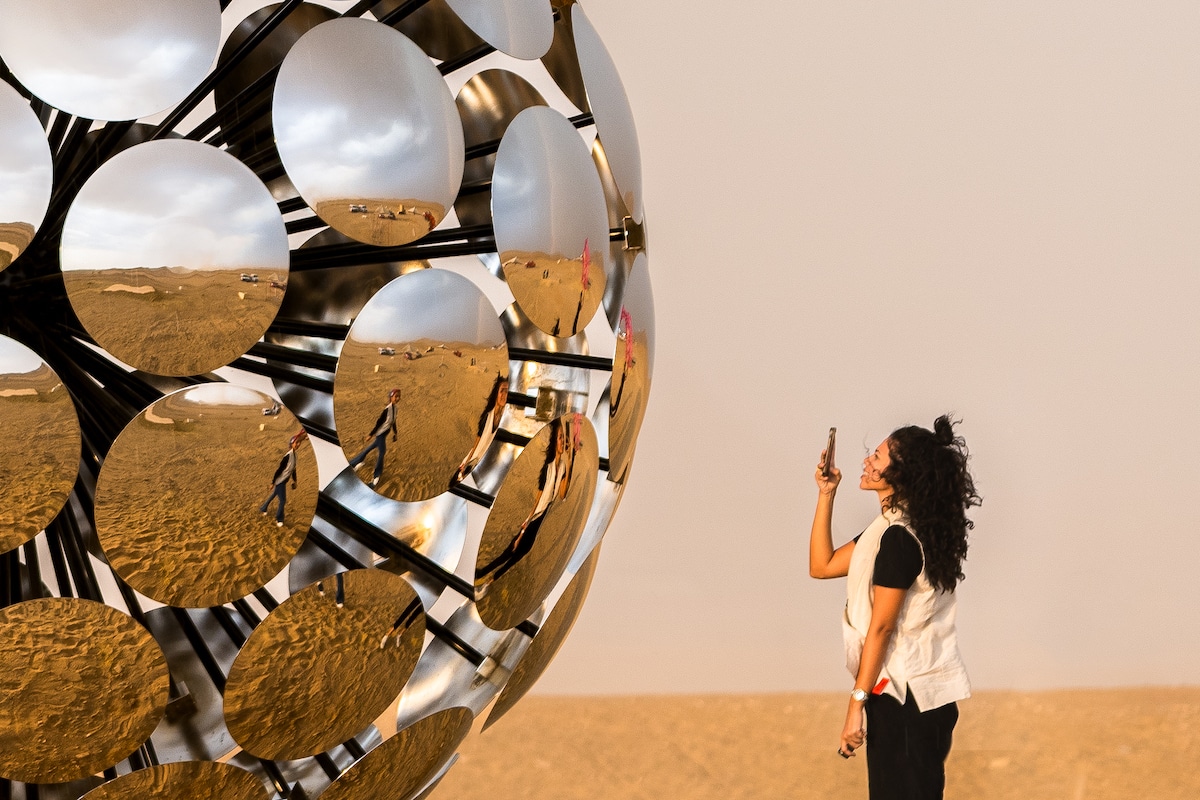
The sphere is created from a cluster of circular chrome mirrors, allowing bystanders to soak in the surrounding environment that is reflected back at them. The form is based on the number pi, which is concealed within the geometry of the pyramids. SpY, understanding the importance of geometry and mathematics in Ancient Egypt, carefully looked at the measurements of the pyramids. What he discovered is that when one divides the perimeter of a pyramid by twice its height, the result is very close to pi.

"The sphere is an invisible part of the resulting geometry since a sphere with a radius as high as the pyramid would have a circumference very close in length to the pyramid's perimeter," the artist writes in a statement.

The use of mirrors is tied to the spiritual beliefs of the Ancient Egyptians. "The Egyptians believed that life in the beyond was a reflection of life on earth and it was thought that mirrors had magical properties. They also linked mirrors to the sunlight that contributes to resurrection, the regeneration of the corpse," the artist shares. "The construction of our sculpture shows these intentions. Like those mirrors, the sun, light, the surroundings, visitors will be reflected, creating a living link with the regeneration of life."

Forever is Now II, organized in collaboration with UNESCO and the Egyptian Ministry of Tourism and Antiquities, brings together the artwork of twelve international artists and will run until November 29, 2022.

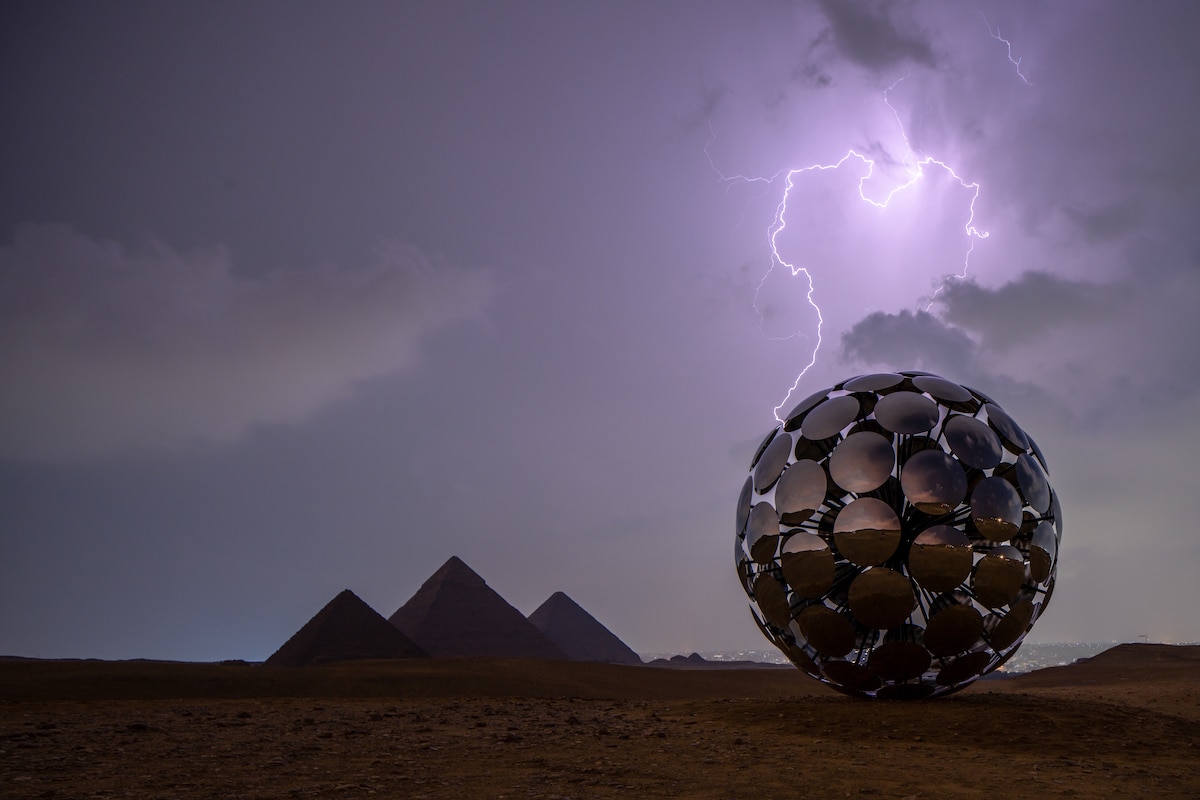
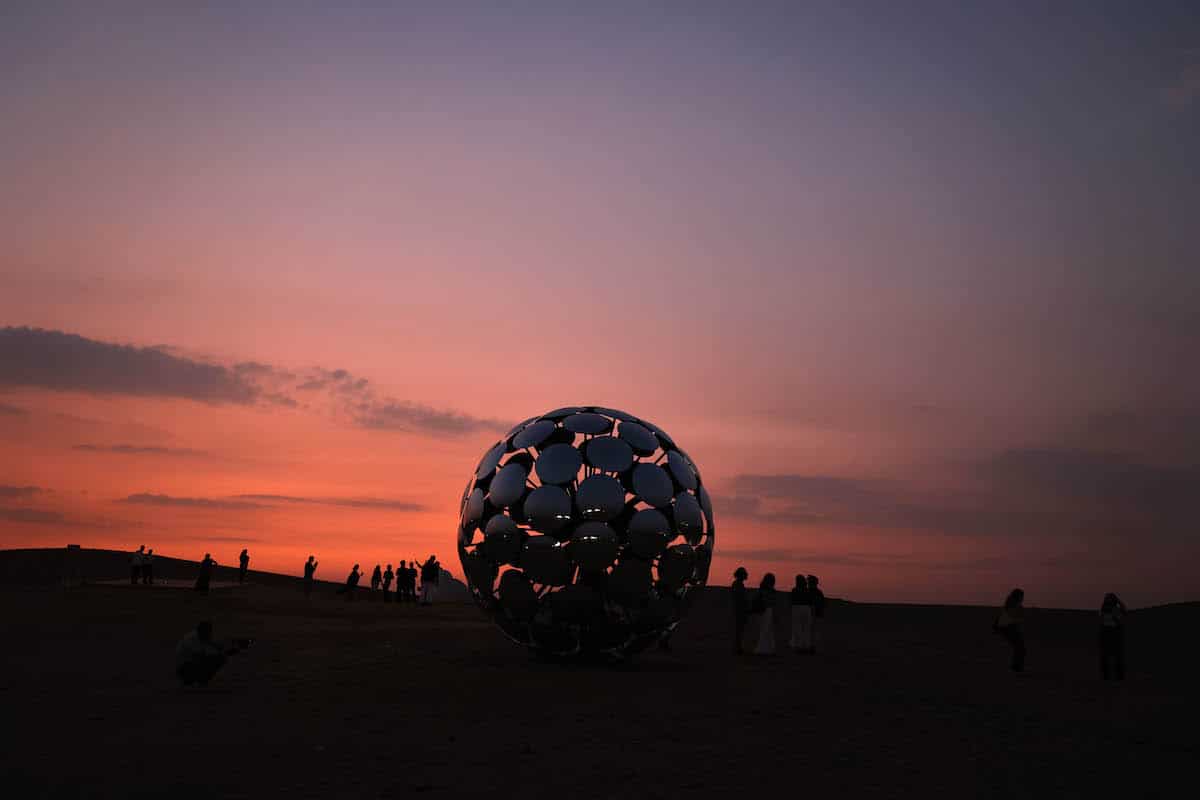
ORB is a new installation by Spanish artist SpY that is set against Egypt's Giza pyramids.

SpY Art Installation in Front of the Pyramids in EgyptSpY Art Installation in Front of the Pyramids in EgyptArt Installation in Front of the Pyramids in Giza

The sculpture is inspired by Egyptian symbolism and mathematics.

Art Installation in Front of the Pyramids in GizaRainbow Over SpY Installation in EgyptGirl Taking Photo in Reflection of SpY's ORB in Egypt

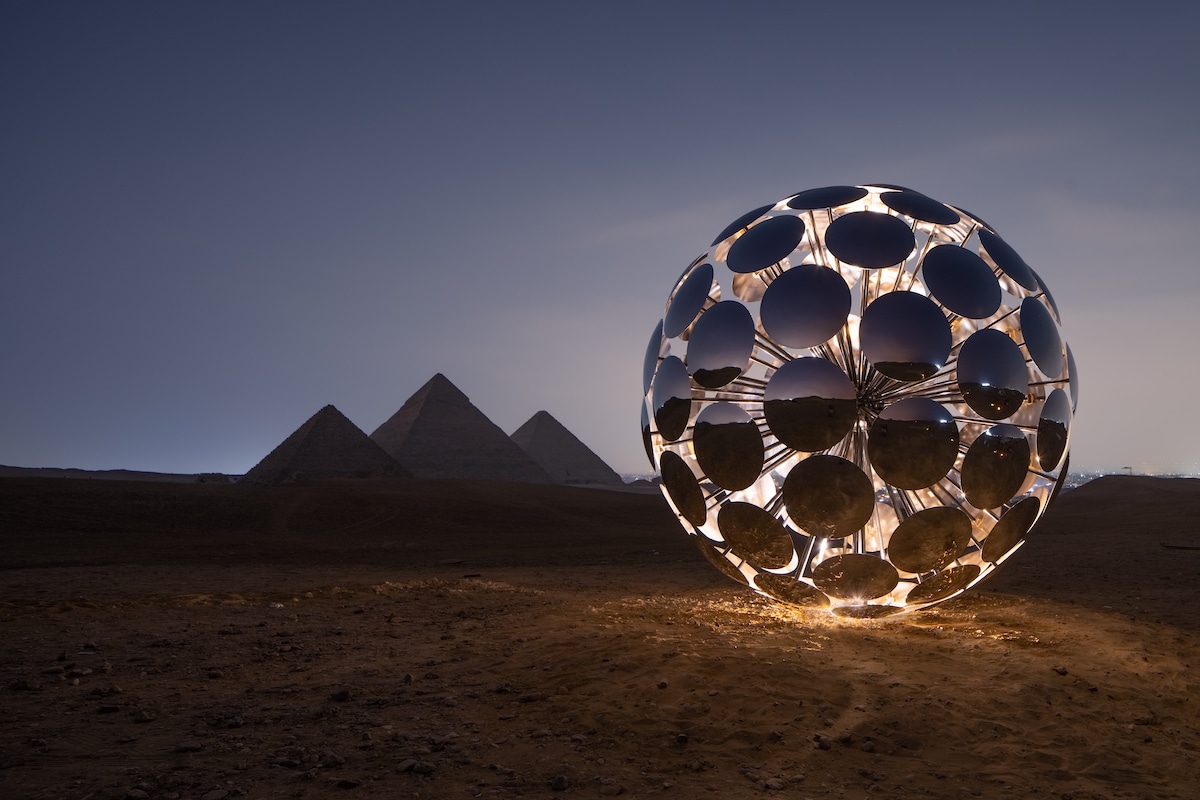
At night, the mirrored sphere glows from within, adding another layer of mystery.

SpY Art Installation at Night in Front of the Pyramids              in GizaLighting Behind SpY - ORB for Forever is Now 2

The piece is part of the Forever is Now II exhibition, which runs until November 29, 2022.

SpY - ORB for Forever is Now 2

SpY: Website | Instagram

My Modern Met granted permission to feature photos by SpY.


Jessica Stewart

Jessica Stewart is a Contributing Writer and Digital Media Specialist for My Modern Met, as well as a curator and art historian. Since 2020, she is also one of the co-hosts of the My Modern Met Top Artist Podcast. She earned her MA in Renaissance Studies from University College London and now lives in Rome, Italy. She cultivated expertise in street art which led to the purchase of her photographic archive by the Treccani Italian Encyclopedia in 2014. When she's not spending time with her three dogs, she also manages the studio of a successful street artist. In 2013, she authored the book 'Street Art Stories Roma' and most recently contributed to 'Crossroads: A Glimpse Into the Life of Alice Pasquini'. You can follow her adventures online at @romephotoblog.
--   Sent from my Linux system.