7,702 views
Dec 23, 2021

-- Sent from my Linux system.
-- Sent from my Linux system.
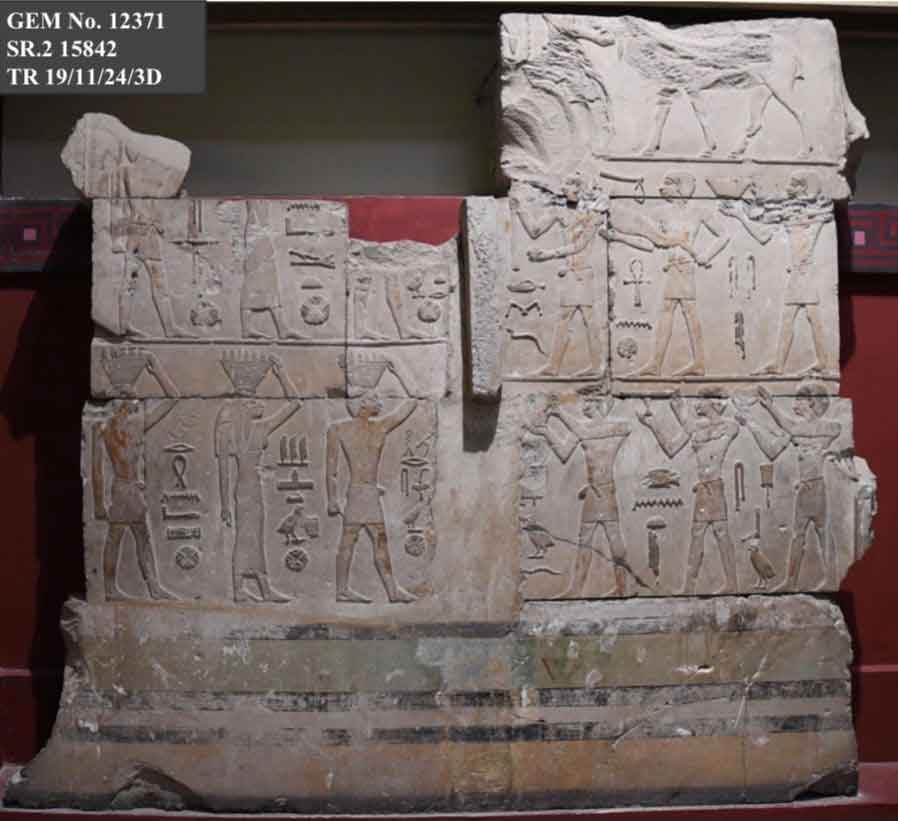
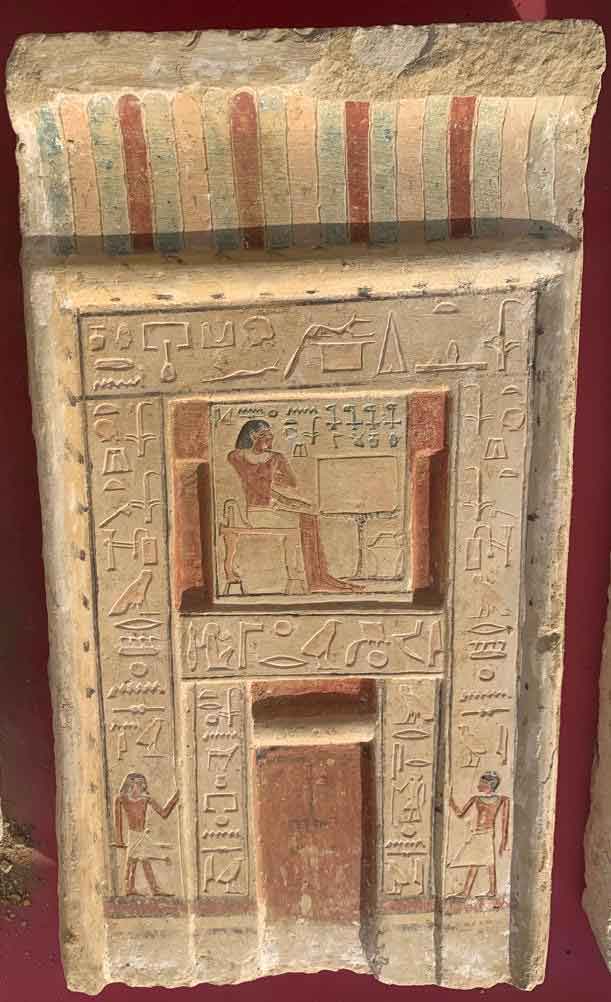
The Grand Egyptian Museum (GEM) has received a collection of 23 artefacts, including large stone reliefs, transported from the Egyptian Museum in Tahrir and the Saqqara and Ismailia archaeological sites.
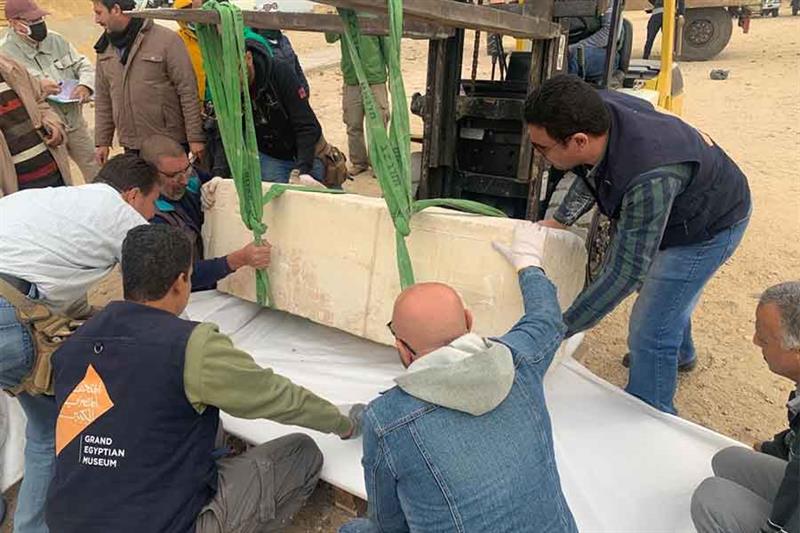
The objects include a large limestone relief bearing the different titles of the Old Kingdom King Senefru, a relief depicting the monotheistic King Akhenaten and his wife Queen Nefertiti, three Old Kingdom reliefs from the tomb of Raa-Hotep, and two red granite reliefs bearing the image of King Ramses II in the osirion pose and wearing the red crown, according to Altayeb Abbas, antiquities ministry assistant for archaeological affairs.
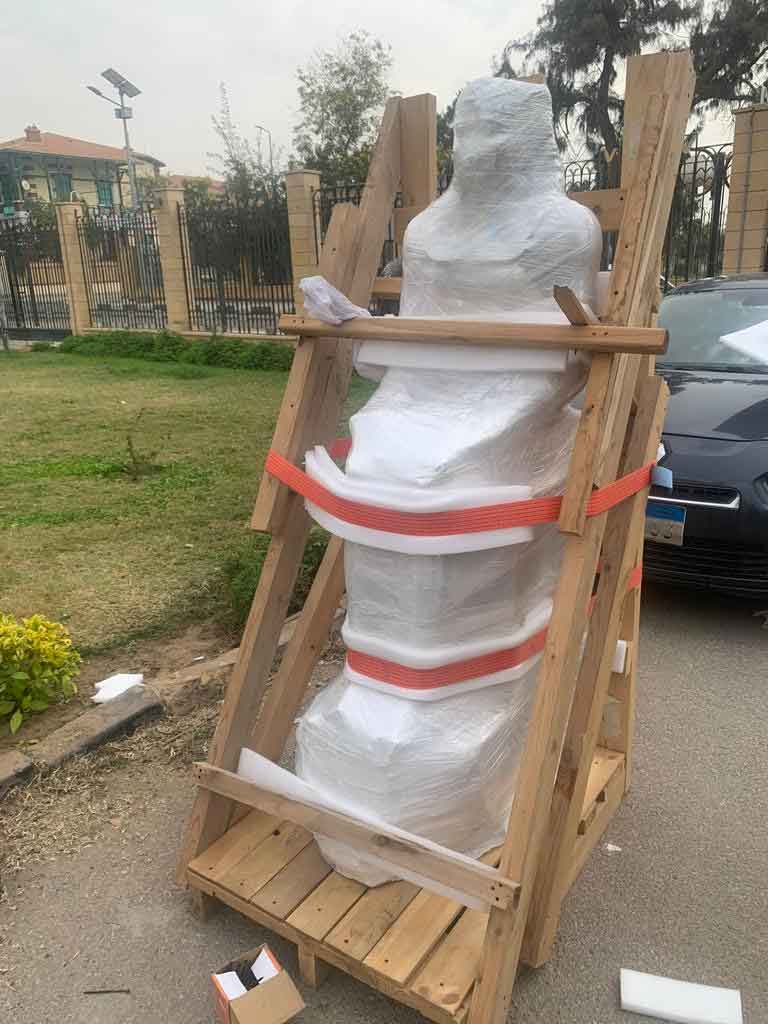
All the objects were restored before transportation and were packed using the latest scientific methods, Eissa Zidan, executive director for the restoration and transportation of artefacts.
Among the most notable objects is also a collection of 269 pieces of a limestone wall bearing pyramid text for Queen Ankh Isen Pepi. These pieces will be reassembled to form a huge wall in the GEM's main hall.
A collection of painted false doors, offering tables, and a statue of King Amenemhat I from the Ismailia museum have been also transferred, Zidan added.


-- Sent from my Linux system.
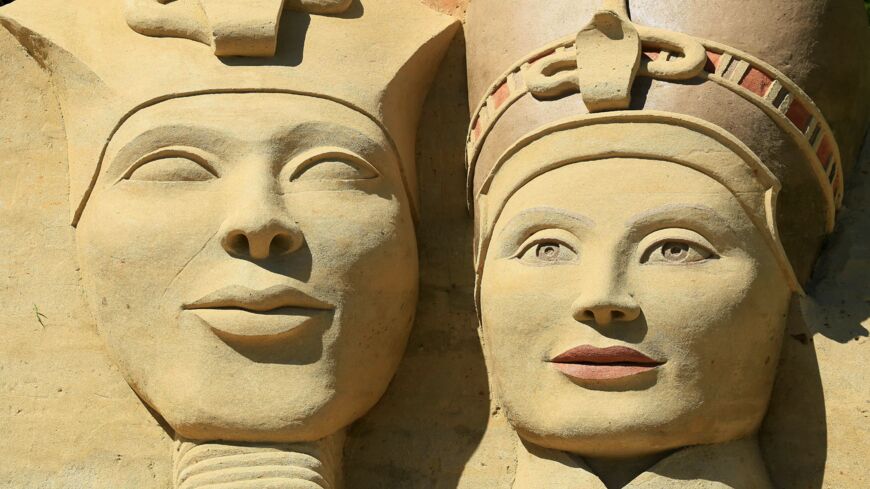
CAIRO — Egypt's archaeological mission, led by famed Egyptologist and former Antiquities Minister Zahi Hawass, resumed on Dec. 9 the hunt for Queen Nefertiti's tomb in the west bank of Luxor after years of debate over her burial site.
Hawass told Al-Monitor by phone he believes Queen Nefertiti is resting in the Valley of the Kings in the west bank in Luxor. He said an Egyptian team has been formed to search for and excavate the tomb.
"The team of Egyptian archaeologists tasked with finding Nefertiti's tomb was formed in 2017 and is an entirely Egyptian mission. This is the first time that an Egyptian mission leads [the excavation] works at the archaeological site of the Valley of the Kings, where foreign missions have always worked," Hawass said.
Controversy and division over the whereabouts of Queen Nefertiti's tomb have prevailed among archaeologists for years. In August 2015, Nicholas Reeves, an archaeologist at the University of Arizona, claimed Nefertiti may lie behind a wall within Tutankhamun's tomb.
The BBC reported in August 2015, "The whereabouts of Nefertiti's remains are not known, although those of Tutankhamun were found in 1922."
In October 2015, the Egyptian Ministry of Antiquities formed a scientific committee led by then-Minister of Antiquities Mamdouh el-Damaty to hold an objective discussion in the Valley of the Kings in Luxor with Reeves, who said Nefertiti's tomb might be located behind the north wall of Tutankhamun's tomb. The Egyptian Ministry of Antiquities conducted a radar survey of Tutankhamun's tomb in November 2015, but it did not confirm what Reeves said.
In May 2018, the ministry dismissed Reeves' theory about the tomb and said the monthslong geophysics studies by the team of researchers at the Polytechnic University of Turin in Italy ruled out any hidden rooms behind the walls of Tutankhamun's tomb. This means that Nefertiti's tomb was not found.
Hawass said, "There is no scientific evidence proving the theory that Queen Nefertiti was buried inside Tutankhamun's tomb. We believe that Nefertiti could be buried in the western valley next to the tomb of King Amenhotep III."
"There are still a lot of undiscovered secrets about ancient Egyptians in the area located between King Amenhotep III's tomb and King Ay's," Hawass added. Locating Nefertiti's tomb would be "the most important archaeological discovery in the world, and even the discovery of the century," he said.
Hawass said in a lecture at the National Museum of Egyptian Civilization on Dec. 8 about the recent archaeological discoveries that "evidences in the west bank (in Luxor) show that there are antiquities that match those found among the amulets belonging to King Tutankhamun, the son of Akhenaten, Nefertiti's husband."
Hussein Abdel Baseer, director of the Antiquities Museum at Bibliotheca Alexandrina, told Al-Monitor, "Queen Nefertiti is the beautiful and smart wife of King Akhenaten. She supported him greatly and was one of the strongest supporters of the new religious call that he made to worship the new god Aten. She is one of the most famous queens of ancient Egypt and the lady of the Amarna period."
He added, "There are some studies that indicate Queen Nefertiti co-reigned with her husband. Recent studies, however, stated that King Akhenaten ruled alone and that Nefertiti may have assumed power after his death. Too many mysteries and questions continue to surround this queen's life in general."
Egyptian historian and Egyptologist Bassam al-Shammaa told Al-Monitor by phone, "There are many hurdles to the discovery of Nefertiti's tomb, given her mysterious life about which only a little was revealed. It is said that ancient Egypt's most famous figures are the most mysterious ones."
Shammaa added, "I doubt that the [team] will find the mummy and the original tomb of Nefertiti in Luxor for religious and political reasons, most notably among which is the enmity with the priests of Amun-Ra after her husband Akhenaten called for worshipping the god Aten and she supported him. This resulted in problems and pushed them to abandon Thebes (in Luxor), the capital of ancient Egypt, and to build a new capital in Amarna."
He explained, "Finding Nefertiti's tomb in the west bank in Luxor is only possible if the mummies of Akhenaten and Nefertiti were moved from Amarna to Luxor in later eras." He called on the ministry to expand the archaeological team searching for Nefertiti and to involve more scientists who specialize in hunting and locating tombs.
Commenting on the possible historical value of the discovery of Nefertiti's tomb, he said, "Finding Nefertiti's mummy, and what's in her tomb, by the Egyptian team would be tantamount to the rewriting of history, particularly since that tomb has preoccupied everyone for hundreds of years."
-- Sent from my Linux system.
![Ancient wooden statues are found in a tomb of a goldsmith in Luxor, Egypt on 9 September 2017 [Ibrahim Ramadan/Anadolu Agency]](https://i0.wp.com/www.middleeastmonitor.com/wp-content/uploads/2017/09/20170910_2_25662939_25729692.jpg?resize=1200%2C800&quality=85&strip=all&zoom=1&ssl=1)


Cairo has deported United Arab Emirates (UAE) Ambassador Hamad Saeed Al-Shamsi over his involvement in smuggling Egyptian antiques, Al-Quds Al-Arabi reported on Friday.
According to Al-Quds Al-Arabi, Egyptian Ambassador to Qatar Amr El-Sherbini posted on his official Facebook page on Friday that the decision to deport the Emirati ambassador came following the revelation that he was involved in smuggling Egyptian antiques.
El-Sherbini added that investigations into businessperson Hassan Ratib and his partner, former member of Egyptian Parliament, Alaa Hassanein: "Revealed his involvement in smuggling Egyptian antiquities with Emirati diplomatic bags."
The Egyptian ambassador to Qatar shared: "A correct decision confirms the vigilance of the Egyptian security and oversight services, and the Ministry of Foreign Affairs for dealing with the matter professionally, without arousing concern for relations with the UAE."
He added: "This procedure must be complemented by a similar Emirati procedure that includes quickly punishing the ambassador who committed crimes against his country and the country that hosted him."
Meanwhile, he urged the UAE to return the smuggled antiquities and respond to the investigation inquiries.
The antiquities include a variety of statues, some of which were inside tombs as part of burial offerings.
-- Sent from my Linux system.
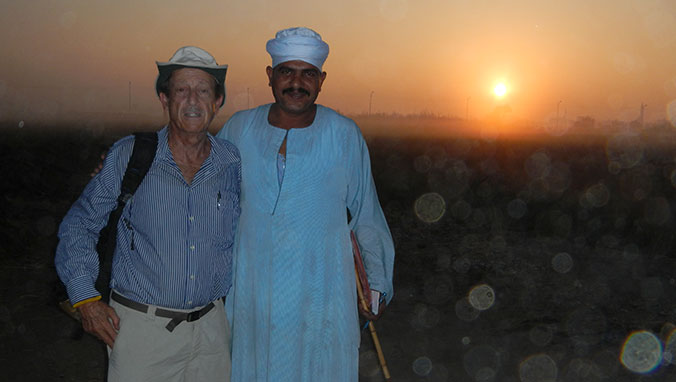
World renowned scholar in Greek history and literature, ancient medicine and archaeology Robert Littman celebrated 50 years at the University of Hawaiʻi at Mānoa in September. Littman was recruited by UH in 1971 and is a professor in the College of Languages, Linguistics & Literature (CALL). He is known for, among other things, helping recreate Cleopatra's perfume and a project based in Egypt where UH students participate in the excavation of an ancient city.
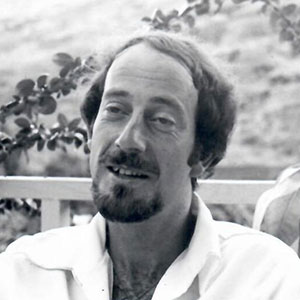
UH Mānoa pursued Littman when he was at Brandeis University in Boston. Littman's wife suggested that they go to Hawaiʻi for what they thought would be one year, and it turned into more than five decades. Littman earned a BA in classical languages from Columbia University, a masters in ancient history from the University of Oxford and a PhD in classical philology from Columbia University.
"One of the things I've appreciated about being out in Hawaiʻi is, since I teach in a small program that is not very specialized, I have not been pigeonholed," said Littman. "I've had the opportunity to diversify my academic work here. I started out as a classicist and historian with a little bit of archaeology. And in Hawaiʻi, I've gradually shifted into biblical studies in both Hebrew bible and Greek bible and biblical history. And then I expanded my work in Egyptology in both teaching and researching in the ancient Egyptian language and moving into Egyptian archaeology."
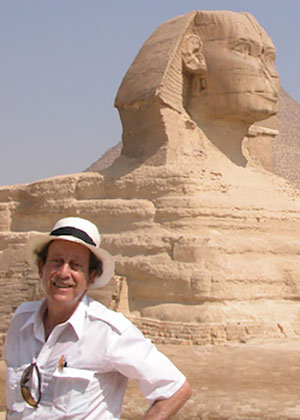
Littman has amassed a myriad of accomplishments over his time at UH including: being selected as the 2018 recipient of the Archaeological Institute of America Martha and Artemis Joukowsky Distinguished Service Award; he was part of a team who recreated Cleopatra's ancient perfume, which was showcased in a National Geographic exhibit; he was involved in producing the digital edition of the Codex Sinaiticus, the oldest New Testament and Greek version of the Old Testament dating from the 4th century A.D.; and he co-published the illustrated children's history book, The Story of Ancient Timai.
Littman continues to direct the UH Tell Timai Project, the excavation of the ancient city of Thmouis in Timai El Amdid, Egypt in the Nile Delta that started in 2007. To date, more than 200 UH Mānoa students as well as students from other universities, have traveled to Egypt to participate in the excavation of Thmouis, a flourishing city from 500 B.C. to about 600 A.D. for the Egyptians followed by Greeks and then the Romans.
While on excavations students are exposed to ancient Egyptian culture, they learn about archaeological techniques, and they help with pottery washing on site.
"My first job was in a commercial kitchen washing dishes, and I guess I'm still doing it, only it's [ancient Egyptian] pottery, and I usually get the students to wash it now," Littman said.
-- Sent from my Linux system.

Researchers from the University of Malta have developed an algorithm that performs "virtual segmentation" to reveal the internal structures of archaeological remains; specifically, ancient mummified animals.
The hidden internal structures of archaeological remains can be revealed through a technique, Propagation Phase Contrast Synchrotron Microtomography (PPC-SRμCT), which is considered the gold standard for non-invasive and non-destructive imaging.
PPC-SRμCT allows researchers to perform a "virtual autopsy" and "virtual unwrapping" of mummified remains, uncovering information about processes used to create mummies and informing historical study. It has been applied to archaeozoological studies of mummified animal remains from the Ptolemaic and Roman periods of Ancient Egypt, originating from the third century BC to the fourth century AD.
Image segmentation is an important process in computer vision, unlocking higher level tasks such as understanding the progress of a disease from a CT image. Previous studies have trained AI to segment imagery automatically, with most work focused on segmenting medical images, such as CT scans of the human liver.
However, there is a significant difference between conventional CT scans and the volumetric scans captured by PPC-SRμCT. Methods for segmenting the latter are comparatively primitive, requiring an expert to manually segment the virtual specimen to separate different parts and materials.
The University of Malta researchers developed a tool to automatically segment volumetric images, aiming to drastically reduce the effort involved from weeks of effort, even for small remains, to a matter of hours. They used manually segmented samples from previous work to train and tune their machine learning model.
For a set of four specimens of Ancient Egyptian animal mummies, they achieved an overall accuracy of 94 to 98 per cent when compared with manually segmented slices, approaching the off-the-shelf commercial software harnessing deep learning (97 to 99 per cent) at much lower complexity.
A qualitative analysis of the segmented output demonstrated that their results were close in terms of usability to those from deep learning, justifying the use of these techniques. Their system has the key advantage of achieving high accuracy at lower complexity, allowing it to scale well for larger volumes.
The researchers wrote in their study that their automatic segmentation algorithm could be applied directly to a variety of other applications in which microtomography is used.
"In industrial applications automatic segmentation will be useful in non-destructive metrology and detection of voids, cracks and defects," they wrote. "In biomedical research, it would be useful in small animal and tumour imaging, amongst others. Other applications include nanotechnology, geology, electronics and food science."
Dreamstime
Sign up to the E&T News e-mail to get great stories like this delivered to your inbox every day.
-- Sent from my Linux system.

Scientists are trying to verify the age of mummified remains found in an ancient tomb at the Saqqara archaeological site. Above, Zeinab Hashesh, a professor of Egyptology at Beni-Suef University and a member of the team. (Photo courtesy of Zeinab Hashesh)
Preliminary studies of mummified remains from a recently discovered ancient tomb in Egypt suggest that mummification began 1,000 years earlier than previously thought. If confirmed, the findings "may rewrite the history of Egyptian mummification," a scientist working on the project said.
The scientist, Salima Ikram, a professor of Egyptology at the American University in Cairo, joined a research team one year ago to help analyze remains found in a richly decorated tomb in the necropolis at Saqqara, an archaeological site 20 miles south of Cairo. Ikram was asked to confirm whether the remains dated back to Egypt's Old Kingdom (ca. 2686–2181 B.C.E.).
Scientists had already determined that the tomb was built for a nobleman named Khuwy, who lived in the late Fifth Dynasty of the Old Kingdom. Were the mummified remains found inside also that old?
"We took samples from the mummified remains to be analyzed again using the radiocarbon technique, in the laboratories of the French Institute in Cairo."
Ikram's X-rays would help find out, and also help resolve doubts about the date of the beginning of mummification in ancient Egypt. If the mummy was as old as the tomb, that would contradict previous thinking that mummification began during the New Kingdom (ca. 1550–1069 B.C.E.).
Ikram said she found "the mummified remains date back to the Old Kingdom, based on the use of X-rays and chemical analysis." However, the research team asked her to confirm those findings through radiocarbon dating.
"We took samples from the mummified remains to be analyzed again using the radiocarbon technique, in the laboratories of the French Institute in Cairo," she told Al-Fanar Media via email. "The results will appear within six months."
She added: "If we confirm that this cemetery belonged to the Old Kingdom, we will rewrite the history of mummification. This means that modern mummification techniques were used a thousand years earlier than our initial conviction that mummification techniques began with the New Kingdom."
Discovered in April 2019, Khuwy's tomb was selected by Archaeology Magazine as one of the top archaeological discoveries that year.
Nine Egyptian scholars have worked to unearth the tomb over the past four years.

Zeinab Hashesh, a professor of Egyptology at Beni-Suef University, was one of the first to join the team in 2018. Hashesh conducted anthropological examinations to determine the sex, age, and diseases of the remains found in the tomb.
In a phone call, Hashesh told Al-Fanar Media: "All the archaeological evidence suggest that the body in the tomb belongs to Khuwy. The tomb's architecture, including the mural scenes and inscriptions, all belong to the Old Kingdom."
Hashesh recalls the moment of the new tomb's discovery. "While the head of the expedition was completing the cleaning and registration work for the mortuary collection of King Djedkare Isesi (a Fifth Dynasty ruler buried at Saqqara), in 2019, a new mastaba began to appear, distinguished by some royal connotations. With the completion of the excavations, we knew the name of the buried body, Khuwy, whose titles suggest a relation to the royal family."
"All the archaeological evidence suggest that the body in the tomb belongs to Khuwy. The tomb's architecture, including the mural scenes and inscriptions, all belong to the Old Kingdom."
"Archaeological evidence that dated the cemetery back to the Old Kingdom included canopic jars from the Old Kingdom era," said Hashesh. She explained that these jars were used to preserve the internal organs extracted from the abdominal cavity during the mummification process. "This confirms that the buried body was embalmed," she added.
All the mummified remains found inside the burial chamber belonged to one individual, said another research team member, Ahmed Gabr, a bioarcheologist specializing in human remains.
Gabr told Al-Fanar Media: "The techniques used in the mummification in this tomb, from the large amount of oils and the high quality linen found in abundance, are consistent with the mummification methods used in the New Kingdom era and beyond."
Mummification was rare in the Old Kingdom, Gabr said, and its methods were different. The older burial technique method used bandages and plaster which were molded onto the body in a natural shape.
The importance of the discovery of Khuwy's tomb becomes even more significant if the team confirms that the remains date back to the ancient royal family, Ikram said.
"If it turns out that the mummy dates back to the Old Kingdom, we have to review what we know about mummification at that time," she explained. "This will extend our project, to understand why this mummy is distinguished, compared to all other mummies, which were processed in a completely different way."
Gabr agrees. "Proving the association of the mummified remains with the Old Kingdom will change our understanding of mummification, and push us to rewrite its history again," he said. "This means that the methods of embalming that we usually connect to the New Kingdom were known a thousand years earlier."
-- Sent from my Linux system.
This city is largest administrative, industrial settlement in Luxor during Ancient Egyptian Empire

The Archaeology Magazine has named the "Lost Golden City" in Luxor as the most important archaeological discovery in 2021.
An Egyptian excavation mission headed by Zahi Hawass discovered the ancient city, "The Rise of the Aten", which dates back to the reign of King Amenhotep III. The city continued to be used by King Tutankhamun, 3000 years ago.
Hawass said that the mission was searching for the mortuary temple of King Tutankhamun in that area, because the temples of Horemheb and Ay were found in the same place.
He described the discovered city as the largest one in Ancient Egypt. King Amenhotep III, the founder of the city, was the ninth king of the Eighteenth Dynasty. He ruled Egypt from 1391 to 1353 BC. His son Amenhotep IV, also known as Akhenaten, lived in the city during the last eight years of his father's reign.
Hawass added that this city is the largest administrative and industrial settlement in the era of the Egyptian Empire on the western bank of Luxor. Some houses were found in the city, whose walls were about 3 metres high.
"We uncovered a part of the city that extended to the west, while Deir el-Madina (Monastery of the City) was part of our city," Hawass added.

He explained that the excavations began in September 2020, and within weeks, mud-brick formations began to appear in all directions. The large city was in a good condition, as almost complete walls and rooms filled with the utensils of daily life were found. It remained untouched for thousands of years.
"The discovery of this city, not only gave us a rare glimpse into the lives of the Ancient Egyptians in the era of the empire, but it will also help us shed light on one of the greatest mysteries in history and why Akhenaten and Nefertiti decided to move to Amarna," he said.
"We have a lot of information about tombs and temples, but this is the first time that it reveals secrets about the lives of the kings of the golden age of Egypt," Hawass concluded.
-- Sent from my Linux system.
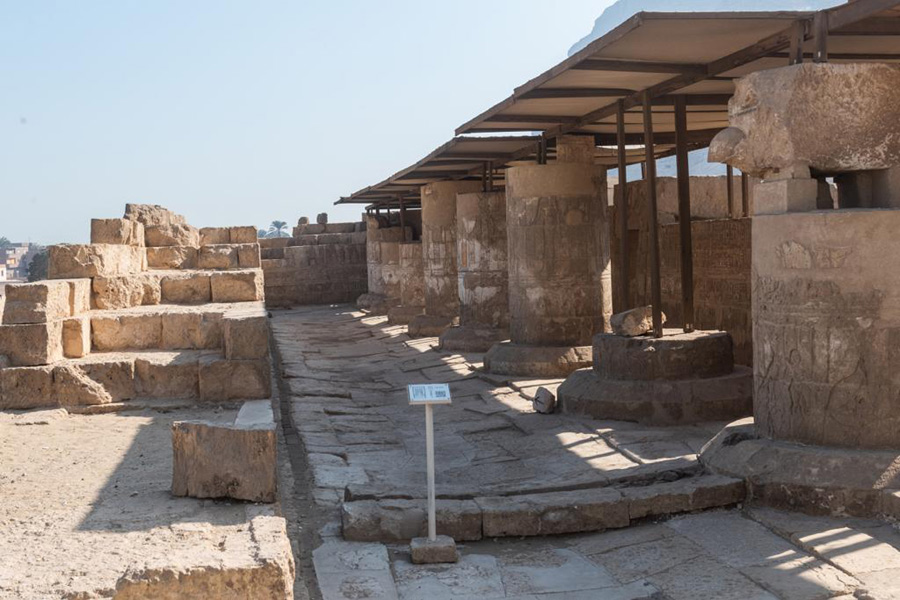
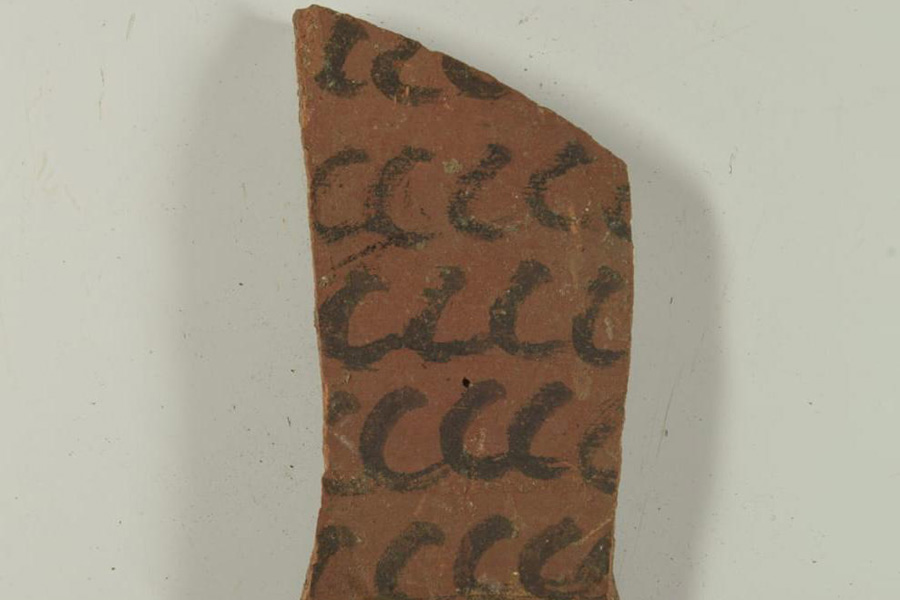
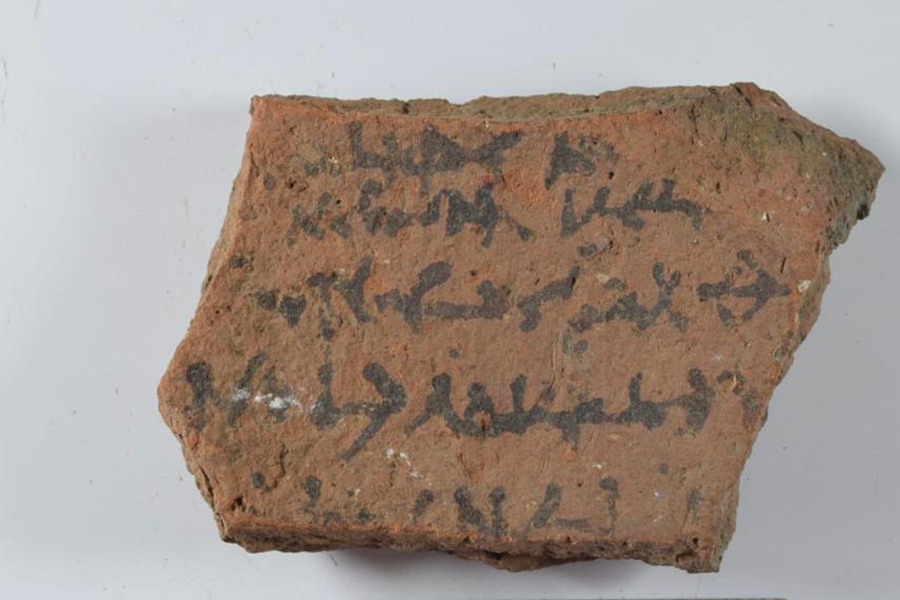
A German-Egyptian mission at Al-Sheikh Hamad archaeological site in Tel Atribis in Sohag has unearthed a collection of 13,000 ostraca (clay vessel fragments) which bear engraved text in demotic, hieratic, Coptic, Greek and Arabic, the Egyptian Ministry of Antiquities and Tourism said on Wednesday.
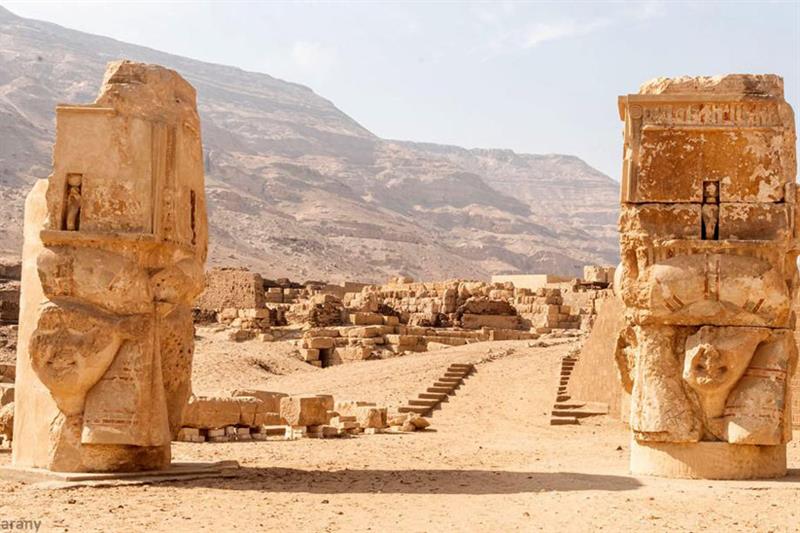
Christian Latis, head of the German mission, explains that archaeologists are now studying the ostraca in order to learn more about the activities of the area's past inhabitants.
Latis suggests that the text written on the ostraca indicates that the area may have housed a school for teaching demotic, hieratic, hieroglyphic and Greek writing.
Mohamed Abdel-Badia, head of the central department for Upper Egypt, revealed that the mission has also found a collection of ostraca that date back to the Roman or Byzantine eras.
Atribis was one of the ancient towns of the nine nomes of ancient Egypt. It is located on the west bank of the Nile southwest of Sohag city.



-- Sent from my Linux system.
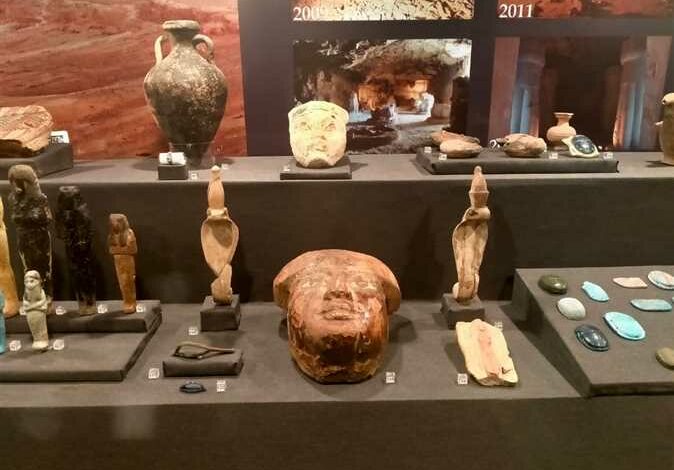
Luxor University President Mohamed Azzouz, accompanied by the Spanish ambassador in Cairo, inaugurated on Sunday evening the "Treasures of Minister Amenhotep Huy" temporary exhibition in cooperation with the Spanish mission.
The exhibit marks the 46th anniversary of the opening of the Luxor Museum of Ancient Egyptian Art.
The museum's director general, Alaa al-Menshawy, said that the exhibition includes 155 artifacts uncovered by the Spanish mission working in the tomb of Minister Amenhotep Huy from the Eighteenth Dynasty.
He added that one of the most important of these pieces is a limestone plaque decorated with the prayers of the god "Ra-Horakhty" and a limestone ostracon used in hand painting, showing a man carrying fruit-collecting tools – in addition to a group of scarabs, amulets, and ushabti statues.
The Luxor Museum of Ancient Egyptian Art is considered one of the most beautiful regional museums in Egypt. It is located on the eastern bank of the Nile and adorns the Nile Corniche in the center of Luxor Governorate.
The museum was established specifically to revive art in the ancient city of Thebes. It includes more than 3,000 artifacts on display, and more than 3,000 pieces are preserved within its museum stores. It consists of 5 exhibition halls; The First Hall, the Sobek Hall, The Cache Hall, the Upper Floor Hall, and the Hall of Thebes' Military and Technical Glory.
The museum was opened for visitation on December 12, 1975.
A new hall was added to it in 1984, and the Cache Hall was opened in 1991 and became one of the most important halls of the museum as it includes the most recent findings that were found in Luxor Temple in 1989. The Glory of Thebes Hall then opened in 2004.
The museum's display scenarios shed light on ancient Egyptian art from Thebes (Luxor) through the ages, beginning with prehistoric times, the ancient state, the middle state, the modern state known as the "Golden Age", the Greek and Roman eras, Coptic art, and the Islamic era.
Among the most important pieces displayed in the museum are a green schist statue depicting King Thutmose III as a young man, a unique alabaster statue of King Amenhotep III with the god Sobek, a quartz stone statue of King Amenhotep III standing, and the mummy of King Ahmose I, founder of the Eighteenth Dynasty.
-- Sent from my Linux system.
 |
Living and Dying in Ancient NubiaZoom
Lecture. A
registration
link will be
automatically
sent to
ARCE-NC
members.
Non-members
may request a
registration
link by
sending email
with your name
and email
address to
arcencZoom@gmail.com.
Attendance is
limited, so
non-members,
please send
any
registration
requests no
later than
Friday, January 7. Glenn Meyer ARCE-NC Publicity Director
 About the
Lecture: The project area for the Bioarchaeology of Nubia Expedition (BONE) lies between the fourth and fifth cataracts of the Nile River in northern Sudan. During six seasons of fieldwork, multiple cemeteries were excavated, spanning from the Kerma through Christian periods (c. 2500 BCE to 1400 CE). Analyses of the graves and the individuals they contain reveal previously unrecognized aspects of funerary practices and lived experiences of the people who inhabited this area. Recent research includes evaluation of evidence that graves were re-entered within memory of a person’s death to retrieve heirlooms rather than looted without regard for the deceased. Analyses of stable isotopes reveal substantial residential mobility and interconnections in the earliest periods, and a dietary shift between the Post-Meroitic and Christian periods that accompanies major changes in grave style and accompaniments. Grooves in teeth provide new evidence for use of toothpicks in this region as far back as 2200 BCE. Spatial and social organization of the largest cemetery—the Qinifab School site—is demonstrated through biodistance analysis. Additionally, indicators of disease and trauma in the skeletons reveal life histories and the experiences of specific individuals in different eras, such as a potter with silicosis and a massive teratoma in her abdomen, a mother and baby who died during a breech delivery, a man who died after fractures to all bones of his right leg began to heal, and an older woman who survived numerous traumatic injuries. About the Speaker:

About ARCE-NC:
For more information, please visit https://facebook.com/NorthernCaliforniaARCE/, https://arce-nc.org/, https://twitter.com/ARCENCPostings, or https://khentiamentiu.org. To join the chapter or renew your membership, please go to https://www.arce.org/general-membership and select "Berkeley, CA" as your chapter when you sign up. |
