The American Research Center in Egypt, Northern California Chapter, and the Near Eastern Studies Department, University of California, Berkeley, invite you to attend a virtual lecture by Dr. Rita Lucarelli, UC Berkeley:
Ancient Egypt and Its Reception in Black America: From Afrocentrism to Afrofuturism
When: Sunday, April 18, 2021, 3 PM Pacific Time
Zoom Lecture. A registration link will be automatically sent to ARCE-NC members. Non-members may request a registration link by sending email with your name and email address to arcencZoom@gmail.com. Attendance is limited, so non-members, please send any registration requests no later than April 16.
About the Lecture:
Hartmut Geerken, Sun Ra Arkestra Performing at Heliopolis, Egypt, 1971, gelatin silver print, 5 x 7". From "Cosmic Communities: Coming Out into Outer Space—Homofuturism, Applied Psychedelia & Magic Connectivity."
The cultural imagining of Ancient Egypt and of its monuments, writing and religion has been at the basis of histories of Egyptology and especially of Western Egyptomania, which originated in Greece and Rome and continued to prosper in Europe and the West before and after Napoleon's campaign in Egypt (1798-99). What is often forgotten is the existence of a non-Western egyptomania, which has developed in philosophical, political, religious and cultural movements and trends in modern Egypt itself (Pharaonism) as well as in Africa, the Middle East and among the African-American communities in the US. This lecture aims at raising interest into and discussing elements of fascination and inspiration from ancient Egypt in modern and contemporary art, literature and music inspired by two main African-American cultural movements such as Afrocentrism and Afrofuturism.
About the Speaker: Dr. Rita Lucarelli
Rita Lucarelli studied at the University of Naples "L'Orientale," Italy, where she received her MA degree in Classical Languages and Egyptology. She holds her Ph.D. from Leiden University, the Netherlands. Her Ph.D. thesis was published as The Book of the Dead of Gatseshen: Ancient Egyptian Funerary Religion in the 10th Century BC. She worked as a Research Scholar and a Lecturer at the Department of Egyptology of Bonn University, where she was part of the team of the "Book of the Dead Project". She is an Associate Professor of Egyptology at UC Berkeley and Faculty Curator of Egyptology at the Phoebe A. Hearst Museum of Anthropology of the University of California, Berkeley and Fellow of the Digital Humanities in Berkeley. She is presently working at a project aiming at realizing 3D models of ancient Egyptian coffins, the "Book of the Dead in 3D". She is also completing a new monograph on demonology in ancient Egypt entitled "Agents of Punishment and Protection: Ancient Egyptian Demonology in the First Millenium BCE" and is one of the coordinators of the international project "Ancient Egyptian Demonology Project", or "Demon Things".
Volcanic Eruption Led to the Abandonment of Ancient Egyptian City
Image Credit : Antiquity
Share
Archaeologists conducting excavations of the fortified Ancient Egyptian city of Berenike suggest that a drought caused by a volcanic eruption led to the city's abandonment.
Berenike, also known as Berenice Troglodytica was founded in the 3rd century BC by Ptolemy II Philadelphus, upon a narrow rim of shore at the head of the Sinus Immunduson on the west coast of the Red Sea.
The city was named after his mother Berenice I, and served as a trading centre with the East Coast of Africa, India, and Arabia for the transportation of war Elephants and exotic goods.
The first stage of the Hellenistic period was interrupted by a period of abandonment for almost half a century around 200 BC, until the city was reoccupied in the latter part of the second century BC.
Archaeologists conducting studies of an ancient well used by the city garrison in a fortified gate complex, suggest that the city was abandoned due to climatic changes brought on by a volcanic eruption.
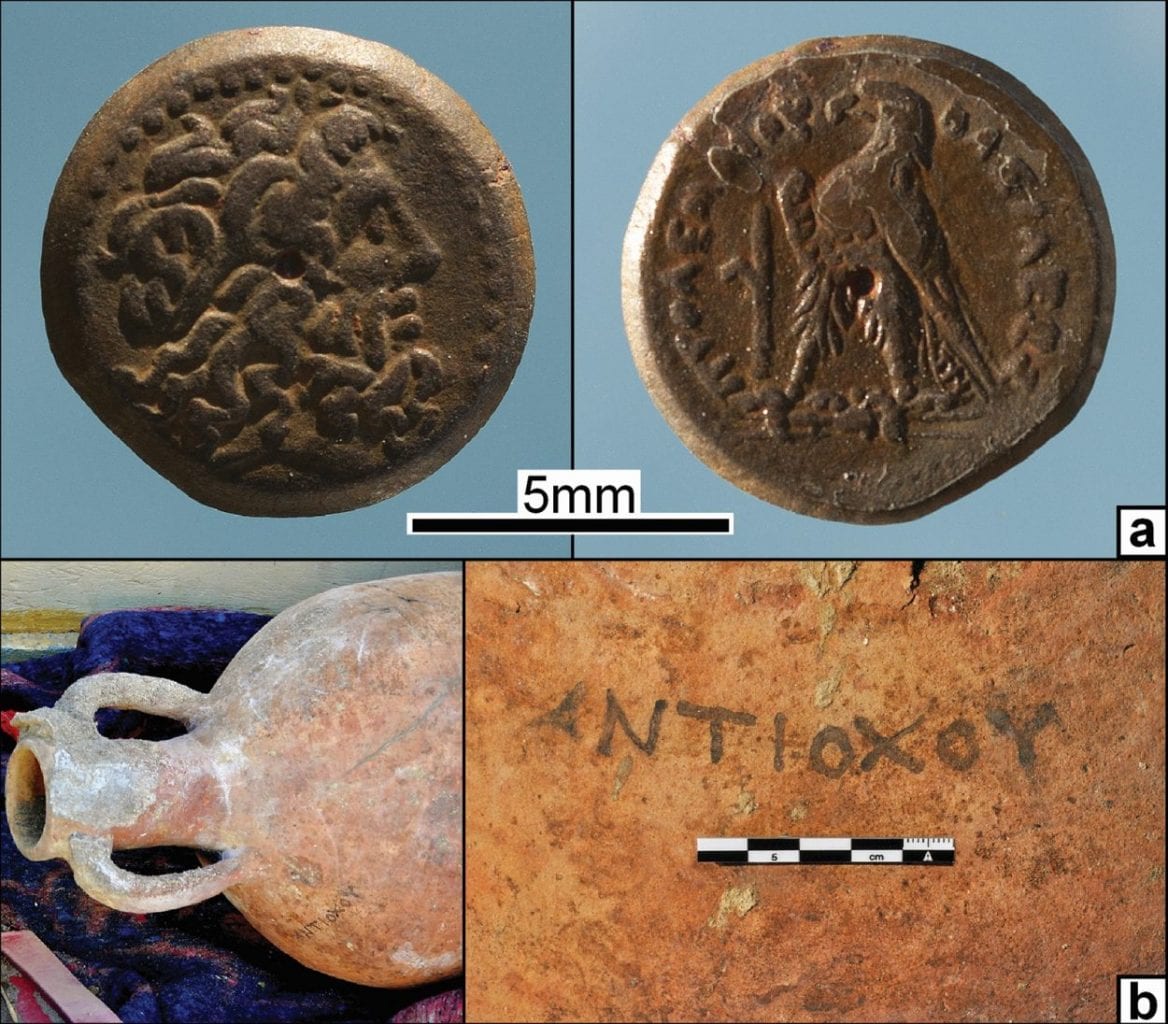
Artefacts excavated from the well – Image Credit : Antiquity
Previous research found that a volcanic eruption in 209 BC from an unidentified volcano ejected a significant amount of gas and ash into the atmosphere, shifting North-Eastern Africa's climate and causing a weakening of the annual Nile flood.
The failure of the Nile flood drove the Egyptian people to rise up against the Hellenistic rulers of Egypt in a period known as the 'Great Theban Revolt' of 207–186 BC.
This climatic event most likely disrupted the fragile climate of the Red Sea region driving the drought at Berenike, causing the well to dry up and be buried with windblown sand.
Archaeologists methodically removed the thick layers of sand filling the well, where they found coins, amphora, and other datable material that suggest the event happened at the very end of the third century BC.
The drought closed the desert route to Berenike and disrupted the long-distance sea routes that the city was dependent upon, resulting in the eventual abandonment. Find out more
Statue of Goddess Bastet newly transferred to NMEC - Min. of Tourism & Antiquities
CAIRO – 18 March 2021: CEO of the National Museum of Egyptian Civilization Ahmed Ghoneim announced the receipt of six important artifacts from the recent archaeological discoveries of the Ministry of Tourism and Antiquities' excavations in the Saqqara Cemetery
Ghoneim explained that an archaeological committee has been formed from the museum to complete the collection process.
This comes within the framework of the great role played by the museum to preserve the archaeological heritage of Egypt through recording and documenting the artifacts and providing a suitable environment that protects them against the dangers of damage, theft and looting. This is in addition to studying and examining the artifacts with modern technological methods; sterilizing them against bacteria, fungi and insects with Anoxia devices; and determining the age of the artifacts through a carbon 14 device, which the museum supplies.
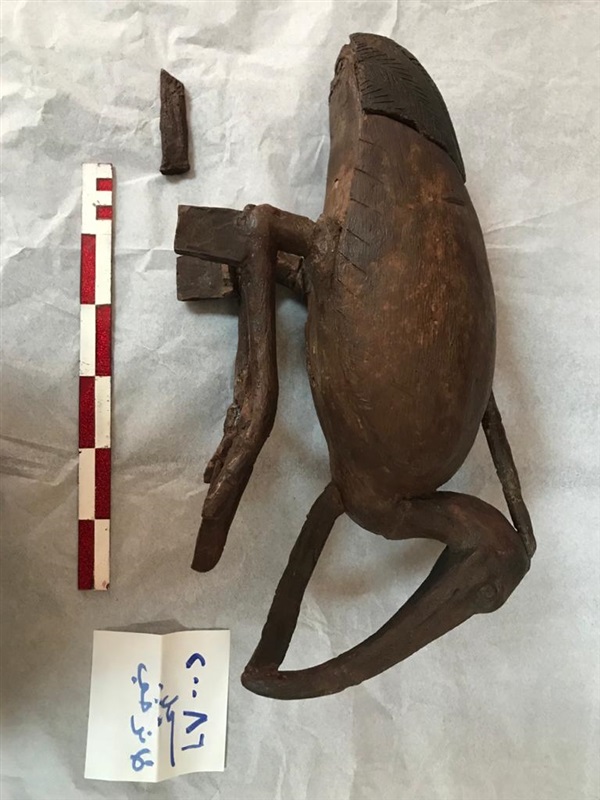
One of the artifacts transferred to NMEC - Min of Tourism & Antiquities
The CEO added that among these artifacts that were transferred to the Museum of Egyptian Civilization is an important and rare statue of the ibis, the symbol of the God of Wisdom and Science in ancient Egypt (Thoth) made of wax, which is one of the rare materials that the ancient Egyptian used in a manner that preserves its cohesion to withstand a temperature of more than 40 degrees Celsius.
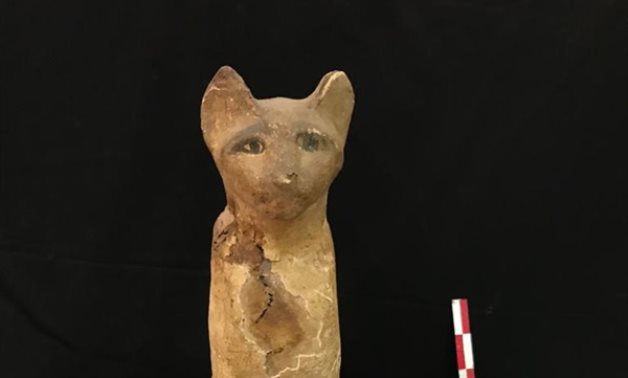
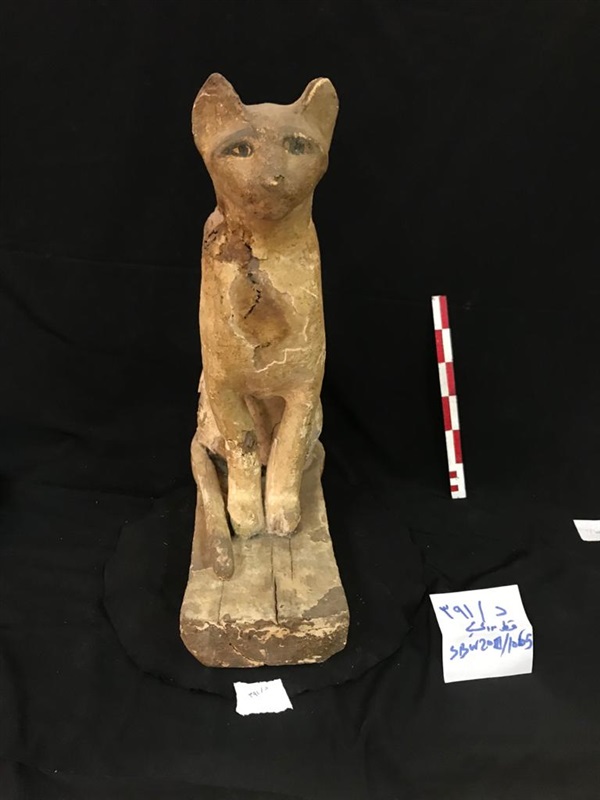
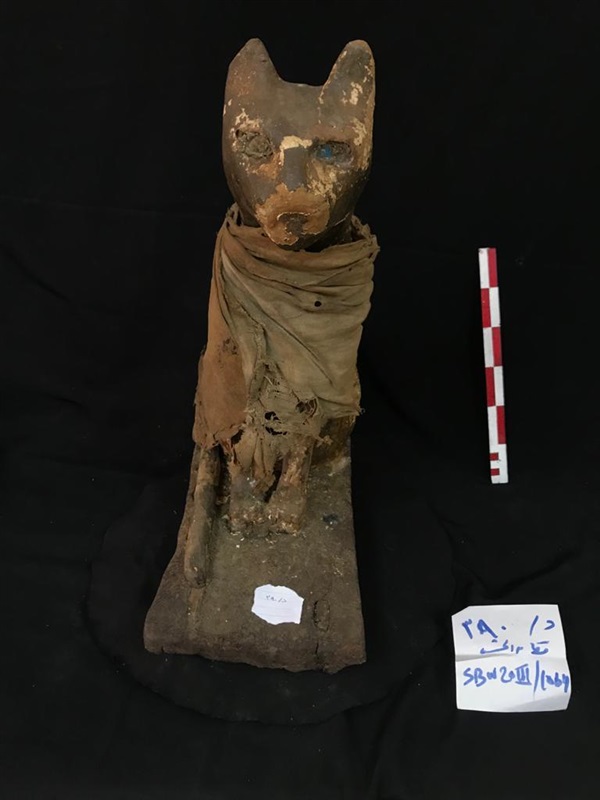
Also, three large statues of a cat, which was a symbol of the Goddess Bastet, were transported from the Saqqara cemetery in the area where the statues were discovered, which is called the Temple of Boubasatin. It dates back to the late Pharaonic era.
Statue of Goddess Bastet - Min. of Tourism & Antiquities
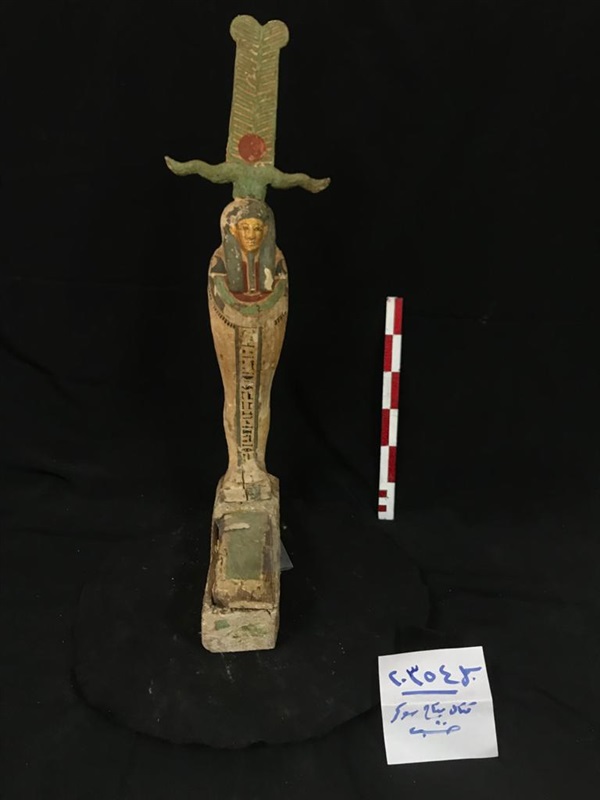
Ptah Sokar statue newly transferred to NMEC - Min. of Tourism & Antiquities
That is in addition to receiving two statues of Ptah, Sokar and Osiris, which represents the following gods united together: Ptah, the main god of the city of Memphis; Sokar, the god of the necropolis of Saqqara; and Osiris, the god of the dead and judge of the afterlife, and the hero of one of the oldest, most famous ancient Egyptian myths, which expresses the value of loyalty, redemption and sacrifice, the myth of "Isis and Osiris".
Bastet - Min of Tourism & Antiquities
It is worth noting that the museum is preparing to receive 22 royal mummies from the Egyptian Museum in Tahrir in a huge international procession, in addition to the opening of two halls, the Central Exhibition Hall and the Royal Mummies Hall.
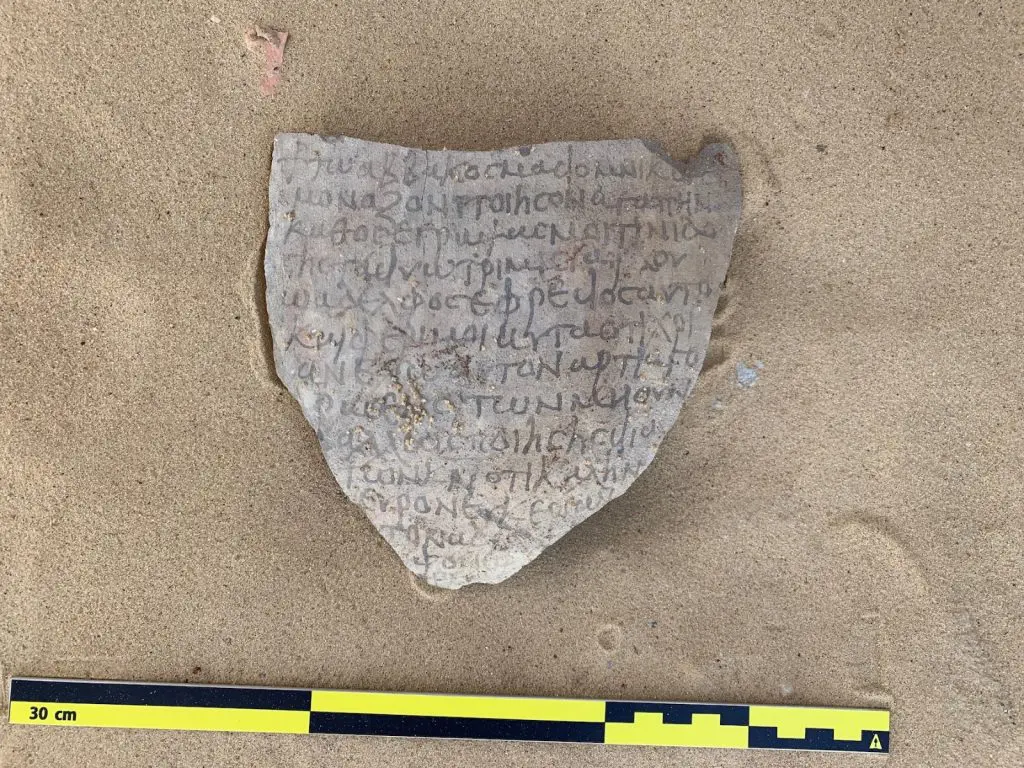
An inscription found at the site in Coptic, an Egyptian language written with Greek letters. Credit: Egyptian Antiquities Ministry
Archaeologists have uncovered the ruins of an ancient Christian settlement, including a monastery, dating to the fourth and fifth centuries AD, in Egypt's Western Desert, the Egyptian Antiquities Ministry stated on Saturday.
The team of French and Norwegian archaeologists has conducted a series of excavations at the site, called Tal Ganoub Qasr al-Agouz, and found a large complex of buildings, including a church, in 2020.
The find, which includes "19 structures" and the church, which was "carved into bedrock," is expected to greatly expand our knowledge of the period, and helps to "the nature of monastic life in the region," Dr. Victor Ghica, the head of the archaeological team, stated.
According to Ghica, the walls of the church, which dates to the fifth century AD, a critical period in the development of early Christianity, were adorned with religious inscriptions and passages from the Bible written in Greek.
The walls of the church also include inscriptions, written in yellow ink, detailing some aspects of monastic life in the region.
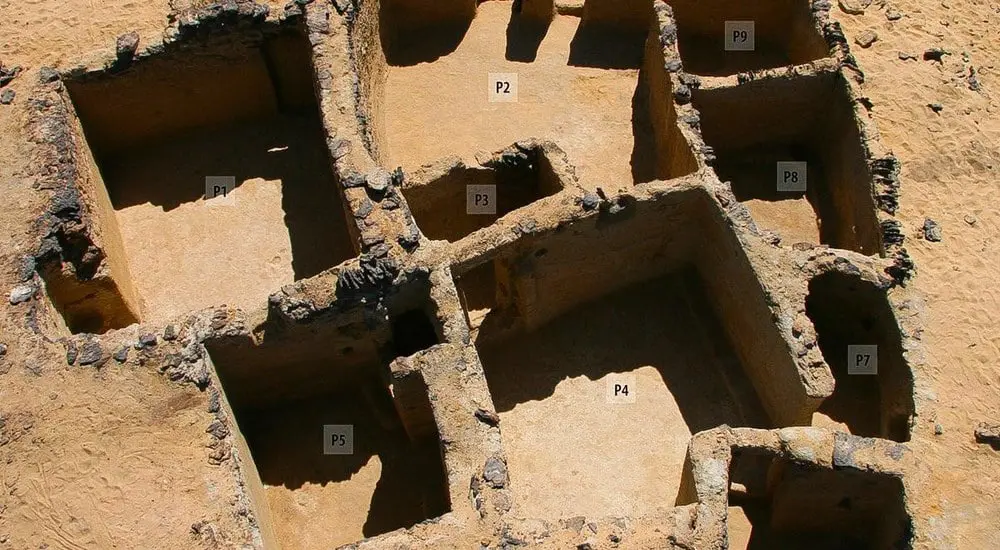
Ruins found at the site. Credit:Egyptian Antiquities Ministry
Ruins of monastery in Egypt part of larger, ancient Christian complex
The massive complex includes "six sectors containing the ruins of three churches and monks' cells," Osama Talaat, head of Islamic, Coptic and Jewish Antiquities at Egypt's Ministry of Antiquities stated.
Archaeologists found both graffiti and intentional decorations featuring Coptic symbols on the walls of the ruins.
The many structures uncovered in the area, located in the desert southwest of the Egyptian capital Cairo, were made from a variety of materials, including basalt, bedrock, and mud bricks.
According to archaeological evidence, the site was occupied by monastic and other Christian communities from the fourth century AD until the eighth century, yet scholars believe its peak was from the fifth to the sixth centuries AD.
Previous excavations at the site, undertaken in 2009 and 2013, unearthed other monastic activities at the complex, including the "the production and preservation of wine as well as the husbandry of animals" by monks, according to the French Institute of Oriental Archaeology.
File: Egypt's Grand Egyptian Museum received the fourth shrine of King Tutankhamun's collection.
CAIRO - 14 March 2021: The Grand Egyptian Museum received the fourth shrine of King Tutankhamun from the Egyptian Museum in Tahrir, which will be part of the display scenario of the halls of the treasures of the Golden King.
Major General Atef Moftah, General Supervisor of the Grand Egyptian Museum project and the surrounding area, explained that the transfer was carried out amid security measures by the Tourism and Antiquities Police and under the supervision of restorers and museum curators.
He indicated that although this shrine is the smallest of King Tutankhamun's shrines, it is considered one of the largest artifacts that have been transferred from the King's treasures so far to the museum.
Dr. Al-Tayeb Abbas, Assistant Minister of Tourism and Antiquities for Archaeological Affairs at the Grand Egyptian Museum, said that this shrine will be subject to restoration work inside the museum. He added that it is made of gilded wood.
Dr. Al Tayeb Abbas said that the rest of the three shrines will be moved consecutively to be displayed with the rest of the king's treasures in Tutankhamun's hall on an area of 7,500 squared meters.
Mr. Moamen Othman, Head of the Museums Sector at the Supreme Council of Antiquities, said that before the transfer, the shrine was examined and a detailed report was prepared to document its preservation status.
He added that the restoration team carried out scientific and archaeological documentation of it and took all necessary scientific measures for restoration, maintenance.
They strengthened certain parts to ensure the safety of the shrine during transportation.
Mr. Moamen Othman added that the team covered the shrine with Japanese chu paper and the appropriate stiffening materials to ensure its complete safety during the transportation process.
Dr. Issa Zidan, Director General of Executive Affairs for Restoration and Transfer of Antiquities at the Grand Egyptian Museum, said that the transfer of the shrine was carried out according to international scientific standards.
He explained that the treasuers were dismantled into five parts with the same technique that the ancient Egyptian used, and then each side was individually wrapped and inner and another outer boxes were added using acid-free materials.
Dr. Issa Zidan added that the team from the Grand Egyptian Museum and the Egyptian Museum in Tahrir will reassemble the shrine again, within the next few days, inside its showcases in the halls of the Boy King's treasures.
The American Research Center in Egypt, Northern California Chapter, and the Near Eastern Studies Department, University of California, Berkeley, invite you to attend a virtual lecture by Dr. Rita Lucarelli, UC Berkeley:
Ancient Egypt and Its Reception in Black America: From Afrocentrism to Afrofuturism
When: Sunday, April 18, 2021, 3 PM Pacific Time
Zoom Lecture. A registration link will be automatically sent to ARCE-NC members. Non-members may request a registration link by sending email with your name and email address to arcencZoom@gmail.com. Attendance is limited, so non-members, please send any registration requests no later than April 16.
About the Lecture:
Hartmut Geerken, Sun Ra Arkestra Performing at Heliopolis, Egypt, 1971, gelatin silver print, 5 x 7". From "Cosmic Communities: Coming Out into Outer Space—Homofuturism, Applied Psychedelia & Magic Connectivity."
The
cultural imagining of Ancient Egypt and
of its monuments, writing and religion
has been at the basis of histories of
Egyptology and especially of Western
Egyptomania, which originated in Greece
and Rome and continued to prosper in
Europe and the West before and after
Napoleon's campaign in Egypt (1798-99).
What is often forgotten is the existence
of a non-Western egyptomania, which has
developed in philosophical, political,
religious and cultural movements and
trends in modern Egypt itself (Pharaonism)
as well as in Africa, the Middle East and
among the African-American communities in
the US. This lecture aims at raising
interest into and discussing elements of
fascination and inspiration from ancient
Egypt in modern and contemporary art,
literature and music inspired by two main
African-American cultural movements such
as Afrocentrism and Afrofuturism.
About the Speaker:
Dr. Rita Lucarelli
Rita Lucarelli studied at the University of Naples "L'Orientale," Italy, where she received her MA degree in Classical Languages and Egyptology. She holds her Ph.D. from Leiden University, the Netherlands. Her Ph.D. thesis was published as The Book of the Dead of Gatseshen: Ancient Egyptian Funerary Religion in the 10th Century BC. She worked as a Research Scholar and a Lecturer at the Department of Egyptology of Bonn University, where she was part of the team of the "Book of the Dead Project". She is an Associate Professor of Egyptology at UC Berkeley and Faculty Curator of Egyptology at the Phoebe A. Hearst Museum of Anthropology of the University of California, Berkeley and Fellow of the Digital Humanities in Berkeley. She is presently working at a project aiming at realizing 3D models of ancient Egyptian coffins, the "Book of the Dead in 3D". She is also completing a new monograph on demonology in ancient Egypt entitled "Agents of Punishment and Protection: Ancient Egyptian Demonology in the First Millenium BCE" and is one of the coordinators of the international project "Ancient Egyptian Demonology Project", or "Demon Things".
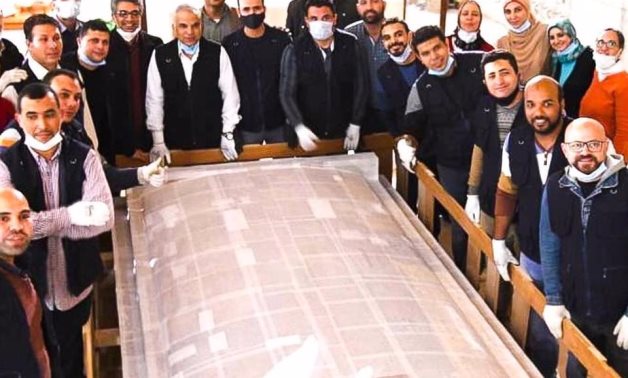
CAIRO – 9 March 2021: The Grand Egyptian Museum contains a huge amount of artifacts, which exceed 50,000 pieces, including the entire collection of King Tutankhamun.
Recently, Egypt's Ministry of Tourism and Antiquities began implementing the museum's display of the Golden King possessions within a base of 7000 meters, after restoring them.
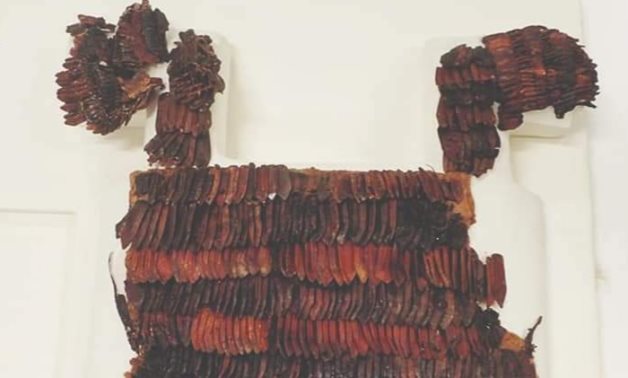
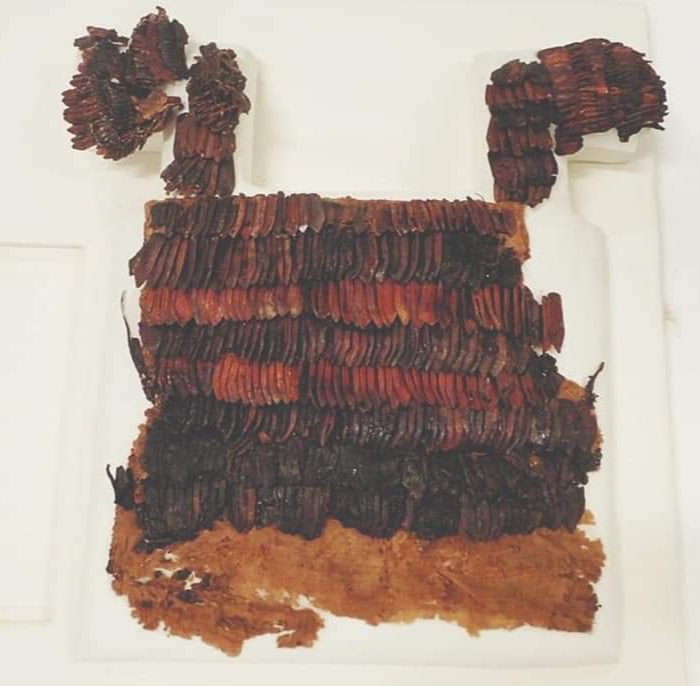
It is worth noting that restorers at the Restoration Center of the Grand Egyptian Museum were able to restore a large number of pieces. Among those pieces was the unique war shield of King Tutankhamun.
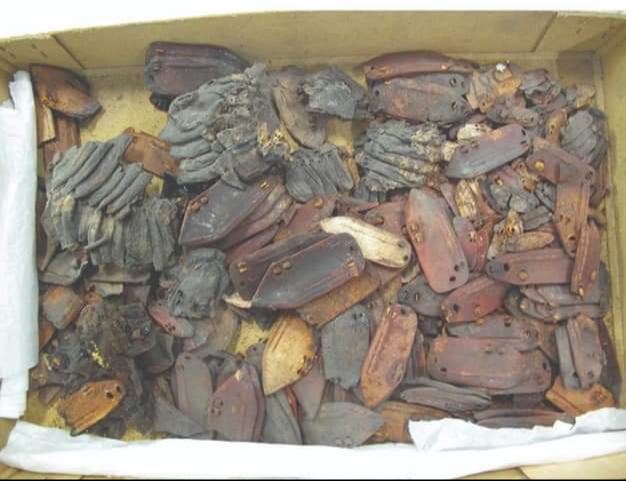
Tutankhamun's war shield before restoration - GEM
Director General of Restoration Affairs at the Grand Egyptian Museum Hussein Kamal said that the shield had suffered severe damage since the tomb was discovered in 1922. Most of the leather units were separate from the linen bedding, in addition to the fragility of the skin.
Due to the difficulty of restoring it at the time of its discovery, the unique English restorer Lux - who accompanied the tomb discoverer Howard Carter - made use of paraffin wax to stabilize its condition, and it remained in storage for long periods, until it was transferred to the Grand Egyptian Museum.
The restoration plan took about two months, so that the patterns and shapes of the leather units could be studied and classified, and the places of their fixation could be known, using modern methods of analysis and examination.
After restoration - GEM
This very shield comes to light for the first time thanks to pure Egyptian hands that managed to add yet another major achievement to the collection of the Grand Egyptian Museum's achievements, giving lurid proof of the skill and dedication of Egyptians in protecting and preserving their civilizational and cultural heritage.
Ancient Christian ruins discovered in Egypt reveal 'nature of monastic life'
Archaeologists unearth monks' cells and churches with biblical inscriptions dating back to fourth century AD
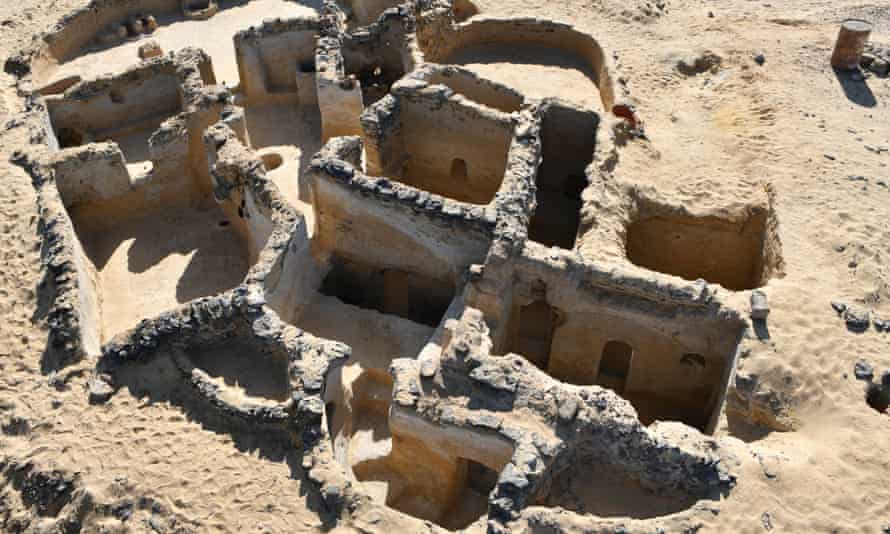
Ancient Christian structures built with basalt rock or carved in the rock face and mudbrick buildings were dated back to between the fourth and seventh centuries AD. Photograph: Egyptian Ministry of Antiquities/AFP/Getty Images
Agence France-Presse
Sat 13 Mar 2021 23.03 EST
A French-Norwegian archaeological team has discovered new Christian ruins in Egypt's Western Desert, revealing monastic life in the region in the fifth century AD, the Egyptian antiquities ministry said.
"The French-Norwegian mission discovered during its third excavation campaign at the site of Tal Ganoub Qasr al-Agouz in the Bahariya Oasis several buildings made of basalt, others carved into the bedrock and some made of mud bricks," it said in a statement on Saturday.The complex is comprised of "six sectors containing the ruins of three churches and monks' cells", whose "walls bear graffiti and symbols with Coptic connotations", said Osama Talaat, head of Islamic, Coptic and Jewish Antiquities at the ministry.
Mission head Victor Ghica said "19 structures and a church carved into the bedrock" were discovered in 2020, according to the statement.
The church walls were decorated with "religious inscriptions" and biblical passages in Greek, revealing "the nature of monastic life in the region", Ghica said.
It clearly showed that monks were present there since the fifth century AD, he added.
The remote site, located in the desert southwest of the capital Cairo, was occupied from the fourth to eighth centuries, with a likely peak of activity around the fifth and sixth centuries, according to the French Institute of Oriental Archaeology, in charge of the mission.
Cairo has announced several major new archaeological discoveries in recent months with the hopes of spurring tourism, a sector that has suffered multiple blows – from a 2011 uprising to the coronavirus pandemic.
Call for Applications: Marie Buttery Memorial Student Grant
The Board of Directors of the American Research Center in Egypt, Northern California chapter, is offering one $1,000 grant to a qualified student. Deadline for submission is April 23, 2021 with the grant to be awarded in May. To qualify for this grant, the applicant must be an undergraduate or graduate student who is enrolled at a Northern California college or university (Monterey to the Oregon border) or who has a home address in this area. Applicants must be pursuing a degree that incorporates Egyptian anthropology, Egyptian archaeology or art, history, museum studies or language, or Coptic or Arabic studies in any period. Proof of enrollment may be required. Applicants are to submit 1) a brief summary (250-500 words) describing how they will use the grant and 2) a 1-2 page CV. The grant will be awarded by the Board based on merit. Applicants should email their materials (Word or PDF file) to ARCENorCal@gmail.com .
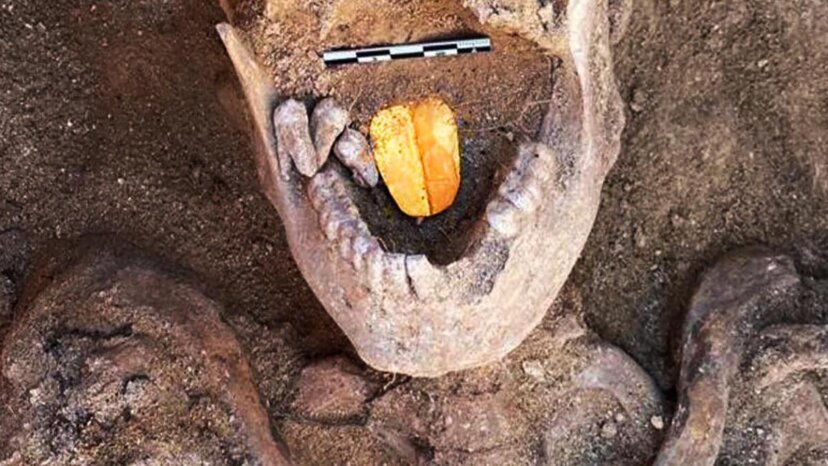
One of two golden-tongued mummies discovered in the temple of Taposiris Magna, currently being excavated by archaeologists outside Alexandria, Egypt. Egyptian Ministry of Tourism and Antiquities
There are probably some really boring things about digging up ancient dead bodies, but the reward probably comes in when you find the weird thing — the mysterious thing. Like mummies with golden tongues, for instance.
The Ancient Egyptians were a treasure trove of unusual funerary practices — for at least half of the 6,000-or-so years they buried their VIPs, it's obvious they were perfecting the process of preserving the soft tissues of their physical bodies, as well as streamlining the travel necessities for the deceased's journey to the afterlife. As their culture grew, so did the stories around the paces the dead would be put through in the Great Beyond.
The process of mummifying somebody was long — it took a bunch of specially trained priests with detailed knowledge of human anatomy around 70 days to complete. It was also expensive, which is why it's the wealthy and royal ancient Egyptian people archaeologists find mummified in sarcophagi, tucked in among treasures and mummified cats and sometimes servants to take care of them in the afterlife, occasionally with their tongues covered in gold foil.
In a statement made by the Egyptian Ministry of Tourism and Antiquities in January 2021, two of the 16 mummies discovered in the temple of Taposiris Magna, currently being excavated by archaeologists outside Alexandria, were found with gold foil tongues stuck in their mouths. The Ministry statement explained this would have been done by the priest who prepared the bodies "to ensure their ability to speak in the afterlife" — particularly to Osiris, the Egyptian god of the dead.
Gold was as precious in ancient Egypt as it is today, and golden tongues have been found in Egyptian mummies before, but it is not known why some of the mummies got these precious prosthetics while others did not. However, the practice is mentioned in the Book of the Dead, the ancient Egyptian text outlining funerary practices. The text explains that placing gold foil on the tongue would ensure the deceased would be able to breathe, eat and speak in the afterlife.
The mummies found at Taposiris Magna were not in particularly good shape, but they were buried with some other treasure, including coins depicting the face of Cleopatra, which means they were entombed around 2,000 years ago, during the Ptolemaic Kingdom of Egypt. The team that uncovered the 16 burials at Taposiris Magna has been working for years to find the tomb of Cleopatra, the last ruler of the last dynasty of ancient Egypt, which is believed by some to be submerged under the harbor in Alexandria.
We've all heard of the historically accurate settings that dwell within Ubisoft's Assassin's Creed franchise. Equipped with its own Discovery Tour, titles such as Assassin's Creed Origins really hone in on the historical experience, and its representation of Ptolemaic Egypt is being used to teach history in a new Twitch series.
Egyptologist Dr. Chris Naunton was joined by Southampton University PhD student Gemma Renshaw and associate professor of history at Missouri University of Science and Technology Dr. Kate Sheppard for the first episode of "Playing in the Past." Naunton's six-part series revolves around dissecting Egypt's history through Ubisoft's tenth title in the franchise. In the premiere, Naunton described Assassin's Creed Origins as "the best visualization of Ancient Egypt," and it ignites a new-found appreciation for Ubisoft's dedication to historical detail.
Thebes was the first location that the three Egyptologists featured, where Naunton would compare his personal photos of the ancient city to Origins' depiction. Free reign exploration of the game followed shortly after, where the trio would bring their expertise as Naunton visually explored Egypt's history. Playing in the Past is scheduled to run up until July 15, where each episode will have different guests who discuss various pockets of Egypt - including the death and the afterlife of Ancient Egypt, craft and technology, and the people of Ptolemaic Egypt.
Ubisoft News recently asked Naunton where his inspiration for the series came from, and he admitted that he stumbled upon stills of the game whilst doing research. "What's this?... How can I get this?", Naunton remarked when he kept seeing screenshots of Origins whilst Googling images of Alexandria. Naunton and his colleagues collectively agreed that Ubisoft's reenactment was "amazing" and the Egyptologists were particularly impressed when they discovered the post-launch Discovery Tour - where they didn't even have to play the game to experience its inclusive history.
Ubisoft has also been praised for aiding children's education during lockdown, where games like Assassin's Creed offer a unique look at the history the game is based upon. During a "Keys To Learn" panel, the advantages of incorporating education within a video game was discussed, allowing children's learning to be more enjoyable - and Assassin's Creed Origins makes learning entertaining for both kids and adults.
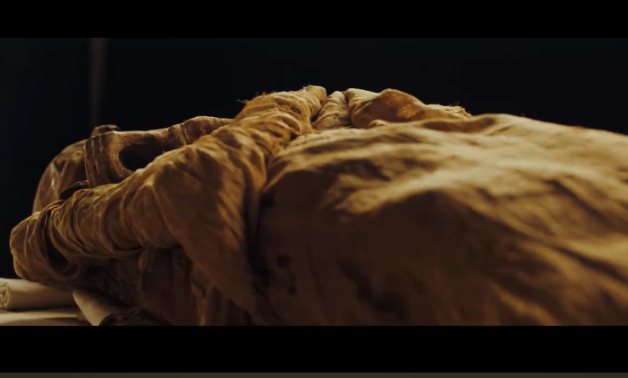
File: one of the mummies that will be transferred during the Pharaohs Golden Parade.
CAIRO - 12 March 2021: Egyptian Minister of Tourism and Antiquities Khaled El Enany follows up on the latest developments of the Pharaohs Golden Parade.
The Ministry of Tourism and Antiquities is organizing the event, which is the first of its kind in the world, to transfer 22 royal mummies in a majestic world parade from the place of its current display in the Egyptian Museum in Tahrir to the place of its permanent display in the National Museum of Egyptian Civilization in Fustat.
Dr. Khaled El Enany, Minister of Tourism and Antiquities and Major General Khaled Abdel A'al, Governor of Cairo, met with representatives of the ministries of defense, interior and security officials, the Supreme Council of Antiquities, and officials of the company doing the transfer of mummies to discuss the final touches in preparation for the start of the parade in the coming days.
During the meeting, the company organizing the event which is specialized in this field, in a way that guarantees and provides the safety and security of atrifacts of the event, reviewed the details of the action plan to bring out the event with the appearance that befits the greatness of our ancestors and the nobility of the Egyptian civilization.
In addition to discussing the plans of the artistic performances that will be presented since the parade's departure from the Egyptian Museum in Tahrir and traveling through the streets of Cairo until reaching the National Museum of Egyptian Civilization in Fustat, and the itinerary of the parade, decorations, artistic elements and propaganda materials that will be used to decorate the streets and squares along the route of the parade, as well as the designs of clothes and costumes that will be worn by the participants in the celebration and the accompanying music.
Egypt's Minister of Tourism& Antiquities follows up on Pharaohs Golden Parade latest developments
File: one of the mummies that will be transferred during the Pharaohs Golden Parade.
CAIRO - 12 March 2021: Egyptian Minister of Tourism and Antiquities Khaled El Enany follows up on the latest developments of the Pharaohs Golden Parade.
The Ministry of Tourism and Antiquities is organizing the event, which is the first of its kind in the world, to transfer 22 royal mummies in a majestic world parade from the place of its current display in the Egyptian Museum in Tahrir to the place of its permanent display in the National Museum of Egyptian Civilization in Fustat.
Dr. Khaled El Enany, Minister of Tourism and Antiquities and Major General Khaled Abdel A'al, Governor of Cairo, met with representatives of the ministries of defense, interior and security officials, the Supreme Council of Antiquities, and officials of the company doing the transfer of mummies to discuss the final touches in preparation for the start of the parade in the coming days.
During the meeting, the company organizing the event which is specialized in this field, in a way that guarantees and provides the safety and security of atrifacts of the event, reviewed the details of the action plan to bring out the event with the appearance that befits the greatness of our ancestors and the nobility of the Egyptian civilization.
In addition to discussing the plans of the artistic performances that will be presented since the parade's departure from the Egyptian Museum in Tahrir and traveling through the streets of Cairo until reaching the National Museum of Egyptian Civilization in Fustat, and the itinerary of the parade, decorations, artistic elements and propaganda materials that will be used to decorate the streets and squares along the route of the parade, as well as the designs of clothes and costumes that will be worn by the participants in the celebration and the accompanying music.
The Golden Pharoah's Parade will be accompanied on the same day by the opening of the central hall and the Royal Mummies Hall of the National Museum of Egyptian Civilization.
Dr. Khaled El Enany stressed that the transfer of royal mummies will be carried out according to specific procedures that will be taken into account, safety and security wise, followed internationally in the transfer of artifacts.
The artifacts will be placed in advanced sterilization units, and then loaded on carts that have been specially designed and equipped for that event.
This will all be loaded with the aim of preserving the integrity of the mummies, and ensuring that the celebration is carried out in a manner befitting the greatness of the ancient Egyptian civilization.
It is noteworthy that the number of mummies and coffins which will be transferred are 22 royal mummies, dating back to the 17th, 18th, 19th, and 20th dynasty, there are 18 mummies for kings and 4 mummies for queens, including the mummy of King Ramses II, King Seqnen Ra, King Thutmose III, and King Siti The first, Queen Hatshepsut, Queen Mert Amon, wife of King Amenhotep the First, and Queen Ahmose-Nefertari.
The Golden Pharoah's Parade will be accompanied on the same day by the opening of the central hall and the Royal Mummies Hall of the National Museum of Egyptian Civilization.
Dr. Khaled El Enany stressed that the transfer of royal mummies will be carried out according to specific procedures that will be taken into account, safety and security wise, followed internationally in the transfer of artifacts.
The artifacts will be placed in advanced sterilization units, and then loaded on carts that have been specially designed and equipped for that event.
This will all be loaded with the aim of preserving the integrity of the mummies, and ensuring that the celebration is carried out in a manner befitting the greatness of the ancient Egyptian civilization.
It is noteworthy that the number of mummies and coffins which will be transferred are 22 royal mummies, dating back to the 17th, 18th, 19th, and 20th dynasty, there are 18 mummies for kings and 4 mummies for queens, including the mummy of King Ramses II, King Seqnen Ra, King Thutmose III, and King Siti The first, Queen Hatshepsut, Queen Mert Amon, wife of King Amenhotep the First, and Queen Ahmose-Nefertari.