Search This Blog

Friday, December 27, 2019

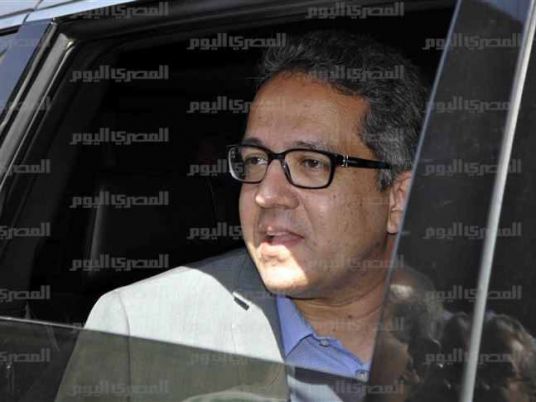
Profile - Khaled al-Anany, the first Minister of Antiquities and Tourism - Egypt Independent


https://www.egyptindependent.com/profile-khaled-al-anan-the-first-minister-of-antiquities-and-tourism/

Profile – Khaled al-Anany, the first Minister of Antiquities and Tourism


Khaled al-Anany was appointed to first Minister of Antiquities and Tourism, after the Tourism Ministry merged with the Ministry of Antiquities in the recent cabinet reshuffle.

In March 2016, Anany assumed the Minister of Antiquities office in Prime Minister Sherif Ismail's Cabinet. He continued in the same position under the current Prime Minister Mostafa Madbouly's Cabinet.

Anany studied tourism guidance and was appointed as an assistant lecturer at Helwan University and then an assistant teacher.

He obtained a doctorate in Egyptology and worked as a professor of Egyptology and Tourism at the Guidance Department at the Faculty of Tourism and Hotel Management at Helwan University, since 2011.

Anany has worked as a correspondent member at the German Archaeological Institute in Berlin, as director of the Open Education Center from 2010 to 2012, as head of the Tourism Guidance Department in 2011/2012, and as Deputy Dean of the Faculty of Tourism and Hotel Management in 2012-2013.

He was also a visiting professor at the Paul Valéry University in France.

Anany taught the ancient Egyptian language, civilization and antiquities in many public and private universities, where he supervised and discussed many scientific theses.

He also taught in the Joint Master in Heritage Conservation and Site Management study programme, which is implemented by the BTU Cottbus–Senftenberg university alongside the Helwan University in Cairo, with support from the Egyptian Ministry of Antiquities and the German Archaeological Institute.

Edited translation from Al-Masry Al-Youm

--   Sent from my Linux system.

Sunday, December 22, 2019

′Emoglyphs′: Emojis reminiscent of ancient Egyptian writing, says museum | News | DW | 22.12.2019


https://www.dw.com/en/emoglyphs-emojis-reminiscent-of-ancient-egyptian-writing-says-museum/a-51770895

News

'Emoglyphs': Emojis reminiscent of ancient Egyptian writing, says museum

Egypt's ancient writing system remains a mystery to many. One museum in Jerusalem is hoping to change that by introducing emojis to increase understanding of hieroglyphs in the digital age.

The Israel Museum opened its "Emoglyphs" exhibition this week to explain the importance of Egypt's ancient hieroglyphs through the use of emojis.

The Jerusalem-based museum is hoping the modern-day script will appeal to the digital generation and attract more visitors. 

The exhibition's curator, Shirly Ben-Dor Evian, came up with the idea as she struggled to explain to visitors how hieroglyphs are used as a script.

In an era in which many people are glued to their mobile screens, the curator had an epiphany.

"It occurred to me that some of the things can now be explained more easily because we are all writing with pictures now — it has become very widespread," Ben-Dor Evian told French news agency AFP.

"My goal as an Egyptologist is to show to people that something that is ancient is still relevant to their lives today." 

Read more: Egypt: Archeologists find 3,500-year-old wooden coffins 

Emojis similar to hieroglyphs 

The Egyptologist explained that modern-day emojis are not so different from the ancient Egyptian text and that they share equivalents.

One example is the purple-suited dancer emoji with his hand raised, which Ben-Dor Evian says echoes a pose very similar to an Egyptian in a loin cloth from 3,000 years ago.

Another is a necklace dating back to around 100 BC, which bears the inscription of a scarab beetle, a symbol of resurrection. According to the Egyptologist, the character resembles today's ladybird emoji.

"There is a similarity in design and shapes, which is very interesting because there are thousands of years and very big cultural gaps between those two systems."

Read more: Cairo: Where ancient history meets modernity

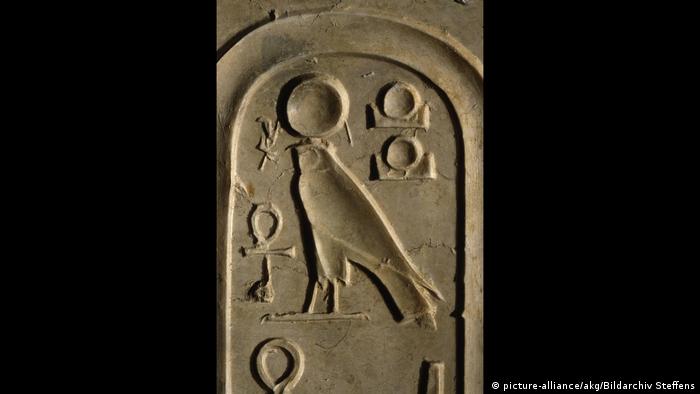
A slab showing hieroglyphs

The Israel Museum says there is a "similarity in design and shapes" between emojis and ancient hieroglyphs despite a gap of thousands of years between the two writing systems

New forms of communication 

The term emoji comes from the Japanese word for a combination of a picture and a written character.

Overtime, more emojis have been created to replace written words and often convey much more than simply a single emotion, for example the monkey emoji covering its face to convey cheekiness or playfulness.

The 21st century pictograms started to become popular in the late 1990s and have become a key form of communication across online messaging and social media platforms including WhatsApp and Facebook.

"When you use ideographic writing, the image becomes more powerful than the word," Ben-Dor Evian said, using Apple's 2016 fluorescent green water pistol as an example. 

"Once you start using picture as writing, then it's much more powerful than writing the word 'gun.' It's much scarier."

The hieroglyphic script was developed in Egypt about 5,000 years ago and comprised hundreds of pictures. Over time, the pictures were replaced by a writing system consisting of some 20 signs.

A difference between the two communication systems is that in the case of emojis, the writer decides how emojis are used, whereas ancient Egyptians maintained rigid rules around the use of hieroglyphics, believing they were sacred.

The "Emoglyphs: Picture-Writing from Hieroglyphs to the Emoji" exhibition is open until October 2020 and also includes collections never before displayed.

Founded in 1965, the Israel Museum is Israel's largest cultural institution and is ranked as one of the world's leading art and archaeology museums.

--   Sent from my Linux system.

Egypt Centre Collection Blog: Pharaohs, Queens, and Priests: The Graeco-Roman Period in Swansea


https://egyptcentrecollectionblog.blogspot.com/2019/12/pharaohs-queens-and-priests-graeco.html

Monday, 16 December 2019

Pharaohs, Queens, and Priests: The Graeco-Roman Period in Swansea

Three third year students of Egyptology at Swansea University, Mollie Beck, Gabrielle Stanley, and Hannah Rawlings write the blog post for this week.

We have reached the tenth week of our course and, unfortunately, our last session. This week we focused on six objects from the Graeco-Roman Period, more specifically the Ptolemaic dynasty (c. 302–30 BC). The Ptolemaic dynasty was a very dramatic period full of scandals and murder. The capital moved to Alexandria and Egypt was ruled by the Macedonian-Greek family, the "House of Ptolemy", until the Roman conquest in 30 BC (Manning 2010).

Fig. 1: Ptolemaic queen (W194)

W194 is a black granite female head of a Ptolemaic queen from a life size statue (fig. 1). This object was a part of the MacGregor collection (1672) and purchased by Wellcome in 1922. Based on stylistic factors, the statue can been dated to the early Ptolemaic Period (Ashton 2001; Brophy 2015) and it is suggested that the queen depicted is either Berenice II or Arsinoe III. Berenice II was married to Ptolemy III Euergetes I, the third king of the dynasty (c. 246–221 BC) and Arsinoe III was the daughter of Berenice II who was married to her brother Ptolemy IV Philopator (c. 221–205 BC). Women in the Ptolemaic Period were very influential and queens had a lot of power; both Berenice and Arisinoe were very involved with the government and the state (Minas-Nerpel 2019). An interesting factor about this statue fragment is that the lower part of the face was re-cut, this could be a result from a mistake the sculptor made, a repair done to fix damage, or the statue was later reused by someone else. There is also traces of glue on the nose which tells us that it had broken off and was repaired at some point. In fact, the MacGregor catalogue mentions this restoration, thus indicating that it was done prior to the sale in 1922. The female figure wears a textured wig with a headband running around the top part of the wig. On her forehead the remains of a uraeus can be seen, but unfortunately it has been damaged. The wig shown is one that was popular among queens of the Ptolemaic Period. An interesting feature of this head is that the support pillar along the back of the head has been smoothed and should have had an inscription on it, although it is blank. This could suggest that the statue was never finished, explaining the re-carving of the lower face.

Fig. 2: Door shrine (EC485)

EC485 is the left side of a shrine door (fig. 2). This object was also purchased from the MacGregor collection (lot 645), but unfortunately the provenance is unknown. This object is particularly important because wooden examples of these do not usually survive or are not preserved well and it helps us get an idea of how these shrines were constructed. The carved wood is decorated with gesso on the front and it is also possible that it was gilded with gold leaf, although there are no traces of the latter surviving. The gesso is inscribed with a king kneeling and presenting an offering of incense to the god within the shrine. The king wears the blue crown, which is debated among scholars as being either the war crown or a representation of the living king at the time (Hardwick 2003). He also wears other kingly regalia such as a kilt, a uraeus on the forehead, and a broad collar. An interesting aspect of this object is the fact that it features a blank cartouche in the top right-hand corner. Scholars have also debated the meaning of this as it could reflect the period—no one knew who was king as there were so many in a short period of time so they left the cartouche blank—or it could be a general representation of the king, not specific to anyone. The blank cartouche is a trend of the late Ptolemaic Period, which perhaps gives us an estimated date. The hole for the tie where both doors would be tied together and then sealed can be seen on the right side. The right door would most likely have the same image but mirrored with the statue of the god inside the shrine.       

Fig. 3: Mummy mask (W917)
  
Object W917 is a colourful mummy mask that dates to the late Ptolemaic Period/early Roman Period (fig. 3). It is made of cartonnage but has been beautifully decorated with various different colours of paint. For the face of the mask, gold leaf has been used in order to show that this person has died and become an Osiris, and so has the gold skin of the gods. In addition, blue paint has been used for the hair as lapis lazuli is the colour of the hair of the gods. A headband has been added with decoration of squares of colour with white flowers in the centre. This pattern continues the whole way around until the back where there is a knot painted on. Is this simply decorative or does it represent the "crown of justification" (mꜣḥ n mꜣꜥ ḫrw), which is meant to represent triumph over death in the afterlife (Riggs 2005, 81–82)? This mask has been left without an inscription and it is quite difficult to tell the gender of the person being represented.

Fig. 4: Roman coffin fragment (W1042a)

W1042a is a coffin fragment dating to the Roman Period (fig. 4). This is an interesting piece as it has previously been suggested by some scholars to be a fake due to the unusual hieroglyphs. However, they just do not conform to the typical stylistic traits of the period and do actually make sense. They read 'Life to the good god. Horus, Isis and Osiris, Khentyimentyu, the great god, lord of Abydos, the eldest son, first born of Geb' (fig. 5). Stylistically this object can be traced to Tuna el-Gebel as several other similar coffins have been excavated there (Kurth 1990). This place was the necropolis for Hermopolis, which became a popular city during Roman Egypt. In the upper register, we have the deceased dressed as a priest worshipping the Goddesses Nekhbet, who wears the Hedjet-crown of Upper Egypt, and Wadjet, who wears the Deshret-crown of Lower Egypt. They are shown in snake form and are resting on the wings of Khepri who is shown as a beetle. He is meant to be pushing up the solar disc but this has been removed and now a number (6) in its place. In the lower register we have the deities Isis, Osiris, Nephthys, and perhaps Re. The two gods are sitting and each is holding a was-sceptre and an ankh. The two goddesses each have their names on top of their head and are standing in a praising gesture toward the gods.

Fig. 5: Hieroglyphs on Roman coffin fragment (W1042a)

Bought at auction by Henry Wellcome in 1931 (lot 12), the next artefact (W1043) that we examined was the stela of Pamenes (fig. 6). With Ken's help, we were able to read the majority of the four lines at the bottom of the stela, which is an offering dedicated to Re-Harakhty. The four lines list his epithets and the offerings of the usual bread and beer in addition to other provisions for the ka of Pamenes. The final line tells us the name of his parents, Herefernit and Satweret. The central register of the stela depicts the deceased, Pamenes, in the garb of a priest with his arms raised in adoration before Re and Osiris. Above this is the winged sun-disc that has a central column of red dots that represent the rays of the sun that hit the hieroglyph for the sky, flanked by two snakes wearing the crowns of Upper and Lower Egypt respectively.

Fig. 6: Ptolemaic stela (W1043)

This course has been extremely interesting and we are so fortunate to have had this opportunity. It has been such a great way to become more familiar with the Egypt Centre collection and take a chronological trip through ancient Egypt. The vast areas that are covered by objects at the Egypt Centre is incredible and Ken has presented amazing information and knowledge.

Bibliography:
Ashton, S.-A. (2001) Ptolemaic royal sculpture from Egypt: the interaction between Greek and Egyptian traditions. BAR International Series 923. Oxford: Archaeopress.
Brophy, E. (2015) Royal statues in Egypt 300 BC–AD 220: context and function. Archaeopress Egyptology 10. Oxford: Archaeopress.
Hardwick, T. (2003) 'The iconography of the Blue Crown in the New Kingdom'. Journal of Egyptian Archaeology 89: 117–141.
Kurth, D. (1990) Der Sarg der Teüris: eine Studie zum Totenglauben im römerzeitlichen Ägypten. Aegyptiaca Treverensia: Trierer Studien zum Griechisch-Römischen Ägypten 6. Mainz am Rhein: Philipp von Zabern.
Manning, J. G. (2010) The last pharaohs: Egypt under the Ptolemies, 305–30 BC. Princeton: Princeton University Press.
Minas-Nerpel, M. (2019) 'Ptolemaic queens as ritualists and recipients of cults: the cases of Arsinoe II and Berenike II'. Ancient Society 49: 141–183.
Riggs, C. (2005) The beautiful burial in Roman Egypt: art, identity, and funerary religion. Oxford studies in Ancient Culture and Representation. Oxford: Oxford University Press.
Sotheby, Wilkinson & Hodge. (1922) Catalogue of the MacGregor Collection of Egyptian Antiquities. London: Davy.
Sotheby & Co. (1931) Catalogue of Egyptian, Greek, Roman, South American, Arabian and Indian antiquities, etc. savage art, etc. Monday the 27th July 1931. London: Sotheby and Co.
--   Sent from my Linux system.

Min. of Antiquities' discoveries of 2019 - Egypt Today


https://www.egypttoday.com/Article/4/78946/Min-of-Antiquities-discoveries-of-2019
Part of El-Assasif Cache findings of 2019 - ET Part of El-Assasif Cache findings of 2019 - ET

Min. of Antiquities' discoveries of 2019

Sun, Dec. 22, 2019

CAIRO - 22 December 2019: The year 2019 was full of archaeological discoveries in various regions of Egypt. The number of discoveries reached about 19 important discoveries, celebrated inside and outside of Egypt.

In the following lines, ET sheds light on the numerous discoveries made during 2019:

Jan 15, 2019: The mission of the Ministry of Antiquities operating in Bir Shaghala in the Dakhla Oasis succeeded in uncovering two ancient tombs from the Roman era.

Feb 1, 2019: The discovery of three wells, where a large number of mummies were buried in Tuna el-Gebel region in Minya Governorate during the excavations of the mission of the Ministry of Antiquities and the Research Center for Archaeological Studies at Minya University.

Feb 26, 2019: The mission of the Ministry of Antiquities and the Swedish Lund University in the Gebel al-Silsilah region of Aswan discovered a workshop for the manufacture of architectural elements dating back to the era of the modern state.

March 28, 2019: The mission of the American University of New York in Abydos discovered the lobby of Ramses II Palace, attached to his temple in Abydos, along with the stones to inaugurate and establish the temple.

April 1, 2019: The Ministry of Antiquities mission in Quesna region, Menoufia discovered a limestone sarcophagus with a mummy and golden flakes.

April 5, 2019: A cemetery from the Ptolemaic period for a man and his wife containing human remains and a group of burials of birds and animals in Al-Diabat area, Sohag Governorate were uncovered.

April 13, 2019: The mission of the Ministry of Antiquities in Saqqara discovered the tomb of the nobleman Khuwy, which dates back to the end of the Fifth Dynasty. It was chosen among the top 10 discoveries of 2019.

April 18, 2019: The mission of the Ministry of Antiquities in Luxor discovered a cemetery in the area of Draa Abul Naja and two cemeteries in Al-Assasif region, dating back to the Ramesside era.

April 23, 2019: The mission of the Ministry of Antiquities and the University of Milan, Italy, discovered a rocky cemetery dating back to the Greco-Roman era in the Aga Khan Cemetery area, western Aswan.

May 4, 2019: The mission of the Ministry of Antiquities discovered a cemetery dating back to the Old Kingdom, with colorful coffins in the southeastern side of the Giza Pyramids monuments area.

June 28, 2019: The Ministry of Antiquities' mission discovered a rocky cemetery, south of the Pyramid of Senusret II, in Fayoum.

July 14, 2019: The Ministry of Antiquities discovered south of the Curved Pyramid in Dahshur a number of stone, pottery and wooden coffins with mummies inside.

October 10, 2019: The Egyptian Mission to the Western Valley of the Kings discovered a funerary furniture workshop.

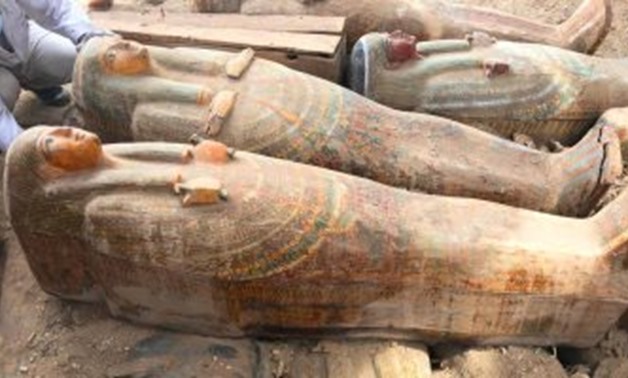
October 19, 2019: The Ministry of Antiquities' mission in Al-Assasif, Luxor, discovered a cache of 30 coffins, kept in a great state of preservation and color, containing mummies for men, women, and children.

November 23, 2019: The mission of the Ministry of Antiquities in Saqqara discovered a large number of cat mummies, sacred animals, and goddess statues in the Bobcati district of Saqqara.

December 1, 2019: The Egyptian-German Mission in Al-Matareya discovered parts of royal statues and a large mud brick wall dating back to the era of the modern state.

December 10, 2019: The Egyptian Archaeological Mission unearthed a rare royal statue in the form of a K (Ancient Egyptian concept of vital essence differentiating between a dead and a live person) in Mit Rahina region of Giza Governorate.

December 14, 2019: The Egyptian Archaeological Mission discovered a small royal statue in the shape of a Sphinx in Tuna el-Gabal, Minya Governorate.

December 19, 2019: The Egyptian-German Archaeological Mission unearthed a legendary statue of the God Horus at King Amenhotep III's Temple of Millions of Years in the western mainland in Luxor.

King Ramses red granite statue unearthed in Mit          Rahina village
King Ramses' red granite statue unearthed in Mit Rahina village-ET

Statue          discovered in TUna el-Gebel
Sphynx look-alike statue discovered in Tuna el-Gebel - ET

Huge statue of Horus
Latest statue of Horus discovered - ET

Coffin          unearthed in Luxor Nov. 27
Well-preserved coffin unearthed in Luxor - ET
 

--   Sent from my Linux system.

French excavations on display at the Egyptian Museum in Tahrir - Heritage - Ahram Online


http://english.ahram.org.eg/NewsContentP/9/358032/Heritage/French-excavations-on-display-at-the-Egyptian-Muse.aspx

French excavations on display at the Egyptian Museum in Tahrir

An exhibition showcasing artefacts unearthed during French missions' excavations in Egypt is on display for two months at the Egyptian Museum in Tahrir

Nevine El-Aref , Thursday 19 Dec 2019
Museum
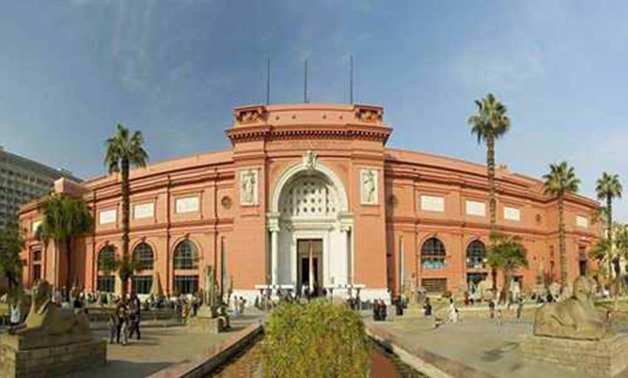
French excavations in Egypt, Research, Cooperation and Innovation" is the title of the exhibition Minister of Antiquities Khaled El-Enany and French Ambassador to Egypt Stephane Romatet officially inaugurated as a temporary archaeological exhibition at the Egyptian Museum in Tahrir.

The exhibition is a collection of artefacts French missions unearthed in Egypt.

Museum

Laurent Coulon, director of the French Archaeological Istitute for oriental studies (IFAO), said the exhibition falls within the framework of the French-Egyptian Cultural Year 2019, and is organised in collaboration between the Ministry of Antiquities and the IFAO.

Coulon added the exhibition highlights the French-Egyptian friendship and cooperation in archaeology.

Some 100 artefacts uncovered from different archaeological sites are showcased at the Egyptian Museum. The artefacts date back to prehistoric times through the Middle Ages.

Museum

Among the most important exhibits are king Khufu's Wadi Al-Jarf Papyri, considered the oldest papyri found in the world. It was unearthed in 2013 in Wadi Al-Jarf port, 24km south of Zaafarana and 119km south of Suez.

The papyri show the daily life of workers at Wadi Al-Jarf during the reign of king Khufu, and how they constructed the Great Pyramid at the Giza Plateau. It tells how the workers transported stones from the Tora limestone quarry to the plateau to build the Great Pyramid of Khufu, which indicates the highly efficient administrative system during Khufu's reign.

A collection of panels illustrating the activities of French missions at archaeological sites is also on show.

France is one of Egypt's key partners in the archaeological field, operating through three permanent archaeological centres: IFAO, the French Egyptian Centre for Karnak Temples Studies, and the Alexandria Studies Centre. 

Short link:


--   Sent from my Linux system.

Tourism Min. celebrates picking Egypt among fastest growing destinations - Egypt Today


https://www.egypttoday.com/Article/1/78889/Tourism-Min-celebrates-picking-Egypt-among-fastest-growing-destinations
FILE: Tourism Minister Rania Al-Mashat FILE: Tourism Minister Rania Al-Mashat

Tourism Min. celebrates picking Egypt among fastest growing destinations

Sat, Dec. 21, 2019

CAIRO – 21 December 2019: Tourism Minister Rania Al-Mashat has celebrated Egypt for being one of the world's fastest-growing destination by the World Tourism Organization (UNWTO) for continuing to be travelers' top choice in 2019 and 2020, as highlighted by Forbes.


"Congratulations Egypt for being one of the world's fastest-growing destination by the World Tourism Organization and for continuing to be travelers' top choice in 2019 and 2020," Mashat tweeted.

Egypt was chosen by Lexie Alford, the youngest traveler to visit all of the world's 196 countries at the age of 21, breaking a Guinness World Record.

"After traveling to every country in the world, Egypt is one of the countries that I would consider one of the most underrated," the article said. "Egypt harbors such immense, well-preserved history and a unique culture that can only be discovered in this forgotten corner of North Africa.

"The country is finally beginning to receive the recognition it deserves after being named the world's fastest-growing travel destination by the World Tourism Organization."

Forbes also mentioned the 2020 opening of the Grand Egyptian Museum—the largest archaeological museum in the world—that will open to the public and the exhibits will include thousands of ancient Egyptian artifacts that have never been seen before.

"The best way to discover everything this astonishing country has to offer is by taking a Nile River cruise with Abercrombie & Kent," she added.

Abercrombie & Kent is an award-winning luxury travel company, offering luxury vacations, private tours and small-group adventures on all seven continents.

In November, Mashat said Egypt earned over $12.5 billion in the 2018-19 fiscal year, as the North African country aims to restore its tourism glory that reached its peak in 2010.

In an interview with Bloomberg, Mashat said that the earnings in this fiscal year has been the highest ever in Egypt's history concerning the tourism sector.

"Today's travelers are looking for experience, they're looking for diversity of offer and they're looking for being part of the local community," Mashat said.
 
--   Sent from my Linux system.

Egypt's 'history of humanity' monuments face climate change threat - Reuters


https://www.reuters.com/article/us-egypt-climate-change-culture-trfn/egypts-history-of-humanity-monuments-face-climate-change-threat-idUSKBN1YO0QE

Egypt's 'history of humanity' monuments face climate change threat

LUXOR, Egypt (Thomson Reuters Foundation) - It's a steamy November day in the southern Egyptian city of Luxor, and the tourists tramping through the ancient temples of Luxor and Karnak are sweating. But the city's famed 7,000-year-old antiquities are feeling the heat too.

Increasingly high temperatures linked to climate change, as well as wilder weather, particularly heavy rains and flooding, are taking a growing toll on the ancient stonework, said Abdelhakim Elbadry, a restoration expert who works at Karnak temple.

"The changes appear noticeably, in the damage and cracks of the facades of many graves as well as the change of the color of the archaeological stones, as a result of high temperature and humidity," Elbadry told Thomson Reuters Foundation.

Granite that was once rose-colored has faded to a pale pink or even light grey over the last 15 years, he said.

"In every archeological site here in Luxor, you can witness the changes," he said.

Climate change is making efforts to protect Egypt's famed but fragile archaeological sites even harder, preservation experts say.

From the pyramids and Sphinx to the Citadel of Qaitbay and an ancient Roman amphitheatre near the Mediterranean Sea, the country's historic sites face growing threats from harsher weather and rising seas.

Egyptologist Zahi Hawass - the country's former Minister of State for Antiquities Affairs - said virtually all open-air archeological sites in Egypt are in danger from stronger winds and humidity, higher temperatures and bigger floods.

"I believe that in 100 years all these antiquities will be gone because of climate change," Hawass said, referring to expected serious deterioration of the monuments.

He said offices staffed by specialists should be set up near each of the country's archeological sites to record the changes taking place, try to find immediate solutions and to coordinate restoration of damage.

He has called for a joint effort by Egypt and the European Union to try to mitigate the effects of climate change on Egyptian antiquities.

Monica Hanna, an archaeologist with the Arab Academy for Science, Technology and Maritime Transport, said she believes many Egyptian historic sites near the Mediterranean Sea could see significant damage from rising sea levels linked to climate change within about 30 years.

Alexandria, Egypt's second-largest city, faces some of the biggest risks.

In remarks in Germany last year, Patricia Espinosa, head of the U.N. climate change secretariat, warned that climate change posed particularly severe threats to low-lying coastal cities such as Alexandria and Osaka in Japan.

Climate impacts "are not going to get better, they are going to get worse," she warned.

But a shifting climate also is just one of the threats to Egypt's antiquities, which also face pressure from everything from worsening air pollution to expanding settlements as the country's population grows, Hanna said.

Air pollution can erode the limestone and sandstone blocks that make up many ancient structures, she said, and the construction of housing areas without proper sewage systems, in areas near historic sites, can cause "tremendous" damage.

Egyptologist Hawas said visiting tourists also remain a threat to the structures they flock to admire.

"The flashes of mobile phones, the breathing and touching the antiquities — all these have really harmful effects," he said.

GOVERNMENT ACTION

Hussein Abdel Basir, director of the Antiquities Museum at the Bibliotheca Alexandrina, said the government is taking some action to better protect its archaeological sites from climate threats.

In Alexandria, the national government has earmarked $14 million to protect the Citadel of Qaitbay from coastal erosion.

"A total of 4,700 concrete blocks have been dropped in the water around the citadel in order to protect it from rising water," Abdel Basir said.

In addition to that effort, which started in late 2018, the government is putting in place projects to protect beaches from higher waves and stop coastal erosion.

Abdel Basir said about 230 foreign-led archeological missions operate in Egypt, and about 10% of those are carrying out work to reverse degradation seen in the country's famed antiquities.

But that is still far too little to adequately deal with the growing climate change threats, he said.

The endangered monuments are "the heritage of the world. It is not only Egypt's civilization that is being threatened, it is the history of humanity," he said.

Reporting by Menna A. Farouk ; editing by Laurie Goering : Please credit the Thomson Reuters Foundation, the charitable arm of Thomson Reuters, that covers humanitarian news, climate change, resilience, women's rights, trafficking and property rights. Visit news.trust.org/climate

--   Sent from my Linux system.

Egypt's sovereign fund to revamp historic area under citadel - The National


https://www.thenational.ae/world/mena/egypt-s-sovereign-fund-to-revamp-historic-area-under-citadel-1.953680

Egypt's sovereign fund to revamp historic area under citadel

The 56,000-square-metre Bab Al Azab area lies within the citadel's walls behind the ornate Azab gate and was built in 1754

A worker prepares a papyrus sheet before being dried              at a workshop in Al Qaramos, a village in Sharqia              governorate, north Cairo. EPA
A worker prepares a papyrus sheet before being dried at a workshop in Al Qaramos, a village in Sharqia governorate, north Cairo. EPA

Egypt approved a plan on Wednesday to turn over an abandoned historic area under Cairo's towering 12th-century Islamic citadel to its new sovereign wealth to develop for tourism and culture, a cabinet statement said.

The 56,000-square-metre Bab Al Azab area lies within the citadel's walls behind the ornate Azab gate, built in 1754. It contains early-19th-century warehouses, some with traditional wind scoops for cooling ventilation, built by the Ottoman ruler of Egypt at the time, Mohamed Ali.

"The aim of the project is to revive the area so that visitors find fun and entertainment by creating a mixed-use cultural centre," the statement quoted Antiquities Minister Khaled Al Anani as saying.

The area, controlled by the Antiquities Ministry, will be leased to the fund to develop and operate under a 49-year concession. Final approval depended on a more detailed plan, including finances, Anani said.

The preliminary proposal includes spaces for a museum, a spice market, a plaza for traditional foods, a crafts market, hotels, shops, a performances and events centre and a hammam.

The citadel was built by Salah Al Din, also known as Saladin, a Muslim warrior who wrested control of Jerusalem from the Crusaders in the late 12th century.

An ancient path through the concessionary area, from Bab Al Azab to the citadel, was the site of a famous massacre in 1811 of Mamluk officers by Mohamed Ali that allowed him to consolidate his control of Egypt.

Ayman Soliman, CEO of the Sovereign Fund of Egypt, told Reuters last week that the fund was looking to Egyptian businessman Samih Sawiris, chairman of Orascom Development Holding, to help develop the area. Between them, they plan to invest 2 billion Egyptian pounds ($125 million) in the project.

"It is a very old and neglected area. It has been used for storage, Islamic art storage, military museum storage," Soliman said. "They've erected ugly warehouse buildings there so it impacts lots of land. So now we're going to clean it up."

He said they would remove the modern construction and restore what remains of the historical buildings and walls.

The new sovereign fund says it plans to take control of some of the government's most promising assets in industries such as power and real estate, to bring in private investors to develop them.

Updated: December 19, 2019 05:06 PM

--   Sent from my Linux system.

A granodiorite colossus of Horus unearthed in Egypt's Luxor - Heritage - Ahram Online


http://english.ahram.org.eg/NewsContentP/9/358052/Heritage/A-granodiorite-colossus-of-Horus-unearthed-in-Egyp.aspx

A granodiorite colossus of Horus unearthed in Egypt's Luxor

The colossus was found at the Funerary Temple of king Amenhotep III

Nevine El-Aref , Thursday 19 Dec 2019
Horus
Share/Bookmark
Views: 4313

During excavations carried out at the Funerary Temple of king Amenhotep III, an Egyptian-German archaeological mission led by Horig Sourouzian unearthed a large part of a granodiorite colossus of a standing falcon-headed god Horus.

Sourouzian said the statue is missing the legs, and the arms are broken, but the head and torso are very well preserved.

The 1.85-metres-tall statue depicts the ancient Egyptian deity Horus wearing the divine pleated kilt held around the waist with a horizontally pleated belt.

The back pillar of the statue is unsubscribed.

Horus

The statue was found among the ruins of the hypostyle hall of the Funerary Temple of Amenhotep III, also known as the Temple of Millions of Years, at Kom Al-Hettan, Luxor's West Bank.

The mission also uncovered the lower part of a seated goddess and the head of a god, both in granodiorite. The god is wearing a tripartite wig, and a wide collar adorns his chest.  


Short link:
--   Sent from my Linux system.

Wednesday, December 18, 2019

Exhibition of French excavations in Egypt to be launched on Dec. 18 - Egypt Today


https://www.egypttoday.com/Article/4/78731/Exhibition-of-French-excavations-in-Egypt-to-be-launched-on
Egyptian Museum in Tahrir - ET Egyptian Museum in Tahrir - ET

Exhibition of French excavations in Egypt to be launched on Dec. 18

Mon, Dec. 16, 2019

CAIRO - 16 December 2019: Minister of Antiquities Khaled el-Anani and French Ambassador to Egypt Stephen Romate will inaugurate an exhibition organized by the Ministry of Antiquities, the Egyptian Museum of Tahrir and the French Institute of Oriental Archeology (LFAO).

The exhibition will be titled "French excavations in Egypt: Research, Cooperation, Innovation," and will be held on Dec. 18, 2019.

The exhibition will be held within the activities of the Egyptian-French cultural year 2019. It will be available to the public from Dec. 19 to Feb. 18, 2020, where a selection of distinguished artifacts discovered by French archaeological missions operating in Egypt will be displayed.

The exhibition paints a current panoramic picture of French archaeological activity in Egypt, the institutions that support it and the archaeological excavations carried out by these institutions in different regions of the country.

The exhibition also reflects the richness and progress of archaeological cooperation between the two countries and its tangible results.

France is one of Egypt's most important partners in the field of archaeological work. France has established three permanent research centers in Egypt: The French Scientific Institute for Oriental Archeology (IFAO) -which will soon celebrate the 140th anniversary of its founding-, The French Egyptian Center for the Study of Karnak Temple (CFEETK) and Alexandria Study Center (CEAlex). This is in addition to about fifty annual excavation missions launched in cooperation with the Egyptian Ministry of Antiquities.
--   Sent from my Linux system.

Celebrated ancient Egyptian woman physician likely never existed: Merit Ptah is often called the first woman doctor, esearcher calls it a case of mistaken identity -- ScienceDaily


https://www.sciencedaily.com/releases/2019/12/191216142152.htm

Celebrated ancient Egyptian woman physician likely never existed

Merit Ptah is often called the first woman doctor, esearcher calls it a case of mistaken identity

Date:
December 16, 2019
Source:
University of Colorado Anschutz Medical Campus
Summary:
For decades, an ancient Egyptian known as Merit Ptah has been celebrated as the first female physician and a role model for women entering medicine. Yet a researcher now says she never existed and is an example of how misconceptions can spread.
Share:
FULL STORY

For decades, an ancient Egyptian known as Merit Ptah has been celebrated as the first female physician and a role model for women entering medicine. Yet a researcher from the University of Colorado Anschutz Medical Campus now says she never existed and is an example of how misconceptions can spread.

"Almost like a detective, I had to trace back her story, following every lead, to discover how it all began and who invented Merit Ptah," said Jakub Kwiecinski, PhD, an instructor in the Dept. of Immunology and Microbiology at the CU School of Medicine and a medical historian.

His study was published last week in the Journal of the History of Medicine and Allied Sciences.

Kwiecinski's interest in Merit Ptah (`beloved of god Ptah') was sparked after seeing her name in so many places.

"Merit Ptah was everywhere. In online posts about women in STEM, in computer games, in popular history books, there's even a crater on Venus named after her," he said. "And yet, with all these mentions, there was no proof that she really existed. It soon became clear that there had been no ancient Egyptian woman physician called Merit Ptah."

Digging deep into the historical record, Kwiecinski discovered a case of mistaken identity that took on a life of its own, fueled by those eager for an inspirational story.

According to Kwiecinski, Merit Ptah the physician had her origins in the 1930s when Kate Campbell Hurd-Mead, a medical historian, doctor and activist, set out to write a complete history of medical women around the world. Her book was published in 1938.

She talked about the excavation of a tomb in the Valley of Kings where there was a "picture of a woman doctor named Merit Ptah, the mother of a high priest, who is calling her `the Chief Physician.'"

Kwiecinski said there was no record of such a person being a physician.

"Merit Ptah as a name existed in the Old Kingdom, but does not appear in any of the collated lists of ancient Egyptian healers -- not even as one of the `legendary'; or `controversial cases," he said. "She is also absent from the list of Old Kingdom women administrators. No Old Kingdom tombs are present in the Valley of the Kings, where the story places Merit Ptah's son, and only a handful of such tombs exist in the larger area, the Theban Necropolis."

The Old Kingdom of Egypt lasted from 2575 to 2150 BC.

But there was another woman who bears a striking resemblance to Merit Ptah. In 1929-30, an excavation in Giza uncovered a tomb of Akhethetep, an Old Kingdom courtier. Inside, a false door depicted a woman called Peseshet, presumably the tomb owner's mother, described as the `Overseer of Healer Women.' Peseshet and Merit Ptah came from the same time periods and were both mentioned in the tombs of their sons who were high priestly officials.

This discovery was described in several books and one of them found its way into Hurd-Mead's private library. Kwiecinski believes Hurd-Mead confused Merit Ptah with Peseseth.

"Unfortunately, Hurd-Mead in her own book accidentally mixed up the name of the ancient healer, as well as the date when she lived, and the location of the tomb," he said. "And so, from a misunderstood case of an authentic Egyptian woman healer, Peseshet, a seemingly earlier Merit Ptah, `the first woman physician' was born."

The Merit Ptah story spread far and wide, driven by a variety of forces. Kwiecinski said one factor was the popular perception of ancient Egypt as an almost fairytale land "outside time and space" perfectly suited for the creation of legendary stories.

The story spread through amateur historian circles, creating a kind of echo chamber not unlike how fake news stories circulate today.

"Finally, it was associated with an extremely emotional, partisan -- but also deeply personal -- issue of equal rights," he said. "Altogether this created a perfect storm that propelled the story of Merit Ptah into being told over and over again."

Yet Kwiecinski said the most striking part of the story is not the mistake but the determination of generations of women historians to recover the forgotten history of female healers, proving that science and medicine have never been exclusively male.

"So even though Merit Ptah is not an authentic ancient Egyptian woman healer," he said. "She is a very real symbol of the 20th century feministic struggle to write women back into the history books, and to open medicine and STEM to women."


Story Source:

Materials provided by University of Colorado Anschutz Medical Campus. Note: Content may be edited for style and length.


Journal Reference:

  1. Jakub M Kwiecinski. Merit Ptah, "The First Woman Physician": Crafting of a Feminist History with an Ancient Egyptian Setting. Journal of the History of Medicine and Allied Sciences, 2020; 75 (1): 83 DOI: 10.1093/jhmas/jrz058

Cite This Page:

University of Colorado Anschutz Medical Campus. "Celebrated ancient Egyptian woman physician likely never existed: Merit Ptah is often called the first woman doctor, esearcher calls it a case of mistaken identity." ScienceDaily. ScienceDaily, 16 December 2019. <www.sciencedaily.com/releases/2019/12/191216142152.htm>.
--   Sent from my Linux system.

Tuesday, December 17, 2019

Tombs at Ancient Greek Site Were Gold-Lined Chambers - The New York Times


https://www.nytimes.com/2019/12/17/science/tombs-archaeology-ancient-greece.html

Tombs at Ancient Greek Site Were Gold-Lined Chambers

The burial structures were looted during antiquity, but beads and a pendant depicting Hathor, an Egyptian goddess, suggest earlier trade links between Pylos, Greece, and Egypt.

The Tholos Tomb IV as reconstructed by the Greek Archaeological Service.Credit...via the Department of Classics, University of Cincinnati
  • Dec. 17, 2019

Two large tombs have been discovered and excavated at the site of the ancient city of Pylos in southern Greece, suggesting that Pylos played a surprisingly prominent role in early Mycenaean civilization.

Although the tombs had been looted in antiquity, archaeologists reported on Tuesday that they had recovered thousands of pieces of gold foil, remnants of the sheets of gold that once lined the tomb floors and would have lent a spectacular gleam to the darkened chamber.

The larger of the two tombs is 39 feet in diameter and the smaller 28 feet. Both were originally built in a beehive shape known as a tholos but had collapsed.

Archaeologists also found beads made of amber, carnelian and malachite, and a golden pendant depicting the head of the Egyptian goddess Hathor. These items suggest that Pylos, a city with a fine port, had trading connections, previously unknown, with Egypt and the Near East around 1500 B.C.E., the time the tombs were in use.

The two new tholos tombs were discovered by Jack L. Davis and Sharon R. Stocker, a husband and wife team of archaeologists at the University of Cincinnati who have been working at the site since 1992.

In 2015 they discovered a spectacular shaft grave just outside the ancient palace of Pylos. The grave's occupant was buried with a long bronze sword and a wealth of Minoan artwork, principally seal stones, of the highest quality. They named him informally as the Griffin Warrior, after a mythical beast carved on an ivory plaque in the grave.

Image
A gold pendant with an engraved depiction of the head of the Egyptian goddess Hathor. 15th century B.C.E.Credit...Vanessa Muros, via the Department of Classics, University of Cincinnati.

Both the Griffin Warrior and the two tholos tombs belong on a pottery-based time scale to a period known as Late Helladic IIA, which lasted from 1600 to 1500 B.C.E., although the exact dates are disputed. The period is of critical interest because it saw the formation of the Mycenaean civilization, which lasted from around 1600 to 1200 B.C.E., when many of its major cities were burned in an unknown catastrophe.

The era of Classical Greece did not emerge until after an ensuing dark age of some 700 years.

The later Mycenaean period is the setting for Homer's epics and such heroes as Agamemnon of Mycene. The period is called the Mycenaean because Homer portrays the city's king, Agamemnon, as leader of the Greek fleet that set out to recapture Helen of Troy. Also, monumental architecture, including many tholos tombs, was excavated at Mycene in the 19th century.

The new finds at Pylos raise the question of whether the ancient city may have had a greater importance at the beginning of the Mycenaean period, maybe even more than Mycene. "We need to rethink the formation of Mycenaean civilization and the role that Pylos played in this development," Dr. Stocker said.

A central feature of Mycenaean culture is that it originated from the Minoan civilization of Crete, an island south of Greece that prospered as a trading hub in the Eastern Mediterranean between the Near East and Egypt.

The fine Minoan artifacts in the Griffin Warrior's grave could have been just loot from Crete. But Dr. Davis and Dr. Stocker believe instead that the items, even though made in Crete, were integral to the warrior's culture. The handle of a sword in his grave looks identical to one engraved on a seal stone buried with him. This and other similarities point to the warrior's people having understood the meaning and imagery on the Minoan objects buried with him.

From further study of these objects, the two archaeologists now believe the warrior had both military and priestly functions as did the king or "wanax" described in inscriptions from the later Mycenaean period. If so, he would have been one of the early kings of Pylos, possibly the first, and if so the leader of the first kingdom on the European mainland.

Thomas G. Palaima, an expert in Mycenaean writing at the University of Texas at Austin, said he agreed with the two archaeologists' interpretation of the military and religious significance of the objects in the Griffin Warrior's grave. His main reservation, he said, was whether the role of the wanax existed in this early period.

Archaeologists see the new finds at Pylos as helping to clarify the early relationship between the Minoan and Mycenaean civilizations. The elites at Pylos and Mycene were using Minoan imagery and art objects to establish their status in Greek society.

"They quickly reach agreement on what shows status — it's weapons, big-time architecture, lots of gold, and seal stones," said Jeremy B. Rutter, a Mycenaean archaeologist at Dartmouth College. The elites imported precious objects from Crete and copied the style of Minoan architecture in the palaces at Pylos and Mycenae.

"The new findings at Pylos have been magnificent and have changed the nature of the debate," Dr. Rutter said. "What is emerging as a result of these excavations and the thesis by Michael Nelson is that Pylos was a real powerhouse in the early Mycenaean period." Dr. Nelson, an archaeologist at Queens College, New York, has long argued for an early Minoan influence at Pylos.

The two University of Cincinnati archaeologists have enjoyed a double measure of luck in their excavations at Pylos. They decided in 2015 to dig near the Pylos palace site in a grove of currant grapes known as the Dimopoulos Field. But the farmer who owned the field refused to sell it. They had to switch their team to what had seemed a far less promising site. It was there, on their first day of digging, that Drs. Davis and Stocker stumbled across the grave of the Griffin Warrior.

The Dimopoulos Field became available for purchase last year after the owner died. Dr. Davis raised the large sum required with funds that had been made available by the University of Cincinnati in return for his not moving to Stanford and with a grant from the Institute for Aegean Prehistory.

Last year, Dr. Davis said: "We started the excavation and my goodness we didn't find anything. It was getting very depressing because we'd paid a fortune for the field and I didn't want to admit we'd made a mistake."

When they did find the first tholos tomb, they realized to their horror that another excavator had been at work before them, using a backhoe. They were able to date this event through an unusual artifact — a chocolate croissant wrapper with an expiration date of September 2015.

The nearby Griffin Warrior grave was being excavated at this time, and presumably inspired the digging at the tholos tomb, even though plundering antiquities is a serious offense under Greek law. Fortunately the huge stones of the tholos tomb prevented even the backhoe operator from making much progress or destroying the site's archaeological value.

--   Sent from my Linux system.