|


|
|
|

Fascinated with ancient Egypt?
Cal State San Bernardino now has a certificate for that.
The university's Department of History is launching a new Egyptology program for undergraduates and the community.
Ancient artifacts from the university's Robert and Frances Fullerton Museum of Art will be used along with archaeological data from surveys and excavations at the ancient Egyptian amethyst mining region Wadi el-Hudi as part of the program, a news release states.
While all students will study from a variety of Egyptologists, some will have the opportunity to travel to Egypt for a study or work abroad experience, or conduct Egyptological internships in museums or archives.
Kate Liszka, the Pamela and Benson Harer Fellow in Egyptology and an assistant professor of history at the university, said in the release that students will learn to debate, interpret, research and write history from diverse and incomplete sources.
The certificate will help those interested in ancient Egypt, K-12 teachers who want to incorporate Egypt into their lessons and museum docents, among others, Liszka said in the release.
-- Sent from my Linux system.
 The American Research Center in Egypt, Northern California Chapter, and the Near Eastern Studies Department, University of California, Berkeley, invite you to attend a virtual lecture by Dr. Elaine Sullivan, UC Santa Cruz: Constructing the Sacred: Exploring the Ritual Landscape of Saqqara in 3D Zoom Lecture. A registration link will be automatically sent to ARCE-NC members. Non-members may request a registration link by sending email with your name and email address to arcencZoom@gmail.com. Attendance is limited, so non-members, please send any registration requests no later than Friday, October 8. Glenn Meyer ARCE-NC Publicity Director  About the Lecture: The ancient Egyptian necropolis of Saqqara was the burial place of kings, queens, priests, and elite officials during the entire Pharaonic Period (3000-332 BCE), and boasts some of the most spectacular architecture and art in Egypt. In her recently published "born-digital" monograph, Dr. Elaine Sullivan uses a 3D model that digitally "reconstructs" the original appearance of the ancient monuments and visualizes large-scale change over time at the cemetery, allowing the archaeologist to make a virtual visit to the site at various moments in time. The digital model provides new insights into how royal and elite Egyptians created a special monumental landscape to guarantee their eternal life and power. In this talk, Sullivan will highlight some of the findings of her research into ritual sight and visibility at this important necropolis. About the Speaker:
Dr. Sullivan has published widely on Egyptological and technological topics in both peer-reviewed and invited publications. She has lectured throughout the United States, often focused on digital cultural mapping, transformative scholarship and geospatial renderings. Her field experience began in 1995 when she excavated in Israel, and includes work in Italy, Syria, and Luxor, Karanis, and Saqqara in Egypt. She received her Bachelor's degree in history from Duke University, including a semester in Egypt at The American University in Cairo, and her Masters and PhD from the Department of Near Eastern Studies and Art at Johns Hopkins University in Baltimore, Maryland. About ARCE-NC:
For more information, please visit https://facebook.com/NorthernCaliforniaARCE/, https://arce-nc.org/, https://twitter.com/ARCENCPostings, or https://khentiamentiu.org. To join the chapter or renew your membership, please go to https://www.arce.org/general-membership and select "Berkeley, CA" as your chapter when you sign up. |
-- Sent from my Linux system.



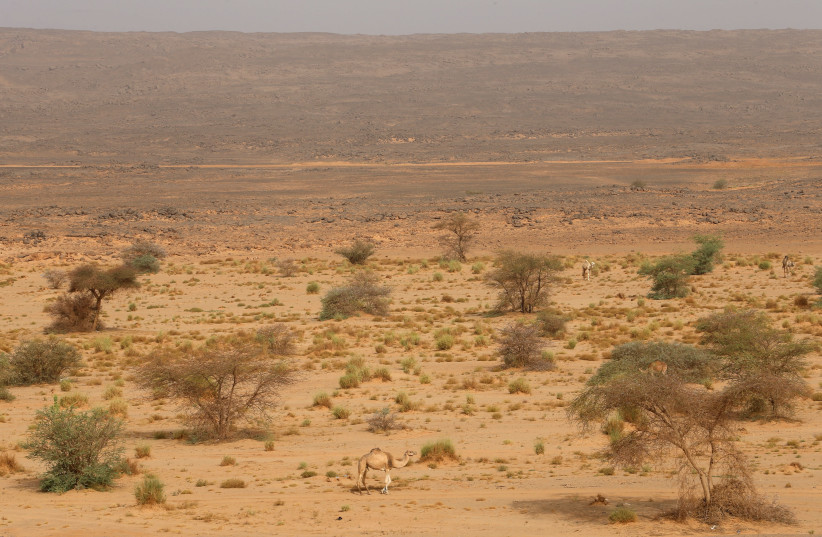 A camel seen at the Sahara Desert. (credit: REUTERS/AHMED JADALLAH)
 -- Sent from my Linux system.
Egypt's Ministry of Tourism and Antiquities is starting on Sunday the second phase of a project to develop and beautify squares all over Egypt.
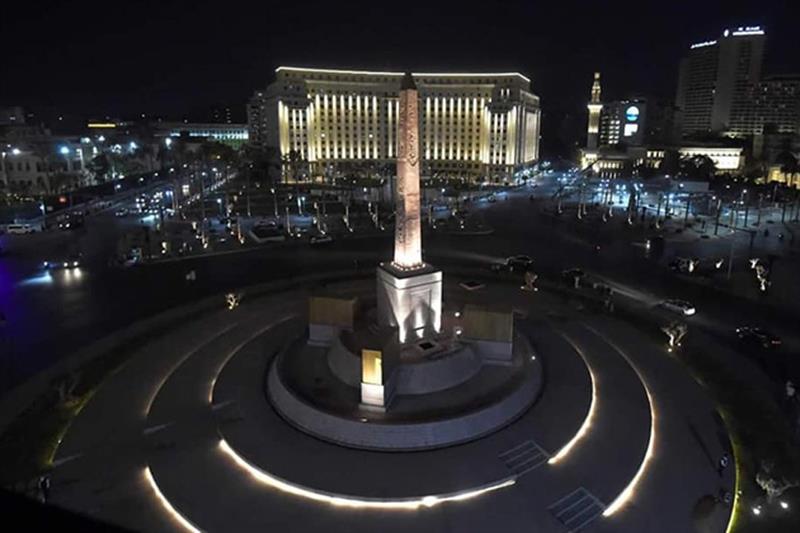
All the statues and art pieces that were already decorating the squares have been cleaned and renovated.
Mustafa Waziri, secretary-general of the Supreme Council of Antiquities, explains that this campaign aims to give the statues, both archaeological and non-archaeological, that adorn public squares and parks all over Egypt a "civilised and aesthetic" appearance.
All cleaning and maintenance work is carried out by the restorers of the Supreme Council of Antiquities due to their experience in this field.
Mustafa Abdel-Fattah, head of the Central Department of Maintenance and Restoration, explained that the maintenance work includes removing graffiti and dust, protecting and isolating metal elements, maintaining stone elements, reviving and gilding the founding texts.
The initiative's second phase will last for about one month and will include about 80 squares in the governorates of Cairo, Giza, Fayoum, Sohag, Beni Suef, Assiut, Minya, Alexandria, Beheira, the Red Sea, Ismailia and Port Said.
-- Sent from my Linux system.
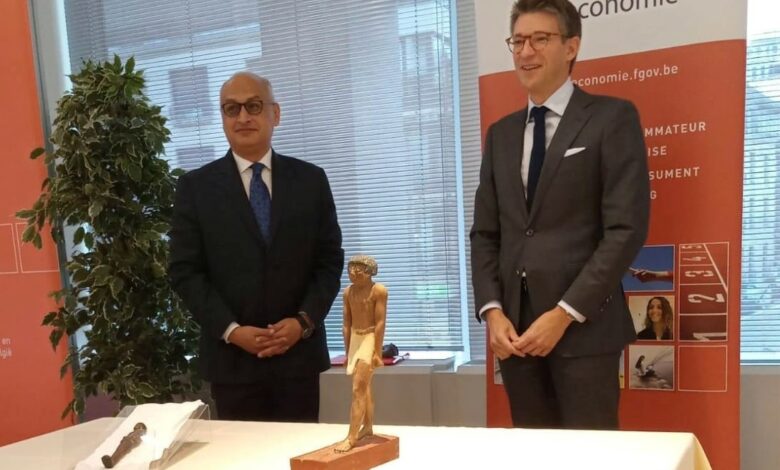
Belgium on Saturday sent Egypt two ancient Egyptian artifacts that had been smuggled out of the country.
The recovered artifacts include a colored limestone statue of a standing man resting on a base dating back to the Old Kingdom, and another ushabti figurine made of faience that dates back to the Late Period.
They were received by the Egyptian ambassador to Belgium, Khaled al-Baqly, in a ceremony organized by the Belgian Ministry of Economy according to the precautionary measures applied to confront the coronavirus.
The ceremony was attended by Deputy Prime Minister, Minister of Economy and Labor of Belgium, in addition to a number of Belgian government officials.
A statement by the Egyptian Foreign Ministry said on Saturday that this is part of Egypt's tireless efforts to restore all antiquities smuggled abroad to preserve the nation's heritage.
The Foreign Ministry cooperated with the Ministry of Tourism and Antiquities and the Office of the Public Prosecutor to help bring the artifacts bring. The statement also credited the continued efforts of the Egyptian embassy in Brussels with the competent Belgian authorities to retrieve the smuggled artifacts.
Baqly stressed that this event represents the distinguished relations between Egypt and Belgium, and paves the way for more coordination especially in recovering smuggled Egyptian antiquities.
The Egyptian ambassador in Brussels also invited the Belgian people to visit the tourist destinations in Egypt and get acquainted with the history of the ancient Egyptian civilization that has long represented a tributary of science, culture and art worldwide and throughout history.
Baqly praised the efforts made by the various Egyptian authorities, whether the Foreign Ministry, the Ministry of Tourism and Antiquities, and the Public Prosecutor's Office who worked together in order to recover the artifacts and will continue working to recover other smuggled antiquities next.
-- Sent from my Linux system.
This is the first successful DNA sequencing on ancient Egyptian mummies, ever.
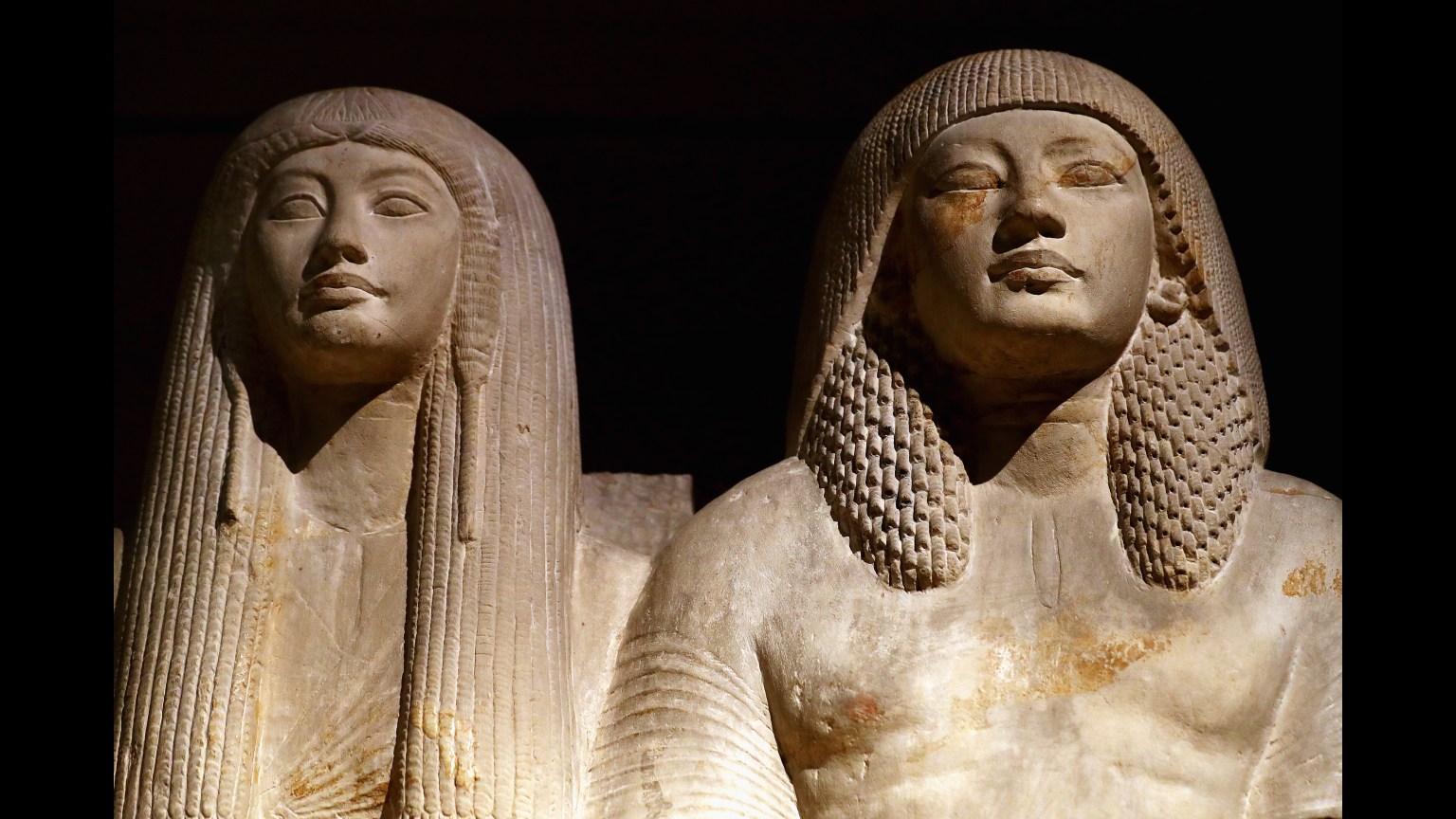
Getty Images
Ancient Egyptian Statues
Reactionaries, meanwhile, say that there's never been any significant black civilizations—an utter falsehood, of course. There were several in fact, highly advanced African empires and kingdoms throughout history. Curiously, some extreme Right groups have even used blood group data to proclaim a Nordic origin to King Tutankhamun and his brethren.
The problem, it was thought, is that mummy DNA couldn't be sequenced. But a group of international researchers, using unique methods, have overcome the barriers to do just that. They found that the ancient Egyptians were most closely related to the peoples of the Near East, particularly from the Levant. This is the Eastern Mediterranean which today includes the countries of Turkey, Iraq, Israel, Jordan, Syria, and Lebanon. The mummies used were from the New Kingdom and a later period, (a period later than the Middle Kingdom) when Egypt was under Roman rule.
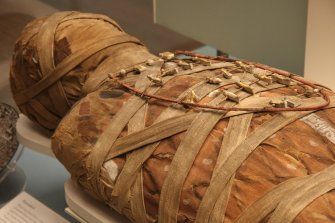
Egyptian mummy. British Museum. Flikr.
Modern Egyptians share 8% of their genome with central Africans, far more than ancient ones, according to the study, published in the journal Nature Communications. The influx of Sub-Saharan genes only occurred within the last 1,500 years. This could be attributed to the trans-Saharan slave trade or just from regular, long distance trade between the two regions. Improved mobility on the Nile during this period increased trade with the interior, researchers claim.
Egypt over the span of antiquity was conquered many times including by Alexander the Great, by the Greeks, Romans, Arabs, and more. Researchers wanted to know if these constant waves of invaders caused any major genetic changes in the populace over time. Group leader Wolfgang Haak at the Max Planck Institute in Germany said, "The genetics of the Abusir el-Meleq community did not undergo any major shifts during the 1,300 year timespan we studied, suggesting that the population remained genetically relatively unaffected by foreign conquest and rule."
The study was led by archeogeneticist Johannes Krause, also of the Max Planck Institute. Historically, there's been a problem finding intact DNA from ancient Egyptian mummies. "The hot Egyptian climate, the high humidity levels in many tombs and some of the chemicals used in mummification techniques, contribute to DNA degradation and are thought to make the long-term survival of DNA in Egyptian mummies unlikely," Dr. Krause said.
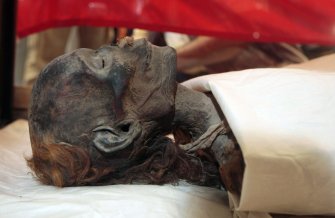
The mummified remains of Queen Hatshepsut wet-nurse Sitre-In. Egyptian Museum, Cairo. 2007. Getty Images.
It was also thought that, even if genetic material were recovered, it may not be reliable. Despite this, Krause and colleagues have been able to introduce robust DNA sequencing and verification techniques, and completed the first successful genomic testing on ancient Egyptian mummies.
Each came from Abusir el-Meleq, an archaeological site situated along the Nile, 70 miles (115 km) south of Cairo. This necropolis there houses mummies which display aspects revealing a dedication to the cult of Osiris, the green-skinned god of the afterlife.
First, the mitochondrial genomes from 90 of mummies were taken. From these, Krause and colleagues found that they could get the entire genomes from just three of the mummies in all. For this study, scientists took teeth, bone, and soft tissue samples. The teeth and bones offered the most DNA. They were protected by the soft tissue which has been preserved through the embalming process.
Researchers took these samples back to a lab in Germany. They began by sterilizing the room. Then they put the samples under UV radiation for an hour to sterilize them. From there, they were able to perform DNA sequencing.
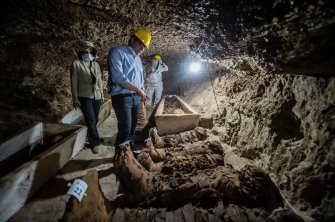
An Egyptian necropolis. Getty Images.
Scientists also gathered data on Egyptian history and archaeological data of northern Africa, to give their discoveries some context. They wanted to know what changes had occurred over time. To find out, they compared the mummies' genomes to that of 100 modern Egyptians and 125 Ethiopians. "For 1,300 years, we see complete genetic continuity," Krause said.
The oldest mummy sequenced was from the New Kingdom, 1,388 BCE, when Egypt was at the height of its power and glory. The youngest was from 426 CE, when the country was ruled from Rome. The ability to acquire genomic data on ancient Egyptians is a dramatic achievement, which opens up new avenues of research.
One limitation according to their report, "all our genetic data were obtained from a single site in Middle Egypt and may not be representative for all of ancient Egypt." In southern Egypt they say, the genetic makeup of the people may have been different, being closer to the interior of the continent.
Researchers in future want to determine exactly when Sub-Saharan African genes seeped into the Egyptian genome and why. They'll also want to know where ancient Egyptians themselves came from. To do so, they'll have to identify older DNA from, as Krause said, "Back further in time, in prehistory."
Using high-throughput DNA sequencing and cutting-edge authentication techniques, researchers proved they could retrieve reliable DNA from mummies, despite the unforgiving climate and damaging embalming techniques.
Further testing will likely contribute much knowledge to our understanding of the ancient Egyptians and perhaps even those from other places as well, helping to fill in the gaps in humanity's collective memory.
To learn about the latest Egyptian archaeological find, click here: https://youtu.be/y-EzdALuLQs
-- Sent from my Linux system.
In collaboration with the Office of the President, the project is tasked with restoring, assembling and re-erecting the column in order to help revive this Cairo garden.
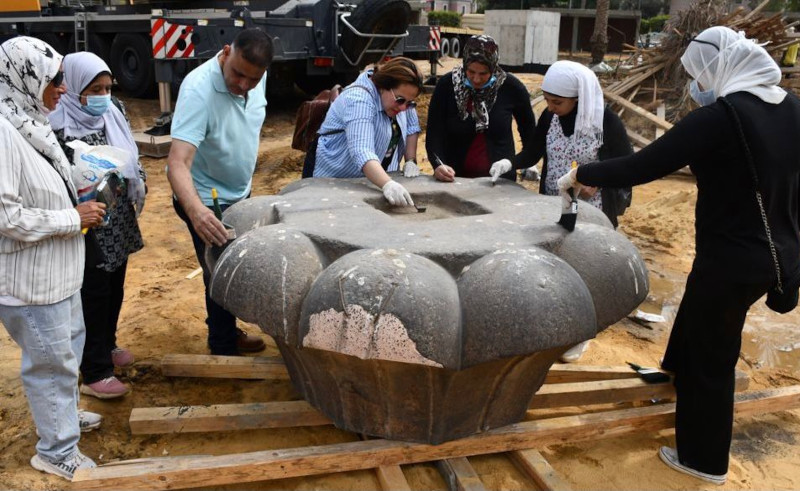
As part of the effort to beautify Egypt's public squares and gardens by the Ministry of Tourism and Antiquities, restoration work has begun on the ancient Egyptian granite column towering over Saraya El-Qobbah Garden.
In collaboration with the Office of the President, the project is tasked with restoring, assembling and re-erecting the column in order to help revive this Cairo garden. The eight-metre tall solid pink granite column dates back to the New Kingdom era, and is known for its distinct cylindrical shape, crowned with a traditional arrangement of outward folding palm leaves.
Restorers from the Supreme Council of Antiquities have started working to remove the dirt, calcification and build-up that has accumulated on the column over time. Once restored, the column is set to be lifted up and placed in the middle of the garden to make for a stunning display, honouring the past while beautifying the present.
-- Sent from my Linux system.


