Search This Blog

Wednesday, May 2, 2018

Primates of Ancient Egypt: The Bizarre and Satirical Monkeys of Amarna—Part II | Ancient Origins


http://www.ancient-origins.net/news-history-archaeology/primates-ancient-egypt-bizarre-and-satirical-monkeys-amarna-part-ii-009985
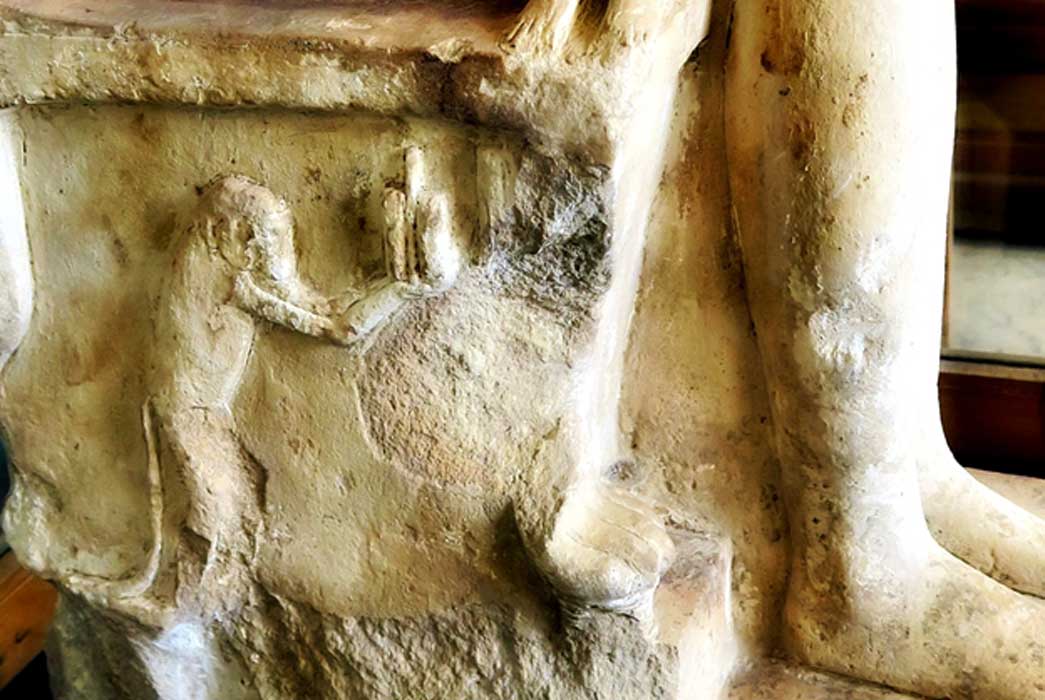
Detail from the side of a seat of a group                    sculpture shows a baboon holding a cosmetic pot or                    kohl eyeliner; design by Anand Balaji

Primates of Ancient Egypt: The Bizarre and Satirical Monkeys of Amarna—Part II


Baboons and monkeys were an inalienable part of the religious and artistic landscape in ancient Egypt. A wealth of depictions of these animals exists in varied media spanning all dynasties. But it is in Amarna that we encounter some of the most intriguing portrayals of these creatures. Were the monkeys shown riding chariots and kissing a daring spoof on the royal family, who were also represented in such activities? Were the sculptors venting their own ire by reflecting the collective mood of the disgruntled citizenry against their heretic ruler, Akhenaten; or was there a more simple and religious explanation to this manner of art?

[Read part 1]

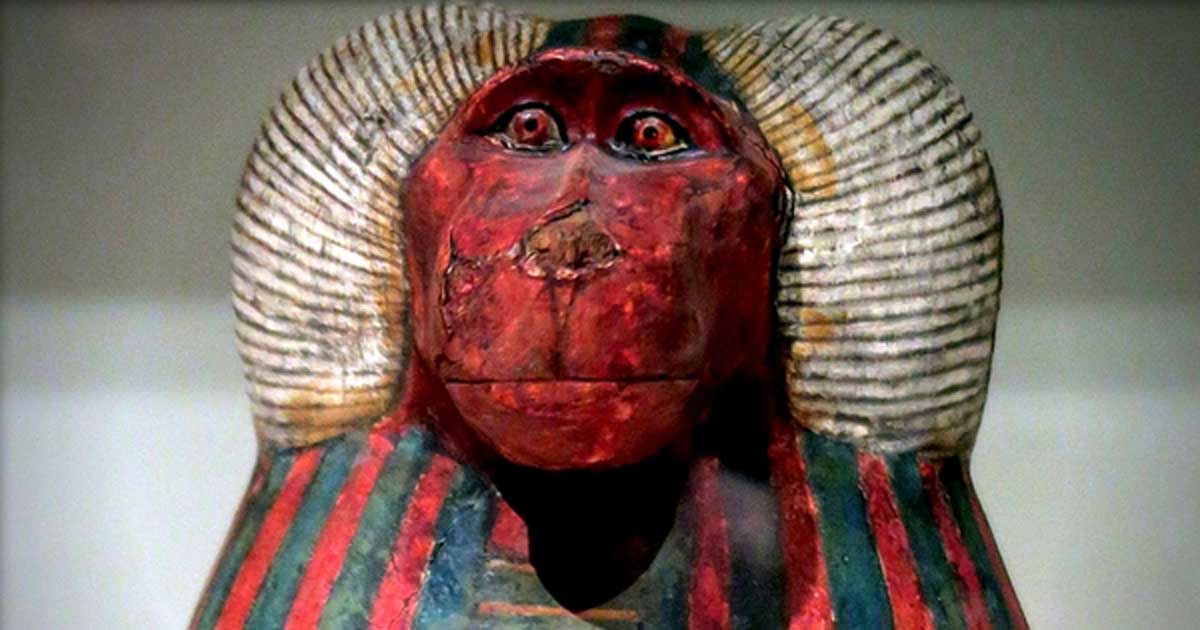
Detail from one of the pseudo                  canopic jars of Padiouf, a priest of Amun, shows the                  face of Hapy. Third Intermediate Period. Musée du Louvre                  Paris. Exhibition 'Animals and Pharaohs', CaixaForum                  Barcelona.

Detail from one of the pseudo canopic jars of Padiouf, a priest of Amun, shows the face of Hapy. Third Intermediate Period. Musée du Louvre Paris. Exhibition 'Animals and Pharaohs', CaixaForum Barcelona.

Roving Monkey Attack Squads

Monkeys were involved in policing the streets of ancient Egypt. Strange as this sounds, a few depictions show the creatures apprehending offenders. Dr Joyce Tyldesley provides in depth information on common crimes millennia ago, "The streets were by no means free of crime, however. Ostraca recovered from Deir el-Medina record a sorry procession of petty thefts, unsatisfied debts and unrestored borrowings (often concerning donkeys). The Old Kingdom tomb of Niankhkhnum and Khnumhotep includes an amusing market scene with a trained security monkey arresting a naked thief.

As can be seen in this ostracon                  from Deir el-Medina, baboons and monkeys were trained to                  pick fruits and dates. But not all scholars agree with                  this assessment. Ramesside Period. Musée du Louvre                  Paris. Exhibition 'Animals and Pharaohs', CaixaForum                  Barcelona.

As can be seen in this ostracon from Deir el-Medina, baboons and monkeys were trained to pick fruits and dates. But not all scholars agree with this assessment. Ramesside Period. Musée du Louvre Paris. Exhibition 'Animals and Pharaohs', CaixaForum Barcelona.

"Yet the absence of the monkey led to the absence of easily portable wealth and so handicapped the would-be street robber. The lack of purses, wallets, handbags and even pockets resulted in a corresponding lack of pickpockets, bag-snatchers and other opportunist villains. The ambitious mugger could only hope to rob his victim of his or her possessions. It would have been easy to challenge an unprotected lady wearing a golden necklace, but much more difficult to make a quick getaway squawking duck or a bowl of grain".

Canopic jars held the internal                  organs that were removed during mummification. This                  example, with its baboon-headed lid, held the lungs and                  was under the protection of the god Hapy, one of the                  Four Sons of Horus. 18th–20th Dynasty. Abydos.                  Metropolitan Museum of Art, New York.

Canopic jars held the internal organs that were removed during mummification. This example, with its baboon-headed lid, held the lungs and was under the protection of the god Hapy, one of the Four Sons of Horus. 18th–20th Dynasty. Abydos. Metropolitan Museum of Art , New York.

Noted Egyptological scholar, Thierry Benderitter, of Osirisnet offers an engaging description of the "monkey scene" that appears on the northern wall of the first chamber of the Tomb of the Two Brothers, "At the far right end of the register is another person with a monkey (not a baboon, perhaps a meerkat), he is described as a security guard. These guards are often found with two monkeys (in the same way that police today use dogs), so perhaps the youth at the far end of the register is his assistant. The guard has set his monkey at a thief, shouting to the monkey: "Seize him! Seize him!"

This terracotta figurine depicts                  a monkey in a rare avatar—dressed as a gladiator. Roman                  Period. Musée du Louvre Paris. Exhibition 'Animals and                  Pharaohs', CaixaForum Barcelona.

This terracotta figurine depicts a monkey in a rare avatar—dressed as a gladiator. Roman Period. Musée du Louvre Paris. Exhibition 'Animals and Pharaohs', CaixaForum Barcelona.

Not so Benign, after all?

But perhaps the most exciting account of encountering an ancient Egyptian monkey, albeit a mummified one, was narrated by Theodore Davis, the American financer responsible for discovering a large number of tombs and artifacts in the Valley of the Kings. He stumbled upon an unusual scene whilst excavating KV50 in 1906: "I went down and entered the chamber.... I was startled by seeing very near me a yellow dog of ordinary size standing on his feet, his short tail curled over his back, and his eyes open. Within a few inches of his nose sat a monkey in quite perfect condition; for an instant I thought they were alive, but I soon saw they had been mummified, and unwrapped in ancient times by robbers. Evidently they had taken a fragment of the wooden monkey box on which they seated the monkey to keep him upright, and then they stood the dog on his feet so near the monkey that his nose nearly touched him. The attitude of the animals suggested that the monkey was saying, "It's all over with me," and the dog, with his bright eyes and manner, seemed to reply, "Have courage, it will end all right." I am quite sure that the robbers arranged the group for their amusement... a joke 3,000 years old."

The west wall of Tutankhamun's                  tomb is covered with scenes from the Amduat (

The west wall of Tutankhamun's tomb is covered with scenes from the Amduat ("That Which is in the Afterworld"). In the lower register, 12 squatting Baboon deities symbolise the 12 hours of the night through which the sun and king must travel before achieving rebirth at dawn. (Photo: Meretseger Books)

Jimmy Dunn opines that monkeys were not always considered benign and lovable creatures, "There were rites involving monkeys that are documented by early illustrations and alter by religious texts that describe the danger of monkeys "who cut off heads". In fact, the image of a baboon with raised tail serves as the hieroglyph for "enraged". The baboon's wildness made it into a dangerous, apotropaic intercessory, being the primordial creation in a mythical landscape."

The Monkeys of Akhetaten

While the workmen's village in Deir el-Medina yielded several ostraca with depictions of monkeys and baboons engaged in many, often hilarious, activities; it is in El-Amarna that archeologists discovered a sizeable number of carved statuettes in various stages of completion that showed the primates in peculiar scenes. Sir Flinders Petrie discovered at least twenty-three crudely modeled figures of monkeys in a dump at Amarna in 1891–92. Why were so many such similar works of art portraying monkeys produced in Akhetaten?

This blue glazed faience monkey                  seated on an ovoid base holds a round object, perhaps a                  ball or a piece of fruit, in its forepaws. In antiquity                  the animal's pierced ears had metal earrings indicating                  that it was a household pet. 18th Dynasty. Tell el                  Amarna. Brooklyn Museum, New York.

This blue glazed faience monkey seated on an ovoid base holds a round object, perhaps a ball or a piece of fruit, in its forepaws. In antiquity the animal's pierced ears had metal earrings indicating that it was a household pet. 18th Dynasty. Tell el Amarna. Brooklyn Museum , New York.

Based on the available evidence, modern interpretation of the goings-on in the new capital established by Pharaoh Akhenaten points to the fact that the populace was not pleased with the radical changes their king had ushered in, as Dr Joyce Tyldesley postulates, "The series of crude limestone figurines unique to Amarna which show families of monkeys generally aping the behaviour of the royal family is probably best explained as an early attempt at political satire: the monkeys drive chariots, play musical instruments, eat, drink, and even kiss their young." While this appears to be a plausible theory, the true meaning and purpose of these "toys" is open to debate.

Limestone group of a monkey                  driving a chariot. The piece is unfinished being roughly                  blocked out. The back and one side have been outlined in                  black paint or ink though much of this is now worn away.                  18th Dynasty. Tell el Amarna. Brooklyn Museum, New                  York.

Limestone group of a monkey driving a chariot. The piece is unfinished being roughly blocked out. The back and one side have been outlined in black paint or ink though much of this is now worn away. 18th Dynasty. Tell el Amarna. Brooklyn Museum , New York.

Did the monkeys driving chariots really symbolize Akhenaten and his family; and was this a covert way in which the artists of the time mocked and displayed their negative sentiments against the Heretic king? Given the depictions of a strong police and militaristic presence on the walls of tombs in Amarna, it would have required great daring by the community of sculptors to indulge in this kind of satire – literally a matter of life and death. But these "toys" begin to make sense when one considers the possibility they were carved in honor of Thoth, or even Hathor. Of course, if one assumes this, it opens up another debate about whether Akhenaten was truly the monotheist he is made out to be.

This toy is made of painted                  sandstone and depicts three monkeys, two on the left                  side and one on the right. They are stretching a robe                  above the horses' heads. All the figures are resting on                  a chariot with four wheels. 18th Dynasty. Tell el                  Amarna. Egyptian Museum, Cairo.

This toy is made of painted sandstone and depicts three monkeys, two on the left side and one on the right. They are stretching a robe above the horses' heads. All the figures are resting on a chariot with four wheels. 18th Dynasty. Tell el Amarna. Egyptian Museum, Cairo.

Representations of baboons and monkeys would have been tolerated at Amarna because of the association of apes with the "Eastern Ba's" and Akhenaten as sun priest being able to understand the language of the animals; as the description of the apes from a sun hymn states – "The baboons who announce Ra… They dance for him and leap in the air. They sing for him, make music and create joyful sound".

In Life and Afterlife

By the Late Period, titles such as "Priest of the Living Baboon" or "Priest of the Osiris-Baboon" were held by individuals who served gods in the court of the sanctuaries that had the form of baboon statues. They also looked after the sacred temple monkeys. The sacred troops of baboons functioned in small groups. "The best known example are those from Memphis, and Ptolemaic texts from the Necropolis at Saqqara confirm that a colony of these animals was kept in the temple of Ptah "under his Moringa-tree" in the valley. There may have been a dozen or so in the colony at any one time. One of these would have been singled out as an oracular and given the name, "the face of the baboon has spoken"," reveals Jimmy Dunn.

Faience perfume vessel in the                  shape of a monkey eating fruit. 18th Dynasty.                  Metropolitan Museum of Art, New York.

Faience perfume vessel in the shape of a monkey eating fruit. 18th Dynasty. Metropolitan Museum of Art , New York.

From the 26th Dynasty, mummified baboons were buried in wooden coffins. At the very beginning of the Greek Period under its first two rulers, these consecrated beasts were buried in special rooms where they were placed in costly limestone sarcophagi. During this period, they were sometimes interred in fairly large rock-cut chambers at Tuna el-Gebel. Not until the 26th Dynasty were sacred baboons buried in the ibis necropolis near this site. However, by the Ptolemaic Period, monkey mummies are found alongside those of ibises and falcons in almost every animal necropolis. The highest quality burials of monkeys are found in the well-documented baboon galleries of Memphis at Saqqara, but also in the animal cemeteries of Tuna el-Gebel, Abydos and the "Valley of the Monkeys" at Wadi Gabbanet el-Gurud in southern Thebes.

[The author thanks Merja Attia for granting permission to use their photographs in this series. The public archives of the Metropolitan Museum of Art can be accessed here.]

Top Image: Detail from the side of a seat of a group sculpture shows a baboon holding a cosmetic pot or kohl eyeliner; design by Anand Balaji (Photo credit: Merja Attia); Deriv.

By Anand Balaji

Independent researcher and playwright Anand Balaji, is an Ancient Origins guest writer and author of Sands of Amarna: End of Akhenaten .

--

References:

Geraldine Pinch, Magic in Ancient Egypt , 2010

Jimmy Dunn, The Baboons and Monkeys of Ancient Egypt

Richard H. Wilkinson, The Complete Gods and Goddesses of Ancient Egypt , 2003

Geraldine Pinch, Handbook of Egyptian Mythology , 2002

John M. Adams, The Millionaire and the Mummies: Theodore Davis's Gilded Age in Egypt , 2013

Nicholas Reeves and Richard H. Wilkinson, The Complete Valley of the Kings , 2008

Thierry Benderitter, assorted articles, Osiris.net

Joyce Tyldesley, Judgement of the Pharaoh: Crime and Punishment in Ancient Egypt , 2000

Margaret Bunson, The Encyclopedia of Ancient Egypt , 1991

--   Sent from my Linux system.

Primates of Ancient Egypt: The Deification and Importance of Baboons and Monkeys—Part I | Ancient Origins


http://www.ancient-origins.net/news-history-archaeology/primates-ancient-egypt-deification-and-importance-baboons-and-monkeys-part-021888
Detail from one of the canopic jars of Padiouf, a                    priest of Amun, shows the face of the god Hapy; design                    by Anand Balaj

Primates of Ancient Egypt: The Deification and Importance of Baboons and Monkeys—Part I


The ancient Egyptians populated their vast pantheon of gods and goddesses with an incredible menagerie of animals and birds. These deities served as protectors, law-givers, healers, patrons of the arts and much more. From the run-of-the-mill creatures to the exotic—virtually every conceivable beast was venerated by the masses. Monkeys and baboons were also greatly regarded in various roles and contexts throughout Egyptian history. As the representatives of the gods and in their role as pets and helpers, these animals were dear to the people. Quite bizarrely, in addition to being trained to pick fruit and lend a hand in mundane chores; monkeys also formed an elite squad that was every criminal's worst nightmare! Evidence shows that the primates policed the streets with their human counterparts – much like canine companions of cops today.

A Steatite sculpture of a seated                  Baboon representing the god of wisdom, Thoth. New                  Kingdom. Los Angeles County Museum of Art. (public                  domain)

A Steatite sculpture of a seated Baboon representing the god of wisdom, Thoth. New Kingdom. Los Angeles County Museum of Art. ( public domain )

Hailing Baboons and Monkeys

The Egyptians were of the view that living beings, both big and small; feathered and scaled, were the repositories of magical powers. Endowed with special capabilities, these creatures were believed to communicate with the gods and perform the role of intermediaries between the multitude of deities and humankind. However, even though animals were considered sacred messengers, the populace did not worship them per se. On the contrary, they paid obeisance to the invisible and supernatural attributes of the deities that they believed manifested in animal form. And so, a range of beats and birds were heralded in cult centers dedicated to their worship across the land.

The sides of this seat from a                  group statue are decorated with images of baboons. On                  the right side, seen here, the animal is shown holding a                  cosmetic pot or kohl eyeliner. Painted limestone. 18th                  Dynasty. Egyptian Museum, Cairo.

The sides of this seat from a group statue are decorated with images of baboons. On the right side, seen here, the animal is shown holding a cosmetic pot or kohl eyeliner. Painted limestone. 18th Dynasty. Egyptian Museum, Cairo.

The advent of baboons in religion can be traced back to the dawn of the Egyptian civilization; and one of the earliest pre-dynastic deities was the baboon god Baba (or Babi) – "Bull of the Baboons" who, it was thought, devoured the innards of the immoral dead. Examples of artistic representations of monkeys and baboons – be they sculptures, reliefs, or paintings – abounded throughout the country. Extant art from the Old and New Kingdom periods portrays the primates in different settings; and monkeys in particular are often shown engaging in human activities including, among other things - harvesting figs, playing musical instruments, dancing and even policing!

That's not all; monkeys can be seen in winepresses, lending a hand in beer production and rigging and building boats as well. "However, scholars such as Deiter Kessler believe that there were no trained monkeys in ancient Egypt, and that most such scenes have some sort of "religio-theological function", though particularly on New Kingdom ostraca there may have also been an element of humor," notes Egyptological scholar, Jimmy Dunn.

This relief from the mortuary                  temple of Ramesses III shows the king worshipping                  alongside sacred baboons. Medinet Habu, Theban                  Necropolis. (Photo: CC by SA 3.0 / Rémih)

This relief from the mortuary temple of Ramesses III shows the king worshipping alongside sacred baboons. Medinet Habu, Theban Necropolis. (Photo: CC by SA 3.0 / Rémih )

The Egyptians regarded monkeys over and above their humorous antics; they considered them as erotic symbols linked to the cycle of birth, death, and rebirth. "Monkeys were evidently closely linked to female sexuality, probably on a less subtle level than the duck or goose. The baboon which, in some instances alternates with the monkey, had the phonetic value "nfr", a word which cannot always be translated by one equivalent English word. 'Good', 'Beautiful' and the like is the conventional rendering, but the word also implies something dynamic, creative and potent," writes Dr Lise Manniche.

In spite of their fearsome appearance and unpredictable nature, baboons and monkeys were nurtured as pets, with the latter being imported from Nubia. The Theban Queen Makare, was buried with her favorite female Green Monkey. This species was deified as an aspect of the invisible primeval god, Atum, particularly when depicted shooting with a bow and arrow. Evidence also suggests that these primates were exclusively reared in temples, like many other animals and birds that were associated with, and sacred to, specific deities.

Two men are depicted catching                  birds, while in the lower register a boy is shown                  playing with two monkeys. Tomb of Atet, Meidum.                  Limestone with inlays. 4th Dynasty. Glyptotek,                  Copenhagen.

Two men are depicted catching birds, while in the lower register a boy is shown playing with two monkeys. Tomb of Atet, Meidum. Limestone with inlays. 4th Dynasty. Glyptotek, Copenhagen.

King's Connect with the Hamadryas

Experts opine that unlike baboons, monkeys were not worshipped in Egypt whilst they were alive. The animal was deified post mortem following its mummification, before which they spent their lives in temple sanctuaries. The ritual interment of monkeys in large necropolises dedicated to them and also in the burials of nobles and kings was a common practice.

Baboons depicted in art were predominantly the hamadryas (Papio hamadryas), a species from the Old World monkey family. Hamadryas baboons were associated with Thoth-Khonsu, the ibis-headed moon god who was worshipped as the god of wisdom and credited with devising hieroglyphics. Thoth also functioned as scribe to the gods and played a major part in Afterlife rituals. "At the Temple of Khonsu in Thebes, statues of Khonsu in the form of a baboon fronted the complex. In the Late Period, we know from a baboon tomb at Saqqara that the god Thoth-Khonsu became an important nocturnal oracle god, to whom written petitions were submitted. In this form, during the Greek Period, he was called Metasythmis, meaning ""hearing ear"," reveals Jimmy Dunn.

Quartzite sculpture of a seated                  hamadryas baboon (c. 1400 BC), depicting the god Thoth.                  British Museum. (Photo: CC by SA 3.0 / Steven G.                  Johnson)

Quartzite sculpture of a seated hamadryas baboon (c. 1400 BC), depicting the god Thoth. British Museum. (Photo: CC by SA 3.0 / Steven G. Johnson )

Astennu, the attendant of Thoth, was represented as a hamadryas in his capacity as recorder of the outcome of the crucial Weighing of the Heart ceremony; and as one of the four hamadryas baboons guarding the Lake of Fire in Duat or the underworld. "The image of the Thoth baboon beside a wedjat eye occurs on magic wands as early as the twentieth century BC. Two baboon forms of the god Khons controlled The Books of the End of the Year. These contained lists of those who were destined to die and those who would live," explains Egyptologist, Dr Geraldine Pinch.

Scribe Nebmerutef is portrayed                  under the attentive gaze of the god Thoth, patron of                  writing. He is engrossed in reading a document, seated                  cross-legged on the ground, with his torso leaning                  slightly forward, and his right hand resting on the                  papyrus. Above him, the baboon sacred to Thoth is seated                  on a pedestal. New Kingdom. Louvre Museum, Paris.

Scribe Nebmerutef is portrayed under the attentive gaze of the god Thoth, patron of writing. He is engrossed in reading a document, seated cross-legged on the ground, with his torso leaning slightly forward, and his right hand resting on the papyrus. Above him, the baboon sacred to Thoth is seated on a pedestal. New Kingdom. Louvre Museum, Paris.

During the ceremony to renew the physical world and the person of the ruler, individual ancestors were ritually deified in the form of baboons and received cultic offerings. The erection of wooden kiosks containing ancestor baboons at the Heb Sed-festival of royal rejuvenation may have developed from this earlier practice. An image of a baboon representing King Narmer, erected by an official, implicitly suggests the transformation of the king into a baboon, as part of a rejuvenation festival. It is interesting to note that the king was identified with a baboon god known as the "Great White One". Some scholars opine that the title of this god is derived from the silver-gray mane of a dominant hamadryas.

Limestone relief panel showing                  two baboons offering the wedjat eye to the sun god                  Khepri, who holds the Underworld sign. Late                  Period–Ptolemaic Period. Metropolitan Museum of Art, New                  York.

Limestone relief panel showing two baboons offering the wedjat eye to the sun god Khepri, who holds the Underworld sign. Late Period–Ptolemaic Period. Metropolitan Museum of Art , New York.

Essence of Divine Association

The most important aspect of baboons, however, was their association with Ra, the mighty sun god. In keeping with this, we find numerous depictions of these animals adoring the sun with raised arms, or holding a solar symbol. The baboon, in his aspect as Hapy, one of the four sons of the falcon-headed god Horus, was represented on canopic jar stoppers as he was in charge of protecting the lungs of the deceased. Hapy was also depicted in funerary literature as protecting the throne of Osiris in the Underworld.

This large quartzite statue of                  Thoth as a baboon was erected by Pharaoh Amenhotep III.                  Hermopolis/El Ashmunein. (Photo: Tatiana Matveeva /                  flickr)

This large quartzite statue of Thoth as a baboon was erected by Pharaoh Amenhotep III. Hermopolis/El Ashmunein. (Photo: Tatiana Matveeva / flickr )

From the New Kingdom onward, temple statues of baboons are more in abundance. They frequently appear to be squatting on a raised platform, often accessed by a flight of stairs. Giant quartzite baboon sculptures from the reign of Amenhotep III have been found in Hermopolis, Middle Egypt. The age of votive mummies began during the Twenty-sixth Dynasty (Ca. 664 BC) and by the Late and Graeco-Roman Periods (332 BC -395 AD) we find buried in the necropolises various primates including hamadryas, baboons (Papio cynocephalus anubis), green monkeys (Cercopithecus aethiops), red monkeys (Cercopithecus pata), and the barbary ape (Macaca sylvanus).

[The author thanks Merja Attia and Margaret Patterson for granting permission to use their photographs in this series. The public archives of the Metropolitan Museum of Art can be accessed here.]

[Part 2 Coming Soon]

Top Image: Detail from one of the canopic jars of Padiouf, a priest of Amun, shows the face of the god Hapy ; design by Anand Balaji (Photo credit: Merja Attia); Deriv.

By Anand Balaji

Independent researcher and playwright Anand Balaji, is an Ancient Origins guest writer and author of Sands of Amarna: End of Akhenaten .

--

References:

Geraldine Pinch, Magic in Ancient Egypt , 2010

Jimmy Dunn, The Baboons and Monkeys of Ancient Egypt

Richard H. Wilkinson, The Complete Gods and Goddesses of Ancient Egypt , 2003

Geraldine Pinch, Handbook of Egyptian Mythology , 2002

John M. Adams, The Millionaire and the Mummies: Theodore Davis's Gilded Age in Egypt , 2013

Nicholas Reeves and Richard H. Wilkinson, The Complete Valley of the Kings , 2008

Thierry Benderitter, assorted articles, Osiris.net

Joyce Tyldesley, Judgement of the Pharaoh: Crime and Punishment in Ancient Egypt , 2000

Margaret Bunson, The Encyclopedia of Ancient Egypt , 1991

--   Sent from my Linux system.
Egyptians worry Renaissance Dam poses risk for heritage sites along Nile


https://www.al-monitor.com/pulse/originals/2018/04/egypt-academic-warns-risks-of-ethiopia-dam.html

Egyptians worry Renaissance Dam poses risk for heritage sites along Nile


Article Summary
A study by an Egyptian professor reports that Ethiopia's new dam puts heritage sites at risk — and not only those in Egypt.

Natural and cultural heritage sites in Egypt and the Nile Basin countries are at risk due to the negative impact on the environment that would be caused by the Grand Ethiopian Renaissance Dam, according to a study by Egyptian archaeologist Abdel Aziz Salem.

Ethiopia started building the dam in 2011, at the height of the Arab Spring. As it nears completion seven years later, it has become a major conflict between Ethiopia and its two downstream neighbors, Egypt and Sudan.

Salem's study, which was finalized in March, reports that the construction of the dam is not simply a political and economic issue but a cultural one, as it would have grave consequences on the UNESCO-registered natural and cultural sites in the Nile Basin.

The report, which is the result of a five-year research project by Salem, states that the sites at risk are located not just in Egypt, but in Ethiopia and Sudan as well. Salem, a professor of archaeology at Cairo University, worked from 2002 to 2015 at the Islamic Educational, Scientific and Cultural Organization. He will present the report at an international conference on sustainable development in Africa scheduled for May 7-9 at Cairo University's Institute of African Research and Studies.

"Some world heritage sites in Egypt will be affected by future climate change due to the construction of the Ethiopian dam, which causes a decrease in the Nile water level, soil erosion and shortage of groundwater," Salem told Al-Monitor.

One of the most famous of these sites is Abu Simbel Temple, located 230 kilometers (143 miles) southwest of Aswan. When the temple was at risk of flooding during the construction of the High Dam in Aswan, UNESCO led an unprecedented international campaign in the 1960s by dismantling the temple, stone by stone, and moving it some 200 feet above the original site.

"The same is expected to happen when the Ethiopian dam is fully constructed. The Ethiopian dam will impact the level of the Nile River in the surrounding area causing the water to rise. This will lead to disturbance of the soil and the environment surrounding Abu Simbel Temple and the temples of Luxor and all the monuments built on the banks of the Nile River," Salem warned.

He said that Thebes would be at risk, too. Thebes was the capital of Egypt during the Middle Kingdom and the New Kingdom, and includes areas on the eastern bank of the Nile, where the temples of Karnak and Luxor are located, and the western bank with its necropolis of large royal cemeteries and funerary complexes.

Salem believes that the findings of his paper should be used "to urge Ethiopia not to finalize this dam or at least not to build other dams in areas that may endanger heritage."

He noted that since many of these monuments are listed on the UNESCO World Heritage List, they do not only belong to Egypt but to mankind. "It is my right to demand [international measures to protect] these sites that are registered on the UNESCO World Heritage List," Salem said, calling for an international campaign similar to the one of the 1960s, when the Aswan Dam was under construction.

He added that it is not simply Egypt's heritage that would be negatively impacted, but that of Ethiopia as well. According to Salem, nine heritage sites in Ethiopia would be impacted, including Rock-Hewn Churches, Lalibela, in the heart of Ethiopia, and the Konso Cultural Landscape, a "spectacular example of a living cultural tradition" dating back more than 400 years. 

"The dam will reduce the optimum area for the habitats of birds. It will put animals in danger of extinction as well," he said, adding that the change in flora and fauna would increase the risk of drought and high temperatures.

Some of the affected areas would also include Sudan's Gebel Barkal, a small mountain located some 400 kilometers (248 miles) north of Khartoum that includes five archaeological sites over an area of more than 60 kilometers (37 miles) in the Nile Valley.

Commenting on the study, Mamdouh Ouda, director of disaster management at the Antiquities Ministry, told Al-Monitor, "I totally agree with what is mentioned in the study — that the Egyptian sites of Abu Simbel and Thebes would be affected by the construction of the Ethiopian Dam."

He added, "The ministry can't do anything to prevent the negative effects due to its low budget. The government should pay more attention to the antiquities sector as it is the country's heritage."

Gamil Abdel Moety, lecturer of meteorology at Cairo University's Institute of African Studies and Research, also agreed with the findings of the study by Salem. "Due to climate change, the archaeological areas will be affected by high temperatures and humidity as well as sandstorms that will threaten its survival," he told Al-Monitor.

He noted there should be preventive measures and strategies to mitigate climate change, explaining that the Ministry of Agriculture and Land Reclamation is working on the development of new grains and products that can endure high temperatures, drought and excess soil salinity.

Egypt's Ministry of Water Resources and Irrigation is in the process of constructing concrete walls to reduce the erosion of beaches as well as developing campaigns to raise awareness about rationalizing water consumption and preserving the Nile River. However, according to Abdel Moety, any sustainable or long-term environmental plans would require considerable funding.

Salwa Samir, an Egyptian journalist, has been writing about human rights, social problems, immigration and children's and women's issues since 2005.

--   Sent from my Linux system.

Egypt restores 14 smuggled artifacts from Cyprus - Egypt Today


http://www.egypttoday.com/Article/4/49165/Egypt-restores-14-smuggled-artifacts-from-Cyprus
Director of Cyprus' Department of Antiquities, Marina        Solomidou, handed over 14 artifacts to Egypt-Photo courtesy of        Ministry of Antiquities official Facebook page Director of Cyprus' Department of Antiquities, Marina Solomidou, handed over 14 artifacts to Egypt-Photo courtesy of Ministry of Antiquities official Facebook page

Egypt restores 14 smuggled artifacts from Cyprus

Wed, May. 2, 2018
CAIRO - 2 May 2018: Director of Cyprus' Department of Antiquities, Marina Solomidou, handed over 14 artifacts to Egypt on Tuesday; the artifacts were stolen and illegally smuggled from Egypt in the late 1980s.

This came on the sidelines of the initiative entitled "Nostos: Reviving Roots," which was launched by President Abdel Fatah al-Sisi and his Cypriot and Greek counterparts in Alexandria on Monday.

In this regard, Egyptian Minister of Antiquities Khaled al-Anani expressed his thanks to the Cypriot authorities for their continuous cooperation with Egypt to restore these artifacts.

In the same context, Director General of the Retrieved Antiquities Department of the Antiquities Ministry Shaaban Abdel Gawad stated that the process of repatriation began in 2017 when Interpol conversed with the Egyptian Ministry of Antiquities.

Abdel Gawad revealed that these artifacts date back to the ancient Egyptian era. They were smuggled after the Antiquities Protection Law had been issued in 1983, and arrived in Cyprus in 1986.

He further remarked that the Ministry of Antiquities, Ministry of Foreign Affairs, Ministry of Justice and the International Cooperation Office coordinated to send urgent letters to Cyprus, stressing Egypt's right to retrieve the artifacts, especially considering that the Cypriot law allows for antiquities trafficking.

Abdel Gawad said that the restored pieces comprise of an alabaster vase decorated with the name of king Ramses II, in addition to 13 ushabti figurines and amulets of different shapes, sizes and materials, including amulets for goddesses Sekhmet, Neith and Isis.

Upon invitation from the Cypriot authorities, Abdel Gawad travelled to Cyprus to inspect these pieces, which were kept at the Cypriot antiquities museum in Nicosia. Gawad delivered a lecture highlighting the efforts exerted by the Ministry of Antiquities to restore the smuggled artifacts and to make new archaeological discoveries in Egypt.

capt 1
Director of Cyprus' Department of Antiquities, Marina Solomidou, handed over 14 artifacts to Egypt-Photo courtesy of Ministry of Antiquities official Facebook page

"Nostos: Reviving Roots" initiative is a cultural festival, which is scheduled to be held from April 30 to May 6 in Alexandria, Cairo and Sharm El Sheikh.

The festival will give the opportunity for Greeks and Cypriots, who once lived in Alexandria, to participate in this event, returning to their old homes and reviving their memories.

Sisi said on Monday that the ancient city of Alexandria has a special place in the hearts of Egyptians, as well as the people of the Mediterranean region. He expressed his great pleasure for hosting this celebration in Alexandria.

Sisi said that Alexandria has been witness to the deep ties binding the people of Egypt, Greece and Cyprus throughout ancient and modern history. He noted that Alexander the Great laid the first pillars of the city of Alexandria in 332 BC, establishing a point of convergence of civilizations and an incubator of cultures and heritage on the Egyptian Mediterranean shores.

"Alexandria remains an embodiment of the values of tolerance, coexistence and human communication. These values encouraged hundreds of thousands of people in the region to choose to live in Egypt, where they were embraced without discrimination," he added.

Thousands of Greeks and Cypriots were among those who chose to live in Egypt, where they integrated into the Egyptian fabric, the president said, adding that they were a major addition to the economic, scientific and cultural movements in Egypt.

The Greeks and Cypriots, together with their Egyptian brothers, contributed to the renaissance of trade, culture and art and worked to promote various aspects of economic life, Sisi said, remarking that Egypt witnessed the establishment of organizations for the Greek communities in many governorates, including Minya in 1812, Zagazig in 1850, Cairo in 1856, Mansoura in 1860 and Port Said in 1870.
--   Sent from my Linux system.

Tuesday, May 1, 2018

The Latest Discoveries in Egyptology (March-April 2018) - Nile Scribes


http://nilescribes.org/2018/04/28/the-latest-discoveries-in-egyptology-march-april-2018/

The Latest Discoveries in Egyptology (March-April 2018)

Every few months, the Nile Scribes bring you summaries of the latest news and discoveries in Egyptology, both from the field and the lab. We'll introduce you to the newest archaeological finds, or recently undusted manuscripts being rediscovered in museum collections, plus other new theories stirring in the Egyptological Zeitgeist. From a relief of Hatshepsut identified after decades of hiding in storage, to thousands of fragments belonging to a Late Period king, the last two months have produced some phenomenal finds that we highlight in this week's post.

Are you up-to-date on the latest discoveries? Read our last post here

The Egyptian Ministry of Antiquities publishes a very helpful round-up of recent discoveries, events, and projects in Egypt in an accessible PDF format. The latest issue was published in March 2018 (English or Arabic).

Tattoos discovered on Egyptian mummies housed in the British Museum (Photo: British Museum)

World's earliest figural tattoos discovered on 5,000-year-old mummies (March 1 – British Museum)

Nile Scribes: Researchers at the British Museum in London made an exciting discovery on two of the Egyptian mummies in their collection. One of the mummies, known as 'Gebelein Man A' was on display at the museum for over a hundred years, before his tattoos were discovered. These ancient tattoos push back our understanding of when tattooing practices began in Egypt to the Predynastic Period.

"Dating to between 3351 to 3017 BC, tattoos of animals and motifs have been discovered on two naturally mummified bodies from Egypt. Using infrared technology, figural tattoos of a wild bull and a sheep were identified on the upper arm of a male mummy, while linear and S-shaped motifs have been identified on the upper arm and shoulder of a female mummy; these are the oldest tattoos ever found on a female individual."

Dr. Kenneth Griffin and a newly identified fragment of Hatshepsut (Photo: Swansea University)

Rare female pharaoh artwork found at Swansea University (March 23 – BBC)

NS: Scholars at times make fortuitous discoveries in the archives or storage areas of a museum (in Toronto, we remember Gordo the Barosaurus, who was hidden for over four decades). In this case, an Egyptologist working with the Egypt Centre at Swansea University in Wales came across a photograph of a relief in storage that warranted a closer look: 

"An Egyptian artwork that had languished in storage for over forty years has been identified as an extremely rare depiction of one of Egypt's few female pharaohs. The relief sculpture was discovered at Swansea University's Egypt Centre during a routine student handling session. It depicts Hatshepsut, one of just five women known to have ruled the empire. It came to the city in 1971 as part of Sir Henry Wellcome's collection. The discovery was made by Egyptology lecturer Dr. Ken Griffin on International Women's Day."

Graeco-Roman temple discovered near Siwa Oasis (Photo: Ministry of Antiquities)

Remains of Graeco-Roman temple discovered near Egypt's Siwa Oasis (April 4 – Ahram)

NS: In the process of removing debris from the al-Salam site just east of the Siwa Oasis, an Egyptian mission discovered architectural fragments including lintels, statue fragments, as well as parts of a temple's foundation. The temple is thought to date to Graeco-Roman times.

"An Egyptian archaeological mission from the Supreme Council of Antiquities has uncovered the remains of a Graeco-Roman temple while carrying our excavation work at the Al-Salam archaeological site, about 50km east of the Siwa Oasis. Aymen Ashmawi, the head of the Ancient Egyptian Antiquities Department at the Ministry of Antiquities, said that the mission uncovered the front part of the temple as well as parts of its foundations, its main entrance and one-metre thick stones from its outer wall. The outer wall leads to a front courtyard with entrances to chambers."

Thousands of fragments belonging to Psamtek I were discovered in Matariya (Photo: Ministry of Antiquities)

Fragments of massive Psamtek I's Matariya colossus uncovered (April 11 – Egypt Today)

NS: In an amazing addition to last year's discovery, an Egyptian-German team working in downtown Cairo at Matariya discovered more than 4,000 fragments belonging to a statue of the Twenty-Sixth Dynasty ruler, Psamtek I. These additional fragments allow scholars to visually recreate the colossal statue as it originally appeared.

"The Egyptian-German-Mission at Matariya/Heliopolis, uncovered a collection of 4,500 fragments from King Psamtek I colossus discovered last year and now at the Egyptian Museum in Tahrir. Dr. Aiman Ashmawy (Head of the ancient Egyptian Antiquities) and head of the mission from the Egyptian side, said that at Souq el-Khamis area in Matariya, the mission succeeded to uncover a collection of 4,500 fragments of the quartzite colossus of king Psamtek I. The He explains that these fragments along with those found last season have reached a total number of 6,400 fragments which allow the visualization of the original form of the colossus before its destruction in antiquity."

New Meroitic inscriptions were discovered at Sedeinga (Photo: Sedeinga Archaeological Mission)

Large Cache of Texts May Offer Insight Into One of Africa's Oldest Written Languages (April 13 – Smithsonian)

NS: Archaeologists working at the Sudanese site of Sedeinga near the Third Cataract have uncovered a large collection of texts written in Meroitic, an ancient Sudanese language that remains largely undeciphered. Amongst these objects was also the first-known depiction of the Egyptian deity, Ma'at, depicted in a Nubian style. 

"Another find of note, a funerary stele, describes a high-ranking woman by the name of Lady Maliwarase and details her connections with royalty. Similarly, a lintel uncovered during the excavation explores the lineage of another woman of high rank, Adatalabe, who counts a royal prince among her blood line. These kinds of inscriptions are sure to help historians continue to piece together the story of Meroe. For instance, as Francigny tells Choi, the aforementioned finds reveal that in Meroe kingdom matrilineality—the women's lineage—was important enough to record."

A shrine dedicated to Osiris-Ptah-Neb was discovered at Karnak Temple (Photo: Ministry of Antiquities)

Rare Osirian temple and marble head of Marcus Aurelius unearthed in Luxor and Aswan (April 22 – Ahram)

NS: This article announces exciting finds made by two separate Egyptian missions working at Luxor and Kom Ombo. Near the Tenth Pylon at Karnak Temple, a shrine dedicated to Osiris-Ptah-Neb and dating to the Late Period was discovered. Among the finds at the shrine's site was a stela depicting two of Amun's zoomorphic symbols, a goose and a ram. South of Luxor at Kom Ombo, another mission came across a statue head belonging to Roman Emperor Marcus Aurelius:

"Egyptian archaeological missions in Upper Egypt have made two rare discoveries, unearthing a marble head of Roman Emperor Marcus Aurelius in Aswan and an unusually positioned Osirian temple in Luxor. The Luxor discovery was made at the southern side of Karnak Temples' tenth pylon, with archaeologists revealing architectural elements of a Late Period shrine dedicated for god Osiris-Ptah-Neb. The well-preserved find consists of an entrance, foundation remains, columns, inner walls and ruins of a third hall located at the eastern side. Paving stones from the shrine floor were also uncovered, along with other extension structures built during a later period."

Did you know that our weekly newsletter keeps you up-to-date with recent news in Egyptology?

Sign up here!


--   Sent from my Linux system.

Newport engineer helping to save the Ancient Pyramids of Egypt


https://wales247.co.uk/newport-engineer-helping-to-save-the-ancient-pyramids-of-egypt/

Newport engineer helping to save the Ancient Pyramids of Egypt


A Newport Engineer has presented a new theory on how Egypt's great pyramids were built, challenging many of the ideas accepted and shared across the world currently.

Peter James, Managing Director of Newport-based engineering company, Cintec International has written a book on his theories, 'Saving the Pyramids', which took 4 years to write and launched last week in an event held in Cardiff's St David's Hall.

Having worked on projects around the world, strengthening and restoring historically significant structures from Windsor Castle to the parliament buildings in Canada, Peter brings insight to the structural engineering of ancient Egypt.

Following the October 1992 earthquake which measured 5.8 on the Richter scale, 35 miles South of Cairo in Egypt, which had a devastating effect on buildings in Cairo, 50,000 were left homeless with 600 people killed and 6,500 injured.

Now after 24 years working on these historic structures in Cairo including mosques and maqaads, and most recently the world's oldest pyramid, Peter's book dispels some of the more common theories surrounding the reasons behind the deterioration as well as the original construction of these ancient monuments.

The decoding of historic construction from a builder's perspective is examined and explained – at times against many existing theories – and the book provides a new outlook on long-held assumptions, to embrace modern theories in a bid to preserve the past.

Peter says:

"Having worked in the construction industry for 54years, I started to put myself in the mind of an ancient Egyptian builder faced with all the problems of limited tools and little experience of large scale construction.

"With the confidence of the Ministry of the Antiquities, I was asked to assist in restoring a Pharaonic Temple in the Western Desert known as Hibis. More interest was shown by the authorities in our abilities to problem solve and we were asked to restore a part of the burial chamber of the Red Pyramid.

He continues:

"I was then asked to visit the Step Pyramid to assess the damaged ceiling of the burial chamber, located 29m above the sarcophagus in an 8m by 8m vertical chamber. The ceiling was still collapsing due tothe failure of the timber beam that the ancient Egyptians used to support it. Using within the chambers our unique Waterwall airbags to temporarily support the dangerous hanging stones, our patented anchors were inserted to permanently secure the chamber ceiling.

"Whilst undertaking work in the burial chamber, diamond drilling holes over 4 meters in length, we did not encounter stones that were more than 30-40cm wide. Also, there were a lot of smaller stones bonded with Talfa (a mixture of desert grout and Gypsum). This appeared to directly contradict the common belief that the large stones on the outside were the same all the way through the pyramid.

"This observation as well as actual experience led me to question the historical theories on this and other aspects of the construction of the pyramids."

Peter and his team will be returning to Egypt in the very near future to undertake tests in order to repair part of the Bent Pyramid. Additionally, Cintec have started repair work on Knousu Temple in Luxor through another contract from the Egyptian Department of Antiquities.

Peter's book 'Saving the Pyramids' is published by University Wales Press and is available online through Amazon and Waterstones branches in the UK.

--   Sent from my Linux system.