New archaeological discovery in Egypt: "one of the most impressive and best preserved tombs discovered to date"
The discovery was made by a joint expedition between Italians and Egyptians
AUSTIN CALDWELL
The civilization of Ancient Egypt, despite everything we already know, remains a mystery to archaeologists who daily try to find details that reveal new information about what life was like 3,000 years ago. Almost every month, scientists working in the area find new remains that may be important to continue revealing data that may give us a new vision of life in Egypt.
Now, according to the Egyptian Ministry of Tourism and Antiquities, nine steps further down a stone staircase in the Mausoleum of Aga Khan, numerous hieroglyphic inscriptions have been found and the archaeologists working in the area have described it as "one of the most impressive and best preserved tombs discovered to date"
The tomb of Ka-Mesiu number 38
The tomb was found hidden more than two meters underground and inside it a limestone sarcophagus was found, approximately two meters high, on a platform carved into the rock. The tomb, as deciphered from the inscriptions, belonged to Ka-Mesiu, a senior official.
The discovery was made by a joint Egyptian-Italian archaeological mission, led by the Supreme Council of Antiquities and the University of Milan. The burial, which was named "Tomb 38," is of great value. In its sarcophagus was found a relief of an antelope with a human face faithfully detailed, which in turn was decorated with a painted wig and different features of the official. Several mummies were also found in the tomb, including several children.
A new perspective on Egypt's social dynamics
Faced with such a discovery, archaeologists have detailed that this tomb offers a new perspective on social dynamics, while reinforcing Aswan's historical status as an important cultural centre in southern Egypt, as stated by S.E. Sherif Fathy of the Ministry of Tourism and Antiquities. "These tombs not only reflect the greatness of the pharaonic civilisation, but also its adaptability and continuity under new administrations, such as the Ptolemies and the Romans," he said.
In addition, Mohamed Ismail Khaled, Secretary General of the Supreme Council of Antiquities, added that the discovery reveals clear evidence of the continuous funerary use of the necropolis by various social classes over a considerable period. He also stated that everything found will be subjected to CT scans and biological analysis to try to discover their identities, health status and causes of death, as well as that the hieroglyphs found will be studied in depth to better understand the funerary traditions and religious symbolism of the later periods of ancient Egyptian history.
The 1,800-year-old Roman-era Tomb of the Towers, known for its rare zodiac ceiling, has reopened to the public in the ancient city of Athribis, located in Nagaa El-Sheikh Hamad, west of Sohag, following a year-long restoration by Egypt's Supreme Council of Antiquities (SCA).
The project is part of a broader national strategy to revive Egypt's cultural heritage and expand tourism offerings, particularly in Upper Egypt.
Dating to the second century AD, the tomb belonged to two brothers, Ip Pamani and Pa Mehyt, sons of Hor Nefer and Tashret Hor Segem. Known as the Tomb of the Towers for its painted ceiling depicting two zodiac towers—each symbolizing one of the deceased—the site is notable for its vivid astronomical scenes and richly ornamented funerary imagery.
The restoration covered both the antechamber and triangular burial chamber, which features a western wall burial niche. A team from the SCA conducted a full condition assessment before beginning work to restore the tomb according to internationally recognized standards.
The process, according to the head of the Central Department for Conservation and Restoration, Manal El-Gannamm, included mechanical and chemical cleaning of the walls and ceiling, consolidation of flaking pigments and plaster, and reconstruction of missing sections using compatible materials.
Mohamed Ismail Khaled, Secretary-General of the SCA, praised the professionalism of the team and emphasized the council's ongoing commitment to documentation and conservation across Egypt. He described heritage preservation as a "national responsibility that requires coordinated and sustained efforts," adding that projects like this transform heritage into an educational and developmental resource.
"These restoration projects are not only vital for preserving our heritage, but also for enhancing the tourism experience, supporting local communities, and fostering sustainable economic growth," stated Minister of Tourism and Antiquities Sherif Fathy.
The tomb was first documented more than 150 years ago and excavated by British archaeologist Sir Flinders Petrie in 1906–1907.
Athribis itself, part of the ninth Upper Egyptian nome, is a key archaeological site that played a significant role in the region's late Ptolemaic history and the early development of monasticism. The sprawling site includes temples, cemeteries, quarries, industrial workshops, hermit cells, a convent, and a sixth-century church.
Home to centuries of heritage, Sudan's biggest museum is looted and wrecked by a 2-year war
1 / 4
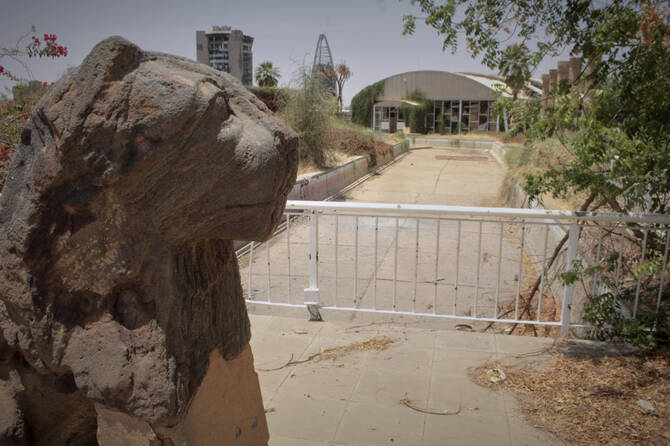
A Meroitic lion statue is seen in the garden of Sudan National Museum, the home to the country's largest artifacts that date to different eras of Sudanese history, after nearly two years of war between the army and paramilitary Rapid Support Forces (RSF), in Khartoum, Sudan, Thursday, April 3, 2025. (AP Photo/Khaled Abd Al Gader)
2 / 4
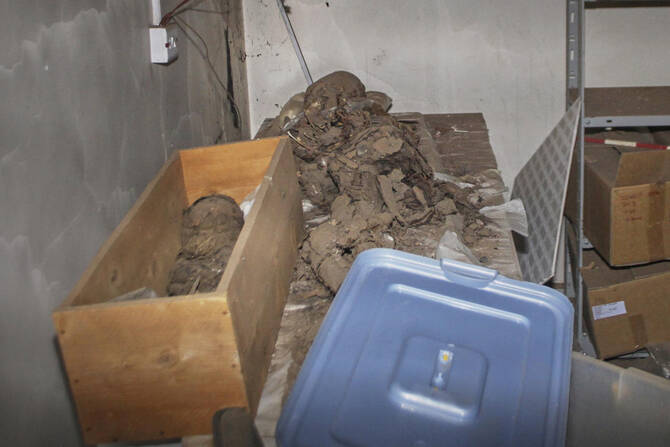
Mummy coffins lie destroyed on the ground at the Sudan National Museum, the home to the country's largest artifacts that date to different eras of Sudanese history, after nearly two years of war between the army and paramilitary Rapid Support Forces (RSF), in Khartoum, Sudan, Thursday, April 3, 2025. (AP Photo/Khaled Abd Al Gader)
3 / 4
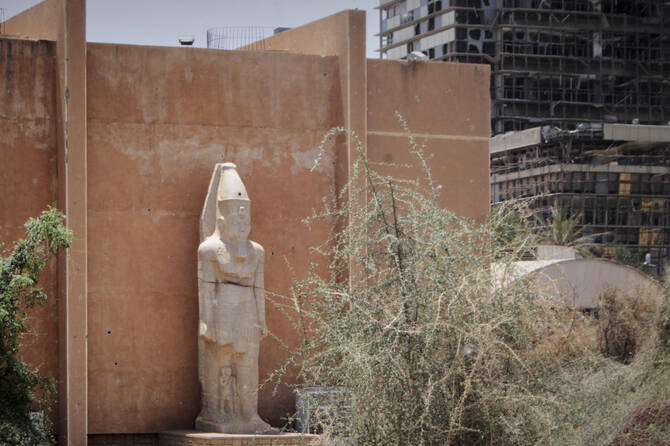
A granite colossal statue from the ancient temple of Tabo on Argo Island stands despite the damage at the Sudan National Museum, the home to the country's largest artifacts that date to different eras of Sudanese history, after nearly two years of war between the army and paramilitary Rapid Support Forces (RSF), in Khartoum, Sudan, Thursday, April 3, 2025. (AP Photo/Khaled Abd Al Gader)
4 / 4
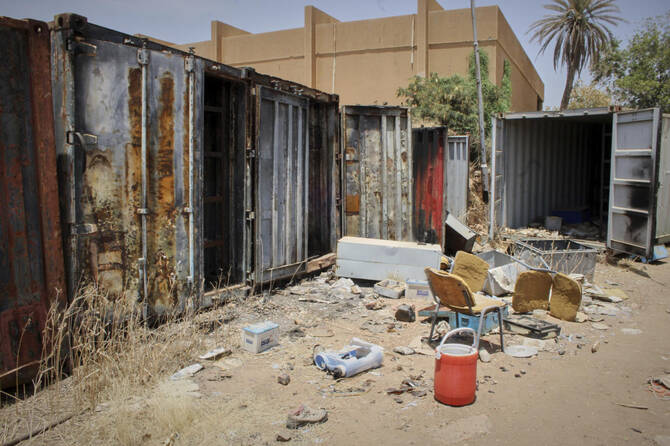
Antiquities warehouses are seen looted at Sudan National Museum, the home to the country's largest artifacts that date to different eras of Sudanese history, after nearly two years of war between the army and paramilitary Rapid Support Forces (RSF), in Khartoum, Sudan, Thursday, April 3, 2025. (AP Photo/Khaled Abd Al Gader)
CAIRO: Inside Sudan's biggest museum, the exhibition halls once filled with statues and relics from centuries of ancient civilizations are trashed, littered with debris. The display cases stand empty and shattered. A mummy lies exposed in an open storage box. All the gold artifacts have been looted.
The Sudan National Museum has been wrecked by two years of war in Sudan, with most of its artifacts stolen. Authorities blame the paramilitary Rapid Support Forces, which held this district of Khartoum along the banks of the Nile River for most of the conflict.
Since the Sudanese military regained control of the capital last month, officials have been working to assess the damage and loss in hopes of one day restoring the museum.
"The losses are extremely big and saddening. A significant number of antiquities were stolen," Gamal ElDeen Zain Al-Abdeen, a senior official at the National Corporation for Antiquities and Museums, told The Associated Press. "The RSF destroyed everything ... concerning the civilization of the Sudanese people."
The National Museum had thousands of pieces, dating back to the Paleolithic era well before the development of agriculture, and through the kingdoms of ancient Sudan. Many came from the Napatan era in the eighth and seventh centuries B.C., when pharaohs from Sudan ruled over much of ancient Egypt, or from the later Meroitic kingdom that built pyramids in Sudan. Other halls had later Christian and Islamic material.
Some pieces too heavy to carry remain in place. In the museum's garden, a line of stone lions remains, as do the Colossi of Tabo, two large pharaonic-style statues. Also remaining are three pharaonic temples that were moved from northern Sudan and reassembled at the museum in the 1960s to escape the rising waters of Lake Nasser from Egypt's construction of the High Dam.
But many objects are gone. Looters broke into the locked storerooms and made off with all the gold artifacts, Zain Al-Abdeen said. But it was too early to know how much of the museum's collection had been stolen, he said.
Museums paid a heavy price in the war
He blamed the RSF for the destruction, saying they had fighters in the museum at some point during the war.
The war in Sudan broke out in April 2023, after tensions between the Sudanese army and the rival RSF turned into battles in the streets of Khartoum and rapidly spread around the country. The RSF held much of Khartoum during the war, including the district of the museum.
Now that they have been driven out, the extent of the destruction from fighting and looting is coming clear.
"Khartoum in general has been destroyed, particularly the center of Khartoum," Zain Al-Abdeen said. "No building was spared from the bloodshed and theft, and this is what I saw with my own eyes." He said all the city's museums were damaged, particularly the Ethnography Museum, where walls were demolished and halls and offices burned.
The ransacking is a blow to a country with a rich heritage, one that has deep resonance among Sudanese but is often overlooked abroad because of Sudan's decades of instability.
'Erasing history'
UNESCO said in September it was concerned about looting at the Sudan National Museum, which it helped renovate in 2019. It warned that sale or removal of artifacts "would result in the disappearance of part of the Sudanese cultural identity and jeopardize the country's recovery."
A UNESCO spokesperson said Friday that damage, looting and destruction of museums and cultural sites happened across Sudan's states of Khartoum, River Nile, Northern State, Gezeira and the Darfur region. An accurate assessment isn't possible due to the ongoing fighting.
The Sudan National Museum is among several that have undergone "extensive looting and substantial damage," according to UNESCO.
Sedeeq Mohamed Sedeeq, who lives near the museum, said the RSF vowed democracy and liberation but instead they are "erasing the oldest nation in history, erasing its history."
Reconstruction plans for destroyed museums will begin after committees assess the damage and recommend proposals for rehabilitation, Zein Al-Abdeen said. The plans are expected to include building repairs, restoration of the antiquities storage areas and fixing the museum's surrounding grounds.
At least 20,000 people have been killed since the war broke out, though the number is likely far higher. The war has also driven more than 14 million people from their homes and pushed parts of the country into famine.
A history-loving homebrewer in suburban Utah has pulled off something few museums or universities have even attempted: reviving a beer that may have been the drink of choice of pyramid builders in Ancient Egypt over 3,000 years ago.
Without the help of a fancy lab or any funding, Middle Eastern studies scholar and self-taught brewer Dylan McDonnell recreated the ancient tipple all by himself in his own back yard in Millcreek, just outside Salt Lake City.
How a Utah homebrewer made an Ancient Egyptian beer
But doing so was no easy task. Inspired by the hordes of Americans baking sourdough bread in the early stages of the covid-19 pandemic, McDonnell went down a slightly different route linked to two of his passions, hoping to replicate the kind of beer drunk by laborers working for the pharaohs three millennia ago.
McDonnell went through 75 beer-related recipes in the Ebers Papyrus, a 3,500-year-old Egyptian medical text, discovering there were eight core ingredients: desert dates, Yemeni Sidr honey, sycamore figs, black cumin, juniper berries, golden raisins from Israel, carob fruit, and a hint of frankincense. Good luck finding some of them in Utah.
However, where there's a will there's a way, and McDonnell was determined not to be stopped by inconvenience. He grew Egyptian purple barley in his garden, malted and dried ancient emmer wheat (also known as farro) and even smoked some of the grain to mimic Bronze Age conditions.
Yeast the key to recreating 3,000-year-old beer
But the yeast, as with most beers, was the key. McDonnell partnered with Primer's Yeast, a German-Israeli biotech firm that works with archaeologists to isolate and revive dormant yeast strains found in ancient ceramics, and was sent an extract from a jug discovered at Tel es-Safi, the site of the ancient Philistine city of Gath. According to experts, that very strain had been used to ferment beer almost 3,000 years ago.
The result was a drink offering floral aromas, fruity sweetness reminiscent of apricot, and a tangy acidity not unlike a light fruit wine or modern cider. "It has a rustic, almost wild character, but it's totally drinkable," said Chris Detrick, brewmaster at Level Crossing Brewing in Salt Lake City, after a private tasting.
No plans to sell ancient beer
And you'll have to take Detrick's word for it, as McDonnell has no plans to sell his beer, or even brew more of it. For him, it was all about finding a connection with the ancient past.
"During the brewing process, I stopped and looked up at the sky," he said. "And I thought: someone 3,000 years ago was doing the same thing, following the same recipe."
The Ancient Egyptian Old Kingdom (2686–2125 bc) produced many lasting artefacts — but little DNA has survived.Credit: Azoor Photo/Alamy
Teeth from an elderly man who lived around the time that the earliest pyramids were built have yielded the first full human genome sequence from ancient Egypt.
The remains are 4,800 to 4,500 years old, overlapping with a period in Egyptian history known as the Old Kingdom or the Age of Pyramids. They harbour signs of ancestry similar to that of other ancient North Africans, as well as of people from the Middle East, researchers report today in Nature1.
"It's incredibly exciting and important," says David Reich, a population geneticist at Harvard Medical School in Boston, Massachusetts, who was not involved in the study. "We always hoped we would get our first ancient DNA from mummies."
The hot North African climate speeds up the breakdown of DNA, and the mummification process might also accelerate it, said Pontus Skoglund, a palaeogeneticist at the Francis Crick Institute in London who co-led the Nature study, at a press briefing. "Mummified individuals are probably not a great way to preserve DNA."
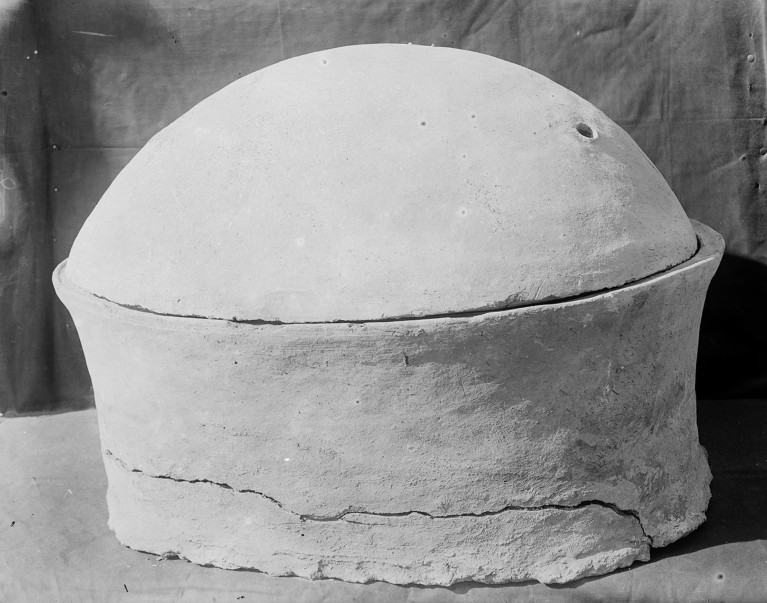
The ceramic vessel in which the remains of the Nuwayrat individual were discovered.Credit: A. Morez et al./Nature
The remains that Skoglund's team sequenced pre-date widespread mummification: the person was interred instead in a ceramic pot, a sign of high, but not elite, status. The remains were found at an archaeological site called Nuwayrat, 265 kilometres south of Cairo along the Nile river. The teeth and bones were discovered in 1902, when Egypt was under British colonial rule. They were donated to institutions in Liverpool, UK, where they have been ever since, even surviving German bombing during the Second World War.
Low expectations
Skoglund says his expectations were low when his team extracted DNA from several teeth from the Nuwayrat individual. But two samples contained enough authentic ancient DNA to generate a full genome sequence. Y-chromosome sequences indicated that the remains belonged to a male.
The majority of his DNA resembled that of early farmers from the Neolithic period of North Africa around 6,000 years ago. The rest most closely matched people in Mesopotamia, a historical Middle Eastern region that was home to the ancient Sumerian civilization, and was where some of the first writing systems emerged. It's not clear whether this implies a genetic direct link between members of Mesopotamian cultures and people in ancient Egypt — also hinted at by similarities in some cultural artefacts — or whether the man's Mesopotamian ancestry arrived through other unsampled populations, the researchers say.
The rest of the ancient Egyptian man's bones revealed more details about his life. Evidence of arthritis and osteoporosis suggest he died at an advanced age for the time, possibly in his sixties. Other signs of wear indicate a life of physical toil, sitting hunched over on hard surfaces. On the basis of this and imagery from other tombs from this period, he might have been a potter, said co-author Joel Irish, a bioarchaeologist at Liverpool John Moores University, at the press briefing.
"The publication of a whole-genome data set of an ancient Egyptian constitutes a significant achievement in the field of molecular Egyptology," says Yehia Gad, a geneticist at Egypt's National Research Centre in Cairo, who praises the researchers for presenting the provenance of the remains clearly. But he points out that the genome is from one individual and might not fully represent ancient Egypt's gene pool, which was probably a melting pot of different ancestries.
For this reason, researchers are eager for more ancient Egyptian genome data — perhaps even from a mummy. Advances in ancient-genomics technology and local capacity — Gad supervises an ancient DNA lab at the National Museum of Egyptian Civilization in Cairo — means it hopefully won't take another 40 years.
The Pyramid of Djoser, the oldest pyramid still standing, was being built around the time the man's remains were entombed. (Wikimedia Commons: Vyacheslav Argenberg, CC BY 4.0)
In short:
Researchers have sequenced DNA extracted from an ancient Egyptian entombed almost 5,000 years ago.
The genome suggests the man, who the researchers believe was higher status and grew up on the banks of the Nile, had ancestry from the area of modern-day Iraq.
What's next?
While ancient DNA is difficult to collect from Egyptian samples, researchers are building up data that will help to understand the ancestries of ancient Egypt.
Link copied
Almost five millennia ago, the remains of an ancient Egyptian man were placed in a ceramic pot and entombed in a hillside.
While his identity is still a mystery, scientists have extracted and sequenced his genetic data.
The genome, described in a study published in Nature, is the oldest DNA extracted from an Egyptian human to date, and the first entire genome sequenced from an ancient Egyptian.
The man, whose skeleton was unearthed from a necropolis at Nuwayrat, 265 kilometres south of Cairo, lived between 2855 – 2570 BC.
His DNA potentially helps us understand the members of the culture that built the pyramids, according to Adeline Morez Jacobs, first author on the paper and a research fellow at Liverpool John Moores University.
"The question of 'who the ancient Egyptians were' is something people are really curious about," Dr Morez Jacobs said.
"There are all kinds of theories out there," she said.
So, what can we learn from a set of ancient bones buried in a plain clay pot while, or even before, the Sphinx was being constructed?
Ancestry of the skeleton in the pot
The Nuwayrat pot was excavated between 1902 and 1904 by a United Kingdom-led team, while Egypt was under British rule.
Previous analysis of the skeleton in the pot suggested it belonged to a man aged between 44 – 64 years old at time of death.
The man was also believed to be of higher-status, based on how burials were usually done at this time.
While other burials from the area went to Egyptian museums, this pot was one of eight exported to the UK more than a century ago. (Supplied: Morez, A. (2025))
To find out more about him, the team carbon dated the skeleton, which suggested he lived just before or during the Old Kingdom period when the oldest, and many of the most famous, pyramids were built.
Then they took seven tiny samples of the man's teeth for DNA extraction, and found two of them well-preserved enough to collect an entire genome.
The team then compared the man's genome against a database of 4,000 other people's DNA — 3,233 people from the present day, and 805 ancient people.
This comparison suggested the man's ancestry was mostly North African, but about a fifth of it also matched genes from ancient Mesopotamia, in modern-day Iraq.
They also analysed chemical signatures in his teeth that suggested he grew up in the Nile.
Dr Morez Jacobs said the team wasn't surprised by the results.
"His genetic ancestry largely aligns with neighbouring populations of the time."
This could add to the evidence that there was human migration between these two regions.
Carbon dating suggests the latest the man lived was 2570 BC, roughly when the Great Sphinx is estimated to have been built downriver of Nuwayrat. (Wikimedia Commons: Petar Milošević, CC BY-SA 4.0)
Bastien Llamas, an ancient-DNA researcher at the University of Adelaide, said the researchers had performed a solid, careful analysis.
"It's quite interesting to see that there is already, potentially, movement across the region that leads to this kind of mixture," Dr Llamas, who wasn't involved with the study, said.
But, he added, the researchers' analysis was very resource-intensive, and they could have reached the same conclusions by focusing on key parts of the man's genome and examining just a thousanth of the 8 billion data points they looked at.
"Targeting 1.2 million of those letters is much, much cheaper."
Why has it taken so long to do this?
While the dry Egyptian desert has been helpful for preserving pyramid superstructures over millennia, it's less friendly to tiny shreds of DNA.
Ancient DNA research is plagued by the problem that DNA is, usually, not a robust molecule.
It breaks down swiftly after death, and is even more likely to degrade in hot environments.
"Although advances in laboratory techniques have greatly improved our ability to recover ancient DNA, there's still significant uncertainty when working with material from hot and arid environments like Egypt," Dr Morez Jacobs said.
Some mummification and preservation techniques can also destroy DNA.
The person was found in a tomb cut into the rock at Nuwayrat south of Cairo. (Supplied: Morez, A. (2025))
But Sally Wasef, a palaeogeneticist at Queensland University of Technology, said there was still plenty of well-preserved DNA found in ancient Egyptian tombs.
Dr Wasef, who wasn't involved with the current research, worked on DNA extraction from King Tutankhamun's family more than 15 years ago.
While they couldn't garner whole genomes, she said that ancient DNA extraction was now more powerful.
"I'm sure that we would be able to get more using the current techniques."
There can also be legal and logistical challenges when working with ancient DNA.
Dr Wasef said the Egyptian government has placed tight regulations on DNA sequencing, making it difficult to carry out the work with samples held in the country.
Artefacts moved overseas, however, can have patchy provenance, making it harder to link DNA with archaeological and historical information.
How much can the DNA of one person tell us?
While Dr Wasef said the researchers' DNA extraction was sound, she thought they might have drawn too many conclusions from their ancestry analysis.
"It's just one individual that has been moved outside of Egypt."
Dr Wasef said one individual's genes couldn't yield much information about migration, and the century-old excavation history lacked details that could possibly tell us more about the man.
She also pointed out that it's harder to determine ancestry from this region, because there's less genetic data from both ancient and modern people in the area.
"The ancient DNA results are as good as the database that you're comparing to."
Egyptian researchers are currently working on building a library of modern and ancient Egyptian DNA, due to be complete in the next couple of years.
"I'll be more inclined to see those results when that data is published and this analysis is redone," Dr Wasef said.
Science in your inbox
Get all the latest science stories from across the ABC.
Thirty years after archaeologist Jean-Yves Empereur of the Centre d'Études Alexandrines (CEAlex) discovered the underwater remains of the Alexandria Lighthouse—one of the Seven Wonders of the World—in 1995, a new remarkable mission is underway.
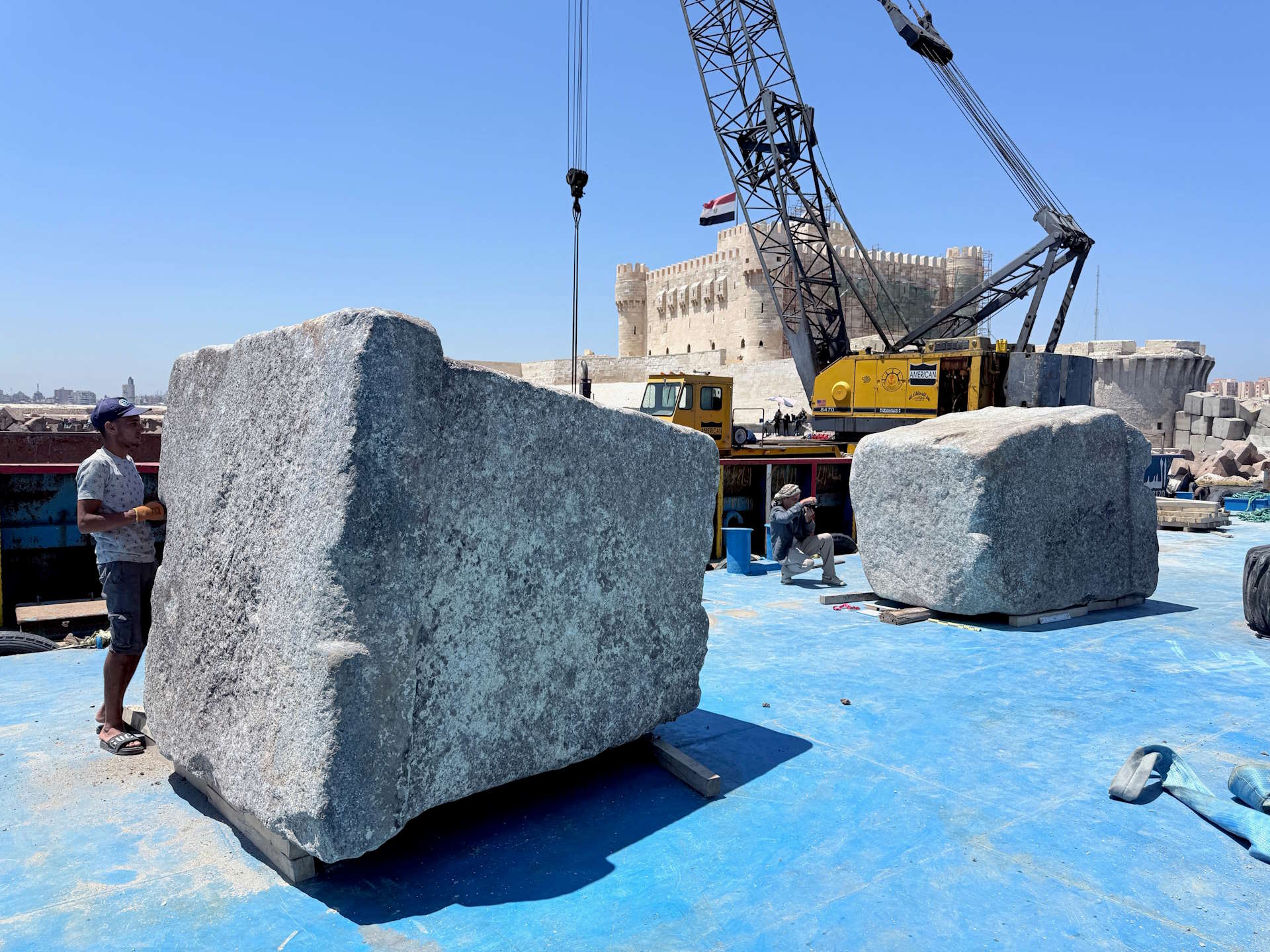
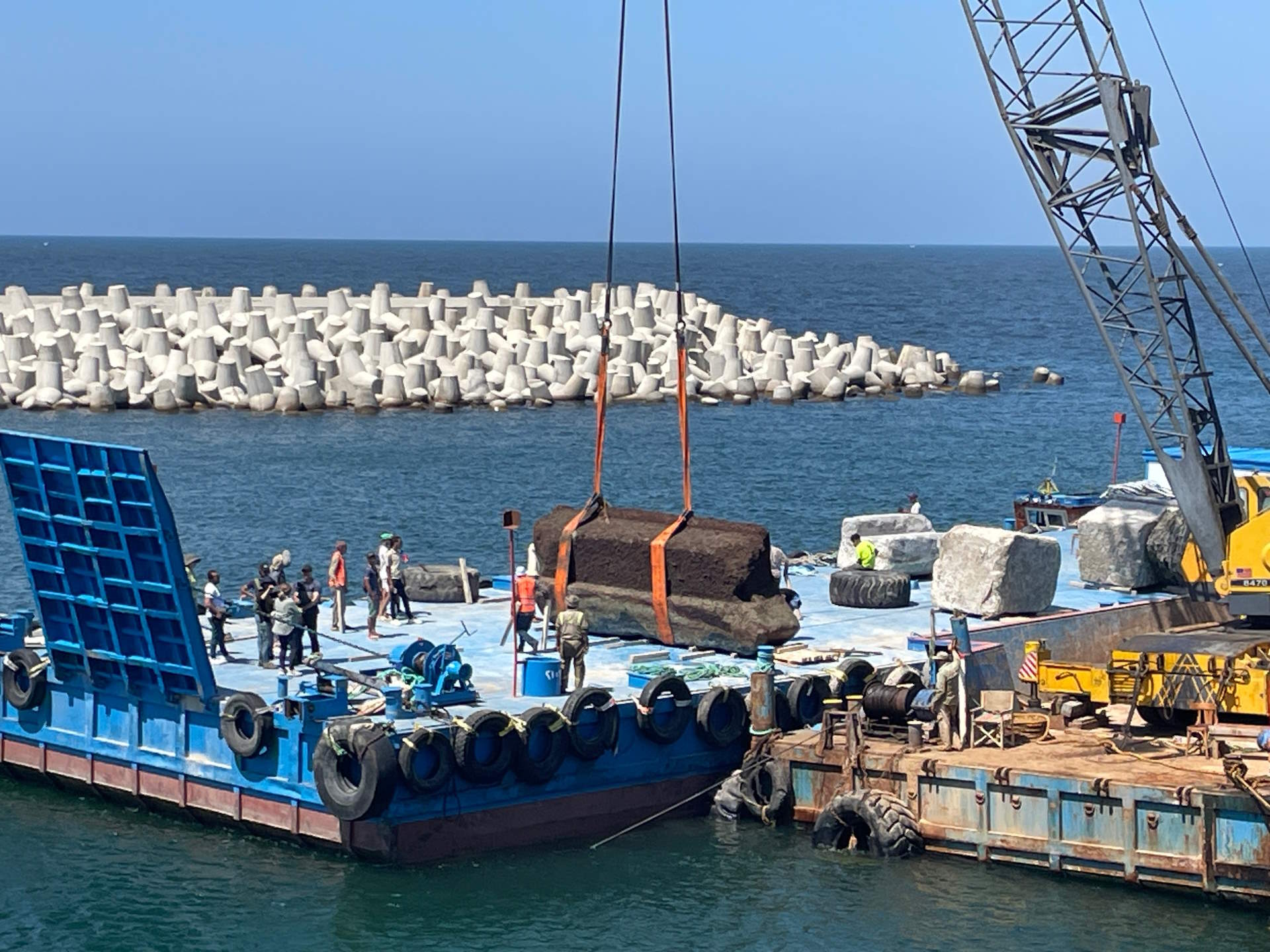
Under the scientific supervision of archaeologist and architect Isabelle Hairy from the French Centre national de la recherche scientifique (CNRS), the team has successfully lifted 22 of the lighthouse's largest stone blocks out of the water. These include monumental door lintels and jambs weighing 70 to 80 tons, the threshold, large base slabs, and parts of a previously unknown monument: a pylon with an Egyptian-style door crafted from the Hellenistic period.
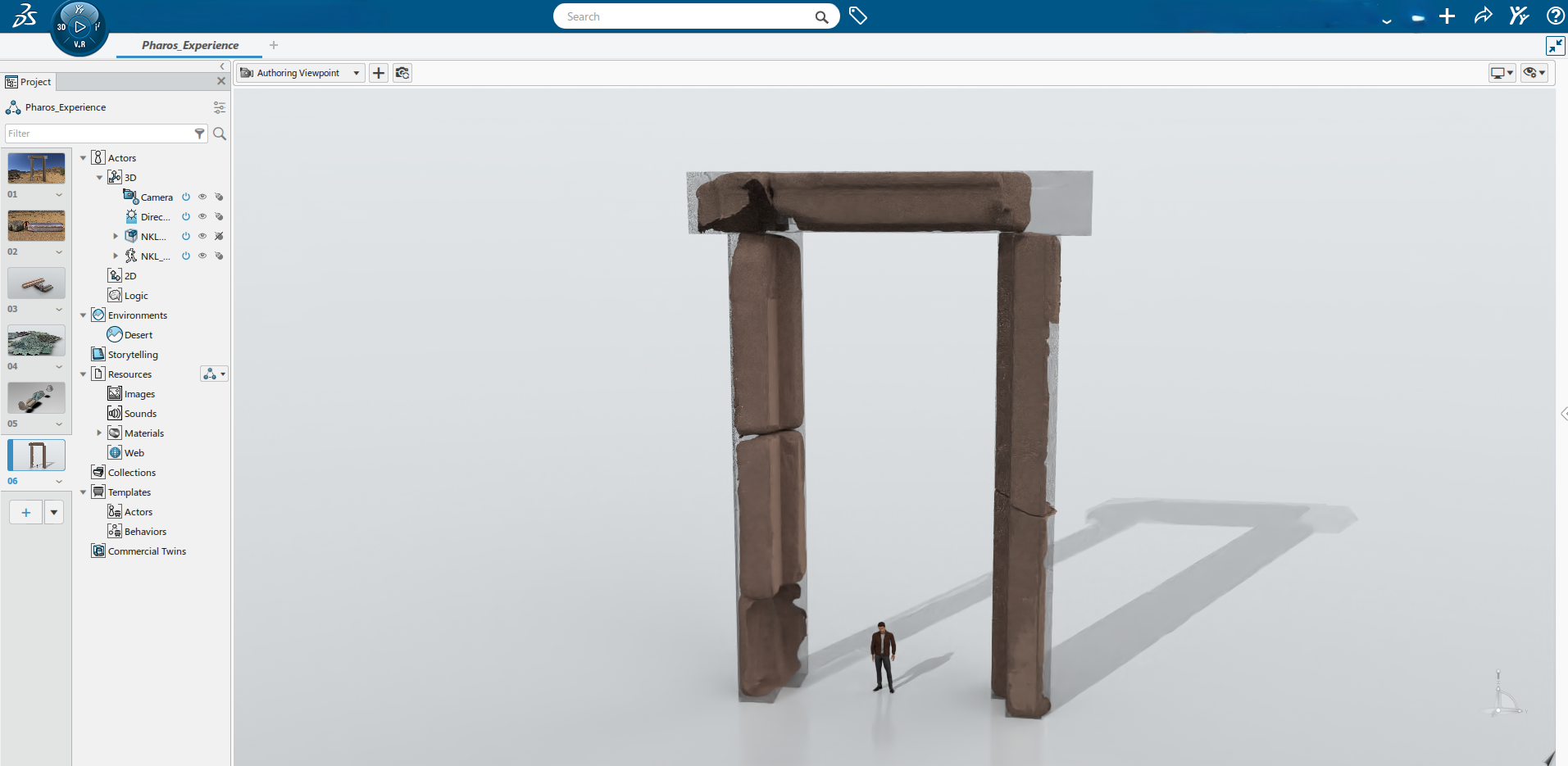
The goal of this exceptional and spectacular operation is to study and scan these architectural elements, adding them to a collection of over 100 blocks already digitized underwater over the past decade. After photogrammetric processing, the scanned blocks will be handed over to volunteer engineers with La Fondation Dassault Systèmes. Like pieces of a giant archaeological puzzle, each block will be analyzed and repositioned virtually. Using scientific simulations and virtual worlds, the team of engineers will test hypotheses about the lighthouse's construction and collapse, creating a digital twin of this lost wonder. The virtual model will revive the lighthouse's original grandeur, allowing visitors to explore it as if they were on site.
A French-Led Excavation
The CNRS - specifically its permanent unit in Egypt, the Centre d'études Alexandrines - is conducting the lighthouse excavation under the authority of the Egyptian Ministry of Tourism and Antiquities. La Fondation Dassault Systèmes has been supporting the project for the last three years.
Photo credit: GEDEON Programmes / CEAlex
The "PHAROS" Project
Funded by La Fondation Dassault Systèmes and led by Isabelle Hairy (CNRS - UMR 8167, Orient & Méditerranée), the PHAROS project brings together historians, numismatists, archaeologists, and architects to collect ancient depictions and descriptions of the lighthouse from the late fourth century BCE until its destruction in the early 15th century CE. This research helps to fill gaps left by the highly fragmented archaeological remains, as the lighthouse was quarried for building materials after it ceased operation in 1303 until the construction of the Qaitbay Fortress in 1477.
These findings complement the parameters already available for the ongoing digital reconstruction, shedding light on the lighthouse's unique architecture—crucial since no major ancient lighthouse survives today. The Alexandria Lighthouse was the first of its kind and understanding its history offers insightful clues about how and why it collapsed.
Virtual reconstruction of the monumental door of the Alexandria Lighthouse - Photo credit: Isabelle Hairy - Centre d'Etudes Alexandrines
About the Alexandria Lighthouse
Built at the beginning of the third century BCE by Ptolemy I, this incredible towering structure guided sailors approaching a treacherous coastline. Standing 100 meters tall, its beacon made the Egyptian city a shining hub at the heart of Mediterranean trade. Symbolizing the city's power and the prestige of its builders, Pharos can be regarded as humanity's first skyscraper. Its technical brilliance and architectural genius – emblems of the era's scientific and artistic peak – allowed it to withstand time and history for over 1,600 years.
A Major Documentary Project
GEDEON Programmes, a renowned French producer of history and science documentaries, helped cofinance the 1995 Alexandria Lighthouse rescue mission and produced the acclaimed film "The Seventh Wonder of the World" which was broadcasted on France 2 and major international channels such as the BBC, PBS, ZDF, RAI, NHK, and others. In 2025, GEDEON Programmes is again supporting the CEAlex's mission by funding the barge and crane used to lift the lighthouse blocks. This spectacular operation was filmed by GEDEON Programmes' teams, led by director Laurence Thiriat, for a 90-minute documentary set to premiere in prime time on France Télévisions.
The Ministry of Tourism and Antiquities has completed the restoration work of several archaeological structures in the historic city of Pelusium (Tell El-Farama) as part of Egypt's Sinai development plan.
The initiative aims to preserve Egypt's rich cultural heritage while promoting sustainable development and tourism in the region.
Pelusium in North Sinai is one of Egypt's most important ancient cities, having played a vital role throughout various periods of Egyptian history.
The recent restoration work, overseen by the Supreme Council of Antiquities (SCA), focused on preserving the city's unique architectural heritage and integrating the site into Egypt's broader tourism and cultural development plans.
Minister of Tourism and Antiquities Sherif Fathy emphasized that the project reflects the state's commitment to revitalizing archaeological sites in Sinai and enhancing their value as cultural and touristic landmarks.
"Preserving the historical and architectural identity of Sinai is a key component of our national development strategy," he said.
Meanwhile, SCA Secretary-General Mohamed Ismail Khaled highlighted the significance of Pelusium as a historic gateway to Egypt.
He noted that the restoration work aimed to preserve the site's architectural elements and historical legacy for future generations.
The project involved structural reinforcement and conservation of several key monuments.
Most notable among these are the walls, towers, and gates of the ancient Pelusium Fortress, which spans nearly 80,000 square metres, as well as important Roman and Christian-era remains.
These also include the Roman Senate building, the southern Roman bath, and the ruins of the western Rotunda Church, a rare fifth-century architectural type in early Christian design, alongside the southern church, one of the city's most prominent ecclesiastical structures.
Special attention was also given to the intricate restoration of inscribed lintels from the Temple of Zeus Kasios, preserving both their artistic and historical value.
The work was carried out using state-of-the-art scientific techniques, including detailed analysis of original building materials to ensure accurate and authentic conservation.