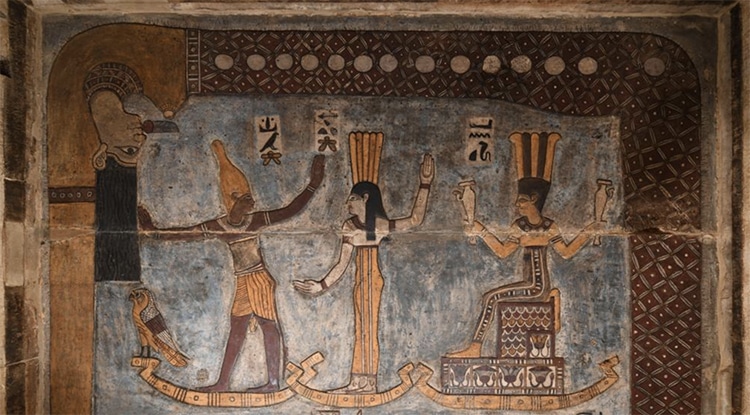
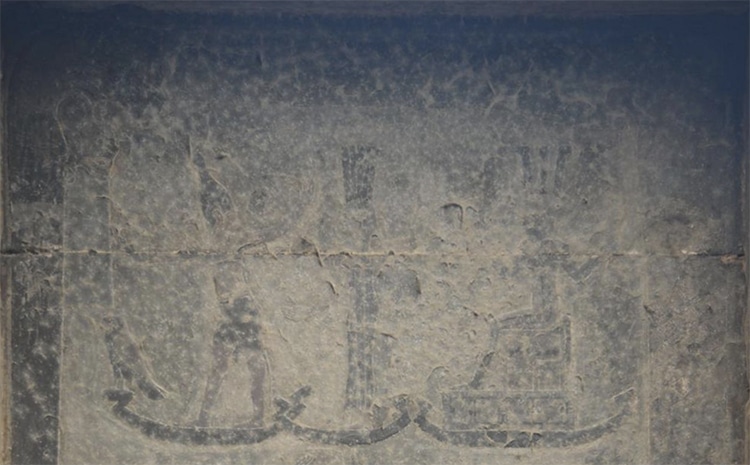
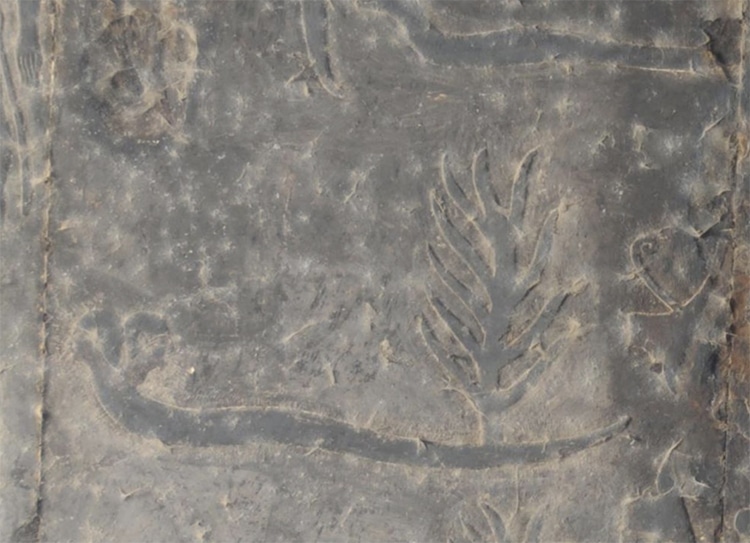
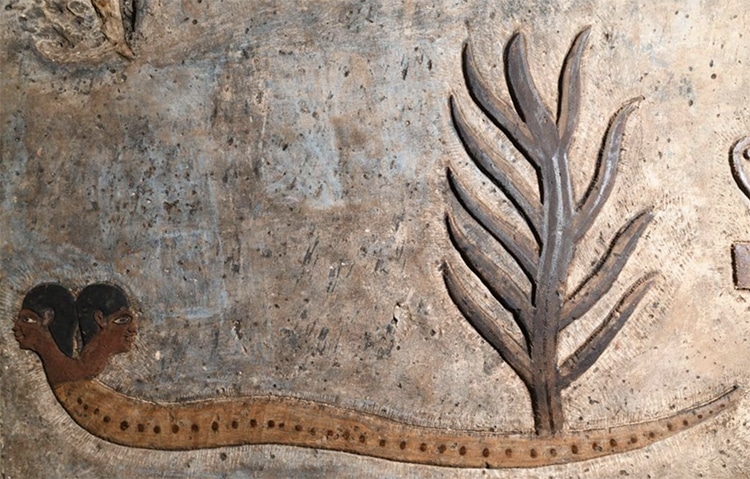
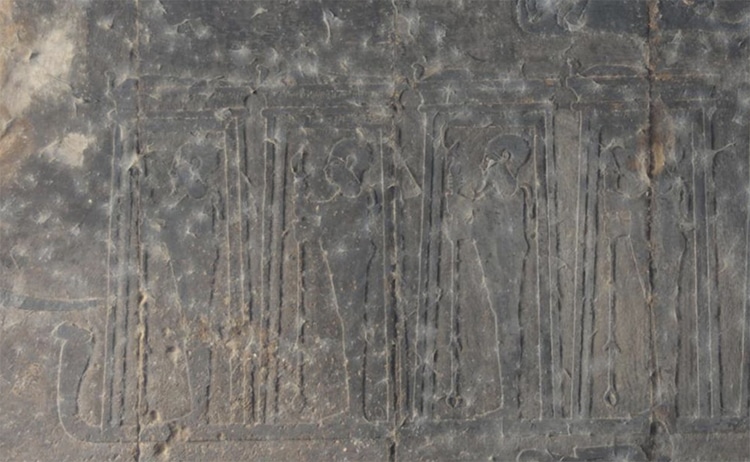
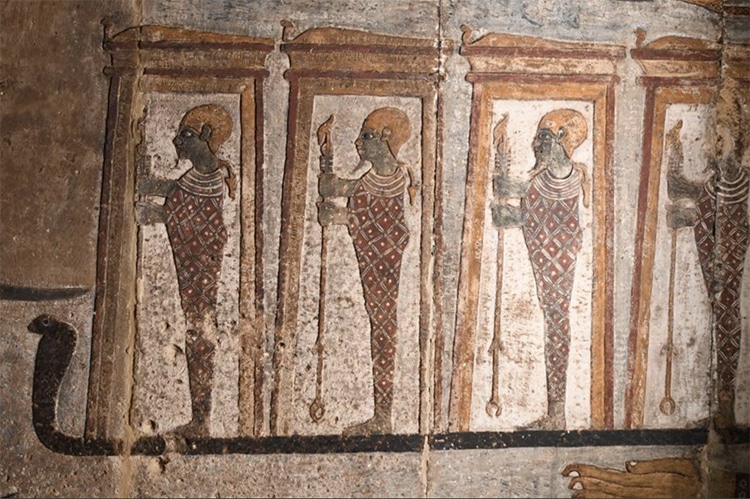
Archeology is often envisioned as a quest, whether it be digging for treasure or scouring caves. However, a significant amount of conservation goes into discovering and preserving the past. For a team of archeologists in Egypt, the last five years have been a cleaning mission. The group have been scrubbing dirt, soot, and bird droppings off the Temple of Esna's ceiling to reveal incredible ink inscriptions which were previously murky. Among these are a stunning New Year's scene of Egyptian gods—Orion, Sirius, and Anukis—onboard boats under the sky god.
The Temple of Esna is south of Luxor in Egypt. The part which remains standing is the vestibule or pronaos, which was built during the Roman period under Emperor Claudius (41–54 CE). Made of sandstone, it is 37 meters (88.6 feet) long, 20 meters wide (65.6 feet), and 15 meters (49.2 feet) high. It is unknown exactly what deity the temple was dedicated to but further cleaning of the walls may suggest an answer. Answers may be slow however, as it took the 30-person team five years to uncover the ceiling. According to a statement from the University of Tübingen, which partners with the Egyptian Ministry of Tourism and Antiquities on the project, the soot has receded across "hundreds of figures and astronomical representations, revealing them once more in their original colors."
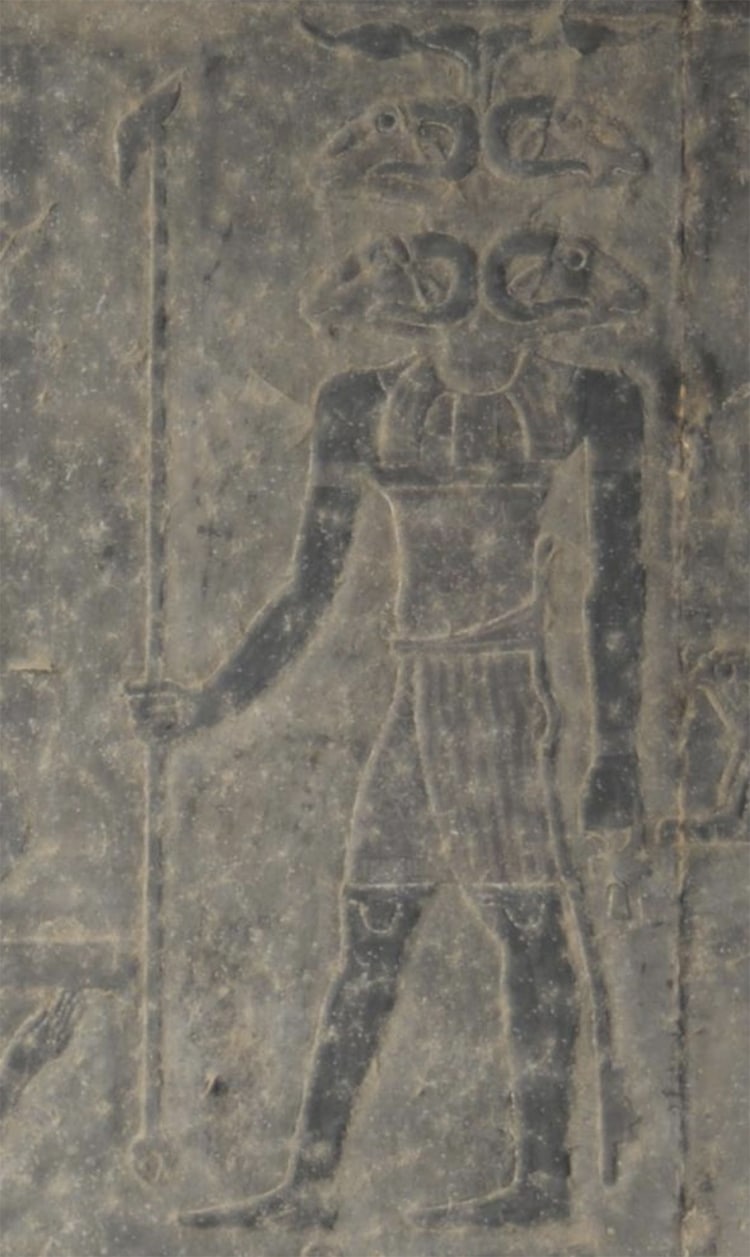
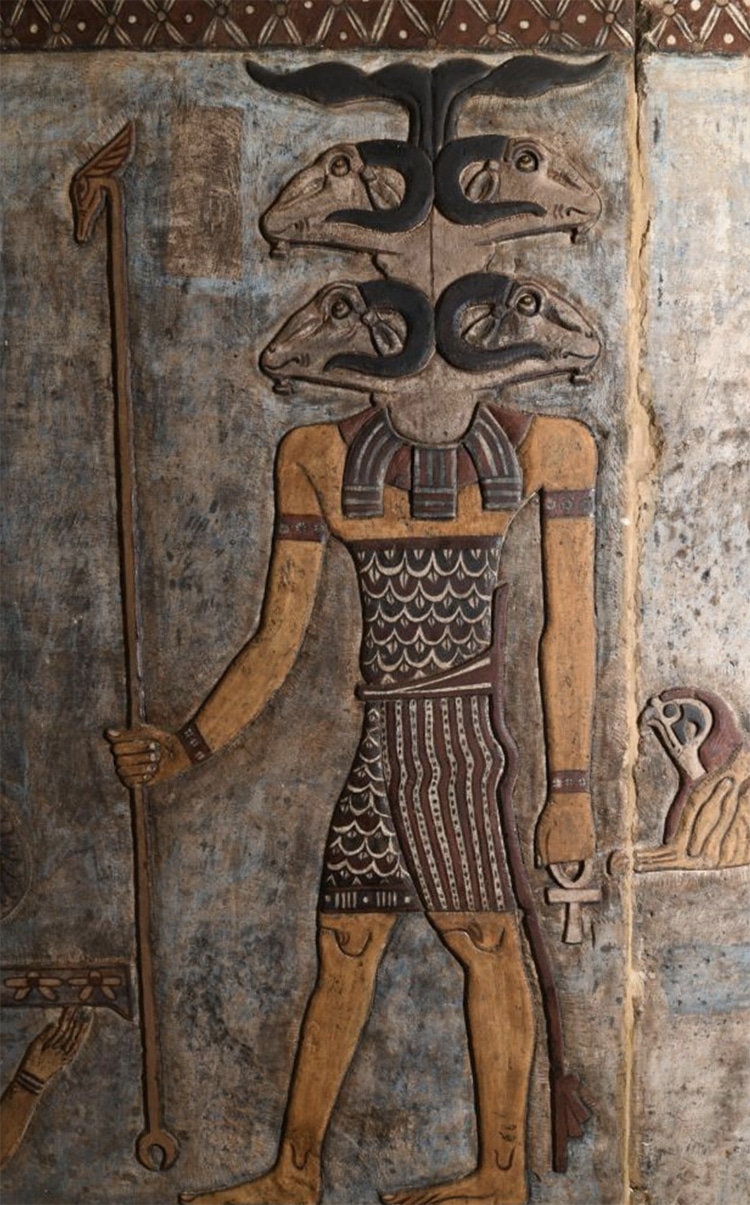
The ceiling has seven thematic sections. Among the panels is a New Year's scene, where Sothis, aka Sirius, is depicted by Orion. "Sirius is invisible in the night sky for 70 days a year until it rises again in the east," Professor Christian Leitz of University of Tübingen explained. "That point was New Year's Day in ancient Egypt and also heralded the annual flooding of the Nile." The goddess Anukis, also depicted, caused the Nile floodwaters to retreat about 100 days after this event. Also rendered on the ceiling were other figures, including a god with four rams' heads and a "representation of the south wind as a lion with four wings and a ram's head."
However, there is still more work to be done in his historic site. "The completion of the ceiling restoration marks the project's first and perhaps most important milestone," Professor Leitz said. "In the next few years, we want to focus on removing soot from the interior walls of the Pronaos and the remaining columns."
Archeologists are scrubbing away thousands of years of grime from the Temple of Esna, near Luxor, Egypt.
"Sirius is invisible in the night sky for 70 days a year until it rises again in the east," Professor Christian Leitz of University of Tübingen explained.
Researchers extol skills of ancient Egyptian medics
Cleopatra would have been in safe hands if she really had been bitten by a snake, or a affected by any number of illnesses - say University of Manchester Egyptologists in a new book.
Medicine and Healing Practices in Ancient Egypt by Professor Rosalie David and Dr Roger Forshaw, is one of the first to consider the perspective of doctors who delivered medical and related treatments, and the patients who they cared for.
Amongst the gems the book covers, is a description of treatments for snake bites found in the Brooklyn Papyrus- one of the oldest preserved writings about medicinedated to around 450 BCE.
The book, published by Liverpool University Press , also details how the ancient Egyptians dealt with old age, their attitudes to deformity and disability, court punishments, insecticides and pesticides and treatment of trauma.
Medical care in ancient Egypt was universally available to men, women and children in all levels of society. Different treatments were carried out in various locations including temple areas, worksites and towns.
To offset the danger of being bitten and poisoned by snakes and scorpions, the Egyptians prayed to deities associated with the creatures.
They used magical spells to ward off snake bites and also to cure their effects, but patients also had practical treatments, some of which were painful, though effective.
According to the researchers, onions, a naturally occurring compound called natron, wound incision and bandaging were all used by the ancient medics of Egypt to treat snake and scorpion bites.
Though previous research by University of Manchester Egyptologists dismissed the long-held argument that the ancient Egyptian queen Cleopatra was killed by a snake, bites by scorpions and snakes were common hazard in ancient Egypt.
The Brooklyn Papyrus is a scroll which describes different snakes found at the time and treatments for their bites. The manuscript also contains treatments of scorpion and spider bites.
Measures include the 'knife treatment' which was likely to be aimed at incising the wound to relieve tissue fluid as well as limiting absorption of the venom.
Bandaging was sometimes advised and used to retain specific medications rather than as a tourniquet to prevent the spread of venom.
Natron, which can be found in saline lake beds in arid environments, has the capacity to reduce swelling by osmosis and act as an early antiseptic for wounds and cuts
It was also used to prepare mummies and as a fish and meat preservative, a household insecticide, part of the leather making process, and a bleach for clothing.
Almost 100 prescriptions are listed in the Brooklyn Papyrus, many of them of herbal origin.
Onion was the commonest ingredient of the remedies, probably because of its ability to repel snakes.
"
The Egyptian healthcare system was advanced and successful, not least for devising innovative ways to treat snake bites and save lives. Its achievements although widely praised in antiquity, are often not fully recognised today
Professor Rosalie David
„
The sulfonic acid in onions, the same chemical that causes tears when onions are chopped, has a deterrent effect on snakes.
Professor Rosalie David, emeritus professor of biomedical Egyptology said: "Throughout much of its history, ancient Egypt exerted considerable political, military and cultural influence over neighbouring lands.
"The Egyptian healthcare system was advanced and successful, not least for devising innovative ways to treat snake bites and save lives.
"Its achievements although widely praised in antiquity, are often not fully recognised today.
"This ancient Egyptian medicine was even evident in medieval and later practices in Europe, and some aspects still survive today in modern 'Western' medicine."
Dr Roger Forshaw, an honorary lecturer at The University of Manchester, said: "Healers and care providers were essential to the Egyptian medical system, and offered a wide range of treatment methods.
"Certain types of healthcare, training and practice developed simultaneously in various locations including temples, palaces, towns and villages, battlefields and building sites.
"Surgery, pharmaceutical therapy and magico-religious treatments were available which made use of bandages and splints, medical instruments, prostheses and pharmaceutical prescriptions."
The book, Medicine and Healing Practices in Ancient Egypt, is published by Liverpool University Press
Images :
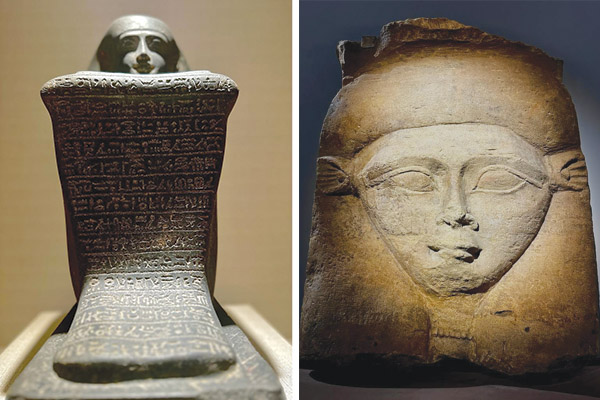
Healing statue holding snakes
Coffin of Khnum-Nakht
Statue of Sekhmet, goddess of medicine who has protective snake on her forehead - snakes and scorpions were simultaneously good and evil - dangerous and therefore had to be appeased through deification and worship.
Share this release
Researchers extol skills of ancient Egyptian medics
Enhancing the tourist experience, digitising the services provided at archaeological sites and museums, exploring and conserving Egypt's heritage, and opening new cultural attractions all took place this year, writes Nevine El-Aref
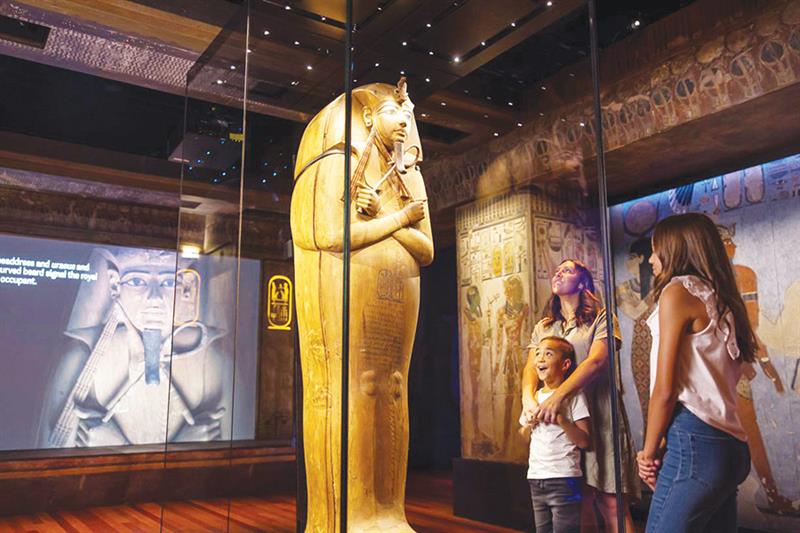
Ramses and the Gold of the Pharaohs exhibition in Sydney
Egypt embarked on a journey to harness the power of digital technology to enhance the tourist experience, preserve monuments, and make the wonders of its past more accessible to all types of visitors this year.
The digital revolution at the country's archaeological sites and museums is not just about embracing modernity but is also about safeguarding and celebrating the nation's cultural heritage for future generations to learn from and enjoy.
This year further efforts were exerted to enhance the tourist experience and digitise the services provided at archaeological sies and museums across the country, in addition to a wealth of new openings and discoveries.
Egypt's National Tourism Strategy launched in November 2022 aims to attract 30 million tourists to Egypt by 2028, increasing arrivals by 25 to 30 per cent annually. It continues the Ministry of Tourism and Antiquities' policy started many years ago to develop the quality of visitor services at Egypt's archaeological sites and museums, making them more tourist-friendly and more accessible to visitors with disabilities.
The strategy targets a threefold increase in seat capacity on flights in collaboration with the Ministry of Civil Aviation. It seeks to enhance tourist experiences at archaeological sites, museums, and other landmarks, create convenient products for independent travellers, improve the investment environment, and encourage room capacity.
It also focuses on fast-growing markets that can generate high volumes of tourists and widen the range of activities to increase spending.
The improvement of the quality of services at archaeological sites and museums aims to allow for more sustainable tourism, giving visitors the opportunity to fully experience ancient sites and make their visits more enjoyable and at the same time protect the sites from any negative impacts.
In 2021, the Ministry of Tourism and Antiquities launched a project to improve visitor services at 40 archaeological sites and museums across the country as well as to build partnerships with private-sector companies and scientific institutes to improve facilities at sites such as the Salaheddin Citadel in Cairo, the Giza Plateau, the Saqqara Necropolis, Beni Hassan, the Karnak and Luxor Temples in Luxor, and temples in Aswan such as Philae, Abu Simbel, Amada, and Seboua.
It also upgrades the Egyptian Museum in Tahrir Square and sites that the Supreme Council of Antiquities (SCA) has already improved, such as the Isis Temple in Aswan and archaeological sites in Fayoum.
The development of services undertaken by the strategy includes the installation of visitor paths and new signage with information about the sites and monuments. Maps of the sites are provided to visitors along with descriptions of each with QR codes for more information. Sunshades and benches are provided.
All sites will be equipped to be accessible to the disabled under the strategy, including by providing improved mobility for those in wheelchairs, as well as making information more accessible to those with impaired sight and hearing. Environmentally friendly vehicles have been provided at sites such as the Salaheddin Citadel and the Giza Pyramids in Cairo, Deir Al-Bahari and the Valley of the Kings in Luxor, and the Abu Simbel Temples in Aswan.
E-ticketing systems have been implemented at most sites and museums in a step towards their being introduced at all of them. There are now e-ticketing systems at sites including the National Museum of Egyptian Civilisation (NMEC) in Cairo, the Egyptian Museum, the Giza Plateau, the Karnak and Luxor Temples, and the Kom Al-Shoqafa Catacombs and Qait Bay Citadel in Alexandria, among others.
As part of the ministry's digital transformation initiative, a new payment system has been launched for purchasing tickets to access archaeological sites and museums all over Egypt that started in May this year. The move is part of the third phase of the ministry's strategy to allow entry to 120 archaeological sites and museums via cashless payments, such as credit and debit cards and pre-paid Meeza cards.
The new system is meant to facilitate and control the entry process, as well as ensure that foreign currency makes its way into the banking sector and increases its flow. Exceptions are being made for Egyptian school trips until a special electronic ticketing portal is implemented. Egyptian nationals can purchase tickets electronically on site or via the website egymonuments.com. Tour agencies can buy group tickets through bank transfers to the SCA or via direct purchase on site.
Cashless entry is now available at the temples of Edfu, Kom Ombo, Abu Simbel, and Philae, as well as at the Nubian Museum and the Unfinished Obelisk in Aswan, the Giza Plateau, the Cairo Citadel, and the Egyptian Museum in Tahrir Square. It has also been implemented at the Baron Empain Palace in Heliopolis, the Royal Carriages Museum in Boulaq, and the Prince Mohamed Ali Palace in Manial.
Solar energy stations have been installed at the Sharm El-Sheikh National Museum, the Mohamed Ali Palace in Manial, and the Giza Plateau Visitor Centre, both in the Greater Cairo area, and at the Alexandria National Museum and the Jewellery Museum in Alexandria, marking a significant step towards greener and more sustainable tourism and heritage preservation.
The installation is the result of an agreement signed in November 2022 during the UN COP27 Climate Change Conference in Sharm El-Sheikh between the SCA and a number of international development and cultural preservation bodies.
Solar energy is more sustainable and economically feasible than electricity provided from the grid. It will contribute to preserving, protecting, and rehabilitating Egypt's cultural heritage and help to achieve the country's Sustainable Development Strategy 2030.
NEW DISCOVERIES: This year witnessed spectacular new discoveries revealing more about Egyptian history.
Among the most compelling was the chevron ceiling corridor found within the northern face of the Great Pyramid of Khufu on the Giza Plateau and just above its main entrance using five non-invasive techniques: infrared rays, muography, georadar, ultrasound, and architectural and 3D simulation.
The corridor, which is not accessible from outside the structure, is nine metres long and two metres wide. After the discovery was made, the scientific ScanPyramids team responsible sent a tiny six mm Japanese endoscope through a crack between the stones to attain images of the space from inside.
The discovery is part of the ScanPyramids project launched in 2015 to unravel the secrets of the Great Pyramid four millennia after its construction. The project combines several non-invasive and non-damaging scanning techniques to search for the presence of any hidden internal structures and cavities in ancient monuments that may lead to a better understanding of their structure and their construction processes and techniques.
An unprecedented discovery of eight previously undocumented storage chambers — or magazines — within Sahure's Pyramid was also made at the Abusir Necropolis south of Giza. This discovery, carried out by a joint Egyptian-German mission, sheds new light on the interior design and architecture of King Sahure's Pyramid, the second king of the Fifth Dynasty and the first to be buried in Abusir.
At the Saite-Persian Cemetery in Abusir, excavations carried out by a Czech-Egyptian team also revealed more about ancient Egyptian society during the 26th and 27th dynasties. The shaft tombs found there reveal information about the society that produced them, showcasing the society that produced King Djoser's Pyramid, the first stone structure in history.
The area was not used until the end of the 26th Dynasty, when high-ranking dignitaries at the royal court selected it to be their final resting place for eternity.
The site is on a straight line connecting the Giza Pyramids with the King Djoser Pyramid, forming the head of two shallow valleys running from the east and southeast. It is also located near older royal structures and has a sanctified status steeped in long-standing tradition. It is likely to be close to the cemetery of foreign mercenary soldiers commanded by dignitaries. The geological foundations of the site, characterised by a substantial layer of hardened mud, proved conducive to the construction of tombs.
There was a stunning discovery at the Saqqara Necropolis outside Cairo that is unlikely to be the last at this extensive archaeological site. Two embalming workshops considered to be the largest and most complete found to date dedicated to humans and animals have been uncovered. Also unearthed were two tombs from different historical periods, along with a significant collection of artefacts.
The human embalming workshop is a rectangular building with multiple rooms containing stone beds that were used for the mummification of the deceased. They were covered with plaster and featured gutters. Among the artefacts found within the workshop were clay pots, tools, and ritual vessels used for mummification.
The other workshop, also rectangular in shape, was constructed with mud walls and stone floors consisting of several rooms where a collection of clay pots and animal burials were unearthed. Bronze tools used in the mummification process were also found. The workshop contained five stone beds distinct from those discovered in the human embalming workshop.
Initial studies show that this particular workshop was used for the mummification of sacred animals.
Excavations at Al-Ghoreifa at Minya's Tuna Al-Gabal site in Upper Egypt revealed a significant find that promises to be an addition to the annals of archaeology. For the first time the New Kingdom cemetery of the 15th ancient Egyptian nome, or district, was found, although cemeteries from the old and middle kingdoms had been unearthed many years ago.
The cemetery comprises an array of rock-hewn tombs filled with anthropoid limestone sarcophagi and intricately decorated wooden coffins adorned with religious depictions. It also included 25,000 statues depicting ancient Egyptian deities and ushabti figurines crafted from faience.
A collection of canopic jars and amulets was also unearthed, alongside mummy masks and an exceptionally well-preserved papyrus, spanning 13 to 15 feet in length and bearing text from the Book of the Dead. This papyrus was transported to the Grand Egyptian Museum (GEM) for public display.
The Esna Temple in Luxor governorate witnessed the discovery of Egypt's first complete Zodiac on the ceiling of the temple's Hypostyle Hall during restoration work carried out by a German-Egyptian team and revealing a bright and colourful astronomical representation of the ancient Egyptian night sky.
The relief contains all the 12 Zodiac signs, the outer planets of Jupiter, Saturn, and Mars, as well as depictions of the so-called seven arrows and constellations used by the ancient Egyptians in time measurement. The reliefs also depict deities, animals, the names of divine figures, and composite beings including a ram-headed serpent and a crocodile-headed bird.
Excavation in Abu Qir Bay, the site of the ancient sunken city of Thonis-Heracleion off Alexandria also revealed new archaeological treasures this year. An Egyptian-French archaeological mission led by the European Institute for Underwater Archaeology (IEASM) found the remains of Aphrodite's sanctuary and a collection of artefacts from the Amun Gereb Temple on the seabed.
The discovery is considered as important because it shows how the city sank and the kind of life that its inhabitants had once led. Precious objects and jewellery from the treasury of the famed Temple of Amun Gereb, part of which slid into a canal during the earthquake that hit the country destroying the city, have been also found.
RESTORATION PROJECTS: Several restoration projects were completed this year, and various new archaeological attractions were opened as part of Egypt's commitment to preserve its Islamic, Coptic, and Jewish shrines as well as the artefacts in museums.
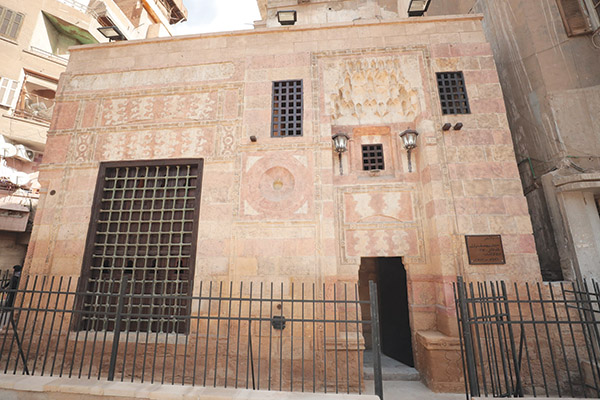
Several mosques and sites in Historic Cairo were inaugurated after the completion of restoration projects.
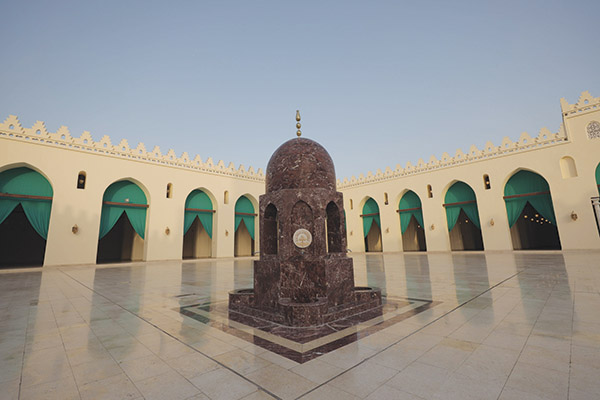
In Al-Muizz Street in Historic Cairo, the Al-Hakim Bi-Amr Allah Mosque was inaugurated after the completion of restoration work aimed mainly to reinforce the walls and clean the masonry and desalinate it. The restoration also aimed to clean and strengthen the building's architectural designs, wooden ceilings, mashrabiya (lattice woodwork) windows, arcades, paintings, engravings, and fine metal ornaments.
The mosque is the fourth oldest in Egypt and the second largest after the Mosque of Ibn Tulun. Its construction begun in 380 AH/990 CE by Al-Hakim's father, the Fatimid caliph Al-Aziz bi-Allah, who died before its completion, leaving his son to finish it in 403 AH/1013 CE.
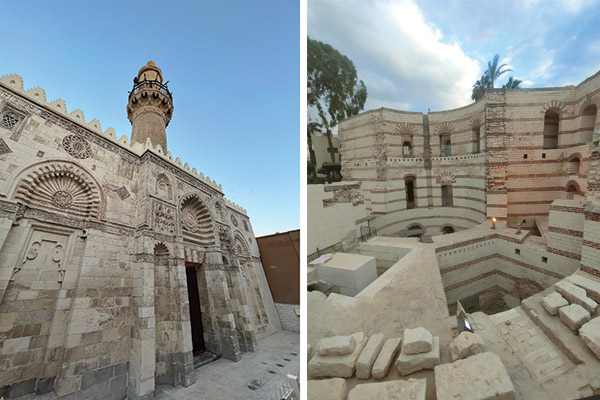
Neighbouring the Al-Hakim Mosque is the Al-Aqmar Mosque, which reopened its doors this year to worshippers and visitors after three years of restoration that included the maintenance of the main stone facade, the removal of dirt and bird waste from the walls, the cleaning of marble pillars, restoration of plaster engravings, replacement of missing parts of the construction with historically accurate replacements, and the restoring of wooden doors and windows.
New lighting and metal window grilles to protect the architecture from birds were installed. The walls of the minaret and glass decorations were also strengthened.
The mosque was commissioned by the Fatimid caliph Al-Amir bi-Ahkam Allah in 519 AH/1125 CE. Construction was supervised by the Vizier Al-Maamun Al-Bataihi, and it was renewed during the reign of Sultan Barquq in 799 AH/1397 CE under the supervision of Prince Yalbugha Al-Salmi.
In the Al-Zaher area in central Cairo stands the Al-Zaher Baybars Mosque, which has now regained its original splendour. The mosque has been under restoration since 2007, but the work was halted in 2011 when the SCA supervising the work realised that the bricks used in the restoration did not match the originals.
The Permanent Committee of Islamic Monuments had agreed to use adobe bricks in the restoration work that were similar to the originals and not mudbrick ones.
The work did not resume until 2018, when the mosque's foundations were consolidated, putting an end to the leakage of subterranean water into the foundations by installing a new drainage system to lower the groundwater level. The faulty electrical system was replaced, and the mosque's minaret, dome, and columns, as well as inner walls and ceilings, were restored.
The ground of the mosque's open courtyard was paved with tiles similar to those used in the original design, while the four halls around it were covered in a manner consistent with its original design to protect it from rain. New lighting and security systems were installed, while decorative features inside and outside the Mosque were cleaned and restored.
In the Cairo Citadel, the Suleiman Pasha Al-Khadim Mosque, known as the Sariyat Al-Gabal Mosque, was officially inaugurated after the completion of its architectural restoration. The restoration work included removing plasterwork added over the centuries, cleaning the masonry, and repairing the mosque's walls, woodwork, and decorative elements.
The Sariyat Al-Gabal Mosque was built on the ruins of a former Fatimid Mosque built in 1140 CE by the Fatimid Governor Abu Mansur Qastah Ghulam Al-Muzaffar Ibn Amir Al-Guyush. In the Ottoman period, the mosque served the Janissaries, an elite unit of the Ottoman armies that conquered Egypt in 1517.
Sariyat Al-Gabal is considered to be Egypt's earliest Ottoman-style mosque and is characterised by domes, semi-domes, pencil-shaped minarets, and ceramic tiling.
In Menoufiya, the Mosque and Mausoleum of Al-Fadl Ibn Al-Abbassi has been opened after restoration. The aim of the restoration was to strengthen the foundations and protect them from damage. The walls were consolidated, cracks removed, missing and decayed stones replaced, and masonry cleaned and desalinated.
Parts of the damaged floor of the mosque have been restored and the missing pieces replaced. All the wooden furniture such as the pulpit, the Quran Chair, and mashrabiya windows were restored, along with all the façades and stained-glass windows. A new drainage system was installed to prevent the leakage of rainwater.
In Old Cairo, where layers of history converge on narrow alleyways and centuries-old architecture, remarkable restoration efforts have been breathing new life into three cultural gems that stand as testimony to Egypt's rich historical and cultural diversity.
The Ben Ezra Synagogue, the Aqueduct, and the Babylon Fortress in Old Cairo were inaugurated by Prime Minister Mustafa Madbouli as part of the rehabilitation project of Historic Cairo, testifying to the government's keenness to carry out development work while maintaining and protecting Egypt's heritage.
The three monuments have undergone meticulous restoration work that not only rejuvenates their physical structures and preserves tangible pieces of Cairo's history, but also rekindles the bonds of tolerance. The walls of the three buildings have been reinforced and cleaned as part of the restoration project and the masonry cleaned and desalinated. Decayed parts of the wooden mashrabiya windows have been restored and replaced with similar ones.
Wooden ceilings and decorative elements have been restored and paintings retouched. New lighting systems have been installed in the three buildings, giving them a dramatic look at night.
The synagogue holds an exceptional place in the tapestry of Cairo's history. Legend has it that it stands on the spot where the infant Moses was found among the reeds that lined the Nile in antiquity. However, the history of the synagogue as a Jewish place of worship really begins in the ninth century CE, when it was purchased from the Christian community in Cairo. Over the centuries, the synagogue has seen various challenges, from fire to political changes, yet its spiritual significance and architectural beauty have endured.
The southern section of the Babylon Fortress located beneath the Hanging Church and known as the Amr Gate was restored after the completion of the first phase of the larger restoration project around the Coptic Museum in Old Cairo.
The façade of the fortress's southern part has been cleaned of dust and bird droppings and any damaged blocks restored. A new lighting system has also been installed to highlight the beauty of the architecture and the original job for which it was constructed.
During the second century CE, the Roman emperor Trajan ordered the construction of a fortress to secure the Roman military units in the country and to be the first line of defence at the eastern gateway of Egypt. In the fourth century CE, the Roman emperor Arcadius restored, expanded, and strengthened the Fortress.
Leading to the Cairo Citadel, the Aqueduct stands as testimony to the engineering skills of Egypt's Islamic civilisations. Its origins go back to the reign of Al-Nasser Salaheddin Al-Ayoubi (Saladin) in the 12th century CE, and it was renovated during the reign of the later Mameluke Sultan Al-Nasr Mohamed Ibn Qalawun in the early 14th century CE.
Sultan Qansuh Al-Ghuri built the wheels that bring water from the Nile into the Aqueduct to serve the Citadel, and the construction as a whole extends from the banks of the Nile to Sayeda Aisha Square close to the Citadel. For centuries, the Aqueduct was an engineering marvel, delivering water from the Nile to the Citadel and ensuring that its inhabitants had access to this vital resource.
The wooden waterwheels were repaired as part of the restoration work and all encroachments on the walls and the surrounding areas removed. The stonework has been cleaned and dirt and soot removed. The woodwork and floors in the internal corridors have been restored, the stairs rehabilitated, and the area surrounding the monument upgraded.
The idea of building an Aqueduct to carry water to the Citadel goes back to Salaheddin Al-Ayoubi himself. A canal was constructed on top of a wall to convey water to the Citadel by a series of waterwheels. The water flowed through the canal to the Citadel, where it was used for drinking and irrigation.
MUSEUM PROJECTS: Within the grounds of Ain Shams University in Cairo stands the Al-Zaafarana Palace (Saffron Palace), with its exquisite 19th-century architectural style welcoming Egyptian and international students and researchers after the completion of its restoration.
Named after the saffron plantations that surrounded it at the time of its construction, the Al-Zaafarana Palace has now been turned into an educational museum and its basement has been transformed into galleries relating the history of Egypt since the ancient Egyptian era right through to modern times.
The new museum displays 167 artefacts carefully selected from different museums in Egypt, such as the Egyptian Museum in Tahrir Square, the Museum of Islamic Art, the Manial Palace Museum, the Royal Carriages Museum and Kafr Al-Sheikh Museum.
The palace's design combines the Gothic and Baroque styles, two of the most important architectural styles used in the 19th century in Europe. It is a three-storey building and has a basement designated for services, including kitchens, laundries, and stores. The third floor was designated for the accommodation of courtiers and servants.
The Graeco-Roman Museum in Alexandria, considered one of the city's most prominent landmarks, was reopened to the public this year after almost two decades of closure for development.
The ambitious restoration aimed not only at reviving a building of historical significance, but also at breathing new life into a treasure trove of civilisations from a fascinating period in Egyptian history when the Greek, Roman, and Ancient Egyptian civilisations all interacted, resulting in a fusion of traditions.
The restoration involved adding new sections to the museum to attract more visitors and highlight the intellectual and artistic amalgam of ancient Egyptian, Greek, Roman, Coptic, and Byzantine civilisations.
Both the museum and its library were consolidated and restored, while the showcases were improved to ensure a better display of the artefacts. A new exhibition scenario was created to display the objects chronologically and thematically, and new lighting and security systems were also installed.
The Graeco-Roman Museum, built in 1892, was inaugurated by khedive Abbas Helmi II in 1895 to display Graeco-Roman artefacts discovered at archaeological sites in Alexandria. It was registered on Egypt's Heritage List for Islamic, Coptic, and Jewish antiquities in 1983.
The Saqqara Necropolis Site Museum was also reopened to the public this year after development to enhance the visitor experience, unlocking the mysteries of this ancient burial ground.
The site entrance has been developed and the ticket office refurbished. Electronic gates have been installed along with information about the site and its monuments, a map showing directions, and the site visitor route.
Signage has been installed at the foot of every monument giving information about it, its history, and its restoration. A visitor path has been created and slopes and pathways created for visitors with disabilities. New lighting and security systems connected to a control room have been installed. Sunshades, seats, and recycle bins are also provided on site.
The new museum's exhibition scenario remains the same except for the addition of six new showcases with 70 additional artefacts uncovered by an Egyptian archaeological mission in different areas of Saqqara Necropolis.
Among the most distinguished artefacts on display are a collection of early medical instruments from the Fifth Dynasty, the oldest royal mummy ever found of the Sixth-Dynasty King Mery-Re, and a collection of mummified animals such as lynxes, cheetahs, lion cubs, and cats.
The irrigation system of the cultivated area around the museum was improved, while the visitor path was also upgraded with additional sunshades, seats, and restrooms. Services for visitors have been improved by adding information signs and interactive display screens showing videos and photographs of some of the archaeological discoveries made at the Saqqara Necropolis.
The museum's façade has been cleaned and consolidated, special panoramic lighting for the site has been installed, and the exhibited archaeological pieces, security and surveillance systems, and central air-conditioning units have all been upgraded. Cafeterias and bazaars have been added to the site. Facilities have been provided for visitors with disabilities, including dedicated restrooms and pathways.
The museum, called the Imhotep Museum, takes its name from the legendary ancient Egyptian architect, physician, and statesman Imhotep. Renowned as the mastermind behind the iconic Step Pyramid of Djoser, the first stone building in the world, Imhotep is considered to be one of the earliest polymaths in history.
EXHIBITIONS ABROAD: This year, Paris and Sydney fell under the spell of the ancient Egyptians as an exhibition of their treasures was opened in both cities.
The Ramses and the Gold of the Pharaohs exhibition opened in April at the Grande Halle de la Villette in Paris, where the coffin of the Pharaoh Ramses II was seen abroad for the first time.
The exhibition then opened its doors at the Australian Museum in Sydney in November, selling more than 10,000 tickets before its opening.
The exhibition features 182 invaluable artefacts, including the coffin of King Ramses II, one of the most impressive royal coffins from ancient Egypt ever to be discovered, as well as the timeless beauty of jewellery, funerary masks, amulets, and animal sarcophagi, many of which have never left Egypt before.
* A version of this article appears in print in the 21 December, 2023 edition of Al-Ahram Weekly
Medicine and Healing Practices in Ancient Egypt is an innovative, 'people-focused' study which approaches ancient Egyptian practices from the perspective of the healthcare professionals and their patients. It describes perceptions of illness and disability; the training, roles and interaction of healthcare providers; the healing methods experienced by various social groups; and ancient Egypt's legacy to modern 'Western' medicine. In this blog post, authors Rosalie David and Roger Forshaw introduce their new book, touching on a range of ancient Egyptian medical practices and discussing the similarities to twenty-first century standards.
The ancient Egyptian civilisation lasted for over five thousand years and provided the inspiration and basis for some of the developments we enjoy today. Their medicine and healing systems were advanced for their time and were well respected by other early civilisations. For example, we know that Egypt exchanged ideas and practices with the Babylonians, Persians, Greeks, and Romans.
Similar to other ancient societies, the Egyptians interpreted the experienced world according to patterns of knowledge rather different from those of the modern Western world. Supernatural powers were regarded as major controlling influences in daily life. These not only included phenomena such as changing weather patterns and the annual flooding of the river Nile, but also the causation of disease. They believed that Illness could be instigated by a variety of agents such as malevolent spirits or powers which included not only the Gods, but also living and dead persons as well as animals. However, in the case of a traumatic injury such as a wound or bite, they recognised that the agent was the actual perpetrator of the injury.
The healing practices that were employed involved a combination of magical incantations, performative rituals, and the use of a wide range of medicaments. They did not recognise a distinction between empirical-rational therapy and the use of incantations. In ancient Egypt empirical knowledge and magical actions were equally valid parts of the complex cultural system, and the healer seems unlikely to have actively distinguished between them when treating a sick member of the community.
The Egyptian healing procedures continue to fascinate us today. Our book, Medicine and Healing Practices in Ancient Egypt, now looks at the subject in a fresh way: instead of focusing predominantly on the types of disease present in ancient Egypt, our account is more people-focused, considering the roles of healers and patients and their professional interaction with each other.
Surgical treatments, although limited in scope, are particularly interesting, and researchers have questioned whether surgery was a separate branch of general medicine and if any type of operative treatment was practised. While there is considerable evidence for the management of injuries and trauma there is less support for surgical procedures relating to conditions which did not result from trauma.
Relief depicting possible surgical instruments at the Graeco-Roman temple at Kom Ombo. Public Domain via Wikipedia (Photographer: Ad Meskens).
However, the extant ancient Egyptian medical texts do provide some information on surgical procedures. These manuscripts, known as the medical papyri, of which there are about fourteen in number, supply details on disease, diagnosis, and remedies for ailments which include herbal mixtures, surgery and magical incantations. Within the texts there is reference to minor surgical procedures such as incisions to drain or excise swellings. One example in the Ebers Papyrus describes a swelling of the blood vessels which is rounded and solid on palpitation. The treatment recommended is cauterisation followed by the 'knife treatment'. This suggests that the ancient Egyptians realised that cauterisation would reduce excessive bleeding before commencing surgery, and perhaps suggests the diagnosis of a haemangioma in this case.
An essential part of any wound management is a surgical dressing, and bandages and wound coverings composed of linen were frequently recommended in the medical papyri, being used to apply medicaments as well as to bind wounds. Lint made from linen or vegetable fibres was used to absorb secretions, and linen strips were impregnated with gum resin to approximate the sides of a wound, much as 'Steri-Strips' do today.
A group of three bone spatulas from the Iseum Savaria in Hungary dated to the Roman Period and which were probably used to mix compounds, perhaps for medical purposes. Courtesy of Savaria Museum – Iseum Savariense.
There is palaeopathological evidence of amputations, and the ancient Egyptians understood the principles involved in diagnosing and managing bone fractures. They would 'reduce' the fracture and then immobilise the bones by the use of splints.
The Ebers papyrus includes a section describing medicinal preparations for the treatment of burns, some with recognisable beneficial properties including honey which would reduce swelling and exert an anti-bacterial effect. The use of copper flakes and malachite which would also have a bactericidal effect were other compounds recommended. However, for certain other suggested ingredients, including plant and herbal products, no health benefit has yet been demonstrated.
Although ancient Egyptian medicine may appear somewhat unsophisticated, judged by twenty-first century standards, the medical papyri and the Edwin Smith Papyrus, in particular, do demonstrate that evidence-based medicine was practised some four millennia ago. Some type and level of medical care and treatment appears to have been available to everyone, regardless of wealth or status. Specific guidelines defined and protected the relationship between healthcare providers and their patients, and there was an enlightened attitude towards deformity and disabling physical and mental health issues. Healers provided some level of treatment for all their patients, regardless of the severity of their condition; even for the terminally ill, appropriate palliative care was offered. It is perhaps this centrality and importance of the patient's role that should be regarded as the Egyptians' most significant and enduring legacy to the modern world.
Grand Egyptian Museum main entrance, showing doorless access.
In the realm of museum architecture, the white cube exerts a profound influence on contemporary museum design. In 1976, artist Brian O'Doherty interrogated the abstract, sterile character of the 20th-century museum's interior environment in his book "The White Cube: The Ideology of the Gallery Space". This antiseptic curatorial standard requires minimizing distractions as much as possible by painting walls white, obscuring material details, and eliminating windows and other contextual connections. When architects have defied white cube expectations—as Frank Lloyd Wright famously did in his design of the spiraling ramp in New York's Guggenheim Museum—the news makes headlines. In his introduction to O'Doherty's book, art critic Thomas McEvilley argues for the importance of contextual awareness in the museum experience, supporting the conscientious strategy to "investigate things in relation to their context, to come to see the context as formative on the thing, and, finally, to see the context as a thing itself."
View of the main atrium with a statue of Ramses II.
Context is crucial in the Grand Egyptian Museum (GEM) in Giza, the new flagship destination for Egyptian antiquities. GEM is the antithesis of the white cube—a building in constant, animated dialogue with the objects it contains and the landscape in which it is situated. Designed by Dublin-based Heneghan Peng Architects, which won the project commission in a 2003 design competition, the 1.8 million square foot (168,000 m²) building recently opened for limited tours after much anticipation. Defined as the "largest museum in the world dedicated to one civilization," the $1 billion project comprises nearly half a million square feet of exhibition halls housing 100,000 objects. Planned as one of the world's leading archeological destinations, the museum functions not as a blank canvas for its collections but as a visually engaging container in constant conversation with its contents and location.
The open-air atrium is covered by a vast, light-filtering roof structure.
The Grand Egyptian Museum occupies 120 acres of land west of the Nile, with a clear view of the Giza Necropolis 1.2 miles south. As the new home for many collections long held in the 1902 Egyptian Museum in central Cairo, the GEM effectively brings funerary artifacts back to the Land of the Dead, where they were initially located. The wedge-shaped building consists of a series of folded plates that occupy a swath of the first desert plateau that rises to the foot of the pyramids. "The museum exists between the level of the Nile Valley and the plateau, never extending above the plateau," explains the architect. "The design of the museum utilizes the level difference to construct a new 'edge' to the plateau, a surface defined by a veil of translucent stone that transforms from day to night."
Colossal statues are situated within a varied and animated context.
For GEM visitors, the museum's site exerts a palpable presence. Arrival involves passing through two checkpoints and traversing a vast plaza, which the architect describes as a "series of layers." The checkpoints provide the security and ticket collection functions usually housed within a museum's lobby. This functional offloading is sensible, given that the museum entrance has no doors. Instead, one gains access to the main building under a large, wedge-shaped protrusion lifted off the ground to provide a generous passageway. This entrance leads to a vast atrium open at both ends, functioning as an outdoor plaza sheltered by a perforated roof structure.
Ascending galleries mimic the elevation change from the Nile Valley to the desert plateau.
The experiential quality of this open-air configuration cannot be overstated: soft desert breezes continuously waft throughout the space while the roof provides welcome shade, moderating the ambient air temperature. In this way, museum-goers enjoy an interior environment that is comfortable without being hermetic. Today's vast majority of museums perpetuate a climate-based white cube treatment in the form of sealed, air-conditioned interiors. In contrast, the GEM's direct linkage of primary public spaces and galleries with the outdoors imparts a dynamism and freshness that elevate the overall visitor experience.
The top level of the stepped galleries offers a view of the Giza Necropolis.
These spaces are full of large artifacts originally located in outdoor settings (a series of climate-controlled galleries, yet to be opened to the public, will house more vulnerable works, such as the relocated Tutankhamun collection). Colossal monuments such as the statue of Ramses II are situated within the central atrium. At the same time, collections of stone sculptures and architectural megaliths are strategically located along monumental stairways that function as ascending galleries. These stepped exhibits, also accessible via ramp escalators, navigate the elevation change between the Nile Valley and the desert plateau. At the uppermost level, visitors are rewarded with framed views of the Great Pyramid of Giza and the Pyramid of Khafre to the southeast (in plan, the GEM's shape and orientation represent a view cone focused on the Giza Necropolis).
Dappled light animates the museum interior throughout the day.
Materially, the building's features throughout this spatial sequence contribute varied and dynamic influences. Large, faceted expanses of locally sourced concrete, metal, and stone—including the facade's translucent marble—animate the visual backdrop. Meanwhile, the entire space is infused with dappled light softly filtered via the massive roofscape. This constellation of light changes in intensity, location, and color temperature depending on the presence of clouds as well as diurnal and seasonal changes.
Open-air entrance to the glazed atrium on the north side of the museum.
An architecture so closely connected with its site, and which exerts such a strong sensory presence as a contextual backdrop for artifacts, is a rare and welcome contribution to contemporary museum design. To be sure, the GEM's site is one of the world's most historically significant landscapes, its statuary collections are sufficiently robust for an exterior environment, and Egypt's perpetually dry climate allows for such an open-air configuration. Nevertheless, these realities provided significant design opportunities that an architect could easily have missed, given the seemingly inescapable paradigm of the white cube. Fortunately, Heneghan Peng Architects took full advantage of this potential, with extraordinary results.
As visitors flock to what will most certainly become one of the world's most desirable travel destinations, the perpetuation of the white cube model for galleries—and hermetic architecture in general—will be increasingly called into question.
The views and conclusions from this author are not necessarily those of ARCHITECT magazine or of The American Institute of Architects.
Read more:The latest from columnist Blaine Brownell, FAIA, includes a profile on textile designer and weaver Suzanne Tick, and looks at emerging carbon capture and storage technologies, the blue economy, and AI's impact on supply chain management.
Blaine Brownell, FAIA, is an architect and materials researcher. The author of the four Transmaterial books (2006, 2008, 2010, 2017), he is the director of the school of architecture at the University of North Carolina at Charlotte.
The American Research Center in Egypt, Northern California chapter, and the UC Berkeley Department of Middle Eastern Languages and Cultures invite you to attend a Zoom lecture by Raghda (Didi) El-Behaedi, University of Chicago: