Senior officials and businesspeople from Egypt to Saudi Arabia and the Emirates were involved in financial deals that funded the illicit excavation and smuggling of over 200 archeological artifacts, according to court documents from a trial that began this year obtained by Mada Masr.
At the heart of the matter lies a unique trove of ancient objects, extracted from the mouth of five separate tunnels dug under urban residential areas, tapping ancient tombs for treasures spanning prehistory to classical civilization that were ultimately sold to buyers across 42 countries.
The illicit smuggling operations were brought to light by a financial dispute over a sum of US$3 million between the two central protagonists, one of them an Egyptian businessman and media mogul, Hassan Ratib, and the other a self-professed exorcist and sorcerer who once held a seat in Egypt's legislature, Alaa Hassanein.
After the arrest of Ratib and Hassanein in 2021, authorities collected evidence for a trial that was first set to begin in December, but was adjourned due to the recusal of the first judge. According to the state-oriented Cairo24 news outlet, a relative of the judge was applying for a position at Sinai University, which is owned by Ratib. A new court resumed the trial in February with the latest session taking place last week.
The case first became public in June 2021, when Egyptian police carried out 20 simultaneous arrests at least five different sites. Four were in Cairo's Ezbet Kheirallah, where holes in the ground acted as access points in illicit excavations. What the Interior Ministry described at the time as a "gang," headed by the former MP Alaa Hassanein, was working to empty burial sites of their stores of priceless archeological artifacts. Hassanein was arrested with his driver, in possession of 36 apparently Pharaonic statues and 52 ancient coins, just some of a total of 227 artifacts including prehistoric, Pharaonic, Greek, Roman and Islamic pieces that were seized in the June operation. Security forces also confiscated equipment used in the excavations.
Days later, Hassan Ratib was also arrested, while another two defendants are reportedly outside of the country.
Hassanein, the owner of a quarrying conglomerate, held a seat in Parliament for the governorate of Minya as part of the National Democratic Party, the ruling party under the ousted late President Hosni Mubarak. He gained a popular reputation as a sorcerer and a renowned practitioner of exorcisms. As a guest on TV channels, Hassanein, known as "the MP of jinn and demons," was invited to comment on the involvement of jinn in popular football matches, and to commune with the "king of the jinn" in the Cairo neighborhood of Shobra.
It was after an appearance on the Mehwar TV channel in which Hassanein performed an exorcism that he said he was first introduced to a Saudi Arabian princess in 2011, according to court documents obtained by Mada Masr. "Nouf," as she is called in the court documents, asked Hassanein to travel to Saudi Arabia in order to help her daughter, who she said was possessed. From there, Hassanein's relationships in the Saudi royal family grew, according to his testimony, as he was asked to perform similar services for others. Hassanein then pitched an investment opportunity to Ratib, who owned Mehwar TV at the time, that would involve Ratib partnering with Nouf on a project to build residential tower blocks in Giza and Riyadh. Ratib and Hassanein boarded a private jet to Saudi Arabia to meet the princess, ultimately agreeing on a 60-40 split, with the majority going to Ratib. As a mediator, Hassanein would take 2.5 percent of the profits from each party. As proof of intent, Nouf asked Ratib to send her SAR20 million (around US$5.3 million), according to the testimonies of both Ratib and Hassanein, and Ratib agreed and made the transfer after returning to Egypt.
Just a few months later, say the court documents, Hassanein became indignant upon discovering that Ratib and the princess had been communicating with one another directly, and for fear of losing his commission, he phoned Nouf to establish that her dealings with Ratib should go through him alone. Under this agreement, Ratib transferred a sum worth $2.05 million to Hassanein, according to the latter's testimony, but Ratib told the courts that he transferred $2.7 million, which was intended for Hassanein to transfer onward to the princess. Yet, according to Ratib's testimony, "due to the conditions created by the revolution against the [Muslim] Brotherhood," Hassanein was unable to transfer the funds, and as a result, Ratib demanded at the end of 2015 that Hassainain return the sum.
Hassanein did not return the money, and in 2017, Ratib sued him for fraud and breach of trust. Hassainain was arrested and held for four days before being released on bail and the two men ultimately reached a settlement out of court for repayment in installments. The residential project came to a halt, according to both testimonies, since the funds were never transferred to Nouf.
It's here that the smuggling trial began. On day one of proceedings before the North Cairo Criminal Court on February 12, defense lawyers for both Ratib and Hassanein called upon witnesses that included a friend of Ratib's.
The witness said that Ratib had requested their assistance in 2017 to help resolve a financial dispute between himself and Hassanein over a sum of US$3 million (LE47 million), which Ratib said had been given to Hassanein for delivery to Nouf in Saudi Arabia. Hassanein, on the other hand, told the witness that "the money is from antiquities." "At the time I didn't know if he was joking or not," the witness said. Hassainain was then offered an opportunity to enter into gold-mining ventures in Aswan with an Emirati sheikh, who remains unnamed in the investigation documents, in order to raise funds to pay off Ratib, according to both Hassanein and Ratib's testimonies. The two men flew together to meet the Emirati, where Hassanein once again assumed his role as deal broker, according to Hassanein's testimony. Ratib and the Emiratis would act together to partner with the Shalateen Mineral Resources Company — which belongs to the Armed Forces National Service Projects Authority. Hassanein, once his dues to Ratib were paid off, would get a cut of the profits. An Emirati company named Sama, according to Hassanein's testimony, was formed on the back of the negotiations. Participants in the company included Hassanein, Ratib, "several people who are important in Egypt" and "someone who belongs to a sovereign family in Egypt," as Hassanein describes them in his statement, as well as Egyptian construction magnate Abdel Mohsen Abdel Hassan, who operates mainly in Kuwait.
The General Intelligence Service, border authority and Military Intelligence Directorate investigated the parties for nearly a year and a half, according to Hassanein, who testified that the company was licensed, but that the Egyptian state later intervened to stop the project. Ratib's testimony, meanwhile, describes Hassanein as mediating between himself and "important people in the Emirates" to undertake real estate projects in Dubai, all of which he described as going smoothly.
As for the missing millions that Ratib had transferred to Hassanein, Hassanein's brother Ezz Eddin and two other defendants said he had been paid from these funds to dig for and excavate antiquities in four different sites in Cairo and a fifth in Sohag. The Public Prosecution charged that LE14.5 million had been used to finance the excavations out of a total of LE50 million (currently around US$3.2 million) earmarked by Ratib for the operation. Although the money was confiscated by the police next to dozens of pieces of evidence, and despite Ezz Eddin's testimony, both Hassanein and Ratib still denied the accusations.
Court documents, however, do not clarify whether Nouf, the Gulf figures or the senior Egyptian figures had knowledge of the antiquities smuggling.
Yet, former UAE ambassador to Egypt Hamad Saeed Al Shamsi left the country unexpectedly on December 13, 2021, when the Public Prosecution referred the detainees in the antiquities investigation to criminal trial, according to two well-informed Egyptian officials who spoke to Mada Masr on condition of anonymity.
The sources said that Shamsi is one of four prominent figures from the Gulf who are said to have been involved in Ratib and Hassanein's alleged smuggling ring.
When exactly Shamsi departed from Egypt was recounted differently by the two sources. But on December 20, Emirati writer Abdullah Abdul-Khaleq, who is close to decision-makers in Abu Dhabi, tweeted that an Emirati ambassador had "made a mistake." "He is currently under investigation. The results of the investigation will be announced transparently, and the ambassador will be punished," he said, deleting the tweet shortly afterward. Yet, one of the Egyptian officials told Mada Masr on condition of anonymity that once Shamsi returned to Abu Dhabi, he was asked to stay at his home, but was not questioned.
According to the same official, Egypt expressed, through high-ranking officials, its dissatisfaction with the UAE over the involvement of its ambassador in the illegal trade in antiquities, which was met with a high-level Emirati visit to express Abu Dhabi's apology for the incident.
The
American Research Center in Egypt, Northern California
Chapter, and the Near Eastern Studies Department,
University of California, Berkeley, invite you to attend a
virtual lecture by Dr. Carly Maris, University of San Diego:
Visions of Ancient Egypt in Athenaeus' Deipnosophistae
Sunday, March 13, 2022, 3 PM Pacific Time
Zoom Lecture. A registration link will be automatically sent to ARCE-NC members. Non-members may request a registration link by sending email with your name and email address to arcencZoom@gmail.com. Non-members, please send any registration requests no later than Friday, March 11. Registrations are limited to 100, so the sooner you register, the better.
Glenn Meyer ARCE-NC ePublicity
(Image courtesy of Dr. Carly Maris)
About the Lecture:
The Deipnosophistae is a late second- to early third-century CE dialogue written by grammarian Athenaeus of Naucratis. The text follows the style and themes of Plato's Symposium, presenting an imaginary conversation between philosophers that takes place during a Roman banquet. Scholars have found value in the Deipnosophistae for its inclusion of lengthy quotations from earlier Greek texts that have otherwise been lost. It provides key insight as to the historical resources and documents available to the educated classes during the height of the Roman Empire. Included in the Deipnosophistae are multiple historical accounts of Egypt--including descriptions of its geography and climate, the history of Egyptian wine, and stories about various rulers (including a description of a massive parade during the reign of Ptolemy Philadelphus). My talk will focus on how Athenaeus viewed the ancient Egyptian past, and will place this in context with broader visions of Ancient Egypt during the Roman Empire.
About the Speaker:
Dr. Carly Maris is a Visiting Assistant Professor in the History Department at the University of San Diego. Her research looks broadly at Western perceptions of the East, and explores how Near Eastern culture influenced the Roman empire. She is currently working on a book titled Parades of Antiquity, in which she explores the history of imperial parades in the Near East, and how they impacted the spectacle of Roman triumphal parades up through the early Byzantine period.
ARCE's Northern California Chapter is pleased to present the following lectures by renowned Egyptologists. Until otherwise noted, all lectures are virtual, at 3 p.m. Pacific Time. Registration instructions will appear in upcoming posts. In normal times, most lectures take place on the University of California Berkeley campus.
Visions of Ancient Egypt in Athenaeus' Deipnosophistae March 13, 2022 Dr. Carly Maris, University of San Diego To register now for this Zoom lecture, please send an email request to arcencZoom@gmail.com.
Making Millions of Pots: How the Cult in Ancient Egypt Met its Demand for Pottery April 10, 2022 Dr. Meredith Brand, Cal State University San Bernardino
The Resurrection of the First Pharaohs May 1, 2022 Dr. Aidan Dodson, University of Bristol Please note: This lecture is scheduled for 2 p.m. Pacific Time, NOT 3 p.m.
A temporary exhibition entitled "Royal Artifacts of Ancient Egyptian Rulers of the Oasis," is organized at the New Valley Museum marking his 29th anniversary.
The Royal Artefacts of Ancient Egyptian Rulers of the Oases is a temporary exhibition organised at the New Valley Museum marking its 29th anniversary.
The exhibition is on show until the end of February.
The exhibition displays a collection of artefacts that highlights the reigns of oases rulers, clay vessels used during the celebration of the 30th birthday of king Pepi I, and the head rest of oases ruler Khent-Ka.
On the sidelines of the exhibition a seminar on the establishment of the museum and its collection will be held.
The museum displays 4,087 artefacts from the prehistoric era to the Mohamed Ali era. The most important of these objects are the funerary contents of ruler Khent-Ka's tomb uncovered in the archaeological site of Balat, a collection of Graeco-Roman coffins, statues of deities, jewelleries, anthropoid wooden coffins, icons and lamps from the Coptic era, lamps and frames engraved with Quranic verses, and clay vessels from the Islamic era.
The museum was originally built of mud brick to be an administrative area for inspectors and a storage for unearthed artefacts in the New Valley. In 1993 the museum was renovated and built of three levels.
The second phase of the Dendera Temple restoration project will be completed soon, paving the way to its reopening to the public, reports Nevine El-Aref
Dendera Temple
On the west bank of the Nile opposite the modern town of Qena stands the beautiful Temple of Dendera, with its soaring columns, shrines, crypts, halls, and extravagant Zodiac ceiling and wall reliefs commemorating one of the most popular and powerful ancient Egyptian deities, Hathor, the goddess of love, beauty, music, dancing, fertility, and pleasure.
Today, restorers wearing white gowns, face masks, and plastic gloves are standing on wooden scaffolding brushing the marks of time off the temple's walls, while others are cleaning the reliefs and revealing original colours hidden for decades under dust, bird deposits, and dirt.
"We are rediscovering the temple and its interior decorations that have been concealed for decades under dust," said one restorer while cleaning a part of a column inside the temple's colonnaded hall. She added that the original colours of the relief have been revealed and it looks as vivid as if it had been painted yesterday.
"Returning the temple to its original allure was not easy," the restorer said, adding that it had taken months of work to complete the task.
"The second phase of the restoration project started in March 2021, and it should be completed next month," Gharib Sonbol, a restoration and preservation consultant at the Supreme Council of Antiquities (SCA), told Al-Ahram Weekly.
He said that the work was carried out in this phase on the temple's small colonnaded hall, known as the transfiguration hall, the five side halls surrounding it, and the deity Nut's shrine. All the dirt and bird deposits were removed from the walls and the reliefs were consolidated, while the paintings were cleaned revealing their original colours. A new lighting system has also been installed.
Abdel-Hakim Al-Sagheer, in charge of the Dendera Temple, said that the conservation project had originally started in 2005 but had stopped in 2011 and then resumed in 2017.
In 2019, in collaboration with a French archaeological mission, blocks, stelae and statues that were uncovered in the area and left in situ since their initial discovery were restored and put on newly fabricated mounts in the open-air area of the temple. The displays include artefacts from the store galleries.
Newly fabricated blocks have been placed in the open courtyard at the entrance of the temple, where a collection of statues of ancient Egyptian deities has been installed. Among these are statues of the goddess Hathor, the god Bes, and the falcon god Nekhbet Waawet.
In 2020, the first phase of the temple's restoration project started as part of a plan by the Ministry of Tourism and Antiquities to preserve the temple complex and develop the area around it into an open-air museum. This phase included the restoration and cleaning of three crypts, the rooftop of the great hall, the entrance façade, and the birth kiosk known as the mammisi. All these were opened to the public.
The temple contains a number of small crypts on its eastern, southern, and western sides. These are thought to have served as warehouses or treasuries for ritual furnishings, sacred and ceremonial equipment, and the divine images used in celebrating various feasts and holidays. The crypts are small, however, and they likely did not serve as the sites of formal rituals.
Mustafa Waziri, secretary-general of the SCA, said that three of the 12 crypts found beneath the temple were opened during the first phase of the project and within the second one five more will be opened.
The crypts can only be accessed through small openings and have low ceilings and walls decorated with ancient Egyptian scenes. Only one of the crypts was previously open to the public.
The rooftop of the temple was also not previously accessible to visitors, but after its restoration and inauguration early last year, visitors can now enjoy the panoramic view of Qena from the top of the building for the first time.
The Dendera Temple is one of the best-preserved ancient Egyptian temples. It was built mainly of sandstone and was uncovered in the mid-19th century by French Egyptologist Auguste Mariette.
In its present form, the temple is largely Ptolemaic and Roman, its reconstruction having taken place under the Ptolemies, the last dynasty of ancient Egypt (305-30 BCE) and completed some 185 years later under the Roman emperor Tiberius. In dedicating a temple to Hathor, the Ptolemies honoured one of Egypt's most popular deities.
Under Greek and Roman rule, Egyptian temples continued to have mammisi (birth houses), and the surviving mammisi at Dendera was reconstructed by the Roman emperor Augustus near the ruins of the one built by the Pharaoh Nectanebo and is adorned with reliefs added by the Roman emperor Trajan relating to the birth of the god Horus.
It was converted into a church in the fifth century CE, and a Christian basilica was built in the area between it and the original birth house of Nectanebo.
Hathor, the deity of the temple, was one of the 42 state gods and goddesses of ancient Egypt and one of the most popular and powerful. She was also the protector of women and had priests and priestesses in her temples.
Her centre of worship was Dendera, and her veneration began early in Egypt's history, possibly in the Predynastic Era. She was the daughter of Re and was sometimes called "the Eye of Re" (a title shared with the gods Bast and Sekhmet, among others) in her role as the sun god's defender.
As the wife of Horus, she was associated with the mother of the Pharaoh in her role as Horus' nurse, and also with the wife of the Pharaoh in her role as Horus's consort.
In her role as goddess of beauty, she was the patron of cosmetics. Wearing cosmetics was seen as a form of worship of Hathor, and offerings of mirrors or cosmetic palettes to her were common. Every year, her statue would be carried in a boat to Edfu to be reunited with Horus. A festival celebrating their union would then begin.
*A version of this article appears in print in the 17 February, 2022 edition of Al-Ahram Weekly.
CAIRO – 14 February 2022: Ancient Egyptian art and pharaonic influences reached Chicago, USA with the 23 pharaonic mummies exhibited in the Field Museum and the statue of King Tutankhamun displayed at the University of Chicago's Oriental Institute.
In the latest celebration of pharaonic antiquities in the United States, a new exhibition of pharaonic art has been launched at the Art Institute of Chicago under the title "Life and Afterlife in Ancient Egypt." The exhibition describes life in ancient Egypt, according to the American newspaper Chicago Sun-Times.
Stela of Amenemhat and Hemet, Middle Kingdom, early Dynasty 12, about 1956–1877 BCE
While the Art Institute's collection of about 1,000 pieces may not be as large as the holdings of the Field Museum or the Oriental Institute, it does speak more about artistic practice and the role of art in ancient Egypt.
Statue of Shebenhor, Late Period, Dynasty 26 (664-525 BCE)
Nearly 80 relics dating back 3,000 years will be displayed in the Art Institute's New Egyptian Gallery, a 3,150-square-foot space formerly dedicated to Islamic artwork, which is now distributed to other parts of the museum.
Plaque Depicting a Quail Chick, Ptolemaic Period (332–30 BCE)
The gallery is located in the basement below the gallery that connects the modern wing to the American Galleries and the rest of the museum.
Model of a River Boat, Middle Kingdom, Dynasty 11–12, about 2046–1794 BCE
Kohl Container in the Shape of a Palm Column, New Kingdom, mid–Dynasty 18 or early Dynasty 19, about 1352–1213 BCE
"It's a central collection of the museum's holdings," said Ashley Eriko, assistant curator of the museum.
Ancient Egyptian art is no longer included with the ancient Mediterranean art, which occupies the galleries on the first floor due to the reorganization of the museum departments since 2020.
The exhibits in the "Life and Afterlife in Ancient Egypt" are organized by themes rather than by chronology. Among the topics are religious practices in the ancient civilization as well as how cosmetics and jewelry were used.
An Egyptian-Italian archaeological mission has discovered 20 well-preserved 2,000-year-old mummies in the necropolis around the mausoleum of Aga Khan in West Aswan, Egypt. The mummies were found in a large and previously unknown tomb beneath a place of worship dedicated to the Ancient Egyptian god Khnum.
The whole complex, well preserved despite showing traces of fire, consists of two structures. The above-ground portion was the first structure to be found in this ancient cemetery, which extends over a vast area on the west bank of the Nile's First Cataract. The second, the tomb, was carved into the rock beneath. The team is now working out their connection to each other and to the rest of the necropolis.
The discovery came as a surprise to the mission. The team decided to focus last year on the above-ground structure, which was originally believed to be a tomb. During the excavation, they found evidence of a worship site including fragments of pottery, offering tables, fruit remnants, slabs inscribed in hieroglyphs and most importantly, a huge trove of animal bones, mainly rams. The head of Khnum, one of the earliest-known Egyptian deities, is usually depicted with a ram's head.
Patrizia Piacentini is a professor of egyptology at the University of Milan, Italy, and co-head of the mission. She told Al-Monitor, "We thought it was the court of a tomb, and we started to excavate there because it was different from the tombs we had found before. Clearly there were offerings; this was a sort of an offering place," she added.
While working on the upper structure, the team noticed that part of the floor was broken. They dug into that area and found stairs leading to the underground tomb. The stairs were flanked by sculpted blocks and covered by a mud-brick vault, and the tomb's entrance was sealed by stone slabs and blocks. At the door, the team found the remains of a large offering vase still containing the remains of a fig species.
Inside they discovered a large family tomb dating to the Greco-Roman period. Despite having been looted in ancient times, it still contained 20 mummies in a very good state of preservation and other significant finds. The entrance to the tomb led to a hall where the team found a terra cotta sarcophagus containing the mummy of a child and cartonnage Piacentini called "astonishing."
Four funerary chambers, deeply carved into the rock, opened onto the hall. "We found 20 mummies intact, and 10 more individuals that were also originally mummies but [whose] bodies were dismembered because thieves in antiquity went inside the tombs and broke the mummies," Piacentini said. Some mummies were of old persons with evident arthrosis, and others women and young children, including a newborn baby.
The mummy of a man was also found in the upper structure. Beside him lay a copper necklace with a plaquette engraved with his name in Greek: Nikostratos. Archaeologists believe that he was originally placed in the tomb but taken out by ancient looters. Because his was the only name found at the site, the team decided to name the tomb after him.
"We are still studying to understand if the offering place was only for that tomb, which I don't think is the case, or if it was an offering place for a group of tombs," Piacentini said. "In 2022 we decided to excavate around the present tomb and cultic place to see how the other tombs around are tied to them."
The team is also trying to uncover the origin of a mysterious fire that burned the upper structure and part of the tomb underneath.
"There are two possibilities," Piacentini noted. "That during the offerings, when they burned animals, a fire started and went down to the tomb," she said. "Or that — and perhaps this is more likely — the ancient thieves who went into the tombs to look for treasures and precious things had torches in their hands and the fire started in the tomb."
The joint Egyptian-Italian mission has been working in the necropolis surrounding the mausoleum of the Aga Khan since 2019. So far, they have located more than 300 tombs dating from the sixth century BC to the fourth century AD, although the total number is believed to be much higher in the largely unexplored area of around 100,000 square meters.
"In Aswan we have necropolises of previous periods," Piacentini said. "We knew before our excavations that there was a town of Persian, Greek and Roman times — the Late Pharaonic period [to] the Graeco-Roman period — but we didn't know the place where these people were buried."
The necropolis, she said, "covers one millennium of history. And the number of tombs is very high. We will never excavate everything; it would take centuries. But if we excavate well, a good sample of tombs, I think we can understand better the way in which people were buried at that time and, what is more important, the way they lived."
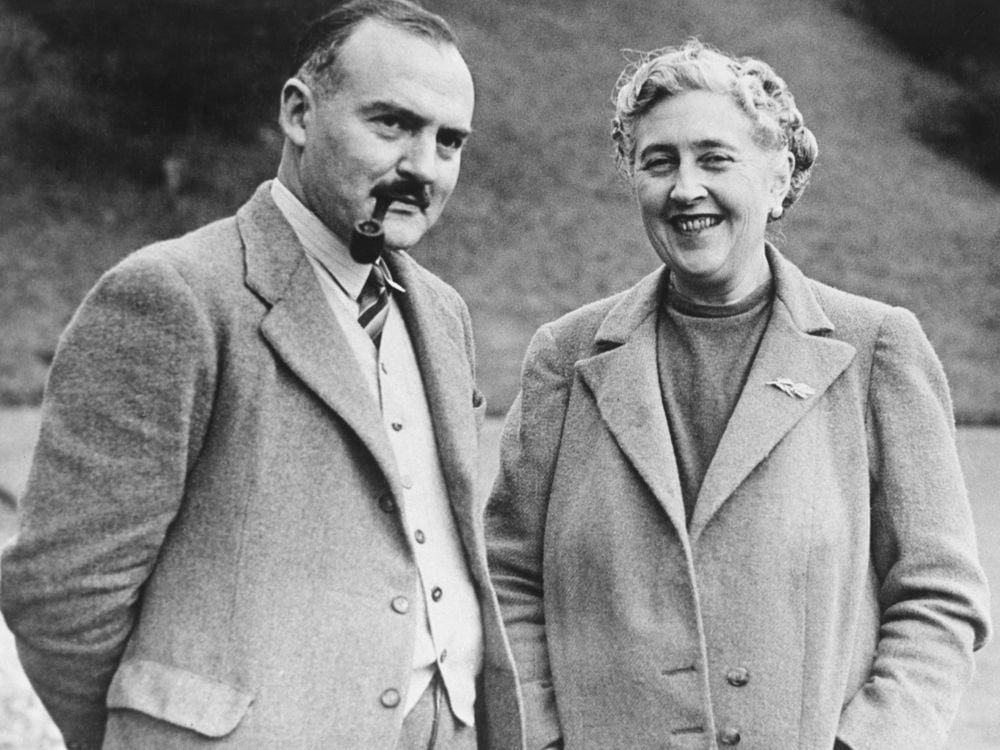
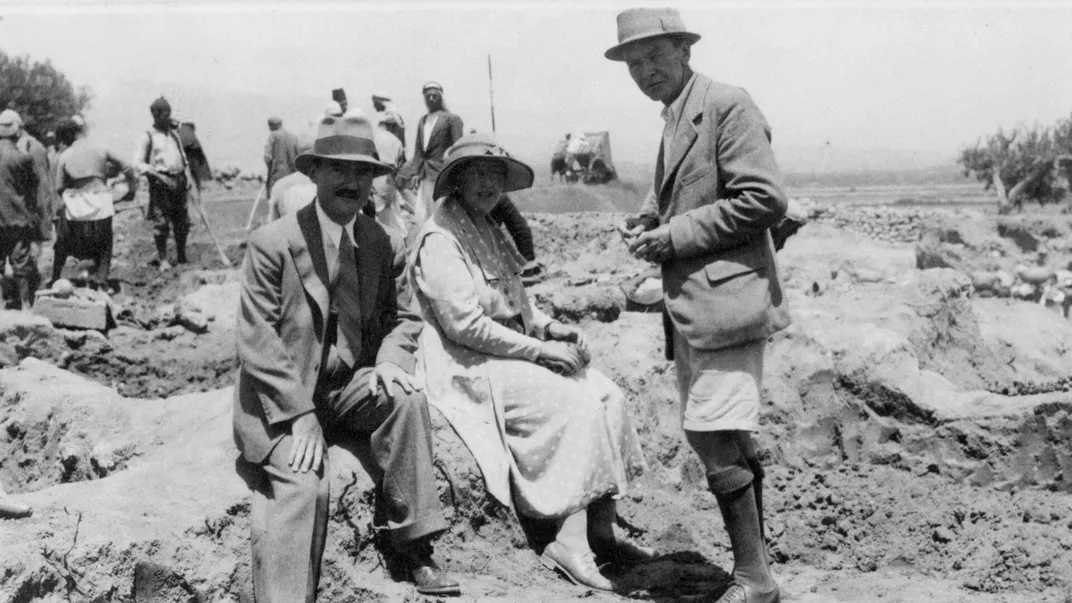
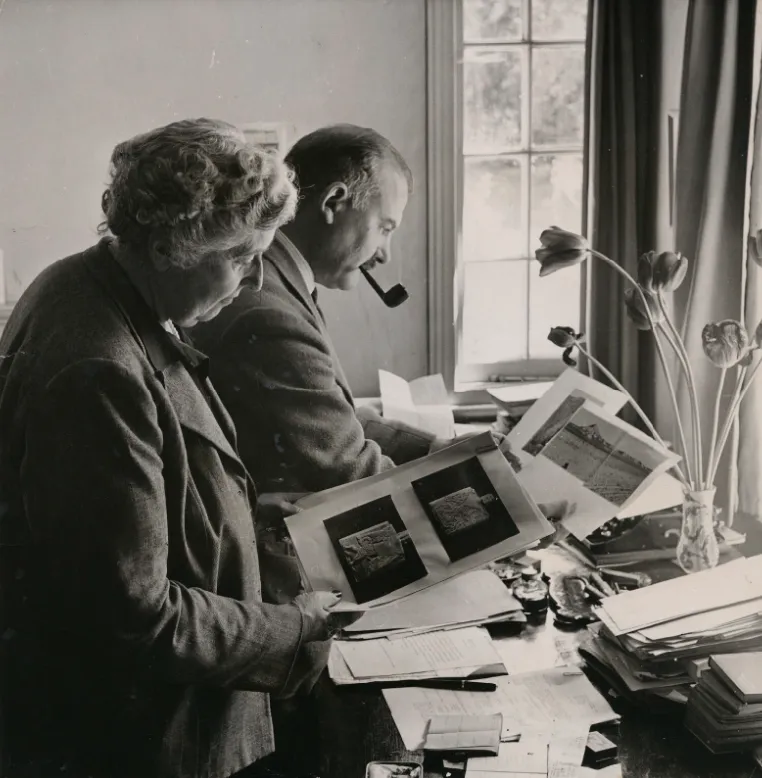
Christie accompanied her second husband, Max Mallowan, on digs in Egypt and Syria. During these expeditions, she helped catalog, illustrate and restore artifacts, in addition to managing everyday operations. Photo by Daily Herald Archive / National Science & Media Museum / SSPL via Getty Images
Toward the end of Agatha Christie's 1937 novel Death on the Nile, detective Hercule Poirot likens his investigation to an archaeological excavation, declaring, "You take away the loose earth, and you scrape here and there with a knife until finally your object is there, all alone. … That is what I have been seeking to do—clear away the extraneous matter so that we can see the truth."
Poirot's comparison is an apt one that reflects his creator's oft-overlooked interest in archaeology. As the wife of Max Mallowan, a British archaeologist who led digs in Syria and Iraq, Christie often accompanied her husband on his trips to the Middle East, all while she was at the peak of her powers as a best-selling author. She spent her mornings writing and her afternoons in the field, photographing excavations and conserving and cataloging finds. The methodical nature of the work greatly appealed to the mystery novelist, who "was of course fascinated by puzzles, by the little archaeological fragments," as Charlotte Trümpler, who co-curated an early 2000s exhibition on Christie and archaeology, told CNN in 2011. "[S]he had a gift for piecing them together very patiently."
In addition to fulfilling her "glorious, lifelong urge to learn," expeditions offered Christie an escape from the pressures of fame, says Laura Thompson, author of Agatha Christie: A Mysterious Life. "She didn't have to be 'Agatha Christie.' … She could spend a big part of the year away from it all and just be Mrs. Mallowan."
Christie's fascination with ancient civilizations comes through in works such as Murder in Mesopotamia, a 1936 novel that centers on the killing of an archaeologist's wife; Death Comes as the End, a 1945 whodunnit set in Egypt in 2000 B.C.E.; and, perhaps most famously, Death on the Nile. This Friday, a long-delayed film adaptation of the Poirot mystery, which follows the murder of a newlywed socialite traveling on a Nile cruise, will finally arrive in theaters. Featuring Kenneth Branagh as the Belgian detective, Gal Gadot as the murdered heiress, Emma Mackey as a spurned ex-fiancée, and a host of A-list celebrities (and one persona non grata) as Poirot's suspects, the movie—much like its 1978 predecessor and source material—draws on both Christie's travels and her experiences as an amateur archaeologist. Here's what you need to know about Death on the Nile's historical influences before seeing it.
A prolific writer who authored 66 detective novels, 14 short story collections and more than 20 plays over her five-decade career, Agatha Christie (neé Miller) first visited Egypt in 1910, when she was a young debutante. (Spending the social season in what was then a British colony was cheaper than making a society debut in England, and Christie's family struggled financially at the time.) She dedicated her three months in Cairo to socializing with other European travelers, preferring dances, polo matches and shopping to touring Egypt's archaeological wonders. As Christie later wrote in her autobiography, "I am very glad [my mother] did not take me. Luxor, Karnak, the beauties of Egypt, were to come upon me with wonderful impact about 20 years later. How it would have spoiled them for me if I had seen them with unappreciative eyes."
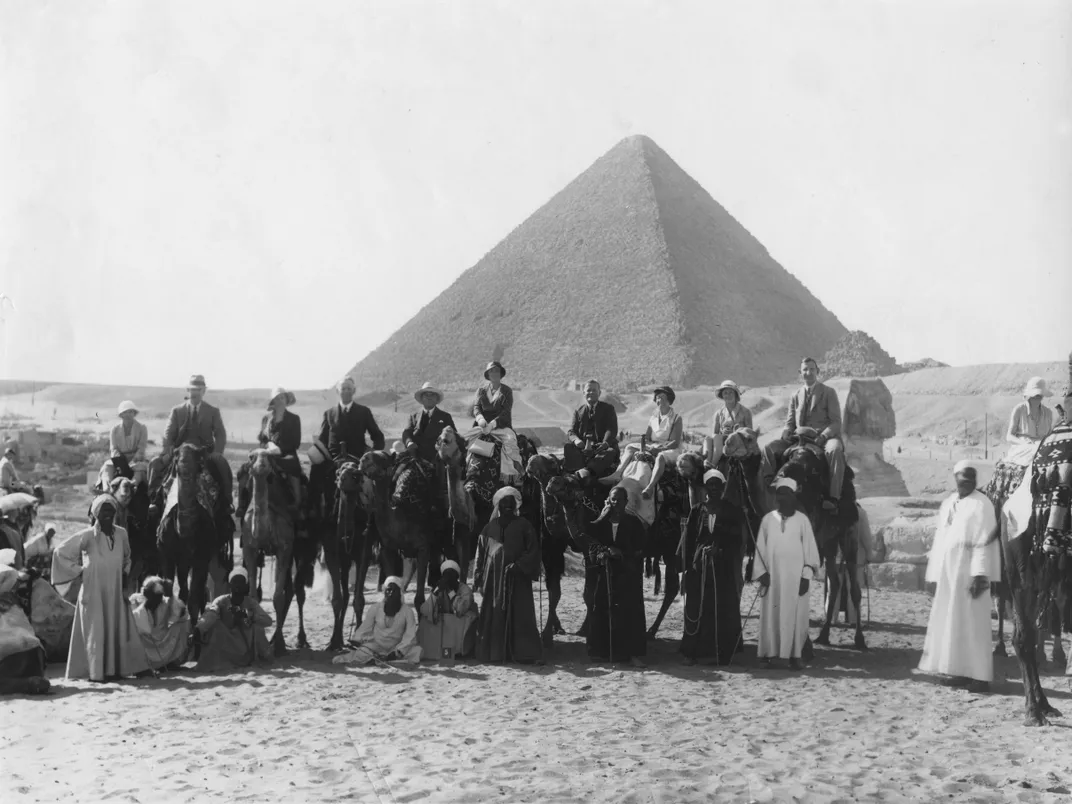
Camel tour in front of one of the Pyramids of Giza in Egypt, circa 1920s to 1930s Photo by the Print Collector / Print Collector / Getty Images
Though Egypt's ancient history failed to make much of an initial impression on the young Christie, her time abroad clearly shaped her early writing. She set her first novel, a romance titled Snow Upon the Desert, in Cairo but was unable to get it published. More than a decade later, in 1923, Christie—likely capitalizing on the "Egyptomania" sparked by Howard Carter's discovery of Tutankhamun's tomb that same year—revisited the setting in a Poirot short story titled "The Adventure of the Egyptian Tomb."
Christie's next visit to the Middle East took place in the fall of 1928. Newly divorced from her first husband, Archibald Christie, the writer planned to recover from the split by "seek[ing] sunshine" in the Caribbean. Two days before she was scheduled to depart, however, her friends suggested an alternative destination: Baghdad. Traveling to the Iraqi capital via the Orient Express—a luxury train that inspired another famous Christie novel—she took in the sights before moving on to the Sumerian city of Ur, where British archaeologist Leonard Woolley was conducting a headline-making excavation on behalf of the British Museum and the University of Pennsylvania Museum. Leonard's wife, fellow archaeologist Katharine Woolley, was a fan of Christie's, and the couple encouraged her to observe the ongoing dig.
"I fell in love with Ur," Christie recalled in her autobiography. "... The lure of the past came up to grab me. To see a dagger slowly appearing, with its gold glint, through the sand was romantic. The carefulness of lifting pots and objects from the soil filled me with a longing to be an archaeologist myself."
Christie's friendship with the Woolleys earned her an invitation to the tail end of the next season's dig, in the winter of 1930. Arriving in Ur in the middle of a sandstorm, the writer reconnected with the archaeological team and introduced herself to Leonard's assistant, 25-year-old Mallowan, who'd missed the previous season due to an illness. Katharine recruited Mallowan to take Christie, who was then a few months shy of her 40th birthday, on a tour of other ancient wonders across Iraq. When Christie received word that her daughter, Rosalind, had fallen ill, Mallowan accompanied her back to England. They wed later that year, embarking on a partnership that would endure for the rest of Christie's life.
From 1931onward, Christie and Mallowan followed largely the same routine, spending the fall and spring working in the Middle East, the summer in England with Rosalind, and the rest of the year either at home or traveling. "Archaeology became a way of sharing [Mallowan's] life, which she was very keen to do, having lost her first husband—she thought—almost by her own negligence," says Thompson.
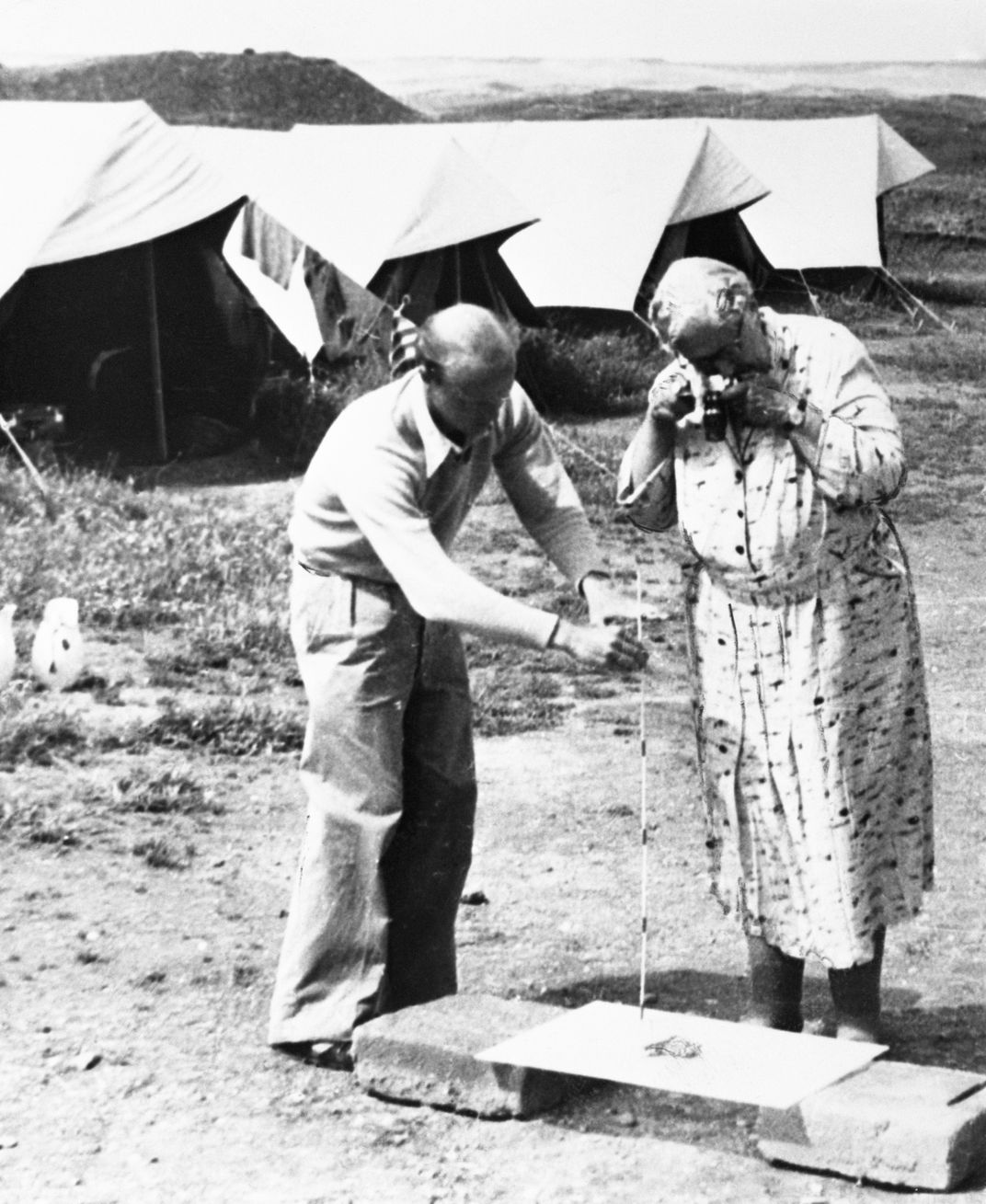
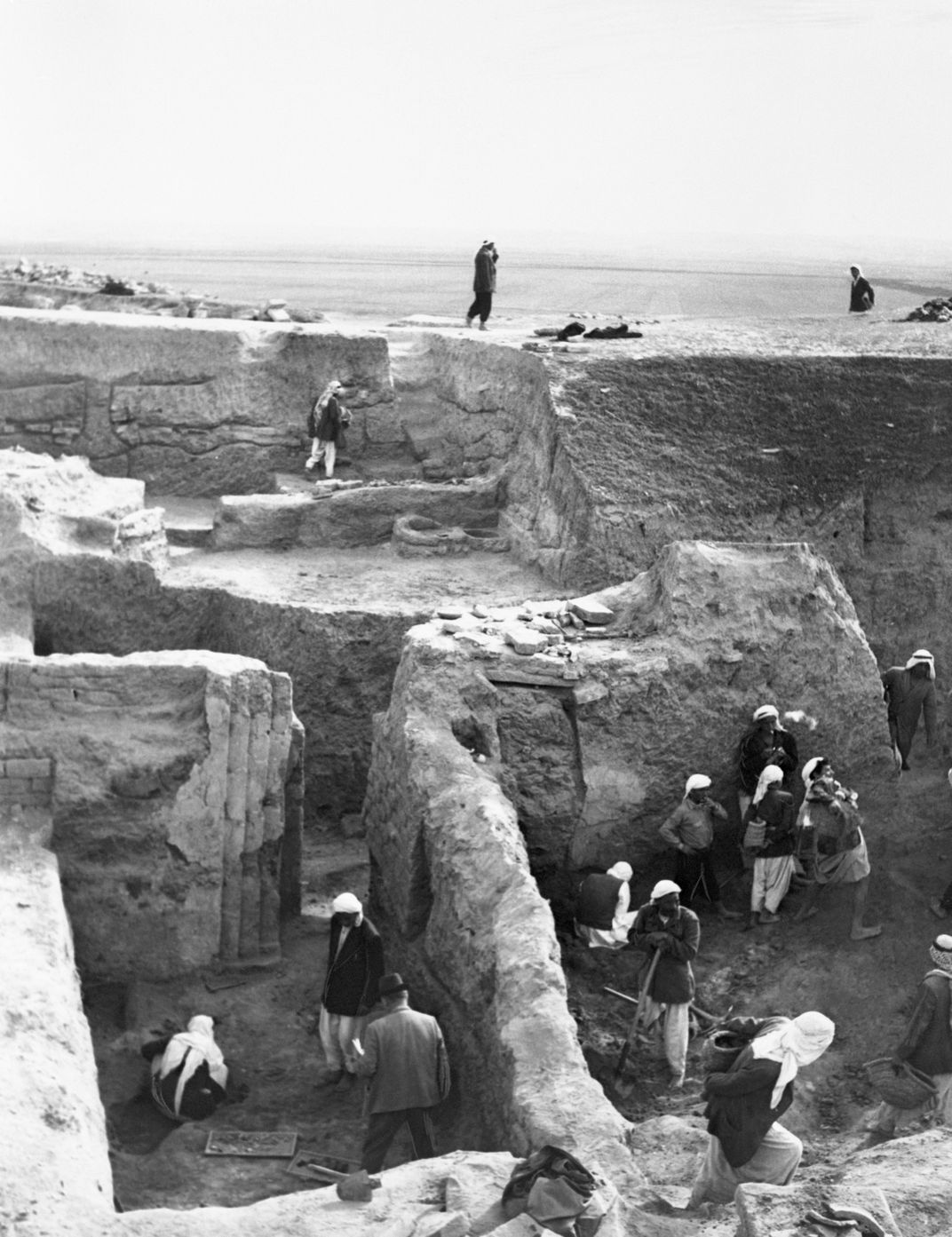
During Mallowan's expeditions, most of which were bankrolled by Christie, the writer took charge of camp operations, overseeing supplies and the management of local laborers. As she gained more experience in the field, she also took on projects like cataloging, illustrating and restoring artifacts. On one occasion, Christie even came up with an archaeological innovation of her own: using diluted face cream to clean ivories found in Nimrud. "There was such a run on my face cream that there was nothing left for my poor old face after a couple of weeks!" she later wrote.
Agatha Christie photographs an Assyrian ivory figure at Nimrud in Iraq. Getty Images
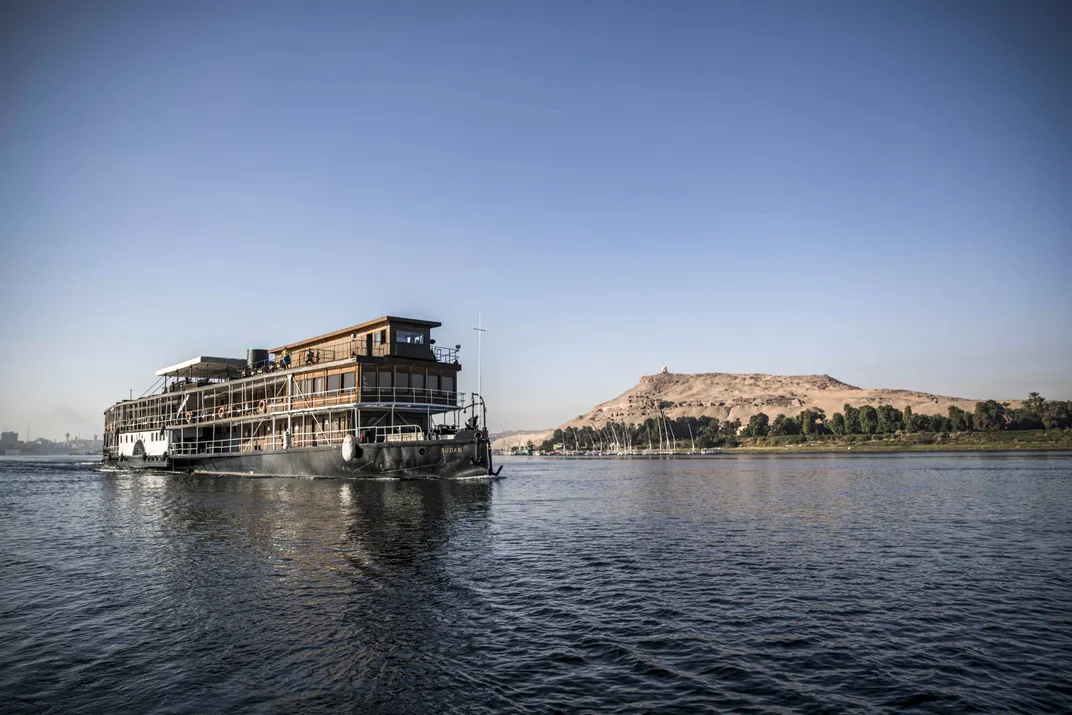
In 1933, the Mallowans stopped in Egypt on their way to an archaeological dig, boarding the S.S. Sudan for a Nile River cruise. Built in 1885 for Egypt's royal family and converted into a cruise ship in 1921, the luxury vessel—still in operation today, complete with a suite where Christie allegedly stayed—took visitors to the Nile cataracts, Luxor and Aswan. Most passengers were members of the European elite who preferred Egypt's "sunny skies and blue water," as Christie later put it, to the doldrums of winter at home. The writer took careful note of both her traveling companions and the sites she saw on her journeys (she switched to another steamer to continue south to Sudan), including Karnak and Ramses II's rock-cut Abu Simbel temples.
A few years later, Christie returned to Aswan, checking in at the Old Cataract Hotel for an extended stay. There, in a suite overlooking the riverscape, she wrote what would soon be hailed as one of her finest works: Death on the Nile.
"[This book] was written after coming back from a winter in Egypt," Christie noted in the 1937 novel's foreword. "When I read it now I feel myself back again on the steamer from [Aswan] to Wadi Haifa. There were quite a number of passengers on board, but the ones in the book traveled in my mind and became increasingly real to me."
Death on the Nile borrows its setting directly from Christie's travels. "Part II: Egypt" opens with a mother and son on vacation, sitting in a pair of "brightly painted scarlet basket chairs" outside the Cataract Hotel in Aswan. They spot Poirot, whom they recognize as a world-famous detective. Despite Poirot's protestations that he is on holiday, he quickly finds himself investigating a love triangle among Linnet Doyle; her husband, Simon; and Jacqueline de Bellefort, the woman Simon left to wed Linnet. The action then moves to the S.S. Karnak, a steamer inspired by the Sudan.
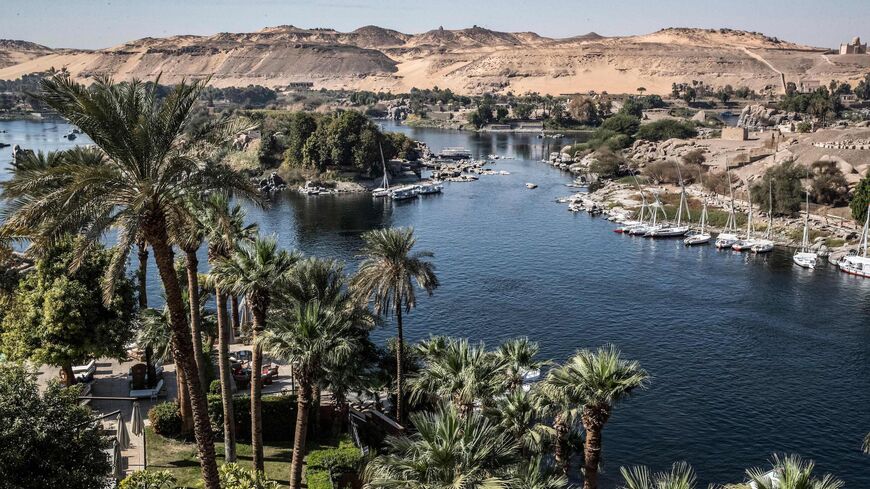
A 1933 Nile cruise on the S.S. Sudan inspired Death on the Nile. Here, the luxury steamer sails along the Nile near the city of Aswan in January 2021. Photo by Khaled Desouki / AFP via Getty Images
On one of the Nile cruise's first stops, at Abu Simbel, a boulder comes crashing down, narrowly missing Linnet. But her luck is running out, and she's soon found dead, shot by an unknown assailant in a classic Christie whodunnit. Among the suspects are Guido Richetti, an Italian whom Poirot describes in tongue-and-cheek fashion as "almost too word-perfect in his role; … all archaeologist, not enough human being," and Salome Otterbourne, a romance novelist whose book Snow on the Desert's Face likely parodies Christie's own unpublished, Egypt-set novel.
According to Thompson, Death on the Nile contains more physical description and detail than many of Christie's other works. "It's a book that feels unusually full of the place, the symbolism and resonance of the place, and that fits in with her profoundly developed sense of the miracle of and the survival of antiquity," the biographer says.
Thompson theorizes that Christie's research for the 1937 play Akhnaton, a dramatization of the life of 18th-Dynasty pharaoh Akhenaten, spilled over into Death on the Nile, which she wrote around the same time. Authored at the suggestion of family friend and Egyptologist Stephen Glanville, the script "conveys [Christie's] deep knowledge on the subject," with much of its dialogue adapted from ancient texts, notes Egyptologist Jun Yi Wong for New Lines magazine. (The author also wrote Death Comes as the End, her only novel not set during the 20th century, at Glanville's behest.) Immersed in Egyptian culture, Christie may have become "imaginatively lost in her setting in a way that is not always the case with her books," says Thompson.
The outbreak of World War II in 1939 put Christie and Mallowan's annual sojourns to the Middle East on hold. Mallowan took a position with the Air Ministry in Cairo, using his knowledge of Arabic to support the war effort, while Christie remained in England, writing and volunteering at a hospital pharmacy. Separated from her husband with little news of him, the writer decided to "relive our life, to have the pleasure of remembering," by writing a book about their time in the field. Titled Come, Tell Me How You Live, the memoir was published in November 1946 and offered a lighthearted recounting of the couple's digs in Syria and Iraq.
Max Mallowan (left foreground, with back to camera) supervises the excavation of an ancient Assyrian fortress in Nimrud. Getty Images
Come, Tell Me How You Live, Death on the Nile and Christie's other self-proclaimed "foreign travel" novels are undoubtedly products of their time. The writer's descriptions of the Middle East reflect her colonialist conception of a "civilized" West and exotic "other"; early in Death on the Nile, a character tells Poirot that "[t]here's something about this country that makes me feel—wicked. It brings to the surface all the things that are boiling inside one. Everything's so unfair—so unjust." At the same time, Christie's Western characters, much like the author herself, often view the East as an escape from everyday life back home. "The question," according to critic Grace Byron, "quickly becomes who is escaping whom and to where?"
Tinged by her Orientalist views, Christie's writings also reflect a genuine interest in archaeology and the ancient past. As Thompson explains, she was skeptical of "clever men [who were] so assured of what they were saying": for example, identifying a structure discovered during a dig based on limited evidence. "It all comes down to her fascination with the pursuit of truth."
Christie, for her part, found traces of "everyday life—the life of the potter, the farmer, the tool-maker, the expert cutter of animal seals and amulets—in fact, the butcher, the baker, the candlestick-maker" more intriguing than any royal burials or temples unearthed by her husband and his archaeologist peers. She had a "wonderful gift for [capturing] the ordinary in her novels," says Thompson.
"The plot of Death on the Nile is clearly never going to happen in real life," Thompson adds. "But the characters are very truthful—that poor young girl who doesn't want people to know her mother drinks and the love triangle. [Christie is] rarely realistic but always truthful. And archaeology is the same thing. You're trying to find the truth of the aspects of the past."