http://ancientworldonline.blogspot.com/2014/03/open-access-oriental-institute-nubian.html
On 09/25/2018 01:46 PM, Charles Jones wrote:
> Open Access Oriental Institute Nubian Expedition Publications
>
>
> [First posted in AWOL 31 March 2014, updated 25 September 2018]
>
>
> Oriental Institute Nubian Expedition Publications
>
>
> The Oriental Institute Nubian Expedition
> <http://oi.uchicago.edu/research/projects/oriental-institute-nubian-expedition>
>
> The Oriental Institute has had a long history of research in ancient Nubia.Oriental Institute
> Founder, James Henry Breasted traveled to southern Egypt and northern Sudan in 1905-07
> <http://oi.uchicago.edu/museum/collections/pa/breasted/>, to document ancient Egyptian and
> Nubian monuments. A selection of the Breasted Expedition photographs
> <http://oi.uchicago.edu/research/pubs/catalog/oimp/oimp24.html> was exhibited in the Oriental
> Institute Museum in 2006. In addition to this early work by our founder, between 1960 and 1968
> the Oriental Institute participated in the international archaeological campaign organized by
> UNESCO <http://oi.uchicago.edu/research/projects/nub/> in the areas threatened by the
> construction of the Aswan High Dam. Nine volumes
> <http://oi.uchicago.edu/research/pubs/catalog/oine/> of final reports have been published. The
> Robert F. Picken Family Nubia Gallery <http://oi.uchicago.edu/museum/nubia/>, which opened in
> 2006, displays some of the approximately 15,000 objects brought back to the Oriental Institute
> as a result of the work in the 1960s.
> The return of the Oriental Institute to Nubia began in 2006 with a preliminary reconnaissance
> trip to evaluate the possibility of participating in an archaeological salvage project in
> Sudan. The Merowe Dam Project <http://www.merowedam.gov.sd/> at the 4th Cataract of the Nile,
> upon its completion in 2008, flooded an area of approximately 100 miles in the Nile Valley.
> Between January and March 2007, the Oriental Institute joined international teams in the 4th
> Cataract region in archaeological investigation of the area, an area that had, prior to the
> salvage project, received virtually no attention.
>
> Oriental Institute excavations in the 4th Cataract were supported by the Packard Humanities
> Institute and National Geographic.
>
>
> The Nubia Salvage Project <http://oi.uchicago.edu/research/projects/nubia-salvage-project>
>
>
> * INTRODUCTION <http://oi.uchicago.edu/research/projects/nub/#Introduction>
> * 1987 Exhibition Brochure - NUBIA "Its glory and its people"
> <http://oi.uchicago.edu/museum/special/nubia/>
> * 1992 Exhibition Brochure - VANISHED KINGDOMS OF THE NILE: The Rediscovery of Ancient Nubia
> <http://oi.uchicago.edu/gallery/nubia_1992/>
>
>
> ----------------------------------------------------------------------------------------------------
>
>
> <https://www.blogger.com/null>INTRODUCTION
>
> The Oriental Institute participated in the UNESCO international salvage excavation project in
> the reservoir area of the Aswan High Dam in Upper Egypt in 1960-64. The project was directed
> by Keith Seele, Professor of Egyptology at the Institute. The expedition was based on the
> former Cook tourist boat "Fostat", accompanied by another houseboat, the "Barbara", a tug
> boat, and a motor launch, all purchased and modified to provide mobile housing, laboratories
> and storage space. In the first season the project produced an epigraphic record of the Beit
> El-Wali Temple, near the High Dam. In subsequent seasons the expedition moved its little fleet
> up the Nile to a new concession between the temples at Abu Simbel and the border of the
> Sudanese Republic. Excavations were conducted in a monastery, at habitation sites, and in a
> number of cemeteries extending for miles along both banks of the Nile. These excavations
> contributed information on every period of Egyptian Nubia from the Old Kingdom through Coptic
> times.
>
> After the death of Professor Seele in 1971, the Institute initiated a project to complete the
> publication of the results of the Egyptian Nubia excavations. The publication project was
> entrusted to Bruce Williams, Ph.D., a graduate of the University of Chicago in Egyptology. The
> first two volumes were published before Williams was assigned to the project. Since then
> Williams has completed eight monumental monographs (1986-93) that will stand as the
> fundamental sources for the archaeology and history of Egyptian Nubia. Williams is currently
> working on two additional volumes. Another two volumes are also in preparation by
> collaborators, including one Ph.D. dissertation. Williams has devoted his entire academic
> career to the Nubia publications. His dedication is admirable and the Institute takes pride in
> the fact that the Nubia publication project is near completion.
>
> Because the Nubian expedition was a part of the UNESCO salvage project, the Egyptian
> Government granted export license for a large collection of objects recovered by the
> expedition. These artifacts are now a part of the perminent collection of the Institute and
> will serve as a valuable resource for generations of scholars as new questions are raised and
> new techniques of analysis are introduced. Two museum exhibitions of Nubian materials from the
> collection have been mounted; one of magnificent textiles at the Art Institute, and a fine
> educational exhibition in the Oriental Institute Museum. The exhibit in our museum, Vanished
> Kingdoms of the Nile: The Recovery of Ancient Nubia, attracted many enthuiastic new visitors
> to the museum and received a "Superior Achievement" award from the Congress of Illinois
> Historical Societies and Museums in 1992, as well as considerable press coverage, including a
> favorable review in the New York Times.
>
> The Oriental Institute has had a long history of research in ancient Nubia.Oriental Institute
> Founder, James Henry Breasted traveled to southern Egypt and northern Sudan in 1905-07
> <http://oi.uchicago.edu/museum/collections/pa/breasted/>, to document ancient Egyptian and
> Nubian monuments. A selection of the Breasted Expedition photographs
> <http://oi.uchicago.edu/research/pubs/catalog/oimp/oimp24.html> was exhibited in the Oriental
> Institute Museum in 2006. In addition to this early work by our founder, between 1960 and 1968
> the Oriental Institute participated in the international archaeological campaign organized by
> UNESCO <http://oi.uchicago.edu/research/projects/nub/> in the areas threatened by the
> construction of the Aswan High Dam. Nine volumes
> <http://oi.uchicago.edu/research/pubs/catalog/oine/> of final reports have been published. The
> Robert F. Picken Family Nubia Gallery <http://oi.uchicago.edu/museum/nubia/>, which opened in
> 2006, displays some of the approximately 15,000 objects brought back to the Oriental Institute
> as a result of the work in the 1960s.
>
> The return of the Oriental Institute to Nubia began in 2006 with a preliminary reconnaissance
> trip to evaluate the possibility of participating in an archaeological salvage project in
> Sudan. The Merowe Dam Project <http://www.merowedam.gov.sd/> at the 4th Cataract of the Nile,
> upon its completion in 2008, flooded an area of approximately 100 miles in the Nile Valley.
> Between January and March 2007, the Oriental Institute joined international teams in the 4th
> Cataract region in archaeological investigation of the area, an area that had, prior to the
> salvage project, received virtually no attention.
>
> Oriental Institute excavations in the 4th Cataract were supported by the Packard Humanities
> Institute and National Geographic.
>
>
> 2007 Excavations <http://oi.uchicago.edu/research/projects/oine/oine2007.html>
>
>
> 2008 Excavations <http://oi.uchicago.edu/research/projects/oine/oine2008.html>
>
> Reports in the Oriental Institute Annual Report
>
> 2016-2017
>
> Oriental Institute Nubian Expedition (OINE). Lisa Heidorn, Bruce B. Williams and Artur Obłuski
> <https://oi.uchicago.edu/sites/oi.uchicago.edu/files/uploads/shared/docs/Publications/Annual-Reports/2016-2017/AR-2016-2017-OINE.pdf>
>
> 2015-2016
>
> Oriental Institute Nubian Expedition (OINE). Lisa Heidorn, Artur Obłuski, Alexandros Tsakos,
> Dobrochna Zielińska, Grażyna Zofia Żukowska, Barbara Wagner, Olga Syta, Bruce Williams, Donald
> Whitcomb, Tasha Vorderstrasse, and Carol Meyer
> <https://oi.uchicago.edu/sites/oi.uchicago.edu/files/uploads/shared/docs/ar/11-20/15-16/ar2016_OINE.pdf>
>
> 2014-2015
>
> Oriental Institute Nubian Expedition (OINE). /Bruce B. Williams, Lisa Heidorn, Alexander
> Tsakos, and Joanna Then-Obłuska/
> <https://oi.uchicago.edu/sites/oi.uchicago.edu/files/uploads/shared/docs/ar/11-20/14-15/ar2015-OINE.pdf>
>
> 2013-2014
>
> Oriental Institute Nubian Expedition (OINE). /Bruce B. Williams and Lisa Heidorn/
> <https://oi.uchicago.edu/sites/oi.uchicago.edu/files/uploads/shared/docs/ar/11-20/13-14/ar2013-14_OINE.pdf>
>
> 2012-2013
>
> Oriental Institute Nubian Expedition (OINE). /Bruce B. Williams/
> <https://oi.uchicago.edu/sites/oi.uchicago.edu/files/uploads/shared/docs/ar/11-20/12-13/12-13_OINE.pdf>
>
> 2011-2012
>
> Oriental Institute Nubian Expedition (OINE). Bruce Williams
> <https://oi.uchicago.edu/sites/oi.uchicago.edu/files/uploads/shared/docs/ar/11-20/11-12/11_12_Nubian.pdf>
>
> *Oriental Institute Nubian Expedition (OINE)* [All available for open access
> download]<http://oi.uchicago.edu/research/pubs/catalog/oine/>
>
> * OINE 10. Excavations at Serra East, Parts 1-5: A-Group, C-Group, Pan Grave, New Kingdom,
> and X-Group Remains from Cemeteries A-G and Rock Shelters.
> <http://oi.uchicago.edu/research/pubs/catalog/oine/oine10.html> By B. B. Williams.
> Originally published in 1993.
> * OINE 9. Excavations Between Abu Simbel and the Sudan Frontier, Part 9: Noubadian X-Group
> Remains from Royal Complexes in Cemeteries Q and 219 and Private Cemeteries Q, R, V, W, B,
> J, and M at Qustul and Ballana.
> <http://oi.uchicago.edu/research/pubs/catalog/oine/oine9.html> By B. B. Williams.
> Originally published in 1991.
> * OINE 8. Excavations Between Abu Simbel and the Sudan Frontier, Part 8: Meroitic Remains
> from Qustul Cemetery Q, Ballana Cemetery B, and a Ballana Settlement.
> <http://oi.uchicago.edu/research/pubs/catalog/oine/oine8.html> By B. B. Williams, et. al.
> Originally published in 1991.
> * OINE 7. Excavations Between Abu Simbel and the Sudan Frontier, Part 7: Twenty-Fifth
> Dynasty and Napatan Remains at Qustul Cemeteries W and V.
> <http://oi.uchicago.edu/research/pubs/catalog/oine/oine7.html> By B. B. Williams.
> Originally published in 1990.
> * OINE 6. Excavations Between Abu Simbel and the Sudan Frontier, Part 6: New Kingdom Remains
> from Cemeteries R, V, S, and W at Qustul and Cemetery K at Adindan.
> <http://oi.uchicago.edu/research/pubs/catalog/oine/oine6.html> Bruce B. Williams. 1992.
> * OINE 5. Excavations Between Abu Simbel and the Sudan Frontier, Part 5: C-Group, Pan Grave,
> and Kerma Remains at Adindan Cemeteries T, K, U, and J.
> <http://oi.uchicago.edu/research/pubs/catalog/oine/oine5.html> By B. B. Williams.
> Originally published in 1983.
> * OINE 4. Excavations Between Abu Simbel and the Sudan Frontier, Parts 2, 3, and 4:
> Neolithic, A-Group, and Post A-Group Remains from Cemeteries W, V, S, Q, T, and a Cave
> East of Cemetery K. <http://oi.uchicago.edu/research/pubs/catalog/oine/oine4.html> By B.
> B. Williams. Originally published in 1989.
> * OINE 3. Excavations Between Abu Simbel and the Sudan Frontier, Part 1: The A-Group Royal
> Cemetery at Qustul, Cemetery L.
> <http://oi.uchicago.edu/research/pubs/catalog/oine/oine3.html> By B. B. Williams.
> Originally published in 1986.
> * OINE 2. Ausgrabungen von Khor-Dehmit bis Bet El-Wali.
> <http://oi.uchicago.edu/research/pubs/catalog/oine/oine2.html> H. Ricke. Originally
> published in 1967.
> * OINE 1. The Beit el-Wali Temple of Ramesses II.
> <http://oi.uchicago.edu/research/pubs/catalog/oine/oine1.html> By Herbert Ricke, George R.
> Hughes, and Edward F. Wente. Originally published in 1967.
>
> * OIMP 24. Lost Nubia: A Centennial Exhibit of Photographs from the 1905-1907 Egyptian
> Expedition of the University of Chicago.
> <http://oi.uchicago.edu/research/pubs/catalog/oimp/oimp24.html> John A. Larson. 2006.
> * Ancient Nubia. Oriental Institute Museum. Originally published in 2006."
> <https://oi.uchicago.edu/research/pubs/catalog/oimp/ancient_nubia.html>
>
> * Ancient Textiles from Nubia: Meroitic, X-Group, and Christian Fabrics from Ballana and
> Qustul. <http://oi.uchicago.edu/research/pubs/catalog/misc/textiles.html>
>
> Christa C. Mayer Thurman and Bruce Williams. Originally published in 1979.
>
>
> And for an up to date list of all Oriental Institute publications available online see
> The Oriental Institute Open Access Publications
> <http://ancientworldonline.blogspot.com/2010/10/oriental-institute-open-access.html>
--
Sent from my Linux system.
Friday, September 28, 2018

FM: Ancient Civilizations Forum plays pivotal role in countering terrorism - Egypt Today
http://www.egypttoday.com/Article/2/58238/FM-Ancient-Civilizations-Forum-plays-pivotal-role-in-countering-terrorism
Foreign Minister Sameh Shoukry participates in a ministerial meeting of the Forum, held in New York
on the sidelines of the 73rd session of the United Nations General Assembly- Press photo
Foreign Minister Sameh Shoukry participates in a ministerial meeting of the Forum, held in New York
on the sidelines of the 73rd session of the United Nations General Assembly- Press photo
FM: Ancient Civilizations Forum plays pivotal role in countering terrorism
By: MENA <http://www.egypttoday.com/Editor/72>
Fri, Sep. 28, 2018
CAIRO - 28 September 2018- Foreign Minister Sameh Shoukry stressed the need to mobilize efforts to
fight against illicit trafficking in cultural property and seek ways to retrieve stolen antiquities
by establishing a mechanism for coordination among member states of the Ancient Civilizations Forum
and international and regional organizations concerned.
This came during his participation in a ministerial meeting of the Forum, held in New York on the
sidelines of the 73rd session of the United Nations General Assembly, and bringing together member
countries including Egypt, Italy, India, Bolivia, Iraq, Iran, Mexico and Peru, plus China, Greece
and Armenia, which joined the Forum this year.
The Forum is an important platform that reflects the importance of the role played by countries of
ancient civilizations in preserving the cultural and humanitarian heritage, providing a model for
peaceful coexistence and extending bridges of communication and understanding among peoples of
different cultures, Foreign Ministry Spokesman Ahmed Abu Zeid said. It also shows their role in
reviving the lofty values of civilization and human history in our contemporary world, which is
plagued by conflicts and extremism and ignorance and non-acceptance of the other, he added.
He said that the foreign minister stressed in his address to the gathering the pivotal role played
by the Forum in countering terrorism.
The minister also, according to the spokesman, praised the achievements made during the previous
ministerial meetings, the one in Athens last year and the other hosted by La Paz in July, pointing
out that both meetings served the objectives of the Forum by giving a strong impetus to regional and
international efforts to counter the threats of terrorism and extremism and promote the principles
of peace and moderation, a thing which contributes to enhancing international security, stability
and prosperity.
He added that Shoukry warned during the meeting against using the media and cultural platforms to
promote terrorist ideologies and spread twisted ideas about religion and civilization.
He invited his participating counterparts to attend the inauguration of the Grand Egyptian Museum
(GEM) at the end of this year.
--
Sent from my Linux system.
Foreign Minister Sameh Shoukry participates in a ministerial meeting of the Forum, held in New York
on the sidelines of the 73rd session of the United Nations General Assembly- Press photo
Foreign Minister Sameh Shoukry participates in a ministerial meeting of the Forum, held in New York
on the sidelines of the 73rd session of the United Nations General Assembly- Press photo
FM: Ancient Civilizations Forum plays pivotal role in countering terrorism
By: MENA <http://www.egypttoday.com/Editor/72>
Fri, Sep. 28, 2018
CAIRO - 28 September 2018- Foreign Minister Sameh Shoukry stressed the need to mobilize efforts to
fight against illicit trafficking in cultural property and seek ways to retrieve stolen antiquities
by establishing a mechanism for coordination among member states of the Ancient Civilizations Forum
and international and regional organizations concerned.
This came during his participation in a ministerial meeting of the Forum, held in New York on the
sidelines of the 73rd session of the United Nations General Assembly, and bringing together member
countries including Egypt, Italy, India, Bolivia, Iraq, Iran, Mexico and Peru, plus China, Greece
and Armenia, which joined the Forum this year.
The Forum is an important platform that reflects the importance of the role played by countries of
ancient civilizations in preserving the cultural and humanitarian heritage, providing a model for
peaceful coexistence and extending bridges of communication and understanding among peoples of
different cultures, Foreign Ministry Spokesman Ahmed Abu Zeid said. It also shows their role in
reviving the lofty values of civilization and human history in our contemporary world, which is
plagued by conflicts and extremism and ignorance and non-acceptance of the other, he added.
He said that the foreign minister stressed in his address to the gathering the pivotal role played
by the Forum in countering terrorism.
The minister also, according to the spokesman, praised the achievements made during the previous
ministerial meetings, the one in Athens last year and the other hosted by La Paz in July, pointing
out that both meetings served the objectives of the Forum by giving a strong impetus to regional and
international efforts to counter the threats of terrorism and extremism and promote the principles
of peace and moderation, a thing which contributes to enhancing international security, stability
and prosperity.
He added that Shoukry warned during the meeting against using the media and cultural platforms to
promote terrorist ideologies and spread twisted ideas about religion and civilization.
He invited his participating counterparts to attend the inauguration of the Grand Egyptian Museum
(GEM) at the end of this year.
--
Sent from my Linux system.
Festschrift Celebrating the Career of Janet Johnson Now Available | The Oriental Institute of the University of Chicago
https://oi.uchicago.edu/article/festschrift-celebrating-career-janet-johnson-now-available
Festschrift Celebrating the Career of Janet Johnson Now Available
September 23, 2018
The Oriental Institute of the University of Chicago announces the publication of a new title in
print and online:
/Essays for the Library of Seshat: Studies Presented to Janet H. Johnson on the Occasion of Her 70th
Birthday/
Edited by Robert K. Ritner
Studies in Ancient Oriental Civilization 70
Chicago: The Oriental Institute, 2017
Pp. xii + 452; 262 illustrations (many color)
ISBN 978-1-61491-032-9 $59.95
Download:
https://oi.uchicago.edu/research/publications/saoc/saoc-70-essays-library-seshat-studies-presented-janet-h-johnson-occasion
Purchase: https://www.oxbowbooks.com/dbbc/essays-for-the-library-of-seshat.html
Purchase in the UK: https://www.oxbowbooks.com/oxbow/essays-for-the-library-of-seshat.html
Janet H. Johnson, Morton D. Hull Distinguished Professor of Egyptology, is internationally known as
editor of the Chicago Demotic Dictionary (CDD) project (1976–present), but her publications and
interests extend far beyond lexicography. These range from philology and social history to
technology and archaeology, including gender studies and marriage, bureaucracy and scribal training,
Egyptian grammar of all periods, as well as computer applications to Egyptology and archaeological
investigations of the late antique port at Quseir on the Red Sea coast and medieval Luxor. This
Festschrift, by twenty-eight colleagues, students, and friends, reflects her wide variety of
interests, with topics ranging from the Old Kingdom to Late Antiquity.
--
Sent from my Linux system.
Festschrift Celebrating the Career of Janet Johnson Now Available
September 23, 2018
The Oriental Institute of the University of Chicago announces the publication of a new title in
print and online:
/Essays for the Library of Seshat: Studies Presented to Janet H. Johnson on the Occasion of Her 70th
Birthday/
Edited by Robert K. Ritner
Studies in Ancient Oriental Civilization 70
Chicago: The Oriental Institute, 2017
Pp. xii + 452; 262 illustrations (many color)
ISBN 978-1-61491-032-9 $59.95
Download:
https://oi.uchicago.edu/research/publications/saoc/saoc-70-essays-library-seshat-studies-presented-janet-h-johnson-occasion
Purchase: https://www.oxbowbooks.com/dbbc/essays-for-the-library-of-seshat.html
Purchase in the UK: https://www.oxbowbooks.com/oxbow/essays-for-the-library-of-seshat.html
Janet H. Johnson, Morton D. Hull Distinguished Professor of Egyptology, is internationally known as
editor of the Chicago Demotic Dictionary (CDD) project (1976–present), but her publications and
interests extend far beyond lexicography. These range from philology and social history to
technology and archaeology, including gender studies and marriage, bureaucracy and scribal training,
Egyptian grammar of all periods, as well as computer applications to Egyptology and archaeological
investigations of the late antique port at Quseir on the Red Sea coast and medieval Luxor. This
Festschrift, by twenty-eight colleagues, students, and friends, reflects her wide variety of
interests, with topics ranging from the Old Kingdom to Late Antiquity.
--
Sent from my Linux system.
Thursday, September 27, 2018
Kingdom of Khatt: Egypt’s love affair with calligraphy - in pictures - The National
https://www.thenational.ae/arts-culture/art/kingdom-of-khatt-egypt-s-love-affair-with-calligraphy-in-pictures-1.774601
Kingdom of Khatt: Egypt's love affair with calligraphy - in pictures
'Layers of time have rendered Egypt an urban palimpsest, where computer-generated fonts compete with
traditional calligraphy and experimental lettering'
Nick Leech
Nick Leech
<https://www.thenational.ae/topics/Author/Nick%20Leech>
September 27, 2018
/
Updated: September 27, 2018 02:37 PM
/
The book Khatt: Egypt's Calligraphic Landscape surveys the continued use of hand-painted typography
and calligraphy throughout Egypt. Courtesy Saqi Books
The aspirational parents of Cairo's Pyramids Plateau are many, and private tutor Hisham Orabi aims
to reach as many of them as possible. Not only is Orabi an Arabic language expert and a consultant
for an Egyptian newspaper, /Al Wafd/, he is nothing short of a history legend. Or so he says.
In other highly competitive markets the tutor might have employed a website, social media or print
publications to get his message across. But operating, as Orabi does, in one of Cairo's working
class neighbourhoods, he resorts to a medium that captures the attention in ways that combine
authentic, street-smart modernity with far older traditions.
Painted on walls, Orabi's advertisements are composed of khatt – hand-rendered Arabic calligraphy,
written by none other than the Bronze Inventor, a group of some of contemporary Cairo's most
distinctive calligraphy artists, named for their distinctive use of metallic and glitter-based
paints. The team consists of five brothers who work as a collective using their surname, Eleiwa.
The Bronze Inventor's calligraphy style is unmistakable, thanks not only to their use of metallic
and glitter paints, but also to materials that are becoming increasingly common among Cairo's street
calligraphers, which the eldest Eleiwa brother, 30-year-old Mohamed, insists he pioneered with the
group in 2014. "We were the ones who came up with this idea to use bronze in our banners to attract
more attention. After we had applied this approach on a wide scale, many others started to imitate
us and to claim that it was their idea," the street artist says in an interview with graphic
designer Ahmad Hammoud, founder of Samaklaban, an organisation dedicated to documenting and
celebrating Cairo's vernacular visual culture and popular design. "That's why it was crucial to
include our signature on every banner, to claim the title of the real 'Bronze Inventor'. Had no one
tried to steal it, we wouldn't have put so much emphasis on it."
The interview appears in a new book, /Khatt: Egypt's Calligraphic Landscape,/which surveys the
continued use of hand-painted typography and calligraphy throughout Egypt in a series of essays and
interviews, including one with French-Tunisian calligrapher eL Seed, a resident of Dubai whose 2016
mural, /Perception/, spreads across the facades of almost 50 buildings in the Coptic Manshiyat Nasir
neighbourhood on Cairo's outskirts. Written by various authors and edited by Basma Hamdy, a graphic
designer and associate professor at Virginia Commonwealth University, Qatar, the book's chapters
cover the use of khatt on trucks, boats and shops, in Hajj paintings – executed on the walls of the
houses of those who have undertaken the Hajj as evidence of their piety – on shrines, cinemas and
everyday consumer objects.
'Perception' by eL Seed:
Ranging from amateur scrawls on walls to fading advertisements, roadside greetings, prayers and
graffiti-style set pieces, the widespread and popular use of khatt transforms the surfaces of
Egypt's urban landscape into a kaleidoscopic, multilayered text that merits close reading.
Thanks to the photographs taken by Noha Zayed, the Cairo photographer behind the "Arabic Typography"
Instagram account that currently commands more than 100,000 followers, /Khatt: Egypt's Calligraphic
Landscape/manages to turn what could be an obscure and academic subject into a sumptuous guide to a
phenomenon that is simultaneously popular and increasingly under threat.
Hamdy discusses the contemporary use of khatt in an essay that explores the history of the practise,
tracing its origins back to the ancient use of hieroglyphics and the emergence of architectural
calligraphic friezes that became increasingly popular in Egypt during the time of the Fatimid and
Ayyubid dynasties.
Noha Zayed is responsible for the photographs in the book. Saqi Books Photographer Noha Zayed
For Hamdy, one of the key moments in the history of Arabic calligraphy in Egypt was the foundation,
in 1922, of the Royal School of Calligraphy in Cairo under the patronage of King Fouad I. The
opening coincided with a period of increased nationalism following a revolution against British
colonial rule in 1918 to 1919 and the unilateral declaration of Egyptian independence that was
issued by the British government in February 1922. It was a time, Hamdy writes, when "artists and
writers, in pursuit of a national identity that rejected foreign occupation, extracted iconic forms
from their visual heritage to represent what it meant to be truly Egyptian."
Not for the first time, calligraphy came to the service of the state while also expressing popular
notions of national pride and identity, a tendency that was to repeat itself throughout much of the
20th century. During the nationalist period associated with Gamal Abdul Nasser's presidency,
calligraphers helped satisfy renewed demand for products that reflected Egypt's new-found,
post-imperial identity and were commissioned regularly to hand-render book and magazine titles,
newspaper headlines, signs, posters and advertisements, some of which can still be seen on the
facades of older buildings.
"Travelling through the streets of Egypt, one cannot escape the overpowering role of language in the
urban landscape. Words and phrases adorn buildings, vehicles, shopfronts and advertisements," Hamdy
writes. "Layers of time have rendered Egypt an urban palimpsest, where computer-generated fonts
compete with traditional calligraphy and experimental lettering."
Pyramids Plateau, an image on p. 36 of Khatt: Egypt's Calligraphic Landscape, a book which surveys
the continued use of hand-painted typography and calligraphy throughout Egypt. Courtesy Saqi Books A
work in Pyramids Plateau
Despite the increasing popularity of digitally designed type and a decline in the demand for
hand-drawn lettering, 12,000 calligraphers graduate from Egypt's 390 calligraphy schools annually,
including Mohamed Eleiwa, who chose to study at an Arabic calligraphy institute for four years after
he completed his university studies.
"Long before I joined the institute, I noticed that I had a talent in calligraphy. But I wanted to
upgrade my skills, learn the basics of Arabic calligraphy and move beyond being an amateur," he
tells Hammoud. "In order for you to present decent work, you must follow the rules of calligraphy.
If you do so, passers-by on the street will realise that you are well aware of what you're doing.
Nonetheless, the talent is a gift from God – it's the foundation; refinement follows."
Despite the increasing use of digital technology, Hamdy believes that there is a particular quality
to handwritten text that will always distinguish it.
"There is a nostalgia associated with handwritten lettering that can never be replaced with a
digital alternative. A nostalgia that is potent in urban Egypt," she writes romantically.
"You can see it in the faces of the people on the street, smell it in the hustle and bustle of the
traffic, hear it in the sound of car horns and street vendors, and read it in the words that adorn
everything you see, words that weave the rich and complex tapestry that is Egypt."
/Khatt: Egypt's Calligraphic Landscape by Saqi Books London is available now/
Khatt, Egypt's Calligraphic Landscape. Saqi Books The book cover
--
Sent from my Linux system.
Kingdom of Khatt: Egypt's love affair with calligraphy - in pictures
'Layers of time have rendered Egypt an urban palimpsest, where computer-generated fonts compete with
traditional calligraphy and experimental lettering'
Nick Leech
Nick Leech
<https://www.thenational.ae/topics/Author/Nick%20Leech>
September 27, 2018
/
Updated: September 27, 2018 02:37 PM
/
The book Khatt: Egypt's Calligraphic Landscape surveys the continued use of hand-painted typography
and calligraphy throughout Egypt. Courtesy Saqi Books
The aspirational parents of Cairo's Pyramids Plateau are many, and private tutor Hisham Orabi aims
to reach as many of them as possible. Not only is Orabi an Arabic language expert and a consultant
for an Egyptian newspaper, /Al Wafd/, he is nothing short of a history legend. Or so he says.
In other highly competitive markets the tutor might have employed a website, social media or print
publications to get his message across. But operating, as Orabi does, in one of Cairo's working
class neighbourhoods, he resorts to a medium that captures the attention in ways that combine
authentic, street-smart modernity with far older traditions.
Painted on walls, Orabi's advertisements are composed of khatt – hand-rendered Arabic calligraphy,
written by none other than the Bronze Inventor, a group of some of contemporary Cairo's most
distinctive calligraphy artists, named for their distinctive use of metallic and glitter-based
paints. The team consists of five brothers who work as a collective using their surname, Eleiwa.
The Bronze Inventor's calligraphy style is unmistakable, thanks not only to their use of metallic
and glitter paints, but also to materials that are becoming increasingly common among Cairo's street
calligraphers, which the eldest Eleiwa brother, 30-year-old Mohamed, insists he pioneered with the
group in 2014. "We were the ones who came up with this idea to use bronze in our banners to attract
more attention. After we had applied this approach on a wide scale, many others started to imitate
us and to claim that it was their idea," the street artist says in an interview with graphic
designer Ahmad Hammoud, founder of Samaklaban, an organisation dedicated to documenting and
celebrating Cairo's vernacular visual culture and popular design. "That's why it was crucial to
include our signature on every banner, to claim the title of the real 'Bronze Inventor'. Had no one
tried to steal it, we wouldn't have put so much emphasis on it."
The interview appears in a new book, /Khatt: Egypt's Calligraphic Landscape,/which surveys the
continued use of hand-painted typography and calligraphy throughout Egypt in a series of essays and
interviews, including one with French-Tunisian calligrapher eL Seed, a resident of Dubai whose 2016
mural, /Perception/, spreads across the facades of almost 50 buildings in the Coptic Manshiyat Nasir
neighbourhood on Cairo's outskirts. Written by various authors and edited by Basma Hamdy, a graphic
designer and associate professor at Virginia Commonwealth University, Qatar, the book's chapters
cover the use of khatt on trucks, boats and shops, in Hajj paintings – executed on the walls of the
houses of those who have undertaken the Hajj as evidence of their piety – on shrines, cinemas and
everyday consumer objects.
'Perception' by eL Seed:
Ranging from amateur scrawls on walls to fading advertisements, roadside greetings, prayers and
graffiti-style set pieces, the widespread and popular use of khatt transforms the surfaces of
Egypt's urban landscape into a kaleidoscopic, multilayered text that merits close reading.
Thanks to the photographs taken by Noha Zayed, the Cairo photographer behind the "Arabic Typography"
Instagram account that currently commands more than 100,000 followers, /Khatt: Egypt's Calligraphic
Landscape/manages to turn what could be an obscure and academic subject into a sumptuous guide to a
phenomenon that is simultaneously popular and increasingly under threat.
Hamdy discusses the contemporary use of khatt in an essay that explores the history of the practise,
tracing its origins back to the ancient use of hieroglyphics and the emergence of architectural
calligraphic friezes that became increasingly popular in Egypt during the time of the Fatimid and
Ayyubid dynasties.
Noha Zayed is responsible for the photographs in the book. Saqi Books Photographer Noha Zayed
For Hamdy, one of the key moments in the history of Arabic calligraphy in Egypt was the foundation,
in 1922, of the Royal School of Calligraphy in Cairo under the patronage of King Fouad I. The
opening coincided with a period of increased nationalism following a revolution against British
colonial rule in 1918 to 1919 and the unilateral declaration of Egyptian independence that was
issued by the British government in February 1922. It was a time, Hamdy writes, when "artists and
writers, in pursuit of a national identity that rejected foreign occupation, extracted iconic forms
from their visual heritage to represent what it meant to be truly Egyptian."
Not for the first time, calligraphy came to the service of the state while also expressing popular
notions of national pride and identity, a tendency that was to repeat itself throughout much of the
20th century. During the nationalist period associated with Gamal Abdul Nasser's presidency,
calligraphers helped satisfy renewed demand for products that reflected Egypt's new-found,
post-imperial identity and were commissioned regularly to hand-render book and magazine titles,
newspaper headlines, signs, posters and advertisements, some of which can still be seen on the
facades of older buildings.
"Travelling through the streets of Egypt, one cannot escape the overpowering role of language in the
urban landscape. Words and phrases adorn buildings, vehicles, shopfronts and advertisements," Hamdy
writes. "Layers of time have rendered Egypt an urban palimpsest, where computer-generated fonts
compete with traditional calligraphy and experimental lettering."
Pyramids Plateau, an image on p. 36 of Khatt: Egypt's Calligraphic Landscape, a book which surveys
the continued use of hand-painted typography and calligraphy throughout Egypt. Courtesy Saqi Books A
work in Pyramids Plateau
Despite the increasing popularity of digitally designed type and a decline in the demand for
hand-drawn lettering, 12,000 calligraphers graduate from Egypt's 390 calligraphy schools annually,
including Mohamed Eleiwa, who chose to study at an Arabic calligraphy institute for four years after
he completed his university studies.
"Long before I joined the institute, I noticed that I had a talent in calligraphy. But I wanted to
upgrade my skills, learn the basics of Arabic calligraphy and move beyond being an amateur," he
tells Hammoud. "In order for you to present decent work, you must follow the rules of calligraphy.
If you do so, passers-by on the street will realise that you are well aware of what you're doing.
Nonetheless, the talent is a gift from God – it's the foundation; refinement follows."
Despite the increasing use of digital technology, Hamdy believes that there is a particular quality
to handwritten text that will always distinguish it.
"There is a nostalgia associated with handwritten lettering that can never be replaced with a
digital alternative. A nostalgia that is potent in urban Egypt," she writes romantically.
"You can see it in the faces of the people on the street, smell it in the hustle and bustle of the
traffic, hear it in the sound of car horns and street vendors, and read it in the words that adorn
everything you see, words that weave the rich and complex tapestry that is Egypt."
/Khatt: Egypt's Calligraphic Landscape by Saqi Books London is available now/
Khatt, Egypt's Calligraphic Landscape. Saqi Books The book cover
--
Sent from my Linux system.
Prehistoric Egyptians mummified bodies long before the pharaohs - CNN
https://www.cnn.com/2018/09/27/middleeast/prehistoric-egyptians-mummified-bodies-before-pharaohs/index.html
Prehistoric Egyptians mummified bodies millennium before the pharaohs
<https://theconversation.com>
By Jana Jones, for CNN
Updated 10:10 PM ET, Thu September 27, 2018
"Jana Jones is an egyptologist and research fellow in the department of ancient history at
Australia's Macquarie University."
(CNN)Ancient Egypt continues to bring to light one fabulous surprise after another.
Last month, my colleagues and I publishedour analysis
<https://www.sciencedirect.com/science/article/pii/S0305440318304114> of an intact Egyptian
prehistoric body, dating from around 3,700 to 3,500 BC, that had been housed in the Museo Egizio
<https://www.museoegizio.it/en/> (Egyptian Museum) in Turin, Italy, since 1901. The results provide
strong evidence that Egyptian mummification techniques -- long associated with the time of the
pharaohs -- date back to 1,500 years earlier.
Before this, it was assumed that the dead man had been naturally mummified by the desiccating action
of the hot, dry desert sand. But now we know he was deliberately preserved.
Together with our previous research
<https://journals.plos.org/plosone/article?id=10.1371/journal.pone.0103608>, this new information
tells us that the prehistoric Egyptians, living at the time the man died, already had knowledge of
the processes required to preserve the body, and practiced a developed religious belief system about
the afterlife.
The mummy was stored in the Museo Egizio in Turin, Italy.
The mummy was stored in the Museo Egizio in Turin, Italy.
We had hints
Prior to this new study, our analysis of funerary wrappings
<https://theconversation.com/gummy-mummies-egyptians-used-a-millennia-old-embalming-recipe-30454>
from prehistoric bodies found in sites in central Egypt proved that people who lived before the time
of the pharaohs used some body preservation techniques.
Prehistoric Egyptians already had knowledge of the processes required to preserve the body.
Jana Jones
Reports of pellets of resin, found in pouches with the bodies in early burials excavated at
prehistoric sites at Badari and Mostagedda in Middle Egypt (circa 4,500 to 3,350 BC), had made me
wonder whether they were already using resin in a rudimentary form of mummification.
Resin is a substance harvested from certain trees, particularly pine, and is a preservative
component of embalming mixtures.
In our previous work we did not have whole bodies -- only small fragments of linen conserved in
British museums. These pieces of fabric -- donated by excavators in the early 20th century in return
for excavation funds -- were the only surviving evidence the bodies had been wrapped.
Working with archaeological chemist Stephen Buckley, my colleague Ron Oldfield and I identified
resin in the wrappings <https://journals.plos.org/plosone/article?id=10.1371/journal.pone.0103608>.
But we didn't have any further samples to expand this work -- until now.
Preparing for the afterlife
The central tenet of ancient Egyptian mummification was preservation of a perfect body, so that it
could enter into the afterlife as a complete entity. If a crocodile had bitten off a leg, a wooden
prosthesis would be substituted.
Most wrapped bodies at prehistoric sites did not come under intense scrutiny when excavated, because
in the 19th and early 20th centuries interest was overwhelmingly in the artifacts. Furthermore,
there had been no reason to believe that the prehistoric Egyptians were using any preservative balms
on their dead.
During this period, the Italians were conducting excavations to fill the Museo Egizio. Perhaps the
best-known Italian archaeologist is Ernesto Schiaparelli, director of the museum between 1895 and 1928.
Ernesto Schiaparelli at the tomb of Queen Nefertari in the Valley of the Queens.
Ernesto Schiaparelli at the tomb of Queen Nefertari in the Valley of the Queens.
Schiaparelli went on a number of missions to Egypt to excavate and purchase mummies and artifacts
from antiquities dealers, including the prehistoric body in this current study (identified as "Turin
S. 293, RCGE 16550"), bought between 1900 and 1901.
It is one of only 20 bodies of this period (circa 3,600 BC) now kept in international museums.
Although there are few written records on the body's provenance, Gebelein in Middle Egypt is the
most probable source.
A recipe for preservation
In 2014, a research grant from Macquarie University afforded a unique opportunity to forensically
examine this Turin mummy.
Working with an international team, we took minute samples of textile and skin for biochemical
analysis, radiocarbon dating, textile analysis and DNA analysis of disease causing bacteria.
Close-up of linen fibers the Turin mummy was wrapped in for burial.
Close-up of linen fibers the Turin mummy was wrapped in for burial.
The mummy had not undergone conservation in the museum which meant that contamination was minimal,
making him an ideal subject for scientific investigation. The downside of him not having been
conserved is that he is extremely fragile and damaged.
Chemical analysis of the residues on the textile wrappings from the torso and wrist, using a
technique known as gas chromatography-mass spectrometry, revealed the presence of a plant oil or
animal fat, a sugar or gum, a conifer resin and an aromatic plant extract.
The resin and aromatic plant extracts are the two main antibacterial components that would have
repelled insects and preserved the soft tissue underneath. Chemical signatures indicate gentle
heating, so it was indeed a "recipe" that was probably applied by dipping the linen into the melted
mixture and then wrapping.
Egyptian ingenuity
Radiocarbon dating of linen -- one sample each from the body and the basket of fragments
accompanying the body -- gave a date range of around 3,700 to 3,500 BC. Both samples shared the same
early spinning technology observed in Egyptian linen between about 5,000 BC and 3600 BC, when a
momentous change in the direction of the spin took place.
Close-up of basket fibers found with the Turin mummy, indicating a "prehistoric" spin
direction.
Close-up of basket fibers found with the Turin mummy, indicating a "prehistoric" spin direction.
No bacterial DNA was detected by genetic analysis, probably because it had not survived the
environmental conditions in either Egypt or the museum (which, until recently, was not
climate-controlled).
As a result, we do not know whether the man died from an infectious disease. Furthermore, his
extremely fragile state prevented him from being moved for X-ray analysis.
Together with our previous research, the information gleaned from this complete mummy tells us that
the prehistoric Egyptians already had knowledge of the processes required to preserve the body, as
well as a developed religious belief system about the afterlife.
They had access to resins from the Eastern Mediterranean, suggesting long-distance trade. That
similar components were used in the balms in burials 200 km (125 miles) apart and, indeed, continued
to be used in similar proportions during the pharaonic period, some 2,500 years later, when
embalming skills were at their peak, shows the enduring nature of ancient Egyptian ingenuity.
Copyright 2018 The Conversation <https://theconversation.com>. Some rights reserved.
--
Sent from my Linux system.
Prehistoric Egyptians mummified bodies millennium before the pharaohs
<https://theconversation.com>
By Jana Jones, for CNN
Updated 10:10 PM ET, Thu September 27, 2018
"Jana Jones is an egyptologist and research fellow in the department of ancient history at
Australia's Macquarie University."
(CNN)Ancient Egypt continues to bring to light one fabulous surprise after another.
Last month, my colleagues and I publishedour analysis
<https://www.sciencedirect.com/science/article/pii/S0305440318304114> of an intact Egyptian
prehistoric body, dating from around 3,700 to 3,500 BC, that had been housed in the Museo Egizio
<https://www.museoegizio.it/en/> (Egyptian Museum) in Turin, Italy, since 1901. The results provide
strong evidence that Egyptian mummification techniques -- long associated with the time of the
pharaohs -- date back to 1,500 years earlier.
Before this, it was assumed that the dead man had been naturally mummified by the desiccating action
of the hot, dry desert sand. But now we know he was deliberately preserved.
Together with our previous research
<https://journals.plos.org/plosone/article?id=10.1371/journal.pone.0103608>, this new information
tells us that the prehistoric Egyptians, living at the time the man died, already had knowledge of
the processes required to preserve the body, and practiced a developed religious belief system about
the afterlife.
The mummy was stored in the Museo Egizio in Turin, Italy.
The mummy was stored in the Museo Egizio in Turin, Italy.
We had hints
Prior to this new study, our analysis of funerary wrappings
<https://theconversation.com/gummy-mummies-egyptians-used-a-millennia-old-embalming-recipe-30454>
from prehistoric bodies found in sites in central Egypt proved that people who lived before the time
of the pharaohs used some body preservation techniques.
Prehistoric Egyptians already had knowledge of the processes required to preserve the body.
Jana Jones
Reports of pellets of resin, found in pouches with the bodies in early burials excavated at
prehistoric sites at Badari and Mostagedda in Middle Egypt (circa 4,500 to 3,350 BC), had made me
wonder whether they were already using resin in a rudimentary form of mummification.
Resin is a substance harvested from certain trees, particularly pine, and is a preservative
component of embalming mixtures.
In our previous work we did not have whole bodies -- only small fragments of linen conserved in
British museums. These pieces of fabric -- donated by excavators in the early 20th century in return
for excavation funds -- were the only surviving evidence the bodies had been wrapped.
Working with archaeological chemist Stephen Buckley, my colleague Ron Oldfield and I identified
resin in the wrappings <https://journals.plos.org/plosone/article?id=10.1371/journal.pone.0103608>.
But we didn't have any further samples to expand this work -- until now.
Preparing for the afterlife
The central tenet of ancient Egyptian mummification was preservation of a perfect body, so that it
could enter into the afterlife as a complete entity. If a crocodile had bitten off a leg, a wooden
prosthesis would be substituted.
Most wrapped bodies at prehistoric sites did not come under intense scrutiny when excavated, because
in the 19th and early 20th centuries interest was overwhelmingly in the artifacts. Furthermore,
there had been no reason to believe that the prehistoric Egyptians were using any preservative balms
on their dead.
During this period, the Italians were conducting excavations to fill the Museo Egizio. Perhaps the
best-known Italian archaeologist is Ernesto Schiaparelli, director of the museum between 1895 and 1928.
Ernesto Schiaparelli at the tomb of Queen Nefertari in the Valley of the Queens.
Ernesto Schiaparelli at the tomb of Queen Nefertari in the Valley of the Queens.
Schiaparelli went on a number of missions to Egypt to excavate and purchase mummies and artifacts
from antiquities dealers, including the prehistoric body in this current study (identified as "Turin
S. 293, RCGE 16550"), bought between 1900 and 1901.
It is one of only 20 bodies of this period (circa 3,600 BC) now kept in international museums.
Although there are few written records on the body's provenance, Gebelein in Middle Egypt is the
most probable source.
A recipe for preservation
In 2014, a research grant from Macquarie University afforded a unique opportunity to forensically
examine this Turin mummy.
Working with an international team, we took minute samples of textile and skin for biochemical
analysis, radiocarbon dating, textile analysis and DNA analysis of disease causing bacteria.
Close-up of linen fibers the Turin mummy was wrapped in for burial.
Close-up of linen fibers the Turin mummy was wrapped in for burial.
The mummy had not undergone conservation in the museum which meant that contamination was minimal,
making him an ideal subject for scientific investigation. The downside of him not having been
conserved is that he is extremely fragile and damaged.
Chemical analysis of the residues on the textile wrappings from the torso and wrist, using a
technique known as gas chromatography-mass spectrometry, revealed the presence of a plant oil or
animal fat, a sugar or gum, a conifer resin and an aromatic plant extract.
The resin and aromatic plant extracts are the two main antibacterial components that would have
repelled insects and preserved the soft tissue underneath. Chemical signatures indicate gentle
heating, so it was indeed a "recipe" that was probably applied by dipping the linen into the melted
mixture and then wrapping.
Egyptian ingenuity
Radiocarbon dating of linen -- one sample each from the body and the basket of fragments
accompanying the body -- gave a date range of around 3,700 to 3,500 BC. Both samples shared the same
early spinning technology observed in Egyptian linen between about 5,000 BC and 3600 BC, when a
momentous change in the direction of the spin took place.
Close-up of basket fibers found with the Turin mummy, indicating a "prehistoric" spin
direction.
Close-up of basket fibers found with the Turin mummy, indicating a "prehistoric" spin direction.
No bacterial DNA was detected by genetic analysis, probably because it had not survived the
environmental conditions in either Egypt or the museum (which, until recently, was not
climate-controlled).
As a result, we do not know whether the man died from an infectious disease. Furthermore, his
extremely fragile state prevented him from being moved for X-ray analysis.
Together with our previous research, the information gleaned from this complete mummy tells us that
the prehistoric Egyptians already had knowledge of the processes required to preserve the body, as
well as a developed religious belief system about the afterlife.
They had access to resins from the Eastern Mediterranean, suggesting long-distance trade. That
similar components were used in the balms in burials 200 km (125 miles) apart and, indeed, continued
to be used in similar proportions during the pharaonic period, some 2,500 years later, when
embalming skills were at their peak, shows the enduring nature of ancient Egyptian ingenuity.
Copyright 2018 The Conversation <https://theconversation.com>. Some rights reserved.
--
Sent from my Linux system.
CoinWeek Ancient Coin Series: The Ptolemies: Part I
https://coinweek.com/ancient-coins/coinweek-ancient-coin-series-the-ptolemies-part-i/
CoinWeek Ancient Coin Series: The Ptolemies: Part I
By
Mike Markowitz <https://coinweek.com/author/mike-markowitz/>
-
September 27, 2018
Coinage of the Ptolemies, Part I
*CoinWeek <https://www.coinweek.com/> Ancient Coin Series on Ancient Counterfeiters* by *Mike
Markowitz* ….
Of all the successors of *Alexander the Great*, the family of *Ptolemy, son of Lagos*, was the most
successful, ruling Egypt for nearly three centuries (305 – 30 BCE).
Oddly enough, the story begins with a *hijacking*.
When Alexander died in Babylon on 10 June 323 BCE, his corpse, embalmed by a team of Egyptian
morticians, was placed in an elaborate mule cart for travel back to Macedon in northern Greece for
burial with his ancestors.
Ptolemy (born 367, died 283 BCE), one of Alexander's boyhood companions and trusted bodyguards,
seized the body and diverted it to Memphis, capital of Egypt, where he had been appointed /satrap/
(governor). Moved to a splendid tomb in the newly founded city of Alexandria, Alexander's body
became a trophy and symbol of legitimacy for Ptolemy's dynasty.
For centuries, this extensive and complex coinage has been a challenge for scholars and a delight
for collectors.
Since every ruler of the dynasty was named "Ptolemy," they are identified by (modern) Roman numerals
and (ancient) nicknames or "epithets" such as Ptolemy III Euergetes ("benefactor.")
Even the epithets were sometimes repeated, so we get "Ptolemy VIII Euergetes II" (born c. 182 BCE,
died 116) also known as Ptolemy VIII Physcon ("Fatty").
The queens and princesses of this prolific dynasty share just three names – there are at least seven
numbered *Cleopatras*, four *Berenikes* and four *Arsinoës*. This is the first article of a
three-part series that will examine the coins of the Ptolemies.
Ptolemy I Soter
Fig 1 Alexander –Athena tet Figure 1: Alexander –Athena tetradrachm
The earliest coins of Ptolemy I followed the pattern of Alexander's coinage, using the immense hoard
of bullion captured from the defeated Persian empire. At an uncertain date (c. 316 – 312), Ptolemy
issued a new type of silver tetradrachm bearing a portrait of the deified Alexander wearing an
elephant head-dress (symbolizing his conquest of India).
On the reverse, the goddess Athena, wearing an elaborately pleated chiton, advances holding spear
and shield.
The inscription Alexandreion Ptolemaiou can be interpreted either as "Alexander Coin of Ptolemy" or
"Alexandria coin of Ptolemy."
Apparently, the other Successors didn't approve of Ptolemy putting his own name on the coinage, and
on the example shown it was deliberately erased from the reverse die.
Figure 2 Elephant Stater Figure 2: Elephant Stater
About 305 BCE, Ptolemy took the title of king (/basileus/ in Greek) and boldly placed his own
portrait on his coins.
On the reverse of his gold staters (a coin about 7.2 grams that represented a month's pay for a foot
soldier), a male figure holding a thunderbolt (some sources say the god Zeus, others say the deified
Alexander) rides a chariot drawn by four elephants. An example of this rare type realized *$40,000*
in a 2016 auction.
Figure 3: Portrait Pentadrachm Figure 3: Portrait Pentadrachm
With the fertility of the soil renewed each year by Nile floods, Egypt grew rich on export of grain
that fed much of the Greek world. Gold mines in Nubia and the Eastern Desert fed a steady stream of
wealth into Ptolemy's capital. Some of this wealth took the form of high-denomination gold coins,
convenient for trade in costly luxuries, or for paying the salaries of the elite. The spectacular
gold pentadrachm, or trichryson of almost 18 grams bears Ptolemy's heavy-jawed image, and an eagle
grasping a thunderbolt in its talons – a design that would be endlessly repeated on the coinage of
the dynasty for over two centuries.
Figure 4: Ptolemey AR Tetradrachm Figure 4: Ptolemey AR Tetradrachm
A craftsman known only as the "Delta Master" cut some of the most artistic dies of Ptolemy's
coinage. He signed his work with a tiny Greek letter (Δ) hidden in a curl of hair behind the ear on
the portrait. An example of this type realized *$550* in a 2001 auction.
Ptolemy had three official wives and numerous liaisons, fathering at least 11 children. In 289 BCE
he appointed his son, *Ptolemy II* as co-ruler. He died in 283 or 282, aged 84, the only one of
Alexander's Successors to die peacefully in his own bed.
Ptolemy II Philadelphus
Ptolemy II, unlike his father, was not a military leader, nor a charismatic king. A keen
administrator, Ptolemy II enriched himself by commercial ventures and heavier taxes, albeit much of
his revenue went to support his soldiers, courtiers, poets, priests and foreign allies.
Figure 5: Ptolemy II Philadephus Figure 5: Ptolemy II Philadephus
Ptolemy II was born in 308 BCE on the Aegean island of Cos, where his parents were engaged in the
complex struggle against the other Successors of Alexander.
He is known by the epithet *Philadelphus* ("sibling-loving") because he married his full sister,
*Arsinoë II* (ar-SIN-oh-ee) aged 43, in 273.
Philadelphus continued the issue of his father's high-quality silver coinage, with the same design,
at a variety of mints in Phoenicia, Palestine, and Cyprus, as well as Alexandria.
According to legend, for his vast Alexandria library, Philadelphus commissioned the first Greek
translation of the Hebrew Bible.
His most memorable achievement was the construction of Alexandria's great lighthouse, the Pharos,
one of the Seven Wonders of the ancient world. Standing over 100 meters (330 feet) tall, the granite
and limestone tower took twelve years to build, at a cost of 800 talents. Although repeatedly
damaged by earthquakes, parts of it stood until 1480 and it appears on a number of Roman coins
struck at Alexandria under the empire.
Figure 6: Ptolemy II Philadelphos, In the name of Arsinoë II. DecadrachmFigure 6: Ptolemy II
Philadelphos, In the name of Arsinoë II. Decadrachm
Figure 7: Ptolemy II Philadelphos, In the name of Arsinoë II. OctodrachmFigure 7: Ptolemy II
Philadelphos, In the name of Arsinoë II. Octodrachm
After the death of Arsinoë II, she was declared a goddess and commemorated on large (over 35 grams)
silver decadrachms and gold octodrachms. The veiled head is an artistic convention for depicting
deceased subjects. The gold octodrachm of Arsinoë II is *#74* on Harlan Berk's list of the *100
Greatest Ancient Coins*.
Figure 8: Ptolemy II Philadelphus. Bronze Drachm. Figure 8: Ptolemy II Philadelphus. Bronze Drachm.
Figure 9: Ptolemy II Philadelphos. Mnaeion, gold Octodrachm.Figure 9: Ptolemy II Philadelphos.
Mnaeion, Gold Octodrachm.
Ptolemy II celebrated his ancestors on the obverse of a magnificent gold octodrachm where the joined
portraits of Ptolemy I and Berenike I bear the simple inscription Theon ("Gods").
The exaggerated eyes of these portraits emphasize their divinity. On the reverse, the joined
portraits of Ptolemy II and his sister-wife are inscribed Adelphon ("siblings").
This gold "dynastic" octodrachm of Ptolemy II is *#84* on Berk's list of the *100 Greatest Ancient
Coins*, and it continued to be issued under Ptolemy III. Most surviving examples are in nearly
uncirculated condition and sell at auction for *$8,500 – $12,500*.
With control over the rich copper mines of Cyprus, Philadelphus issued an extensive bronze coinage
in a wide range of denominations.
Ptolemaic bronzes typically have a small central pit or dimple on each side, a feature that has been
debated by numismatists for centuries. The current consensus is that the blanks were cast in molds,
and then chucked on a lathe to smooth and round the edges. The dimples were pressed into the metal
by the pins of the lathe.
The obverse bears the horned and bearded head of Zeus-Ammon, a god who fuses attributes of Greek and
Egyptian divinities. The reverse bears a pair of eagles, which would become a standard mark of the
denomination for many of the largest Ptolemaic bronzes.
Ptolemy III Euergetes
Figure 10: Ptolemy III Euergetes. AV Oktadrachm Figure 10: Ptolemy III Euergetes. AV Oktadrachm
*Ptolemy III* is known by the epithet Euergetes ("Benefactor"). Under his rule (246 – 222) Egypt
grew powerful and prosperous. He adopted the cornucopia ("horn of plenty") as his personal emblem,
and it appears on many of his coins.
For the Library of Alexandria, Euergetes borrowed the official edition of the plays of Sophocles,
Aeschylus, and Euripides, and to retain the originals he forfeited to Athens an enormous 15-talent
deposit (he sent back copies.) He appointed the brilliant mathematician Eratosthenes of Cyrene
(276-194 BCE) director of the Library, and tutor to his son, the future *Ptolemy IV*.
Ptolemy III's chubby face did not appear on his coinage during his lifetime but was used by his son,
Ptolemy IV on a commemorative octodrachm. The deified father wears the spiked crown of the sun god,
and holds a trident, symbolizing command of the sea thanks to his powerful navy.
Figure 11: Berenike II, wife of Ptolemy III Euergetes. AR PentakaidekadrachmFigure 11: Berenike II,
wife of Ptolemy III Euergetes. AR Pentakaidekadrachm
He married his cousin, Berenike II of Cyrene in 244. A formidable woman, she ruled Egypt skillfully
while Euergetes was away on a campaign against the Seleucid empire.
One of the largest silver coins of antiquity was issued in honor of yet another Berenike, Ptolemy's
sister, who married the Seleucid ruler Antiochus II and was murdered in a palace coup; the silver
pentakaidecadrachm weighing just over 52 grams (valued at 15 drachmai sometimes described as a
dodecadrachm or 20-drachma piece, because of uncertainty over the weight standard).
This coin is *#58* on Berk's list of the *100 Greatest Ancient Coins*. Until recently these were
considered very rare, commanding prices up to $200,000, but recent finds (some evidently from sea
salvage) have dropped the price as low as $14,000. Of about 50 examples known, many have cracks from
striking, perhaps because the blanks were insufficiently heat-treated.
Figure 12: Ptolemaic Kings of Egypt. Ptolemy III Euergetes. 246-222 BC. Æ DrachmFigure 12: Ptolemaic
Kings of Egypt. Ptolemy III Euergetes. 246-222 BC. Æ Drachm
Bronze coinage in a range of denominations became increasingly important in the Egyptian economy
during this reign. With a high tin content, these high-quality bronzes often survive in beautiful
condition. A piece of about 68 grams was probably valued equivalently to a silver drachma (although
there was a 2.5% service charge for converting bulky bronze coin into the scarcer and more
convenient silver.) A high-grade example of this type brought *$450* in a recent auction.
Collecting the Ptolemies
Many beginning collectors are surprised to learn that there is virtually no Egyptian coinage before
the time of the Ptolemies. The traditional temple-based economy of ancient Egypt functioned smoothly
on a barter and commodity basis, and imported Greek silver sufficed for centuries for foreign trade.
The Ptolemies introduced a "modern" monetized economy, right down to the village level and hoards of
Ptolemaic coins have been found across the Mediterranean world.
Examples in all price ranges appear frequently on the market.
For over a century the standard reference was the monumental four-volume catalog of Ioannis Svoronos
(Athens, 1904-1908) in Greek. German and English translations exist, and the text and superb plates
are online, thanks to the American dealer Edward J. Waddell.
Furthermore, in 2018, the American Numismatic Society published the first two volumes of a
magnificent multi-year project, /Coins of the Ptolemaic Empire/, by eminent American numismatist,
Catharine C. Lorber, who has spent decades studying this material.
References
Berk, Harlan J. /100 Greatest Ancient Coins/. Atlanta (2008)
Faucher, Thomas and Catharine Lorber. "Bronze Coinage of Ptolemaic Egypt in the Second Century BC."
/American Journal of Numismatics 22/ (2011)
Fletcher, Joann. /The Story of Egypt: The Civilization that Shaped the World/. New York (2016)
Hazzard, Richard A. /Ptolemaic Coins: An Introduction for Collectors/. Toronto (1995)
Lorber, Catharine C. "Dating the Portrait Coinage of Ptolemy I." /American Journal of Numismatics
24/ (2012)
Lorber, Catharine C. /Coins of the Ptolemaic Empire: Part I, Ptolemy I through Ptolemy IV/ (2 vols.)
New York (2018)
Pollard, Justin, and Howard Reid. /The Rise and Fall of Alexandria: Birthplace of the Modern Mind/.
New York (2006)
Manning, Joseph G. /"The Ptolemaic Economy" in The Cambridge Economic History of the Greco-Roman
World/. Cambridge (2013)
Newell, Edward. /Royal Greek Portrait Coins/. New York (1937)
Svoronos, Ioannis. /Ta nomísmata /tou/krátous tōn Ptolemaíōn/. (4 volumes, in Greek, "Coinage of the
Ptolemaic Rulers") Athens (1904-08)
Wolf, Daniel. "A Metrological Survey of Ptolemaic Bronze Coinage." /American Journal of Numismatics
25/ (2013)
--
Sent from my Linux system.
CoinWeek Ancient Coin Series: The Ptolemies: Part I
By
Mike Markowitz <https://coinweek.com/author/mike-markowitz/>
-
September 27, 2018
Coinage of the Ptolemies, Part I
*CoinWeek <https://www.coinweek.com/> Ancient Coin Series on Ancient Counterfeiters* by *Mike
Markowitz* ….
Of all the successors of *Alexander the Great*, the family of *Ptolemy, son of Lagos*, was the most
successful, ruling Egypt for nearly three centuries (305 – 30 BCE).
Oddly enough, the story begins with a *hijacking*.
When Alexander died in Babylon on 10 June 323 BCE, his corpse, embalmed by a team of Egyptian
morticians, was placed in an elaborate mule cart for travel back to Macedon in northern Greece for
burial with his ancestors.
Ptolemy (born 367, died 283 BCE), one of Alexander's boyhood companions and trusted bodyguards,
seized the body and diverted it to Memphis, capital of Egypt, where he had been appointed /satrap/
(governor). Moved to a splendid tomb in the newly founded city of Alexandria, Alexander's body
became a trophy and symbol of legitimacy for Ptolemy's dynasty.
For centuries, this extensive and complex coinage has been a challenge for scholars and a delight
for collectors.
Since every ruler of the dynasty was named "Ptolemy," they are identified by (modern) Roman numerals
and (ancient) nicknames or "epithets" such as Ptolemy III Euergetes ("benefactor.")
Even the epithets were sometimes repeated, so we get "Ptolemy VIII Euergetes II" (born c. 182 BCE,
died 116) also known as Ptolemy VIII Physcon ("Fatty").
The queens and princesses of this prolific dynasty share just three names – there are at least seven
numbered *Cleopatras*, four *Berenikes* and four *Arsinoës*. This is the first article of a
three-part series that will examine the coins of the Ptolemies.
Ptolemy I Soter
Fig 1 Alexander –Athena tet Figure 1: Alexander –Athena tetradrachm
The earliest coins of Ptolemy I followed the pattern of Alexander's coinage, using the immense hoard
of bullion captured from the defeated Persian empire. At an uncertain date (c. 316 – 312), Ptolemy
issued a new type of silver tetradrachm bearing a portrait of the deified Alexander wearing an
elephant head-dress (symbolizing his conquest of India).
On the reverse, the goddess Athena, wearing an elaborately pleated chiton, advances holding spear
and shield.
The inscription Alexandreion Ptolemaiou can be interpreted either as "Alexander Coin of Ptolemy" or
"Alexandria coin of Ptolemy."
Apparently, the other Successors didn't approve of Ptolemy putting his own name on the coinage, and
on the example shown it was deliberately erased from the reverse die.
Figure 2 Elephant Stater Figure 2: Elephant Stater
About 305 BCE, Ptolemy took the title of king (/basileus/ in Greek) and boldly placed his own
portrait on his coins.
On the reverse of his gold staters (a coin about 7.2 grams that represented a month's pay for a foot
soldier), a male figure holding a thunderbolt (some sources say the god Zeus, others say the deified
Alexander) rides a chariot drawn by four elephants. An example of this rare type realized *$40,000*
in a 2016 auction.
Figure 3: Portrait Pentadrachm Figure 3: Portrait Pentadrachm
With the fertility of the soil renewed each year by Nile floods, Egypt grew rich on export of grain
that fed much of the Greek world. Gold mines in Nubia and the Eastern Desert fed a steady stream of
wealth into Ptolemy's capital. Some of this wealth took the form of high-denomination gold coins,
convenient for trade in costly luxuries, or for paying the salaries of the elite. The spectacular
gold pentadrachm, or trichryson of almost 18 grams bears Ptolemy's heavy-jawed image, and an eagle
grasping a thunderbolt in its talons – a design that would be endlessly repeated on the coinage of
the dynasty for over two centuries.
Figure 4: Ptolemey AR Tetradrachm Figure 4: Ptolemey AR Tetradrachm
A craftsman known only as the "Delta Master" cut some of the most artistic dies of Ptolemy's
coinage. He signed his work with a tiny Greek letter (Δ) hidden in a curl of hair behind the ear on
the portrait. An example of this type realized *$550* in a 2001 auction.
Ptolemy had three official wives and numerous liaisons, fathering at least 11 children. In 289 BCE
he appointed his son, *Ptolemy II* as co-ruler. He died in 283 or 282, aged 84, the only one of
Alexander's Successors to die peacefully in his own bed.
Ptolemy II Philadelphus
Ptolemy II, unlike his father, was not a military leader, nor a charismatic king. A keen
administrator, Ptolemy II enriched himself by commercial ventures and heavier taxes, albeit much of
his revenue went to support his soldiers, courtiers, poets, priests and foreign allies.
Figure 5: Ptolemy II Philadephus Figure 5: Ptolemy II Philadephus
Ptolemy II was born in 308 BCE on the Aegean island of Cos, where his parents were engaged in the
complex struggle against the other Successors of Alexander.
He is known by the epithet *Philadelphus* ("sibling-loving") because he married his full sister,
*Arsinoë II* (ar-SIN-oh-ee) aged 43, in 273.
Philadelphus continued the issue of his father's high-quality silver coinage, with the same design,
at a variety of mints in Phoenicia, Palestine, and Cyprus, as well as Alexandria.
According to legend, for his vast Alexandria library, Philadelphus commissioned the first Greek
translation of the Hebrew Bible.
His most memorable achievement was the construction of Alexandria's great lighthouse, the Pharos,
one of the Seven Wonders of the ancient world. Standing over 100 meters (330 feet) tall, the granite
and limestone tower took twelve years to build, at a cost of 800 talents. Although repeatedly
damaged by earthquakes, parts of it stood until 1480 and it appears on a number of Roman coins
struck at Alexandria under the empire.
Figure 6: Ptolemy II Philadelphos, In the name of Arsinoë II. DecadrachmFigure 6: Ptolemy II
Philadelphos, In the name of Arsinoë II. Decadrachm
Figure 7: Ptolemy II Philadelphos, In the name of Arsinoë II. OctodrachmFigure 7: Ptolemy II
Philadelphos, In the name of Arsinoë II. Octodrachm
After the death of Arsinoë II, she was declared a goddess and commemorated on large (over 35 grams)
silver decadrachms and gold octodrachms. The veiled head is an artistic convention for depicting
deceased subjects. The gold octodrachm of Arsinoë II is *#74* on Harlan Berk's list of the *100
Greatest Ancient Coins*.
Figure 8: Ptolemy II Philadelphus. Bronze Drachm. Figure 8: Ptolemy II Philadelphus. Bronze Drachm.
Figure 9: Ptolemy II Philadelphos. Mnaeion, gold Octodrachm.Figure 9: Ptolemy II Philadelphos.
Mnaeion, Gold Octodrachm.
Ptolemy II celebrated his ancestors on the obverse of a magnificent gold octodrachm where the joined
portraits of Ptolemy I and Berenike I bear the simple inscription Theon ("Gods").
The exaggerated eyes of these portraits emphasize their divinity. On the reverse, the joined
portraits of Ptolemy II and his sister-wife are inscribed Adelphon ("siblings").
This gold "dynastic" octodrachm of Ptolemy II is *#84* on Berk's list of the *100 Greatest Ancient
Coins*, and it continued to be issued under Ptolemy III. Most surviving examples are in nearly
uncirculated condition and sell at auction for *$8,500 – $12,500*.
With control over the rich copper mines of Cyprus, Philadelphus issued an extensive bronze coinage
in a wide range of denominations.
Ptolemaic bronzes typically have a small central pit or dimple on each side, a feature that has been
debated by numismatists for centuries. The current consensus is that the blanks were cast in molds,
and then chucked on a lathe to smooth and round the edges. The dimples were pressed into the metal
by the pins of the lathe.
The obverse bears the horned and bearded head of Zeus-Ammon, a god who fuses attributes of Greek and
Egyptian divinities. The reverse bears a pair of eagles, which would become a standard mark of the
denomination for many of the largest Ptolemaic bronzes.
Ptolemy III Euergetes
Figure 10: Ptolemy III Euergetes. AV Oktadrachm Figure 10: Ptolemy III Euergetes. AV Oktadrachm
*Ptolemy III* is known by the epithet Euergetes ("Benefactor"). Under his rule (246 – 222) Egypt
grew powerful and prosperous. He adopted the cornucopia ("horn of plenty") as his personal emblem,
and it appears on many of his coins.
For the Library of Alexandria, Euergetes borrowed the official edition of the plays of Sophocles,
Aeschylus, and Euripides, and to retain the originals he forfeited to Athens an enormous 15-talent
deposit (he sent back copies.) He appointed the brilliant mathematician Eratosthenes of Cyrene
(276-194 BCE) director of the Library, and tutor to his son, the future *Ptolemy IV*.
Ptolemy III's chubby face did not appear on his coinage during his lifetime but was used by his son,
Ptolemy IV on a commemorative octodrachm. The deified father wears the spiked crown of the sun god,
and holds a trident, symbolizing command of the sea thanks to his powerful navy.
Figure 11: Berenike II, wife of Ptolemy III Euergetes. AR PentakaidekadrachmFigure 11: Berenike II,
wife of Ptolemy III Euergetes. AR Pentakaidekadrachm
He married his cousin, Berenike II of Cyrene in 244. A formidable woman, she ruled Egypt skillfully
while Euergetes was away on a campaign against the Seleucid empire.
One of the largest silver coins of antiquity was issued in honor of yet another Berenike, Ptolemy's
sister, who married the Seleucid ruler Antiochus II and was murdered in a palace coup; the silver
pentakaidecadrachm weighing just over 52 grams (valued at 15 drachmai sometimes described as a
dodecadrachm or 20-drachma piece, because of uncertainty over the weight standard).
This coin is *#58* on Berk's list of the *100 Greatest Ancient Coins*. Until recently these were
considered very rare, commanding prices up to $200,000, but recent finds (some evidently from sea
salvage) have dropped the price as low as $14,000. Of about 50 examples known, many have cracks from
striking, perhaps because the blanks were insufficiently heat-treated.
Figure 12: Ptolemaic Kings of Egypt. Ptolemy III Euergetes. 246-222 BC. Æ DrachmFigure 12: Ptolemaic
Kings of Egypt. Ptolemy III Euergetes. 246-222 BC. Æ Drachm
Bronze coinage in a range of denominations became increasingly important in the Egyptian economy
during this reign. With a high tin content, these high-quality bronzes often survive in beautiful
condition. A piece of about 68 grams was probably valued equivalently to a silver drachma (although
there was a 2.5% service charge for converting bulky bronze coin into the scarcer and more
convenient silver.) A high-grade example of this type brought *$450* in a recent auction.
Collecting the Ptolemies
Many beginning collectors are surprised to learn that there is virtually no Egyptian coinage before
the time of the Ptolemies. The traditional temple-based economy of ancient Egypt functioned smoothly
on a barter and commodity basis, and imported Greek silver sufficed for centuries for foreign trade.
The Ptolemies introduced a "modern" monetized economy, right down to the village level and hoards of
Ptolemaic coins have been found across the Mediterranean world.
Examples in all price ranges appear frequently on the market.
For over a century the standard reference was the monumental four-volume catalog of Ioannis Svoronos
(Athens, 1904-1908) in Greek. German and English translations exist, and the text and superb plates
are online, thanks to the American dealer Edward J. Waddell.
Furthermore, in 2018, the American Numismatic Society published the first two volumes of a
magnificent multi-year project, /Coins of the Ptolemaic Empire/, by eminent American numismatist,
Catharine C. Lorber, who has spent decades studying this material.
References
Berk, Harlan J. /100 Greatest Ancient Coins/. Atlanta (2008)
Faucher, Thomas and Catharine Lorber. "Bronze Coinage of Ptolemaic Egypt in the Second Century BC."
/American Journal of Numismatics 22/ (2011)
Fletcher, Joann. /The Story of Egypt: The Civilization that Shaped the World/. New York (2016)
Hazzard, Richard A. /Ptolemaic Coins: An Introduction for Collectors/. Toronto (1995)
Lorber, Catharine C. "Dating the Portrait Coinage of Ptolemy I." /American Journal of Numismatics
24/ (2012)
Lorber, Catharine C. /Coins of the Ptolemaic Empire: Part I, Ptolemy I through Ptolemy IV/ (2 vols.)
New York (2018)
Pollard, Justin, and Howard Reid. /The Rise and Fall of Alexandria: Birthplace of the Modern Mind/.
New York (2006)
Manning, Joseph G. /"The Ptolemaic Economy" in The Cambridge Economic History of the Greco-Roman
World/. Cambridge (2013)
Newell, Edward. /Royal Greek Portrait Coins/. New York (1937)
Svoronos, Ioannis. /Ta nomísmata /tou/krátous tōn Ptolemaíōn/. (4 volumes, in Greek, "Coinage of the
Ptolemaic Rulers") Athens (1904-08)
Wolf, Daniel. "A Metrological Survey of Ptolemaic Bronze Coinage." /American Journal of Numismatics
25/ (2013)
--
Sent from my Linux system.
Egypt revives long-stalled effort to renovate pyramids as tourism rebounds - Los Angeles Times
http://www.latimes.com/world/la-fg-egypt-giza-pyramids-20180928-story.html#
Egypt revives long-stalled effort to renovate pyramids as tourism rebounds
By Rachel Scheier
Sep 27, 2018 | 3:25 PM
| Cairo
<mailto:?subject=Egypt%20revives%20long-stalled%20effort%20to%20renovate%20pyramids%20as%20tourism%20rebounds&body=http%3A%2F%2Fwww.latimes.com%2Fworld%2Fla-fg-egypt-giza-pyramids-20180928-story.html>
Egypt revives long-stalled effort to renovate pyramids as tourism rebounds
Tourists and their guide ride camels past a pyramid in Giza, Egypt. (Fayez Nureldine / AFP/Getty Images)
Pushy locals hawking camel rides and souvenirs have long been part of the Giza pyramids experience.
But it wasn't until recent years that conditions became so desperate that visitors approaching by
taxi were advised to roll up the windows and lock the doors to keep overeager touts from jumping in
the backseat.
As tourism evaporated after political turmoil erupted in Egypt in 2011, perhaps nothing symbolized
the chaos and hardship like the scene at the pyramids, icons of Egypt's rich past that developed a
reputation as a decidedly unpleasant tourist attraction. Those who still dared to make the
pilgrimage found themselves so incessantly harassed that some began settling for viewing the world's
only remaining ancient wonder of seven from the second floor of a nearby Pizza Hut.
Now, with tourism finally staging a comeback thanks to an improved security situation and bargain
prices — arrivals are up 50% over last year — Egypt is pushing forward on an ambitious renovation to
the Giza Plateau, which houses the Sphinx and the three pharaonic pyramids including the Great
Pyramid of Khufu, a marvel of human engineering that was built around 2560 BC.
A military-owned company is said to be overseeing a $23-million project, which calls for a new
visitors center, a state-of-the-art security system and a fleet of electric buses to ferry visitors
to and from the nearby Grand Egyptian Museum — itself a massive, $1-billion project (paid for
largely with Japanese bank loans) that's been under construction for nearly 20 years.
A decade-long effort to renovate the site of the pyramids had halted abruptly after the 2011
political revolution as tourism revenue across Egypt plunged. Members of Egypt's new government said
in 2016 that work had resumed, overseen by Queen, a security and hospitality services company with
ties to the armed forces. Officials have said they will contract with private companies to maintain,
secure and clean the area, an idea that has been mostly applauded by archaeologists and tourism
operators, many of whom have lost faith in the state's ability to run the site.
"They will do a better job," said former antiquities minister Zahi Hawass, who has long criticized
the Giza Plateau as an "open zoo" filled with garbage and free-roaming, unlicensed vendors and pack
animals. "You cannot experience the magic of the pyramids when someone is bothering you to buy a scarf."
Details about the companies have not been forthcoming, however, and the project — like the museum —
has been delayed repeatedly. In a January article, the website Egyptian Streets observed that though
officials had promised the multimillion-dollar improvements by the end of 2016, the site was still
"unsafe, unclean, and confusing" and lacked even basic long-promised improvements like ATMs and
trash cans.
In recent decades, the creeping urban sprawl of modern Cairo began encroaching on the ancient
majesty of the pyramids, which had long stood isolated in the desert. UNESCO named the Giza pyramids
a World Heritage Site in 1979, but in subsequent years they were threatened by illegal construction
and rapidly expanding neighboring slums in what is now known as the Haram ("Pyramids") District,
vehicle pollution and unfettered tourism, Hawass argued in a 2000 academic journal article.
On national holidays, thousands could be found playing soccer at the pyramids and climbing on the
ancient structures, wrote Hawass, who helped spearhead the construction of a fence around the site
in 2008.
"The pyramids should be for the people — but they're like a dish of gold, and instead of cleaning
and taking care of it, they" defiled it, added Hawass, who starred in a reality TV series on the
History Channel before the Arab Spring uprising, when he was pushed out amid accusations of
corruption and publicity-seeking.
Security at the Giza pyramids is lax compared with Rome's Colosseum or Jerusalem's Western Wall,
where visitors' movements are tightly controlled. And no fence was high enough to keep out
impoverished salespeople in search of tourist dollars.
A record $12.5 billion from tourism flowed into Egypt's economy in 2010 — more than a tenth of its
gross domestic product. Some high-end tour operators wistfully recall the days when they had to
pre-book camel rides for groups. "There was actually a shortage of sellers," says Karim El Minabawy
of Cairo-based Emeco Travel. "Then the situation was reversed."
Western visitors stayed away from cultural sites across Egypt during two years of political unrest
followed by a string of scary headlines: In 2015, security forces mistakenly killed a dozen mostly
Mexican tourists picnicking in the desert; a few months later, terrorists bombed a Russian airline
shortly after taking off from a Red Sea resort.
Online travel message boards about the Giza pyramids were filled with disturbing descriptions of
emaciated, abused animals and aggressive vendors, a few of whom physically accosted visitors who
declined to cooperate.
"It was mayhem," said Monica Hanna, an Egyptian archaeologist turned activist after the revolution,
when she started a social media group to combat the widespread looting of priceless antiquities that
went on virtually unchecked starting in 2011.
Hanna cites conservation efforts of historic sites in Italy and elsewhere that were paid for through
public-private partnerships that could possibly serve as a model for Egypt. Such arrangements are
increasingly common among governments from San Francisco to Cambodia.
In a recent interview in his office near the Great Pyramid, Director General of the Giza Plateau
Ashraf Mohi said the project — despite a paucity of visible progress — was "95% done."
Conditions at the site have improved since last year with the long-awaited tourism rebound, though
promised amenities have mostly not materialized, including a souvenir bazaar and a "riding zoo" for
horses and camels.
On a recent morning, vendors at the pyramids wore shiny new ID badges as they sought to corral
tourists. Authorities also recently imposed stiff new fines on overzealous touts. "If there is any
complaint, we will take the guy straight to prison," Mohi said.
But Hanna said such measures won't solve a larger problem, which is that ordinary Egyptians think of
antiquities and museums as state-owned properties that are off-limits.
"Unfortunately the government's priority for the last 30 years has been to cater to tourists rather
than the local community," she said, noting that hundreds of books exist in English about the
history of the pyramids, but only a few in Arabic.
"How can we expect people to value their cultural heritage when we have done nothing to teach them
about it?"
--
Sent from my Linux system.
Egypt revives long-stalled effort to renovate pyramids as tourism rebounds
By Rachel Scheier
Sep 27, 2018 | 3:25 PM
| Cairo
<mailto:?subject=Egypt%20revives%20long-stalled%20effort%20to%20renovate%20pyramids%20as%20tourism%20rebounds&body=http%3A%2F%2Fwww.latimes.com%2Fworld%2Fla-fg-egypt-giza-pyramids-20180928-story.html>
Egypt revives long-stalled effort to renovate pyramids as tourism rebounds
Tourists and their guide ride camels past a pyramid in Giza, Egypt. (Fayez Nureldine / AFP/Getty Images)
Pushy locals hawking camel rides and souvenirs have long been part of the Giza pyramids experience.
But it wasn't until recent years that conditions became so desperate that visitors approaching by
taxi were advised to roll up the windows and lock the doors to keep overeager touts from jumping in
the backseat.
As tourism evaporated after political turmoil erupted in Egypt in 2011, perhaps nothing symbolized
the chaos and hardship like the scene at the pyramids, icons of Egypt's rich past that developed a
reputation as a decidedly unpleasant tourist attraction. Those who still dared to make the
pilgrimage found themselves so incessantly harassed that some began settling for viewing the world's
only remaining ancient wonder of seven from the second floor of a nearby Pizza Hut.
Now, with tourism finally staging a comeback thanks to an improved security situation and bargain
prices — arrivals are up 50% over last year — Egypt is pushing forward on an ambitious renovation to
the Giza Plateau, which houses the Sphinx and the three pharaonic pyramids including the Great
Pyramid of Khufu, a marvel of human engineering that was built around 2560 BC.
A military-owned company is said to be overseeing a $23-million project, which calls for a new
visitors center, a state-of-the-art security system and a fleet of electric buses to ferry visitors
to and from the nearby Grand Egyptian Museum — itself a massive, $1-billion project (paid for
largely with Japanese bank loans) that's been under construction for nearly 20 years.
A decade-long effort to renovate the site of the pyramids had halted abruptly after the 2011
political revolution as tourism revenue across Egypt plunged. Members of Egypt's new government said
in 2016 that work had resumed, overseen by Queen, a security and hospitality services company with
ties to the armed forces. Officials have said they will contract with private companies to maintain,
secure and clean the area, an idea that has been mostly applauded by archaeologists and tourism
operators, many of whom have lost faith in the state's ability to run the site.
"They will do a better job," said former antiquities minister Zahi Hawass, who has long criticized
the Giza Plateau as an "open zoo" filled with garbage and free-roaming, unlicensed vendors and pack
animals. "You cannot experience the magic of the pyramids when someone is bothering you to buy a scarf."
Details about the companies have not been forthcoming, however, and the project — like the museum —
has been delayed repeatedly. In a January article, the website Egyptian Streets observed that though
officials had promised the multimillion-dollar improvements by the end of 2016, the site was still
"unsafe, unclean, and confusing" and lacked even basic long-promised improvements like ATMs and
trash cans.
In recent decades, the creeping urban sprawl of modern Cairo began encroaching on the ancient
majesty of the pyramids, which had long stood isolated in the desert. UNESCO named the Giza pyramids
a World Heritage Site in 1979, but in subsequent years they were threatened by illegal construction
and rapidly expanding neighboring slums in what is now known as the Haram ("Pyramids") District,
vehicle pollution and unfettered tourism, Hawass argued in a 2000 academic journal article.
On national holidays, thousands could be found playing soccer at the pyramids and climbing on the
ancient structures, wrote Hawass, who helped spearhead the construction of a fence around the site
in 2008.
"The pyramids should be for the people — but they're like a dish of gold, and instead of cleaning
and taking care of it, they" defiled it, added Hawass, who starred in a reality TV series on the
History Channel before the Arab Spring uprising, when he was pushed out amid accusations of
corruption and publicity-seeking.
Security at the Giza pyramids is lax compared with Rome's Colosseum or Jerusalem's Western Wall,
where visitors' movements are tightly controlled. And no fence was high enough to keep out
impoverished salespeople in search of tourist dollars.
A record $12.5 billion from tourism flowed into Egypt's economy in 2010 — more than a tenth of its
gross domestic product. Some high-end tour operators wistfully recall the days when they had to
pre-book camel rides for groups. "There was actually a shortage of sellers," says Karim El Minabawy
of Cairo-based Emeco Travel. "Then the situation was reversed."
Western visitors stayed away from cultural sites across Egypt during two years of political unrest
followed by a string of scary headlines: In 2015, security forces mistakenly killed a dozen mostly
Mexican tourists picnicking in the desert; a few months later, terrorists bombed a Russian airline
shortly after taking off from a Red Sea resort.
Online travel message boards about the Giza pyramids were filled with disturbing descriptions of
emaciated, abused animals and aggressive vendors, a few of whom physically accosted visitors who
declined to cooperate.
"It was mayhem," said Monica Hanna, an Egyptian archaeologist turned activist after the revolution,
when she started a social media group to combat the widespread looting of priceless antiquities that
went on virtually unchecked starting in 2011.
Hanna cites conservation efforts of historic sites in Italy and elsewhere that were paid for through
public-private partnerships that could possibly serve as a model for Egypt. Such arrangements are
increasingly common among governments from San Francisco to Cambodia.
In a recent interview in his office near the Great Pyramid, Director General of the Giza Plateau
Ashraf Mohi said the project — despite a paucity of visible progress — was "95% done."
Conditions at the site have improved since last year with the long-awaited tourism rebound, though
promised amenities have mostly not materialized, including a souvenir bazaar and a "riding zoo" for
horses and camels.
On a recent morning, vendors at the pyramids wore shiny new ID badges as they sought to corral
tourists. Authorities also recently imposed stiff new fines on overzealous touts. "If there is any
complaint, we will take the guy straight to prison," Mohi said.
But Hanna said such measures won't solve a larger problem, which is that ordinary Egyptians think of
antiquities and museums as state-owned properties that are off-limits.
"Unfortunately the government's priority for the last 30 years has been to cater to tourists rather
than the local community," she said, noting that hundreds of books exist in English about the
history of the pyramids, but only a few in Arabic.
"How can we expect people to value their cultural heritage when we have done nothing to teach them
about it?"
--
Sent from my Linux system.
Wednesday, September 26, 2018
Ministry of Antiquities: Baron Palace Renovation Will be Complete Within a Year | Egyptian Streets
https://egyptianstreets.com/2018/09/24/ministry-of-antiquities-baron-palace-renovation-will-be-complete-within-a-year/
Ministry of Antiquities: Baron Palace Renovation Will be Complete Within a Year
mm
Sara Ahmed <https://egyptianstreets.com/author/saraahmedes/>
September 24, 2018
<https://egyptianstreets.com/wp-content/uploads/2018/09/773967_0.jpg>
Khaled El Anani, Antiquities Minister, announced that 50 percent of the Baron Palace's renovation
was finalized as per local media.
The news of its status and the expected date the renovation completion was announced during the
minister's inspection tour of the project.
The Baron palace is a famed Heliopolis landmark. Its much-needed renovation, which started in August
2017, was reported to cost 100 million EGP.
<https://egyptianstreets.com/wp-content/uploads/2018/09/article-2201662-14FABAAD000005DC-121_470x600.jpg>
Inspired by the Hindu temple of Angkor Wat (Cambodia), the mansion is often referred to the Hindu
Palace. It was built by a Belgian millionaire and the founder of Heliopolis Edouard Louis Joseph, or
Baron Empain at the end of the 19th century.
It has been the object of various folktales and stories by Heliopolis' inhabitants through the years
with fears of satanic underground rooms and ghosts warding the general public at bay. The palace's
fearful reputation stems from the fact that both the baron's daughter and wife died in the house.
Helena, the wife, particularly met a tragic death by falling from the stairway.
<https://egyptianstreets.com/wp-content/uploads/2018/09/article-2201662-14FAB9B1000005DC-895_964x615.jpg>
Although the palace is closed to the public, it has been used in the past as a venue for special events.
--
Sent from my Linux system.
Ministry of Antiquities: Baron Palace Renovation Will be Complete Within a Year
mm
Sara Ahmed <https://egyptianstreets.com/author/saraahmedes/>
September 24, 2018
<https://egyptianstreets.com/wp-content/uploads/2018/09/773967_0.jpg>
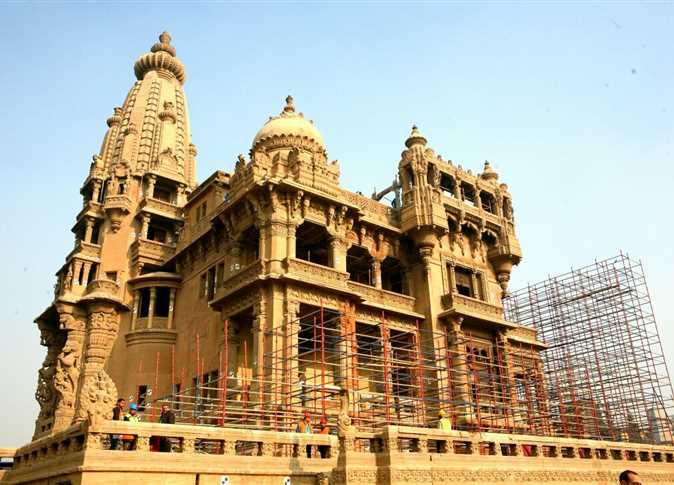
Khaled El Anani, Antiquities Minister, announced that 50 percent of the Baron Palace's renovation
was finalized as per local media.
The news of its status and the expected date the renovation completion was announced during the
minister's inspection tour of the project.
The Baron palace is a famed Heliopolis landmark. Its much-needed renovation, which started in August
2017, was reported to cost 100 million EGP.
<https://egyptianstreets.com/wp-content/uploads/2018/09/article-2201662-14FABAAD000005DC-121_470x600.jpg>
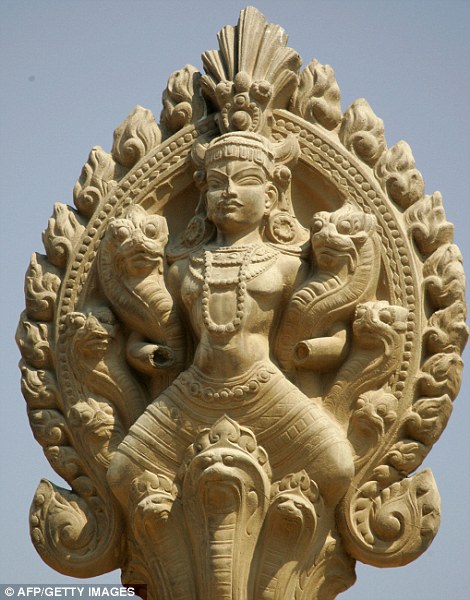
Inspired by the Hindu temple of Angkor Wat (Cambodia), the mansion is often referred to the Hindu
Palace. It was built by a Belgian millionaire and the founder of Heliopolis Edouard Louis Joseph, or
Baron Empain at the end of the 19th century.
It has been the object of various folktales and stories by Heliopolis' inhabitants through the years
with fears of satanic underground rooms and ghosts warding the general public at bay. The palace's
fearful reputation stems from the fact that both the baron's daughter and wife died in the house.
Helena, the wife, particularly met a tragic death by falling from the stairway.
<https://egyptianstreets.com/wp-content/uploads/2018/09/article-2201662-14FAB9B1000005DC-895_964x615.jpg>
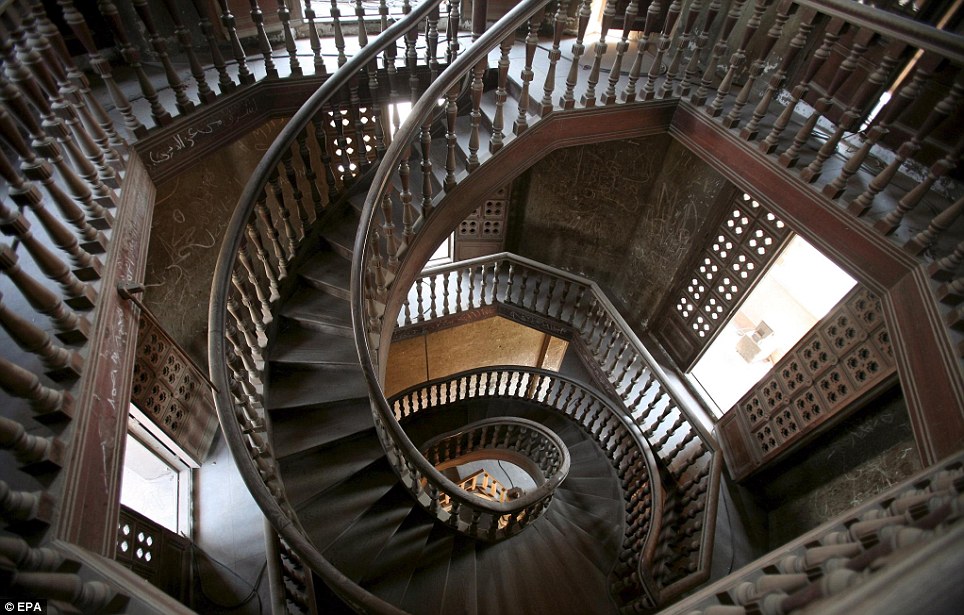
Although the palace is closed to the public, it has been used in the past as a venue for special events.
--
Sent from my Linux system.
My father's Aleppo is now just a faded memory - The National
https://www.thenational.ae/opinion/comment/my-father-s-aleppo-is-now-just-a-faded-memory-1.773406
My father's Aleppo is now just a faded memory
Once a vibrant and diverse nation, Syria's intricately woven social fabric has been torn asunder by
sectarian conflict
Tamara Alrifai
Tamara Alrifai
<https://www.thenational.ae/topics/Author/Tamara%20Alrifai>
September 24, 2018
/
Updated: September 24, 2018 02:04 PM
/
566
shares
A family meal in Aleppo. Courtesy of Tamara Alrifai A family meal in Aleppo. Courtesy of Tamara Alrifai
Egyptians are enjoying an unusually festive month, with the Islamic, Coptic and Jewish New Years all
coinciding. This has prompted many friends to send out messages wishing each other good health and
happiness. Granted, there are only a handful of Egyptian Jews still living in Cairo now, but these
events have still made me pause to reflect.
Seventy years ago, my father was born in Aleppo, one of the oldest continuously inhabited cities in
the world, situated at the tail end of the Silk Road. Its location between the Mediterranean Sea,
Asia and Mesopotamia made it an important hub for merchants across the globe, bringing silk from
Iran and spices from India to its khans and bazaars, and transporting the city's soap and fine
textiles abroad.
My father, the eldest of seven children, grew up in the middle-class neighbourhood of Jamiliyeh in
the 1940s and 1950s. He walked every day to the College des Freres Maristes, a French school run by
priests in affluent Muhafaza. He told me that he used to attend mass on Sundays, as many of his
friends did. Records available online show that at the beginning of the 1949 school year, the
institution boasted eight different religious sects among its 80 students, and only four of its 67
Syrian students were Muslim.
Family photo, circa 1950, with Tamara Alrifai's grandfather Fouad and grandmother Fatima. Courtesy
of Tamara Alrifai Family photo, circa 1950, with Tamara Alrifai's grandfather Fouad and grandmother
Fatima. Courtesy of Tamara Alrifai
My father was born into a traditional Sunni Muslim family. His grandfather, Hajj Tawfic, was a
well-known religious figure in the city and often led prayers in the main Umayyad mosque, whose
ornate Seljuk minaret was destroyed in the conflict earlier
<https://www.thenational.ae/world/mena/is-reconstruction-of-aleppo-s-grand-mosque-whitewashing-history-1.728715>
this year and is now subject to a reconstruction project by Bashar Al Assad's regime. As a child, my
father accompanied him on Fridays to take part in the weekly grand prayer.
Between my father and Hajj Tawfic was my own grandfather, Fouad, a secular intellectual, a poet,
writer and radio broadcaster who was refined both in his manners and his speech. Born in the 1920s,
he married a beautiful woman, Fatima, from Hama, a neighbouring Syrian city later made infamous by
the 1982 massacre, in which up to 40,000 people were killed for rebelling against Hafez Al Assad's
Baathist government. She was 16 years old when she moved to her husband's hometown. She was a loving
wife and a devoted mother who was uncompromising on one issue: maintaining her beautiful hair, which
she entrusted to the magic hands of her Armenian coiffeuse, Sylvo.
Central to my father's upbringing, and probably the most important person in his early life, was his
nanny Rachel. Rachel was a young Jewish woman who, like many of her age, had received a French
education at an all-girls school run by Franciscan nuns in Aleppo and later found a job as a
governess. She quickly developed a particular fondness for my father and poured all her energy and
love into raising him as if he were her own.
Tamara Alrifai's father with his friend, circa 1967. Courtesy of Tamara Alrifai Tamara
Alrifai's father with his friend, circa 1967. Courtesy of Tamara Alrifai
The creation of the state of Israel in 1948, the wars of 1956 and 1967, the loss of Arab territories
and lives, and growing hostility towards Jews in the Arab region forced many Syrian Jewish families
to leave behind friends and neighbours of all religions. Most moved to the US and Latin America.
The current war in Syria has further galvanised society around religious and sectarian lines,
breaking apart what many Syrians had always proudly considered an intricate, yet durably interwoven
social and religious fabric. Even if Syrians had always been aware of each other's religion or sect,
that had never been a reason for rancour. The unwritten rule was to avoid discussing religion and
politics in the same breath and to avoid inter-faith marriages, although there were, of course,
numerous exceptions to the latter.
There is no starker illustration of how fragile that social fabric really was than the sad reality
of Syria today
<https://www.thenational.ae/world/mena/life-in-the-slow-lane-of-isolated-aleppo-1.723243>. Aleppo
has lost most of its Armenian inhabitants during the present conflict, a tight-knit community that
has made its home in the ancient city for centuries. Once 60,000 Armenians lived in Aleppo alone,
but now it is reported that only 15,000 remain in the whole country.
Tamara Alrifai's father, circa 1964. Courtesy of Tamara Alrifai Tamara Alrifai's father, circa 1964.
Courtesy of Tamara Alrifai
The authoritarian Baathist political system, in place since 1963 in Syria, rests on Arab socialist
and secular ideologies, and the nation's constitution maintains that the state shall respect all
religions and protect the personal status of all religious communities. But while Christmas
festivities and Ramadan celebrations had become more visible in the decade preceding the conflict, a
series of tragic sectarian incidents since the outbreak of the conflict in 2011 show that
inter-communal mistrust had been building for much longer.
Stories of neighbours turning on neighbours make older stories of inter-communal harmony sound like
those of an alternate reality. Large-scale displacements that have occurred in big cities such as
Damascus, Aleppo and Homs not only alter the nature of those places, they also highlight a tragic
outcome of this conflict: the fact that less than one century ago, my Sunni-born father went to a
Jesuit school and was raised by a Jewish nanny, and that this will never happen in Syria again.
Political violence in Syria, like that in Iraq before it, has been fuelled by regional and
international players who have skillfully used sectarian discourse to rally support. Mr Al Assad's
regime might have made military gains
<https://www.thenational.ae/world/mena/with-bashar-al-assad-s-survival-seemingly-assured-un-faces-a-different-debate-on-syria-1.773014>,
but the only genuine victory in this conflict would be to give Syrian people hope that they can all
still belong to one country, regardless of their beliefs or ethnicity. Amid a war that has killed
nearly half a million people, though, it has become extremely difficult for voices that once called
for democratic transition and equal citizenship to prevail. Now, I cannot help but feel that the
long-held wish to return to my father's Aleppo has become an impossible dream.
/Tamara Alrifai is a Syrian columnist and human rights advocate living in Cairo/
--
Sent from my Linux system.
My father's Aleppo is now just a faded memory
Once a vibrant and diverse nation, Syria's intricately woven social fabric has been torn asunder by
sectarian conflict
Tamara Alrifai
Tamara Alrifai
<https://www.thenational.ae/topics/Author/Tamara%20Alrifai>
September 24, 2018
/
Updated: September 24, 2018 02:04 PM
/
566
shares
A family meal in Aleppo. Courtesy of Tamara Alrifai A family meal in Aleppo. Courtesy of Tamara Alrifai
Egyptians are enjoying an unusually festive month, with the Islamic, Coptic and Jewish New Years all
coinciding. This has prompted many friends to send out messages wishing each other good health and
happiness. Granted, there are only a handful of Egyptian Jews still living in Cairo now, but these
events have still made me pause to reflect.
Seventy years ago, my father was born in Aleppo, one of the oldest continuously inhabited cities in
the world, situated at the tail end of the Silk Road. Its location between the Mediterranean Sea,
Asia and Mesopotamia made it an important hub for merchants across the globe, bringing silk from
Iran and spices from India to its khans and bazaars, and transporting the city's soap and fine
textiles abroad.
My father, the eldest of seven children, grew up in the middle-class neighbourhood of Jamiliyeh in
the 1940s and 1950s. He walked every day to the College des Freres Maristes, a French school run by
priests in affluent Muhafaza. He told me that he used to attend mass on Sundays, as many of his
friends did. Records available online show that at the beginning of the 1949 school year, the
institution boasted eight different religious sects among its 80 students, and only four of its 67
Syrian students were Muslim.
Family photo, circa 1950, with Tamara Alrifai's grandfather Fouad and grandmother Fatima. Courtesy
of Tamara Alrifai Family photo, circa 1950, with Tamara Alrifai's grandfather Fouad and grandmother
Fatima. Courtesy of Tamara Alrifai
My father was born into a traditional Sunni Muslim family. His grandfather, Hajj Tawfic, was a
well-known religious figure in the city and often led prayers in the main Umayyad mosque, whose
ornate Seljuk minaret was destroyed in the conflict earlier
<https://www.thenational.ae/world/mena/is-reconstruction-of-aleppo-s-grand-mosque-whitewashing-history-1.728715>
this year and is now subject to a reconstruction project by Bashar Al Assad's regime. As a child, my
father accompanied him on Fridays to take part in the weekly grand prayer.
Between my father and Hajj Tawfic was my own grandfather, Fouad, a secular intellectual, a poet,
writer and radio broadcaster who was refined both in his manners and his speech. Born in the 1920s,
he married a beautiful woman, Fatima, from Hama, a neighbouring Syrian city later made infamous by
the 1982 massacre, in which up to 40,000 people were killed for rebelling against Hafez Al Assad's
Baathist government. She was 16 years old when she moved to her husband's hometown. She was a loving
wife and a devoted mother who was uncompromising on one issue: maintaining her beautiful hair, which
she entrusted to the magic hands of her Armenian coiffeuse, Sylvo.
Central to my father's upbringing, and probably the most important person in his early life, was his
nanny Rachel. Rachel was a young Jewish woman who, like many of her age, had received a French
education at an all-girls school run by Franciscan nuns in Aleppo and later found a job as a
governess. She quickly developed a particular fondness for my father and poured all her energy and
love into raising him as if he were her own.
Tamara Alrifai's father with his friend, circa 1967. Courtesy of Tamara Alrifai Tamara
Alrifai's father with his friend, circa 1967. Courtesy of Tamara Alrifai
The creation of the state of Israel in 1948, the wars of 1956 and 1967, the loss of Arab territories
and lives, and growing hostility towards Jews in the Arab region forced many Syrian Jewish families
to leave behind friends and neighbours of all religions. Most moved to the US and Latin America.
The current war in Syria has further galvanised society around religious and sectarian lines,
breaking apart what many Syrians had always proudly considered an intricate, yet durably interwoven
social and religious fabric. Even if Syrians had always been aware of each other's religion or sect,
that had never been a reason for rancour. The unwritten rule was to avoid discussing religion and
politics in the same breath and to avoid inter-faith marriages, although there were, of course,
numerous exceptions to the latter.
There is no starker illustration of how fragile that social fabric really was than the sad reality
of Syria today
<https://www.thenational.ae/world/mena/life-in-the-slow-lane-of-isolated-aleppo-1.723243>. Aleppo
has lost most of its Armenian inhabitants during the present conflict, a tight-knit community that
has made its home in the ancient city for centuries. Once 60,000 Armenians lived in Aleppo alone,
but now it is reported that only 15,000 remain in the whole country.
Tamara Alrifai's father, circa 1964. Courtesy of Tamara Alrifai Tamara Alrifai's father, circa 1964.
Courtesy of Tamara Alrifai
The authoritarian Baathist political system, in place since 1963 in Syria, rests on Arab socialist
and secular ideologies, and the nation's constitution maintains that the state shall respect all
religions and protect the personal status of all religious communities. But while Christmas
festivities and Ramadan celebrations had become more visible in the decade preceding the conflict, a
series of tragic sectarian incidents since the outbreak of the conflict in 2011 show that
inter-communal mistrust had been building for much longer.
Stories of neighbours turning on neighbours make older stories of inter-communal harmony sound like
those of an alternate reality. Large-scale displacements that have occurred in big cities such as
Damascus, Aleppo and Homs not only alter the nature of those places, they also highlight a tragic
outcome of this conflict: the fact that less than one century ago, my Sunni-born father went to a
Jesuit school and was raised by a Jewish nanny, and that this will never happen in Syria again.
Political violence in Syria, like that in Iraq before it, has been fuelled by regional and
international players who have skillfully used sectarian discourse to rally support. Mr Al Assad's
regime might have made military gains
<https://www.thenational.ae/world/mena/with-bashar-al-assad-s-survival-seemingly-assured-un-faces-a-different-debate-on-syria-1.773014>,
but the only genuine victory in this conflict would be to give Syrian people hope that they can all
still belong to one country, regardless of their beliefs or ethnicity. Amid a war that has killed
nearly half a million people, though, it has become extremely difficult for voices that once called
for democratic transition and equal citizenship to prevail. Now, I cannot help but feel that the
long-held wish to return to my father's Aleppo has become an impossible dream.
/Tamara Alrifai is a Syrian columnist and human rights advocate living in Cairo/
--
Sent from my Linux system.
Joseph Manning wins NSF grant to study climate change, human history link | YaleNews
https://news.yale.edu/2018/09/24/joseph-manning-wins-nsf-grant-study-climate-change-human-history-link
Joseph Manning wins major NSF grant to study climate change, human history link
By Bess Connolly Martell
September 24, 2018
A graphic of papyrus with an exploding volcano in the background.(© Department of Papyrology,
Institute of Archaeology, University of Warsaw)
A Yale-led project examining the link between explosive volcanic eruptions and the annual Nile river
summer flooding in antiquity has received an award from the National Science Foundation (NSF).
The project, titled "Volcanism, Hydrology and Social Conflict: Lessons from Hellenistic and
Roman-Era Egypt and Mesopotamia," has received $1.3 million from the NSF. It is funded through the
Dynamics of Coupled Natural and Human Systems Program, which supports interdisciplinary research
that examines human and natural system processes and the complex interactions between the two
systems at diverse scales.
Joseph ManningJoseph Manning
Joseph Manning, the William K. & Marilyn Milton Simpson Professor of History and Classics at Yale,
is the principal investigator on the project. The co-principal investigators on the grant are
Francis Ludlow, Trinity College Dublin; Alexander Stine, San Francisco State University; Jennifer
Marlon, Yale University; and Konstantinos Tsigaridis, Columbia University.
The project — an international collaboration among historians, scientists, hydrologists, and
statisticians — seeks to understand how large volcanic eruptions can reduce average global
temperatures and suppress average global precipitation, causing dramatic effects on annual rainfall
on the Nile watershed in historic times. The human response to this annual flooding, and to its
variability over the years, was the major driver of Egyptian history up to the completion of the
high dam at Aswan in 1970, say the researchers. They will examine the coupling between the
hydrological cycle and human society in Egypt during the Hellenistic era (305 to 30 B.C.E.), a
well-documented period of economic, technological, and social change with often violent rivalries
between major regional powers. The results will also broaden an understanding of best-practice
responses to the changing climate in the modern world.
The researchers on the project will capitalize upon a rare confluence of natural and human archives
for Ancient Egypt and the Near East. They will compare rich historical records such as papyrus
documents and inscriptions with environmental data and regional climate and hydrologic simulations
for repeated, abrupt climate events. The research will determine whether and how social dynamics are
climate-driven, and whether and how human water management affects regional climate and hydrology.
Volcanic eruptions provide tests of human and natural system sensitivity to abrupt shocks because
their repeated occurrence allows the identification of systematic relationships in the presence of
random variability, say the researchers.
With this grant, the project will integrate historical data from a wealth of different archives to
analyze the connections between climate variability, social unrest, and institutional change during
the Hellenistic era; improve knowledge of hydrological responses to volcanic eruptions; and document
the extent of human impacts on Mediterranean hydrology. This historical analysis will describe the
mechanisms through which environmental stress influenced state-level behaviors, community responses
(such as changes in land and water management), and interstate conflict during the Hellenistic
period, and how in return human activities interactively affected soils, land cover, hydrology, and
regional climate.
The Yale Peabody Museum of Natural History, an administrator of the award and a noted hub of
interdisciplinary research and communication, will play a key role in disseminating the results of
the study. In collaboration with Manning and the Yale Program on Climate Change Communication, in
year three of the grant, the museum will develop a traveling exhibition program to inform the public
about the complex interactions between human and natural systems.
The exhibition will feature artifacts and specimens from the Yale Babylonian Collection, the
Beinecke Library, and the Peabody Museum, and is intended to reframe visitors' understanding of
historic events by demonstrating the close connection between climate change and human history and,
more specifically, humankind's connection to a dynamic Earth. The exhibition will travel to five
additional venues across the United States to ensure a diverse audience.
"The Peabody Museum is really a key player in our work; first because of all the great help we
received in applying to the NSF and in coordinating work with three other universities. Second, the
kind of work we are doing, studying the coupling between human society and environment, finds a
natural home in the Peabody and its mission. And finally, because our results will be showcased in
an exhibition in the museum, which will then travel around the country. Educating the public about
our work is a crucial component of the project," says Manning.
"This project is one of the first entirely historical projects that the NSF has funded," says
Manning. "We are incredibly, deeply grateful for this grant."
--
Sent from my Linux system.
Joseph Manning wins major NSF grant to study climate change, human history link
By Bess Connolly Martell
September 24, 2018
A graphic of papyrus with an exploding volcano in the background.(© Department of Papyrology,
Institute of Archaeology, University of Warsaw)
A Yale-led project examining the link between explosive volcanic eruptions and the annual Nile river
summer flooding in antiquity has received an award from the National Science Foundation (NSF).
The project, titled "Volcanism, Hydrology and Social Conflict: Lessons from Hellenistic and
Roman-Era Egypt and Mesopotamia," has received $1.3 million from the NSF. It is funded through the
Dynamics of Coupled Natural and Human Systems Program, which supports interdisciplinary research
that examines human and natural system processes and the complex interactions between the two
systems at diverse scales.
Joseph ManningJoseph Manning
Joseph Manning, the William K. & Marilyn Milton Simpson Professor of History and Classics at Yale,
is the principal investigator on the project. The co-principal investigators on the grant are
Francis Ludlow, Trinity College Dublin; Alexander Stine, San Francisco State University; Jennifer
Marlon, Yale University; and Konstantinos Tsigaridis, Columbia University.
The project — an international collaboration among historians, scientists, hydrologists, and
statisticians — seeks to understand how large volcanic eruptions can reduce average global
temperatures and suppress average global precipitation, causing dramatic effects on annual rainfall
on the Nile watershed in historic times. The human response to this annual flooding, and to its
variability over the years, was the major driver of Egyptian history up to the completion of the
high dam at Aswan in 1970, say the researchers. They will examine the coupling between the
hydrological cycle and human society in Egypt during the Hellenistic era (305 to 30 B.C.E.), a
well-documented period of economic, technological, and social change with often violent rivalries
between major regional powers. The results will also broaden an understanding of best-practice
responses to the changing climate in the modern world.
The researchers on the project will capitalize upon a rare confluence of natural and human archives
for Ancient Egypt and the Near East. They will compare rich historical records such as papyrus
documents and inscriptions with environmental data and regional climate and hydrologic simulations
for repeated, abrupt climate events. The research will determine whether and how social dynamics are
climate-driven, and whether and how human water management affects regional climate and hydrology.
Volcanic eruptions provide tests of human and natural system sensitivity to abrupt shocks because
their repeated occurrence allows the identification of systematic relationships in the presence of
random variability, say the researchers.
With this grant, the project will integrate historical data from a wealth of different archives to
analyze the connections between climate variability, social unrest, and institutional change during
the Hellenistic era; improve knowledge of hydrological responses to volcanic eruptions; and document
the extent of human impacts on Mediterranean hydrology. This historical analysis will describe the
mechanisms through which environmental stress influenced state-level behaviors, community responses
(such as changes in land and water management), and interstate conflict during the Hellenistic
period, and how in return human activities interactively affected soils, land cover, hydrology, and
regional climate.
The Yale Peabody Museum of Natural History, an administrator of the award and a noted hub of
interdisciplinary research and communication, will play a key role in disseminating the results of
the study. In collaboration with Manning and the Yale Program on Climate Change Communication, in
year three of the grant, the museum will develop a traveling exhibition program to inform the public
about the complex interactions between human and natural systems.
The exhibition will feature artifacts and specimens from the Yale Babylonian Collection, the
Beinecke Library, and the Peabody Museum, and is intended to reframe visitors' understanding of
historic events by demonstrating the close connection between climate change and human history and,
more specifically, humankind's connection to a dynamic Earth. The exhibition will travel to five
additional venues across the United States to ensure a diverse audience.
"The Peabody Museum is really a key player in our work; first because of all the great help we
received in applying to the NSF and in coordinating work with three other universities. Second, the
kind of work we are doing, studying the coupling between human society and environment, finds a
natural home in the Peabody and its mission. And finally, because our results will be showcased in
an exhibition in the museum, which will then travel around the country. Educating the public about
our work is a crucial component of the project," says Manning.
"This project is one of the first entirely historical projects that the NSF has funded," says
Manning. "We are incredibly, deeply grateful for this grant."
--
Sent from my Linux system.
2018 'year of archaeological discoveries' for Egypt
https://www.al-monitor.com/pulse/originals/2018/09/egypt-archaeological-discoveries.html
Egypt Pulse
2018 'year of archaeological discoveries' for Egypt
Menna A. Farouk <https://www.al-monitor.com/pulse/authors/menna-a-farouk.html>September 25, 2018
Article Summary
The Egyptian government has delivered on its promise that the year 2018 would be filled with notable
archaeological discoveries in Egypt. Now the government has to find a way to boost tourism based on
these archaeological treasures.
Facebook/moantiquities
An Egyptian archaeological dig uncovered a "huge building" located in the Hid Al-Demerdash area of
Mit Rahina, Egypt, seen in an image uploaded Sept. 25, 2018.
Archaeologists, tourism experts and economists are upbeat about Egypt's newly announced
archaeological discoveries, expressing hope that the discoveries would give a push to the country's
tourism sector.
Egyptian authorities announced the latest discovery on Sept. 25 of an ancient "massive building" —
thought to be part of a residential block from the ancient Egyptian capital of Memphis — in Mit
Rahina, 20 kilometers (12 miles) south of Cairo.
Earlier in September, two key discoveries from the Pharaonic era were made in the southern city of
Aswan. On Sept. 22, the Egyptian Ministry of Antiquities announced the discovery of a number of
Pharaonic mummies
<http://www.skynewsarabia.com/varieties/1184063-%D9%85%D9%88%D9%85%D9%8A%D8%A7%D8%A1-%D9%85%D8%B5%D8%B1%D9%8A%D8%A9-%D8%AA%D8%AD%D9%8A%D9%91%D8%B1-%D8%B9%D9%84%D9%85%D8%A7%D8%A1-%D8%A7%D9%84%D8%A7%D9%93%D8%AB%D8%A7%D8%B1>
in a Pharaonic tomb dating back 2,500 years ago. On Sept. 16, the Egyptian archaeological mission,
which was carrying out excavations at the Kom Ombo temple, unearthed a sandstone Sphinx
<http://www.bbc.com/news/world-middle-east-45546415> statue.
On Sept. 2, remains of an Egyptian village
<http://www.youm7.com/story/2018/9/2/%D8%A7%D9%83%D8%AA%D8%B4%D8%A7%D9%81-%D8%A8%D9%82%D8%A7%D9%8A%D8%A7-%D9%82%D8%B1%D9%8A%D8%A9-%D9%85%D8%B5%D8%B1%D9%8A%D8%A9-%D8%AA%D8%B9%D9%88%D8%AF-%D9%84%D9%84%D8%B9%D8%B5%D8%B1-%D8%A7%D9%84%D8%AD%D8%AC%D8%B1%D9%89-%D8%A7%D9%84%D8%AD%D8%AF%D9%8A%D8%AB-%D8%A8%D8%A7%D9%84%D8%AF%D9%82%D9%87%D9%84%D9%8A%D8%A9/3934219> dating
back to the modern Stone Age were unearthed in the Nile Delta governorate of Dakahlia during
excavation works in the Tell el-Samara area.
Also discovered over the past few months is a rock tomb in Giza
<http://www.skynewsarabia.com/varieties/1179614-%D8%A8%D8%A7%D9%84%D8%B5%D9%88%D8%B1-%D8%A7%D9%83%D8%AA%D8%B4%D8%A7%D9%81-%D9%85%D9%82%D8%A8%D8%B1%D8%A9-%D9%81%D8%B1%D8%B9%D9%88%D9%86%D9%8A%D8%A9-%D9%81%D8%B1%D9%8A%D8%AF%D8%A9-%D8%A7%D9%84%D8%AC%D9%8A%D8%B2%D8%A9>,
a huge sandstone statue of King Ramses II and the oldest workshop for manufacturing pottery in Aswan
<https://www.youm7.com/story/2018/9/19/%D8%B5%D9%88%D8%B1-%D8%AA%D8%B9%D8%B1%D9%81-%D8%B9%D9%84%D9%89-%D8%A3%D9%87%D9%85-%D8%A7%D9%84%D8%A7%D9%83%D8%AA%D8%B4%D8%A7%D9%81%D8%A7%D8%AA-%D8%A7%D9%84%D8%A3%D8%AB%D8%B1%D9%8A%D8%A9-%D9%81%D9%89-%D9%85%D9%86%D8%B7%D9%82%D8%A9-%D9%83%D9%88%D9%85-%D8%A3%D9%85%D8%A8%D9%88/3954681>,
among others.
The discoveries were hardly a total surprise to Egyptian authorities. Last January,
Secretary-General of the Supreme Council of Antiquities Mostafa Waziri said that the year 2018 would
be the year of archaeological discoveries
<http://www.youm7.com/story/2018/7/15/%D9%81%D9%8A%D8%AF%D9%8A%D9%88%D8%AC%D8%B1%D8%A7%D9%81-2018-%D8%B9%D8%A7%D9%85-%D8%A7%D9%84%D8%A7%D9%83%D8%AA%D8%B4%D8%A7%D9%81%D8%A7%D8%AA-%D9%84%D9%84%D8%A2%D8%AB%D8%A7%D8%B1-%D8%A7%D9%84%D9%85%D8%B5%D8%B1%D9%8A%D8%A9/3873829>,
with the Ministry of Antiquities poised to unveil at least one archaeological discovery per month.
"These discoveries are considered a major achievement at the archaeological level. They also
demonstrate that Egypt is still full of monuments and ancient treasures that have not yet been
unearthed," Zahi Hawass, an Egyptian archaeologist and former minister of state for antiquities
affairs, told Al-Monitor.
Hawass said the government has excelled in raising global awareness about the discoveries and
promoting Egypt's tourism sector. "The current minister of antiquities is keen on holding news
conferences with international journalists to announce these discoveries. This gives a very good
message about Egypt to the world and encourages tourists interested in culture and archaeology to
come and visit Egypt," he said.
Taking good care of existing archaeological sites is just as important as announcing new ones,
Hawass said. "It is very crucial that the government works more on making the current tourist and
archaeological sites more appealing and making sure that they are properly presented to those
interested, especially foreign tourists. Many antiquities need to undergo restoration," he added.
Despite praising the new discoveries and highlighting the positive effects on tourism and the
national economy, some tourism experts have raised concerns that some of the unearthed statues might
end up in the attics of the Antiquities Ministry.
"The government has to make sure that these discovered antiquities are restored and displayed in
Egyptian museums or on site with the right protection. They should not be discovered and then
abandoned," Hossam Akawy, a Cairo-based tourism expert and member of the Egyptian Chamber of Tourism
Companies, told Al-Monitor.
Akawy said the Ministry of Antiquities has to set out a comprehensive strategy to finance the
restoration of the newly discovered antiquities as well as restore current archaeological sites and
monuments. "This way, new and old discoveries will be preserved and will be a booster for both the
country's tourism and economy," he said.
Egypt's tourism, which was severely affected by the 2011 uprising and terrorism in the early and
mid-2010s, has shown signs of improvement over the last few years. A government official told
Reuters in August that Egypt's tourism revenues increased
<http://af.reuters.com/article/egyptNews/idAFC6N1OB01I> by 77% to stand at around $4.8 billion in
the first half of this year, compared with the same period a year earlier. The official said the
number of tourists visiting Egypt in this period rose by 41% to reach five million.
"The archaeological discoveries can give an unprecedented push to Egypt's tourism sector because
Egypt mainly attracts tourists who are interested in Egypt's archaeology and civilization," Ahmed
el-Shami, an economist and a professor of feasibility studies at Ain Shams University, told
Al-Monitor. "If well-managed, these discoveries can be a golden goose for the government," Shami added.
Found in: Cultural heritage
<https://www.al-monitor.com/pulse/contents/trending-topics/cultural-heritage.html>, Archaeological
sites <https://www.al-monitor.com/pulse/contents/trending-topics/archaeological-sites.html>
<https://www.al-monitor.com/pulse/authors/menna-a-farouk.html>
Menna A. Farouk, a journalist and an editor at The Egyptian Gazette, writes about social, political
and cultural issues, including press freedom, immigration and religious reforms among other topics.
On Twitter: @ <https://twitter.com/MennaFarouk91>MennaFarouk91 <https://twitter.com/MennaFarouk91>
--
Sent from my Linux system.
Egypt Pulse
2018 'year of archaeological discoveries' for Egypt
Menna A. Farouk <https://www.al-monitor.com/pulse/authors/menna-a-farouk.html>September 25, 2018
Article Summary
The Egyptian government has delivered on its promise that the year 2018 would be filled with notable
archaeological discoveries in Egypt. Now the government has to find a way to boost tourism based on
these archaeological treasures.
Facebook/moantiquities
An Egyptian archaeological dig uncovered a "huge building" located in the Hid Al-Demerdash area of
Mit Rahina, Egypt, seen in an image uploaded Sept. 25, 2018.
Archaeologists, tourism experts and economists are upbeat about Egypt's newly announced
archaeological discoveries, expressing hope that the discoveries would give a push to the country's
tourism sector.
Egyptian authorities announced the latest discovery on Sept. 25 of an ancient "massive building" —
thought to be part of a residential block from the ancient Egyptian capital of Memphis — in Mit
Rahina, 20 kilometers (12 miles) south of Cairo.
Earlier in September, two key discoveries from the Pharaonic era were made in the southern city of
Aswan. On Sept. 22, the Egyptian Ministry of Antiquities announced the discovery of a number of
Pharaonic mummies
<http://www.skynewsarabia.com/varieties/1184063-%D9%85%D9%88%D9%85%D9%8A%D8%A7%D8%A1-%D9%85%D8%B5%D8%B1%D9%8A%D8%A9-%D8%AA%D8%AD%D9%8A%D9%91%D8%B1-%D8%B9%D9%84%D9%85%D8%A7%D8%A1-%D8%A7%D9%84%D8%A7%D9%93%D8%AB%D8%A7%D8%B1>
in a Pharaonic tomb dating back 2,500 years ago. On Sept. 16, the Egyptian archaeological mission,
which was carrying out excavations at the Kom Ombo temple, unearthed a sandstone Sphinx
<http://www.bbc.com/news/world-middle-east-45546415> statue.
On Sept. 2, remains of an Egyptian village
<http://www.youm7.com/story/2018/9/2/%D8%A7%D9%83%D8%AA%D8%B4%D8%A7%D9%81-%D8%A8%D9%82%D8%A7%D9%8A%D8%A7-%D9%82%D8%B1%D9%8A%D8%A9-%D9%85%D8%B5%D8%B1%D9%8A%D8%A9-%D8%AA%D8%B9%D9%88%D8%AF-%D9%84%D9%84%D8%B9%D8%B5%D8%B1-%D8%A7%D9%84%D8%AD%D8%AC%D8%B1%D9%89-%D8%A7%D9%84%D8%AD%D8%AF%D9%8A%D8%AB-%D8%A8%D8%A7%D9%84%D8%AF%D9%82%D9%87%D9%84%D9%8A%D8%A9/3934219> dating
back to the modern Stone Age were unearthed in the Nile Delta governorate of Dakahlia during
excavation works in the Tell el-Samara area.
Also discovered over the past few months is a rock tomb in Giza
<http://www.skynewsarabia.com/varieties/1179614-%D8%A8%D8%A7%D9%84%D8%B5%D9%88%D8%B1-%D8%A7%D9%83%D8%AA%D8%B4%D8%A7%D9%81-%D9%85%D9%82%D8%A8%D8%B1%D8%A9-%D9%81%D8%B1%D8%B9%D9%88%D9%86%D9%8A%D8%A9-%D9%81%D8%B1%D9%8A%D8%AF%D8%A9-%D8%A7%D9%84%D8%AC%D9%8A%D8%B2%D8%A9>,
a huge sandstone statue of King Ramses II and the oldest workshop for manufacturing pottery in Aswan
<https://www.youm7.com/story/2018/9/19/%D8%B5%D9%88%D8%B1-%D8%AA%D8%B9%D8%B1%D9%81-%D8%B9%D9%84%D9%89-%D8%A3%D9%87%D9%85-%D8%A7%D9%84%D8%A7%D9%83%D8%AA%D8%B4%D8%A7%D9%81%D8%A7%D8%AA-%D8%A7%D9%84%D8%A3%D8%AB%D8%B1%D9%8A%D8%A9-%D9%81%D9%89-%D9%85%D9%86%D8%B7%D9%82%D8%A9-%D9%83%D9%88%D9%85-%D8%A3%D9%85%D8%A8%D9%88/3954681>,
among others.
The discoveries were hardly a total surprise to Egyptian authorities. Last January,
Secretary-General of the Supreme Council of Antiquities Mostafa Waziri said that the year 2018 would
be the year of archaeological discoveries
<http://www.youm7.com/story/2018/7/15/%D9%81%D9%8A%D8%AF%D9%8A%D9%88%D8%AC%D8%B1%D8%A7%D9%81-2018-%D8%B9%D8%A7%D9%85-%D8%A7%D9%84%D8%A7%D9%83%D8%AA%D8%B4%D8%A7%D9%81%D8%A7%D8%AA-%D9%84%D9%84%D8%A2%D8%AB%D8%A7%D8%B1-%D8%A7%D9%84%D9%85%D8%B5%D8%B1%D9%8A%D8%A9/3873829>,
with the Ministry of Antiquities poised to unveil at least one archaeological discovery per month.
"These discoveries are considered a major achievement at the archaeological level. They also
demonstrate that Egypt is still full of monuments and ancient treasures that have not yet been
unearthed," Zahi Hawass, an Egyptian archaeologist and former minister of state for antiquities
affairs, told Al-Monitor.
Hawass said the government has excelled in raising global awareness about the discoveries and
promoting Egypt's tourism sector. "The current minister of antiquities is keen on holding news
conferences with international journalists to announce these discoveries. This gives a very good
message about Egypt to the world and encourages tourists interested in culture and archaeology to
come and visit Egypt," he said.
Taking good care of existing archaeological sites is just as important as announcing new ones,
Hawass said. "It is very crucial that the government works more on making the current tourist and
archaeological sites more appealing and making sure that they are properly presented to those
interested, especially foreign tourists. Many antiquities need to undergo restoration," he added.
Despite praising the new discoveries and highlighting the positive effects on tourism and the
national economy, some tourism experts have raised concerns that some of the unearthed statues might
end up in the attics of the Antiquities Ministry.
"The government has to make sure that these discovered antiquities are restored and displayed in
Egyptian museums or on site with the right protection. They should not be discovered and then
abandoned," Hossam Akawy, a Cairo-based tourism expert and member of the Egyptian Chamber of Tourism
Companies, told Al-Monitor.
Akawy said the Ministry of Antiquities has to set out a comprehensive strategy to finance the
restoration of the newly discovered antiquities as well as restore current archaeological sites and
monuments. "This way, new and old discoveries will be preserved and will be a booster for both the
country's tourism and economy," he said.
Egypt's tourism, which was severely affected by the 2011 uprising and terrorism in the early and
mid-2010s, has shown signs of improvement over the last few years. A government official told
Reuters in August that Egypt's tourism revenues increased
<http://af.reuters.com/article/egyptNews/idAFC6N1OB01I> by 77% to stand at around $4.8 billion in
the first half of this year, compared with the same period a year earlier. The official said the
number of tourists visiting Egypt in this period rose by 41% to reach five million.
"The archaeological discoveries can give an unprecedented push to Egypt's tourism sector because
Egypt mainly attracts tourists who are interested in Egypt's archaeology and civilization," Ahmed
el-Shami, an economist and a professor of feasibility studies at Ain Shams University, told
Al-Monitor. "If well-managed, these discoveries can be a golden goose for the government," Shami added.
Found in: Cultural heritage
<https://www.al-monitor.com/pulse/contents/trending-topics/cultural-heritage.html>, Archaeological
sites <https://www.al-monitor.com/pulse/contents/trending-topics/archaeological-sites.html>
<https://www.al-monitor.com/pulse/authors/menna-a-farouk.html>
Menna A. Farouk, a journalist and an editor at The Egyptian Gazette, writes about social, political
and cultural issues, including press freedom, immigration and religious reforms among other topics.
On Twitter: @ <https://twitter.com/MennaFarouk91>MennaFarouk91 <https://twitter.com/MennaFarouk91>
--
Sent from my Linux system.
Scientists Uncover Talismans of 'Unknown Mummy' in Egypt | Asharq AL-awsat
https://aawsat.com/english/home/article/1406411/scientists-uncover-talismans-unknown-mummy-egypt
Scientists Uncover Talismans of 'Unknown Mummy' in Egypt
Tuesday, 25 September, 2018 - 07:45
A mummy is seen inside the newly discovered burial site in Minya, Egypt May 13, 2017. (photo credit:
REUTERS/MOHAMED ABD EL GHANY)
Cairo - Hazem Badr
Since the beginning of the archeological excavations in the region in 2014, archeologists discovered
30 mummies inside 23 cemeteries dating back to different eras in the Agha Khan area, Aswan, last
week. One of the mummies has an unfamiliar state.
The mummy was intact and wrapped with linens, but, the coffin in which it was placed and the
cemetery accommodating the coffin didn't feature any engraves that determine its identity. The
mummy, which dates back to the late period of ancient Egypt has been classified as "unknown."
The lack of information that may help in proceeding DNA tests and comparing them with other mummies'
DNA makes it almost impossible to reach data determining the identity of the mummy. But, according
to Director General of Aswan Antiquities Abdel Moneim Saeed, scientists will be able to gather
information that at least precise the class to which the mummy belongs, its work, and whether it had
diseases or not.
Saeed told Asharq Al-Awsat: "once discovered, the mummy was moved to the study lab at Aswan Museum,
and then it will be moved into Aswan University Hospital to undergo a CT scan that helps us gather
more data within six months."
This is not the first time scientists rely on CT scans in their studies on mummies. In February
2017, CT scans were used to examine four mummies discovered at the nobles' cemeteries in Aswan by
the archeological mission of the University of Jaén, aiming at detecting the disease history of the
mummies, and analyzing the scientific and medical advancement that had been achieved by the ancient
Egyptians in diagnosing and treating diseases. The scan took place after detecting clear symptoms of
breast cancer in one of the mummies.
Saeed says: "these scans provided us with a great result. It showed that the lady (mummy) took a
treatment that helped her survive for a long time," noting that after moving the mummy to the
hospital for further tests, they will likely need six months before they announce their findings on
the mummy.
--
Sent from my Linux system.
Scientists Uncover Talismans of 'Unknown Mummy' in Egypt
Tuesday, 25 September, 2018 - 07:45
A mummy is seen inside the newly discovered burial site in Minya, Egypt May 13, 2017. (photo credit:
REUTERS/MOHAMED ABD EL GHANY)
Cairo - Hazem Badr
Since the beginning of the archeological excavations in the region in 2014, archeologists discovered
30 mummies inside 23 cemeteries dating back to different eras in the Agha Khan area, Aswan, last
week. One of the mummies has an unfamiliar state.
The mummy was intact and wrapped with linens, but, the coffin in which it was placed and the
cemetery accommodating the coffin didn't feature any engraves that determine its identity. The
mummy, which dates back to the late period of ancient Egypt has been classified as "unknown."
The lack of information that may help in proceeding DNA tests and comparing them with other mummies'
DNA makes it almost impossible to reach data determining the identity of the mummy. But, according
to Director General of Aswan Antiquities Abdel Moneim Saeed, scientists will be able to gather
information that at least precise the class to which the mummy belongs, its work, and whether it had
diseases or not.
Saeed told Asharq Al-Awsat: "once discovered, the mummy was moved to the study lab at Aswan Museum,
and then it will be moved into Aswan University Hospital to undergo a CT scan that helps us gather
more data within six months."
This is not the first time scientists rely on CT scans in their studies on mummies. In February
2017, CT scans were used to examine four mummies discovered at the nobles' cemeteries in Aswan by
the archeological mission of the University of Jaén, aiming at detecting the disease history of the
mummies, and analyzing the scientific and medical advancement that had been achieved by the ancient
Egyptians in diagnosing and treating diseases. The scan took place after detecting clear symptoms of
breast cancer in one of the mummies.
Saeed says: "these scans provided us with a great result. It showed that the lady (mummy) took a
treatment that helped her survive for a long time," noting that after moving the mummy to the
hospital for further tests, they will likely need six months before they announce their findings on
the mummy.
--
Sent from my Linux system.
The Newest Curse of the Mummy: Bad Drainage - The New York Times
https://www.nytimes.com/2018/09/25/world/middleeast/egypt-kom-ombo-temple.html
The Newest Curse of the Mummy: Bad Drainage
Image
Tourists visiting the temple of Kom Ombo, near Aswan, Egypt, in June.CreditCreditLaura Boushnak for
The New York Times
By Declan Walsh <http://www.nytimes.com/by/declan-walsh>
* Sept. 25, 2018
KOM OMBO, Egypt — Since Howard Carter discovered Tutankhamen's tomb in the Valley of the Kings
nearly a century ago, pop culture and folklore have invoked the fabled curse of the mummy
<https://www.nationalgeographic.com/archaeology-and-history/archaeology/curse-of-the-mummy/>, said
to plague those who unearth the hidden treasures of ancient Egypt with bad luck, disease or death.
But at the ancient temple of Kom Ombo, 400 miles south of Cairo, where archaeologists recently
unearthed a stack of decaying mummies, peril takes a more prosaic form: waterlogged foundations.
Decades of flood irrigation in the surrounding fields, which were once desert, have soaked the soil
beneath the temple. Water has penetrated the sandstone foundations, combining with salt and heat to
scrub some hieroglyphs from the temple walls. The symbols and figures, effectively the lines of an
ancient story, are fading to dust.
The solution, according to engineers on a $9 million American-financed project
<https://www.usaid.gov/egypt/economic-growth-and-tourism>, is some modern drainage. Since October
2017, dozens of laborers have been digging a 30-foot-deep trench around the temple walls in an
effort to drain the groundwater and divert it back into the Nile.
"Expanding into the desert is a nice dream," said the project engineer, Tom Nichols, standing on a
hill behind the temple. He pointed to the fields of lush sugar cane, dotted with farmhouses, that
pushed up against the temple walls. "But you need to look at the other consequences, too," he said.
Image
This diminutive sphinx was discovered at the temple by a team of archaeologists and engineers
working to save it from water damage.CreditThe Ministry of Antiquities
Unusually, a team of archaeologists is working alongside the laborers, hoping to save any treasures
that are uncovered in the dig. It has found significant objects, including a bust of Marcus
Aurelius, an Old Kingdom pottery workshop and a relief of Sobek, the crocodile god of the temple. On
a searing July afternoon, one archaeologist held forth an ancient lunch: a fistful of charred,
4,000-year-old grains of wheat, discovered in an excavated urn.
"This project allows us to rewrite the history of the temple," said the director of Kom Ombo, Ahmed
Sayed Ahmed.
The most exciting discovery may have been in recent weeks, when archaeologists pulled a
sand-encrusted sphinx from a damp hole. It has been dated to the Ptolemaic era, which ran from 305
B.C. to 30 B.C.
At less than two feet tall, the sphinx is a dwarf compared with the famed Great Sphinx of Giza,
which rises to 65 feet and stretches 240 feet from head to tail. It also had a broken paw and no
identifying markings.
But unlike the Giza sphinx, whose features are badly eroded by time and the elements, the Kom Ombo
sphinx is finely preserved — as is the sense of its mythic power: a man's head on a lion's body, its
wide eyes once again staring out after 2,000 years in the dark.
Even a diminutive sphinx symbolized a fierce devotion to the temple gods, said Matthew Douglas
Adams, a research scholar at New York University's Institute of Fine Arts. "It signified that the
king was guarding the temple and keeping out the forces of chaos," he said.
Image
Workers prepared to photograph a newly uncovered piece at Kom Ombo.CreditLaura Boushnak for The New
York Times
Keeping the water out is another matter.
The water troubles at Kom Ombo, and at many other Pharaonic sites along the Nile, are a product of
one of Egypt's proudest successes.
The massive Aswan High Dam
<https://www.nytimes.com/1970/07/22/archives/egypt-marks-completion-of-aswan-dam-project.html>, 30
miles upstream from Kom Ombo, transformed Egyptian agriculture when it was completed in 1971. Having
tamed the ancient cycle of flood and drought, Egyptians could cultivate up to the river's edge,
helping make their land some of the most productive on earth.
Construction of the dam also set off one of the world's most spectacular archaeological rescue
missions. Through the 1960s, Egyptian and Swedish officials rushed to save a pair of temples at Abu
Simbe
<https://www.nytimes.com/1964/12/22/archives/temples-at-abu-simbel-protected-with-sand-facial-pack-to-ward-off.html>l
that faced inundation from the rising water of Lake Nasser, which lies behind the dam. Engineers cut
the temples into 1,035 blocks, each weighing between 20 and 30 ton, and in 1968 reassembled them on
higher ground, exactly as they were.
In the decades since, though, the unwanted side effects of the Aswan Dam have become gradually more
apparent. In some parts of the fertile Nile Delta, the dam has caused increased salinity, forcing
farmers to switch crops or abandon fields entirely. And the Pharaonic temples lining the river have
also suffered.
Many of the temples were built at a time when the surrounding area was desert, and down through the
centuries became cocooned in layers of sand — near ideal conditions for preservation. But today the
temples are hemmed in by lush fields, farmhouses and a country of nearly 100 million people.
Climate change has brought harsher, more variable weather, and it has accelerated the decay caused
by rising groundwater. Untreated sewage and leaking water from informal houses have also contributed
to the problem.
Image
Inside a Roman Nilometer, which measured the Nile's water level during the annual flood season, at
Kom Ombo.CreditLaura Boushnak for The New York Times
The first sign of water damage is often faded hieroglyphs, said Mr. Adams, the scholar. "Even if it
just concerns a few areas of inscription, what remains of ancient Egypt is a very finite resource,"
he said. "When any piece of it is gone, it is gone forever."
The work at Kom Ombo is one of six major groundwater-lowering projects financed by the United States
in Egypt, at a cost of $100 million, since the 1990s. Previous efforts have focused on the Pyramids
of Giza, <https://eg.usembassy.gov/u-s-helps-preserve-base-sphinx-lowering-groundwater/> the
catacombs of Alexandria and Cairo's old city.
The money has been particularly welcome by the financially struggling government of Egypt, where
tourism has slumped since the Arab Spring in 2011. But American funding is now less assured: The
Trump administration has signaled its intention to slash billions from the United States Agency for
International Development's budget, as part of its "America first" agenda.
In some ways, the temple trouble is the opposite of what concerns most Egyptians, whose worry is not
too much water, but too little. Their country faces chronic water shortages because of pollution,
waste and the demands of a soaring population. A massive hydroelectric dam under construction in
Ethiopia, on the Blue Nile, has heightened public anxiety.
The legend of the mummy's curse was fueled by the sudden death of Lord Carnarvon, not long after
Tutankhamen's tomb was opened
<https://archive.nytimes.com/www.nytimes.com/learning/general/onthisday/big/0216.html> in 1922.
Experts later concluded
<https://www.thelancet.com/journals/lancet/article/PIIS0140-6736%2803%2913576-3/fulltext> that it
had nothing to do with the discovery.
The story may come to a conclusion next year when the Grand Egyptian Museum, under construction near
the Pyramids of Giza, is scheduled to open its doors. The $1 billion museum will store over 100,000
artifacts, making it the largest museum in the world dedicated to a single civilization — including
all 5,000 pieces from Tutankhamen's tomb, on display for the first time since their discovery.
/Follow Declan Walsh on Instagram //@declanjwalsh/ <https://www.instagram.com/declanjwalsh/>/and on
Twitter: //@declanwalsh/ <https://twitter.com/declanwalsh>/./
Christine Hauser contributed reporting from New York.
A version of this article appears in print on Sept. 25, 2018, on Page A4 of the New York edition
with the headline: Mummy's New Curse: Poor Drainage. Order Reprints <http://www.nytreprints.com/> |
Today's Paper <http://www.nytimes.com/pages/todayspaper/index.html> | Subscribe
<https://www.nytimes.com/subscriptions/Multiproduct/lp8HYKU.html?campaignId=48JQY>
--
Sent from my Linux system.
The Newest Curse of the Mummy: Bad Drainage
Image
Tourists visiting the temple of Kom Ombo, near Aswan, Egypt, in June.CreditCreditLaura Boushnak for
The New York Times
By Declan Walsh <http://www.nytimes.com/by/declan-walsh>
* Sept. 25, 2018
KOM OMBO, Egypt — Since Howard Carter discovered Tutankhamen's tomb in the Valley of the Kings
nearly a century ago, pop culture and folklore have invoked the fabled curse of the mummy
<https://www.nationalgeographic.com/archaeology-and-history/archaeology/curse-of-the-mummy/>, said
to plague those who unearth the hidden treasures of ancient Egypt with bad luck, disease or death.
But at the ancient temple of Kom Ombo, 400 miles south of Cairo, where archaeologists recently
unearthed a stack of decaying mummies, peril takes a more prosaic form: waterlogged foundations.
Decades of flood irrigation in the surrounding fields, which were once desert, have soaked the soil
beneath the temple. Water has penetrated the sandstone foundations, combining with salt and heat to
scrub some hieroglyphs from the temple walls. The symbols and figures, effectively the lines of an
ancient story, are fading to dust.
The solution, according to engineers on a $9 million American-financed project
<https://www.usaid.gov/egypt/economic-growth-and-tourism>, is some modern drainage. Since October
2017, dozens of laborers have been digging a 30-foot-deep trench around the temple walls in an
effort to drain the groundwater and divert it back into the Nile.
"Expanding into the desert is a nice dream," said the project engineer, Tom Nichols, standing on a
hill behind the temple. He pointed to the fields of lush sugar cane, dotted with farmhouses, that
pushed up against the temple walls. "But you need to look at the other consequences, too," he said.
Image
This diminutive sphinx was discovered at the temple by a team of archaeologists and engineers
working to save it from water damage.CreditThe Ministry of Antiquities
Unusually, a team of archaeologists is working alongside the laborers, hoping to save any treasures
that are uncovered in the dig. It has found significant objects, including a bust of Marcus
Aurelius, an Old Kingdom pottery workshop and a relief of Sobek, the crocodile god of the temple. On
a searing July afternoon, one archaeologist held forth an ancient lunch: a fistful of charred,
4,000-year-old grains of wheat, discovered in an excavated urn.
"This project allows us to rewrite the history of the temple," said the director of Kom Ombo, Ahmed
Sayed Ahmed.
The most exciting discovery may have been in recent weeks, when archaeologists pulled a
sand-encrusted sphinx from a damp hole. It has been dated to the Ptolemaic era, which ran from 305
B.C. to 30 B.C.
At less than two feet tall, the sphinx is a dwarf compared with the famed Great Sphinx of Giza,
which rises to 65 feet and stretches 240 feet from head to tail. It also had a broken paw and no
identifying markings.
But unlike the Giza sphinx, whose features are badly eroded by time and the elements, the Kom Ombo
sphinx is finely preserved — as is the sense of its mythic power: a man's head on a lion's body, its
wide eyes once again staring out after 2,000 years in the dark.
Even a diminutive sphinx symbolized a fierce devotion to the temple gods, said Matthew Douglas
Adams, a research scholar at New York University's Institute of Fine Arts. "It signified that the
king was guarding the temple and keeping out the forces of chaos," he said.
Image
Workers prepared to photograph a newly uncovered piece at Kom Ombo.CreditLaura Boushnak for The New
York Times
Keeping the water out is another matter.
The water troubles at Kom Ombo, and at many other Pharaonic sites along the Nile, are a product of
one of Egypt's proudest successes.
The massive Aswan High Dam
<https://www.nytimes.com/1970/07/22/archives/egypt-marks-completion-of-aswan-dam-project.html>, 30
miles upstream from Kom Ombo, transformed Egyptian agriculture when it was completed in 1971. Having
tamed the ancient cycle of flood and drought, Egyptians could cultivate up to the river's edge,
helping make their land some of the most productive on earth.
Construction of the dam also set off one of the world's most spectacular archaeological rescue
missions. Through the 1960s, Egyptian and Swedish officials rushed to save a pair of temples at Abu
Simbe
<https://www.nytimes.com/1964/12/22/archives/temples-at-abu-simbel-protected-with-sand-facial-pack-to-ward-off.html>l
that faced inundation from the rising water of Lake Nasser, which lies behind the dam. Engineers cut
the temples into 1,035 blocks, each weighing between 20 and 30 ton, and in 1968 reassembled them on
higher ground, exactly as they were.
In the decades since, though, the unwanted side effects of the Aswan Dam have become gradually more
apparent. In some parts of the fertile Nile Delta, the dam has caused increased salinity, forcing
farmers to switch crops or abandon fields entirely. And the Pharaonic temples lining the river have
also suffered.
Many of the temples were built at a time when the surrounding area was desert, and down through the
centuries became cocooned in layers of sand — near ideal conditions for preservation. But today the
temples are hemmed in by lush fields, farmhouses and a country of nearly 100 million people.
Climate change has brought harsher, more variable weather, and it has accelerated the decay caused
by rising groundwater. Untreated sewage and leaking water from informal houses have also contributed
to the problem.
Image
Inside a Roman Nilometer, which measured the Nile's water level during the annual flood season, at
Kom Ombo.CreditLaura Boushnak for The New York Times
The first sign of water damage is often faded hieroglyphs, said Mr. Adams, the scholar. "Even if it
just concerns a few areas of inscription, what remains of ancient Egypt is a very finite resource,"
he said. "When any piece of it is gone, it is gone forever."
The work at Kom Ombo is one of six major groundwater-lowering projects financed by the United States
in Egypt, at a cost of $100 million, since the 1990s. Previous efforts have focused on the Pyramids
of Giza, <https://eg.usembassy.gov/u-s-helps-preserve-base-sphinx-lowering-groundwater/> the
catacombs of Alexandria and Cairo's old city.
The money has been particularly welcome by the financially struggling government of Egypt, where
tourism has slumped since the Arab Spring in 2011. But American funding is now less assured: The
Trump administration has signaled its intention to slash billions from the United States Agency for
International Development's budget, as part of its "America first" agenda.
In some ways, the temple trouble is the opposite of what concerns most Egyptians, whose worry is not
too much water, but too little. Their country faces chronic water shortages because of pollution,
waste and the demands of a soaring population. A massive hydroelectric dam under construction in
Ethiopia, on the Blue Nile, has heightened public anxiety.
The legend of the mummy's curse was fueled by the sudden death of Lord Carnarvon, not long after
Tutankhamen's tomb was opened
<https://archive.nytimes.com/www.nytimes.com/learning/general/onthisday/big/0216.html> in 1922.
Experts later concluded
<https://www.thelancet.com/journals/lancet/article/PIIS0140-6736%2803%2913576-3/fulltext> that it
had nothing to do with the discovery.
The story may come to a conclusion next year when the Grand Egyptian Museum, under construction near
the Pyramids of Giza, is scheduled to open its doors. The $1 billion museum will store over 100,000
artifacts, making it the largest museum in the world dedicated to a single civilization — including
all 5,000 pieces from Tutankhamen's tomb, on display for the first time since their discovery.
/Follow Declan Walsh on Instagram //@declanjwalsh/ <https://www.instagram.com/declanjwalsh/>/and on
Twitter: //@declanwalsh/ <https://twitter.com/declanwalsh>/./
Christine Hauser contributed reporting from New York.
A version of this article appears in print on Sept. 25, 2018, on Page A4 of the New York edition
with the headline: Mummy's New Curse: Poor Drainage. Order Reprints <http://www.nytreprints.com/> |
Today's Paper <http://www.nytimes.com/pages/todayspaper/index.html> | Subscribe
<https://www.nytimes.com/subscriptions/Multiproduct/lp8HYKU.html?campaignId=48JQY>
--
Sent from my Linux system.
Subscribe to:
Posts (Atom)