Search This Blog

Friday, November 25, 2016

The heretic King's head moved to GEM for 2017 opening | Luxor Times


http://luxortimesmagazine.blogspot.com/2016/11/the-heretic-king-head-moved-to-gem-for.html

Today, GEM (Grand Egyptian Museum) receives a group of 850 objects from the Egyptian museum in Cairo in preparation for the partial opening of the GEM by the end of 2017.

The collection includes objects dated to the Middle and New Kingdom as well as a number of objects of King Tutankhamon's collection.

Dr. Essa Zidan said that some objects need restoration work which could take months due to their current condition.

The objects transferred include a sandstone head of statue of Akhnaten in a good preservation state and two granite statues of Amenhotep II and Thotmosis III.


#Egypt #Cairo #EgyptianMuseum #GEM #Antiquities #Egyptology #Archaeology #AncientEgypt #ThisisEgypt
Posted by

--   Sent from my Linux system. 

Luxor Times


http://luxortimesmagazine.blogspot.com/
Nov. 23

Predynastic cemetery and settlement discovered in Abydos. According to Dr. Mahmoud Affifi, a team of Egyptian archaeologists discovered a predynastic cemetery dated to 4th millennium B.C (3316 B.C) located 400 meters to the south of Seti I temple in Abydos.

The team are all Egyptian archaeologists who are working for the ministry of antiquities and this mission also included training a number of Egyptian archaeologists on documentation as a part of the ministry's plan to encourage qualified Egyptian teams to do digs and train new generations.


Dr. Affifi said "It is probably the cemetery and the settlements belong to high officials and the overseers of royal tombs and mortuary structures of the kings of the first dynasty in Abydos."
The team also discovered a number of huts and daily life tools including pottery which could refer to a workers village for the workers who were responsible for building the royal tombs.
Dr. Hany Abo ELAzm said "The Egyptian team managed to unearth 15 large mud brick tombs so far, some measures up to 14 meters x 5 meters. The discovered tombs are different in design and architectural styles. Some of the tombs are even bigger than the royal tombs in Abydos of 1st Dynasty which shows the importance of the owners and their positions in this early period of the Egyptian history.

Yasser Mahmoud Hussein, head of the Egyptian archaeologists' team, said "Some of the tombs are unique as they have more than one Mastaba up to 4 mastabas. Mastabas were used in tombs of 1st Dynasty in Sakkara then in the time of 3rd Dynasty so in this case it is the first to discover Mastaba tombs dated to the 1st Dynasty in Abydos.  

  #Egypt #Egyptology #Archaeology #Abydos #AncientEgypt #EgyptianArchaeologists  


Photos are courtesy of Ministry of Antiquities 
Posted by

--   Sent from my Linux system. 

Tuesday, November 22, 2016

Fwd: How to support ARCE-NC while you shop.

To be clear about this, the 0.5% is NOT something that's tacked onto your bill. Amazon contributes the 0.5%.

Glenn

-------- Forwarded Message --------
Subject: How to support ARCE-NC while you shop.
Date: Tue, 22 Nov 2016 07:38:31 -0800
From: Glenn Meyer <glenn@glennmeyer.net>


If you shop on Amazon anyway, why not support your the ARCE chapter at the same time? Just click on the link in the text or image below to start shopping on Amazon, and when you buy, you'll be making a donation (typically 0.5%) to Northern California ARCE.

Thank you! (And thanks to Al Berens for sending this to me.)

Glenn Meyer
Publicity, ARCE-NC


Support us when you shop on Black Friday and Cyber Monday. #StartWithaSmile at smile.amazon.com/ch/47-0891218 and Amazon donates to American Research Center in Egypt Northern California Inc.

--   Sent from my Linux system.

How to support ARCE-NC while you shop.

If you shop on Amazon anyway, why not support your the ARCE chapter at the same time? Just click on the link in the text or image below to start shopping on Amazon, and when you buy, you'll be making a donation (typically 0.5%) to Northern California ARCE.

Thank you! (And thanks to Al Berens for sending this to me.)

Glenn Meyer
Publicity, ARCE-NC


Support us when you shop on Black Friday and Cyber Monday. #StartWithaSmile at smile.amazon.com/ch/47-0891218 and Amazon donates to American Research Center in Egypt Northern California Inc.

--   Sent from my Linux system.

Keeping track of the artifacts: On the Egyptian Museum’s Registration, Collections Management and Documentation Department | MadaMasr


http://www.madamasr.com/en/2016/10/16/feature/culture/keeping-track-of-the-artifacts-on-the-egyptian-museums-registration-collections-management-and-documentation-department/
Keeping track of the artifacts: On the Egyptian Museum's Registration, Collections Management and Documentation Department


The Egyptian Museum is a common target for accusations of mismanaging Egypt's cultural heritage, most apparent in the media saga detailing the damage and disastrous restoration of Tutankhamun's mask. Recently, for example, an article in US-headquartered news outlet the Huffington Post expressed concerns over the museums' management practices.

These accusations generally fail to grasp the complexity of the museum's task or how its staff manage the world's largest collection of ancient Egyptian artifacts with a limited budget. For decades, one of the most pressing issues for the museum was how to bring an outdated collection management system into the modern era, and its Registration, Collections Management, and Documentation Department (RCMDD) — the first of its kind in an Egyptian museum — has been doing just that.

I recently visited the museum's sprawling basement office, from which the RCMDD's women-led staff of 10 full and part-time employees manage the entire museum's collection, to talk about how the project has evolved, why it's important, and what system existed before.

The Egyptian Museum's operational systems were rooted in the 19th century, specifically 1858, when the nascent Antiquities Service drastically limited the mass export of artifacts. This resulted in a growing collection of ancient Egyptian art and artifacts that needed to be housed and displayed. In 1863 Auguste Marriette, the French director of the Antiquities Service, established what's considered the first museum in the Middle East in Cairo's Bulaq district to house these objects. Soon the collection outgrew the Bulaq Museum, and in 1902 the Egyptian Museum opened its doors. It now has almost 200,000 objects and, with the ongoing accession of newly excavated artifacts, the collection is still growing.

The museum's entire collection was catalogued using an object registration system well-suited to 19th century technology — thousands of journals with handwritten logs. Yasmin El Shazly, who was the RCMDD's head of documentation until this summer, tells me that when an object entered the museum it would be registered in a Journal d'Entrée and inscribed with a unique number. Until 2005, accessing information about museum pieces required a curator or scholar poring over thousands of Journals d'Entrée listing pieces, their descriptions, and various other data, such as status, location, and condition.

Yasmin El Shazly

Like any other major museum, the Egyptian Museum fields requests from scholars to examine artifacts and from other museums to loan pieces for exhibitions, while artifacts within it are moved around for cleaning and restoration or for temporary exhibitions, and new pieces are acquired. As it has hundreds of thousands of artifacts, keeping track of such activity requires a centralized collections and information management system with a searchable database to hold vital information and images of each object.

Recognizing the need for change, the Egyptian Museum and the American Research Center in Egypt (ARCE) — a non-profit that facilitates research and cultural heritage management in Egypt — started a USAID-funded project in 2005 to create and implement a comprehensive centralized management system, while the private New York-based Mellon Foundation began supporting a registrars training program. The first task for the project's original project director, Janice Kamrin, was to write a database suitable for the Egyptian Museum's needs, initially using FileMaker Pro. The next task was daunting: volunteers, mainly Egyptology students at the American University in Cairo, had to enter the hundreds of thousands of journal records into the database.

In 2007 the museum annexed the program as the RCMDD. The department's first years were challenging, Shazly recalls, "All its members were newly hired in the museum, and it therefore took some time for museum staff to accept the presence of this department and understand its role." But they were pioneering such work among local institutions.

In 2008 Shazly joined Head Registrar Hanane Gaber to co-direct the project after completing her PhD at US university Johns Hopkins. The RCMDD found its footing under Shazly's guidance and ARCE fully ceded its management to the Egyptian Museum in 2011. The RCMDD upgraded its database to a specialized museum collections management program, and to date, in a little over a decade, it has recorded 166,377 individual objects into its database.

The department's many responsibilities are covered by an IT section, imaging and multimedia, and divisions handling scholars' requests for information on objects, loans, exhibitions, and permanent collections.

Most of the RCMDD staff are active Egyptologists and archaeologists who research the museum's pieces, as well as participate in excavations. The staff have all received training and unique opportunities through the RCMDD that has improved their professional and academic lives. A small team of registrars have been with the project throughout its journey from US-funded database creation to a ground-breaking museum department.


Marwa Abdel Razek

The department's new director, Marwa Abdel Razek, wanted to work at the Egyptian Museum ever since her first childhood visit, so when she joined the database project in 2006, after completing her BA at the Faculty of Archaeology at Cairo University, she was fulfilling her dream. The RCMDD has become a springboard for Abdel Razek — she started her career in the department as a volunteer and became its director this summer, when Shazly moved on to become head of the Ministry of Antiquities' International Organizations and Cooperation Department. Even Abdel Razek's MA thesis was on a collection of objects she noticed while first working in the museum, and she is currently using the database to write her doctoral dissertation on female figurines in the museum's collections.


Amina El Baroudi

Registrar Amina El Baroudi started with the database project in 2007 as a recent Egyptology graduate from the American University in Cairo. After completing her MA at Leiden University in the Netherlands, Baroudi returned to the department as permanent collections registrar, responsible for accessioning new items into the museum and maintaining accurate information on each piece. Based on this experience, Baroudi has been involved with several major excavations at sites such as Dahshur, Abydos and Deir al-Bersha in Middle Egypt. She is currently lending her expertize as lead registrar for the British Museum's two-year Egypt Documentation Project, which provides training on collections management and documentation to smaller museums and storage magazines in Egypt.

The RCMDD's impact and its herculean behind-the-scenes efforts is a contrast to the Egyptian Museum's reputation as being ineffective. In times of crisis the museum's database provides a sense of order, and this was particularly the case during the revolution. Shazly is very proud of the role it played in helping retrieve some of the objects looted from the museum in January 2011.

The new data management system is the first step in modernizing the museum, as without a solid foundation change would be impossible. This centralized management system has become so effective that it will be implemented at all major new museums in Cairo, for example the National Egyptian Museum of Civilizations in Fustat and the Grand Egyptian Museum in Giza. The fact that the project's methodology is now becoming regular practice in Egypt shows the long-term potential of small-scale heritage management initiatives.

This is the first in a series on Egyptology, archaeology and heritage management in Egypt. See the series introduction here.


--   Sent from my Linux system.

Introducing a series on Egyptology, archaeology and heritage management in Egypt | MadaMasr


http://www.madamasr.com/en/2016/10/15/feature/culture/introducing-a-series-on-egyptology-archaeology-and-heritage-management-in-egypt/
Introducing a series on Egyptology, archaeology and heritage management in Egypt
 
 
Pyramids & Sphinx
 

Neglect and mismanagement are accusations that permeate any discussion of Egypt’s cultural heritage.

When confronted with the crumbling buildings in Islamic Cairo, the apparently chaotic arrangement of artifacts in the Egyptian Museum, or piles of garbage and plastic bags whirling around the pyramids, the situation may indeed appear hopeless. The debacle surrounding the damage and shoddy restoration of King Tut’s mask at the Egyptian Museum seemed to cause a collective sigh in Egypt last year – no one was terribly surprised.

While there’s a degree of truth to such a narrative, it completely ignores the individuals and institutions tirelessly working to develop projects that are drastically improving Egypt’s cultural heritage management. Many archeologists, Egyptologists, art historians, conservators, and educators, working both within and without the Ministry of Antiquities at various archaeological sites and museums, are making a significant impact, yet their efforts are largely overlooked by the media and the public.

Most of these projects are small and focus on limited but substantive change. Ongoing efforts to digitize a collection, make a data set accessible to scholars, conserve a building, or implement an individual site management program may look insignificant if they are seen without the full context. Each of these projects develops new ideas and makes them work. This new generation of archaeologists and conservators are slowing effecting huge changes to the way Egypt cares for its rich heritage.

My monthly series, launching tomorrow on Mada Masr, will explore Egyptian cultural heritage projects that are making an impact, and highlight individuals who struggle daily to implement new strategies and develop sustainable heritage practices amid challenging circumstances. Examining how these individuals and their projects succeed will elucidate the current state of heritage management in Egypt — and inevitably touch on the lasting impact of the colonial histories of these fields, as well as differential access to archaeology, funding, jobs and education.

 
Meredith Brand 
 

--   Sent from my Linux system.

Monday, November 21, 2016

Pyramid Texts Online - the Pyramid Texts


http://www.pyramidtextsonline.com/plan.html

Explore the pyramid of Unas from the comfort of your home. Follow the above URL.


--   Sent from my Linux system. 

Egypt, Jordan join hands to boost religious tourism » Manila Bulletin Lifestyle


http://lifestyle.mb.com.ph/2016/11/21/egypt-jordan-join-hands-to-boost-religious-tourism/

Egypt, Jordan join hands to boost religious tourism

Published

By Philippine News Agency

CAIRO — Jordanian Minister of Tourism Lina Annab said Sunday religious tourism between Egypt and her country will see tangible activity in the coming period, Egypt’s official MENA news agency reported.

Photo courtesy of Wikimedia Commons | Manila Bulletin

Annab, who started a two-day official visit to Cairo on Sunday, told MENA that progress in tourism cooperation will be seen in the wake of signing around 17 agreements and memoranda of understanding by the two sides.

She also said that her talks with Egyptian officials will cover means to activate some tourist routes, particularly the Christian Pilgrimage and the Journey Route of Holy Family, adding that she will meet with Pope Tawadros II of Alexandria and Patriarch of St. Mark Diocese who visited Jordan in September and invited her to visit Egypt.

“Egypt and Jordan are the cradles of civilizations and religions emerged in both nations. Christianity started in Jordan at Al Maghtas area where Jesus Christ was baptized,” MENA quoted Annab as saying.

Annab is expected to meet with a number of Coptic Orthodox Cathedral leaders, Minister of Tourism Yehia Rashed and representatives of the tourism sector particularly travel and tourism agents.

Tags: , , , , , ,


--   Sent from my Linux system.

A journey through the land of wonders: MICHAEL PORTILLO on why Egypt is the most fascinating place on earth | Daily Mail Online


http://www.dailymail.co.uk/travel/article-3952562/A-journey-land-wonders-MICHAEL-PORTILLO-Egypt-fascinating-place-earth.html?ITO=1490&ns_mchannel=rss&ns_campaign=1490

A journey through the land of wonders: MICHAEL PORTILLO on why Egypt is the most fascinating place on earth

  • Great Continental Railway Journeys presenter Michael Portillo loves Egypt
  • Here he writes of its best and most interesting destinations to explore
  • Some areas are currently regarded as off-limits by the UK Foreign Office

Of all the places I’ve visited in my life, Egypt has been the most fascinating. 

I’ve explored almost the whole country: Cairo and the Pyramids, Alexandria, the temples of Luxor and Karnak, the Valleys of the Kings and the Queens and the Nobles.

I’ve travelled to Aswan and all the way down to Abu Simbel in the far south. 

Michael Portillo has explored almost the entirety of Egypt, including Cairo and the Pyramids, pictured

I’ve also been to Sharm-el-Sheik, and from there into the Sinai, where I visited St Catherine’s Monastery. Sadly, this area is currently off-limits to travellers as the Foreign Office warns against visits.

If, like me, you’re interested in history, Egypt is a place of wonders. It’s the land of many civilisations, including Greek, Roman, Christian and Muslim.

So many ancient structures are still brilliantly intact; they invite you to understand a completely different way of looking at life.

This was a civilisation that depended on renewals: the renewal of the day; the renewal of the harvest; the renewal of the river, which made the surrounding countryside fertile. It was a civilisation that was drawn towards the idea of reincarnation.

There is so much to see, but many holidaymakers are worried about safety.

The Foreign Office’s principal source of anxiety is Sharm-el-Sheik airport – UK airlines are not currently flying there for security reasons. 

Great Continental Railway Journeys presenter Michael Portillo, pictured

The area in and around Sharm-el-Sheik itself, however, is considered safe, as is Cairo, Luxor and the resort of Hurghada.

As far as flying to Sharm-el-Sheik is concerned, the British position has not changed since last October, when a Russian passenger jet was brought down. 

The positions of some other national authorities have altered, so you can fly there from Belgium, Germany and Turkey, for example, and British airlines seem to be lobbying to resume flights.

If you are a fan of my BBC series Great Continental Railway Journeys, you’ll probably not be surprised to learn that one of my great aspirations is to travel on Egypt’s railways. 

There are trains from Suez, Alexandria, Port Said and various point on the Nile Delta, allowing travellers to pass through Cairo and Luxor. It’s an obvious journey for us to do, particularly as Egypt is included in the 1913 guide used by George Bradshaw that we feature in our programme.

We’ve already been to what Bradshaw calls the Holy Land and we’ve also headed to Morocco. The British built the railways: Egypt was a very important place strategically because of the Suez Canal and its Mediterranean ports. 

And in 1913, the British would have been extremely worried about the growing alliance of Turkey and Germany, which gave rise to a very important theatre in the First World War.

I can’t wait to get back to Egypt to film my journey.


--   Sent from my Linux system.

Ahram Online - Kom Al-Shoqafa catacombs in good condition, no flooding: Ministry


http://english.ahram.org.eg/NewsPrint/250438.aspx
Kom Al-Shoqafa catacombs in good condition, no flooding: Ministry
Nevine El-Aref, , Monday 21 Nov 2016


The Ministry of Antiquities has announced that the Kom Al-Shoqafa catacombs in Alexandria are safe and have not been submerged in water, as published in some news reports and on social media.

In the statement, head of the Central Administration for Maintenance and Restoration Gharib Sonbol described the social media accounts as “lies and unfounded claims.”

Sonbol said that the catacombs are unharmed, and that water machines installed in the surrounding area are working efficiently and reduce the subterranean water level to protect the site from flooding.

He added that nothing has damaged the wall paintings of the main tomb. The only thing to have fallen was some two cm-thick mortar from restoration carried out in the 1980s, which doesn't threaten the catacomb or its walls.

“All the wall paintings and reliefs are in very good condition and have not collapsed, as some have claimed,” Sonbol told Ahram Online.

The United States Agency for International Development, Sonbol said, has undertaken studies on a comprehensive project to reduce and control the subterranean water level in the area. He said the project will bid for approval in early December.

The Kom Al-Shoqafa catacombs are situated to the west of the Pompy Pillar in Alexandria and are considered the largest and most important burial site dating back to the Graeco-Roman period in Egypt.

Kom Al-Shoqafa, meaning "the hill of treasures" in Arabic, was uncovered accidentally in 1900.

It contains a mixture of Roman, Hellenistic, Pharaonic, and ancient Egyptian decorative elements that were common in different eras in Alexandria.

The catacombs are rock-hewn tombs that date back to the 2nd century AD, consisting of three levels, all located underground. However, due to flooding that occurred in this area in antiquity, the lowest level is now inaccessible.

http://english.ahram.org.eg/News/250438.aspx


--   Sent from my Linux system.

Images: Surprising Discovery Shows Dozens of Mummified Baby Crocodiles

http://news.nationalgeographic.com/2016/11/crocodile-mummy-ancient-egypt-discovery/

--
Sent from my Linux system.

Patra University experts helping establish location of ancient Byblos harbor | Life | ekathimerini.com


http://www.ekathimerini.com/213862/article/ekathimerini/life/patra-university-experts-helping-establish-location-of-ancient-byblos-harbor

Patra University experts helping establish location of ancient Byblos harbor

SAKIS IOANNIDIS

TAGS: Archaeology

The green cedar tree at the center of Lebanon’s flag is a symbol connecting the Eastern Mediterranean state with its ancient past.

Lebanon’s cedars (Cedrus libani) are seen as sacred, not only because they are mentioned 77 times in the Bible, but also because they have greatly contributed to the country’s economic growth. The cedar forests, with trees growing up to 40 meters in height and trunks of up to 2.5 m in diameter, are known to have provided timber for ancient Egypt, Israel and the Babylonians. It is said that the highly resilient wood was used for the construction of Solomon’s famed temple.

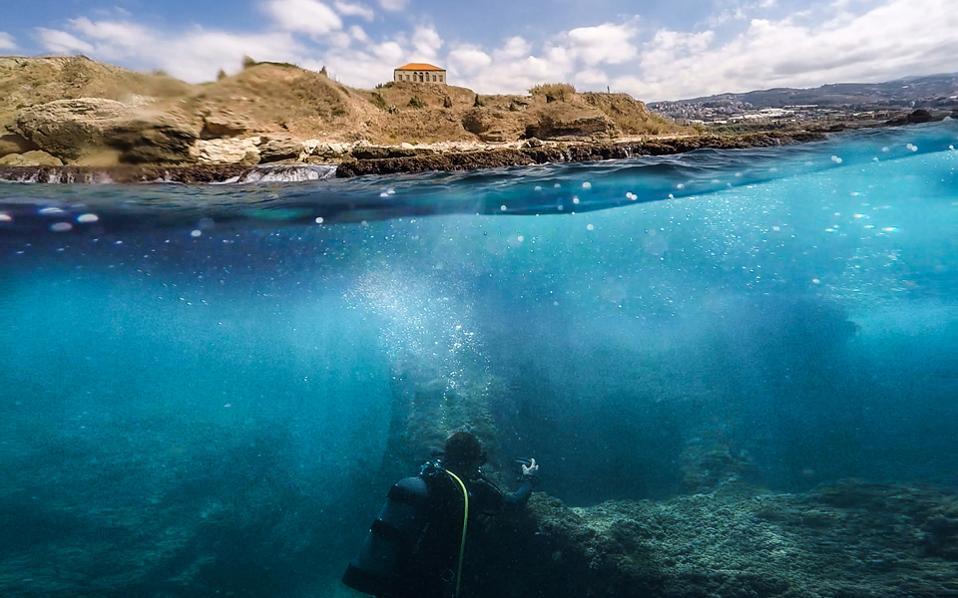
Archaeologists believe that timber exports were shipped from the ancient coastal town of Byblos. Byblos, believed to be one of the oldest continuously inhabited cities in the world, is a UNESCO World Heritage Site.

Speaking to Kathimerini, Lebanese archaeologist Dr Martine Francis-Allouche said that experts had until recently failed to discover signs of a Bronze Age port in the ancient town of Byblos.

“After 17 years of field investigation in Byblos, which began in the 1960s by Honor Frost, a pioneer in the field of marine archaeology in Lebanon, the basin of the ancient port was finally located at the southern foot of the hill that hosted the ancient city,” Francis-Allouche said.

Francis-Allouche and Nicolas Grimal, a French Egyptologist at the College de France, the two scientific supervisors of the “Byblos and the Sea” project, extended their survey to the sea in their effort to trace the ancient port. In doing so, they asked for help from a Greek university.

“From dawn to dusk we are in the sea. We plan the boat routes so as to form a dense canvas of courses to collect as much data as possible,” said George Papatheodorou, professor of environmental and geological oceanography at the University of Patra’s Department of Geology.

Papatheodorou recently returned from the latest mission in Lebanon. Over the winter, scientists will process the data they collected during the survey in order to draw up maps of the ancient port.

The university lab has 30 years of experience in the area of maritime geology and oceanography. It gained international recognition after its research in the sea area of Alexandria in Egypt and the Eastern Mediterranean. The Lebanon mission aims to document the coastal paleogeography of ancient Byblos during its heyday.

“We are very close to locating the ancient Byblos port. We are still not certain about its exact size and location,” said Papatheodorou.

Using the lab’s instruments, the small and flexible team headed by Papatheodorou and alternate professor Maria Geraga (with help from researchers Nikos Georgiou, Dimitris Christodoulou, Xenophon Dimas, Margarita Iatrou and Despina Zoura) will be able to record the seabed as if there was no water and delve beneath the surface to trace submerged formations now covered by sand due to geological or human intervention. By combining traditional archaeology with sciences, the maritime archaeologists will be able to see, as it were, the port of Byblos that reached its peak 6,000 years ago.

“It is a port that has been filled with debris. Part of it is under the land and another part lies under the sea. After its location has been established, archaeologists will launch test digs to unearth the port. We believe that it is buried a few meters beneath the sea floor,” said Papatheodorou.

The next mission of the project, which is subsidized by the Honor Frost Foundation, is scheduled for spring 2017. Then we may get the scientific evidence to determine the position of the ancient harbor from where the cedars of God began their journey to Egypt and elsewhere.


--   Sent from my Linux system.

Sunday, November 20, 2016

A lament in Amarna made by common mourners. - María Rosa Valdesogo


http://www.mariarosavaldesogo.com/lament-in-amarna-made-by-common-mourners/

A lament in Amarna made by common mourners.

Iconography proofs the existence of a mourning practice in Amarna.

Specially relevant is the Royal Tomb, where the funeral of Meketaten, the royal daughter, was depicted.

The death of Meketaten was lamented by the royal family, that is Akhenaten, Nefertiti and the three sisters, Meritaton, Ankhesenpaaton and Neferferuaton-ta-sherit, but also by a group of mourners.

Mourning the Death of Meketaten. Scene in room alfa of Royal Tomb. Photo: Amarna project

These scenes of lament in Amarna were sculpted in rooms alfa and gamma and they merit to be observed in more detail.

Let's watch first at the mourning scene in room alfa.

Here the scene of lament happens in two registers.

On the left side the corpse of Meketaten is laying on a bed (the image remain just in one), while Akhenaten and Nefertiti cry in front of the body. From the drawing probably this "familiar lament" occurs inside a room.

On the right side a group of mourners are depicted in the typical attitude of despair: raising their arms and their faces up, beating their heads, covering their eyes with the hands, and some pretend to fall down while others hold them tight.

Detail of the common mourners in the death of Meketaten. Royal Tomb of Amarna.

Common mourners of Meketaten.

The presence of common mourners in ancient Egyptian funerals is not new. In fact it is usual the scene of lamentation made by common mourners, as  for instance in the mastaba of Mereruka.

Common mourners in Ancient Egypt remembered the chaos and confusion produced by death. And this disorder was depicted in Egyptian art through the dynamism of their bodies.

Common mourners from the mastaba of Mereruka in Saqqara. Photo: Mª Rosa Valdesogo

On the other hand, it is also normal to find them outside the place where the corpse is laying. Because common mourners were a part of the cortege, but they were not involved in the funerary rites in the benefit of the mummy.

So this lament in Amarna has nothing exceptional. Because it is not new in the funerary art and practices of Ancient Egypt.

Therefore, a group of common mourners crying the death of Meketaten proof that the lament in Amarna existed. Their gestures recreated the chaos, disorder and dark of the death itself, a very typical thought of the religious belief in Ancient Egypt.

But, what did the royal family meanwhile do?

In the next post we will write about the scene on the left.


--   Sent from my Linux system. 

ARCE Northern Cal. Dec. 11 Egyptology Talk by Melinda Hartwig: Every Tomb Tells A Story

The lectures now start at 3 p.m., not 2:30 p.m.  A Holiday souk precedes the lecture at 2 p.m.

The Northern California Chapter of the American Research Center in Egypt; the Department of Near Eastern Studies, UC Berkeley; and the Center for Middle Eastern Studies, UC Berkeley, are sponsoring the following lecture:


Every Tomb Tells a Story

By Dr. Melinda Hartwig
The Michael C. Carlos Museum
Emory University

WHEN: 3 p.m. Sunday, December 11, 2016

WHERE: 20 Barrows Hall, Barrow Lane and Bancroft Way, UC Berkeley

There is no admission, but donations are welcomed.


This month a Holiday Souk precedes the lecture at 2 p.m., with sales of Egyptian-themed books and items to benefit ARCE Northern California and the Baer-Keller Egyptology Library of the Department of Near Eastern Studies.

ABOUT THE LECTURE:

The painted decoration in the unfinished tomb chapel of Neferrenpet (TT43) offers a treasure trove of information. In the chapel, several royal kiosk scenes contain unidentified kings with only one identified by cartouche as Amenhotep II. This led scholars to date the tomb to the reign of this king. However, iconographic evidence suggests another date and may reveal an interregnum. The tomb chapel also includes a number of hieratic notes that caption scenes and identify individual figures, one of whom may have decorated the tomb. Using this as a point of departure, this talk will treat the mechanics of Theban tomb painting and discuss the role of scribes in the decorative process.


ABOUT THE SPEAKER:

Dr. Melinda Hartwig is the current President of the American Research Center in Egypt as well as Curator of Ancient Egyptian, Nubian and Near Eastern Art at the Michael C. Carlos Museum at Emory University. Besides curating a number of exhibitions, she has authored four books and a wide array of articles. Dr. Hartwig's recent publication, A Companion to Ancient Egyptian Art (Oxford: Wiley-Blackwell, 2014), received the 2016 PROSE award. She has worked in Egypt since 1983, directing Theban tomb projects, both large and small, as a recipient of NEH and USAID grants, among others. In addition to lecturing around the world, she is a frequent on-air expert for the National Geographic Channel, The Science Channel, The Smithsonian Channel, PBS and the BBC. She is a Professor Emerita of Georgia State University.


----------

Parking is available in U.C. lots after 5 p.m. on weekdays and all day on weekends for a fee. Ticket dispensing machines accept either $5 bills or $1.00 bills, and credit cards. Parking is available in Parking Structure B on Bancroft between Hearst Gym and Kroeber Hall and just across the street from the University Art Museum. Parking is also available under the shops on Bancroft opposite Barrows Hall. There is a parking structure under the Student Union further west on Bancroft.

A map of the campus is available online at
http://www.berkeley.edu/map/3dmap/3dmap.shtml

For more information, go to
http://www.arce-nc.org/lectures.htm
or
https://www.facebook.com/Northern-California-Chapter-American-Research-Center-in-Egypt-115250638513867/

Re: Photo of the temple of Luxor in 1870. (JPEG Image, 748 × 640 pixels)


Someone said that this is probably Karnak, not Luxor. Haven't seen them since 2005, but seven times at that point, and I'm still not sure I'm looking at Karnak, though the absence of any nearby, more modern buildings would argue for that. Anyone care to identify the pylons for me?

Glenn

Glenn Meyer wrote:

https://scontent-iad3-1.xx.fbcdn.net/v/t1.0-9/14980817_791690977638741_8012960595565494484_n.jpg?oh=6414fa78c7b78c959d4444f93ee79048&oe=58CC7338

--   Sent from my monopoly-free Linux system. 


--   Sent from my monopoly-free Linux system. 

Re: Photo of the temple of Luxor in 1870. (JPEG Image, 748 × 640 pixels)


Someone said that this is probably Karnak, not Luxor. Haven't seen them since 2005, but seven times at that point, and I'm still not sure I'm looking at Karnak, though the absence of any nearby, more modern buildings would argue for that. Anyone care to identify the pylons for me?

Glenn

Glenn Meyer wrote:

https://scontent-iad3-1.xx.fbcdn.net/v/t1.0-9/14980817_791690977638741_8012960595565494484_n.jpg?oh=6414fa78c7b78c959d4444f93ee79048&oe=58CC7338

--   Sent from my monopoly-free Linux system. 


Photo of the temple of Luxor in 1870. (JPEG Image, 748 × 640 pixels)


https://scontent-iad3-1.xx.fbcdn.net/v/t1.0-9/14980817_791690977638741_8012960595565494484_n.jpg?oh=6414fa78c7b78c959d4444f93ee79048&oe=58CC7338

--   Sent from my monopoly-free Linux system. 

Saturday, November 19, 2016

Column: Philae: A temple, a bed and a comet – Current in Carmel


http://currentincarmel.com/column-philae-a-temple-a-bed-and-a-comet

Column: Philae: A temple, a bed and a comet

Trajan's Bed on Agilkia Island, Egypt. (Photo by Don Knebel)

Commentary by Don Knebel

An important Egyptian temple complex survives because of an extraordinary journey. It is remembered by another extraordinary journey to a comet.

When Alexander the Great conquered Egypt in 332 B.C., he was proclaimed pharaoh and considered himself a god.  After Alexander's death in Babylon in 323 B.C., his general continued the idea, becoming Pharaoh Ptolemy I.  His son, Ptolemy II, built a temple to the Egyptian Goddess Isis on Philae Island in the Nile River near Aswan. The temple, mimicking much older temples, showed Ptolemy II among the Egyptian gods.  Later Ptolemaic pharaohs added their own touches to the temple. When Cleopatra, the last Ptolemaic pharaoh, died in 30 B.C., Romans took control of Egypt, and their emperors began acting like pharaohs. In about 100 A.D., Emperor Trajan added to the Philae Temple an aesthetically pleasing 14-column pavilion that served as a river entrance to the temple and a place for storing the boat on which Isis traveled on the Nile. The walls of what is often called "Trajan's bed" were decorated with images of Trajan offering incense to Isis and Egyptian gods.

The first Aswan dam partially submerged the Philae temple and Trajan's bed.  With the building of the Aswan High Dam, the Philae structures were threatened with total submersion.  Engineers working for nine years with UNESCO removed the temple complex from Philae, block by block, and reassembled the buildings on higher Agilkia Island, modified to resemble Philae Island. Today, the temple to Isis and Trajan's bed are among the most intact of all ancient Egyptian temples. In 2004, the European Space Agency launched the Rosetta spacecraft toward comet 67P/Churyumov–Gerasimenko.The lander was named Philae in honor of the temple. The name of the 2014 landing spot, determined by public vote, was Agilkia, the destination of the Philae Temple and Trajan's bed.


--   Sent from my Linux system.

What's behind uptick of attacks in Cairo?


http://www.al-monitor.com/pulse/originals/2016/11/egypt-terrorist-attacks-cairo-groups-sinai-meaning.html

EGYPT PULSE


A masked member of the security forces is pictured as Tahrir Square is secured in Cairo, Nov. 11, 2016.  (photo by REUTERS/Mohamed Abd El Ghany)

What's behind uptick of attacks in Cairo?

CAIRO — While Egypt’s northern Sinai region has been associated with terrorism in recent years, there are concerns the violence could be spreading to Cairo. The Cairo governorate — which includes Egypt’s capital and its suburbs, and is highly populated — has witnessed five terrorist attacks in the span of less than three months, from Aug. 6 until Nov. 4.

SummaryPrint A spate of terror attacks in Egypt could have to do with boosting the morale of Muslim Brotherhood supporters in addition to the upcoming verdicts and sentencing involving former President Mohammed Morsi and other Brotherhood figures.
Author

The so-called Hasm movement claimed responsibility Aug. 6 for the failed assassination attempt on former Grand Mufti Ali Gomaa. On Sept. 30, the movement also claimed another failed assassination attempt on Assistant Attorney General Zakaria Abdul Aziz, who was targeted with an improvised explosive device (IED).

In the third such incident, Brig. Gen. Adel Ragaie was gunned down in front of his house Oct. 22 in a Cairo suburb in an attack claimed by a group called Lewaa al-Thawra (Revolution Brigade).

On Oct. 28, there was a terrorist attack against a security patrol on the Suez bridge street. On Nov. 4, Judge Ahmad Abu al-Fotouh, one of the judges in the trials against ousted President Mohammed Morsi, survived an assassination attempt with IEDs.

These operations are similar to the ones carried out in 2013, 2014 and 2015. In December 2013, an explosion occurred at the Dakahlia Security Directorate; another took place in January 2014 in the Security Directorate of Cairo. This is not to mention the June 2015 assassination of Attorney General Hisham Barakat, who was killed in a bombing of his motorcade.

These operations were linked to a dangerous organization known as Ansar Bayt al-Maqdis, later to be called Wilayat Sinai after it pledged allegiance to the Islamic State (IS).

However, the recent attacks have been associated with newly emerged movements and organizations, such as the Hasm movement and Lewaa al-Thawra, which have less experience and savvy than Wilayat Sinai.

Retired Maj. Gen. Khaled Moutaweh told Al-Monitor that there are some indications suggesting a lack of experience within these groups. For instance, in the assassination attempt against Gomaa, a large number of bullets were fired and yet the target was missed. Moutaweh also underlined a lack of capabilities, as bullets were used instead of explosive materials, which he said has been Wilayat Sinai's signature attack and the most effective attack in general.

Meanwhile, retired Maj. Gen. Mohammed Nur al-Din, a former assistant to the interior minister and a security expert, told Al-Monitor that the Hasm movement and Lewaa al-Thawra are likely affiliated with the Muslim Brotherhood, as evidenced by the latter's announcing that the assassination of Ragaie was to avenge the Oct. 3 killing of Muslim Brotherhood leader Mohammed Kamal. Kamal was a member of the movement’s guidance office, in charge of the major cells in the Brotherhood.

It is worth mentioning that the emergence of Lewaa al-Thawra and the high-tempo operations of the Hasm movement happened in tandem with the resumption of fierce attacks by Wilayat Sinai, most notably one on a security checkpoint in northern Sinai on Oct. 14. The attack killed 12 soldiers in the armed forces. Sinai also witnessed other major attacks, which caused the death of prominent leaders in the armed forces, including Col. Rami Hassanein, the commander of Brigade 102, and Brig. Gen. Hicham Mahmoud Abu al-Azm.

Nur al-Din said, “One ought to pay attention to the announcement of Mohammed al-Baltagy, a leader in the Brotherhood, during the Rabia al-Adawiya protest, as he said that the terrorist attacks will continue until the return of Morsi to power. The Muslim Brotherhood is carrying out operations under the names of different groups because it wants to create political distance so it can move about easily in Turkey and Europe and deal with political systems without being questioned about its associations with terrorist activities."

Nur al-Din believes there are three reasons behind the new attacks. “This is an attempt to boost the morale of terrorist organizations and members of the Brotherhood. It is also a bid to intimidate judges before pronouncing final judgments on Morsi and Brotherhood leaders, as judgments have already started to be issued. Finally, these attacks aim at disrupting the economic reform process in Egypt,” he said.

Retired Maj. Gen. Hisham al-Halabi, a consultant in the Nasser Military Academy and member of the Egyptian Council of Foreign Affairs, told Al-Monitor, “With the resumption of heavy attacks, terrorist groups are trying to establish themselves in the Egyptian arena.”

He said one reason for the intensification of such operations is their relative ease compared with attacks against military targets or sites, saying, “There is no 100% [protection] guarantee anywhere in the world. For example, American security could not protect President John F. Kennedy from assassination, despite the substantial capacities of US security services compared with Egyptian security services. Moreover, security services in France, the United States and Turkey were unable to repel the frequent terrorist attacks launched recently. Therefore, terrorist organizations benefit from the security services’ inability to secure all streets and provide protection to all prominent figures to carry out their operations.”

Halabi said that as a result of the attacks, “Citizens are becoming more supportive of the security services and armed forces, despite the terrorist organizations’ attempts to break the trust between the citizen and the state. Moreover, these operations are further boosting the armed forces, police and intelligence services’ determination to avenge their colleagues and eradicate terrorism.”

He said the details of the terrorist operations show the declining capabilities of terrorist organizations. He said the use by these organizations of bullets and lighter explosive devices in several operations show that the organizations' capabilities are declining and that the security and armed forces have drained the financing sources of terror groups and curbed their flow of weapons and ammunition.

The operation against the Security Directorate of Dakahlia used a booby-trapped car fitted with 1.5 tons of explosives, and the Cairo Security Directorate and the Barakat motorcade were targeted by half a ton of explosives each.

On the other hand, the quantities of explosives used by the terrorist groups in the recent operations have dropped significantly. A 3-kilo (6.6-pound) explosive device was used in the assassination attempt on the assistant attorney general and only 5 kilos of explosives were used in the assassination attempt of the judge ruling on the Morsi case.


--   Sent from my Linux system.