Resending to correct the date for the November lecture. My apologies for the extra email.
American Research Center in Egypt (ARCE)
Northern California Chapter
Upcoming 2023 Lectures
The following are among the lectures to be presented in the coming months by ARCE's Northern California Chapter and by the UC Berkeley Department of Middle Eastern Languages and Cultures. Unless otherwise indicated, lectures will be at 3 pm Sunday, in person, at venues to be determined.
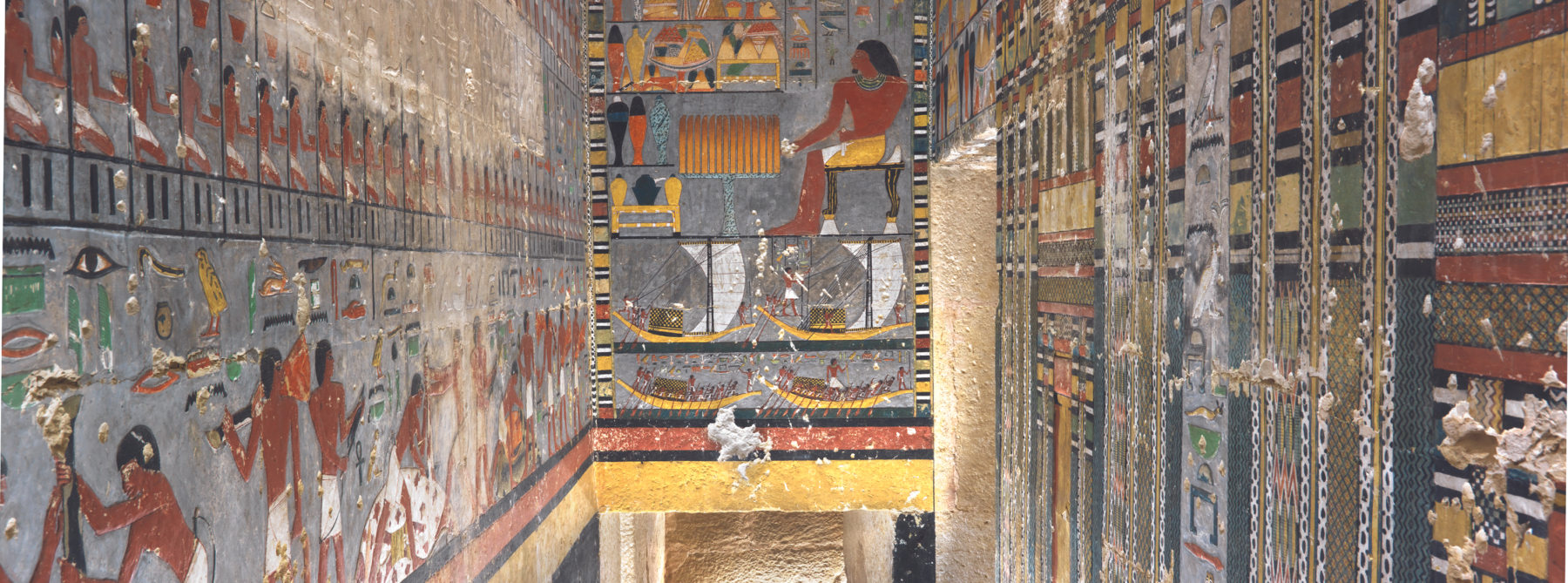
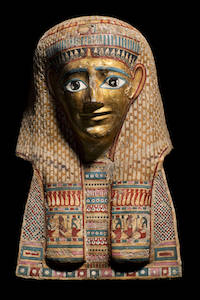
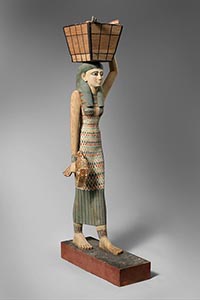
Preparing for Eternity: Funerary Models & Wall Scenes from the Old and Middle Kingdoms September 10, 2023 Dr. Georgia Barker, Macquarie University/CSU San Bernardino Room 20 Social Sciences Building, UC Berkeley.
The Upper Egyptian Temple of Edfu: Its Architecture as an Image of the World 1:30 PM Zoom Lecture October 15, 2023 Dr. Dieter Kurth, Prof-Dr. Emeritus, Hamburg University Zoom lecture co-sponsored by ARCE/Orange County. To register, please click on this link and follow the directions.
Topic: TBD November 5, 2023 (tentative) Jason Silvestri, UC Berkeley
Topic: TBD December 10, 2023 Dr. Jennifer Babcock, SUNY
---------------------------------
Parking is available in UC lots all day on weekends, for a fee. Ticket dispensing machines accept debit or credit cards. Parking is available in lots around the Social Sciences Building, and in lots along Bancroft. A map of the campus is available online at http://www.berkeley.edu/map/
The following are among the lectures to be presented in the coming months by ARCE's Northern California Chapter and by the UC Berkeley Department of Middle Eastern Languages and Cultures. Unless otherwise indicated, lectures will be at 3 pm Sunday, in person, at venues to be determined.
Preparing for Eternity: Funerary Models & Wall Scenes from the Old and Middle Kingdoms September 10, 2023 Dr. Georgia Barker, Macquarie University/CSU San Bernardino Room 20 Social Sciences Building, UC Berkeley.
The Upper Egyptian Temple of Edfu: Its Architecture as an Image of the World 1:30 PM Zoom Lecture October 15, 2023 Dr. Dieter Kurth, Prof-Dr. Emeritus, Hamburg University Zoom lecture co-sponsored by ARCE/Orange County. To register, please click on this link and follow the directions.
Topic: TBD November 12, 2023 Jason Silvestri, UC Berkeley
Topic: TBD December 10, 2023 Dr. Jennifer Babcock, SUNY
---------------------------------
Parking is available in UC lots all day on weekends, for a fee. Ticket dispensing machines accept debit or credit cards. Parking is available in lots around the Social Sciences Building, and in lots along Bancroft. A map of the campus is available online at http://www.berkeley.edu/map/
Will Egypt back off from the demolition of Cairo's historic Islamic cemeteries?
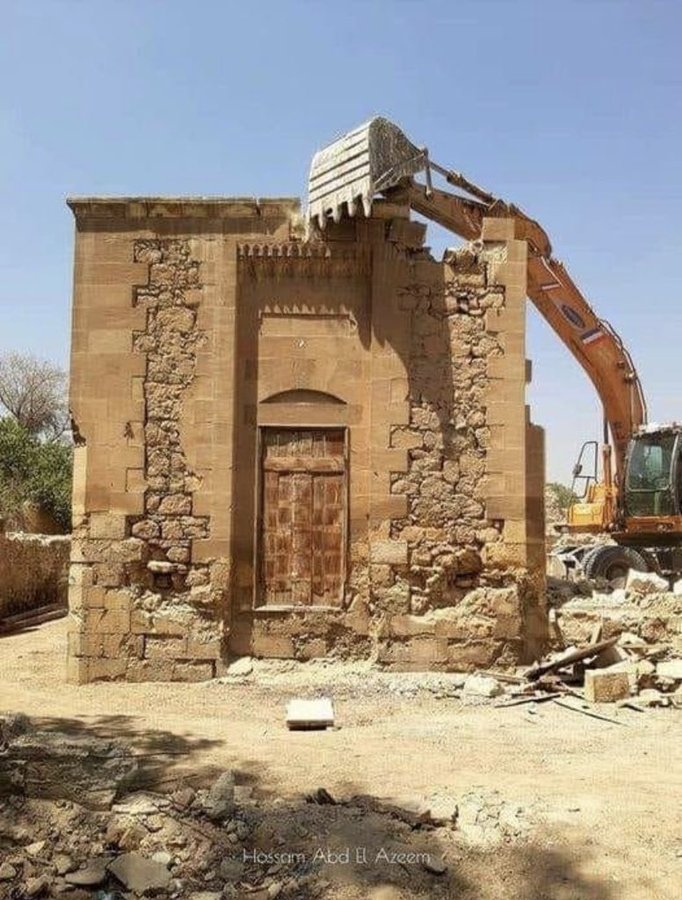
Egypt's government has been demolishing ancient tombs for three years as part of a controversial project that tore apart a renowned cemetery in Cairo, even as researchers and activists fight to stop the destruction.
CAIRO — For the past 10 years, Egyptian researcher Mostafa el-Sadek has been visiting the Islamic cemetery complex City of the Dead in Cairo, always discovering something new about Egyptian heritage from tombs that date back to the arrival of Islam in the seventh century and up to the early 20th century.
But everything has changed since 2020. That's when the Egyptian government began demolishing hundreds of these historic graves to widen highways to the new administrative capital 50 kilometers east of Cairo.
Sadek's visits have also changed. He joined volunteers fighting to save the historic area. They work in parallel with the diggers and bulldozers to rescue artifacts amid the rubble of tombs in the Imam al-Shafi'i and Sayyida Nafisa complexes.
"We feel incapable and frustrated. The government that should protect this heritage destroyed it with its bulldozers," Sadek told Al-Monitor.
First wave in 2020
The City of the Dead, which was first built with the inception of the Islamic capital in 642, covers six areas in the historic northern and southern Cairo, according to the Urban Regeneration Project for Historic Cairo report in 2010-2012.
In July 2020, the first wave of demolition targeted al-Qarafa al-Kobra in historic northern Cairo to link the area with the new administrative capital. Many tombs were demolished that housed famous figures from the 20th century, such as the first president of Cairo University, Ahmed Lutfi El-Sayed; writers Ihsan Abdel Quddous and Mohamed El-Tabii; engineer Abbud Pasha; and Princess Nazli Hanim Halim, Sadek said.
The government said in a statement that these tombs were not registered as Islamic or Coptic monuments and were modern graves.
Sadek, who is also an obstetrician at Cairo University, argued, "Yes, it is not registered. But some of these tombs are full of history, architecture and art."
A few months later, the government embarked on the second wave, which involved al-Qarafa al-Sughra (also called the Qarafa of Imam al-Shafi'i). The plan was to raze 2,760 tombs as part of the Salah Salem Road, to link the mosques and mausoleums that belong to the family of Prophet Muhammad in Islamic Cairo.
On Aug. 8, Egyptian President Abdel Fattah al-Sisi inaugurated Sayyida Nafisa Mosque as part of the renovation of the Ahl al-Bayt shrines. Speaking at the inauguration, Sisi spoke of "the state's plan to revamp Historic Cairo."
But Sisi's plan has stirred public outcry and criticism from heritage researchers, archaeologists and architects. Distinguished architect Tarek el-Murri filed a lawsuit to stop the demolition of cemeteries, with the court set to decide the case on Sept. 21.
"The removal and demolition operations are a disdain to a part of Egypt's history and represent a danger to a significant area back to the seventh century A.D.," Murri told Al-Monitor.
In contrast, Sisi ordered that a committee be formed to "assess the situation and consider available alternatives" for the relocation of the Sayyida Nafissa and Imam Shafi'i cemeteries, even as the government implements its development plan in the two areas. He also directed that a cemetery be established to bury remnants of the great figures of Egypt. The cemetery would also include a museum for artifacts found in the current cemeteries.
"We had felt optimistic after the president's order, especially since the committee recommended to stop the demolition and [that there was] no need to build new roads in that heritage area," Sadek said.
Twitter Post Translated from Arabic by Google, with slight editing:
The Association of Egyptian Architects called for the cemeteries of historic Cairo to be saved from demolition, according to a statement it published last Monday, signed by members of professional syndicates and scientific societies. The statement pointed out that the cemeteries are registered within Historic Cairo, which in turn is included in the World Heritage List, which is protected by international conventions.
·
10.4K
Views
Prominent tombs destroyed
A week after Sisi inaugurated the Sayyida Nafisa Mosque on Aug. 18, as part of the second wave bulldozers were at the Qarafa of Imam al-Shafi'i to demolish the aforementioned 2,760 tombs, including those of prominent Egyptians in the fields of culture, politics, religion and art, as well as members of the royal family.
"I had never been shocked like this time. The demolition was more violent and indiscriminate," Sadek said. "Even workers on bulldozers in the site felt sorry about that." He said workers helped rescue the artifacts from the tomb of Prince Ibrahim-Hilmy, son of Ismail, the Khedive of Egypt (1860-1927).
"The situation is so catastrophic," said Hossam Abdel-Azeem, founder of Egypt's Shawahid Misr initiative, which is tasked with preserving Egypt's lostheritage. Since December 2021, the initiative has rescued 25 artifacts and antiquities from the tombs, including tombstones dating from the Abbasid caliphate in the ninth century.
"All these landmarks are not registered under antiquities laws," Abdel-Azeem told Al-Monitor. But "the funeral monuments are a major factor in Egypt's history from ancient Egyptians to Islamic ages and modern history."
On Aug. 29, the Cairo governorate rejected reports that the tombs of poet Ahmed Shawqi and of Imam Warsh had been destroyed.
However, Sadek said that he did find debris close to poet Shawqi's tomb, and six graves of his family were destroyed.
Parliament member Maha Abdel Nasser sent several questions to Prime Minister Mustafa Madbouly on the development plans in 2020, but she hasn't received any answers. She told Al-Monitor that five members pulled out of the Sisi's presidential committee of experts over the government's determination to demolish the graves.
"It is not clear what's behind the project and the government's determination to demolish the graves," she said. Murri said that the government's plan will replace these cemeteries with skyscrapers and green areas by 2030.
In a rare objection, Ayman Wanas, a government official who headed the Committee for the Survey of Buildings and Facilities of Distinguished Architectural Style, resigned on Thursday to protest the destruction of Cairo's historic tombs.
Wanas posted his handwritten resignation on Facebook: "The ongoing demolition of the heritage cemeteries is not only a loss of the historical cemetery buildings but a loss of a historical urban fabric of unique value in the world and an important part of the world heritage." Yet Wanas retracted his resignation the next day, saying, "My resignation has been used to criticize the government ... and I am sure that the development plan will be corrected."
World heritage site
Historic Cairo has been considered a world heritage site by UNESCO since 1979. "We sent letters to the organization, but it hasn't replied yet," Sadek said.
In 2021, UNESCO said that "no information on this project was sent beforehand to the World Heritage Center for evaluation. ... The World Heritage Center sent a letter in July 2020 to the Egyptian authorities requesting confirmation of this information and the provision of any relevant information, but neither of these has yet been provided," UNESCO said.
The organization added, "While these demolished tombs and mausolea may not have been protected/registered monuments, they are nevertheless important parts of the historic urban fabric, and the roads could channel yet more traffic into the property."
"Even UNESCO can't halt this mess," Murri said. Murri and Sadek still have a glimmer of hope that popular support might push the government to back off through talks, petitions, exhibitions and social media.
Work begins on bridge between Giza pyramids and Grand Egyptian Museum
The 2km walkway will connect the ancient landmarks with the new institution
Construction is under way on the bridge between the Grand Egyptian Museum and the Giza pyramid complex. All photos: Reuters (unless otherwise mentioned)
Construction is under way for a walkway connecting the Giza pyramid complex with the Grand Egyptian Museum.
The bridge – 2km long and 500 metres wide – will allow visitors to move easily between the newly built institution and the ancient landmarks.
The construction is part of a massive urban redevelopment surrounding the vast museum, which is expected to open gradually to the public between October and February. An opening date for the bridge is yet to be announced.
The museum spans 50 hectares and will be home to the world's largest archaeological collection. It will have a comprehensive set of artefacts of ancient Egyptian antiquities, with pieces dating back thousands of years.
Limited areas of the Gem are already open to visitors. Photo: Grand Egyptian Museum
It has been two decades since the multimillion-dollar project was announced, with the opening date originally set for 2013.
The museum will also have a dedicated children's section, galleries and exhibition spaces, a library, an education centre and a state-of-the-art conservation centre.
The outdoors will be dominated by a trio of gardens, named Sculpture, Palm and Terrace.
The Pyramid Complex of King Djedkare and its Surrounding
Era: 5th and 6th Dynasty
Project Director: Dr. Mohamed Megahed
Location: Saqqara
Affiliation: Czech Institute of Egyptology, Faculty of Arts, Charles University
Project Sponsor: Antiquities Endowment Fund
Project dates: 2021 - 2022
Written by: Dr. Mohamed Megahed
The era of the pyramid builders still hides many secrets that have not yet been resolved. Most of the sites of the ancient Egyptian pyramids, concentrated in the Memphite region, have been excavated since the beginning of the 20th century – first unprofessionally and later scientifically. Nevertheless, further studies are still needed to clarify many vague aspects.
One of mysterious periods was the reign of King Djedkare Isesi at the end of the 5th Dynasty of the Old Kingdom. Djedkare came to the throne after a short reign of King Menkauhor, and one of his most important and yet unexplained decisions was to construct his pyramid complex at a completely new area. He selected the site of south Saqqara, which had no earlier pyramids or infrastructure for building the king's funerary complex. It seems possible that Djedkare decided to choose this site for his pyramid because of its location: it is situated less than 3 kilometers to the immediate west of the temple of Ptah in Memphis (Mit Rahina), the capital city of ancient Egypt at that time.
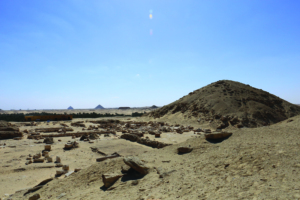
Fig. 1. General view of the pyramid and the funerary temple of Djedkare. Photo: H. Vymazalová
Supported twice by ARCE's Antiquities Endowment Fund, the Djedkare Project (DJP) mission of the Charles University working at this south Saqqara site was able to find new evidence of Djedkare's family and officials. In 2018, the mission discovered a large burial ground above the south part of the funerary temple of Djedkare's queen, and inscriptions with her name, Setibhor, were found here revealing that she was the king's wife.
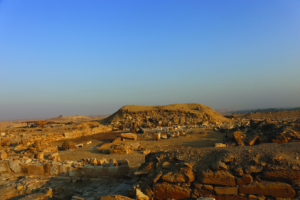
Fig 2. General view of the south side of the pyramid and the funerary temple of Queen Setibhor. Photo: H. Vymazalová
In 2021 the DJP team entered the burial chamber in Setibhor's pyramid for the first time to conduct excavation and documentation followed by conservation and proper protection of her monument. The work of the DJP mission proved Setibhor's pyramid to be a key queenly monument, which set a trend followed by later Old Kingdom queens.
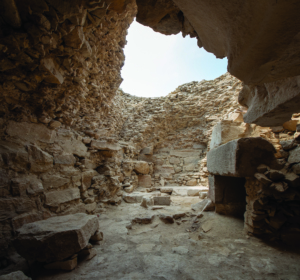
The monument of Queen Setibhor was briefly explored by Ahmed Fakhry in 1952, who showed that her pyramid was the largest of all Old Kingdom queens, and the temple on the east side contained some royal features. Fakhry also started to explore the inner rooms of the queen's pyramid but he only reached the entrance of the burial chamber and then stopped the work. The DJP mission in 2021 focused on clearing the entrance to the burial chamber again and continued to uncover the substructure of the pyramid and document its layout. It soon became apparent that the inner rooms of Setibhor's pyramid suffered bad damage by ancient stone robbers; the side walls, floor, and ceiling of the rooms, once made of fine white limestone blocks, are almost completely missing today.
Fig. 3. The substructure of Setibhor after reaching the floor level. Photo: P. Košárek
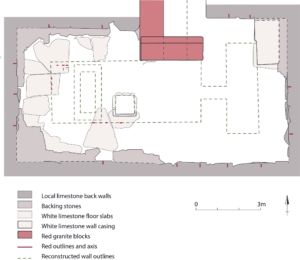
Despite the absence of the original walls, however, the DJP team found indications in the form of red lines drawn by the builders on the core masonry and on the few remaining parts of the floor. With the help of these lines, the DJP team reconstructed the original layout of the interior of the pyramid. It was divided into two spaces: the western side was occupied by the large burial chamber of the queen, while the eastern side contained a smaller room known as the serdab.
The queen's burial chamber had an entrance at the eastern end of its northern wall, and it was 7.12m long, 2.80m wide, and the height of the walls reached 3.10m. Although the sarcophagus is missing today, its position is indicated by unsmoothed areas on the few preserved floor slabs. A partly preserved canopic pit was situated by the southeast corner of the sarcophagus. The east wall of the burial chamber, today completely missing, used to give access to the east room that represented the serdab. The same layout of inner rooms can be found in pyramid of Sixth Dynasty queens.
Fig. 4. Plan of the substructure of Setibhor. Drawing: H. Vymazalová
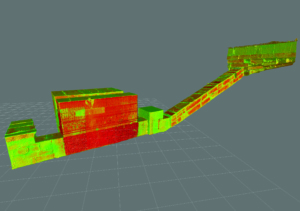
The DJP team cleaned and documented the current state of the inner rooms of Setibhor's pyramid using traditional archaeological methods as well as 3D scanning. The following consolidation and reconstruction works focused on the entire substructure of the pyramid. Starting from the descending corridor and continuing until the burial chamber and the serdab, the preserved masonry was consolidated, and the missing side walls were rebuilt to support a strong modern ceiling protecting the inner rooms.
Fig. 5. 3D model of the north-south section of the pyramid of Setibhor. Photo: V. Brůna
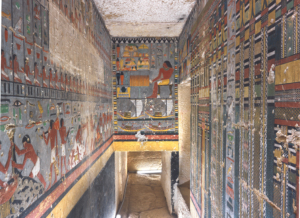
Another important part of the Antiquities Endowment Fund project was the continuation of the work in the tomb Khuwy. The DJP team completed the reconstruction of the eastern façade of the mastaba and installed a modern door to protect the chapel and offering chamber with remains of its decoration.
Fig. 6. General view of the antechamber of the substructure of Khuwy. Photo: S. Vannini
The area south of the tomb of Khuwy was also explored, and the mastaba's south wall was fully cleaned. Less than a meter from this wall, another tomb was found, which was constructed for the king's oldest son, Isesiankh. Even though it was badly devastated in the antiquity, its architecture still reflects the importance of its owner. The superstructure of the tomb was entered by a monumental portico, situated in the north part of the eastern façade, and leading to several rooms. One of the most significant architectural features of the tomb was a large pillared hall that once included 10 pillars made of white limestone. The tomb also contained six storerooms distributed in the superstructure of the tomb.
Fig. 7. 3D model of the tomb of Khuwy. Photo: V. Brůna
Like in the tomb of Khuwy, the substructure of Isesiankh's tomb was reached through a descending corridor, which starts in the north-east corner of the pillared hall. The corridor lead to a vestibule and a large burial chamber with a huge white limestone sarcophagus placed in a western recess. A large storeroom was situated to the south of the burial chamber, with its walls and ceiling blocks still preserved. No decoration was found in Isesiankh's burial chamber.
Fig. 8. View from the south of the tomb of Isesiankh MSE3. Photo: P. Košárek
The two tombs of Khuwy and Isesiankh prove the importance of Djedkare's royal cemetery and its exploration. They provided us with a large amount of new information concerning the transformation of funerary beliefs during Djedkare's reign and the transitional period between the Fifth and Sixth Dynasties
Connect with ARCE
US Office 909 North Washington St Suite 320 Alexandria VA 22314 United States tel: 703-721-3479 email: info@arce.org
The belief in life after death is one of the most defining aspects of Egyptian culture, which has fascinated the outside world for millennia. The sources affording us a glimpse into notions of the otherworld are many and range in date from the early Pharaonic (~3000 BCE) to the Graeco-Roman period (332 BCE – 395 CE). Although there was no single conceptualization of death and the next life, one core notion always formed the basis of all afterlife beliefs: death was merely a temporary condition, a transition towards a new status known as akh (lit. "effective being"), which the deceased hoped to gain after overcoming a series of obstacles lying on their path to rebirth. For the ancient Egyptians, achieving immortality was of paramount importance: the alternative was a second, ultimate death, which would wipe out one's existence in the beyond as well as any memory of them in the society of the living.
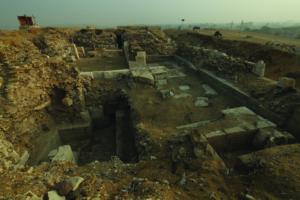
Figure 1. West side of the burial chamber of the pyramid of Wenis, Saqqara, 5th Dynasty. Wikimedia Commons.
Among the most important sources to reconstruct Egyptian beliefs about the afterlife are the funerary texts. Originally an exclusive prerogative of royalty, their use later extended to the elite of the population. Funerary texts were inscribed onto tomb walls or on items of the burial assemblage that were deposited in tombs with the deceased, such as coffins and papyri. Their goal was to ensure that the deceased would travel safely towards and through the next world and that they would be rejuvenated and reborn for all eternity. Ever since the earliest funerary texts (Pyramid Texts) appeared inside the pyramids of kings and queens of the late Old Kingdom (2375–2160 BCE), the deceased were associated with the cycle of the celestial bodies (Figure 1). Among the stars, the sun provided the perfect template of daily "death" (sunset) and "rebirth" (dawn), which everyone aspired to emulate. This is the reason why the West was identified with the place where the deceased continued living after death — albeit in another spatial and temporal dimension — called Duat. Despite identifying the Duat as the otherworld and thus a core notion of the afterlife beliefs, pinning down its features and location is no easy feat. It is described variously across sources and often endowed with contradictory features within the same text, depending on the contexts and functions it has. Moreover, new concepts were introduced over time, adding layer upon layer of complexity to this multifaceted notion.
Ever since the Pyramid Texts, different traditions of the otherworld existed side by side. One was modeled after the sun god Re and his cyclical path in the sky: upon death, the deceased would ascend to the sky, where they would live forever in the company of the gods and celestial bodies. In this (royal) version of the afterlife, the Duat was therefore located in a celestial domain.
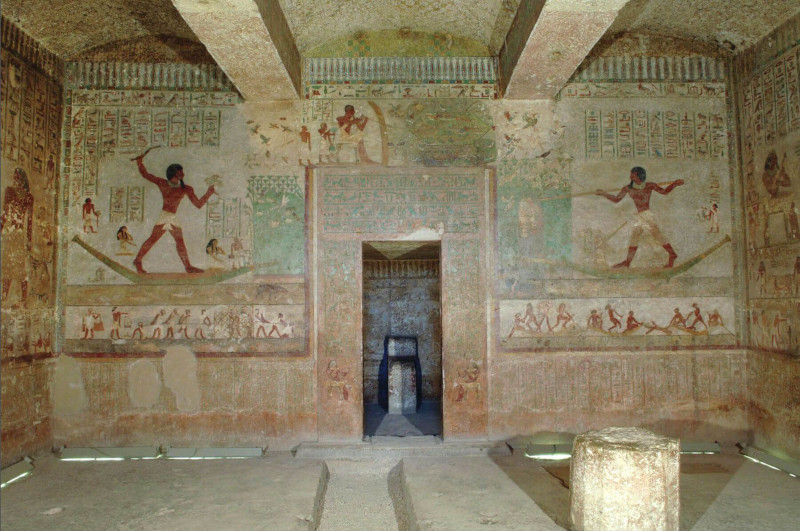
Another (non-royal) tradition entailed resurrection through burial and a new life lived in close proximity to the tomb, within which texts and illustrations re-enacted the earthly world of the deceased. The tomb was conceived as a dwelling for eternity and an interface between worlds, where the living and the dead could (metaphysically) come together on certain occasions and temporarily be reunited (Figure 2).
Figure 2. Detail of the east wall of the tomb chapel of governor Khnumhotep II at Beni Hasan, 12th Dynasty. Photo courtesy of digitalEPIGRAPHY.
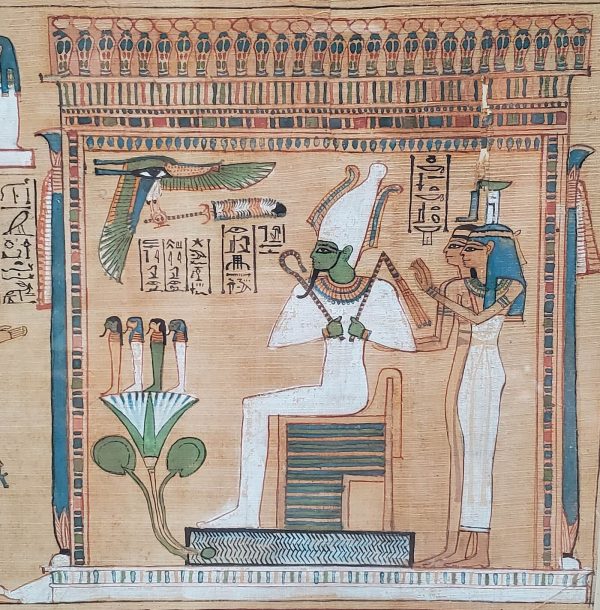
One more tradition of the beyond revolved around the chthonic god Osiris, the prototype of a (divine and royal) individual who died and was brought back to life (in the Duat), and with whom every deceased wished to be identified. This version of otherworld is located in the bowels of the earth (Figure 3).
Figure 3. Detail of Chapter 125 of the 19th Dynasty Book of the Dead of Hunefer (British Museum EA 9901,3) showing the mummiform Osiris enthroned under a kiosk. Photo by the Author.
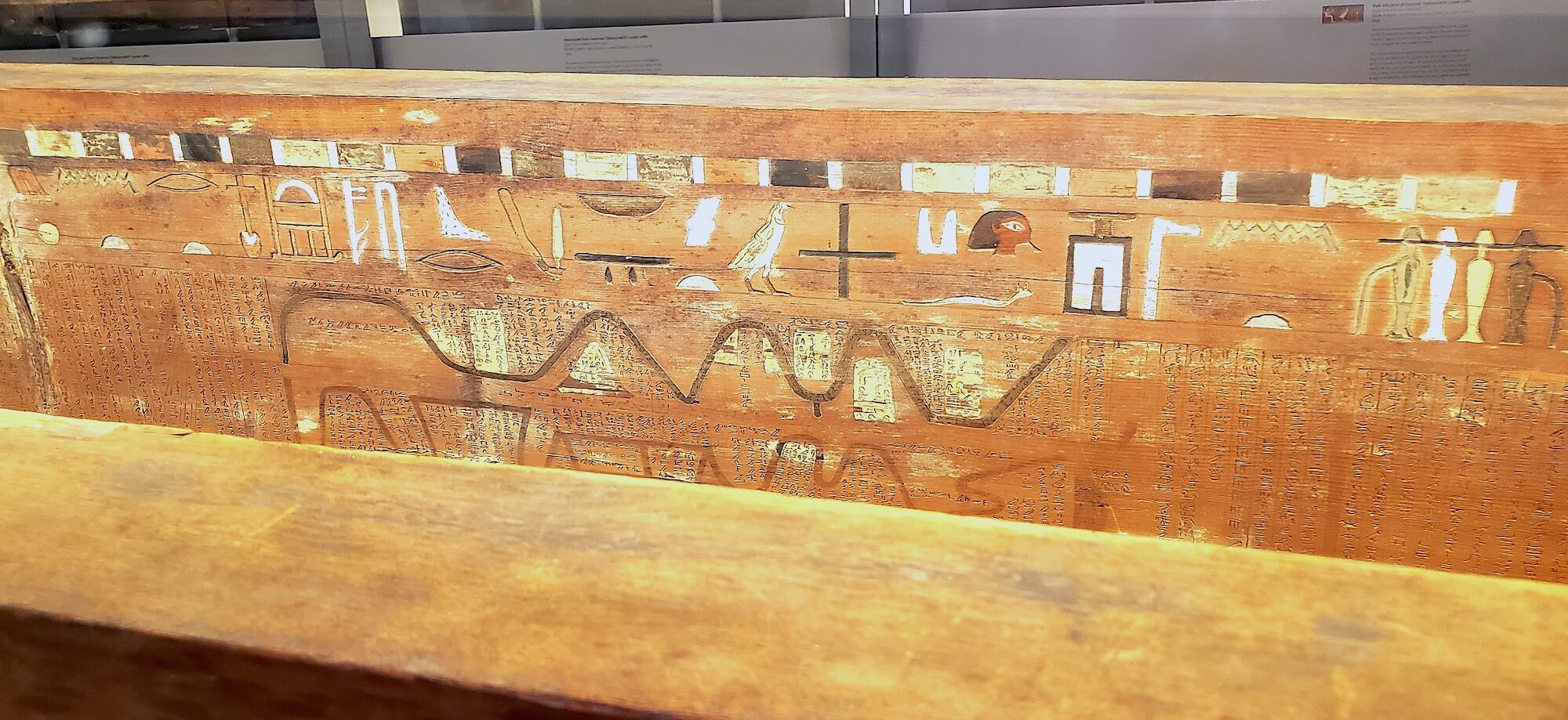
In funerary texts, the Duat exists simultaneously on different cosmic planes encompassed by the diurnal and nocturnal paths of the sun (east to west and backwards) and of the stars (to the north and south of the celestial sphere). Starting with the non-royal Coffin Texts, dating mostly to the Middle Kingdom (~2055–1650 BCE), the Duat evolves into a better-defined locale within the cosmos, distinct from both earth and sky, and yet at times overlapping with (portions of) both (Figure 4).
Figure 4. Detail of back panel (interior view) of governor Djehutynakht's inner coffin (MFA 21.962a) from Deir el-Bersheh Tomb 10A, early 12th Dynasty. Photo by the Author.
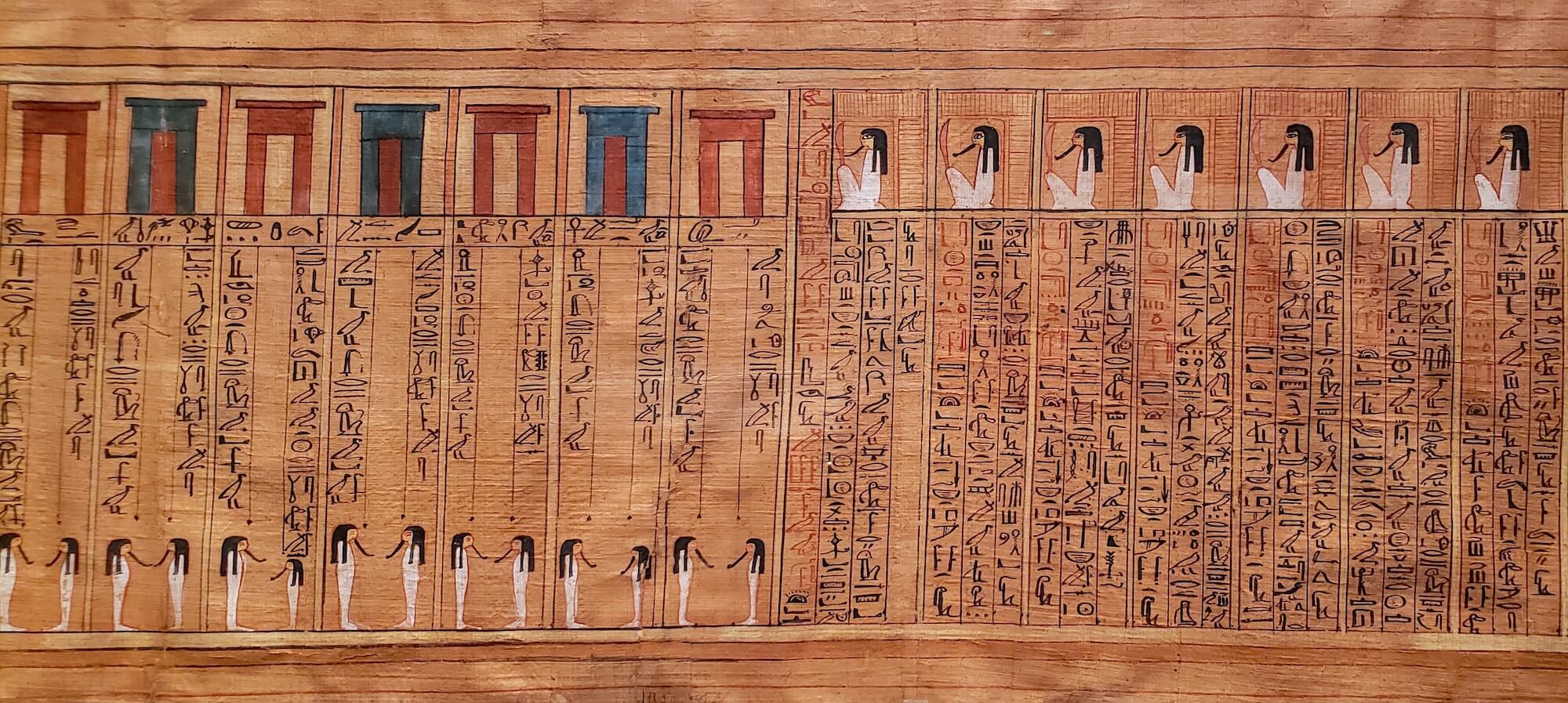
The deceased needed to possess information on the otherworld, such as the names of its denizens, guardians, and various features (e.g., doors), if they wished to live there successfully. Collections of spells such as the Coffin Texts and the Book of the Dead provided said knowledge, also in the form of illustrations (Figure 5).
Figure 5. Book of the Dead of Kha (Museo Egizio, Turin S. 8316/03 = S.8438) from TT8 at Deir el-Medina, 18th Dynasty. Photo by the Author.
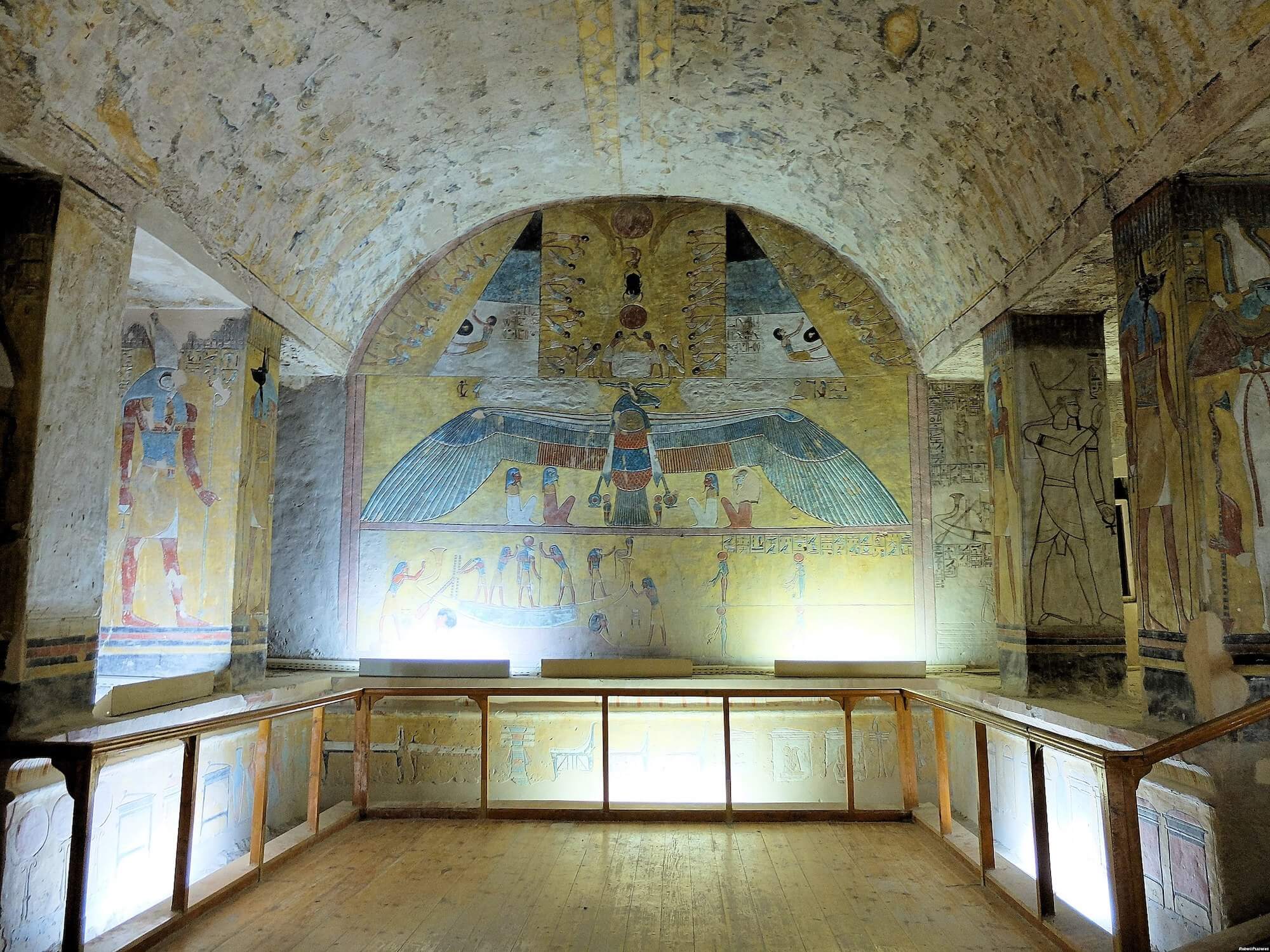
In the New Kingdom (1550-1069 BC), cosmographic texts illustrating the journey of the sun through the Duat and the visible sky were inscribed in the royal tombs in the Valley of the Kings: these are the Netherworld Books and the Books of the Sky. The former focus on the temporary nocturnal union of the solar god Re with Osiris in the Duat, whereby both gods are rejuvenated, and the sun can continue his journey towards rebirth on the eastern horizon in the morning (Figure 6).
Figure 6. Scenes of rebirth of the sun (as scarab) in the eastern horizon from a scene of the Book of the Earth in the burial chamber of the tomb of Tawosret and Sethnakht (KV 14). Valley of the Kings (Luxor), late 19th–early 20th Dynasty. Photo by the Author.
In these compositions, the Duat is located primarily in the depths of the earth, where a place of punishment of the solar-Osirian enemies may also appear. It is no coincidence that the royal burials, where these texts appear, are dug deep into the cliffs of the Theban west bank: architecture, texts, and illustrations aimed to transform the tomb into a monumental materialization of the Duat.
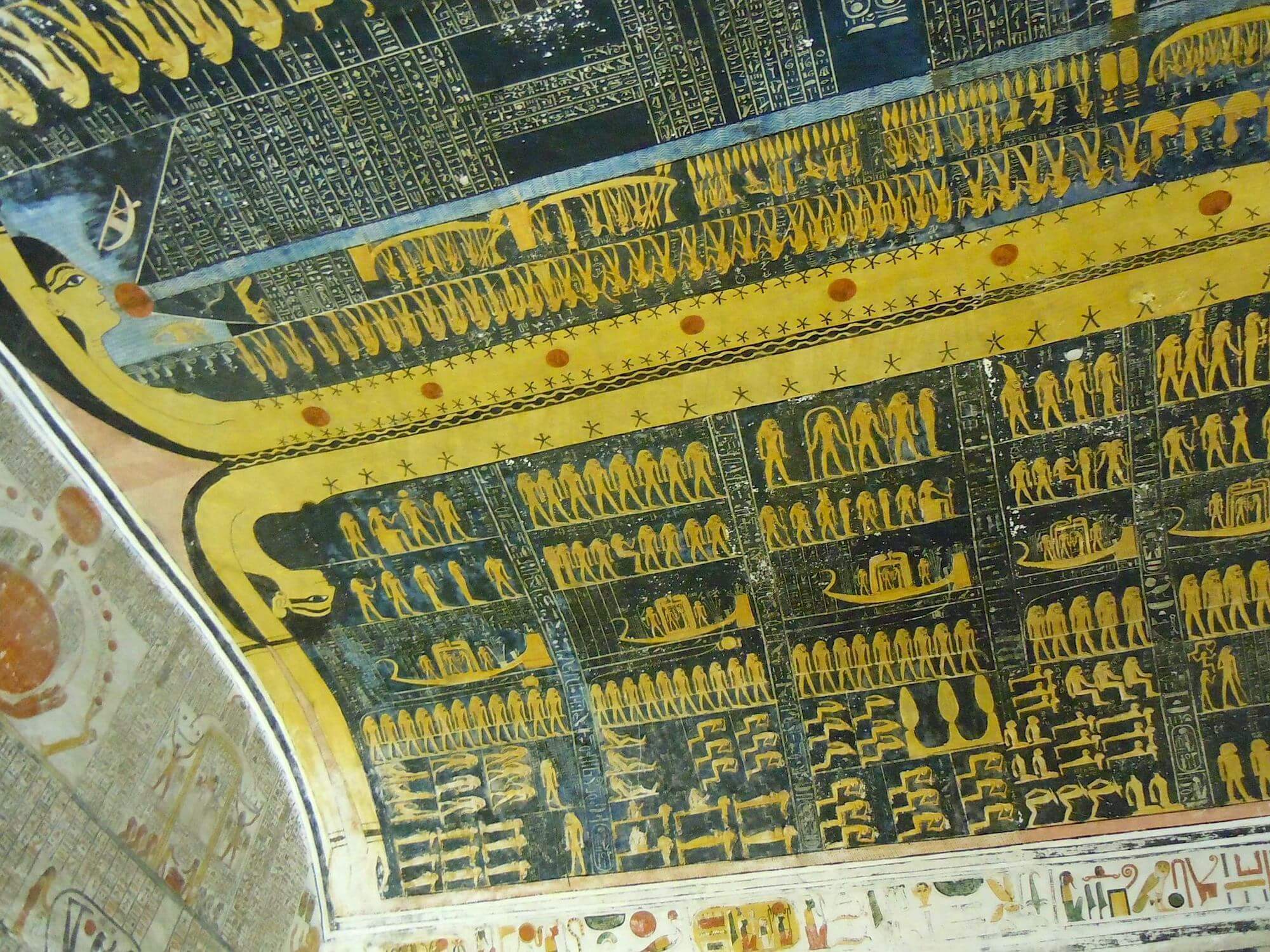
The ancient celestial tradition of the Duat resurfaces, on the other hand, in the Books of the Sky, inscribed on the ceilings of Ramesside tombs and in the Osireion of Abydos. These compositions are centered on the celestial goddess Nut, the embodiment of the sky, who was believed to swallow the sun at nightfall (thus becoming "pregnant" with him) and to give birth to him again each morning (Figure 7).
Figure 7. Ceiling of the burial chamber of the tomb of Ramses V/VI (KV 9) with the Book of the Day and the Book of the Night framed by two back-to-back images of the arched goddess Nut (celestial vault). Valley of the Kings (Luxor), 20th Dynasty. Photo by the Author.
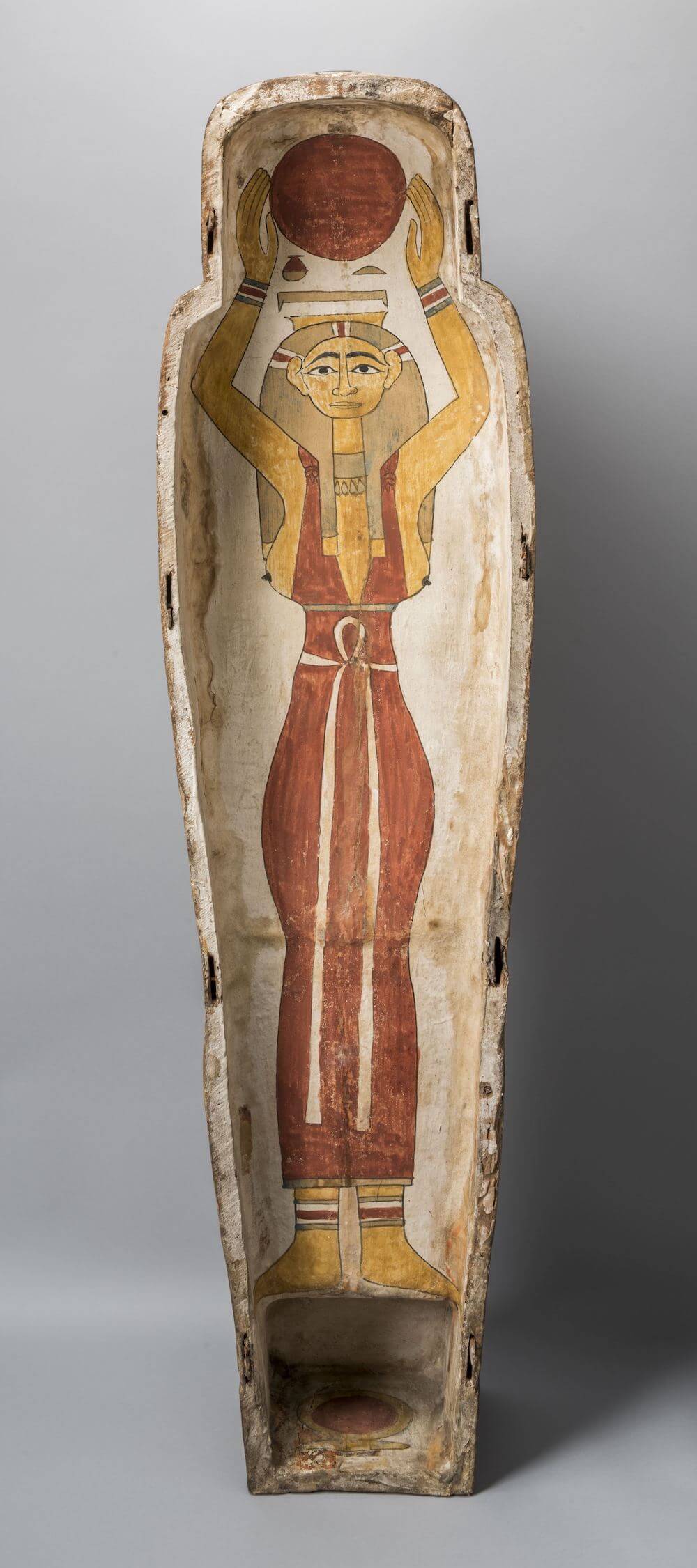
Nut was therefore the mother of the sun and of the celestial bodies as well as of the deceased. She personified the notion of death as a return to the origins, namely, to the womb. Inside her, the nocturnal gestation and regeneration of the deceased could take place prior to rebirth in the morning. In virtue of these mythological associations, Nut could be identified with the coffin or the sarcophagus, inside the lid of which she started to be represented from the early New Kingdom, in the act of physically stretching over the deceased, beckoning him to her and protecting him.
At the same time, a text belonging to the religious-astronomical treatise known as the Book of Nut (text L) describes the Duat as whatever is not earth nor sky and is thus situated beyond the boundaries of the created world, outside the celestial vault.
The traditions of the otherworld outlined above coexisted at all times and are constantly intertwined in the sources, and it is therefore impossible to try and separate them. Depending on different (con)texts, the celestial version of the Duat might be emphasized, or rather the subterranean one, or both. The celestial goddess Nut represents the linchpin of all these traditions: as the (mythological) mother of the deceased as well as of Re and Osiris, she encompasses and harmonizes the different destinies that were imagined to be available to the deceased. The Duat could thus be located simultaneously in a celestial domain and in a liminal locale at the threshold between sky and earth, or beneath the latter. What mattered was its functional nature: the Duat was the metaphysical space for the regeneration of the gods, the deceased, and the celestial bodies. As such, it could be identified with the maternal womb of the sky goddess Nut, who served as a paradigm of cyclical gestation and rebirth existing on various cosmic planes, ranging from the sky to what lies beyond it and down to the underworld. Insofar as the immortality of the deceased was guaranteed, the various versions of the Duat did not represent contradictory scenarios but rather complementary ones, aimed to ensure the everlasting survival of the deceased in whichever form they chose.
S. Zago. 2022. A Journey through the Beyond: The Development of the Concept of Duat and Related Cosmological Notions in Egyptian Funerary Literature. Columbus (GA): Lockwood Press.
Ancient Egyptian funerary texts have been a source of fascination since their discovery. But do these varied texts describe a coherent vision of an afterlife, or is that a 19th century academic projection? Read More
The primary purpose of the ancient Egyptian mummification ritual wasn't to preserve the mortal body for the afterlife — it was to transform the deceased into a divine being. Read More
Scholars have interpreted servant figurines in Egyptian tombs as anonymous toys designed to come to life. A closer look suggests they may have represented a deeper relationship between servants and masters. Read More
Not a Friend of ASOR yet? Sign upto receive ANE Today in your inbox weekly!
American Research Center in Egypt (ARCE)


:quality(70)/cloudfront-eu-central-1.images.arcpublishing.com/thenational/ESGBFK6SK5FP5FE42CQOHYMYWE.JPG)
:quality(70)/cloudfront-eu-central-1.images.arcpublishing.com/thenational/LVKITU5KYJE2TKFIOZCPJ4SACE.JPG)
:quality(70)/cloudfront-eu-central-1.images.arcpublishing.com/thenational/FOVUI7CK45HSZJWK4X5CUIZL64.JPG)
:quality(70)/cloudfront-eu-central-1.images.arcpublishing.com/thenational/Q62TOABJXZGYTFXBGRWXG2OBPI.JPG)
:quality(70)/cloudfront-eu-central-1.images.arcpublishing.com/thenational/OTVMBB6X4VGJ5OABXLPT5LH6JM.JPG)
:quality(70)/cloudfront-eu-central-1.images.arcpublishing.com/thenational/SUZDEMTMC5E73FWNTASD4XJYOE.JPG)
:quality(70)/cloudfront-eu-central-1.images.arcpublishing.com/thenational/A4O4P5ZR5NCADJYKJVIUUUFYVI.JPG)
:quality(70)/cloudfront-eu-central-1.images.arcpublishing.com/thenational/ESGBFK6SK5FP5FE42CQOHYMYWE.JPG)
:quality(70)/cloudfront-eu-central-1.images.arcpublishing.com/thenational/H7UWOWIZQNACLLUZTGQCJTPA6A.jpg)
:quality(70)/cloudfront-eu-central-1.images.arcpublishing.com/thenational/H7UWOWIZQNACLLUZTGQCJTPA6A.jpg)