Search This Blog

Tuesday, August 29, 2023

Spectroscopy and Archaeology: An Inside Look at Ancient Egyptian History

https://www.spectroscopyonline.com/view/spectroscopy-and-archaeology-an-inside-look-at-ancient-egyptian-history

Spectroscopy and Archaeology: An Inside Look at Ancient Egyptian History

Published on: 

Spectroscopy magazine is pleased to welcome you to the "Spectroscopy and Archaeology: An Inside Look at Ancient Egyptian History" landing page, one of two landing pages in our "Spectroscopy and Archaeology" content series!

Below we have four articles that highlight recent spectroscopic studies undertaken to help us understand Ancient Egypt better.

Click on a story below to begin your journey!

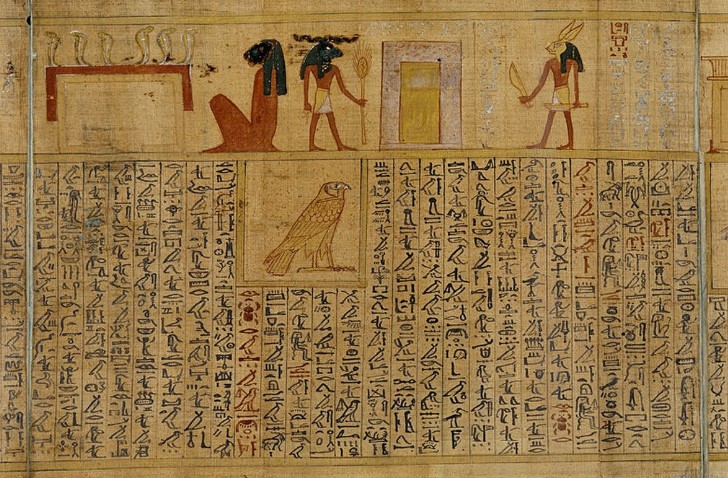
figure image

papyrus of the dead ancient egypt | Image Credit: © francescodemarco - stock.adobe.com

Featured Q & A

Non-Invasive Methods for Studying Papyrus from Ancient Egypt

In this recent Q & A, Arzak Mohamed from Macquarie University in Australia breaks down how she uses spectroscopy to analyze ancient manuscripts.

Click here to access this Q & A:

https://www.spectroscopyonline.com/view/non-invasive-methods-for-studying-papyrus-from-ancient-egypt

Featured Article

Ancient History Revealed Using Laser Light: Unraveling the Secrets of Roman Egyptian Blue

A study published in Scientific Reports has given intricate details into the production and composition of Roman Egyptian blue pigment, which originated in Egypt. Using advanced Raman microspectroscopy, researchers explored pigment balls and murals from ancient Swiss cities, uncovering evidence of raw material provenance, crystal lattice disorder, and the formation of a copper-bearing green glass phase, revealing the sophisticated techniques employed by Roman artisans.

Click here to read this article:

https://www.spectroscopyonline.com/view/ancient-history-revealed-using-laser-light-unraveling-the-secrets-of-roman-egyptian-blue

Recent Spectroscopic Studies in Ancient Egyptian Archaeology

PXRF Analysis Reveals Unique Deterioration in Ancient Pottery

In a recent study, researchers used portable X-ray fluorescence (pXRF) analysis to determine how pottery vessels uncovered at Saqqara degraded over thousands of years.

Click here to read about this study:

https://www.spectroscopyonline.com/view/pxrf-analysis-reveals-unique-deterioration-in-ancient-pottery

Using Spectroscopy to Characterize Gems in Ancient Egyptian Mines

In a recent study published in the journal AIP Advances, researchers used molecular and elemental spectroscopic techniques, such as laser-induced breakdown spectroscopy (LIBS), Raman spectroscopy, and Fourier transform infrared (FT-IR) spectroscopy, to characterize silicate gems found in ancient Egyptian mines.

Click here to read about this study:

https://www.spectroscopyonline.com/view/using-spectroscopy-to-characterize-gems-in-ancient-egyptian-mines


--   Sent from my Linux system.

Monday, August 28, 2023

AWOL - The Ancient World Online: Articles Published in the UCLA Encyclopedia of Egyptology in 2022-2023

http://ancientworldonline.blogspot.com/2023/08/articles-published-in-ucla-encyclopedia.html

--
Sent from my Linux system.

Alicante Egyptologist Solves Enigma Of 4,000-Year-Old Manuscript « Euro Weekly News

https://euroweeklynews.com/2023/08/27/alicante-egyptologist-solves-enigma-of-4000-year-old-manuscript/

Alicante Egyptologist Solves Enigma Of 4,000-Year-Old Manuscript

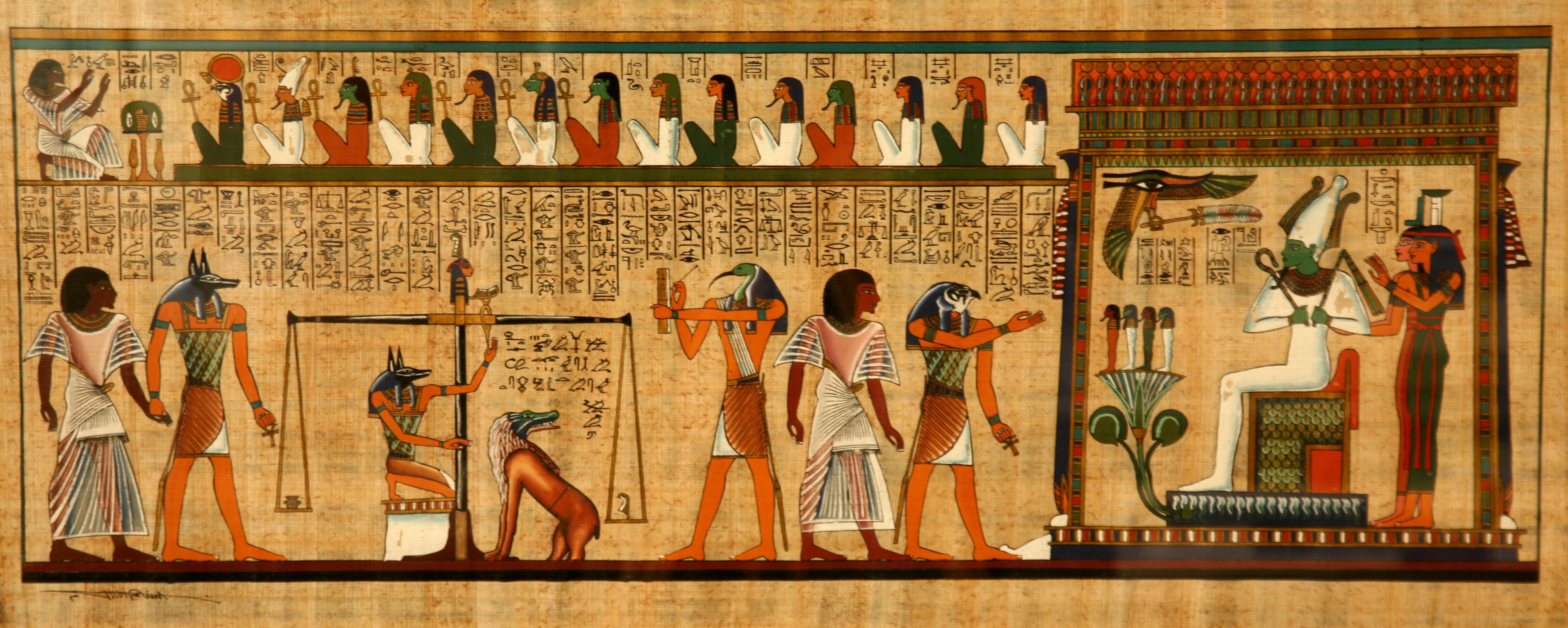
Image of an Egyptian manuscript.

Image of an Egyptian manuscript. Credit: Anonymous (Egypt)/ Public Domain Wikimedia Commons

AN Egyptologist from Alicante has solved a mystery surrounding a manuscript that dates back some 4,000 years.

The enigma was finally explained thanks to Marina Escolano-Poveda, a 37-year-old Spanish researcher who is currently a teacher at the University of Liverpool in England.

Since 1842, the papyrus has been stored in the Egyptian Museum in Berlin and its text is very well-known to Egyptologists across the world.

However, until now, none of these experts had been able to unravel the full meaning of 'The Dispute of the Desperate with his Soul'. It would appear that it is a story similar to that of William Shakespeare's 'Hamlet', in which the hero wonders if is it better to live or die. 'To be or not to be, that is the question', is the famous quote.

'Some believed to see in this text the reflections of a suicidal man; others, the dialogue between a deceased and a spirit, on the occasion of the last judgement', explained Escolano-Poveda.

The original manuscript was missing its first pages

The manuscript was missing several pages of its introductory chapter which made it impossible to contextualise the remainder of the text, something which had baffled the experts for such a long time.

As luck would have it, Escolano-Poveda discovered the missing pages in the archives of a small museum in Mallorca. Her incredible find allowed the reader to finally understand the main protagonist of this almost 4,000-year-old philosophical tale that consists of the assembly of 72 pieces.

'It's about a dying man who describes in a colourful way how he sees his last hour coming', explained the historian from Alicante.

'Contrary to what we thought previously, the hero does not die at the end since it is clearly specified in the introduction that it is he himself who is the author of this text. That tells us that he survived. If we had to qualify the episode, we would say today that the narrator had a near-death experience', she continued.

The Egyptologist added: 'All the elements of what is called a near-death experience (NDE) in English are there: the description of a tunnel at the end of which a light shines; the splitting of the personality of the person who goes through this type of ordeal, and the fact that he sees himself in agony from outside his body'.

Escolano-Poveda found the missing pages in Mallorca

Revealing how she first happened upon the missing pages, the researcher explained: 'It was during a congress, organised in 2010 in Mallorca, that I first came across this document in the form of a puzzle'.

'Nobody knew what it was about. It must be said that, given its poor condition, no researcher had really bothered to look into it. But it intrigued me', she continued.

At that time, Marina Escolano-Poveda was a doctoral student at the renowned Johns-Hopkins University in Baltimore, Maryland, in the United States.

She subsequently spent several years studying the pages from every angle. 'I was told that this document was written in demotic characters. Looking closer at the dynasty, I established it to be an early Middle Kingdom text'.

The Spanish Egyptologist also noted rare characters transcribed sometimes in black ink, sometimes in red ink. In particular, she noticed a mysterious hieroglyph in the shape of an elongated boat.

The mystery started unravelling in April 2015

It was thanks to a new examination of the document in April 2015 that she noted analogies between the Mallorcan text and the famous Berlin papyrus on the basis of this specific spelling.

'I remember perfectly the moment when I had this revelation. It must have been 3 o'clock in the morning. I was listening to the song 'Salir' by the group Extremoduro. I then realised that the papyrus I was looking at was by the same author as that of La Dispute!, she exclaimed.

The researcher immediately wrote to James Allen, her thesis director and professor at Brown University in Rhode Island. His nocturnal e-mail consisted of only one question: 'Do you think, in view of the elements that I submit to you here, that the two texts from Berlin and Mallorca are from the same scribe?'. She quickly replied in the affirmative.

Another Egyptology expert, Richard Parkinson, a professor at the University of Oxford in the United Kingdom, also validated the discovery.

Escolano-Poveda published the first article on her findings in 2017 in the prestigious German journal Zeitschrift für Äegyptische Sprache und Altertumskunde.

She later made more discoveries in Mallorca

She returned several times to Mallorca and made other discoveries. 'The pieces of papyrus kept on-site include extracts from other books', she detailed.

Among them was 'The Pastor's Tale', which narrates a meeting between a cattle herder and a goddess. 'A tale that we tended to think of as a moral tale, as a deity seems to be trying to seduce a human into his bed. My hypothesis is quite different: the goddess seems to me mainly interested in the peasant's cattle', the Egyptologist suggested.

Also included in the Mallorca papyrus are extracts from a famous liturgical work: The Book of the Dead. This literary work lists the blessings that each deceased must pronounce when crossing the kingdom of the dead.

A few months ago, Bernard Mathieu published some of the researcher's conclusions in one of his latest books – La Littérature de l'Egypte vieille, Vol. III, published by Belles Lettres, 2023.

The researcher hopes to organise an exhibition in Berlin

Marina Escolano-Poveda now dreams of organising an exhibition in Berlin where the separate parts of the story she has been studying for so long would be reunited.

'I would like this event to restore the papyrus of Mallorca. On this occasion, we could study it and perhaps retrace its history' she said.

It is a story that begins in an auction room in 1837 in London, where ancient documents are scattered. 'I found traces of this auction at Sotheby's. One of the lots, in good condition, landed in Germany', she explained.

'The other, less well preserved, must have been bought by a Frenchman because the paper that serves as the support for the fragments that I examined resembles that used at the time by the Louvre and the National Library', she continued.

Escolano-Poveda now wants to establish the conditions under which this second batch landed, in part, in Mallorca in 1913. 'I say "in part", because I know that other fragments are in New York today', she added. The investigation appears to be far from over, as reported by lepoint.fr.

Thank you for taking the time to read this article. Do remember to come back and check The Euro Weekly News website for all your up-to-date local and international news stories and remember, you can also follow us on Facebook and Instagram.

--   Sent from my Linux system.
Saturday, August 26, 2023

Northern Cal. Egyptology Lecture Sept. 10 - Preparing for Eternity: Funerary Models & Wall Scenes from the Old and Middle Kingdoms


The American Research Center in Egypt, Northern California Chapter, and the Department of Middle Eastern Languages and Cultures, University of California, Berkeley, invite you to attend a lecture by
Dr. Georgia Barker, Macquarie University/CSU San Bernardino:


Preparing for Eternity: Funerary Models & Wall Scenes from the Old and Middle Kingdoms

Sunday, September 10, 2023, 3 PM Pacific Daylight Time
Room 20 Social Sciences Building (formerly Barrows Hall)
UC Berkeley


The Bersha Procession of Djehuty-nakht. Photograph © 2022 Museum of Fine Arts, Boston: 21.326.

(Image provided by the lecturer)


About the Lecture:

During the late Old Kingdom to the end of the Middle Kingdom, there were two principal types of artistic representation in the ancient Egyptian elite tomb: funerary models and wall scenes. The two media exhibit several similarities in design, with both depicting people and animals engaged in activities of everyday life. This has caused scholars to regularly label funerary models duplicates or substitutes of wall scenes, implying that they served the same purpose in the tomb. However, there are several notable differences yet to be acknowledged. This lecture presents the results of a detailed comparative analysis of the two artistic media, focusing on representations from the sites of Meir, Deir el-Bersha and Beni Hassan in Middle Egypt. It will highlight the distinguishing characteristics of each medium and propose that funerary models should be understood as a distinct type of representation that was specifically conceived to provision the deceased for eternity. 


About the Lecturer:

Dr. Georgia Barker is the W. Benson Harer Egyptology Scholar in Residence at California State University, San Bernardino, for Fall 2023. Before joining CSUSB, she completed a Doctor of Philosophy and a postdoctoral research fellowship at Macquarie University in Sydney, Australia. Her research investigates the purpose and historical significance of funerary art from the Old and Middle Kingdom periods. She has worked extensively with museum collections, including the Macquarie University History Museum and Sydney Living Museums in Australia as well as being a member of the British Museum's Circulating Artefacts Project and an intern at the Metropolitan Museum of Art. She is also a member of the Australian Centre for Egyptology's expeditions at Meir and Beni Hassan.


Parking is available in UC lots all day on weekends, for a fee. Ticket dispensing machines accept debit or credit cards. Parking is available in lots around the Social Sciences Building, and in lots along Bancroft. A map of the campus is available online at http://www.berkeley.edu/map/

About ARCE-NC:

For more information, please visit https://arce-nc.org/, https://www.youtube.com/channel/NorthernCaliforniaARCE, https://facebook.com/NorthernCaliforniaARCE/, https://twitter.com/ARCENCPostings, or https://khentiamentiu.org. To join the chapter or renew your membership, please go to https://www.arce.org/general-membership and select "Berkeley, CA" as your chapter when you sign up.

--   Sent from my Linux system.

Egypt Demolishes Cultural Gems in Cairo in Push to Modernize - The New York Times

https://www.nytimes.com/2023/08/26/world/middleeast/egypt-cairo-city-construction-demolition.html

In Push to Modernize Cairo, Cultural Gems and Green Spaces Razed

The Egyptian government has demolished historic tombs, cultural centers, artisan workshops and gardens in pursuit of large-scale urban renewal.


Roads under construction in Cairo with domed                    white buildings, high-rise buildings and cranes in the                    background.
Construction of highways and roadworks in the Fustat area of Cairo this month.Credit...Sima Diab for The New York Times

Reporting from Cairo

Sign up for The Interpreter newsletter, for Times subscribers only.  Original analysis on the week's biggest global stories, from columnist Amanda Taub.

Ancient tombs have been shattered. Gardens have vanished, and with them many of Cairo's trees.

A growing number of historic but shabby working-class neighborhoods have all but disappeared, too, handed over to developers to build concrete high-rises while families who have lived there for generations are pushed to the fringes of the sprawling Egyptian capital.

Few cities live and breathe antiquity like Cairo, a sun-strafed, traffic-choked desert metropolis jammed with roughly 22 million people. But President Abdel Fattah el-Sisi is modernizing this superannuated city, fast.

He is trying to buff its unruly complexity into a place of efficient uniformity — the traffic tamed, the Nile River promoted as a tourist attraction, the slums cleaned up and their residents rehoused in modern apartments. And he considers the construction as one of the major accomplishments of his tenure.

"There is not a single place in Egypt that has not been touched by the hand of development," Mr. el-Sisi proclaimed in a recent speech.

So the old stone and brick must go, paved over by concrete. New elevated highways undulate over ancient cemeteries, riding skinny struts like giant gray roller coasters. A freshly built walkway lined with fast-food joints runs along the Nile, the entrance fee out of reach for many Egyptians, with consumer inflation running at about 38 percent annually.

Image
A walkway spanning the Nile                            with high-rise buildings in the background.
A new Nile walkway under construction in the Zamalek neighborhood of Cairo.Credit...Sima Diab for The New York Times

New roads, overpasses and offramps materialize so quickly that taxi drivers and Google Maps alike can barely keep up. And Cairo is not just being made over, but replaced: Mr. el-Sisi is erecting a supersized new capital, all right angles, tall towers and luxury villas, in the desert just outside of Cairo.

The estimated cost of the new capital alone is $59 billion, with billions more going to other construction projects, including roads and high-speed trains meant to link the new capital to the old. Most of it was paid for by debt, the sheer mass of which has crippled Egypt's ability to handle a deep economic crisis set off by Russia's invasion of Ukraine.

A few weeks ago, the modernization efforts reached Fustat, the city's most ancient district, founded as Egypt's capital centuries before Cairo was even a thought.

A district official knocked on the door of the artist Moataz Nasreldin and told him to start packing up Darb 1718, the popular cultural center he founded in the neighborhood 16 years ago. The government would be widening the road behind it to build an elevated highway, Mr. Nasreldin, 62, said the official told him.

Darb, along with some of the nearby pottery workshops run for decades by local craftsmen and some nearby housing, would have to go.

As often happens nowadays in Egypt, where stories abound of government excavators and bulldozers appearing on private property with barely any notice, information about the decision was scant. Mr. Nasreldin and the owners of the pottery workshops said local officials had not presented a written demolition order or any other paperwork.

"Every day, you wake up and you don't know what's going to happen," said Mohamed Abdin, 48, who owns one of the workshops slated for destruction. He said his family has been making pottery in the area since the 1920s.


Some Cairenes are proud of the construction, seeing it as tangible evidence of progress.

Image
A few trees with a                          construction site and buildings in the                          background.
What greenery Cairo has is increasingly being cut down and paved over.Credit...Sima Diab for The New York Times

"These are the developments that the country had to see," a pro-Sisi TV presenter, Ahmed Moussa, said on his program recently.

Others say they no longer recognize their own city.

"If you were being invaded, all what you'd care about is your monuments, your trees, your history, your culture," said Mamdouh Sakr, an architect and urbanist. "And now, it's all being destroyed, without any reason, without any explanation, without any need."

Most of the time, Egyptians simply submit, powerless before the state. But not Mr. Nasreldin, who sued to stop the destruction and raised a fuss on social media. The municipality said it was reconsidering the plans, but did not say when a final decision would be made or who would make it.

Construction of roads, bridges and major projects such as the new capital is usually overseen by Egypt's powerful military. It was the military that elevated Mr. el-Sisi, a former general, to power in 2013 amid mass protests demanding the ouster of the country's first democratically elected president, who took office after the country's 2011 Arab Spring uprising.

Cairenes, as this city's residents are known, who have contacted government officials to push back against the development say those in charge tend to wave off experts' advice and dismiss the concerns of local residents. Only in isolated cases have preservationists managed to save historical monuments.

The proliferation of military-led projects has given rise to a sarcastic phrase, "the generals' taste," implying a certain drab boxiness, a monotony occasionally spritzed with glitz.

Image
A man dressed in a T-shirt                          walks in front of an array of pottery outside a                          workshop in Cairo.
A pottery workshop inside the Darb 1718 community center in the Fustat area of Cairo.Credit...Sima Diab for The New York Times

The style is exemplified by the gleaming new National Museum of Egyptian Civilization, not far from Darb, where ancient Egypt's most famous royal mummies are housed. Bulldozers and heavy machinery have nosed around the surrounding district for years, demolishing housing in working-class neighborhoods, apparently to make way for new construction.

A new lakeside restaurant next to the museum boasts the Frenchified name "Le Lac du Caire." While diners enjoy the greenery around the water, trees elsewhere have been felled one by one.

It might be a stretch to call Cairo lush. But Egypt's 19th-century rulers adorned their capital with public gardens, importing greenery that now seems inseparable from the city itself, like the flame trees that flare with bright red flowers every spring.

Many of those gardens and trees have disappeared in the past few years, reducing what little public space Cairo once had — usually without any environmental review, and often over the objections of local residents.

In their place have come fast-food stalls and cafes, new roads and military-owned gas stations, lining the once-green Nile banks and leafy neighborhoods like Zamalek and Heliopolis.


Broken walls and rubble on the                          ground is all that remains from a shattered                          mausoleum in Cairo's famed City of the Dead.
Little more than rubble remained of this mausoleum in a cemetery in the Cairo's famed City of the Dead last year.Credit...Heba Khamis for The New York Times

Amid unrelenting bad press at home and abroad over the demolitions, the prime minister, Mostafa Madbouly, recently said new gardens, parks and roads would be built where large swaths of the ancient cemeteries known as the City of the Dead have been leveled. A new "Garden for the Immortals" will house the remains of some historic figures whose original tombs were razed "due to urgent development needs," as a state-owned newspaper, Al Ahram, put it.

So far, only the roads have appeared.

Locals say modernization is not unwelcome, but wholesale destruction is.

When Mr. Nasreldin and a few other artists started working and living in the area near Darb in the 1990s, it was a crowded jumble of illegally, often unsafely built housing. It has only grown bigger and unrulier since.

Hearing that the government had its eye on the neighborhood, he envisioned better housing, maybe designed by an architect with an eye for preservation and community needs, definitely with reliable electricity and running water. Smoother roads. More businesses opening to serve food to those who came to Darb from around Cairo and beyond for concerts, film screenings and exhibitions.

Not the wrecking of what, to him, was drawing more life and economic activity to the area: art studios, cultural ferment, a symbiotic relationship between the traditional pottery workshops and the artists who came to Darb from Egypt and elsewhere.

Image
Moataz Nasreldin, dressed in a                          black T-shirt, sits at a turquoise table with a                          full bookshelf in the background.
Moataz Nasreldin, an artist and the founder of Darb 1718, a community space in the Fustat neighborhood of Cairo.Credit...Sima Diab for The New York Times

"There should be 100 Darbs all over Egypt," Mr. Nasreldin said. "To me, this is not a very wise decision at all."

One of the homes slated for demolition belongs to Mohamed Amin, 56, a former construction worker turned jack-of-all-trades at Darb.

Yes, the neighborhood was unprepossessing, he said, but it was home, and had been for generations. Yes, the housing was illegally built. But, he argued, the government had refused to issue building permits, forcing residents to take matters into their own hands.

In such cases, the government usually offers new subsidized apartments. But they tend to be a considerable distance away from the original neighborhood and, in many cases, ultimately unaffordable.

Clearing everyone out for the new highway meant that while some people would be able to reach the new museum more easily, former residents of the area would now have to make an exhausting commute across Cairo to get to work, if their livelihoods survived.

"Everyone is scared," said Mr. Amin, adding that no one in the neighborhood had been told what the plan was. "Why are you suffocating us like this?"

Image
A man in shadow on the right                          under a bridge being built in Cairo, with                          high-rise buildings in the background.
A highway under construction near the neighborhood of Maadi in Cairo.Credit...Sima Diab for The New York Times

Vivian Yee is the Cairo bureau chief, covering politics, society and culture in the Middle East and North Africa. She was previously based in Beirut, Lebanon, and in New York, where she wrote about New York City, New York politics and immigration.

A version of this article appears in print on Aug. 27, 2023 of the New York edition with the headline: A Modern Cairo, at History's Expense. Order Reprints | Today's Paper | Subscribe
--   Sent from my Linux system.