The following are among the lectures to be presented by ARCE's Northern California Chapter in the coming months. Other lectures are in process. Unless otherwise indicated, lectures are at 3 p.m. Pacific time, in-person, Room 126 of the Social Sciences Building (formerly Barrows Hall) at UC Berkeley
Ramses II and the Hittite Empire: War & Peace in the Late Bronze Age February 12, 2023 Room 20 Social Sciences Building Dr. Peter Brand, University of Memphis
Roman Egyptian Mummy Portraits and the Artistic Circle of the St. Louis Painter March 12, 2023 Room 20 Social Sciences Building Dr. Branko van Oppen, Tampa Museum of Art
The Hidden Treasures of Elephantine Island April 16, 2023 Dr. Verena Lepper, Freie Universität Berlin
New Perspectives on the African Empire of Kush: Excavations at Gebel Barkal May 7, 2023 Dr. Geoff Emberling, Kelsey Museum, Univ. of Michigan
Parking is available in UC lots all day on weekends, for a fee. Ticket dispensing machines accept debit or credit cards. Parking is available in lots around the Social Sciences Building, and in lots along Bancroft. A map of the campus is available online at http://www.berkeley.edu/map/
A reminder that Dr. Peter Brand will be speaking to the Northern California chapter of ARCE on Ramesses' remarkable diplomacy with Hittite ruler Hattusili III and his formidable consort, the Queen Puduhepa. Don't miss it!
Glenn
The American Research Center in Egypt, Northern California Chapter, and the Near Eastern Studies Department, University of California, Berkeley, invite you to attend a lecture by Dr. Peter Brand, University of Memphis:
Ramses II and the Hittite Empire: War & Peace in the Late Bronze Age
Sunday, February 12, 2023, 3 PM Pacific Standard Time Room 126 Social Sciences Building (formerly Barrows Hall) UC Berkeley
No Zoom meeting is scheduled for this lecture. Ramesses' fight against the Hittites on the shores of Orontes (Battle of Kadesh) by Émile Prisse d'Avennes (1878). (Image source: WikimediaCommons. About the Lecture:
Ramesses II was both a great warrior and visionary statesman. For two decades, he fought the mighty Hittite Empire for control of Syria including the famous Battle of Kadesh. His military campaigns were the culmination of over six decades of hostilities between these ancient superpowers. Yet Ramesses had the vision to make a lasting peace with Egypt's bitter rival, when he concluded a treaty in his twenty-first regnal year with his Hittite counterpart Hattusili III. A remarkable cache of diplomatic letters, second only to the famous Amarna Letters, offers a fascinating glimpse of the pharaoh's boisterous and often tense diplomatic exchanges with Hattusili III and his formidable consort, the Hititte Queen Puduhepa. Fifteen years later, Ramesses negotiated with Puduhepa to marry a Hittite princess. His lively debates with the Hittite king and queen reveal a very different Ramesses II than the god-king and warrior pharaoh we see on his monuments.
About the Speaker:
Dr. Peter Brand is a Canadian Egyptologist from Toronto and a naturalized American citizen. He is a Professor of Ancient History in the Department of History at the University of Memphis. Since 2001 Dr. Brand has served as the Director of the Karnak Great Hypostyle Hall Project sponsored by the University of Memphis, which aims to record and publish all the monumental inscriptions and reliefs from this huge building.
Dr. Brand studied at the University of Texas at Arlington and the University of Memphis before completing his PhD in Ancient Egyptian Language and Literature at the University of Toronto in 1998. His dissertation, The Monuments of Seti I: Epigraphic, Historical and Art Historical Analysis, was published by Brill in 2000. Dr. Brand's area of focus in Egyptology is the history and culture of the New Kingdom, particularly the late 18th Dynasty and the Ramesside Period. In his research and teaching he uses a multi-disciplinary approach that integrates history, art history, language and epigraphy.
Parking is available in UC lots all day on weekends, for a fee. Ticket dispensing machines accept debit or credit cards. Parking is available in lots around the Social Sciences Building, and in lots along Bancroft. A map of the campus is available online at http://www.berkeley.edu/map/
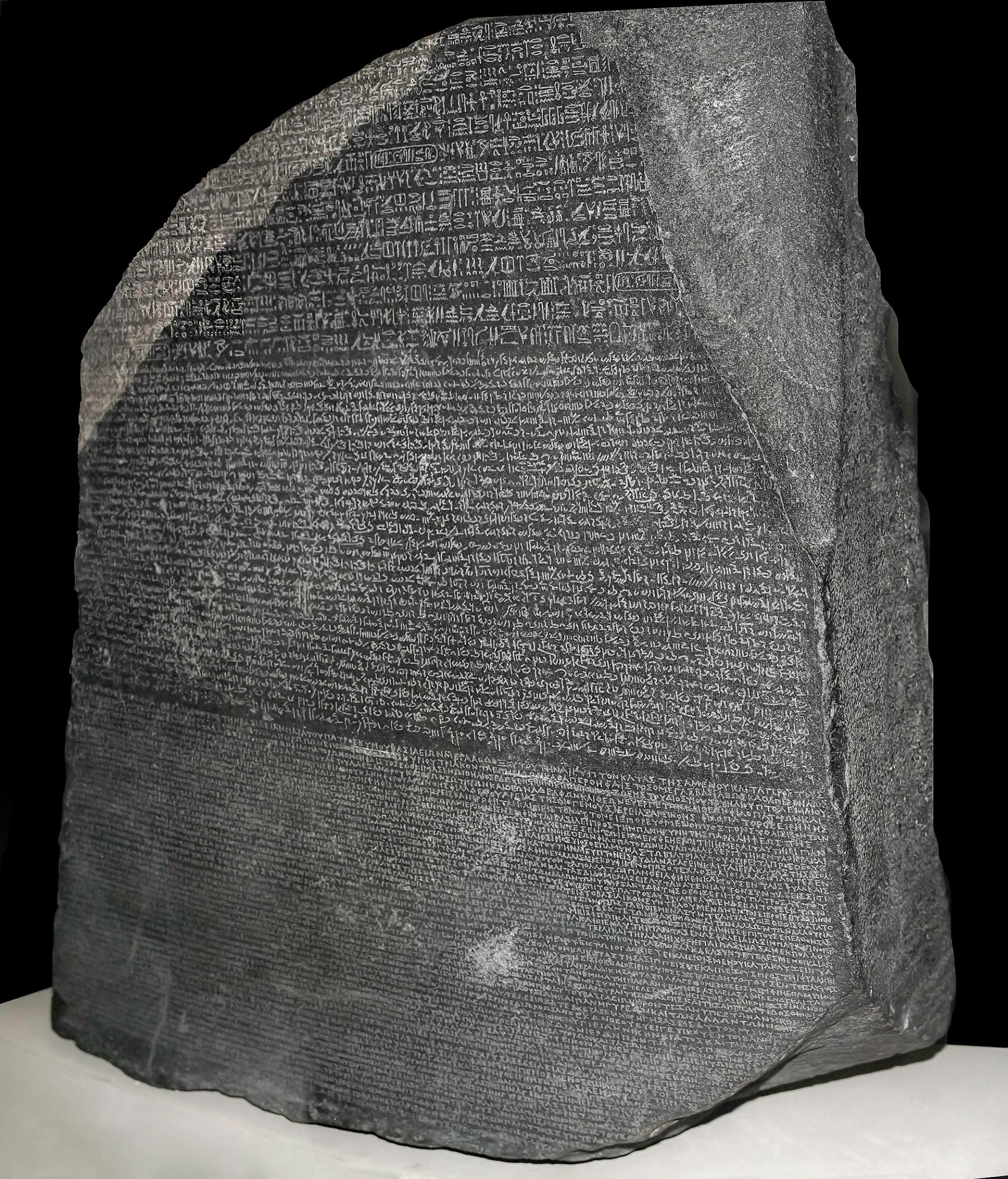
Egypt's "Great Revolt", which happened from 207 to 184 BC, is detailed on the Rosetta Stone Photo: Awikimate
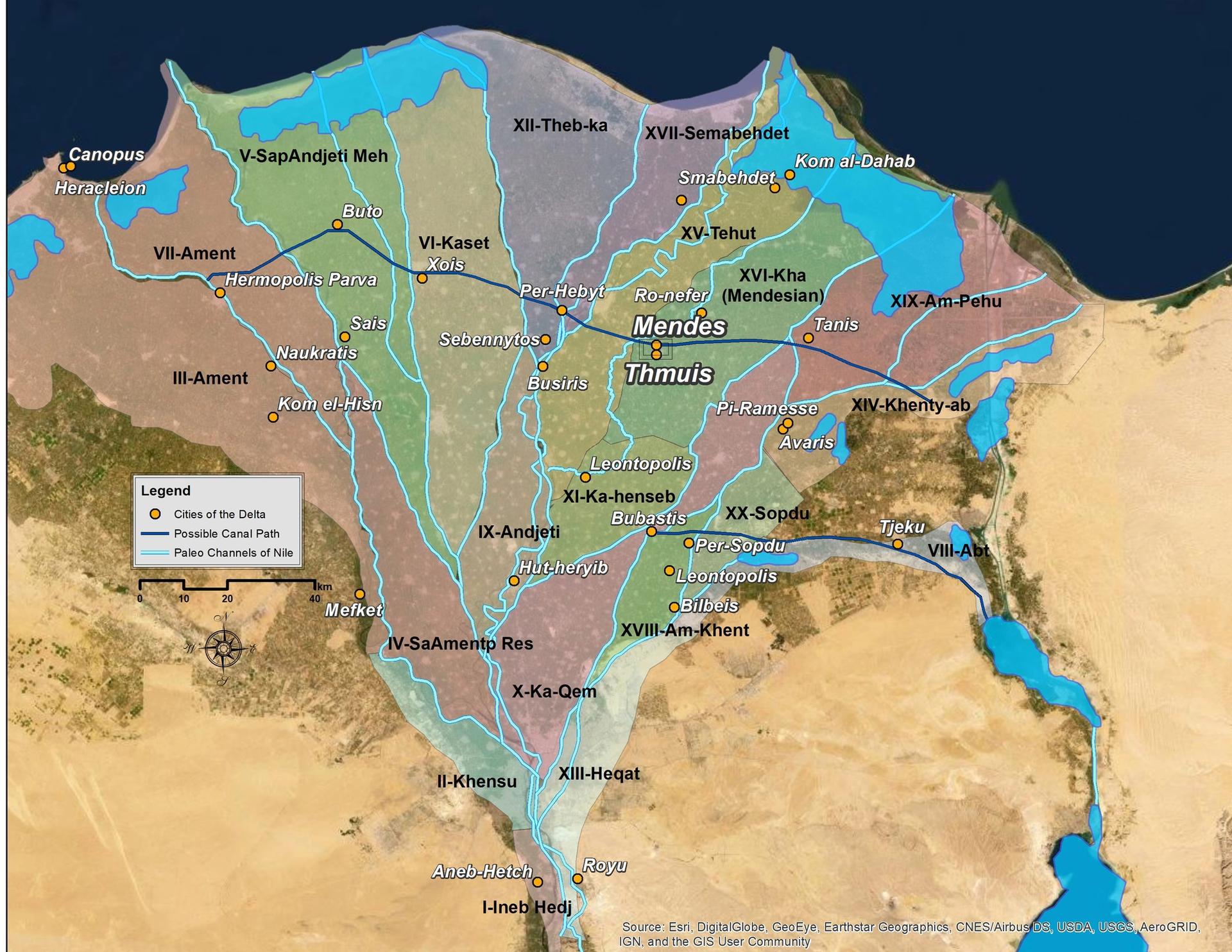
Rare evidence for a decades-long rebellion against Greek-Macedonian rule, mentioned on the Rosetta Stone, has been found at an ancient Egyptian city. Excavations at Tell Timai, ancient Thmouis, 102km north of Cairo, revealed extensive destruction that occurred during the Great Revolt, which happened from 207 to 184 BC.
A map of Egypt's Delta, showing the location of ancient Thmuis, modern Tell Timai Courtesy of Tell Timai Project, Nottingham Trent University and University of Hawaii
"Archaeological evidence from the [revolt] is quite rare," says Jay Silverstein of Nottingham Trent University, UK, one of the lead authors of the paper published in the Journal of Field Archaeology. "There are of course a number of decrees and inscriptions, like the Rosetta Stone, some historical accounts, and a few papyri with indirect references, but when it comes to finding the locations where the sword meets the bone, as far as I can tell, this is the first that has been recognised."
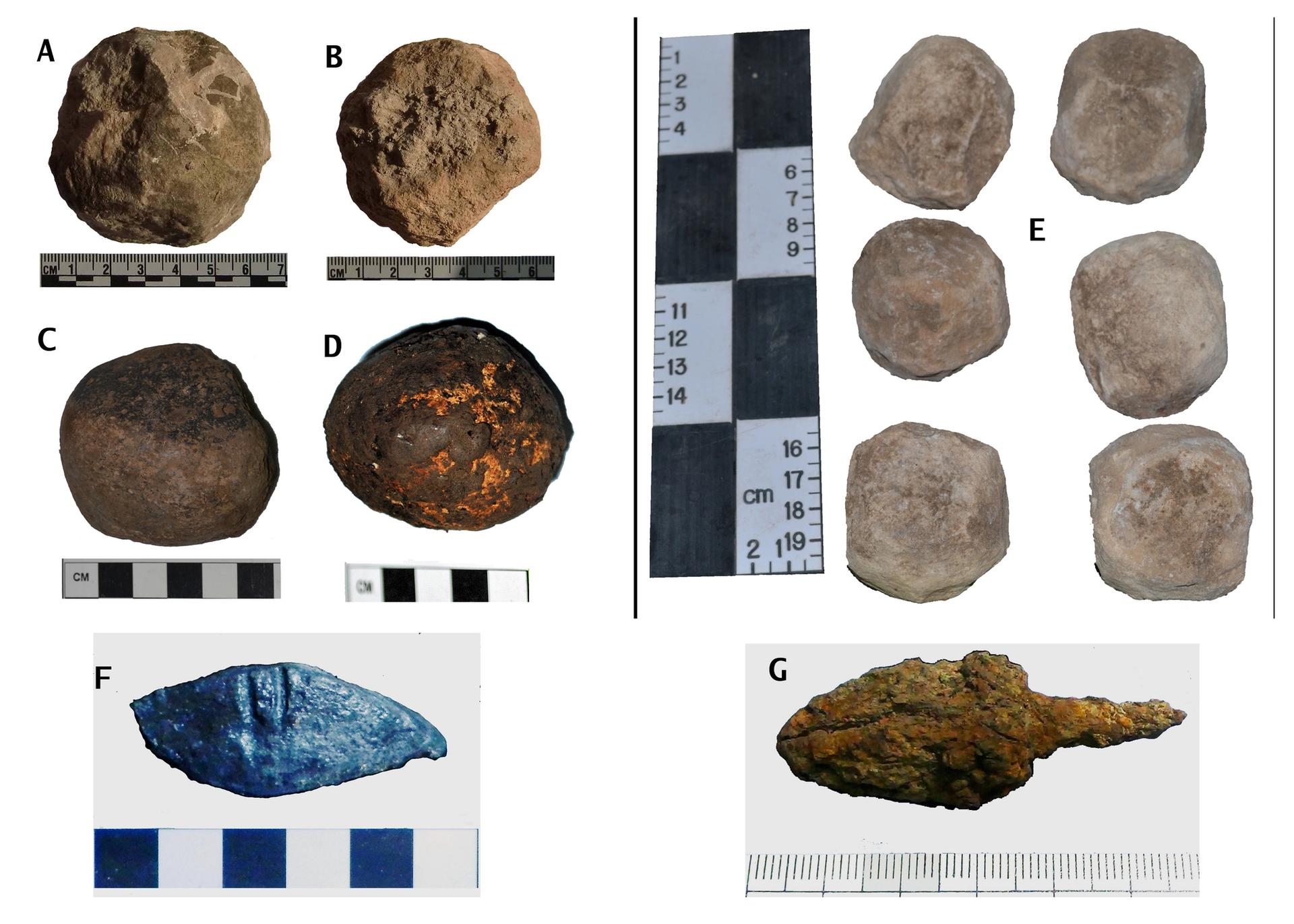
Weapons found at Tell Timai: Ballista stones, a sling pellet, and an arrowhead Courtesy of Tell Timai Project, Nottingham Trent University and University of Hawaii
Over the course of several years, the team uncovered the remains of burned buildings, weapons, stones thrown by a siege engine, coins hidden beneath the floor of a house, a broken divine statue near a temple, and unburied bodies strewn among the ruins or dumped in mounds of rubble and refuse. The skeleton of one young man was discovered with his legs sticking out of a large kiln, where he had perhaps hoped to hide from his attackers. A man in his 50s, whose body displayed earlier healed wounds, appears to have died defending himself. He may have decomposed sitting upright.
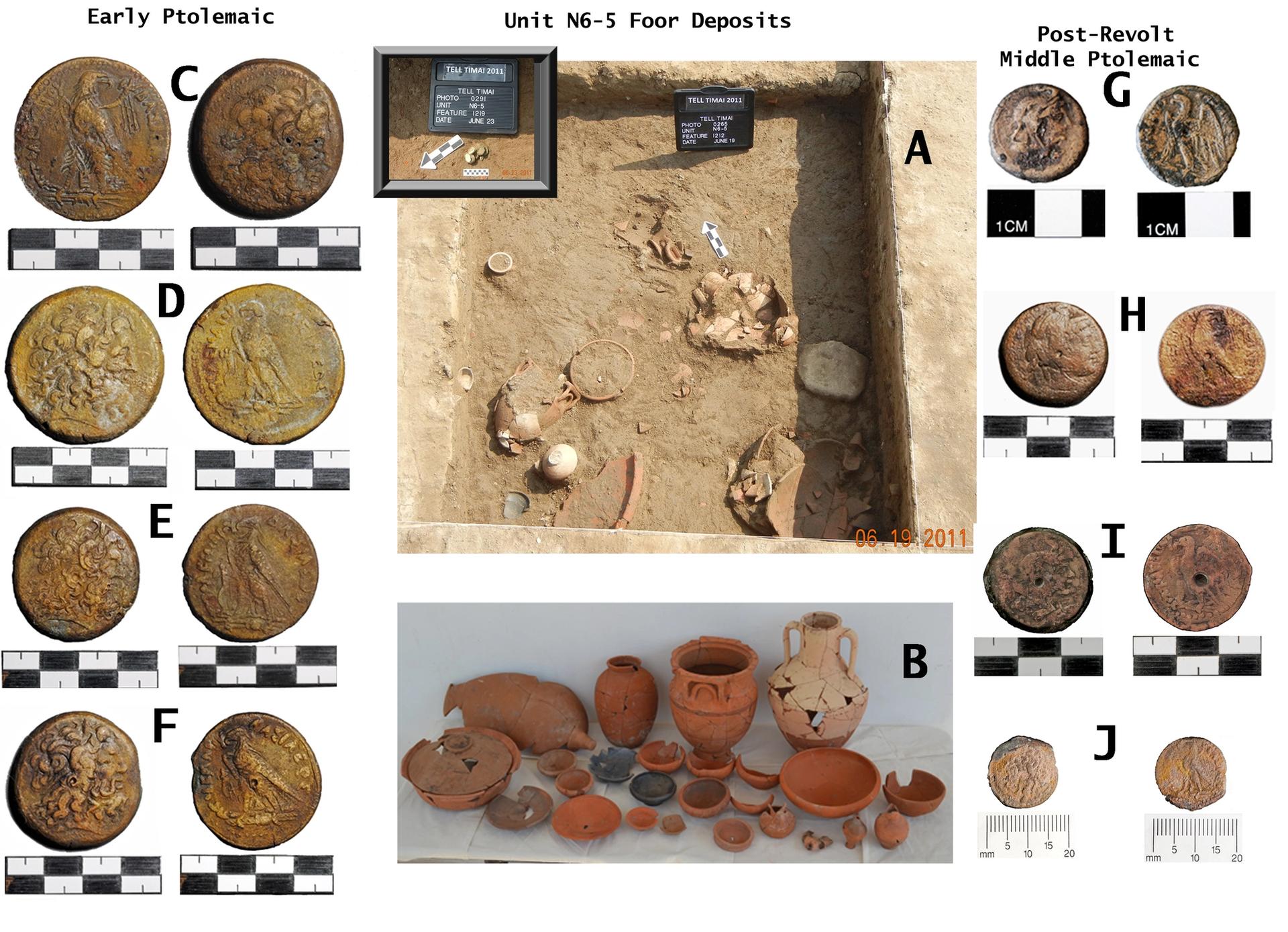
Coins and pottery discovered in a destroyed room during the excavations at Tell Timai Courtesy of Tell Timai Project, Nottingham Trent University and University of Hawaii
By examining the pottery and coins, the team dated the destruction to the Great Revolt, when the Egyptians tried, but failed, to liberate themselves from Ptolemaic rule—the line of Greek-Macedonian kings that began after Alexander the Great conquered Egypt and ended with the famous Cleopatra VII.
"We have opened a new door into our understanding of Hellenistic colonialism, indigenous resistance, and the mechanisms of control including the brutality of the Macedonian dynasty's rule of Egypt," says Silverstein. "Many other cities suffered a similar fate to that of Thmouis and I hope that this discovery will help broaden the scope of our archaeological understanding of these events."
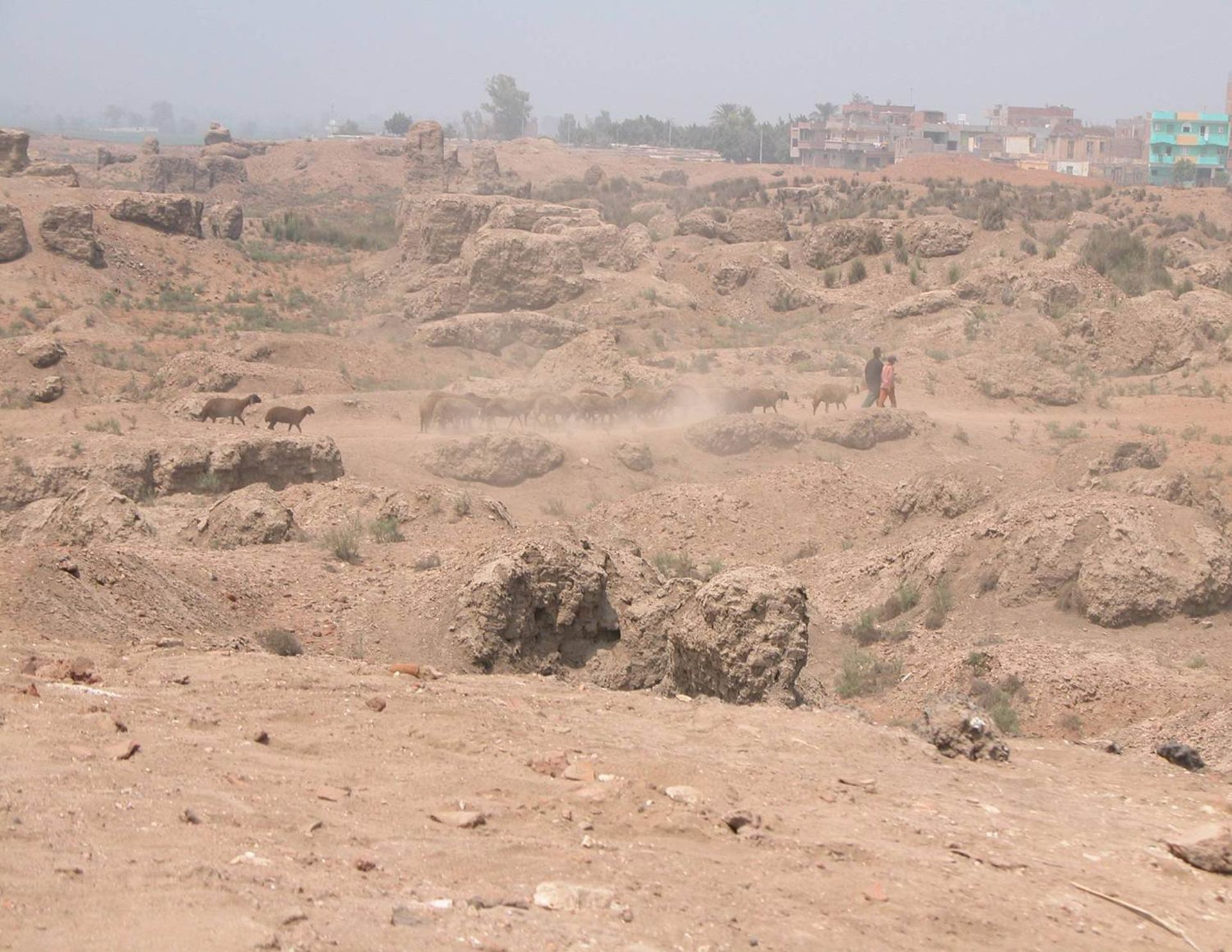
A view of the archaeological site of Tell Timai Courtesy of Tell Timai Project, Nottingham Trent University and University of Hawaii
The discovery made Silverstein reconsider how decisive the events of the rebellion were in the development of the Western world. "Hellenistic Egypt played a crucial role in the trajectory of history including its role as a crucible of Christianity and a bulwark of Roman imperial power. Had the Egyptians retaken their land from the Greek occupiers, I suspect the world would look significantly different today."
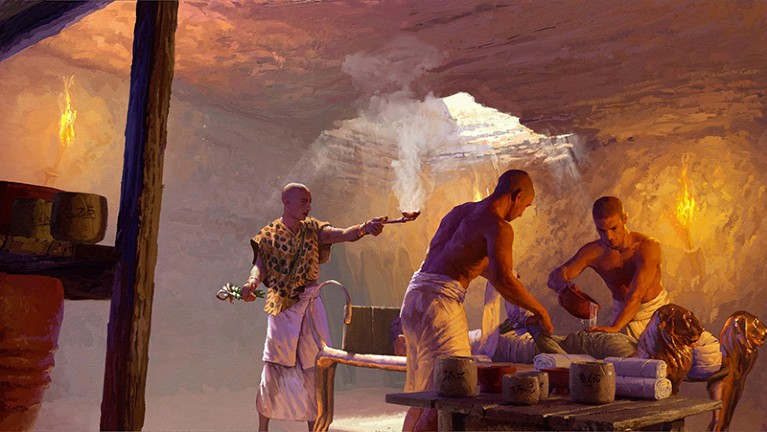
A body is embalmed in an underground chamber (artist's impression).Credit: Nikola Nevenov
Labelled pots found in a 2,500-year-old embalming workshop have revealed the plant and animal extracts used to prepare ancient Egyptian mummies — including ingredients originating hundreds and even thousands of kilometres away.
Chemical analysis of the pots' contents has identified complex mixtures of botanical resins and other substances, some of them from plants that grow as far away as Southeast Asia. The discovery was reported in a 1 February paper in Nature1.
Previously, insights into the embalming process have come from two main sources: historical texts and chemical analyses of the mummies themselves. But linking these strands of information has proved difficult, says Salima Ikram, an archaeologist and mummy specialist at the American University in Cairo. "You might have the name of something, but you don't know what the hell it is, except the hieroglyphics suggesting it's an oil or a resin."
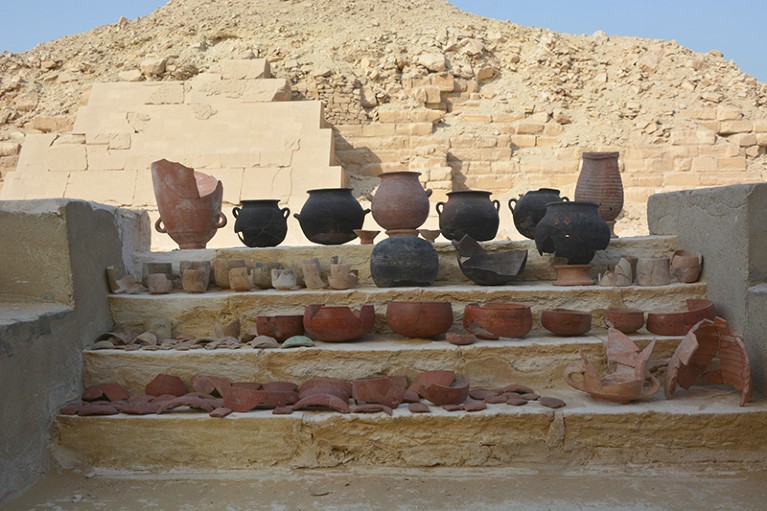
That has now changed thanks to an underground embalming workshop discovered in 2016 at Saqqara, an ancient Egyptian burial ground in use from 2900 bc or earlier. The site also includes burial chambers, and it is likely that elite members of society were interred there, the authors say. Inside the Saqqara workshop, which dates to 664–525 bc, archaeologists discovered dozens of ceramic vessels used in the embalming process, many labelled with the ingredients they contain and their use. "This is the first time you've got jars with labels of the contents," says Ikram.
Vessels from the embalming workshop display a variety of colours and shapes.Credit: Saqqara Saite Tombs Project, University of Tübingen, Tübingen, Germany; Photo: M. Abdelghaffar
To identify the specific contents of the vessels, an Egyptian–German team analysed the mixtures using a technique called gas chromatography–mass spectrometry, at a National Research Centre laboratory in Giza, Egypt. This showed that the pots contained substances previously linked to mummification, including extracts from juniper bushes, cypress trees and cedar trees, which grow in the eastern Mediterranean region. The team also found bitumen from the Dead Sea, along with animal fats and beeswax, probably of local origin
But the researchers also identified two surprising ingredients: one resin called elemi, which comes from Canarium trees that grow in rainforests in Asia and Africa; and another called dammar that comes from Shorea trees found in tropical forests in southern India, Sri Lanka and southeast Asia.
"Egypt was resource poor in terms of many resinous substances, so many were procured or traded from distant lands," says Carl Heron, an archaeological scientist at the British Museum in London.
Imported ingredients
Ancient trade networks connected India and southeast Asia with the Mediterranean region. But it's not clear whether Egyptian embalmers sought out these specific ingredients or came across them through trial and error, says Ikram. "Absolutely amazing", she says. "Who would have thought that they were getting stuff that might be coming from India?"
Ancient Egyptian embalmers had a sophisticated understanding of the raw materials' properties, the authors say. Pots contained complex mixtures of ingredients that, in some cases, had been carefully heated or distilled. Many of the resins had antimicrobial properties — one bowl containing elemi and animal fat was inscribed "to make his odour pleasant" — or characteristics that promoted preservation.
"Their knowledge of these substances was incredible," says study co-author Maxime Rageot, a biomolecular archaeologist at the University of Tübingen in Germany.
Chemical studies of mummies suggest that embalming recipes became more complex over time, notes Rageot. But one open question is how ancient Egyptians developed specific embalming procedures and recipes — and why they selected certain ingredients over others, said study co-author Mahmoud Bahgat, a biochemist at Egypt's National Research Centre in Cairo, at a press briefing. "We need to be as clever as them to discover the intentions."
The Earliest Mention of the Placename Sinai: The Journeys of Khety
By Julien Cooper
Well before Moses ascended "Mount Sinai" and received the revelation from God, Egyptian officials penetrated the rugged vales of the Sinai Peninsula in search of minerals, chiefly copper and turquoise. One Egyptian official traversed the peninsula more than any of his compatriots: Khety, a "seal bearer" and "overseer of quarries" who lived in the Egyptian 11th Dynasty (c. 2150-1990 BCE).
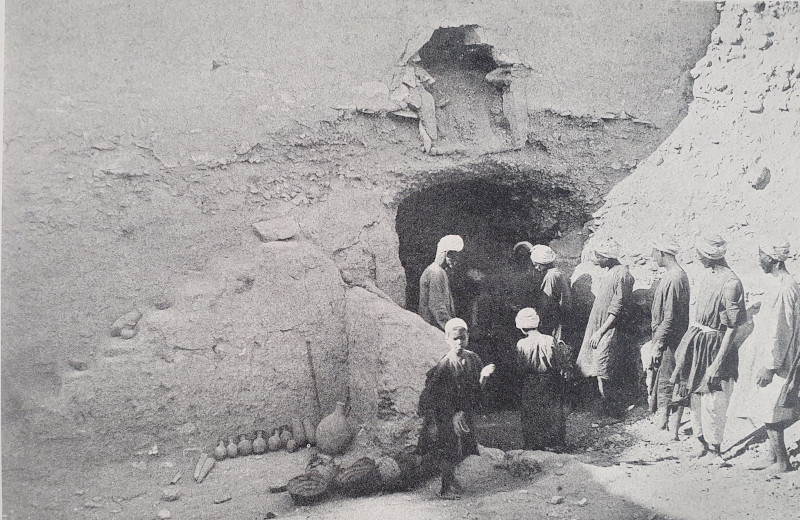
Fig 1: The excavation of Khety's tomb, Carter tomb no. 65. The pertinent stele originally stood just above the staircase and was found on the floor. Gardiner 1917, pl. 6.
Our knowledge of Khety's journeys begins with the famed Howard Carter. Before Carter discovered the tomb of Tutankhamun in the Valley of the Kings, he spent time digging in the nearby necropolis of Birabi on the Theban mountain. In the 1913-1914 season, he excavated Khety's tomb and unearthed several inscriptions from the doorway, including a rectangular limestone stele that stood to the left of the tomb entrance (Fig.1). The task of translating the text was given to the philologist Alan Gardiner who published it in a short article entitled "A tomb of a much-travelled Egyptian official" in 1917.
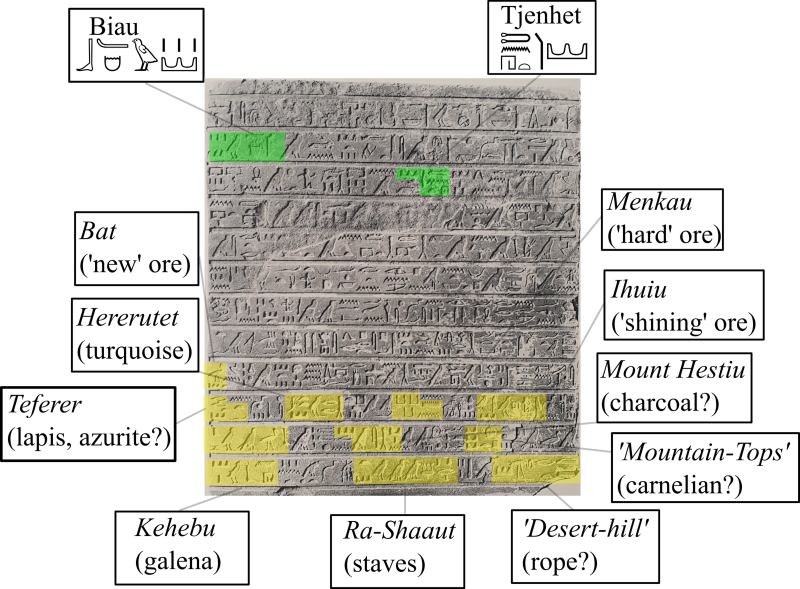
Fig 2: Khety's stele (JdE 45058), "Tjenhet" and "Biau" are highlighted in green (opening section) and the mines and other sites in yellow. After Gardiner 1917, pl. 9.
Fig. 3: Expedition stelae like this one (no. 112) are common at the turquoise mines at Serabit el-Khadem. They reference foreign expedition members, including this rare example of a "brother of the ruler of Retjenu (Canaan)" named Khebded, depicted riding a donkey. (Gardiner and Peet 1917, pl. 37).
Khety's Exploits in the Sinai
Gardiner noted the exceptional nature of this "much-travelled" official, who boasted of his journeys to distant desert quarries and mines. Such exploits are often described in Egyptian tomb biographies, but Khety's biographical text includes unparalleled detail due to the specificity of the places he mentions (Fig. 2). His travel narrative opens with a general statement:
I am a god's seal-bearer in making powerless the hill-countries. When I was in Biau, I inspected it, and I travelled-round the hill-countries of Tjenhet.
Khety subsequently proclaims other general exploits, his excavation of mining shafts, his vanquishing of the Asiatic enemies, and later his procurement of precious materials and metals from specific places: turquoise from Hererutet, copper from Bat, Menkau, and Ihuiu, galena (Egyptian eye-paint) from Kehebu, and staves from Ra-Shaaut, amongst other exotic resources. Some of these places can be located with confidence due to their mention in other texts or as the known location of minerals (all in the southern Sinai Peninsula or its adjacent shores), but other placenames are unknown. Two place names in the text, Tjenhet and Ihuiu, record names from foreign languages. It is Tjenhet which interests us here.
Khety's opening statement—his inspection of Biau and travelling round Tjenhet— acts a frame and heading for his subsequent travels. Biau, literally "mining-country", is the regular Egyptian word for the entire copper and turquoise mining area of the southern Sinai where Egyptians journeyed regularly since the Early Dynastic (c. 3100 BCE). Unlike Biau, the placename Tjenhet has no meaning in the Egyptian language and is never encountered again in attested Egyptian texts. As a foreign word, the name almost certainly stems from a locally-spoken Semitic language. Semitic speakers are well-known in the Sinai desert and are mentioned in the Egyptian expedition inscriptions erected at the turquoise mines (Fig. 3). Such people are notably credited by scholars with the creation of "Proto-Sinaitic" script by adapting Egyptian hieroglyphs to suit their own tongue (Fig. 4). This script was the precursor to Hebrew and Phoenician scripts.
Ṯnht = "Sinai"?
The puzzling placename on Khety's stele is spelt in Egyptian hieroglyphs as follows:
The first four signs are consonants and the last two signs are non-phonetic classifiers that tell the reader that this placename was a foreign land. The name is transcribed as Ṯnht in Egyptological transliteration, regularized in standardized translations as "Tjenhet". Egyptian ṯ represents a sound close to the "ch" in chip, usually transcribed as tj by Egyptologists. In trying to find a Semitic etymology for this placename, one is presented with the problem that there is no such ch sound in Semitic languages of the Levant. However, analyses of hundreds of Semitic loanwords in Egyptian texts shows that Egyptians did use their ṯ sound to transcribe a Semitic sound, namely s, the sound represented by the Hebrew letter samekh (ס).
Fig. 4: One of the so-called "Proto-Sinaitic" texts from the mines at Serabit el-Khadem (No. 349). While the symbols are reminiscent of Egyptian hieroglyphs, the text would be quite unreadable to Egyptians and encodes a Semitic tongue. (Gardiner and Peet 1917, pl. 83).
The reasons why Egyptians used their letter ṯ for Semitic s are complicated, but most linguists conclude that the sound of samekh probably had an original and older pronunciation of a sound like ts [t͡s] [1] (like cats) that later shifted to s [s] by the time of Biblical Hebrew. For Egyptian ears, this "old samekh" sound was closest to their ṯ. So when Khety's scribes and biographers transcribed Ṯnht they probably heard something like t͡snht[2]. As time wore on and sounds shifted, such a name would be later pronounced as snht. The final consonant -t in this placename is a suffix, a common element in Bronze Age placenames across Canaan and adjacent lands that is often dropped by the time of Biblical Hebrew. Taking all this into account, the "later" pronunciation of snh recalls the name "Sinai", Hebrew Sînay סיני. The reason why this equation of "Ṯnht equals Sinai" has escaped the notice of Egyptologists and biblical specialists alike has much to do with the ways in which the placename is regularly transcribed in Egyptian translations as Tjenhet or Thenhet, a pronunciation that seems wholly alien to any Semitic language like Hebrew.
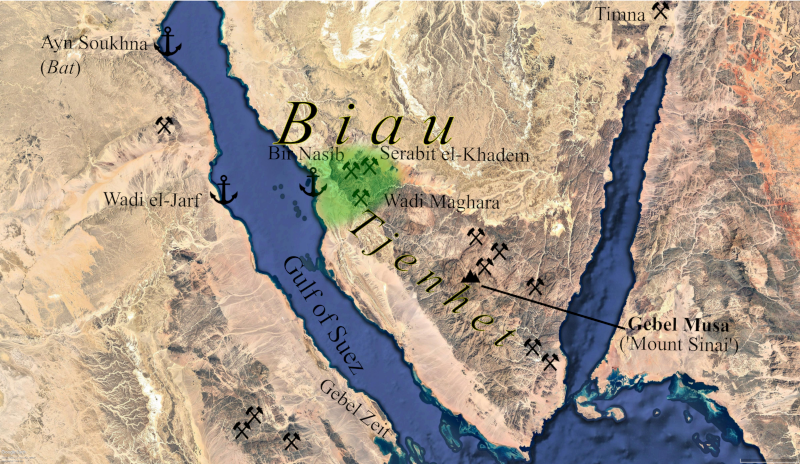
Khety's Ṯnht was a large and mountainous land, which one "travelled round" (deben), a rare verb choice which stresses its expanse. It was large enough to contain multiple khaset or "hill-countries", echoing the Biblical Hebrew expressions har Sînay "Mount Sinai" or midbar Sînay "wilderness of Sinai". Later in his biography, Khety describes the procurement of copper and other precious materials from specific mines, meaning Ṯnht likely designated the parts of the modern Sinai Peninsula from where these materials could be obtained. This would include the nearby "Egyptian" mines at Serabit el-Khadem, Bir Nasib, and Wadi Maghara but also the hills further east near Saint Catherine's monastery where Itzhaq Beit-Arieh identified mining and smelting sites at places like Watia Pass, Wadi Ahmar, and Wadi Samra.
Like the Egyptian expression Biau, Ṯnht must refer to the southern parts of the Sinai Peninsula that contained mineral wealth (Fig. 5). The reason why this toponym occurs only once in attested Egyptian texts is simple, it was a foreign word for the larger reaches of the peninsula. When Egyptians journeyed to Sinai they visited only those mines around Serabit el-Khadem and Wadi Maghara, calling the area Biau. Khety, stressing his pioneering, seems to have travelled here but also beyond these lands, recording Egyptian controlled mines as well as mine-sites with foreign names like Ihuiu.
Fig. 5: Likely locations of Biau and Tjenhet along with ancient copper sources or smelting sites. The area of Egyptian mining activity is shaded in green.
The Location of Biblical Mount Sinai
What can the mention of "Sinai" in Khety's biography tell us about the location of biblical Mount Sinai? The location of this sacred place is one of the thorniest problems in the historical geography of the bible and has been debated for centuries; James Hoffmeier's book, Ancient Israel in the Sinai: The evidence for the authenticity of the Wilderness Tradition, canvasses the varying traditions and debates. As a crescendo of the Exodus story and the place where Moses received the ten commandments, the modern location of this sacred mountain is of obvious importance to Jews, Christians, and Muslims alike.
But the tradition of locating the Mount Sinai of the Hebrew Bible with Gebel Musa, the modern "Mount Sinai", only goes back to Christian times c. 4th Century CE. This has worried many scholars, who saw such an equation as an anachronistic invention of Christian monks and pilgrims, with no earlier material or proof for a local "pre-Christian" tradition at Gebel Musa (Fig. 6). As a result, alternative proposals have proliferated and gained in popularity, with some locating 'Mount Sinai' in the northern parts of the Sinai Peninsula, the Wadi Arabah, Jordan, or even Saudi Arabia.
While it is difficult to link two place names separated by more than 700 years, the phonetic and geographic similarities between Ṯnht and Sînay would be amazingly coincidental. If Khety's Ṯnht is the early form of "Sinai", then this suggestion supports the orthodoxy (to excuse a pun) of the early Christians who located biblical "Mount Sinai" in the southern parts of the Sinai Peninsula, be it Gebel Musa or any other nearby peak like Gebel Serbal or Gebel Katerina. It is worth recalling that place names are stubborn and tenacious elements in language that can survive for a long time with little change. Many other Semitic place names like Ashqelon or Pella are similarly recorded in Egyptian documents of the Middle Kingdom and survive in a similar phonetic form to the present day, lasting for over 4,000 years. Simply put, when Khety journeyed to the mining country, well before Moses trod its mountains, local people already called it something close to Sinai.
Fig. 6: Gebel Musa, the "Mount Sinai" of later traditions.
Another implication of this equation is the etymology of "Sinai". One of the most commonly espoused origins for the name is a link to the Hebrew word snh "bush", an idea that finds its origin in the biblical narrative itself regarding the famed burning bush from which god spoke to Moses; although many other etymologies have been proposed, such as a link to the wilderness of Sin. The "bush" etymology is perfectly supported by this transcription of Ṯnh(t), although it can only be guessed how a series of sound and dialect changes may have later reproduced a name like Hebrew Sînay.