Search This Blog

Friday, August 5, 2022

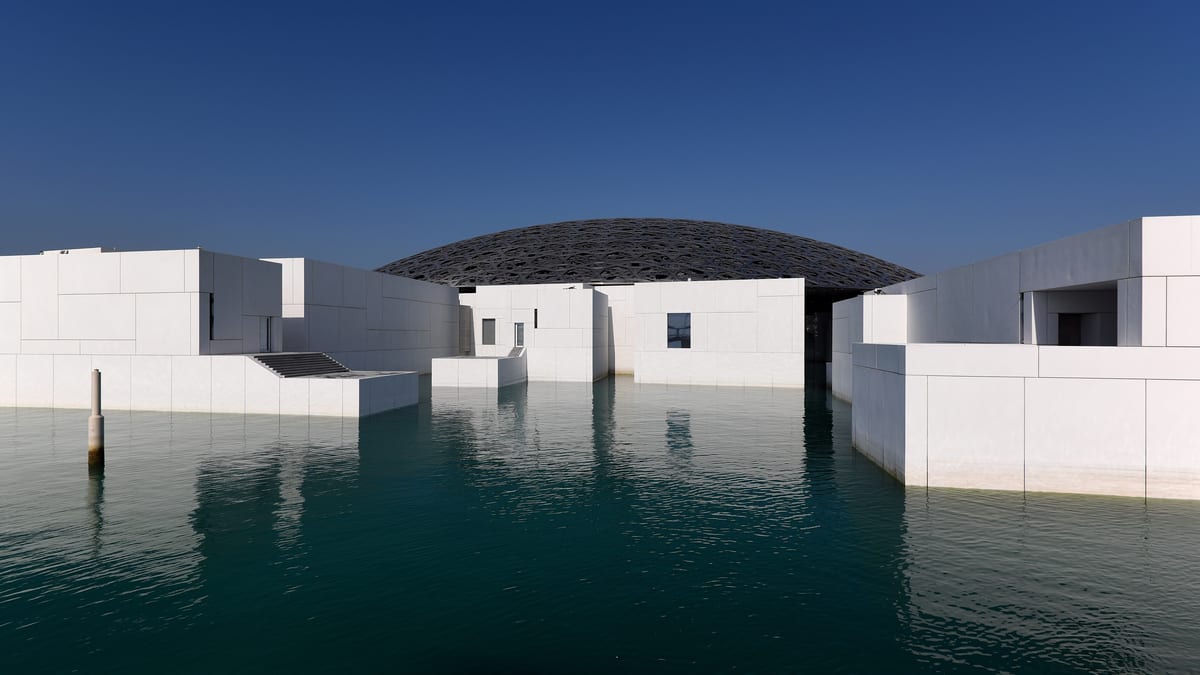
The Louvre Abu Dhabi Is Rocked by Antiquities Trafficking Scandal

https://www.thedailybeast.com/the-louvre-abu-dhabi-is-rocked-by-antiquities-trafficking-scandal

The Louvre Abu Dhabi Is Rocked by Antiquities Trafficking Scandal

MONEY TRAIL

Prominent curator Jean-François Charnier was officially charged this week with supplying charged false provenance information about artworks in the Louvre Abu Dhabi.

Tom Dulat/Getty

In late July, reports emerged that two prominent curators were being held for questioning in connection to a wide-ranging antiquities trafficking scandal that's affected the collections of the Metropolitan Museum of Art, the Louvre and the Louvre Abu Dhabi, according to Artnet.

This week, according to Artnet, one of the curators, Jean-François Charnier, was officially charged with supplying charged false provenance information about artworks that found their way into the collections of the Louvre Abu Dhabi, due to efforts Charnier made on behalf of the organization France Muséums. France Muséums declined to comment to The Daily Beast.

According to Generations Nouvelles, "five objects looted in Egypt purchased by the Louvre Abu Dhabi" are items linked to Charnier's intervention that are now part of a wide-ranging investigation, in addition to hundreds of ancient artifacts believed to have been trafficked.

"Louvre Abu Dhabi confirms it has become a civil party in the ongoing French investigations related to the alleged trafficking of Egyptian antiquities," the Louvre Abu Dhabi told The Daily Beast in a statement. "As these investigations are ongoing, we are unable to provide any further comment on the matter."

In June, the New York District Attorney's Office seized five other Egyptian antiques from the Metropolitan Museum of Art as part of the broader investigation.

Transactions involving looting antiquities are a global issue, and the practice has yet to be fully curbed by the nations involved, but some are trying: in February, fearing the practices of the Taliban, the State Department Bureau of Educational and Cultural Affairs and U.S. Customs and Border Protection placed art and antiquities from Afghanistan under "emergency import restrictions," but there's an uphill battle to be fought. In 2020, an Interpol survey found that over 850,000 ancient looted objects had been seized by global law enforcement in that year alone.

France Muséums was formed in 2007 as part of the origins of the Louvre Abu Dhabi, and on the international museum consultancy's website, it says that it "design[s] museums as ecosystems organized around artworks, that are able to interconnect very diverse audiences, cultures and territories."

Jean-François Charnier and another curator, Noëmi Daucé, have specifically been suspected of looking the other way regarding the approval of the provenance of the items in question; they worked for Jean-Luc Martinez, the former director of the Louvre in Paris, before the latter was suspended by the French government due to his connections to art trafficking. The Louvre declined to comment to The Daily Beast.

Martinez, according to Artnet, was charged with "complicity of gang fraud and laundering" earlier this year. In June, a report by French investigators was released that stated that France Muséums was guilty of "real professional negligence," "transgression of deontological rules," and "failures."


--   Sent from my Linux system.

Queens of Egyptology – europeantimes.news

https://www.europeantimes.news/2022/08/queens-of-egyptology/

Queens of Egyptology

DISCLAIMER: Information and opinions reproduced in the articles are the ones of those stating them and it is their own responsibility. Publication in The European Times does not automatically mean endorsement of the view, but the right to express it.

 
Gaston de Persigny
Gaston de Persigny - Reporter at The European Times News

0

We have all heard the name Howard Carter and know that he is the discoverer of the famous tomb of Tutankhamun in Egypt. However, history knows no less colorful ladies who left an important scientific legacy in Egyptology. I personally have a special sentiment and interest in two of them, with whom I feel connected in a special way.

We have all heard the name Howard Carter and know that he is the discoverer of the famous tomb of Tutankhamun in Egypt. However, history knows no less colorful ladies who left an important scientific legacy in Egyptology. I personally have a special sentiment and interest in two of them, with whom I feel connected in a special way.

Natasha Rambova

she is like a heroine from a movie. Her birth name was Winifred Kimball Shawhennessy. In the 1920s, she was a student of the Russian ballet master and choreographer Teodor Kozlov, and in his honor, when she was 17, she adopted the artistic pseudonym Natasha Rambova, which gradually became her official name. Later, she became one of the most extravagant designers of costumes for theater productions and film productions, and created her own fashion line. Her name is constantly mixed up in love affairs with both men and women.

They say that her mentor Teodor Kozlov and the actress and film producer Alla Nazimova, with whom they created the classic "Salome" in 1922, were also madly in love with her. Natasha Rambova played many roles in Hollywood, created costumes that are emblematic of the spirit of the time. She also went down in history with her stormy two-year marriage, followed by an equally stormy divorce from Hollywood's sex symbol at the time, Rudolph Valentino. Spicy, passionate and uncontrollable, Rambova is fascinated by all forms of art, but also by esotericism and spiritualism, and more than once declares to the sweet and melodramatic

Valentino that it is completely impossible for her to stay at home, look after children and set the table for afternoon tea. A few years after her divorce from Valentino in 1925, she married the aristocrat Alvaro de Urzaiz, and in 1936 she visited Egypt for the first time – the country that enchanted her forever and with which she would connect her life. He is then 39 years old.

Natasha spends nearly a month in Luxor. It was there that she met Howard Carter – a fateful meeting, because from that moment she decided that she would devote the rest of her life, all her means, energy, strength and emotions to the science of Egyptology. At that time he wrote in his personal diary: "I felt as if at last, after a long journey and wandering, I had returned home. The first days I was in Thebes, I couldn't stop my tears, they just flowed from my eyes. But no!… these weren't tears of sadness, but some kind of emotional release, some kind of impact from the past – a return to yourself and to the place you've loved for too long and you're finally back, where it's always been. your heart I'm home, I'm finally home!!!'

Natasha Rambova's research and contribution to the development of Egyptology is truly remarkable. He began collecting and studying various religious texts, until one afternoon, looking for information in the Cairo library, he met the director of the Institute at the time, the Russian-born Egyptologist Alexander Piankov. This acquaintance would lead to some of the most serious research and the publication of valuable books related to the sacred religious texts of Ancient Egypt – the pyramid texts from the pyramid of King Unas of the Fifth Dynasty of Egypt at Saqqara. Rambova took up research and editorial work and actively helped Piankov in his studies. Finds solid funding from foundations, helps field research in Luxor. The team obtained permission to photograph and study the inscriptions from the golden shrines that surround the sarcophagus of Tutankhamun in his tomb in the Valley. He worked as an editor on the first three volumes of the series "Egyptian religious texts" by Alexander Piankov and continued to deal with Egyptology until his last breath.

Nina McPherson Davis

She is the wife of another very talented and famous Egyptologist – Norman de Garris Davis. A true lady, a talented artist, copyist and Egyptologist, she is also known for her impeccable personal style – her long dark hair is always braided and smells of jasmine, her dress is unfailingly elegant and she always welcomes guests for afternoon tea at her house in Kurna, on The West Bank of Luxor, with fine china cups on a white linen tablecloth.

A fateful trip in 1906 to Alexandria linked her life to Egyptology. Then Nina was 25 years old and with a group of friends toured the sights of Ancient Egypt. Over a cup of tea, she meets Norman de Garris Davies, who is 16 years older than her. By this time, Norman was already an established Egyptologist, clearly stating his serious work and dedication to science. Behind him was work as an Egyptologist and copyist, and together with Sir William Matthew Flinders Petrie worked at Dendera (1897-1898).

He then headed the Egypt Exploration Fund mission, resulting in 11 volumes of copies of tombs from Saqqara, Amarna, Sheikh Said and Deir el-Gebrawi. Between 1905 and 1907 he worked with George Reisner on the Giza Plateau, as well as with James Henry Breasted, describing and studying the monuments in Nubia. Love between the two ignited at first sight, and upon returning from her trip, Nina was already engaged to Norman, and a year later, in 1907, they were married in London. In the same year, Norman headed the epigraphic mission to Egypt of major ancient Egyptian necropolises. He and his wife, Nina, settled in Luxor, where Norman began his work at Sheikh ab del-Qurna. Almost their entire life together was spent there studying the texts and images from the tombs of several major ancient Egyptian necropolises. This will become their life's work.

From 1913, Nina began working as a copyist for the Metropolitan Mission, just like her husband. This job requires extreme precision, an accurate eye and a talented hand. It is often dark and uncomfortable to work in the tombs. There is a lack of natural light in which to see the true colors. Texts and reliefs are destroyed, parts are missing, images are covered with layers of dust and dirt. Nina started using mirrors in her work to provide more light in the rooms.

Together with Norman, they began to use a new technique in their repaintings – instead of watercolor paints, they used tempera paints, with which they gave volume and density to the images. Nina mastered the technique, style and form of ancient Egyptian hieroglyphics and imagery to such an extent that her renderings can still easily fool even the professional eye today. They live in a small house in Luxor, where in the evening they like to listen to music on their old gramophone, drink tea, and after dinner continue to work until the early hours of the next day.

Sir Alan Gardiner, one of the most famous British Egyptologists, was impressed by Nina's talent and managed to organize several solo exhibitions of her in London and Oxford, and Rockefeller himself was included as a donor. With his help, two volumes of her works were published.

For the first edition of his Egyptian grammar, Sir Alan Gardiner asked Nina and Norman to produce a hieroglyphic character pool. They do, and in fact the grammar that all Egyptologists use today is based on the hieroglyphs written by Nina and Norman de Garris Davies.

In 1939, because of the complicated political situation immediately before the Second World War, the two left their house in Kurna and returned to England. Half of their belongings remain in Egypt, clearly indicating their intention to return and continue their work. However, on November 5, 1941, Norman died in his sleep of heart failure. Left alone, Nina never returned to Egypt and devoted her entire life to arranging, editing and publishing her husband's unfinished works.
--   Sent from my Linux system.

Missouri professor’s book 'Tea on the Terrace' explores Egyptology's rise | STLPR

https://news.stlpublicradio.org/show/st-louis-on-the-air/2022-08-03/how-early-egyptologists-formed-small-ephemeral-communities

How early Egyptologists formed 'small, ephemeral communities'

 A              black and white image of the Shepheard's Hotel in Cairo from              the late 1800s.
Bibliothèque nationale de France)
/
The Shepheard's Hotel in Cairo during its heyday.

The study of ancient Egypt flourished in the late 1880s, and, over the next decades of British occupation of the country, archaeologists and historians sought to study the artifacts and tombs left behind.

After working at their dig sites, these early Egyptologists gathered in hotels to discuss what they found. Their conversations, held in the hotels of Alexandria, Cairo and Luxor, became "small, ephemeral communities," writes Missouri University of Science and Technology history professor Kate Sheppard, whose research on the topic is featured in her new book, "Tea on the Terrace: Hotels and Egyptologists' social networks, 1885-1925." 

"I'm a biographer, so what happens when you're reading biographies and notes and diaries and letters, you find that a lot of the letterhead is the same," Sheppard said Wednesday on St. Louis on the Air. "It's from the Shepheard's Hotel in Cairo, or somebody is talking about, 'I went to meet this person at the Continental for tea.'"

                  Kate Sheppard, a history professor at Missouri                  University of Science and Technology, sits in a studio                  near a microphone.
Jonathan Ahl
/
Kate Sheppard, a history professor at Missouri University of Science and Technology.

This wasn't just small talk. As Sheppard discovered, these conversations — often held over tea on a hotel terrace — represented the formation of an entirely new field of study.

"That's when I kind of started thinking: What are Egyptologists doing in these spaces? Very specifically, what are they talking about? How are they forming the discipline in these really informal places? And how is that going to impact their work once they get out into the field?"

But while Egyptologists in this era like Howard Carter and James Henry Breasted rose to fame as they cracked into the ancient tombs, their findings were part of the aftermath of the 1882 conquest of Egypt by Britain.

"A lot of Egyptologists understand how the discipline was built in a colonial infrastructure," Sheppard noted.

"The fact that the English took over control of Egypt, essentially from that point in 1882, opened up the political landscape, the social landscape, the economic landscape to the English, so they could come in a lot more freely, tourists would come in more freely."

The influx of British archaeologists, joined by American counterparts, led to a period known as the Golden Age of Egyptology. But it was only a golden age for some.

"One thing that I really tried to draw out in this book is for whom was it a golden age — because you've got these hotels going up, you have tourists coming in, you have infrastructure being built, electricity lines being laid, telegraphs, rail lines, safe travel up and down the Nile. But at what expense? Who was doing the building? How much were they getting paid? Not much. How much were they getting fed? Again, not much."

While Egyptians labored, she noted, the European tourists and archaeologists found fortune and fame. For decades, the British presence enabled the export of antiquities to museums across the world, where many of these items still remain.

Kate Sheppard discusses "Tea on the Terrace" on St. Louis on the Air

Though clouded by colonialism and mass cultural theft, the legacy of these early Egyptologists — from their archaeological discoveries to the conversations they had in Cairo hotels — remains crucial to the modern study of these civilizations.

"It's hard not to fall in love with the people that you write about," she added. "But also, you are reading some of the things that they're saying about the Egyptian population, and it breaks your heart."

"St. Louis on the Air" brings you the stories of St. Louis and the people who live, work and create in our region. The show is produced by Miya Norfleet, Emily Woodbury, Danny Wicentowski and Alex Heuer. Avery Rogers is our production assistant. The audio engineer is Aaron Doerr.

--   Sent from my Linux system.

Sun Temples Project website

Mysterious ancient Egyptian temple found after 4,500 years 02 | TweakTown.com 

https://www.suntemplesproject.org/

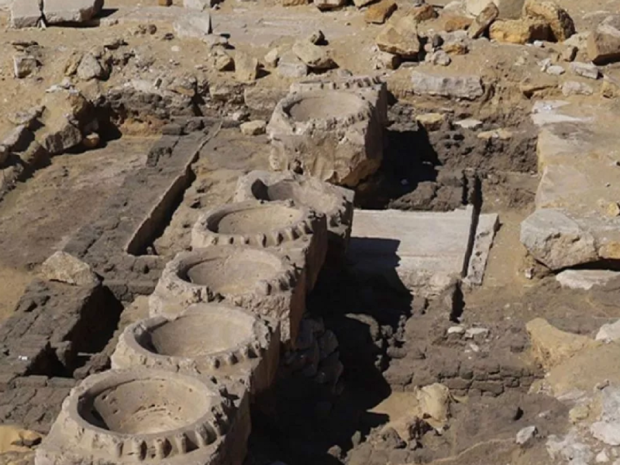
Good background for the recent sun temple findings at Abu Ghorab. 

Glenn


--
Sent from my Linux system.

Monday, August 1, 2022

ARCE-NC Zoom Lecture Aug. 28 - Consumed in Raging Fire: Cremation Burial in Ptolemaic Alexandria


The American Research Center in Egypt, Northern California Chapter, and the Near Eastern Studies Department, University of California, Berkeley, invite you to attend a virtual lecture by Dr. Thomas Landvatter, University of Michigan:


Consumed in Raging Fire: Cremation Burial in Ptolemaic Alexandria

Sunday, August 28, 2022, 3 PM Pacific Time


Zoom Lecture. A registration link will be automatically sent to ARCE-NC members. Non-members may request a registration link by sending email with your name and email address to arcencZoom@gmail.com. Non-members, please send any registration requests no later than Friday, August 26. The number of registrations is limited, so the sooner you register, the better.

Glenn Meyer
ARCE-NC ePublicity


Cremation Urn from Alexandria - Photo courtesy of Dr. Landvatter

About the Lecture:

Mummification is, of course, the burial practice most associated with ancient Egypt. It may come as a surprise, then, that for a period of time cremation - the very antithesis of mummification - is attested in Egypt. During the Ptolemaic period (305-30 BCE), when Egypt was ruled by a dynasty of Graeco-Maedonian origin, it is clear that mummification remained the burial treatment of choice for many elite classes across Egypt. However, a significant minority of burials in the capital of Alexandria and elsewhere were in fact cremations. In this talk, I explore the cremation burials of Ptolemaic Alexandria, who used cremation and why, and what cremation reveals about the cultural and social environment of that city. I argue that these cremation burials and their meaning can only be understood in relation to Egyptian mummification and other cultural practices, as well as the unique social and cultural environment of early Alexandria. About the Speaker:


Dr. Tom Landvatter
(PhD, Interdepartmental Program in Classical Art and Archaeology, University of Michigan), is Associate Professor of Greek, Latin, and Ancient Mediterranean Studies and Humanities at Reed College in Portland, Oregon.  His teaching and research interests center on the history and archaeology of the eastern Mediterranean during the Hellenistic period (323-30 BCE), in particular Cyprus and Ptolemaic Egypt. He has excavated in Egypt at both Mendes and, especially, Abydos, which has been an ongoing focus of his research and publications. Currently he co-directs an excavation at the Hellenistic fortification of Vigla, near Larnaca, Cyprus.

About ARCE-NC:

For more information, please visit https://facebook.com/NorthernCaliforniaARCE/, https://arce-nc.org/, https://twitter.com/ARCENCPostings, or https://khentiamentiu.org. To join the chapter or renew your membership, please go to https://www.arce.org/general-membership and select "Berkeley, CA" as your chapter when you sign up.

--   Sent from my Linux system.