Search This Blog

Wednesday, October 4, 2017

Luxor News - Jane Akshar: New Ticket Prices 1st November 2017


http://luxor-news.blogspot.com/2017/10/new-ticket-prices-1st-november-2017.html

Wednesday, 4 October 2017

New Ticket Prices 1st November 2017

Ticket prices for Egyptians went up 1st October but ticket prices for foreigners go up 1st November thanks to Hussein Omar and Mohamed A Fahmy for confirming that. I have not got all the prices but this is my best guess.

I just phoned Ahmed Khalifa at the Luxor Pass office and he said there is no change to the Luxor Pass

Site                                                                                 Old        New


Assasif Tomb  40 80
Ay Tomb  30 60
Benji, Khonsu, Userhet 30 60
Carter House 50 90
Colossus

Deir El Bahary Temple  50 90
Deir El Medina Tombs  40 80
Isis Temple 40 80
Karnak Temples  80 120
Khokha El Khoukha Area  30 60
Luxor Museum  100 160
Luxor Temple  60 100
Medinet Habu Temple  40 80
Menna And Nakht  30 60
Merenptah Temple  20 40
Mut Temple 40 80
Mummification Museum At Luxor  60 100
Open Air Museum At Karnak  40 80
Pabasa Babaza Tomb  30 60
Pashedu  30 60
Qurnet Marie 40 40
Rameses Vi At Valley Of Kings  50 90
Ramesseum Temple  40 80
Ramouze Tomb  40 80
Roy & Sheroy  20 40
Sennefer & Rekhmire 30 60
Seti I Temple Of Seti The First  30 60
Seti Tomb 1000            ?
Taftaf  4 4
Tomb Of Nefertari 1000 ?
Tutankhamun  100 160
User Hat , Khonsu & Benya  40 80
Valley Of The Kings  100 160
Valley Of The Queens  50 90
Sent from my Linux system.

Archaeologists unearth largest-ever discovered obelisk fragment from Egypt’s Old Kingdom - Ancient Egypt - Heritage - Ahram Online


http://english.ahram.org.eg/NewsContent/9/40/278261/Heritage/Ancient-Egypt/Archaeologists-unearth-largestever-discovered-obel.aspx

Archaeologists unearth largest-ever discovered obelisk fragment from Egypt's Old Kingdom

Nevine El-Aref , Wednesday 4 Oct 2017

Waziri and Collombert on site
A Swiss-French archaeological mission at the Saqqara necropolis, directed by Professor Philippe Collombert from the University of Geneva, has unearthed the upper part of an Old Kingdom obelisk that belonged to Queen Ankhnespepy II, the mother of King Pepy II (6th Dynasty, Old Kingdom, around 2350 BC).

Collombert said that the part of the obelisk that was unearthed is carved in red granite and is 2.5 metres tall; the largest fragment of an obelisk from the Old Kingdom yet discovered.

"We can estimate that the full size of the obelisk was around five metres when it was intact," he said.  

Mostafa Waziri, secretary-general of the Supreme Council of Antiquities, told Ahram Online that the artefact was found at the eastern side of the queen's pyramid and funerary complex, which confirms that it was removed from its original location at the entrance of her funerary temple.

"Queens of the 6th dynasty usually had two small obelisks at the entrance to their funerary temple, but this obelisk was found a little far from the entrance of the complex of Ankhnespepy II," Waziri pointed out, suggesting it may have been dragged away by stonecutters from a later period.

Most of the necropolis was used as a quarry during the New Kingdom and Late Period.

Waziri said that the obelisk also bears an inscription on one side, with what seems to be the beginning of the titles and the name of Queen Ankhnespepy II.

"She is probably the first queen to have pyramid texts inscribed into her pyramid," Waziri said.

He explains that before her, such inscriptions were only carved in kings' pyramids. After Ankhnespepy II, some wives of King Pepy II did the same.

Collombert says that at the top of the obelisk, there is a small deflection that indicates that the pyramidion (the tip) was covered with metal slabs, probably of copper or golden foil, to make the obelisk glint in the sun.

The main goal of the mission, which was established in 1963 by Jean-Philippe Lauer and Jean Leclant, is to study the pyramid texts of the Old Kingdom.

Since 1987, the mission has also been excavating the necropolis of the queens buried in pyramids around the pyramid of Pepy I.

This year, the mission is continuing work on the funerary complex of Queen Ankhnespepy II, the most important queen of the 6th dynasty.

Ankhnespepy II was married to Pepy I, and upon his death, she married Pepy I's son, Merenre, from her sister Ankhnespepy I.

Ankhnespepy II gave birth to the future King Pepy II. Merenre died when Pepy II was around six years old.

Ankhnespepy II then became regent, and the effective ruler of the country, but did not go as far as to become pharaoh, as Hatshepsut did later on.

"This is probably why her pyramid is the biggest of the necropolis after the pyramid of the king himself," he said.

The newly discovered obelisk
Waziri and Collombert on site
Search Keywords:
Short link:
--   Sent from my Linux system.

Mud brick and termites in Amarna – Amarna Anniversary


https://amarnaanniversary.wordpress.com/2017/09/12/mud-brick-and-termites-in-amarna/

Mud brick and termites in Amarna

While famous for its decorated stonework talatat, Amarna was predominantly a mud-brick city. Richard Hughes outlines efforts to protect and stabilise its mud brick ruins.

The siting of Amarna was ideal for its speedy construction via a military-like mass-production campaign making, shifting around and placing down mud bricks (adobes). The riverbank and floodplain graded silty soils and mixed-in calcareous desert graded coarser sandy-silts were ideal for moulding into bricks, the sun then used for free quick drying and hardening of the soil mix. The simple prismatic modules, like 'lego' blocks, were ideal for rectangular and flat-faced buildings of all types. As with buildings today one was generating the right brick sizes and bonding configurations for the design wall widths, wall heights and corner turning – those of best quality were used in the wall faces and 'seconds' in the wall cores. The walls were constructed using brick-bedding mortars of the same muds but of a sloppy consistency; the house shells were then variously finished off with better quality internal and external soil renders. The city's major monuments were commonly finished off with the now famous dressed and often decorated stone talatat. Only a few buildings appear to have used lime/gypsum-based renders. The more temporary mud/rubble huts and small houses of the workers were usually left un-rendered.

Consolidation of brickwork at the North Palace in 2002, with new brick cappings and facings added to protect the ancient brickwork. Note the horizontal render-filled grooves in the wall faces where wooden beams were once located.

Generally, mud brick construction followed normal procedures found elsewhere in pharaonic times, not much different from as seen today with a traditional approach throughout Egypt – not a particularly skilled undertaking, the product valued for the semi-industrial/hand-mechanised speed of construction and for the resulting consistent form, size and surface finishes. Within the various archaeological excavations it has been possible to see precisely how the vast construction labour-force(s) worked to make and precisely place bricks and mortar, how they used their tools and how the many small teams interfaced. It is even possible to differentiate left and right handed workers and in which directions walls were built. Many workers left impressions of their feet in mud splattered around the base of walls they were constructing. The same mass-construction, in the same short time-frame, would not have been achievable using dressed or even rubble stone walls!

As some of our technical studies showed, the resulting soil walls also had a remarkably good thermal performance, not so much related to soil mineralogical composition but to wall orientation, surface shading and especially the low degree of mud compaction within the casting moulds, and by default, internal entrapment of air in the open soil pore structure as this replaced pore water during brick drying.

However, there were by design, some rather interesting tricks-of-the-trade – particularly the use of a tough coarse grass (possibly related to Imperator Cylindrica) for reinforcing the mortar beds around doors and windows. Another was the incorporation of imported and embedded Cedar of Lebanon timbers, for giving monument walls a higher level of robustness and in- and out-of-plane structural stability, via an improved wall tensile and shear strength capability.

However, in one respect the builders got it all wrong! Occasionally the mud mix before casting into bricks, and even more so that used for renders, was 'improved' with chopped straw. This is a technique noted in the Bible, used to good effect with the very plastic clayey soils of the Nile delta. The Amarna more granular and less clayey soils didn't need an artificial means to control any minor shrinkage and cracking.

This 'stabilisation' has to be seen in context of Amarna being mostly sited, then as now, laterally at the geomorphological interface zone where soil moisture reflects on the desert (very dry) conditions to the east and the (moderately damper) river induced regime to the west – a zone good for agriculture and brilliant, unfortunately for Amarna, for termites. Present-day Amarna villages are also located in this zone.

As we know Commander Kemp has waged a military campaign against termite multi-pronged / mass-attacks into the Amarna artefact storage magazine. Concrete floors and insecticides only give some effective resistance – in the villages chickens are the defensive troops. In the conservation of the Small Aten Temple putting back some of the timber reinforcement tie beams for the conservation programme, even with rather dangerous (to us) chemical treatment, hasn't halted the battalions of termites munching yet again their way through the wood. For the well-known grain storage bins found in many Amarna houses it was perhaps only elevated levels of CO2 that provided resistance to overwhelming insect infestation and territory capture!

But for many house walls the story is different, the chopped straw sometimes added to the mud bricks, and particularly their renders, was a good way of donating an in-built free food supply to the termite NGO armies – they must have had an instant set of biblical sized good harvests. Then and as now archaeologically excavated, these mud bricks, and their plaster coatings even more so, quickly became sponge like in appearance – full throughout of interconnected holes and tunnels. This also supported how the occupying armies moved around and were billeted internally, as walls (effectively classic termite air conditioned towers) heated up and cooled down during daily sun, shade and micro-wind cycles. Wooden fittings such as door and window frames, and columns, would have provided another source of sustenance. Perhaps to counteract this, many mud bricks used gravel rather than straw render, and these have often remained quite stable when protected from weathering, even if their plaster coatings are mostly lost. In a sense it was all rather fortunate that Akhenaton died not too long after Amarna was reasonably complete, this resulting in its abandonment! Otherwise, there was going to be one hefty payment to someone for carrying out repairs. The instant ruins then became rather self-buried in brick rubble mounds, also one assumes abandoned by the termites, marching on to richer pickings elsewhere!

Newly made bricks, laid out to dry in the sun.

Today in the conservation agenda the straw is not added, so there is perhaps some loss of replication authenticity. But, at least we hope they last longer and now we already know they are effectively protecting original in situ wall fabrics from on-going decay. The experimental programmes originally utilised smidgens of Ordinary Portland cement and building lime, and now just a small amount of the latter, for soil stabilisation in mud brick making. This is to replicate the effect of calcium carbonate deposition which slowly takes place over the centuries. High levels of engineered compaction is also applied, where we have needed an 'instant' improved unconfined compressive strength to match that of the original bricks found now after some 2500 years survival. Perhaps even more importantly we seek a far greater abrasion resistance, as occurring in desert sand storms, aiming to reduce the normal needs for maintenance.

For those soon heading off to Amarna for the next excavation season, termites don't feature in camp life dinner menus except via chickens, but they could be used for emergency rations. Vintage mud brick dust is freely available for toothpaste or salt/pepper substitute, whether one likes it or not!

Adding mud mixture to the brick mould during early consolidation work in 1988.

Richard Hughes is a Structural Engineer and Historic Building Conservator. His experimental work in the 1980s helped establish current protocols for protecting Amarna's brickwork. To read more about the consolidation of monuments at the site, work supervised in the field by Michael Mallinson and later Suresh Dhargalkar, please visit the Amarna Project website.

--   Sent from my Linux system.

(99) Polish Mission Qurna - Home - Tomasz Górecki (1951-2017)


https://www.facebook.com/polishmissionqurna/?hc_ref=ARTEEhf-6dk_WVVIKucd6gTqv6SAhXfMskbTaxm2YbUwl6luKrPoE-vKqbctdKBnI3M&fref=gs&hc_location=group

Tomasz Górecki (1951-2017)
With deepest sadness we inform that on 29 September, 2017 Tomasz Górecki has passed away. He has been the director of the Polish Archaeological Mission at Sheikh Abd el-Qurna since the very beginning, our outstanding boss and wonderful colleague. Our grief at this unexpected death is hard to express, we are passing the condolences to His Family.

--   Sent from my Linux system.

Ancient wall markings of wild animals uncovered in South Aswan - Ancient Egypt - Heritage - Ahram Online


http://english.ahram.org.eg/NewsContent/9/40/278221/Heritage/Ancient-Egypt/Ancient-wall-markings-of-wild-animals-uncovered-in.aspx

Ancient wall markings of wild animals uncovered in South Aswan

Pre-Dynastic wall markings have been uncovered in Subeira Valley near Aswan

Nevine El-Aref , Wednesday 4 Oct 2017

new discovered graffiti
During an archaeological survey in the desert of Subeira Valley, south Aswan, an Egyptian archaeological mission from the Ministry of Antiquities stumbled upon pre-Dynastic rock markings.

Mostafa Waziri, secretary-general of the Supreme Council of Antiquities, explained that the markings can be dated to the late pre-Dynastic era, and were found engraved on sandstone rocks. They depict scenes of troops of renowned animals at that time, such as hippopotamuses, wild bulls and donkeys, as well as gazelles. Markings showing workshops for the production of tools and instruments were also found on some of the rocks.

Nasr Salama, director general of Aswan and Nubia Antiquities, described the newly discovered markings as "unique and rare" in Egypt. He pointed out that similar markings were previously uncovered at sites in Al-Qarta and Abu Tanqoura, north of Komombo town.

"These markings helped archaeologists to determine the exact dating of the newly discovered ones in Subeira Valley," Salama asserted. He added that 10 new sections of wall markings at around 15,000 years old had been discovered.

Adel Kelani described the discovery as important because it dates to the same period of markings founds in caves in southern France, Spain and Italy, which confirms the idea that art and civilisation during that time spread from Africa to Europe and not vice versa.

new discovered graffiti

--   Sent from my Linux system.

Tuesday, October 3, 2017

Repairing our Inner Seals | UCL Museums & Collections Blog


http://blogs.ucl.ac.uk/museums/2017/10/03/repairing-our-inner-seals/

Repairing our Inner Seals

By Louise Bascombe, on 3 October 2017

Firstly, I would like to apologise to those readers who think that this blog will be about the type of seals who like to eat fish. It is, in fact, about the seal created by a layer of tape, which protects conserved papyri from external forces. I'm not really sorry, however, because this blog is all about the importance and means by which we protect and save objects, some nearly 4000 years old, for both the present and the future.

This poor exposed seal….

As accessibility is the main aim of the Papyrus for the People Project, we knew that we would need to make sure that our collection was able to handle, well, handling. Conservation is key, so from February to April 2017, we conducted a conservation survey of the collection. 

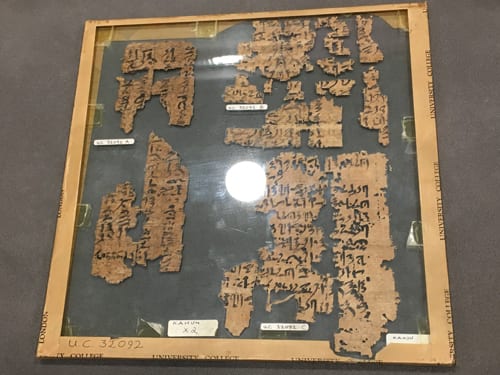
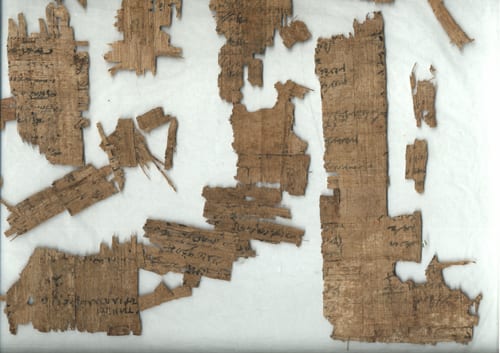
Most of the papyri in the museum has been conserved by being sandwiched between two sheets of glass, which have then had tape applied around the edges to seal it. This structure that the papyrus sits in is called a frame and is the most common way to conserve papyri. However, when the tape becomes frayed, or is ripped off completely, the inner seal is broken and this means that the papyrus could potentially be exposed to pests, humidity, water-damage and dust.

Therefore, as we pulled out each individual frame from the cupboard they are stored in, we checked: the location, its measurements, the condition of the tape, the condition of the glass, the safety of the papyrus within and the stability of any inks or pigments.

The most common conservation issues included:

– Sticky tape corners.

Sticky Corners

– Ripped and torn tapes around the edges of the frames.

– Broken or cracked glass.

After years of stress, this glass has finally cracked.

– Old Sellotape, often under another type of tape, which is now stained and degrading.

Tape on Tape Action. Also I think the fragment on the lower right is trying to escape…

– Papyrus which has not been mounted properly and has moved within the glass.

Slipped Fragments

This information was put into a spreadsheet, which allowed us to collate and rank the data; prioritising those items requiring the most difficult or time-consuming conservation treatment. This list was then sent to our conservator, Vania Assis, who is currently repairing them.

Vania in the middle of making UC32058 look its best

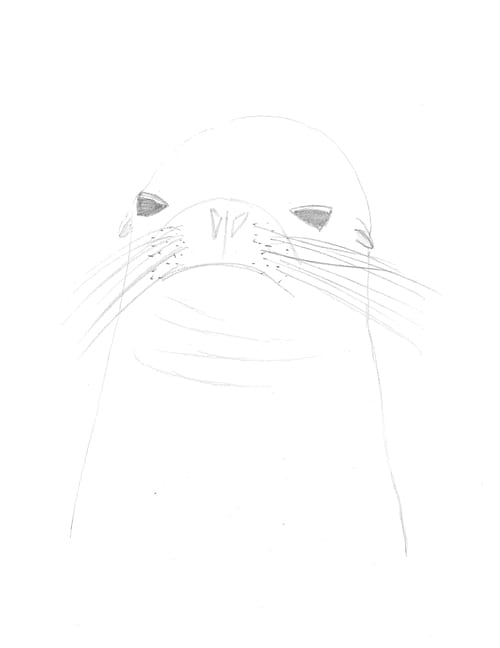
But I couldn't bear to disappoint anyone, so I'll here's a 'real' seal as well.

He's not happy I've dragged him into this.


The Designation Scheme recognises, celebrates and champions significant collections of national and international importance held outside national museums. Awards of Designated status are made by an independent expert panel, based on the collection's quality and significance.

The 2016-18 round of the Designation Development Fund is investing £1,330,849 to support projects that ensure the long-term sustainability of Designated museum collections.

The Designation Development Fund recognises the importance of excellent collections and provides funding for projects that ensure their long-term sustainability, maximise their public value and encourage the sharing of best practice across the sector. In this round, we will focus on opportunities around research and understanding of Designated collections.

***Arts Council England champions, develops and invests in artistic and cultural experiences that enrich people's lives. We support a range of activities across the arts, museums and libraries – from theatre to digital art, reading to dance, music to literature, and crafts to collections. Great art and culture inspires us, brings us together and teaches us about ourselves and the world around us. In short, it makes life better. Between 2015 and 2018, we plan to invest £1.1 billion of public money from government and an estimated £700 million from the National Lottery to help create these experiences for as many people as possible across the country. http://www.artscouncil.org.uk/


--   Sent from my Linux system.

Ministry of Antiquities launches new storage facility in New Valley - Egypt Today


http://www.egypttoday.com/Article/4/25717/Ministry-of-Antiquities-launches-new-storage-facility-in-New-Valley

Minister of Antiquities opening the newly built storage facility (Photo courtesy to Ministry of Antiquities)

Ministry of Antiquities launches new storage facility in New Valley

Mon, Oct. 2, 2017

CAIRO – 2 October 2017: Minister of Antiquities Khaled El Anany inaugurated a new storage for antiquities at a museum in New Valley governorate on Sunday.

The project is the first storage room to be built based on high technological standards after 2011 and will be operating under the Ministry of Antiquities, according to a statement from the ministry.

The storage facilities are meant to protect Egyptian antiquities as it includes surveillance to assist in protecting museums from theft.

Built over 18 months, the museum's storage room is expected to include 10,000 antiquities as it spans over 2,400 square meters and has two divisions; one for administrative purposes and the other will include nine storage halls that can hold heavy antiquities and renovation labs.

--   Sent from my Linux system.

Egyptian civilization seminar to take place in Malawi Museum - Egypt Today


http://www.egypttoday.com/Article/4/25798/Egyptian-civilization-seminar-to-take-place-in-Malawi-Museum
Malawi Museum-File Photo

Egyptian civilization seminar to take place in Malawi Museum

Tue, Oct. 3, 2017

CAIRO – 3 October 2017: The Malawi Museum has organized a cultural seminar titled, "Egyptian Civilization between Past and Present," which takes place on Tuesday, October 3 at 11 a.m.

Elham Salaheldin, the head of the museums sector took part in the Ministry of Antiquities' celebrations commemorating the great victory of the 6th of October war through this seminar.

The symposium which is to be given by Ahmed al-Leithy, the museum director, revolves around the history of the most important Egyptian victories and in Egyptian civilization throughout the ages, in order to introduce young people to their history and connect them with their Egyptian identity.

Malawi National Museum was founded in June, 1962, in Malawi village, Minya governorate, Upper Egypt, in the era of the late Egyptian President Gamal Abdel Nasser.

The museum contains an important collection of Ancient Egyptian artefacts. It houses a lot of pieces from nearby sites like Tuna al-Gebel and Hermopolis. The displayed objects in the museum include animal mummies and statues.

In August 2013, following the dispersal of the Rabaa and Nahda sit-ins, pro-Muslim Brotherhood protesters stormed the Malawi Museum, leaving it almost completely looted. But after three years of renovation, the Malawi National Museum stands in an even better shape than before. A total of 1,090 artefacts were stolen, and about 48 other pieces were destroyed as they were too heavy for vandals to carry.

The stolen objects include coins, jewels, and statues dating from the beginning of Egyptian history to the Islamic period. Now, the museum contains more than 1,000 objects, 503 of which are new pieces that were added after renovations
--   Sent from my Linux system.

Hawass: Ancient Egyptians denounced homosexuality - Egypt Today


http://www.egypttoday.com/Article/4/25825/Hawass-Ancient-Egyptians-denounced-homosexuality
Zahi Hawass – File Photo

Hawass: Ancient Egyptians denounced homosexuality

Tue, Oct. 3, 2017

CAIRO – 3 October 2017: The famous archaeologist, Zahi Hawass, announced that Ancient Egyptians denounced homosexuality, pointing out that recently discovered papyrus belonging to King Pepi I, which stirred controversy, was to raise awareness against homosexuality.

Hawass explained that the papyrus pointed out that King Pepi II, who ruled Egypt at the age of eight and died at the age of 98, left his palace one night, took a ladder, and landed inside the house of the army commander. He pointed out that the papyrus was written in Hieratical twice and that archaeologist Brekken wrote about and explained it.

"The ancient Egyptians were dissatisfied with the King's action, so they repeated the story twice, to raise people's awareness and warn them of such an inappropriate action," said Hawass.

Hawass pointed out that foreign archaeologists thought that the scenes of two brothers' bonding to each other, or the scene of King Akhenaten when he was kissed by his children, were indicators of homosexuality. However, he explained to them that kissing girls and young boys is simply an authentic Egyptian tradition.

Hawass is one of the most distinguished archaeologists worldwide, and has many discoveries to his name. He is also the author of hundreds of books in different languages. His recent discoveries include the Tombs of the Pyramid Builders and the Valley of the Golden Mummies.

Among the important works of Hawass is that he headed the team that scanned King Tutankhamun's mummy to unravel mysteries surrounding the lives and deaths of other Ancient Egyptian kings
--   Sent from my Linux system.

Finishing the packaging of Tutankhamun’s chariot and bed - Egypt Today


http://www.egypttoday.com/Article/4/25837/Finishing-the-packaging-of-Tutankhamun's-chariot-and-bed
Tutankhamun's chariot - File Photo

Finishing the packaging of Tutankhamun's chariot and bed

Tue, Oct. 3, 2017

CAIRO – 3 October 2017: The Grand Egyptian Museum team has finished packaging the second historic chariot and bed of Tutankhamun, in order to transport them to the new Grand Egyptian Museum (GEM), located two kilometres from the Giza Pyramids.

The repair team used modern materials and methods in the process of packing and moving the bed. They used precise air lifters under the base of the bed, and placed it on materials that facilitate moving it from the base area without any mechanical stress to the body of the bed. Previous studies on the internal structure and wooden joints of the bed have been implemented using an X-ray device, which greatly helped identify the points of weaknesses in the bed, and determined the amount of intervention needed to maintain it during the transfer process.

The treasures of King Tutankhamun were exhibited in the Egyptian Museum located in Tahrir square, since their discovery inside the tomb of King Tutankhamun in 1922, in the Valley of Kings on the western bank of Luxor.

In earlier statements, Minister of Antiquities Khaled al-Anani said that 50 percent of the work needed to build the new museum has been finalized, and the first phase will be inaugurated next year. The first phase will include a room for Tutankhamun's relics.

The museum is expected to be one of the largest museums in the world.
--   Sent from my Linux system.

Egypt News.Net - Egypt puts 17 men on trial for homosexuality


http://www.egyptnews.net/news/254888867/egypt-puts-17-men-on-trial-for-homosexuality

Egypt puts 17 men on trial for homosexuality

News24 - Monday 2nd October, 2017

Cairo - Seventeen men suspected of being homosexuals went on trial in Egypt on Sunday for alleged "debauchery" and "incitement to debauchery", judicial sources said.

There was no further information about the hearing which was closed to journalists, and defence lawyers were not immediately available for comment.

Homosexuality is not expressly outlawed in Egypt, but gays have previously been charged with debauchery in the deeply conservative Muslim society.

Security forces arrested at least six people after they held a rainbow flag representing lesbians, gays, bisexual and transgender (LGBT) people at a concert by Lebanese band Mashrou' Leila in Cairo on September 22.

"The fact that Egypt's public prosecutor is prioritising hunting down people based on their perceived sexual orientation is utterly deplorable," Amnesty International said in a statement.

The Egyptian authorities' use of smartphone dating apps such as Grindr to find LGBT people and raids on places they frequent has sparked panic in the community.

The Supreme Council for Media Regulation on Saturday banned "any promotion of homosexuality" in the media, describing it as a "shameful sickness".

"We have identified at least 22 people who have been arrested since the (Mashrou' Leila) concert," said Dalia Abdel Hamid of the Egyptian Initiative for Personal Rights (EIPR).

Human Rights Watch has appealed to the Egyptian government to stop its repression of homosexuals.

In April 2016, 11 men suspected of being gay were sentenced to 12 years in prison for "inciting debauchery", triggering widespread international condemnation.

Source: News24

--   Sent from my Linux system.

ASU archaeologists dig deep - The State Press


http://www.statepress.com/article/2017/10/spmagazine-asu-archaeologists-dig-deep

ASU archaeologists dig deep

University professor leads an archaeological team into the Sudanese deserts and makes ground-breaking discoveries

"Bones and cats," Brenda Baker, who has a doctorate in anthropology, says, holding out her coffee mug decorated with a drawing of a skull made of felines. "These are two of my favorite things." 

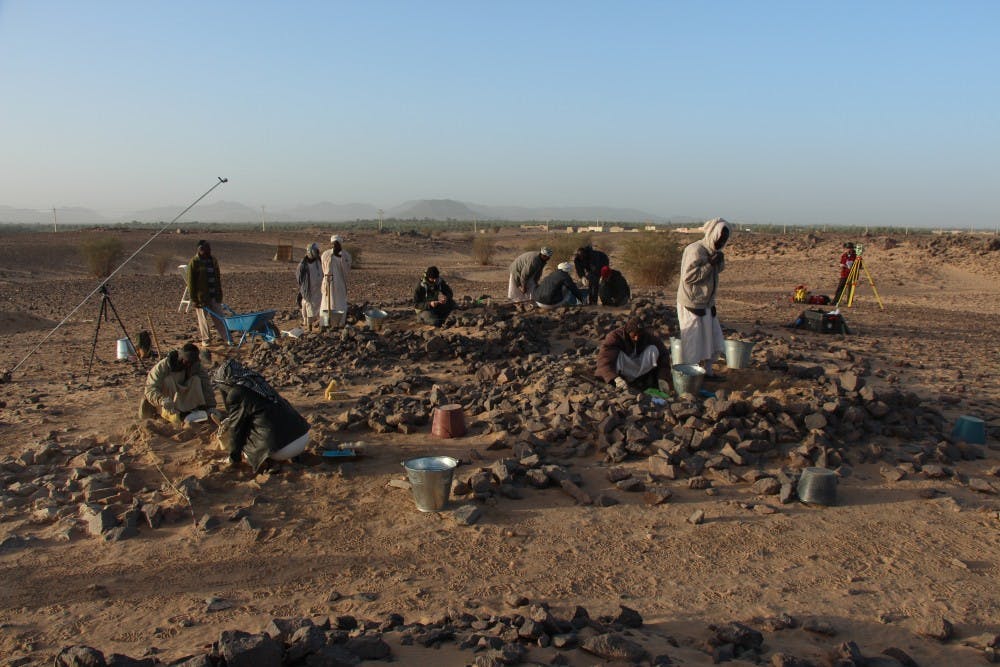
Baker is an associate professor at the School of Human Evolution and Social Change (SHESC) and specializes in bioarchaeology, human osteology and paleopathology. She is also the co-editor-in-chief of Bioarchaeology International and recently returned from working on dig sites in Sudan. 

While she gathers her data and research from her sites after visiting Sudan, Baker continues her research with several ASU graduate and postgraduate students. In Sudan, Baker examined the remains of ancient ancestors through their bone structures at different geographical sites. She and her students study her findings and record them in the school's lab. 

Courtesy Brenda Baker

Map of the Sudanese excavation sites.

"I always wanted to get to work in Nubia and started working in earnest and got to Sudan for the first time in 2006," Baker says. "I went there for a call for help to salvage material from the fourth cataract region because they were building a massive dam. This was going to submerge a huge area and was virtually unknown archaeologically. I got involved with those that needed help particularly in cemetery sites." 

Each piece of bioarchaeology Baker researches in Sudan is part of a giant puzzle as if ancient ancestors had left a story for her research team to piece together. 

Baker's research team has recorded and located about 200 sites throughout the course of working in Sudan. Some are a part of Baker's project titled, Bioarchaeology of Nubia Expedition (BONE) in which different team members use their skills to solve the mystery of each site. 

ASU postgraduate student from the University of Toronto, Aleksandra Ksiezak is a member of the expedition provides her expertise on studying pottery.

"Based on the fragments I study and all the ceramic material the field team recovers from the site, I also try to establish the date of when the [ceramic material] was made," Ksiezak says. "This helps everyone else to assign the proper date of the burial. I am able to establish framework or brackets of each context. I analyze the shape, decoration and manufacture technology."

Ksiezak solved a part of a puzzle when she figured out one of the women on the site was an immigrant potter.

"[The woman] was an immigrant from the east desert because of the different pottery culture which was never made in the area the field team was studying," Ksiezak says. 

Ksiezak says the way the woman made those pots proved that she grew up somewhere else and arrived in that specific site. 

With the help of Baker and her research team, countless stories of ancient ancestors unraveled. Baker described the feeling of seeing these discoveries as being full of "intense emotional swings that hit you" during the excavation.

"You have these mixed emotions in that you're really excited but you know something like that could happen today very easily," she says. "You get choked up with these intense emotional swings while excavating the site. These things happen in those villages today with no real health care."

Of the many stories and ancestors discovered, Baker says finding a skeleton of a mother who experienced a breeched birth. The head of her baby was still in her pelvis.

"You have intense emotional swings when you're excavating something like that," Baker says. 

ASU postdoctoral research associate Katelyn Bolhofner worked with Baker on her Sudanese skeletal collection excavated from the Ginefab School Site. Both worked on publishing papers on dental avulsion, or the process of teeth wearing down, within those individuals on the site.

"Brenda is the queen of puns," Bolhofner says. "She works incredibly hard, long hours in the field, but maintains a sense of humor throughout. She is careful and thorough in her research and writing and is an excellent teacher."

Bolhofner also worked with Baker in Cyprus, where they discovered the earliest known case of leprosy on the island. 

"I owe much of my knowledge of osteology and paleopathology to Dr. Baker," she says. "She gave me many professional opportunities. I am grateful to have had her as a mentor throughout graduate school."

Baker's research while working in Sudan was accompanied with learning more about the present culture and surrounding communities as well.

"A lot of people have a misconception in Sudan in that it's a horrible place and unsafe," Baker says. "I am located in the northern rural part of Sudan which recently got electricity. People (in Sudan) are so friendly and helpful. We reciprocate help if we saw a vehicle stuck in the sand. We make connections with farther away communities. If you get stranded someone will take you in. It amazes international team members the attitude towards helping people and not just driving by them."

Baker says creating Bioarchaeology International was daunting, but worth it.

"It's so different to be able to hold the hard copy," Baker says. "Just developing a new journal is an awful lot of work. Seeing it being published with other people's excitement is very rewarding."

______________________________________________________________________________________________

Reach the reporter at Ashlee.Thomason@asu.edu or follow @ThomasonAshlee on Twitter.

Like The State Press on Facebook and follow @statepress on Twitter.


--   Sent from my Linux system.