4,000-year-old handprint discovered on ancient Egyptian tomb offering

Researchers have unveiled an ancient Egyptian handprint that was left on a soul house tomb offering 4,000 years ago.
Researchers still have a lot to learn about soul houses. English Egyptologist Sir William Matthew Flinders Petrie (1853 - 1942) coined the term and believed that the houses were used to provide provisions for the afterlife, according to the Egypt at the Manchester Museum blog. However, it's uncertain whether they were intended to act as houses for the spirit of the deceased or simply as symbolic offerings. The University of Cambridge statement noted that the houses may have served as both.
It's unclear whether the soul houses represented the deceased's house or a tomb. Strudwick told The Art Newspaper that soul houses were placed directly over burial shafts, suggesting that they were a cheaper alternative to elaborate tomb chapels that were built beside burial chambers, and thus were used by people who couldn't afford such luxuries. However, Strudwick noted that she thinks there's also a connection between soul houses and the idea of the dead being able to return to their homes.
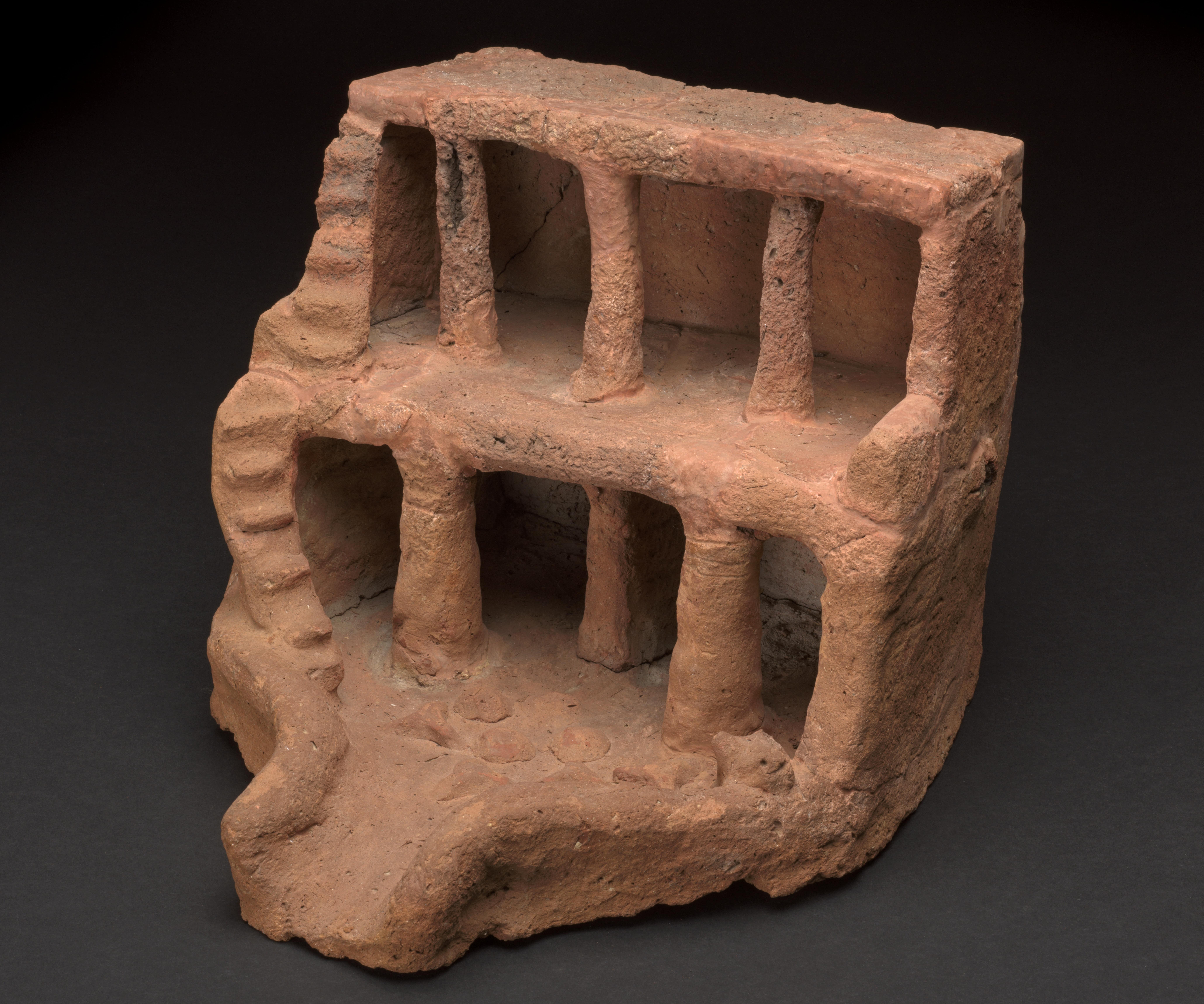
The soul house with a handprint on its underside has two levels with a row of pillars on each. Researchers suspect that the handprint was left by someone moving the model out of a workshop to dry before firing, according to the statement.
This handprint is one of the relatively few glimpses of potters at work to have survived from ancient Egypt.
"I have never seen such a complete handprint on an Egyptian object before," Strudwick said. "You can just imagine the person who made this, picking it up to move it out of the workshop to dry before firing. This takes you directly to the moment when the object was made, and to the person who made it."
-- Sent from my Linux system.

No comments:
Post a Comment