http://blogs.ucl.ac.uk/researchers-in-museums/2015/
From hearing ears to hearing impairment
By Ann E M Liljas, on 28 September 2015 When visiting Petrie museum
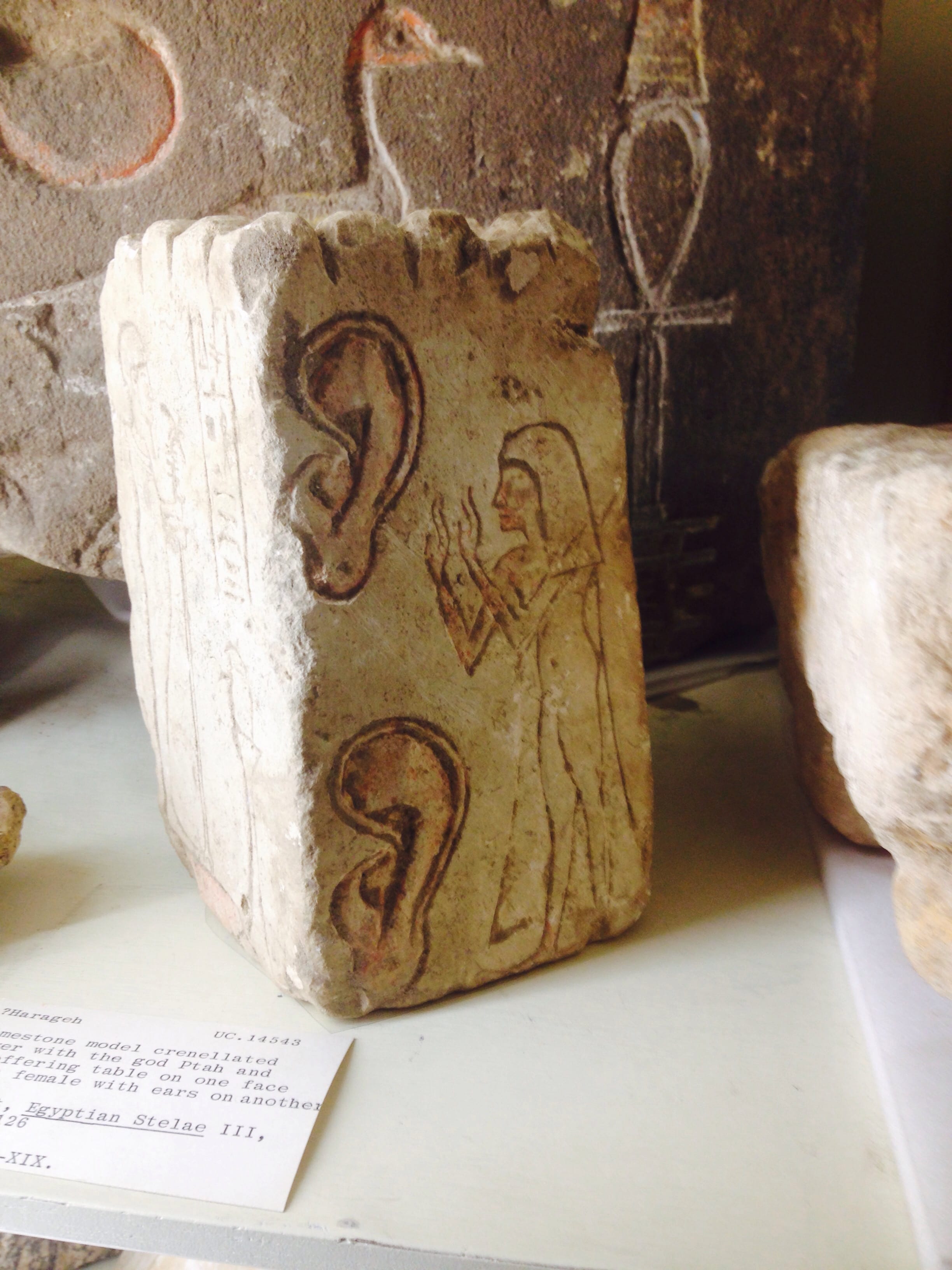
or exhibitions on ancient Egypt you may have seen amulets in the form
of the human external ear. These were extremely common in the New
Kingdom (c. 1550-1069 BC) and onwards and served a votive function (i.e.
a sacred gift to a god or goddess) as “hearing ears”. It was believed
that “hearing ears” would encourage the god or goddess to hear and
consequently answer the person’s prayer.
When visiting Petrie museum
or exhibitions on ancient Egypt you may have seen amulets in the form
of the human external ear. These were extremely common in the New
Kingdom (c. 1550-1069 BC) and onwards and served a votive function (i.e.
a sacred gift to a god or goddess) as “hearing ears”. It was believed
that “hearing ears” would encourage the god or goddess to hear and
consequently answer the person’s prayer.My PhD is about hearing impairment in older age and so the symbolic use of the external human ear in ancient Egypt fascinates me. Today one in five (20%) Britons aged 60 years and over have a hearing impairment. This means hearing impairment is very common in older age. And as we live longer than before the proportion of older people is growing and so does the number of people with a hearing problem. Older people with hearing impairment are more likely to have other physical health problems too which may reduce their chances of independent living. Therefore it’s important to undertake research on hearing impairment and in my study I try to understand how hearing impairment influences chronic conditions such as cardiovascular disease, physical disability and cognitive function. By gaining a better understanding of the links between these age-related conditions I hope to establish the impact of hearing impairment on healthy living in later life.
In my study I have used data from questionnaires on health and lifestyle completed by older men from 24 towns across Great Britain. I have then undertaken statistical calculations to measure any associations between hearing impairment and health and lifestyle factors. My findings so far have shown that, compared to men who did not have a hearing problem, those who report a hearing problem were more likely to have poor physical functioning (e.g. having problems using the telephone or public transport on their own), poor quality of life and little social interaction with other people. Having a hearing impairment was also associated with an increased risk of chronic conditions (cardiovascular disease, stroke, chest pain, breathlessness, arthritis, bronchitis) and being obese. So what do these results really say? First of all, there have been several other studies undertaken in other countries investigating how hearing impairment may influence health in later life and my findings are similar to what has been demonstrated by other researchers. Thus, my findings support existing evidence showing that hearing problems restrict older people’s physical functioning which can limit independent living.
 But
it also show some links between hearing impairment and health that few
previous studies have investigated, for example that those with hearing
impairment are more likely to be obese compared to those who do not have
a hearing impairment. Studies like this are important when it comes to
public health policies on hearing impairment and older people. In the
conclusions of my study I suggest that hearing impairment needs to be
addressed in public health policies. By detecting hearing impairment at
an early stage it would be possible to help people with their hearing
problem before it gets worse. Such actions could also prevent poor
physical functioning and poor social interaction. Local organisations
could also play an important role helping older people leading active
and social lives. Staying healthy is absolutely crucial to avoid
age-related health problems, maintain mental well-being and remain
independent in older age.
But
it also show some links between hearing impairment and health that few
previous studies have investigated, for example that those with hearing
impairment are more likely to be obese compared to those who do not have
a hearing impairment. Studies like this are important when it comes to
public health policies on hearing impairment and older people. In the
conclusions of my study I suggest that hearing impairment needs to be
addressed in public health policies. By detecting hearing impairment at
an early stage it would be possible to help people with their hearing
problem before it gets worse. Such actions could also prevent poor
physical functioning and poor social interaction. Local organisations
could also play an important role helping older people leading active
and social lives. Staying healthy is absolutely crucial to avoid
age-related health problems, maintain mental well-being and remain
independent in older age.If you want to find out more about my study, which also investigates eyesight problems, you can access it online here.
For more information about the hearing ears in ancient Egypt, visit Petrie museum. Objects with hearing ears on display include for example UC 14543.
References:
Gopinath B et al. Prevalence of age-related hearing loss in older adults: Blue Mountains Study. Arch Intern Med 2009;169:415-6.
Helzner EP et al. Race and sex differences in age-related hearing loss: the Health, Aging and Body Composition Study. J Am Geriatr Soc 2005;53:2119-27.
Akeroyd MA et al.. Estimates of the number of adults in England, Wales, and Scotland with a hearing loss. Int J Audiol 2014;53:60-1.
Crews JE & Campbell VA. Vision impairment and hearing loss among community-dwelling older Americans: implications for health and functioning. Am J Public Health 2004;94:823-9.
Campbell VA et al. Surveillance for sensory impairment, activity limitation, and health-related quality of life among older adults–United States, 1993-1997. MMWR CDC Surveill Summ 1999;48:131-56.
Research engager goes abroad
By Ann E M Liljas, on 7 September 2015Our research engager Ann has explored exhibitions about ancient Egypt in Rome and Dublin.
In the last few months I have been to Rome and Dublin. In Rome I visited the Vatican Museums which consists of several museums of which one is about ancient Egypt. In Dublin I spent a couple of hours at the National Museum of Ireland where visitors are introduced to ancient Egypt. In this blog post I present a couple of items on display at these two exhibitions. If you want to find out more, visit Petrie museum in London part of your preparations for your trip to Rome or Dublin.
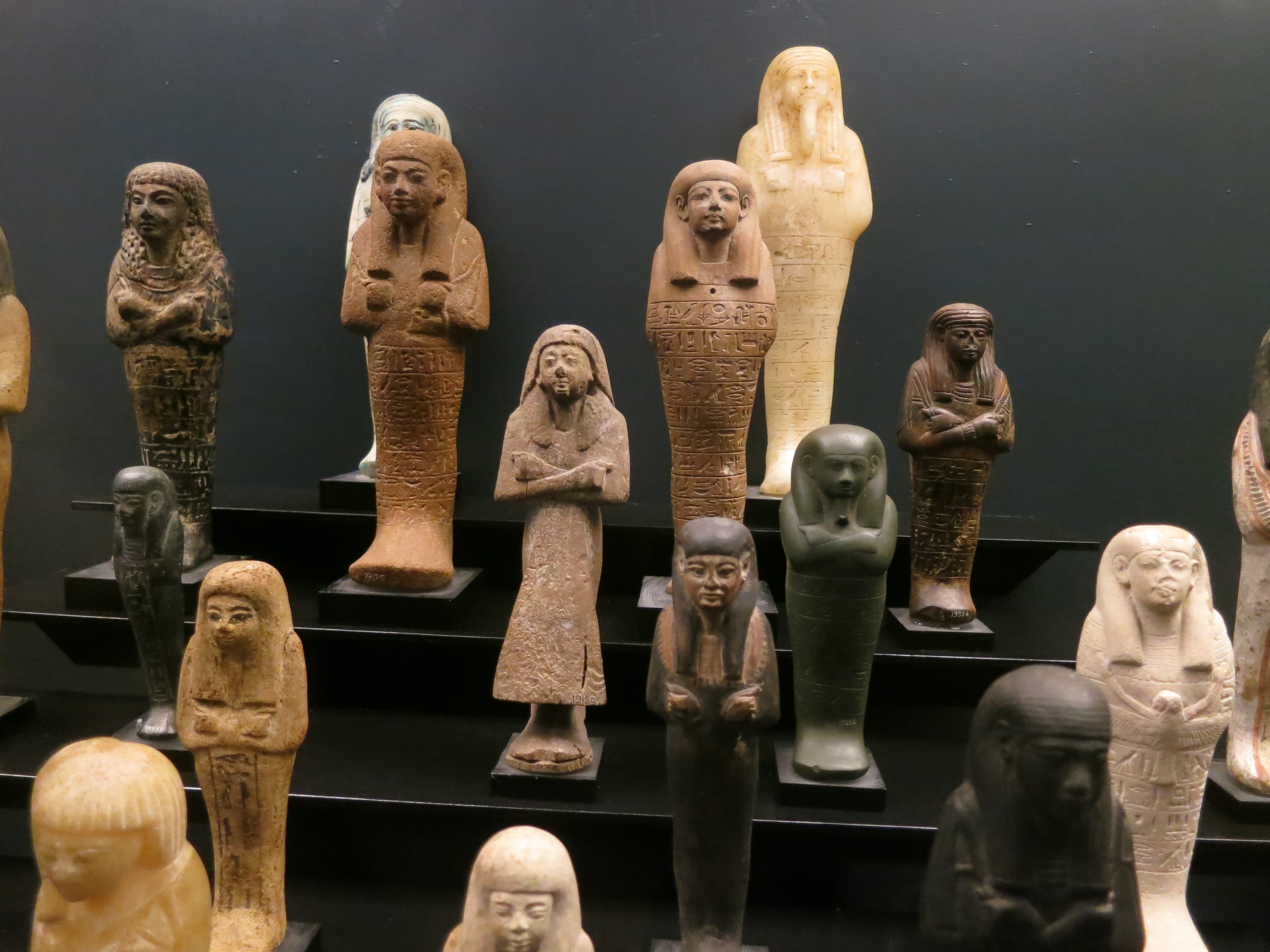
One of the first things you get to explore when entering the Vatican Museums is the museum about ancient Egypt. It was founded by Pope Gregory XVI in 1839 and has several interesting
 artefacts
for those interested in the complex civilisation of ancient Egypt.
Highlights include statues, papyruses, animal mummies and reproductions
of the Book of the Dead. During my visit I took a closer look at the
collection of small statues called Shabtis. The word Shabti refers to
“respond” or “answer” and these statues of adult male or female form
were supposed to carry out tasks on behalf of a person in the afterlife
such as heavy manual work. The Shabti figures on display vary in size
and some are made of stone and others of wood. A sign next to them tells
the visitor that they were wrapped in bandages like mummies and the
number of shabtis in a burial could be as many as one for every day of
the year. The use of shabtis increased over time but during the
Ptolemaic Period the use of these statues gradually disappeared. Now,
the good news is that you do not have to go all the way to Rome to see
Shabtis as there are several of them on display at the Petrie museum in
London.
artefacts
for those interested in the complex civilisation of ancient Egypt.
Highlights include statues, papyruses, animal mummies and reproductions
of the Book of the Dead. During my visit I took a closer look at the
collection of small statues called Shabtis. The word Shabti refers to
“respond” or “answer” and these statues of adult male or female form
were supposed to carry out tasks on behalf of a person in the afterlife
such as heavy manual work. The Shabti figures on display vary in size
and some are made of stone and others of wood. A sign next to them tells
the visitor that they were wrapped in bandages like mummies and the
number of shabtis in a burial could be as many as one for every day of
the year. The use of shabtis increased over time but during the
Ptolemaic Period the use of these statues gradually disappeared. Now,
the good news is that you do not have to go all the way to Rome to see
Shabtis as there are several of them on display at the Petrie museum in
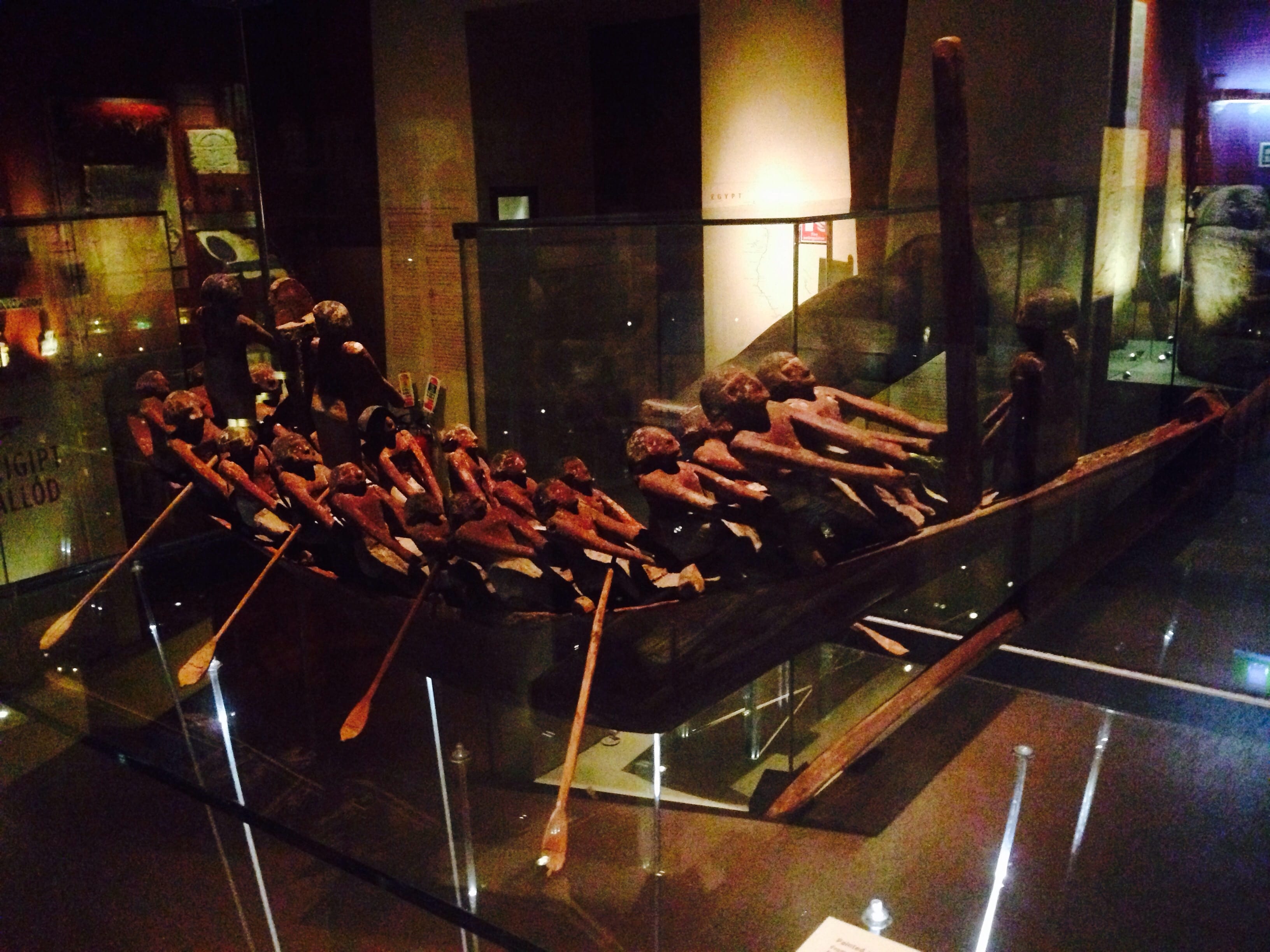
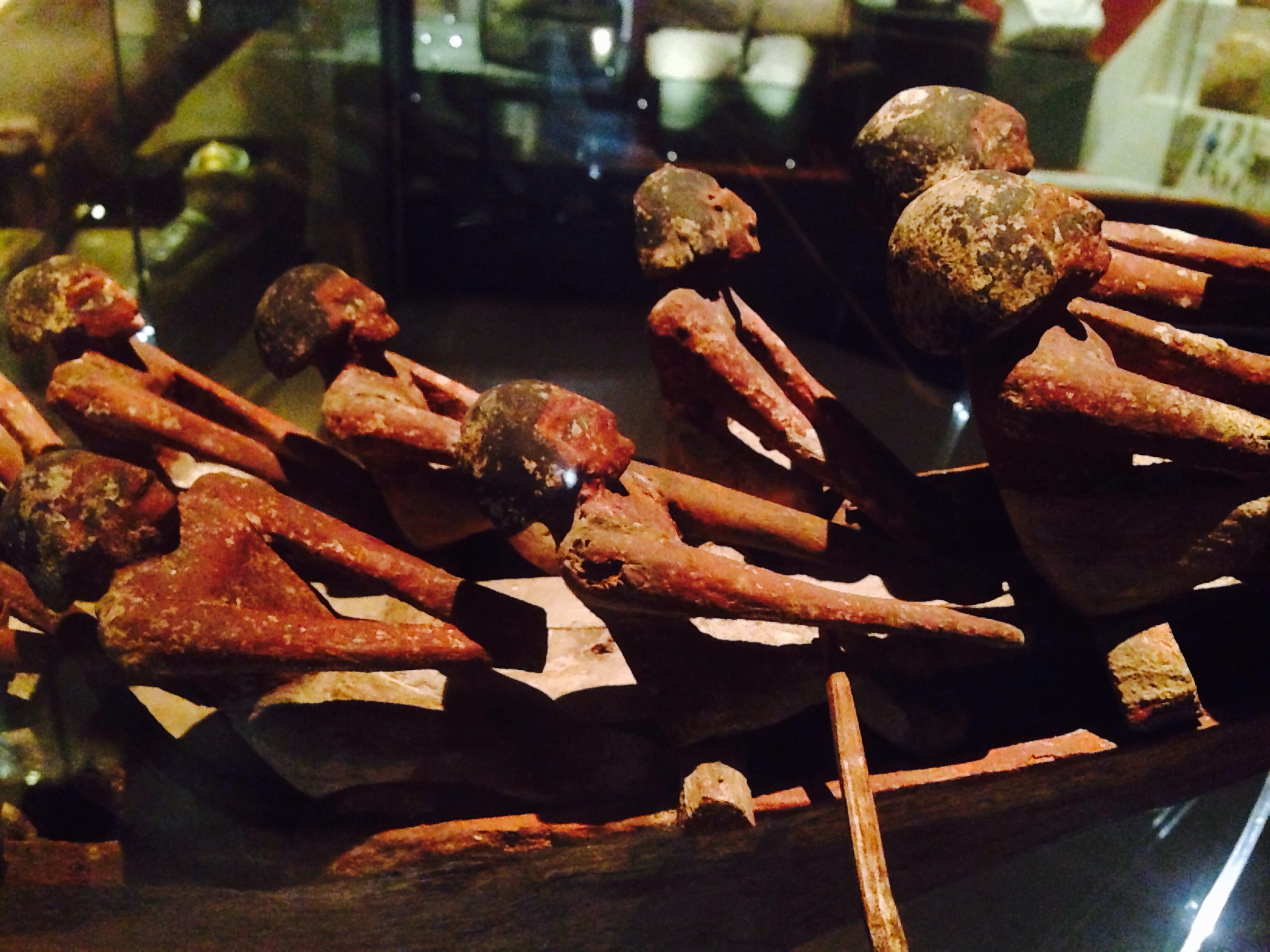
London.The exhibition at the National Museum of Ireland includes four mummies, jewellery and other personal adornments portraying life and death in ancient Egypt. The collection consists
 of
artefacts from several excavations throughout the Valley and Delta led
by Flinders Petrie. I really liked a painted wooden model of a Nile boat
with rowers and armed guard from c.1900 BC. The model was found in a
tomb and boat models of different types were often included in Middle
Kingdom tomb equipment. Boats were important as they were the swiftest
and most reliable mode of transport and communication. In contrast to
many other models found this one includes an armed man with speckled
cowhide shield. An informative sign next to the model suggests it may be
that he is the officer and the crew a troop of soldiers. Military
features in burials around this time may reflect the civil wars of the
First Intermediate Period which ended c. 2025 BC.
of
artefacts from several excavations throughout the Valley and Delta led
by Flinders Petrie. I really liked a painted wooden model of a Nile boat
with rowers and armed guard from c.1900 BC. The model was found in a
tomb and boat models of different types were often included in Middle
Kingdom tomb equipment. Boats were important as they were the swiftest
and most reliable mode of transport and communication. In contrast to
many other models found this one includes an armed man with speckled
cowhide shield. An informative sign next to the model suggests it may be
that he is the officer and the crew a troop of soldiers. Military
features in burials around this time may reflect the civil wars of the
First Intermediate Period which ended c. 2025 BC.Have you been to any of these exhibitions or any other exhibition about ancient Egypt outside the UK? Share your experience with me and the other research engagers next time you visit Petrie museum. Research engagers are PhD students at UCL who regularly spend time at the museums speaking to visitors about their research. We are also interested in hearing your thoughts on the
 collections
as well as research at UCL. And we love when visitors ask us questions!
Although we may not be experts on ancient Egypt as our field of study
ranges from mechanical engineering to epidemiology, we will try our best
to answer your questions. Questions that we think are interesting to
share with others may be published here on our website. We look forward
to speaking to you at your next visit.
collections
as well as research at UCL. And we love when visitors ask us questions!
Although we may not be experts on ancient Egypt as our field of study
ranges from mechanical engineering to epidemiology, we will try our best
to answer your questions. Questions that we think are interesting to
share with others may be published here on our website. We look forward
to speaking to you at your next visit. Filed under Ann Liljas
Tags: Ancient Egypt, museums, Petrie Museum

https://pioneerproductions.blogspot.com/2019/10/hearing-loss-and-quality-of-life-visit.html
ReplyDelete