Rare Circular Bath and Mosaic Roman Villa Unearthed in Alexandria Reveal a Lost Urban Quarter
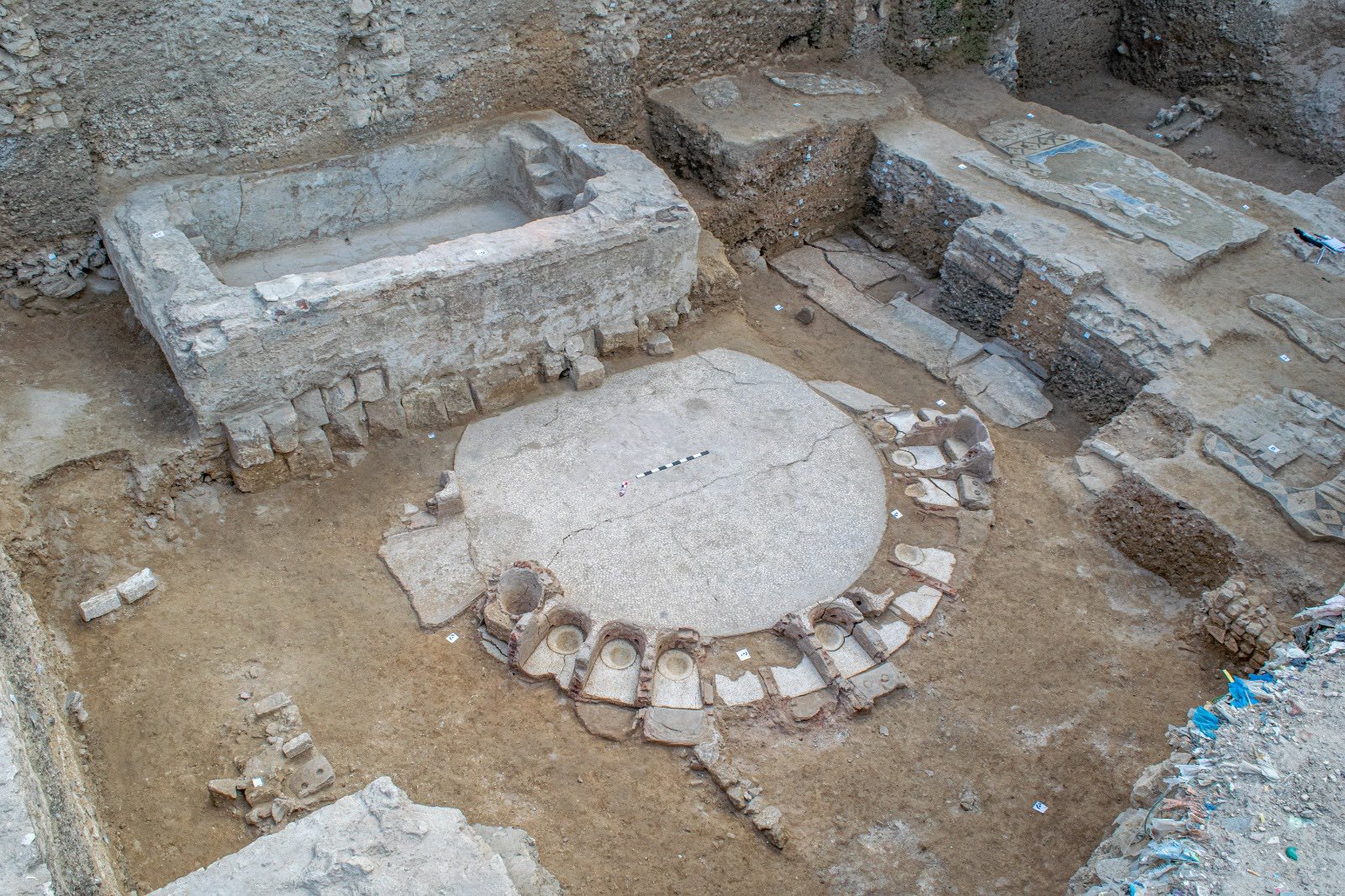
An Alexandria archaeological discovery in the Muharram Bek district has uncovered a rare circular public bath from the late Ptolemaic period and a Roman villa decorated with mosaic floors, offering new evidence for how the ancient city expanded, adapted and remained inhabited across several major eras.
Announced by Egypt’s Ministry of Tourism and Antiquities, the find was made during rescue excavations led by the Supreme Council of Antiquities in central Alexandria. The site revealed architectural remains and movable artifacts dating from the Ptolemaic, Roman, and Byzantine periods, making it one of the most important recent discoveries for understanding the city’s urban history.
A rare circular bath from Ptolemaic Alexandria
One of the most striking features is a circular public bath built in the form of a tholos, a round architectural plan known from Greek tradition. The structure dates to the late Ptolemaic period, when Alexandria was not only the capital of Egypt but also one of the Mediterranean’s great intellectual, commercial and cultural centers.
Public bath buildings from this period are not commonly preserved in Alexandria, especially in such a distinctive circular layout. Archaeologists believe the bath may have been part of a larger complex, with further adjoining rooms still under study. Its discovery points to a dense and organized urban environment in a sector of the ancient city that has received far less archaeological attention than the royal quarter, harbor zone and better-known monumental areas.
Roman villa shows wealth and urban sophistication
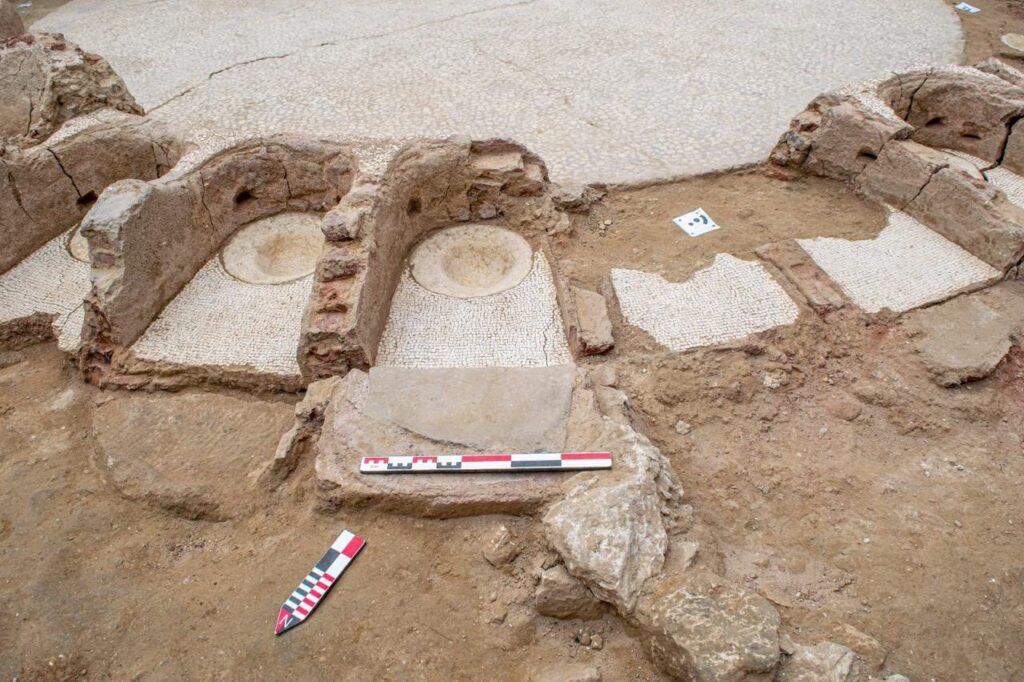
Near the bath, excavators uncovered the remains of a Roman residential villa with mosaic floors executed in several techniques. These include opus tessellatum, made with small cube-shaped tesserae, and opus sectile, which uses cut pieces of colored stone arranged into decorative patterns.
The villa also contained a small bathing pool connected to a developed water management system. This suggests a high level of domestic comfort and engineering, reflecting the lifestyle of Alexandria’s urban elite under Roman rule.
Such finds are valuable because they move the story of Alexandria beyond its famous libraries, palaces and philosophers. They show how people lived, washed, decorated their homes and organized private space inside a city that remained deeply connected to the wider Mediterranean world.
Muharram Bek fills a gap in the map of ancient Alexandria
The Muharram Bek area lies within a part of ancient Alexandria that has long been difficult to reconstruct. According to Egyptian officials, the new evidence helps fill an archaeological gap in the southeastern sector of the ancient city and supports a reassessment of historic maps, including the pioneering work of Mahmoud Bey al-Falaki, who attempted one of the earliest scientific reconstructions of Alexandria’s ancient urban plan.
The discovery indicates that this area remained inside the urban limits of Alexandria through the Byzantine period. Its later decline appears to have been linked to broader changes in the city’s layout and development.
That detail is especially important. Founded by Alexander the Great in 331 BC, Alexandria was designed as a planned Mediterranean metropolis, with wide streets, harbors, royal districts and multicultural neighborhoods. Over time, earthquakes, shoreline changes, political shifts and urban rebuilding altered the city’s shape. Finds like the Muharram Bek bath and villa help archaeologists recover parts of that lost plan, street by street and building by building.
Statues, coins, and amphorae point to trade and belief
The excavation also produced a rich group of artifacts, including coins, oil lamps, pottery vessels and stamped amphora fragments. The amphorae are particularly significant because they reflect Alexandria’s long-distance trade connections across the Mediterranean.
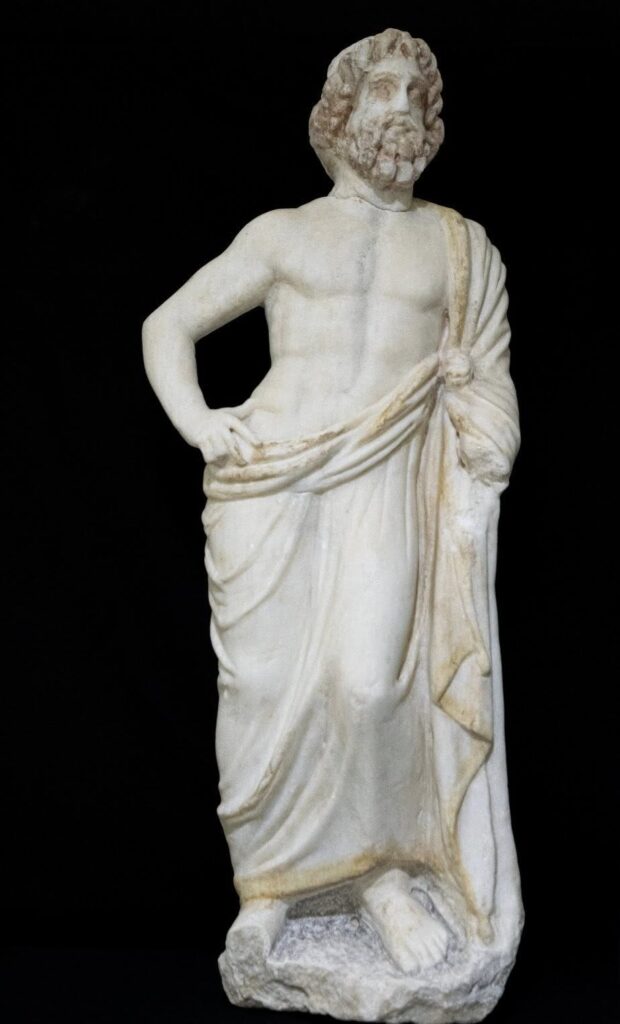
Several marble statues were also found. Among them are figures associated with Bacchus and Asclepius, along with a headless statue believed to represent Minerva. The presence of Asclepius, the Greco-Roman god of healing, may point to religious or therapeutic associations in the wider area, although further study is needed before firm conclusions can be made.
Together, the objects reveal a neighborhood shaped by commerce, domestic life, artistic taste and religious diversity. That mixture is exactly what made Alexandria one of antiquity’s most cosmopolitan cities.
Finds may go on display in the Greco-Roman Museum
The excavation team has already begun preliminary conservation work on the discoveries. Smaller artifacts have been transferred for specialist treatment, while experts are studying whether some of the mosaic floors should remain in place or be moved for restoration.
Officials are also considering displaying selected finds at the Greco-Roman Museum in Alexandria, which would give visitors a direct view of material from a newly uncovered quarter of the ancient city.
Excavations are continuing at the site, and archaeologists expect further work to reveal more about the bath complex, the Roman villa, and the long urban life of Muharram Bek. For Alexandria, a city where much of the ancient past lies beneath modern streets, the discovery offers another rare opening into a layered world that has never fully disappeared.
--
Sent from my Linux system.

No comments:
Post a Comment