Search This Blog

Thursday, July 31, 2025

Monica Hanna on why Egypt must reclaim Egyptology

https://www.newarab.com/features/monica-hanna-why-egypt-must-reclaim-egyptology

Egyptologist_Monica_Hanna

Decolonising Egyptology and historical (mis)translations: In conversation with Egyptologist Monica Hanna

To reclaim its narrative, Egypt must first reclaim Egyptology — translating ownership, agency, and meaning, not just language, says Egyptologist Monica Hanna
30 July, 2025

When we think of Egyptology, we're likely to picture pharaohs and hieroglyphs, maybe Cleopatra luxuriating in milk baths, or the golden mask of Tutankhamun, distorted by decades of pop culture. 

Wrapped in mystique and grandeur, Egyptology has long been portrayed as exotic, sexy, and full of secrets. 

However, behind the allure lies a painful and often neglected truth: Egyptology emerged as and remains a colonial discipline.

It emerged from the ruins of an empire, built by Western archaeologists who excavated Egyptian land, extracted its treasures, and in the process, robbed Egypt of its historical agency. 

This isn't a harmless misunderstanding; it's a legacy of cultural theft and orientalist myth-making that continues to shape how the world sees Egypt today, through the lens of sand, gold, and static antiquity. 

If Egypt is to reclaim its narrative, it must first reclaim Egyptology. According to Egyptian Egyptologist Monica Hanna, author of The Future of Egyptology, this is intrinsically tied to the task of translation, not just of language, but of meaning, ownership, and agency.

Cleopatra_1964
Actress Amanda Barrie as Cleopatra takes a milk bath while filming at Pinewood Studios, 1964 [Getty]

The history of the language of Egyptology epitomises its roots as a colonial and orientalist discipline which has subjugated and marginalised Egypt's own narrative. 

From its inception, Egyptology has been severed from the Egyptian context, articulated not in Arabic, the language of the land, but in European tongues: English, French, German, and Dutch.

The term 'Egyptology' first appeared in the Oxford English Dictionary in 1841, following Napoleon's invasion of Egypt (1798-1801) and the subsequent publication of the Description de l'Égypte.

The discipline crystallised into a formal science in the early 19th century after Jean-François Champollion deciphered the Rosetta Stone in 1822 — an act widely regarded as foundational to modern Egyptology. 

It's very naming marks the moment it was institutionalised within European academia, particularly in France and Britain, and later, Germany.

Rosetta_stone
The Rosetta Stone, 196 BC, a basalt slab inscribed with a decree of Pharaoh Ptolemy V in Greek, Hieroglyphic, and Demotic, was discovered near Rosetta in 1799 and translated by Jean-François Champollion between 1822 and 1824 [Getty]

The coloniality of knowledge production in Egyptology is mirrored in the languages it operated through. The Arabic equivalent, ʿilm al-Miṣriyyāt, remains a somewhat awkward translation — one that is often replaced by the English term 'Egyptology' even in Arabic-language texts. 

This linguistic displacement reflects a deeper epistemic exclusion: while European figures such as Champollion and Auguste Mariette dominated the discourse, aggressively shaping a flawed, romanticised, and fetishised version of Pharaonic Egypt, Egyptian voices and the Arabic language itself were muffled. 

This erasure is evident in the foundational literature of the field. The 1951 edition of Who Was Who in Egyptology failed to mention Ahmad Kamal, one of Egypt's pioneering Egyptologists and arguably the first native scholar to enter the field. His omission is a symptom of a larger structural silencing.

Egyptology stuck in translation

From its inception to the present, Egyptology has been dominated by Western institutions that shaped not only the global narrative around ancient Egypt but also the epistemological frameworks within which Egyptian Egyptologists operate. 

This asymmetry gave rise to a form of double consciousness, where Egyptian scholars must navigate a discipline built on colonial knowledge systems while attempting to assert their own intellectual agency. 

"Egyptians themselves feel incapable of preserving their heritage; they believe it's better off in the hands of the West. This feeling of inadequacy, of 'we cannot do it', is the result of a relentless narrative that tells us we're unfit to care for our past," says Hanna.

It is clear that the decolonial struggle to reclaim Egyptology, both physically through the restitution of looted artefacts and intellectually through epistemic reorientation, is not a separate task: they are interdependent, and the first step toward either is translation.

Translating Egyptology is a multifaceted process — one that encompasses language, praxis, and a redefinition of what the term 'Egyptology' has come to mean.

The discipline is riddled with mistranslations and linguistic dislocations that have confined Egyptology to the study of a distant, pharaonic past.

It is stagnant, failing to translate into the present or to foster a vital, ongoing dialogue between ancient Egypt and contemporary Egyptian society.

In the Western imagination, Egypt is lost in translation: as historian Donald Malcolm Reid put it, "when it ceases to be ancient, it ceases to be Egypt".

The phrase "Walk like an Egyptian" — echoed in drunk football chants, parties, and 90s pop culture — encapsulates a broader distortion.

But what does it actually mean? And what does it say about the language we use to frame Egypt and Egyptology, both within and beyond Egypt today?

The task of translation begins with language in the most literal sense.

"Imagine someone studying Shakespeare without knowing English. The refusal to learn Arabic or to engage with Egyptology in Arabic sustains the idea that modern Egypt is irrelevant to the field," says Hanna.

"It keeps ancient Egypt in a glass box — palatable, exotic, and entirely disconnected from its historical context and cultural continuity."

Reclaiming knowledge through Arabic

Even the most prominent Western Egyptologists committed themselves to studying ancient Egyptian languages, deciphering hieroglyphs and mastering Coptic, yet neglected to learn aamiyya, the modern colloquial Arabic spoken across the country.

This omission reveals a deeper flaw: Egyptology has long been falsely understood as entirely divorced from contemporary Egyptian society, when in fact, the two should be in continuous dialogue.

The study of ancient Egypt should not eclipse the present; rather, each should illuminate and inform the other.

"Ancient Egyptian and aamiyya are not so distant," Hanna explains. "We see linguistic and philological echoes between them."

These continuities, often ignored in Western discourse, affirm the living, evolving relationship between ancient and modern Egypt.

Knowledge of Arabic should be considered foundational to the field of Egyptology. Without it, scholars remain disconnected from both the society that lives among the ruins and the cultural memory encoded in its language.

The absence of a large, thriving Arabic epistemology in Egyptology traps Egyptian society in a suspended state: aware of the need to reclaim historical agency from Western epistemic dominance, yet unable to fully do so without accessible, critically engaged knowledge produced in Arabic.

There have been promising beginnings. As Hanna explains, several grassroots movements in Egypt are working to shift Egyptology into Arabic. 

"One such initiative is Egyptology bil-'Arabi (Egyptology in Arabic), which emerged from the earlier Anthropology bil-'Arabi project, led by Farah Halaba. Another is a recent effort led by the Bibliotheca Alexandrina to publish the long-overlooked dictionary of pioneering Egyptologist Ahmad Kamal in Arabic," she adds. 

Still, these efforts remain limited in scope and reach. The resources are not widely available, and the broader ecosystem needed to sustain Egyptology in Arabic has yet to materialise fully.

A living conversation with history

Egyptology in Arabic remains largely confined to the academic realm, primarily expressed in fusha (Modern Standard Arabic) — a language that, for much of the general public, is as inaccessible as the European languages that first claimed and narrated the discipline.

"To make Egyptology truly accessible beyond academia, you have to meet the people where they are," Hanna explains.

"Public lectures, community engagement, these are essential. People often underestimate the widespread thirst for knowledge across all levels of society. The challenge lies in presenting complex ideas in a way that feels approachable and engaging, without overwhelming or alienating the audience."

The task of decolonising Egyptology, then, is not just to return artefacts or make minor amends to curricula; it is to speak differently and to be heard differently.

It means refusing to see ancient Egypt as a world apart, locked in glass cases and foreign grammars.

Translation, in this sense, is not restricted to words; it's about restoring a living conversation between past and present, in the language of those who have always lived and who continue to live in this history.

Cara Burdon is a freelance writer with an academic background in Arabic and Middle East studies with a particular interest in archive studies, decolonial theory and arts and culture from the Middle East and Northern Africa

--   Sent from my Linux system.

Wednesday, July 30, 2025

4,000-year-old handprint discovered on ancient Egyptian tomb offering | Live Science

https://www.livescience.com/archaeology/ancient-egyptians/4-000-year-old-handprint-discovered-on-ancient-egyptian-tomb-offering

4,000-year-old handprint discovered on ancient Egyptian tomb offering


The handprint is just about visible towards the bottom of the soul house underside (pictured here). (Image credit: © The Fitzwilliam Museum, University of Cambridge)

Researchers have discovered a 4,000-year-old handprint on a tomb offering from ancient Egypt, providing a rare glimpse into the life of its maker.

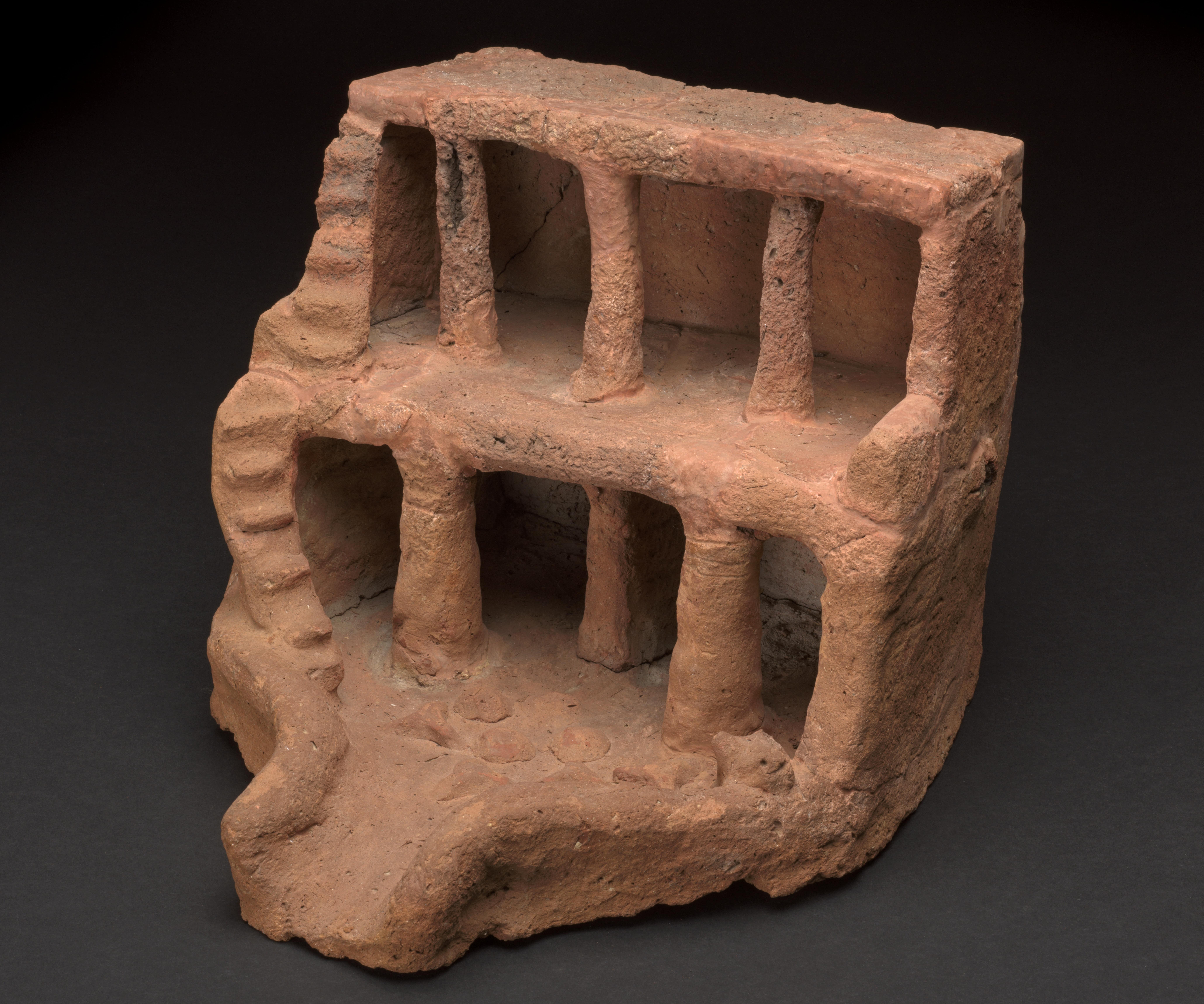
The handprint was left on the underside of a "soul house" — a model dwelling that may have been intended to serve as a resting place for a dead person's soul. These models, which were commonly found with burials, also held food offerings such as bread, lettuce and ox heads, according to a statement from the University of Cambridge in the U.K.

The soul house dates to between 2055 and 1650 B.C. and came from a site called Deir Rifa, located around 174 miles (280 kilometers) north of the city of Luxor in southern Egypt, The Art Newspaper reported. Researchers at the Fitzwilliam Museum, part of the University of Cambridge, discovered the handprint while preparing for the museum's upcoming Made in Ancient Egypt exhibition.

Whoever made the soul house likely left a handprint behind by handling the clay before it had dried, the researchers said.

"We've spotted traces of fingerprints left in wet varnish or on a coffin in the decoration, but it is rare and exciting to find a complete handprint underneath this soul house," Helen Strudwick, the curator of Made in Ancient Egypt and a senior Egyptologist at the Fitzwilliam Museum, said in the statement.

Potters created soul houses by building a frame from wooden sticks and coating them with wet clay. The frame then burnt away when the potters fired the clay at a high temperature to turn it into ceramic.

Researchers still have a lot to learn about soul houses. English Egyptologist Sir William Matthew Flinders Petrie (1853 - 1942) coined the term and believed that the houses were used to provide provisions for the afterlife, according to the Egypt at the Manchester Museum blog. However, it's uncertain whether they were intended to act as houses for the spirit of the deceased or simply as symbolic offerings. The University of Cambridge statement noted that the houses may have served as both.

It's unclear whether the soul houses represented the deceased's house or a tomb. Strudwick told The Art Newspaper that soul houses were placed directly over burial shafts, suggesting that they were a cheaper alternative to elaborate tomb chapels that were built beside burial chambers, and thus were used by people who couldn't afford such luxuries. However, Strudwick noted that she thinks there's also a connection between soul houses and the idea of the dead being able to return to their homes.

A photograph of the soul house from the front.

The soul house featured rows of pillars across two levels, with a staircase up to the second level and the roof. (Image credit: © The Fitzwilliam Museum, University of Cambridge.")

The soul house with a handprint on its underside has two levels with a row of pillars on each. Researchers suspect that the handprint was left by someone moving the model out of a workshop to dry before firing, according to the statement.

This handprint is one of the relatively few glimpses of potters at work to have survived from ancient Egypt.

"I have never seen such a complete handprint on an Egyptian object before," Strudwick said. "You can just imagine the person who made this, picking it up to move it out of the workshop to dry before firing. This takes you directly to the moment when the object was made, and to the person who made it."


--   Sent from my Linux system.

Monday, July 28, 2025

Scientists unveil secrets of Egypt's most complex mummy - without having to unwrap it - Egypt Independent

https://www.egyptindependent.com/scientists-unveil-secrets-of-egypts-most-complex-mummy-without-having-to-unwrap-it/

Scientists unveil secrets of Egypt's most complex mummy – without having to unwrap it

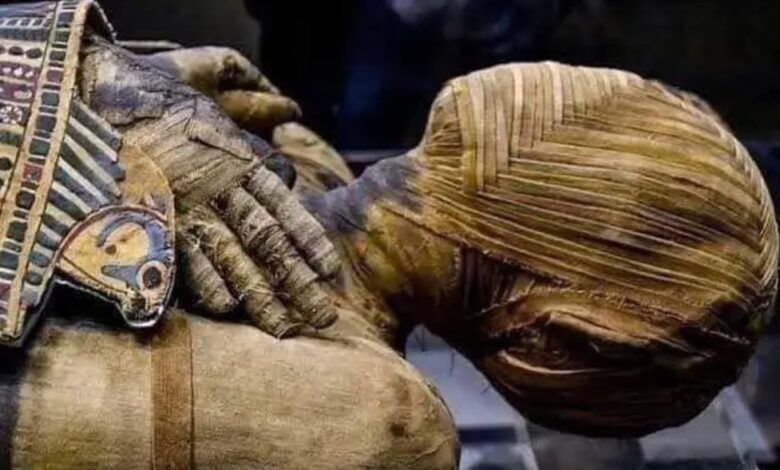
For decades, Egyptologists have been left baffled by the secrets of an ancient mummy known due to its intricate wrappings, unique mummification techniques, and rare inscriptions – until now.

With state-of-the-art technology, scientists have revealed the mummy's secrets "without having to unwrap it."

According to a report in The Sun newspaper on Sunday, the mummy is over 2,300 years old and was discovered by Egyptologist Howard Carter in the Valley of the Kings, the same area where Tutankhamun's tomb was later found.

Advances in X-ray and CT scanning technology made it possible to study it in-depth without damaging it, a significant step toward a greater understanding of the ancient mummy's secrets.

The latest findings have revealed that the mummy belongs to an adult male, approximately 1.68 meters tall, who lived during the Ptolemaic period, which extended from 305-30 BC.

X-rays also revealed inscriptions bearing the name of the buried person, but researchers have been unable to confirm whether the name was "Bashiri" or "Nino," leaving some aspects of the story still mysterious.

According to the American Museum of Natural History, the mummy's facial wrappings feature unique engravings resembling the base of a pyramid, "a rare feature not seen on any other mummies."

The outer covering bears multiple decorations distributed across "records," including a depiction of the mummy lying on a bed surrounded by the goddesses Isis and Nephthys, as well as the Four Sons of Horus.

The section surrounding the feet is decorated with the symbol of Anubis, the god of mummification in ancient Egyptian mythology.


--   Sent from my Linux system.

Saturday, July 26, 2025

Was This Artifact From King Tut’s Tomb? It’s for Sale Anyway. - The New York Times

https://www.nytimes.com/2025/07/25/arts/design/king-tutankhamen-guennol-grasshopper-auction.html

Was This Artifact From King Tut's Tomb? It's for Sale Anyway.

A London auction house says there is "no documented evidence" that an intricately carved grasshopper is from the boy king's tomb. Its estimated price is up to $675,000.

Listen to this article · 6:20 min Learn more


  • An object made of ivory and wood carved in the shape of a grasshopper.
    The Guennol Grasshopper, an ivory and wood container, will be up for sale this weekend.Credit...Apollo Art Auctions

    After discovering King Tutankhamen's tomb, the British archaeologist Howard Carter spent years cataloging the thousands of priceless artifacts inside, including life-size statues of the ancient Egyptian pharaoh, glittering thrones, and the boy king's funeral mask.

    He also pilfered some for himself.

    Now, one object that Egyptologists have for decades said that Carter likely stole is to be auctioned — despite some experts saying the sale should not occur.

    On Sunday, Apollo Art Auctions, a small auction house in London, is to sell the so-called Guennol Grasshopper. The intricately carved ivory and wood container is in the shape of the noisy insect, with wings that swing outward to reveal a hole to store perfume.

    The grasshopper, which the auction house says in promotional material is "from the age of Tutankhamen," has an estimated price of up to 500,000 pounds, or about $675,000. The auction listing says the item previously traded hands for $1.2 million.

    Apollo Art Auctions said in an emailed statement that there was "no documented evidence" that the vessel came from the pharoah's tomb. "The item does not appear on any official excavation inventories," the statement said.

    Still, for some Egyptologists there is little doubt about its origins. Christian Loeben, of the Museum August Kestner in Hanover, Germany, who has written about Carter's career, said in an interview that he was "quite convinced" that the grasshopper could only have come from the tomb.

    Image
    A sarcophagus inside an ancient tomb.
    The sarcophagus of King Tutankhamen inside his tomb in the Valley of the Kings in Egypt.Credit...David Degner/Getty Images

    The artifact is of a style that existed in Egypt at "exactly the period" of Tutankhamen's reign in the 14th century B.C., Loeben said, while the vessel's lack of damage indicates that it came from a sealed chamber like the boy king's.

    Historical records also show that Carter sold the item after returning to England.

    Loeben said the grasshopper should go back to Egypt. "It's a moral question," he said.

    Christina Riggs, a professor at Durham University in northern England who has written extensively on Tutankhamen and on Carter's behavior, said that Carter took other small artifacts, including some designed to look like animals. Some, she said, are still in Western museum collections.

    Riggs said it was unsurprising that there was no documentation of the grasshopper's origins: Carter wouldn't have listed items he stole as being among the tomb's contents.

    She said the auction house should have consulted the Egyptian government. The Egyptian Ministry of Tourism and Antiquities did not respond to requests for comment for this article; nor did a spokesman for the Egyptian government.

    Apollo Art Auctions said it was "confident that the sale complies fully with all applicable laws and international standards, and we have taken all necessary legal and ethical steps to ensure the legitimacy of the object's provenance."

    The auction house also said that the Art Loss Register, a London-based company that maintains a database of stolen artifacts, had issued a "certificate of clearance" confirming that the item was not listed.

    James Ratcliffe, the register's general counsel and director of recoveries, said in an interview that the item sat in "an awkward area": There are questions about its origins, but the Egyptian government has never reported it stolen or asked for its return.

    Image
    A side view of the carved grasshopper.
    The grasshopper has an estimated price of up to £500,000, or about $675,000.Credit...Apollo Art Auctions

    When Carter and his patron, the Earl of Carnarvon, began searching for Tutankhamen's tomb in 1914, they hoped for a big payday. At the time, the Egyptian government let archaeologists keep half of any discoveries if robbers had already broken into a tomb. Carter argued that this was the case for Tutankhamen's chamber, although many have disagreed with his assessment.

    In any case, the Egyptian government decided to keep everything.

    In December 1922, shortly after Carter unveiled the tomb to the world, an article in The New York Times said that the British archaeologist's "unceasing work" would "go unrewarded," as the government decided to "regard the tomb as royal and untouched by robbers."

    Shortly after Carter's death in 1939, his niece discovered items among his belongings that were inscribed with Tutankhamen's name, and some were returned to Egypt. In 2010, the Metropolitan Museum of Art in New York returned 19 items that it said could be "attributed with certainty" to his tomb.

    Today, on the outskirts of Cairo, more than 5,000 artifacts from the boy king's tomb are intended to be the biggest draw in a new Grand Egyptian Museum — although for now the Tutankhamen galleries are closed. Tutankhamen's gold funeral mask is displayed at the old Egyptian Museum in the city.

    Although the Egyptian government hasn't claimed the grasshopper, which has long been held in private collections, experts have for decades linked it to the tomb. In 1978, Thomas Hoving, a former director of the Metropolitan Museum of Art, published "Tutankhamun: The Untold Story" in which he said the grasshopper, "so deftly fashioned that the insect seems about to take flight," had "always been linked to the Tutankhamen treasures."

    Erin Thompson, a professor of art crime at John Jay College of Criminal Justice at the City University of New York, said in an interview that the she wasn't surprised that the sale was occurring at a lesser-known auction house. Major auction houses like Christie's and Sotheby's, she said, "wouldn't touch an antiquity connected so closely to a known pilferer."

    For Thompson, the auction raises wider questions about the ethics of selling potentially looted artifacts. "Should we return only the handful of artifacts whose histories we can trace step by step?" she asked, adding, "I think we should make repatriation decisions by thinking about what's right, not just what's provable."

    Rania Khaled and Vivian Yee contributed reporting from Cairo.

    Alex Marshall is a Times reporter covering European culture. He is based in London.

    A version of this article appears in print on July 26, 2025, Section C, Page 5 of the New York edition with the headline: Questions Surround an Auction Item Linked to Tut. Order Reprints | Today's Paper | Subscribe
    See more on: Tutankhamen
    --   Sent from my Linux system.

    New Discovery in Egypt Highlights Transformation From Pagan Traditions to Christianity

    https://greekreporter.com/2025/07/25/egypt-pagan-christianity/

    New Discovery in Egypt Highlights Transformation From Pagan Traditions to Christianity

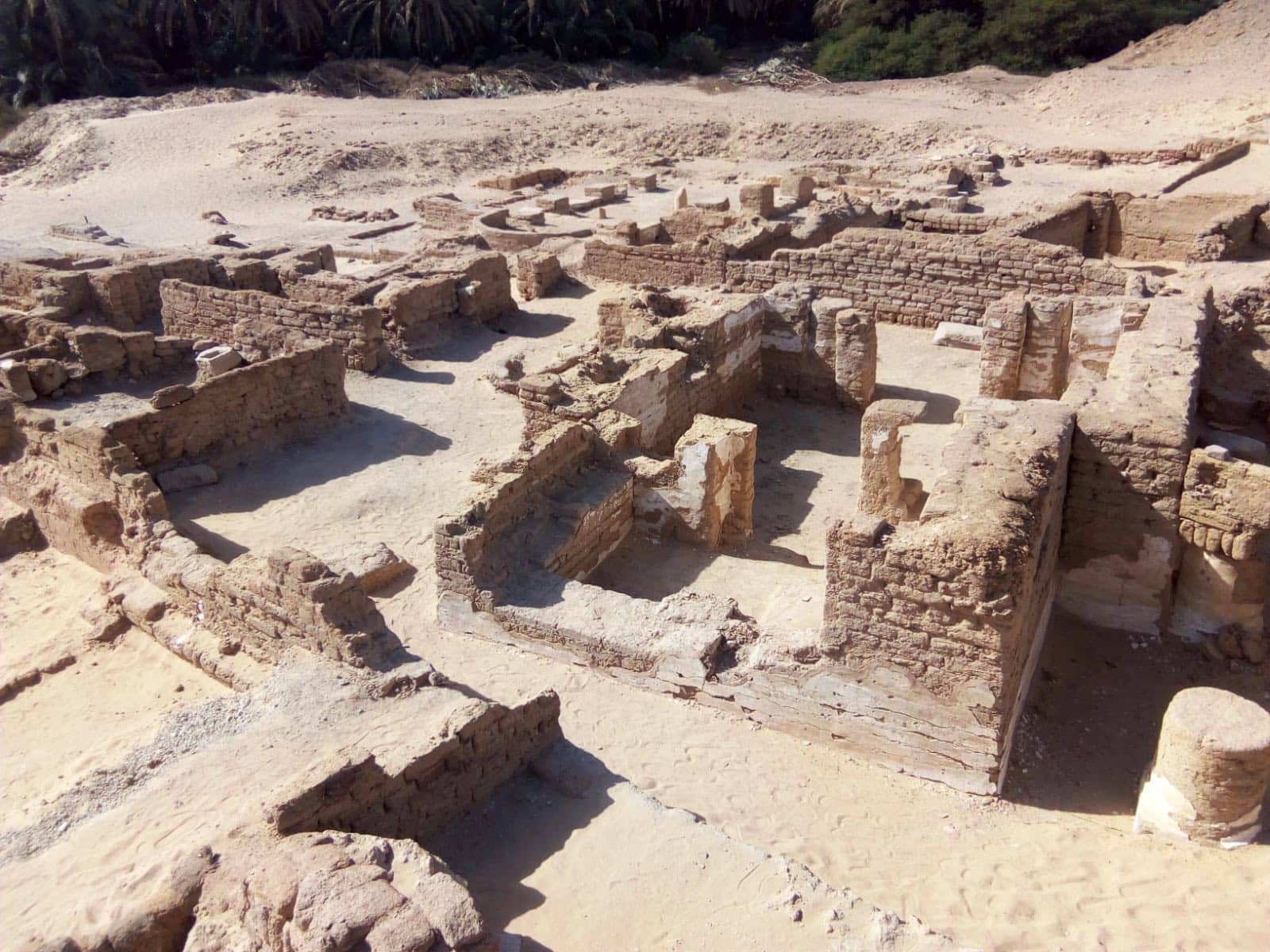
    Excavated mudbrick structures and early Christian inscriptions discovered in the Kharga Oasis
    Excavated mudbrick structures and early Christian inscriptions discovered in the Kharga Oasis. Credit: Ministry of Tourism and Antiquities

    Archaeologists have uncovered Roman city churches and tombs at a Roman-era settlement in Egypt's Kharga Oasis, offering rare insight into the region's transformation during the early Coptic period. The findings, made at Ain al-Kharab in the New Valley, highlight the shift from pagan traditions to Christianity in one of Egypt's most remote desert oases.

    The Egyptian mission, operating under the Supreme Council of Antiquities, discovered ruins of residential buildings, two churches, cemeteries, and a mural depicting Jesus Christ healing the sick. Officials say the findings mark one of the most significant excavations in the western oases in recent years.

    Major discoveries at Roman city churches site in Egypt

    Excavators revealed entire residential blocks built of mudbrick, with some walls coated with plaster. Service areas included ovens for daily use, mudbrick storage structures, and large ground-placed pottery jars used to store grain and food. The team also recovered ostraca, pottery fragments, glass pieces, and stone artifacts, along with several burials.

    Among the most notable discoveries is the mural portraying Jesus Christ healing a sick person—a rare example of early Christian iconography in Egypt's desert oases.

    Experts note that healing scenes were common in early Byzantine and Greek Christian art, hinting at cross-cultural influences that reached deep into Egypt's western frontier.

    Two churches were also unearthed. The larger, built in a basilica style, contained stone foundations and a central hall flanked by two aisles separated by square pillars. Service buildings were located to the south of the structure. The second church is smaller, rectangular in shape, and surrounded by seven external columns. Portions of its interior walls still bear Coptic inscriptions, with additional service buildings on its western side.

    Historical and cultural significance

    Tourism and Antiquities Minister Sharif Fathi has said the find underscores the richness and diversity of Egyptian civilization during a period of profound cultural transition. He noted that it offers deeper insight into Egypt's religious transformation and highlights the tolerance and cultural diversity of the time.

    Fathi praised Egyptian excavation teams for their efforts and reaffirmed the ministry's commitment to supporting archaeological missions nationwide. He maintained that such projects enhance Egypt's standing on the global cultural tourism map.

    Mohamed Ismail Khaled, Secretary-General of the Supreme Council of Antiquities, described the discovery as crucial for understanding the early Coptic period in the Kharga Oasis. He emphasized the enduring significance of the western oases as centers of religious and social life throughout various historical periods.

    Excavation leaders noted that previous seasons at the site revealed Roman-era structures later repurposed during both the Coptic and Islamic periods, showing continuous occupation and an evolving role in Egyptian history.

    © Copyright - GreekReporter.com

    --   Sent from my Linux system.

    Tuesday, July 22, 2025

    Why Canaanites Buried Lamps and Bowls Under Their Homes - Archaeology - Haaretz.com

    https://www.haaretz.com/archaeology/2025-07-16/ty-article/why-canaanites-buried-lamps-and-bowls-under-their-homes/00000198-13b7-d13e-adfb-13f7d0cb0000

    Why Canaanites Buried Lamps and Bowls Under Their Homes

    New study suggests the 3,000-year-old Canaanite custom was the result of Egyptian colonization in Canaan, and persisted well after the pharaohs left

    Send in e-mailSend in e-mail

    A lamp deposited in a bowl at Azekah
    Credit: Ariel David

    Ever since modern archaeologists began investigating the cities of the ancient Canaanites, one simple but peculiar find has turned up time and again, at multiple sites: a ceramic lamp concealed between two bowls that had been carefully buried beneath the floors of temples, palaces and private homes.

    Foundation deposits – the technical term for artifacts purposely buried under ancient buildings – are quite common around the world and throughout history. They are generally interpreted as a propitiatory offering to the supernatural entities – gods, spirits or ancestors – that a particular culture believes have the power to protect one's dwelling. But the specific origin and meaning of the Canaanite "lamp-and-bowl" offering have eluded archaeologists for a couple of centuries.

    The distinctive foundation deposits were first identified in the 1890s, in what was the first modern archaeological dig in the Levant, at Tell el-Hesi, an ancient Canaanite settlement near the city of Kiryat Gat. Scores more have since been found across Israel. Early archaeologists proposed some outlandish interpretations, including that the artifacts were meant as a symbolic substitute for child sacrifices.

    A new study by Israeli archaeologists aims to shed some light, pardon the pun, on this obscure custom. The team mapped the known deposits, chronologically and geographically, and used modern scientific methods to analyze some of the ritually buried artifacts, the researchers reported Tuesday in Tel Aviv: Journal of the Institute of Archaeology of Tel Aviv University. While their conclusions are not set in stone, the researchers think they gave a pretty good shot at understanding the roots of the ritual.

    They believe the evidence confirms previous theories suggesting the custom was tied to the Egyptian colonial presence in Canaan.

    The study offers a rare window into the little-known spiritual believes of the Canaanites, a culture that remains largely shrouded in mystery even though it is credited with inventing the alphabet and spawning a number of history-changing civilizations, including the ancient Israelites and the Phoenicians.


    Aerial view of Tell Azekah
    Credit: The Lautenschläger Azekah Expedition

    Serving Pharaoh

    The lamp-and-bowl deposits can be dated to very specific periods, appearing initially at the very end of the Late Bronze Age, in the 13th-12th centuries B.C.E., and continuing in some spots into the Early Iron Age, up to the end of the 9th century B.C.E. This is a first important clue, as the Late Bronze Age was also the time of the New Kingdom in Egypt, when pharaohs like Ramses II ruled over a vast colonial empire that included the once-independent Canaanite city-states.

    Another clue is the fact that lamp-and-bowl deposits are found mainly in settlements in the Beit Shean area, in today's northern Israel, and on the coastal strip between Jaffa and Gaza, says Prof. Ido Koch, an archaeologist at Tel Aviv University and the lead author on the new study. These areas were under direct Egyptian control, and the foundation deposits are found both in Egyptian settlements and in nearby Canaanite towns that serviced the Pharaoh's empire and were more influenced by the culture of the Nile Valley, he notes.

    "Collaboration with the Egyptians, service to the Egyptian empire, adoption of Egyptian iconography and gods, that's something that happens exactly in the areas where the lamp-and-bowl custom appears," Koch tells Haaretz in a phone interview.


    Lamp and bowl foundation deposits at Azekah
    Credit: אריאל דוד

    This leads the researchers to link the Canaanite ritual to similar, although not identical, foundation deposits that were common in Egypt at the time. These included a set of tools, pottery vessels as wells as amulets, such as scarabs, jewelry and inscribed bricks that were placed in the foundations of new buildings, Koch says.

    The Canaanites too were not unknown to place foundation deposits in earlier periods: artifacts, weapons, jewels and even sacrificial animals, like donkeys, all served this purpose at some time and place or another. But these seem to have been sporadic and very localized customs, as opposed to the very uniform and widespread tradition of the lamp-and-bowl offering, Koch says.

    The timing and location of the earliest lamp-and-bowl deposits suggests that the Canaanites borrowed something from the Egyptian tradition for their own purposes. It was not a one-to-one mirroring of the customs in the Nile Valley. The set of artifacts differed, as seemingly the purpose: the Egyptians placed the offerings in the actual foundations of new buildings, while the Canaanites buried the lamp and bowls under the floors, and seemingly conducted the ritual not just for the construction of a building, but also when it was refurbished or even when new owners settled in.

    Essentially, this was an "entangled" custom that combined the traditions of the colonizer and colonized, Koch concludes.


    A donkey sacrificed in Canaanite ritual, found in situ at Tell es-Safi/Gath.
    Credit: Richard Wiskin

    Egypt falls, Gath rises

    The researchers also conducted advanced testing on 11 deposits that were found in the excavation of Azekah, an ancient settlement that spanned millennia in the Elah Valley, southwest of Jerusalem. Specifically they conducted use-wear analysis to check for signs of previous use on the tools, as well as residue analysis to check if the ceramic artifacts contained specific substances the clay had absorbed.

    The results show that in the Late Bronze Age heyday of this custom, the lamps and bowls didn't show any sign of wear-and-tear and didn't contain any discernible substances: the bowls were clean and the lamps showed no signs of soot. In other words, the artifacts themselves were likely the offering, rather than anything they may have contained, says Prof. Oded Lipschits, a leading Tel Aviv University archaeologist who heads the excavation at Azekah.

    In later periods, when the custom was revived in the Early Iron Age, it seems that "virgin" artifacts were no longer used for the offering, but rather the custom evolved so that tools that had been previously employed for other purposes were also acceptable, the researchers found.

    The fact that this Canaanite practice continued until the end of 9th century B.C.E. is particularly exciting in light of Azekah's history, Lipschits says.


    Four sets of lamp-and-bowl deposits from Azekah, two (right) from the Late Bronze Age, and two (left) from the Iron Age
    Credit: Sasha Flit / TAU

    Azekah and the surrounding Elah Valley are probably best known as the setting of the biblical duel between David and the Philistine giant, Goliath (1 Samuel 17). In reality, researchers have found that Azekah was uninhabited in the time of King David, which would have been in the 10th century B.C.E. The Canaanite city prospered much earlier, in the Middle and Late Bronze Age, and was very much influenced in the latter period by trade and contacts with the Egyptians.

    But then, in the 12th century B.C.E., came the so-called Bronze Age Collapse, a period of war and instability, possibly climate related, that brought down or greatly diminished multiple civilizations across the Eastern Mediterranean, including the Myceneans of Greece and the Hittites in Anatolia.

    While the Egyptian civilization survived in the Nile Valley, the pharaohs withdrew from their colonial empire in the Levant, leaving their former Canaanite vassals to fend for themselves.

    Azekah itself was destroyed around 1130 B.C.E. in a violent attack, in which much of the population was massacred. The perpetrators are unknown, but Lipschits and other scholars strongly suspect the Philistines from the nearby city of Gath, a rising power at the time, which may have ill-tolerated the presence of a prosperous neighbor like Azekah.


    Lamp-and-bowl sets in a Late Bronze Age temple in Azekah
    Credit: Oded Lipschits

    Archaeologists think the Philistines are to blame partly because Azekah remained deserted for 300 years, well into the Early Iron Age, until around 830 B.C.E. Then it was Gath's turn to be on the chopping block of history, at the hands of Hazael, the king of Aram-Damascus, who had invaded large swathes of the Levant.

    Only then Azekah was rebuilt, in what is considered a brief "swansong" of Canaanite city-state culture before the entire Levant was divvied up amongst larger territorial polities, including the biblical kingdoms of Judah and Israel.

    And what is supremely interesting is that after 300 years exile, when the Azekites rebuilt their town, they revived the lamp-and-bowl custom, albeit with the small changes mentioned above.

    "People don't just leave their lands and disappear, so, probably, many small settlements that arose in this area after the Late Bronze Age destruction hosted this clan for 300 years," Lipschits says. "Then, when Gath was destroyed, the first building was rebuilt in Azekah at the end of the 9th century B.C.E. – and it has a foundation deposit. It means it was same population with the same customs."

    Ultimately the lamp-and-bowl deposits disappeared from the foundations of new buildings in Azekah, as they did earlier in other Canaanite sites. Over the 8th century B.C.E., Azekah and the surrounding region came under the control of the Kingdom of Judah, and its capital Jerusalem. The town was destroyed again in 701 B.C.E. during the campaign of the Assyrian King Sennacherib against Judah and was then rebuilt, razed and remade several more times in the following centuries.


    Sennacherib shown at the gates of Lachish, ordering its "slaughter", from Nineveh relief at the British Museum
    Credit: oncenawhile

    Prosperity and light

    One question remains: what was the significance to the Canaanite inhabitants of the lamps and bowls they ritually interred beneath private and public buildings? We may never know: the Canaanites were the first to use the alphabet – later spread across the Mediterranean by their Phoenician descendants – but they themselves have left us only a few, fragmentary inscriptions. We can only speculate on many aspects of their spiritual life.

    The lamp, ensconced in two bowls, may have some connection to Canaanite mythology, Koch suggests. Perhaps fire and light were linked to a protective domestic deity as in the case of Hestia/Vesta, the Greco-Roman hearth goddess.

    Or they may have simply served as symbolic offerings for the prosperity of those living above ground, Lipschits speculates.

    "The bowl symbolizes food, plenty, and the candle represents light," he says. "When you enter a new home, what more can you wish for?"

    Click the alert link to follow topics:

    --   Sent from my Linux system.