Khentiamentiu

A sampling of all things Egypt.

Tuesday, September 22, 2020

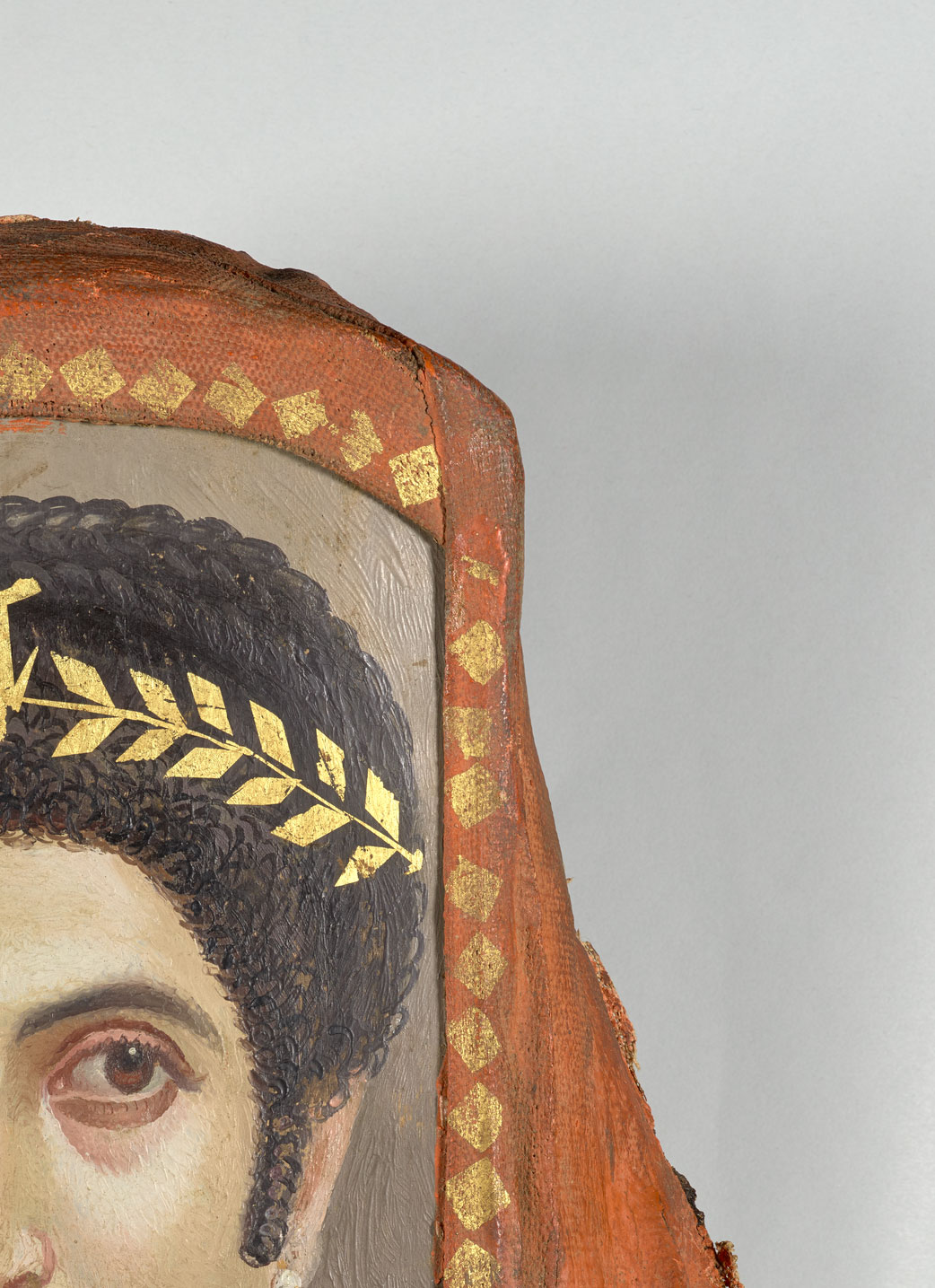
Mummy Portraits of Roman Egypt

https://www.getty.edu/publications/mummyportraits/#content

Mummy Portraits of Roman Egypt: Emerging Research from the APPEAR Project

Edited by Marie Svoboda and Caroline R. Cartwright

Once interred with mummified remains, nearly a thousand funerary portraits from Roman Egypt survive today in museums and galleries around the world, bringing viewers face-to-face with people who lived two thousand years ago. Until recently, few of these paintings had undergone in-depth study to determine how they were made.

An international collaboration known as APPEAR (Ancient Panel Paintings: Examination, Analysis, and Research) was launched in 2013 to promote the study of these objects and to gather scientific and historical findings into a shared database. The first phase of the project was marked with a two-day conference at the Getty Villa. Conservators, scientists, and curators presented new research on topics such as provenance and collecting, comparisons of works across institutions, and scientific studies of pigments, binders, and supports. The papers and poster presentations from the conference are collected in this publication, which offers the most up-to-date information available about these fascinating remnants of the ancient world.


Contents

  • Foreword — Timothy Potts 
  • Acknowledgments 
  • Introduction — Marie Svoboda, Caroline R. Cartwright, and Susan Walker 
  • Part One
    • 1. Challenges in the Characterization and Categorization of Binding Media in Mummy Portraits — Ken Sutherland, Rachel C. Sabino, and Federica Pozzi
    • 2. Understanding Wood Choices for Ancient Panel Painting and Mummy Portraits in the APPEAR Project through Scanning Electron Microscopy — Caroline R. Cartwright
    • 3. The Matter of Madder in the Ancient World — Richard Newman and Glenn Alan Gates
    • 4. Green Pigments: Exploring Changes in the Egyptian Color Palette through the Technical Study of Roman-Period Mummy Shrouds — Caroline Roberts
    • 5. Egyptian Blue in Romano-Egyptian Mummy Portraits — Gabrielle Thiboutot
    • 6. Multispectral Imaging Techniques Applied to the Study of Romano‑Egyptian Funerary Portraits at the British Museum — Joanne Dyer and Nicola Newman
    • 7. Evaluating Multiband Reflectance Image Subtraction for the Characterization of Indigo in Romano-Egyptian Funerary Portraits — Lauren Bradley, Jessica Ford, Dawn Kriss, Victoria Schussler, Federica Pozzi, Elena Basso, and Lisa Bruno
    • 8. Invisible Brushstrokes Revealed: Technical Imaging and Research of Romano-Egyptian Mummy Portraits — Evelyn (Eve) Mayberger, Jessica Arista, Marie Svoboda, and Molly Gleeson
    • 9. Framing the Heron Panel: Iconographic and Technical Comparanda — Georgina E. Borromeo, Ingrid A. Neuman, Scott Collins, Catherine Cooper, Derek Merck, and David Murray
    • 10. A Study of the Relative Locations of Facial Features within Mummy Portraits — Jevon Thistlewood, Olivia Dill, Marc S. Walton, and Andrew Shortland
    • 11. From All Sides: The APPEAR Project and Mummy Portrait Provenance — Judith Barr
    • 12. Painted Mummy Portraits in the Museum of Fine Arts, Budapest — Kata Endreffy and Árpád M. Nagy
  • Part Two
    • 13. Scrutinizing "Sarapon": Investigating a Mummy Portrait of a Young Man in the Michael C. Carlos Museum, Emory University — Renée Stein and Lorelei H. Corcoran
    • 14. Defining a Romano-Egyptian Painting Workshop at Tebtunis — Jane L. Williams, Caroline R. Cartwright, and Marc S. Walton
    • 15. Nondestructive Studies of Ancient Pigments on Romano-Egyptian Funerary Portraits of the Kunsthistorisches Museum, Vienna — Bettina Vak, Roberta Iannaccone, and Katharina Uhlir
    • 16. Painted Roman Wood Shields from Dura-Europos — Anne Gunnison, Irma Passeri, Erin Mysak, and Lisa R. Brody
    • 17. Characterization of Binding Media in Romano-Egyptian Funerary Portraits — Joy Mazurek
    • 18. Binding Media and Coatings: Mummy Portraits in the National Museum of Denmark and the Ny Carlsberg Glyptotek — Lin Rosa Spaabæk and Joy Mazurek
    --   Sent from my Linux system.
Glenn Meyer at 11:24 PM
Share

No comments:

Post a Comment

‹
›
Home
View web version

About Me

My photo
Glenn Meyer
A NASA software engineer for 23 years (retired), Silicon Valley software engineer for 36+years, Egyptology hobbyist and ARCE-NC board of directors member for more than 25 years, reporter and copy editor for the Kansas City Star and Louisville Courier-Journal for 6 years. Phi Beta Kappa, Phi Kappa Phi, Kappa Tau Alpha, Heritage Registry of Who's Who. I favor open source development, Linux, net neutrality, medical care as a right and not a privilege, the ACLU, freedom of religion, separation of church and state, freedom of speech.
View my complete profile
Powered by Blogger.