Search This Blog

Wednesday, October 1, 2025

AERA Field Season Report: Scanning Khufu's Boat Pits

Email from Ancient Egypt Research Associates, Inc.

Summer Field Season Report: 3D survey of Khufu's southern boat pits

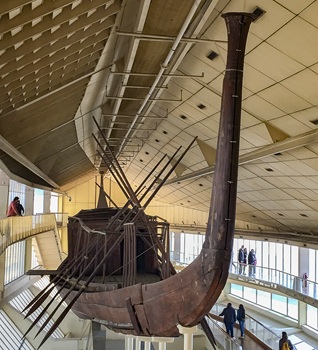
4,600 years ago, Khufu's workers buried two dismantled ceremonial boats inside rectangular pits cut into the bedrock just south of the Great Pyramid. These pits were then sealed shut with limestone cover blocks and remained hidden from the world until their discovery in 1954. One of the magnificent ancient boats was then reassembled and put on display inside a museum built directly over its discovery site (see figure 1).


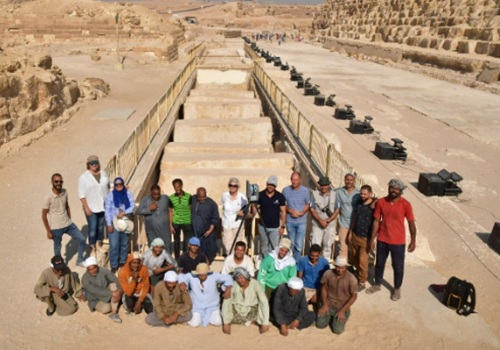
While we've surveyed and documented the rest of the court that surrounds Khufu's Great Pyramid, the boat museum made much of the southern boat pit area inaccessible. Until now—with the recent relocation of both boats to the Grand Egyptian Museum (GEM), the entire area is now fully open and available to research for the first time (see figure 2).

1. Khufu's eastern boat on display in the original museum built over its discovery site. It has now been moved to the GEM

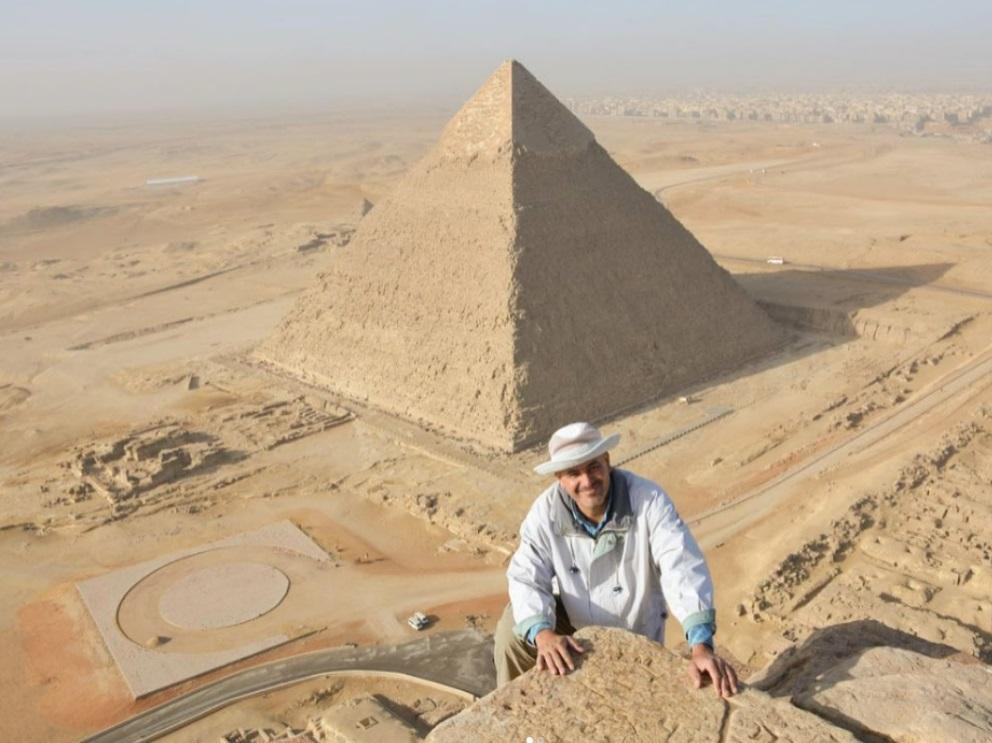
2. The AERA team posing in front of the now uncovered boat pits. The base of the Great Pyramid is visible in the upper right

Working in collaboration with the GEM, this summer the AERA team was able to survey the boat pits and their cover blocks using a combination of 3D laser scanning and photogrammetry. As the cover blocks have been dispersed—some were left in place, some are displayed nearby, and some have been moved to the GEM—our work allows the entirety of these structures to be virtually reunited and preserved for future researchers.


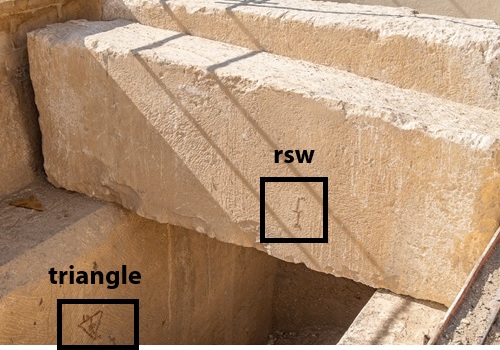
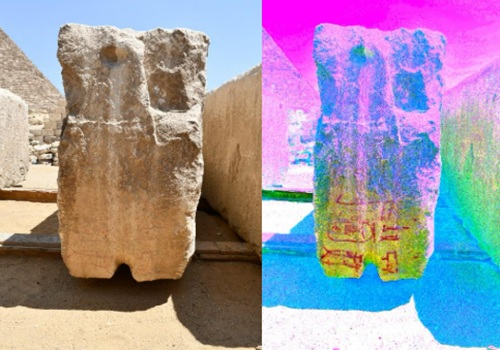
During our survey, we were excited to see the extent of the graffiti left behind by Khufu's workers including measurements, directions and gang names (see figure 3). Dr. Aurore Ciavatti joined our team to help document these builders' marks using photogrammetry and textured 3D scanning. This advanced technology allows us to record details that are invisible to the naked eye (see figure 4).


The imagery we've produced will be incorporated into displays at the GEM's new Khufu's Boats Museum, which is devoted to fully documenting the boats' discovery and conservation. More information about this work will also be published in the next edition of the AERAgram newsletter, available to AERA members later this year.

3. A cover block over the eastern boat pit shows a red-painted hieroglyph for "south" (rsw) and a triangle with measurements written inside it

4. A cover block (left) and an image (right) produced using software that is able to highlight pigments on it that are imperceptible to the naked eye

AERA's legacy of groundbreaking archaeology wouldn't be possible without the generosity and support of our members. We hope you'll consider supporting our work and be first to hear about our latest findings!

The Collapse of the Old Kingdom as a Multidisciplinary Problem

AERA team members presented papers at the first-ever conference dedicated to investigating the collapse of the Egyptian Old Kingdom.


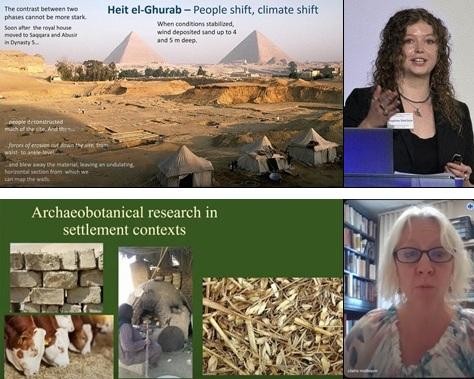
"The Collapse of the Old Kingdom as a Multidisciplinary Problem" was organized by the Czech Institute of Egyptology, Charles University, and Yale University. Participants analyzed this period from archaeological, epigraphic, hydrological and paleoclimate perspectives. 

On the first day of the seminar, Dr. Claire Malleson presented "Archaeobotanical Evidence for Agriculture in Egypt during the 4th-3rd Millennia BC: Methods and Results." A livestream of it can be viewed on YouTube here.


On the second day, Dr. Mark Lehner and Daphne Sinclaire Myhrvold presented "Site Formation and Climate Change: Reading the Old Kingdom Settlement Record at Giza," which can be viewed here

The Return of the AERA Field Schools

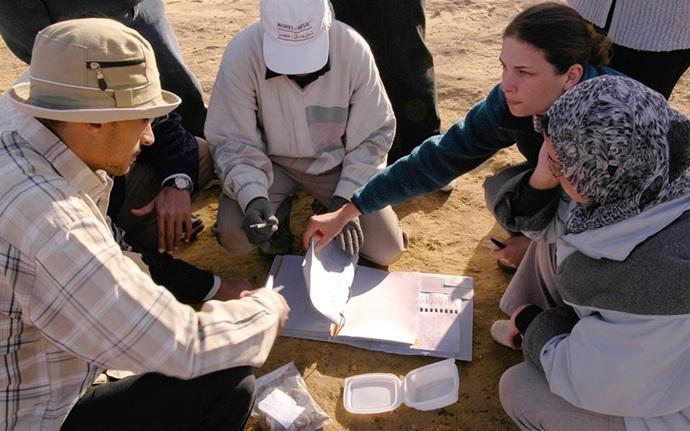
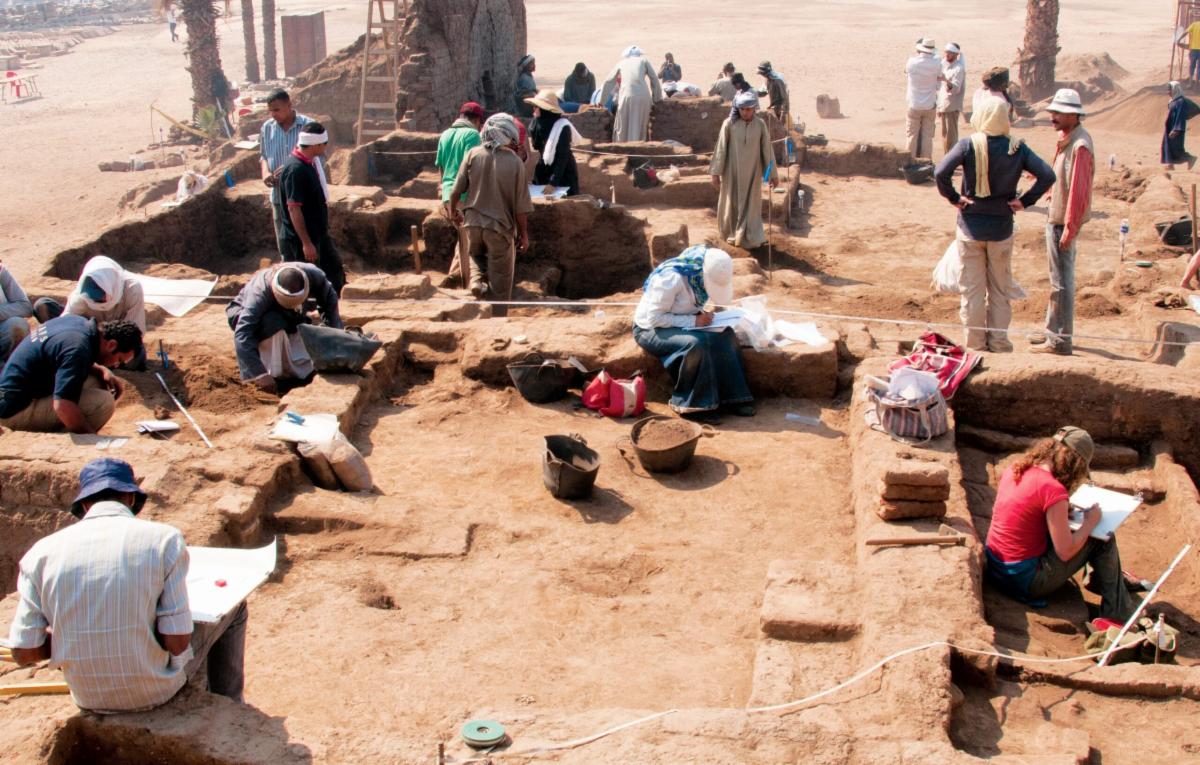
We are excited to announce the relaunch AERA's Archaeological Field School at the Lost City of the Pyramids. Over an eight-week intensive excavation season, our Beginner's Field School will offer archaeologists from Egypt's Ministry of Antiquities and Tourism invaluable hands-on training in scientific excavation.


AERA field schools embed training within research. We never make work up just to teach. Students will excavate craft production areas located along the Lost City's southern harbor, including Egypt's oldest faience production area, copper-working facilities, and an alabaster workshop. Students will work hand-in-hand with professional archaeologists to learn the principles and practice of stratigraphic excavation and how to document and preserve information at the site that once housed the workers responsible for constructing the pyramids. Learn more about our field school program here.

We are thrilled to begin this new series of large-scale excavations and field schools at the Giza plateau! But starting our Field School program again takes a pyramid of people—research scientists, students, professional archaeologists, drivers, cooks, staff—and we need your support to make it happen. Your tax-deductible donation to AERA supports our field school program and is an investment in the future of Egyptian archaeology.

Join AERA and help us explore further

Our members support our excavations in Egypt, field school training, and vital conservation efforts, helping ensure Egypt's ancient heritage is preserved for future generations. By joining our community, you become an integral partner in our mission to explore and safeguard Egypt's extraordinary history.


All AERA members receive copies of our AERAgram newsletters and annual reports, while supporting members gain further insights into our ongoing discoveries through Mark Lehner's detailed field reports.

Have a membership question? Email info@aeraweb.org and we'll be happy to help!

AERA is a 501(c)(3) tax exempt, nonprofit organization. Your membership or donation is tax deductible.

Keep in Touch


Our Instagram account posts photos from the field, finds from the lab, and lets you get to know our team members. Follow @aeraegypt for the latest news and photos from Egypt!


Website: aeraweb.org


Email: info@aeraweb.org 

3 comments: