Thursday, December 18, 2025

Mystery of King Tut’s jars solved? Yale researchers find opium clues | ScienceDaily

https://www.sciencedaily.com/releases/2025/12/251217082513.htm

Mystery of King Tut's jars solved? Yale researchers find opium clues

Date:
December 18, 2025
Source:
Yale University
Summary:
Traces of opium found inside an ancient alabaster vase suggest drug use was common in ancient Egypt, not rare or accidental. The discovery raises the possibility that King Tut's famous jars once held opiates valued enough to be buried with pharaohs—and stolen by tomb raiders.
Share:

FULL STORY

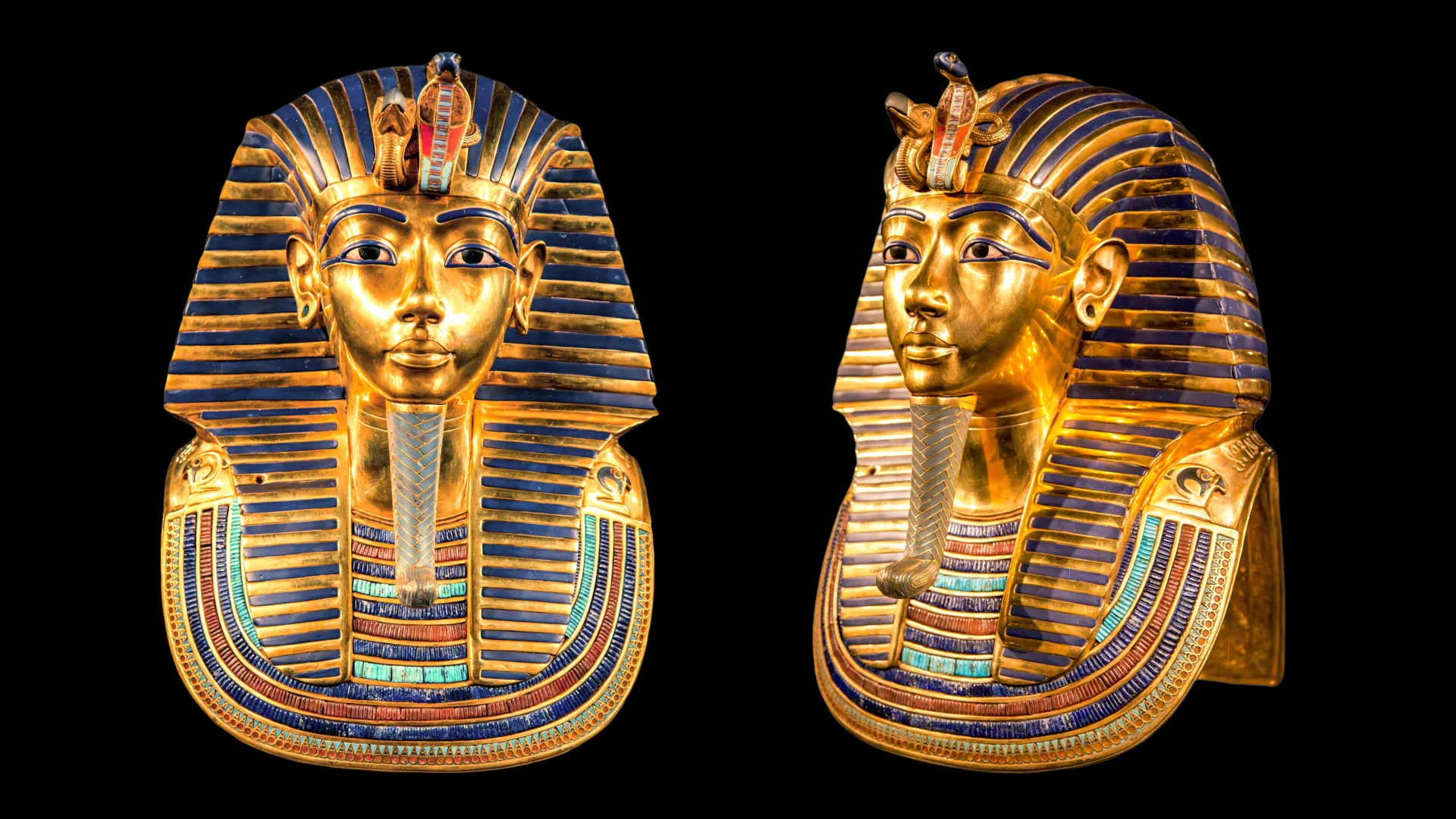
Scientists examining an ancient alabaster vase in the Yale Peabody Museum's Babylonian Collection detected chemical traces of opiates. The Yale Ancient Pharmacology Program (YAPP) says this is the strongest evidence so far that opium use was widespread in ancient Egyptian society.

Andrew J. Koh, YAPP's principal investigator and the study's lead author, said the results also point to a bigger possibility. Similar ancient Egyptian alabaster vessels (all made of calcite mined from the same quarries in Egypt) including several remarkable examples from the tomb of Pharaoh Tutankhamun could also still carry traces of ancient opiates.

"Our findings combined with prior research indicate that opium use was more than accidental or sporadic in ancient Egyptian cultures and surrounding lands and was, to some degree, a fixture of daily life," said Koh, a research scientist at the Yale Peabody Museum. "We think it's possible, if not probable, that alabaster jars found in King Tut's tomb contained opium as part of an ancient tradition of opiate use that we are only now beginning to understand."

The study appeared in the Journal of Eastern Mediterranean Archaeology. It was coauthored by Agnete W. Lassen, associate curator of the Yale Babylonian Collection, and Alison M. Crandall, YAPP's lab manager.

A Vase Linked to Xerxes and Written in Four Ancient Languages

The alabaster vase bears inscriptions in four ancient languages: Akkadian, Elamite, Persian, and Egyptian. The text is dedicated to Xerxes I, who ruled the Achaemenid Empire from 486 to 465 BCE. Centered in Persia, that empire at its peak included Egypt, Mesopotamia, the Levant, Anatolia, and parts of Eastern Arabia and Central Asia.

Another inscription on the vessel is written in Demotic script, a simplified form of ancient Egyptian writing. It states the vase holds about 1,200 millimeters. (It is 22 centimeters tall.) The researchers noted that intact inscribed ancient Egyptian alabaster vessels are extremely rare, likely fewer than 10 in museum collections worldwide.

The team said the origins of these intact vessels are generally uncertain. Even so, the surviving examples appear to span the reigns of Achaemenid emperors Darius, Xerxes, and Artaxerxes, covering 550 to 425 BCE. Yale's vase has been in the Babylonian Collection since shortly after the university established the collection of about 40,000 ancient artifacts in 1911.

How YAPP Studies Ancient Residues in Museum Vessels

YAPP is based at the Peabody Museum and combines ethnography, science, and technology to investigate everyday life thousands of years ago. The group focuses on organic residues left on or inside ancient containers, which can reveal details about diet and lifestyle. To do this work, the program developed methods designed for residues that deteriorate over time and that can be contaminated, whether the objects come from museum collections or recent excavations.

"Scholars tend to study and admire ancient vessels for their aesthetic qualities, but our program focuses on how they were used and the organic substances they contained, knowledge that reveals a great deal of information about the daily lives of ancient peoples, included what they ate, the medicines they used, and how they spent their leisure time," Koh said.

Koh's attention was first drawn to the vase after he noticed dark-brown aromatic material inside it.

Chemical Biomarkers Confirm Opium Compounds

YAPP's testing found strong evidence of noscapine, hydrocotarnine, morphine, thebaine, and papaverine. These compounds are well-known diagnostic biomarkers for opium.

Researchers said the results align with earlier work that identified opiate residues in Egyptian alabaster vessels and Cypriot base-ring juglets. Those items came from a typical tomb in Sedment, Egypt, south of Cairo, believed to belong to a merchant family. That burial dates to the New Kingdom, when the Egyptian empire lasted from the 16th to the 11th century BCE.

Koh said these two discoveries, separated by more than a millennium and connected to different socio-economic groups, make it plausible that opium could be present in the many alabaster vessels found in Tutankhamun's tomb in the Valley of the Kings.

Opium Use Beyond Medicine and Into Ritual Life

Koh noted that historical signals of opium use often go beyond healing and into spiritual or ritual contexts across antiquity, from ancient Mesopotamia to Egypt and through the Aegean. During Tutankhamun's lifetime, for instance, people in Crete were linked to the so-called "poppy goddess" in clearly ritualistic settings. The poppy plant is also referenced in several ancient texts, including the Ebers Papyrus, Hippocrates, Dioscorides's De Materia Medica, and Galen.

King Tut's Tomb, Sticky Residues, and an Unfinished Investigation

Howard Carter, the Egyptologist and archaeologist, discovered Tutankhamun's tomb in November 1922. The find included an enormous collection of artifacts, among them many exquisitely preserved Egyptian alabaster vessels that likely represented the finest available during Tutankhamen's reign, which last from 1,333 to 1,323 BCE.

In 1933, analytical chemist Alfred Lucas, who worked with Carter's team, carried out a limited chemical study of the vessels. Many contained sticky, dark brown, aromatic organic material. Lucas could not identify the substances at the time, but he concluded most were not unguents or perfumes.

"That Lucas questioned whether any of the vessels contained perfumes or unguents at all and did not identify the remaining vessel contents as primarily aromatic in nature is significant given that the prevailing conventions at the time would have pressured him to do so," Koh said.

No additional testing of those organic materials has been done since Lucas' early effort. The vessels (along with most other artifacts from Tutankhamun's tomb) are now housed at the Grand Egyptian Museum in Giza, Egypt.

Looters Targeted the Contents, Not Just the Containers

The researchers said Carter recorded evidence of an ancient looting episode that focused on what was inside the alabaster vessels. Finger marks inside some jars suggest looters tried to scrape out the contents as completely as possible. Many of the looted vessels held the same kind of dark-brown aromatic material that Lucas concluded was not perfume. A small number of jars were not looted and still contain their original contents.

Koh said whatever was stored in these vessels was considered valuable enough to accompany Tutankhamen into the afterlife, and important enough that grave robbers were willing to risk an attempted theft.

He added that it seems unlikely people would have treated ordinary unguents and perfumes of the period as that valuable.

"We now have found opiate chemical signatures that Egyptian alabaster vessels attached to elite societies in Mesopotamia and embedded in more ordinary cultural circumstances within ancient Egypt," Koh said. "It's possible these vessels were easily recognizable cultural markers for opium use in ancient times, just as hookahs today are attached to shisha tobacco consumption. Analyzing the contents of the jars from King Tut's tomb would further clarify the role of opium in these ancient societies."


Story Source:

Materials provided by Yale University. Note: Content may be edited for style and length.


Journal Reference:

  1. Andrew J. Koh, Agnete W. Lassen, Alison M. Crandall. The Pharmacopeia of Ancient Egyptian Alabaster Vessels: A Transdisciplinary Approach with Legacy Artifacts. Journal of Eastern Mediterranean Archaeology and Heritage Studies, 2025; 13 (3): 317 DOI: 10.5325/jeasmedarcherstu.13.3.0317

Cite This Page:

Yale University. "Mystery of King Tut's jars solved? Yale researchers find opium clues." ScienceDaily. ScienceDaily, 18 December 2025. <www.sciencedaily.com/releases/2025/12/251217082513.htm>.

--   Sent from my Linux system.
Wednesday, December 17, 2025

Ancient Egyptian valley temple excavated — and it's connected to a massive upper temple dedicated to the sun god, Ra | Live Science

https://www.livescience.com/archaeology/ancient-egyptians/ancient-egyptian-valley-temple-excavated-and-its-connected-to-a-massive-upper-temple-dedicated-to-the-sun-god-ra

Ancient Egyptian valley temple excavated — and it's connected to a massive upper temple dedicated to the sun god, Ra

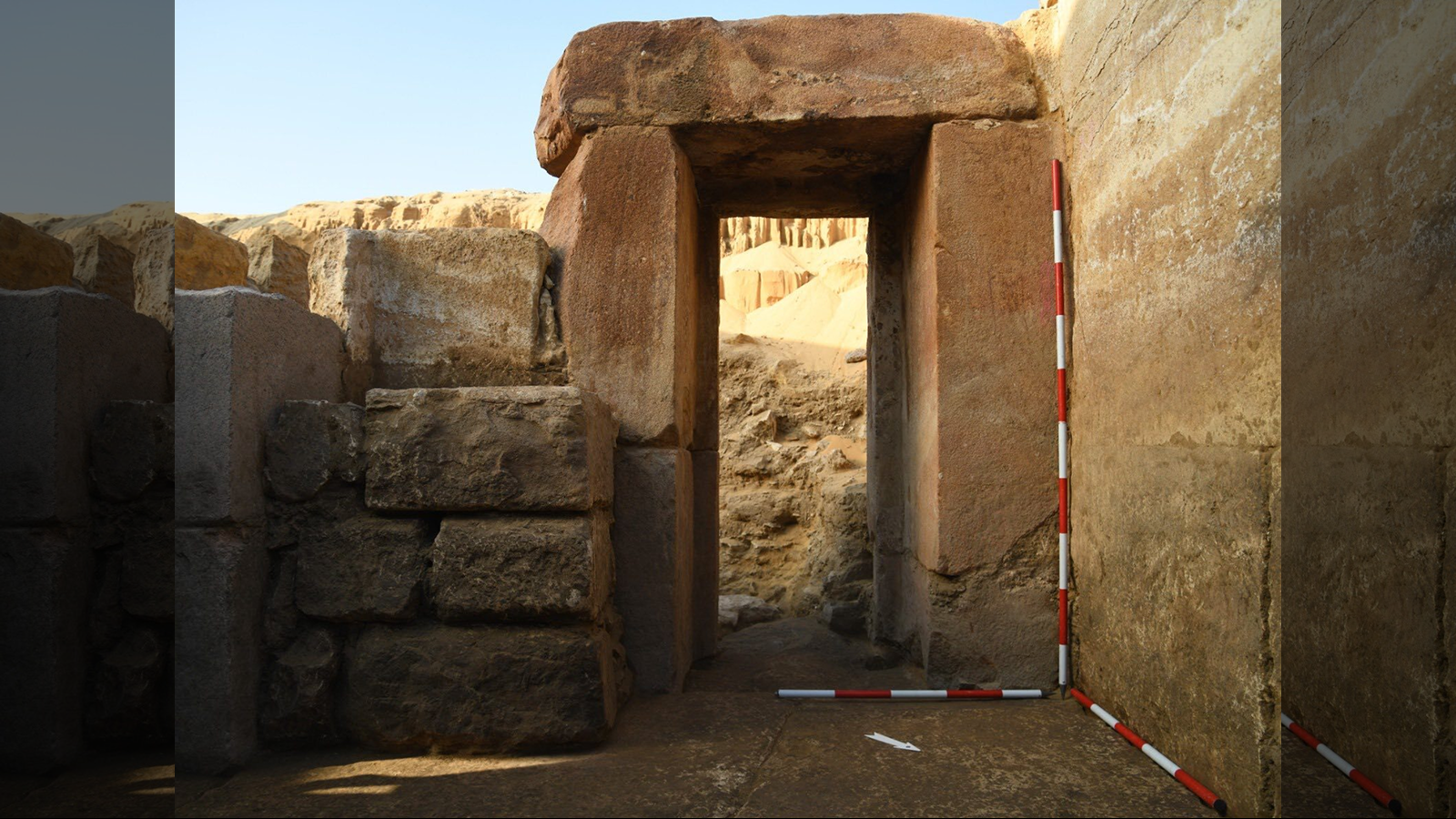
Part of the valley temple at Abu Ghurab, about 10 miles (16 kilometers) southwest of Cairo. (Image credit: Courtesy of the Egyptian Ministry of Tourism and Antiquities)

Archaeologists in Egypt have uncovered the remains of a 4,500-year-old valley temple. The structure is part of a sun temple that ancient Egyptians built in honor of the sun god Ra, the Egyptian Ministry of Tourism and Antiquities said in a translated statement.

The temple is located at Abu Ghurab, about 10 miles (16 kilometers) southwest of Cairo. The sun temple has two parts: an upper temple, which the archaeologists excavated several years ago, and the newly excavated valley temple, which the team started working on in 2024. The valley temple is positioned near the Nile River, and two temple parts are connected through a causeway.

The recent excavations have led to several discoveries, including the remains of a columned entrance portico, a public calendar of religious events carved into blocks, and dozens of decorated blocks with inscriptions that mention Pharaoh Niuserre (reign circa 2420 B.C. to 2389 B.C.), the ruler who had the temple built.

The upper temple was the main place of worship, but the valley temple made it easier for people to reach. The valley temple "was used as a landing stage for the boats approaching it from the Nile or, more likely, from one of its side channels," Nuzzolo told Live Science in an email. The "most convenient way to reach the upper temple was to enter the valley temple and go up on the hill where the upper temple was located through a ramp [the causeway]."

 Part of the valley temple from an overhead view.

Part of the valley temple from an overhead view. (Image credit: Courtesy of the Egyptian Ministry of Tourism and Antiquities)

Public calendar

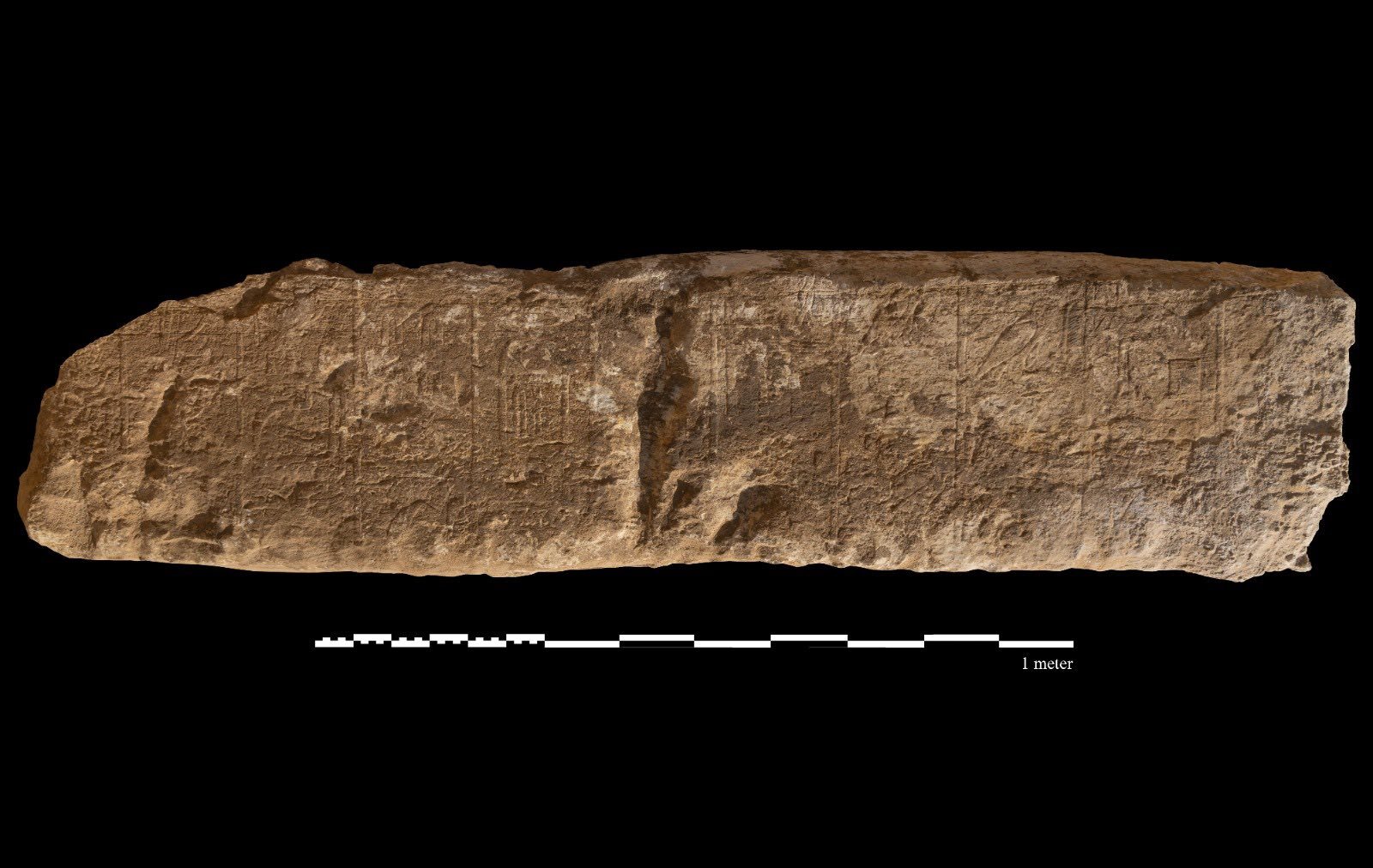
The valley temple had a calendar of religious events inscribed on decorated blocks. Borchardt found part of the calendar in 1901, and more of it was uncovered by the modern-day archaeological team. The events mentioned include the feasts of Sokar, a falcon-headed god associated with the Egyptian city of Memphis — a capital during the Old Kingdom. The blocks also mention the festival of Min, a god associated with fertility, and the procession of Ra.

"What is really important here is however the location of these blocks," Nuzzolo said. "They were all found in the area of the entrance portico and this seems to indicate that the façade of the temple, on the outside, was inscribed with this long calendar of feasts, possibly one of the first [examples] of 'public calendars' known so far to us."

A carved stone against a black background

Inscriptions found in the valley temple, which include a "public calendar" telling of religious events. (Image credit: Courtesy of the Egyptian Ministry of Tourism and Antiquities)

Stars and games

The team also found a staircase that went up to the roof of the valley temple, the ministry statement said. Ancient Egyptians likely accessed the roof to observe the sky.

"The roof of the valley temple was probably used for astronomical observations but not for the celebration of the festivals," Nuzzolo said.

After about a century of use, the valley temple was turned into a residential area, the researchers found. They discovered two wooden pieces dating to this time that were used to play a board game known as "senet." Many senet pieces have been found at other sites in Egypt, including in the tomb of King Tutankhamun, but the exact rules of the game are unclear.

"The sanctuary thus became a dwelling and one of the favourite local [games] was probably playing senet," Nuzzolo said.


--   Sent from my Linux system.

New research from Anne Austin reveals prevalence of tattooing in ancient Nubia, including on young children - UMSL Daily

https://blogs.umsl.edu/news/2025/12/15/anne-austin-tattoo-research-ancient-nubia/

New research from Anne Austin reveals prevalence of tattooing in ancient Nubia, including on young children

by | Dec 15, 2025

Austin, an associate professor in UMSL's Department of History, has worked with colleagues at Arizona State to publish a new article about their findings in the journal PNAS.
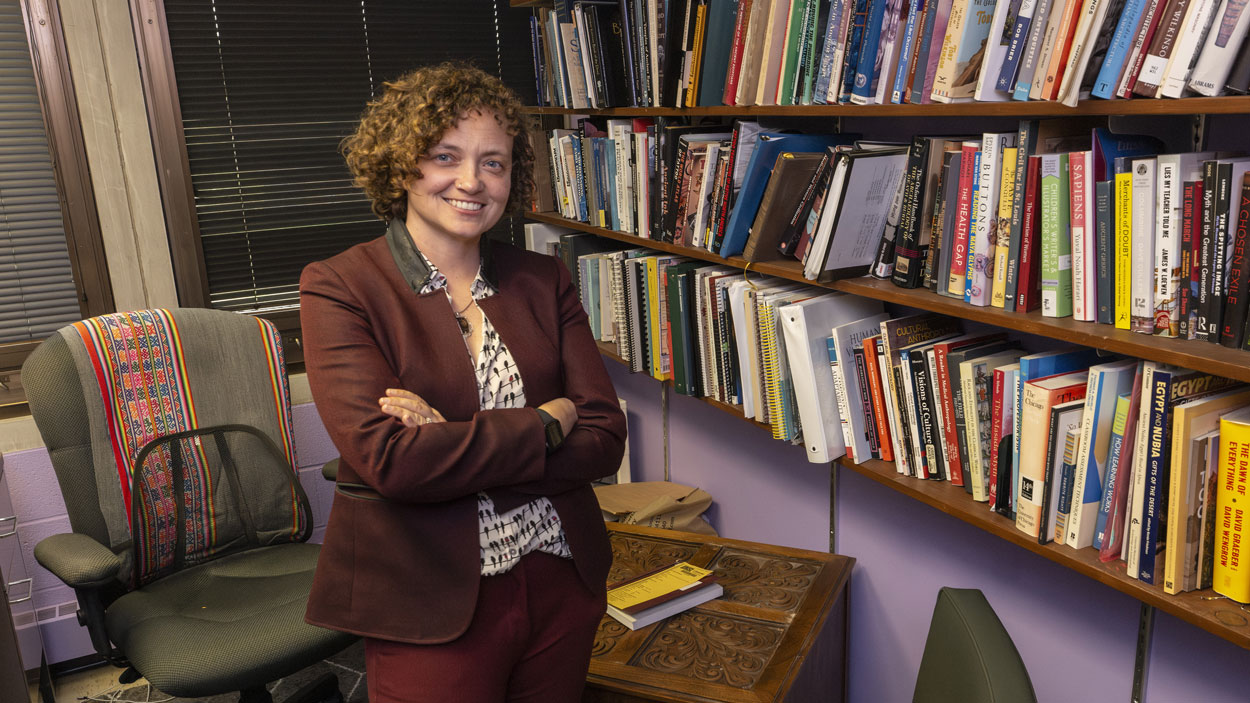
University of Missouri–St. Louis Associate Professor of History Anne Austin standing in her office with bookshelf to her left

UMSL Associate Professor Anne Austin and her collaborators at Arizona State University have uncovered extensive evidence of tattooing in the ancient Nile Valley civilization of Nubia, including tattoos on the remains of young children. They've published their findings in a new article titled "Revealing Tattoo Traditions in Ancient Nubia through Multispectral Imaging" in the journal PNAS. (Photo by Derik Holtmann)

University of Missouri–St. Louis anthropologist Anne Austin, working with colleagues at Arizona State University, has uncovered the most extensive evidence yet of tattooing in the ancient Nile Valley civilization of Nubia, including the consistent presence of tattoos on the remains of young children.

Austin, an associate professor in the Department of History at UMSL, worked with Professor Brenda Baker and research assistant Tatijana Jovanović in the School of Human Evolution and Social Change at Arizona State University to conduct a systematic survey of tattoos among the remains of more than 1,000 individuals found in three different sites in Sudan – Semna South, Qinifab School and Kulubnarti – and spanning the period from 350 BCE-1400 CE.

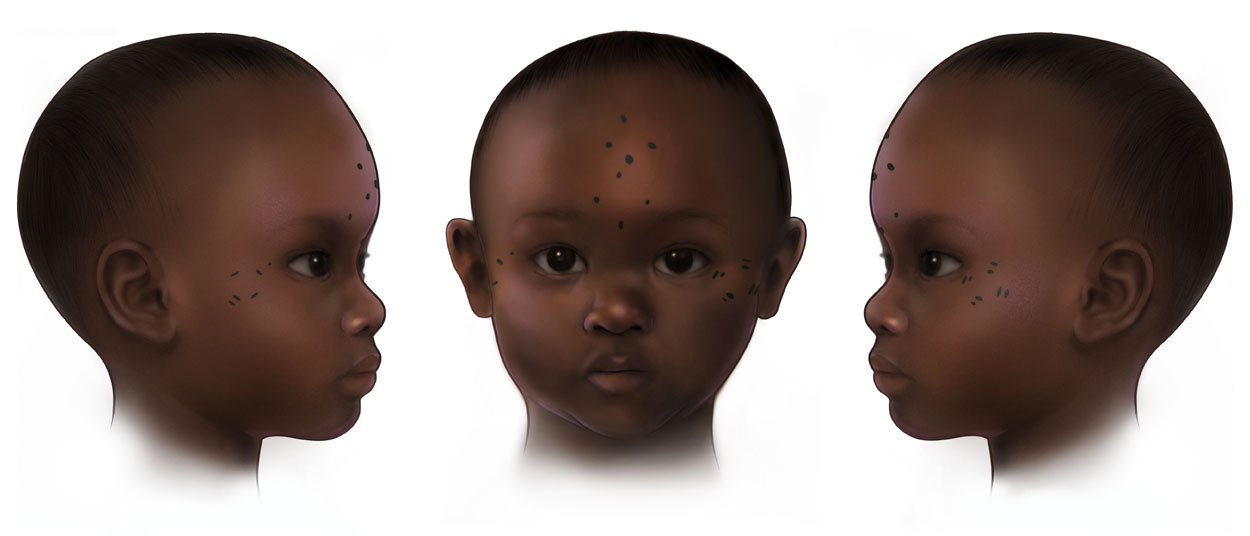
An illustration showing tattoos on the faces of young children. Some of the tattoos are made up of dots, arranged in the shape of a cross on the forehead.

Anne Austin and her colleagues at Arizona State discovered the consistent presence of tattoos on the remains of young children. The tattoos were often found on the faces of the children, sometimes arranged in the shape of a cross on the forehead. (Illustration by Mary Nguyen)

Using multispectral imaging technology, Austin, Baker and Jovanović found 25 previously unknown individuals with tattoos – nearly doubling the known number of tattooed individuals from the Nile Valley. Microscopic imaging and the distribution of the tattoos further revealed a shift in tattoo practices during the Christian period, including tattooing on children under age 3. They have shared their findings in a new article titled "Revealing Tattoo Traditions in Ancient Nubia through Multispectral Imaging," published by PNAS.

"This is the first time that I know of where we find such consistent evidence on really young children," Austin said. "We have somebody who's under 1 that possibly has tattoos, definitely a 1-year-old with tattoos, and we find multiple children, even a child who's 3, who has multiple tattoos, one over another. This is not just showing that they were tattooed, but it might have even happened multiple times during that really early period."

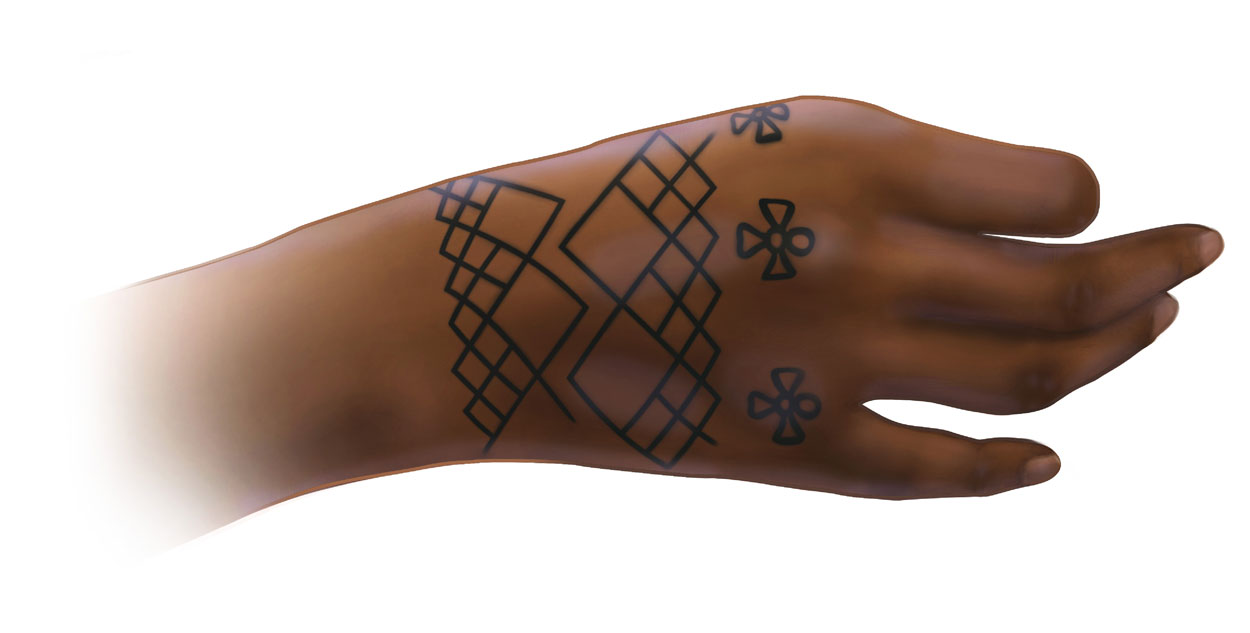
An illustration of tattoos discovered on the hands of the remains of individuals from ancient Nubia

Anne Austin and her colleagues discovered tattoos discovered on the hands of the remains of individuals from ancient Nubia. (Illustration by Mary Nguyen)

Austin, Baker and Jovanović, now a graduate student at University College London, only identified tattoos on individuals at two of the three sites – Semna South and Kulubnarti.

The latter is a known Christian community, so extensive tattooing at Kulubnarti – including what may be cross-shaped markings on the forehead – provides the earliest evidence for Christian tattoo traditions in northeast Africa and could be ancestral to modern Christian practices in the region. Tattooing might also have been done for medicinal purposes, as a way to prevent or treat illnesses.

"We're seeing super imposition of new tattoos over older tattoos, even in children as young as 3 or 4 years old, so that may be due to illness – something like malaria that caused recurrent fevers and headaches," Baker said. "We know that malaria was prevalent in the area, and other diseases, of course, can cause high fevers. There may have been some sort of curative aspect to the tattoos, and there is some ethnographic evidence for that."

Baker added that some adults had tattoos on their backs, which may have also been for medicinal purposes.

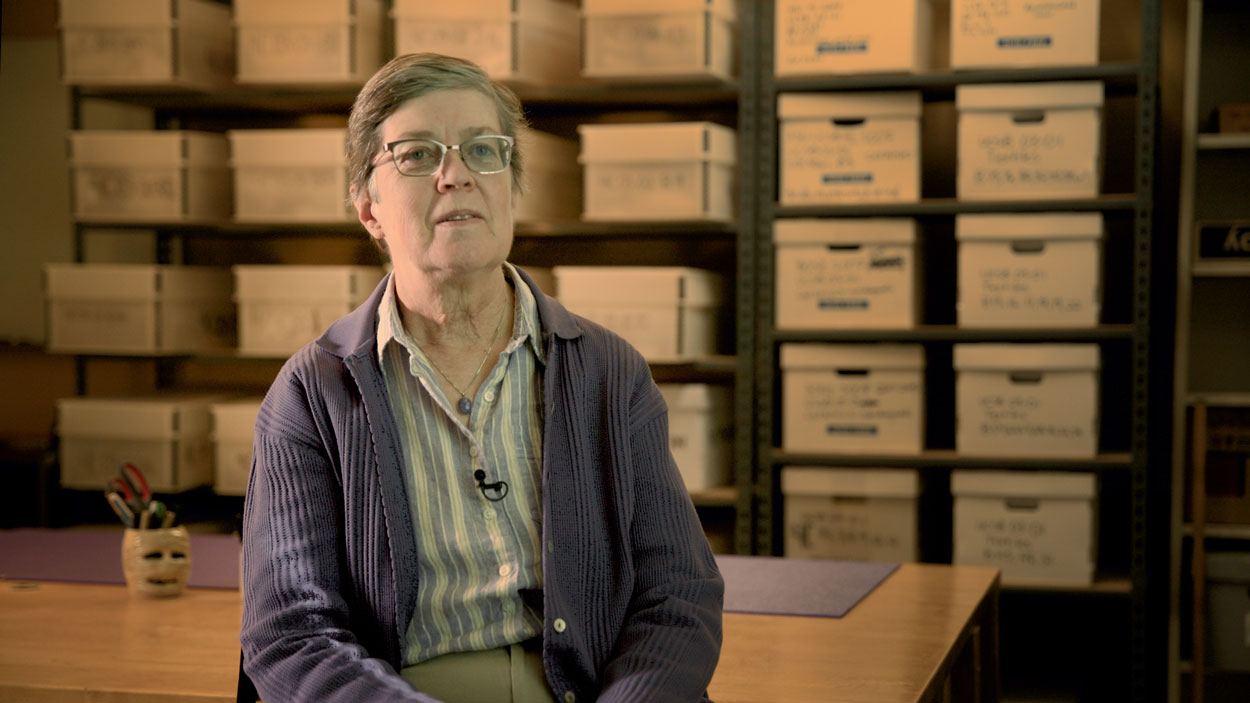
Arizona State University Professor Brenda Baker

Brenda Baker, Anne Austin's collaborator, serves as a professor in School of Human Evolution and Social Change at Arizona State University. (Photo courtesy of Arizona State University)

The excavation of cemeteries at Semna South and Kulubnarti were conducted by the University of Chicago and University of Colorado, respectively, in the 1960s and 70s as part of the UNESCO International Campaign to Save the Monuments of Nubia, while work at Qinifab was conducted by an ASU team under Baker's direction as part of the international Merowe Dam Archaeological Salvage Project. All remains were gifted to the institutions by the government of the Republic of Sudan and are cared for at ASU. The collections had undergone further examination in the years since. But the evidence of tattoos had not been readily apparent without the use of modern near infrared technology and software.

Austin, who previously discovered some of the first figural tattoos identified in ancient Egypt while conducting research at Deir el-Medina, believes there is a need to reexamine other collections.

"We are looking at the tip of the iceberg on tattoos that could be identified," she said. "We really need to do a kind of systematic investigation of other people to see if they have evidence of tattoos, and even if they don't, a lack of evidence is still really useful, because it's telling us where this practice existed and where we don't see any evidence that it was happening."


--   Sent from my Linux system.

Tuesday, December 16, 2025

Northern California ARCE Upcoming Egyptology Lectures

American Research Center in Egypt (ARCE)

Northern California Chapter

Upcoming Lectures


The following lectures are presented by ARCE's Northern California Chapter and by the UC Berkeley Department of Middle Eastern Languages and Cultures. Unless otherwise noted, the lectures are Sunday at 3 pm Pacific Time in person at UC Berkeley.

Dr. John David Ragan, Independent Scholar (PhD, NYU)
Forgotten Saint-Simonian Travelers in Egypt
Jan. 11, 2026 (3 pm via Zoom)
To register, go to https://us02web.zoom.us/meeting/register/cAzvIld9RvanelhVxNRq1A

Rachel Barnas, UC Berkeley
"She is the Son of Bastet": Gender in Papyrus Louvre 32308
Jan. 26, 2026

Dr. Sara Aly, Griffith Institute, Oxford
Topic TBD
Feb. 22, 2026
(3 pm via Zoom)

Dr. Tara Prakash, College of Charleston
Topic TBD
March 15, 2026

Clara McCafferty Wright, Cornell University
Ecology, Mimesis, and Humor: Shining A Different Light on Ancient Egyptian Frog Lamps
April 19, 2026

Dr. Patricia Butz, California State University, Northridge
Topic TBD

May 10, 2026

Dr. Laurel Bestock, Brown University
The Abydos Archival Project
June 14, 2026

---------------------------------

Parking is available in UC lots all day on weekends, for a fee. Ticket dispensing machines accept debit or credit cards. Parking is available in lots around the Social Sciences Building, and in lots along Bancroft. A map of the campus is available online at http://www.berkeley.edu/map/ 

For more information, please visit https://www.youtube.com/@NorthernCaliforniaARCE, https://www.facebook.com/NorthernCaliforniaARCE, https://arce-nc.org, https://bsky.app/profile/khentiamentiu.bsky.social, and https://khentiamentiu.org. To join the chapter or renew your membership, please go to https://arce.org/membership/ and select "Berkeley, CA" as your chapter when you sign up.

Monday, December 8, 2025

Ancient Egyptian pleasure boat found by archaeologists off Alexandria coast | Egypt | The Guardian

https://www.theguardian.com/world/2025/dec/08/ancient-egyptian-pleasure-boat-found-archaeologists-alexandria-coast

Detail from the Nile mosaic of Palestrina

Ancient Egyptian pleasure boat found by archaeologists off Alexandria coast

First-century luxury vessel matches description by the Greek historian Strabo, who visited city around 29-25BC

Mon 8 Dec 2025 04.00 EST

An ancient Egyptian pleasure boat that matches a description by the first-century Greek historian Strabo has been discovered off the coast of Alexandria, to the excitement of archaeologists.

With its palaces, temples and the 130 metre-high Pharos lighthouse – one of the seven wonders of the ancient world – Alexandria had been one of the most magnificent cities in antiquity. The pleasure boat, which dates from the first half of the first century AD, was 35 metres long and constructed to hold a central pavilion with a luxuriously decorated cabin.

It was discovered off the submerged island of Antirhodos, which was part of ancient Alexandria's Portus Magnus (great port).

Strabo had visited the Egyptian city around 29-25BC and wrote of such boats: "These vessels are luxuriously fitted out and used by the royal court for excursions; and the crowd of revellers who go down from Alexandria by the canal to the public festivals; for every day and every night is crowded with people on the boats who play the flute and dance without restraint and with extreme licentiousness."

The excavations were conducted by the European Institute for Underwater Archaeology (IEASM) under the direction of Franck Goddio, a visiting professor in maritime archaeology at the University of Oxford.

He told the Guardian: "It's extremely exciting because it's the first time ever that such a boat has been discovered in Egypt … Those boats were mentioned by different ancient authors, like Strabo, and they were also represented in some iconography – for example in the Palestrina mosaic, where you see such a boat of a much smaller size with noblemen hunting hippopotamuses. But [an actual boat] has never been discovered before."

While that mosaic depicts perhaps a 15-metre boat, this one is far larger, judging by its well-preserved timbers, which also span a breadth of about 7 metres. It may have required more than 20 rowers.

It had been lying only 7 metres under the water and 1.5 metres under the sediment. Goddio's initial assumption was that there were two ships on top of one another "because the construction type was so strange". He added: "The bow is flat … and the stern is round … to be able to navigate in very shallow water."

Goddio's most ambitious projects have been conducted off the coast of Egypt, in Alexandria's eastern harbour and in the Bay of Abu Qir. In partnership with Egypt's Ministry for Antiquities, he has explored a vast area since 1992.

In 2000, the ancient city of Thonis-Heracleion and parts of the city of Canopus were discovered in the Bay of Abu Qir – one of the greatest archaeological finds of recent times. Two colossal statues of a Ptolemaic queen and king are among spectacular treasures that have been retrieved so far.

In 2019, Goddio and his team found a wreck in the waters around Thonis-Heracleion, whose unusual details matched the description of another ancient Greek historian, Herodotus.

The latest discovery lies less than 50 metres from the site of the Temple of Isis, which Goddio has been excavating. He believes the boat could have sunk during the catastrophic destruction of this temple around AD50.

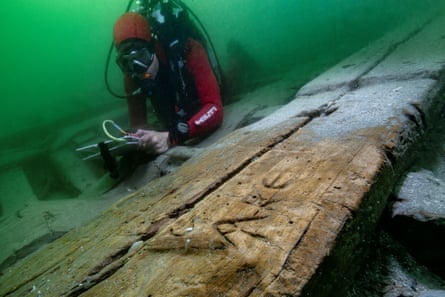
A diver next to a beam with an inscription
The boat's well-preserved timbers had been lying only 7 metres underwater and 1.5 metres under the sediment. Photograph: Christoph Gerigk ©Franck Goddio/Hilti Foundation

After a series of earthquakes and tidal waves, the Portus Magnus and parts of the ancient coastline sank beneath the sea, engulfing palaces and other buildings.

Another theory is that the boat could have been a sacred barge attached to the temple. Goddio said: "It could have … [been] part of the naval ceremony of the navigium Isidis, when a procession celebrating [the goddess] Isis encountered a richly decorated vessel – the Navigium – which embodied the solar barque of Isis, mistress of the sea."

Graffiti in Greek was found on the central carling and is yet to be deciphered.

Although research into the wreck is still at an early stage, it promises to reveal new insights into "life, religion, luxury and pleasure on the waterways of early Roman Egypt", Goddio said.

The latest scientific results of excavations on the temple of Isis have recently been published by the Oxford Centre for Maritime Archaeology.

Prof Damian Robinson, the centre's director, said of the new discovery: "It's a type of ship that's never been found before. While we can read about cabin-boats in ancient texts and see them in the artistic record, it's phenomenal to have the archaeological correlate."

The wreck will remain on the seabed. Goddio said: "We are following the regulation of Unesco, which considers that it is better to [leave] the remains underwater."

Only a tiny percentage of the area has been explored. Excavations are due to resume.


--   Sent from my Linux system.

Water leak in the Louvre damages hundreds of works, museum says | Paris | The Guardian

https://www.theguardian.com/world/2025/dec/07/water-leak-in-the-louvre-damages-hundreds-of-works-museum-says
https://i.guim.co.uk/img/media/2fa84291057937c47ebc0aeb0c490f8abb37f983/322_0_6672_5341/master/6672.jpg?width=1900&dpr=1&s=none&crop=none

Water leak in the Louvre damages hundreds of works, museum says

Open valve in heating system affects 300 to 400 items just weeks after a brazen jewel theft raised security concerns

Agence France-Presse in Paris
Sun 7 Dec 2025 12.37 EST

A water leak in late November damaged several hundred works in the Louvre's Egyptian department, the Paris museum said on Sunday, weeks after a brazen jewel theft raised concerns over its infrastructure.

"Between 300 and 400 works" were affected by the leak discovered on 26 November, the museum's deputy administrator, Francis Steinbock, said, describing them as "Egyptology journals" and "scientific documentation" used by researchers.

The damaged items dated from the late 19th and early 20th centuries and were "extremely useful" but "by no means unique", Steinbock added.

"No heritage artefacts have been affected by this damage," he said. "At this stage, we have no irreparable and definitive losses in these collections."

The incident comes after a theft in October in which a four-person gang raided the world's most-visited art museum in broad daylight, stealing jewellery worth an estimated $102m (£76.5m) in just seven minutes before escaping. It led to a debate over the museum's ageing infrastructure.

The Louvre said there would be an internal investigation into the November leak, which was caused by the accidental opening of a valve in the heating and ventilation system that led to water seeping through the ceiling of the Mollien wing, where the books were stored.

The "completely obsolete" system had been shut down for months and was due to be replaced from September 2026, the museum administrator added.

The works will "be dried, sent to a bookbinder to be restored, and then returned to the shelves", Steinbock said.

In late November, the Louvre said it would raise ticket prices for most non-EU visitors, meaning US, British and Chinese tourists, among others, will have to pay €32 (£28) to get in.

The museum said the 45% price hike aimed to boost annual revenues by up to $23m to fund structural improvements.

The Louvre welcomed 8.7 million visitors in 2024, 69% from abroad.


--   Sent from my Linux system.

Saturday, December 6, 2025

Northern Cal. Zoom Egyptology Lecture Jan. 11: Forgotten Saint-Simonian Travelers in Egypt


The American Research Center in Egypt, Northern California chapter, and the UC Berkeley Department of Middle Eastern Languages and Cultures invite you to attend a Zoom lecture by Dr. John David Ragan, Independent Scholar (PhD, NYU):


Forgotten Saint-Simonian Travelers in Egypt
Sunday, January 11 2026, 3 PM PST


Register in advance for this lecture:

https://us02web.zoom.us/meeting/register/cAzvIld9RvanelhVxNRq1A


After registering, you will receive a confirmation email containing information about joining the meeting.

There are a few things you should know before you join the lecture:

* Advance registration is required. When you click on the link to "Register in advance for this lecture" you will receive instructions by email on how and when to join, along with a link on which you will click to join the meeting. Save the email, as you will need the link it contains to join the meeting. Please register now.
Please do not share the join link with anyone, it is unique to your email address. Try to join at least 10 minutes before the meeting. When you do join the meeting, be prepared to be put in the waiting room until the lecture starts at 3 pm.  This is a security measure.

* If you haven't already installed Zoom, you should download and install the Zoom program (app) well before you try to join the meeting. There IS an option to use your web browser to join the meeting instead of the Zoom program, but the browser interface is limited and depends greatly on what browser and what operating system you're using.

* For tutorials on how to use Zoom, go to
https://learn-zoom.us/show-me. In particular, "Joining a Zoom Meeting" should show you what you need to do to join our lecture.

* All meeting attendees can communicate with everyone, or with individual participants, using the chat window, which can be opened by clicking on the chat button and which you can probably find at the bottom middle of your Zoom viewing screen. Participants will be encouraged to hold their questions for the speaker until after the lecture, and will also be encouraged to address their questions for the speaker to everyone, not just to the speaker, so that all can see them. "Everyone" is the default chat option.

If you have any questions, please email glenn@glennmeyer.net or arcencZoom@gmail.com.


https://american-uni-in-cairo-press-us.imgix.net/covers/9781649033857.jpg
About the Lecture:

This lecture and a book with the same title tell the stories of two French women and a French African man, travelers connected to the Saint-Simonian utopian socialists, who came to work for the Egyptian government in the 1830s. They have been marginalized and excluded from the historical record, because they were women, not part of the colonial elite, or of mixed racial heritage. This history brings them alive through extensive archival research and vibrant storytelling.

There is Suzanne Voilquin, a practicing midwife in Cairo who was involved in left-wing popular politics in Paris and became the editor of one of the first feminist newspapers ever published (1832–34). The second traveler, Thomas Ismayl Urbain, was born in French Guyana, where his mother was born a slave and his father was a French sea captain. "Jehan d'Ivray" is the pen name of the third traveler, a teenage woman who married an Egyptian studying medicine in France, and traveled with him to Egypt in 1879. She wrote more than twenty books, including a retrospective look at Suzanne Voilquin and women in the Saint-Simonian movement, bringing the story full circle to another generation.

Their stories brilliantly illustrate the paradoxes of nineteenth century colonialism in Egypt. Suzanne Voilquin grew up in the Parisian working class and sympathized deeply with Egyptians but initially exoticized the differences between Egypt and her home country, while Urbain, a literary pioneer in black pride, nevertheless joined the French army and saw his role in the colonial occupation as a means of helping indigenous people. These characters transcend the neat binary of East and West and offer a rich, nuanced window onto the experiences of French travelers in Egypt during the nineteenth century.


https://american-uni-in-cairo-press-us.imgix.net/authors/john-david-ragan.jpg


About the Speaker:

Dr. John David Ragan has a PhD in history from New York University and degrees from the University of Paris IV-Sorbonne, the University of Cincinnati, and Binghamton University. He has traveled in fifty countries, across Europe, North Africa, Latin America, New Zealand, Australia, Southeast Asia and the Himalayas, studying French in Paris, Arabic in Cairo and Tunis, German in Berlin, and Spanish in Salamanca and Mexico City. He is a working member of Laborers Union Local 942, Fairbanks, Alaska, and has published two books and numerous articles.

About Northern California ARCE:

For more information, please visit https://www.youtube.com/@NorthernCaliforniaARCEhttps://www.facebook.com/NorthernCaliforniaARCE, https://arce-nc.org, https://bsky.app/profile/khentiamentiu.bsky.social, and https://khentiamentiu.org. To join the chapter or renew your membership, please go to https://arce.org/membership/ and select "Berkeley, CA" as your chapter when you sign up.